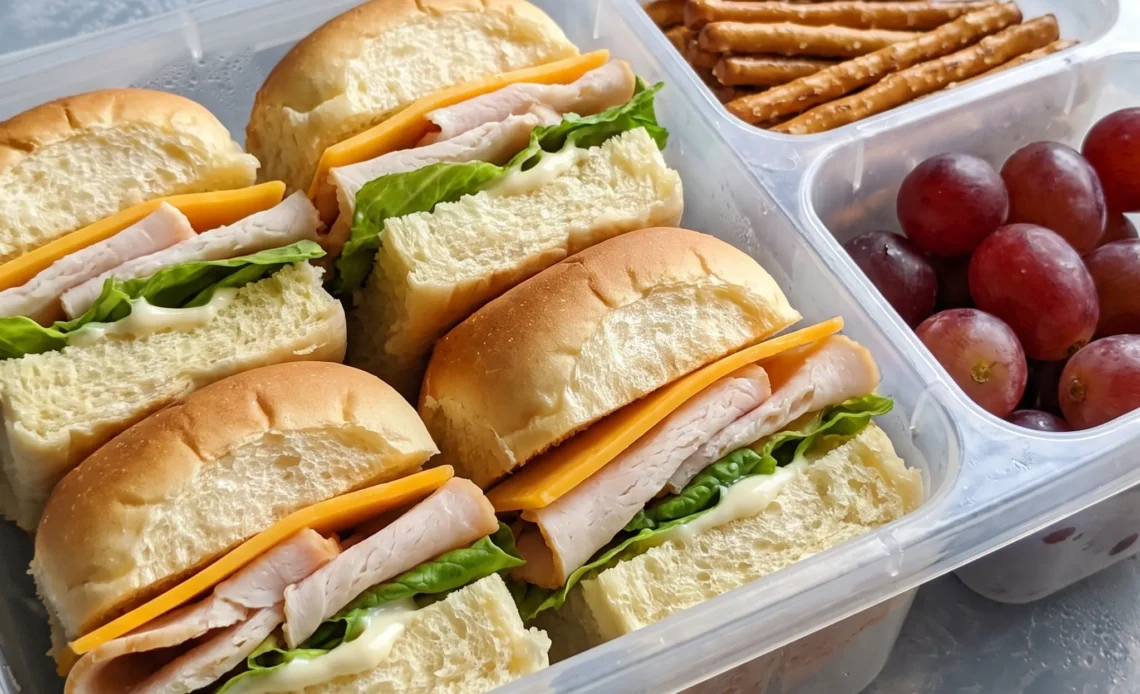
A turkey cheddar sliders lunchbox is not a hot, baked tray of sliders. It’s a cold, packed lunch. The whole sheet of Hawaiian rolls, a swipe of mayonnaise, and stacked turkey and cheddar turn into four portable meals in ten minutes.
The method is assembly, not cooking, so the work is in how you layer and pack. Those sliders travel well because the roll sheet holds the filling in place.
Get the order right and they won’t fall apart. Get it wrong and you’re eating bread with turkey beside it.
The biggest risk is moisture: skip the mayo barrier, or pack the grapes and pretzels against the bread, and the rolls turn soft. What you want is a lunch that still tastes like a sandwich by noon.
That’s what this one does.
Keep the Rolls Connected for Structure
Pull one roll from a standard pack and the crumb tears, leaving a ragged edge that filling escapes through. The same thing happens in a lunchbox.
Cut the whole sheet in half horizontally and you get a single slab with a built-in hinge along the back. That hinge does the work of a sandwich wrapper: it holds the top and bottom together so turkey and lettuce can’t slide out when the box gets tipped. Individual rolls offer no such hinge.
Stack filling on a loose roll and the first bite squeezes the layers sideways, because nothing anchors them. The connected sheet also keeps the sliders aligned as they sit in the box, so they arrive looking like sandwiches rather than a pile of parts.
When you pack them, the sheet resists separating until someone pulls a portion away deliberately. The result is a lunch that travels without turning into a mess.
Mayo Does More Than Flavor
A swipe of mayonnaise on the bottom half of the rolls isn’t just for taste. It creates a thin, even barrier that keeps the bread from soaking up the juices that turkey and lettuce release over a few hours. Butter or oil would sit on the surface and leave the crumb greasy without blocking moisture the same way.
Mayo clings to the bread and forms a seal that stays put even when the lunchbox gets jostled. On the top half, a little mayo adds a second line of defense and a bit of tang that cuts through the cheddar. Without it, the bread would gradually turn wet and limp, and the sandwich would lose its structure.
What you get with mayo is bread that still tastes like bread at lunchtime, not a soggy sponge. The layer is thin enough that it disappears into the filling, doing its job quietly.
Stacking Order That Holds Up
Lettuce goes down first, right against the mayo-coated bread. That leaf provides a non-slip surface; its ribs and curls grip the bread so the filling doesn’t shift when you press the top half on. Turkey comes next, and its slices act as a cushion.
They’re soft enough to conform to the cheddar that follows, filling any gaps that would let the cheese slide. Cheddar sits on top of the turkey, where its firm, flat slices stay put once the top half of the rolls is added.
If you put cheese directly against the bread, it would skate around on the mayo. The order also keeps textures separate: crisp lettuce, tender turkey, solid cheese.
Each bite gives you all three without one dominating. When you cut the sheet into individual sandwiches, the stack stays intact because each layer is anchored by the one below it.
Cold Lunchbox Sliders Are Meant to Be Cold
These sliders are built to be eaten straight from the lunchbox, no reheating. That’s not a compromise; it’s how they’re designed.
Chilling the assembled sandwiches firms up the mayo and helps the layers settle together, so they hold their shape when you pick one up. Cold also keeps the lettuce crisp.
Warmth would wilt the leaves and make the bread steamy, turning the whole thing into a damp package. Because there’s no cooking step after assembly, the sliders are safe to eat cold and fit the rhythm of a lunchbox: pack, chill, eat. The cheddar stays firm and the turkey stays moist, and the rolls keep their softness without getting gummy.
A few hours in the fridge actually improves the texture, giving you a sandwich that tastes fresh and holds together until the last bite.
The Ingredients That Make or Break a Cold Lunchbox Slider
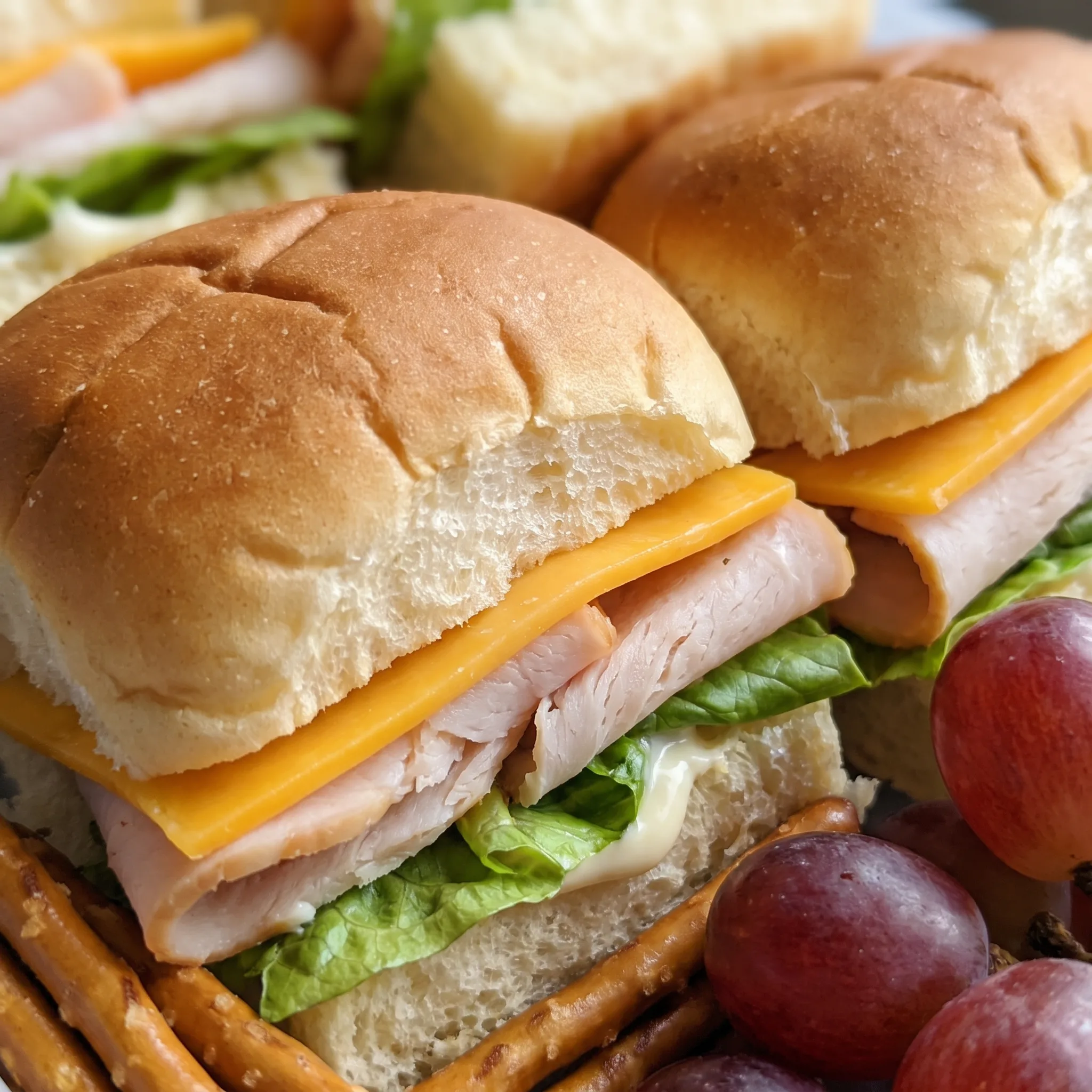
Hawaiian rolls: Buy the 12-count sheet, not loose rolls, because the connected slab is what keeps the sliders from falling apart.
mayonnaise: Full-fat mayo clings to the bread and blocks moisture; low-fat versions turn watery and let the rolls go soggy.
romaine lettuce: Choose leaves that are crisp and dry, since wet or limp leaves will wilt and soak the bread before lunch.
cheddar cheese: Use pre-sliced cheddar, not shredded, so the flat slices stay put and don’t tumble out when you bite.
Judging the Sliders as You Build Them
Cutting the sheet without crushing the rolls
A serrated knife saws through the connected rolls without squashing them. Press straight down with a chef’s knife and the rolls compress, then spring back with a crease that splits later.
You want two clean slabs of equal thickness, so the hinge stays intact. If the knife drags, the cut face turns ragged and filling catches in the tears.
Saw gently, let the teeth do the work, and check that the bottom half lies flat before you spread anything.
Spreading mayo thin enough to disappear
Mayo should coat the crumb, not sit in a visible layer. A tablespoon per half is plenty; more and it squishes out the sides when you press the top on, leaving the lunchbox greasy.
You’re looking for a sheen across the bread with no bare patches. If you see white ridges, you’ve used too much.
Scrape some back with the back of the spoon and spread it thinner. The goal is a barrier you can’t taste as a separate thing.
Layering so nothing slides when you press
Lettuce goes against the mayo, turkey next, cheese last. Each layer should lie flat, not bunched.
If the lettuce is folded over itself, the sandwich won’t close evenly and the top half will rock. Turkey slices should overlap just enough to cover the bread without thick mounds. Cheese goes on flat.
When you set the top half on, press gently; if filling oozes out the sides, you’ve overstacked. Remove a slice of turkey or cheese and try again.
Dividing without tearing the hinge
After the top half is on, cut between the rolls with a serrated knife, using the original seams as guides. You’re separating sandwiches, not sawing through the whole block. If you press too hard, the hinge stretches and the filling squeezes out.
A gentle sawing motion keeps each slider intact. The rolls should pull apart with a little resistance, leaving clean edges. If they don’t, the mayo or cheese is too thick; next time use less.
Turkey Cheddar Sliders in a Lunchbox
Ingredients
Method
- Cut the whole sheet of Hawaiian rolls horizontally into two equal halves.
- Spread the mayonnaise over the bottom half, then arrange the lettuce and turkey in layers.
- Place the cheddar cheese slices on top.
- Set the top half of the rolls over the filling. If you like, add more mayonnaise or mustard to the top half before putting it on.
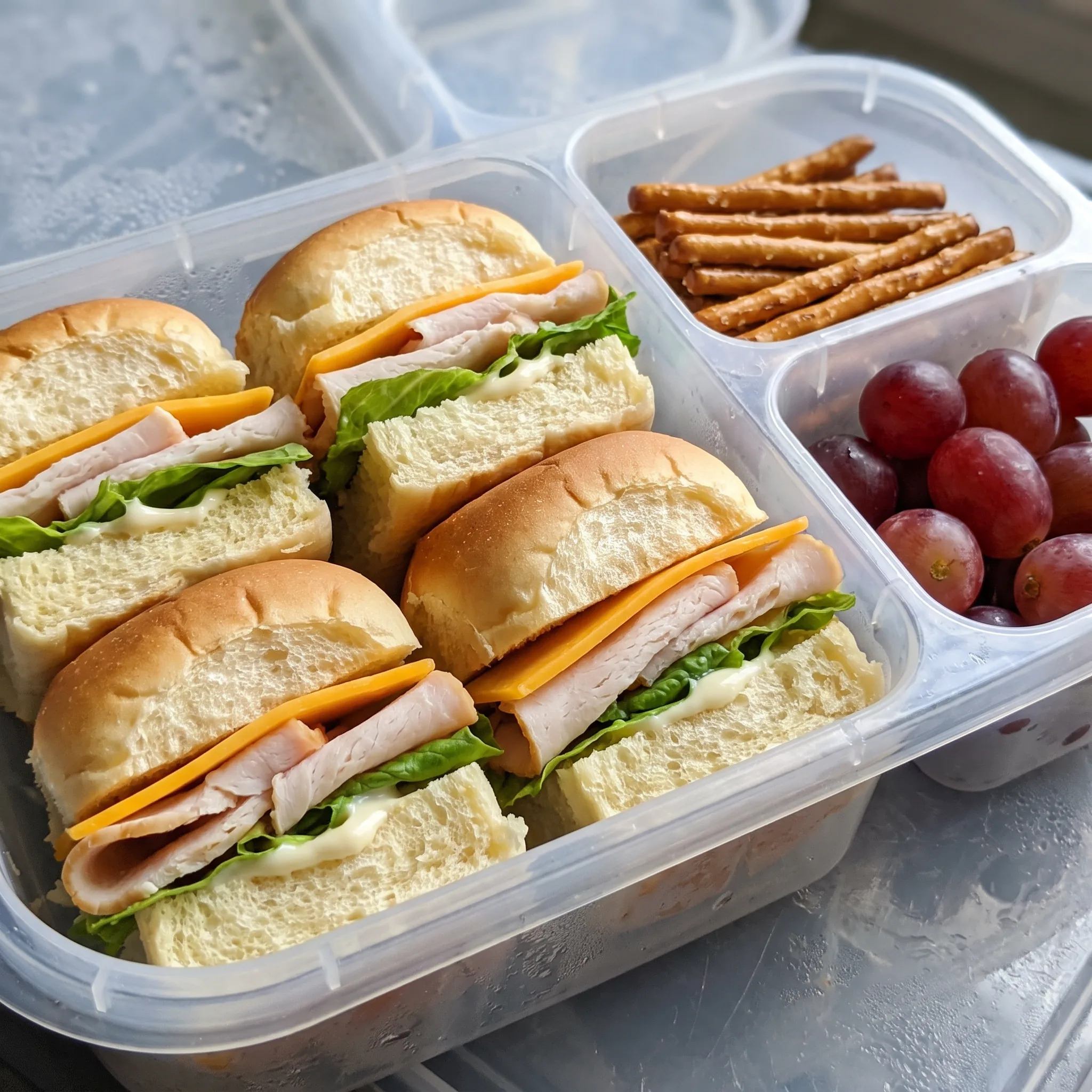
- Divide into individual mini sandwiches and place them in lunchboxes. Add the pretzels and grapes. Cover and chill until serving time. Eat within 3–4 days.
How Long These Lunchboxes Hold
Pack the sliders, pretzels, and grapes into lunchboxes, cover, and chill. Eat within 3 to 4 days, but the first two days are when the sliders are at their best. After that, the roll crumb starts to compress where the mayo and turkey meet, and the lettuce loses its snap.
Keep the pretzels in their own compartment so they don’t pull moisture from the sandwiches and soften. The grapes stay sealed off for the same reason: their skins release water as they sit. If the compartments are shallow, a small sheet of parchment between them works.
Nothing here freezes well. The lettuce turns limp and watery once thawed, and the rolls go crumbly, so freeze neither the assembled sliders nor the sides.
For a make-ahead lunch, assemble the sliders the night before, pack the pretzels and grapes separately, and combine everything in the morning. Eat cold, straight from the fridge, no reheating. The cheddar and turkey are firmest and the roll is softest on day one.
Tips
- Buy the turkey and cheddar sliced to order at the deli counter and ask for a uniform thickness, about 1/8 inch. Pre-packaged turkey and cheddar vary slice to slice, so a thick slice on one side of the sheet makes the top half of the rolls rock and leaves a gap for lettuce to escape. Since you need 12 slices of each, have the counter count them out at the same setting so every layer sits level.
- If the deli only sells cheddar in thicker cuts, ask them to shave it. A 1/8-inch slice of cheddar covers more of the roll than a 1/4-inch one, so 6 slices still span the full 12-roll sheet instead of leaving bare strips where the turkey shows through. Shaved cheddar also presses flat under the top half rather than doming it up at the center.
When to Swap and When to Walk Away
mayonnaise: Deli mustard, same amount as the mayo. You’ll get a sharper, tangier sandwich, but mustard is mostly water and doesn’t seal the bread the way mayo does.
Expect the rolls to turn wetter and softer within a few hours. If you go this route, pack a napkin.
romaine lettuce: Baby spinach, same amount. Spinach brings a softer texture and a slightly earthy flavor. It also wilts faster than romaine, so the sliders are best eaten the day they’re made.
For day three or four, stick with romaine.
cheddar cheese: Swiss or provolone, same number of slices. Both melt at room temperature and turn creamier than cheddar, which stays firm. The sandwich will taste milder and feel richer, but you may need to press the top half down gently to keep everything together.
turkey: Sliced ham or chicken, same number of slices. Ham adds a salty, savory punch that pairs well with cheddar; chicken is milder and takes on the mayo. Either works, but ham releases more moisture, so the bread may soften faster.
Use the same amount and adjust after tasting.
The recipe’s hard step is assembling the sliders as a single connected sheet of rolls, then cutting them apart afterward. If you separate the rolls first, each mini sandwich loses its structural hinge and the filling slides out; cutting the whole sheet after filling keeps the layers compressed and the bread intact. The trade-off is between the convenience of individual assembly and the structural integrity of a slab, and this recipe chooses the slab because it prevents the lettuce and turkey from shifting during transport.
Frequently Asked Questions
Can I make these turkey cheddar sliders the night before?
Yes, and they’ll be at their best within the first two days, so overnight is well inside the window. The storage section says to assemble the night before, pack the pretzels and grapes separately, and combine everything in the morning. The sliders go into the fridge covered, and that cold rest firms the mayo so the layers settle together.
If you’re packing them for a lunch the next day, they’ll eat cold straight from the fridge.
How do I keep the sliders from getting soggy in a lunchbox?
Most lunchbox sogginess comes from the pretzels and grapes sitting in the same compartment as the sandwiches. Their moisture moves into the bread over a few hours, so keep each in its own compartment and the roll stays soft without turning wet.
The second thing to check is the mayo layer: full-fat mayo clings to the crumb and blocks the turkey and lettuce juices, while a thin or patchy swipe lets the bread drink them up. If you want a backup, a small sheet of parchment between compartments helps when the sections are shallow. The sliders are built to be eaten cold, so don’t warm them before packing.
What’s the difference between these lunchbox sliders and classic baked slider recipes?
Classic baked sliders go into the oven as a connected sheet with melted butter or a glaze poured over the top, and they come out hot with cheese that’s fully melted into the meat. These are assembled cold from the same sheet of rolls, cut into individual sandwiches, and packed straight into a lunchbox with no oven step.
The trade is texture: cheddar stays firm rather than gooey, lettuce stays crisp instead of wilting under heat, and the mayo acts as a moisture barrier rather than a butter soak. You also get a lunch that travels well over a few hours, which a hot tray of sliders doesn’t do.
If you want the baked version, that’s a different recipe; this one is built for the cold lunchbox.
