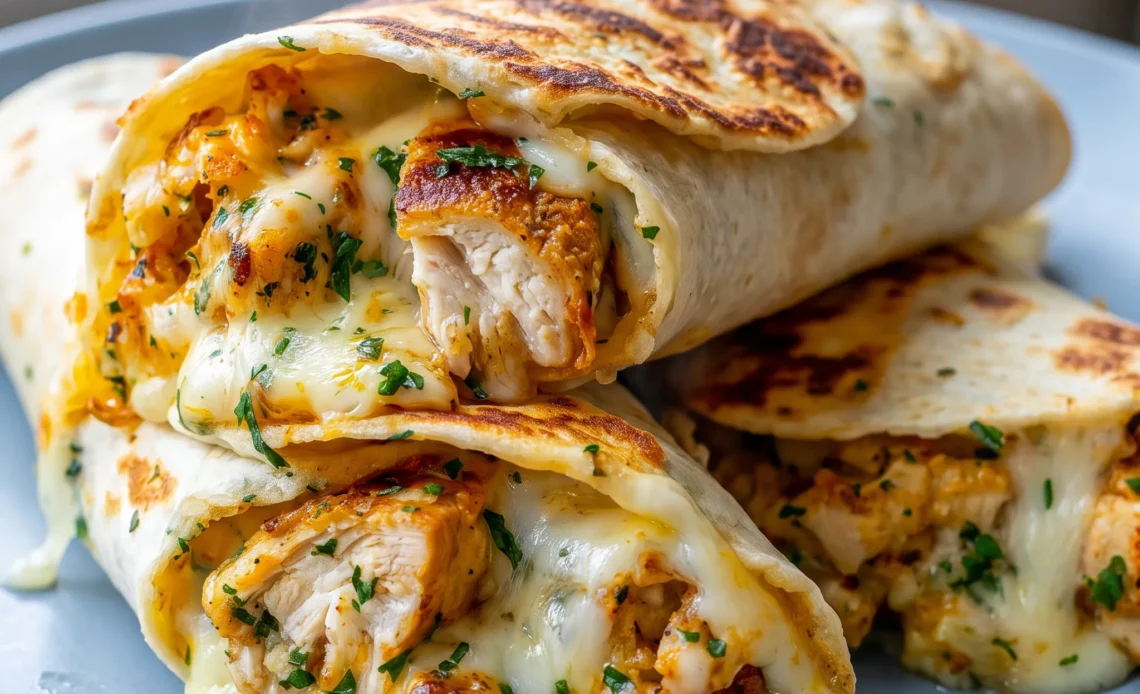
A quesadilla this is not. These cheesy garlic chicken wraps get rolled tight and seared seam-down, so the cheese stays put instead of leaking across a flat pan. That shape is where the trouble lives.
A loose, watery filling will soak the tortilla before it ever hits heat, and low-carb wraps crack when they’re cold or overfilled, which is why the filling has to be dense and the roll compact rather than stuffed. Cream cheese does the binding work here, pulling shredded chicken and two melting cheeses into something that holds as a log. Get the mix right and the skillet rewards you with a blistered shell and a center that still pulls.
Get it wrong and you’re eating a wet tortilla with cheese somewhere near it.
Pick Low-Carb Tortillas for Structure
Low-carb wraps feel drier and more fibrous in your hand than a standard flour tortilla. That difference matters once you pile in a wet, cheesy filling.
The extra fiber and lower moisture mean the tortilla resists soaking through, so it stays intact when you roll it tight and later bite through. Standard flour tortillas tend to turn gummy or tear when they meet the creamy cheese mixture, especially as they sit. The wrap’s job is to hold everything together without disintegrating, and the low-carb version does that better.
You’ll notice the difference at the seam, where a weaker tortilla would split and leak. Pick a brand that feels pliable but not damp.
If it’s too stiff, a few seconds in the microwave can help, but that’s a minor adjustment. What matters is choosing a tortilla that can stand up to the filling without turning to paste.
The end result is a wrap you can eat with your hands, no fork required.
Mozzarella, Cheddar, and Cream Cheese Each Do a Job
Mozzarella melts into long, elastic strings that pull apart when you bite. That stretch is what makes a cheesy wrap feel generous. Cheddar brings a sharper, saltier edge that keeps the mild mozzarella from tasting flat.
Cream cheese doesn’t melt the same way; it softens and binds the shredded cheeses and chicken into a cohesive, creamy filling. Without it, the mixture can crumble and the cheeses may separate into greasy pools.
Together, the three create a filling that’s gooey, flavorful, and stays put inside the tortilla. You’ll see the difference when you stir: the cream cheese disappears into the mix, leaving a uniform, sticky mass.
The cheddar’s sharper notes come through against the background of mozzarella, and the whole thing tastes rich but not one-dimensional. A single cheese would leave you missing either stretch, punch, or cohesion.
This trio covers all three.
Start with Cooked Chicken for Tenderness
Using chicken that’s already cooked, whether from a rotisserie bird or last night’s leftovers, keeps the filling moist and seasoned. Shredded meat has plenty of surface area for the cheese and garlic to cling to, so every bite gets an even distribution.
If you started with raw chicken, you’d need to cook it through in the skillet, which takes longer than the tortilla can handle without burning. The meat would also release juices that could make the wrap soggy. Pre-cooked chicken is tender and won’t dry out when it’s warmed through with the cheeses.
You can taste the difference: the chicken stays juicy, and the garlic and herbs permeate the shreds. A quick stir combines everything without breaking down the meat further.
It’s a practical shortcut that doesn’t compromise flavor or texture. The filling ends up cohesive and rich, ready to be rolled.
Seam-Side Down First Seals the Wrap
Placing the rolled wrap seam-side down in the hot skillet does two things at once. It seals the tortilla shut so it can’t unroll as it cooks, and it gives that side a head start on crisping.
The direct heat turns the tortilla golden and slightly blistered, creating a sturdy shell that contrasts with the creamy filling. As the wrap sits, heat travels through to melt the cheeses inside.
You don’t need an oven; the pan does all the work. When you flip it, the other side gets the same treatment.
The seam side, now sealed, holds everything in place. You’ll hear a faint sizzle and smell the garlic warming.
The result is a wrap with a crisp, golden exterior and a hot, gooey center. That initial seam-down contact is what keeps the whole thing together.
Garlic and Parsley Wake Up the Richness
Minced garlic stirred into the filling starts sharp and pungent, but the heat of the pan mellows it into a warm, savory backdrop. It perfumes the chicken and cheese without overpowering. Fresh parsley, chopped fine, adds a bright, grassy note that cuts through the heaviness of melted mozzarella and cheddar.
You taste it as a fresh lift at the end of each bite. The green flecks also break up the pale, uniform filling, making the wraps look more appetizing on the plate.
Without them, the filling would be one-dimensional and dull. A sprinkle of extra parsley on top after cooking reinforces that freshness.
These two aromatics aren’t just garnish; they balance the richness and signal that the wraps are made with care. The garlic’s warmth and parsley’s brightness are what keep you coming back for another bite.
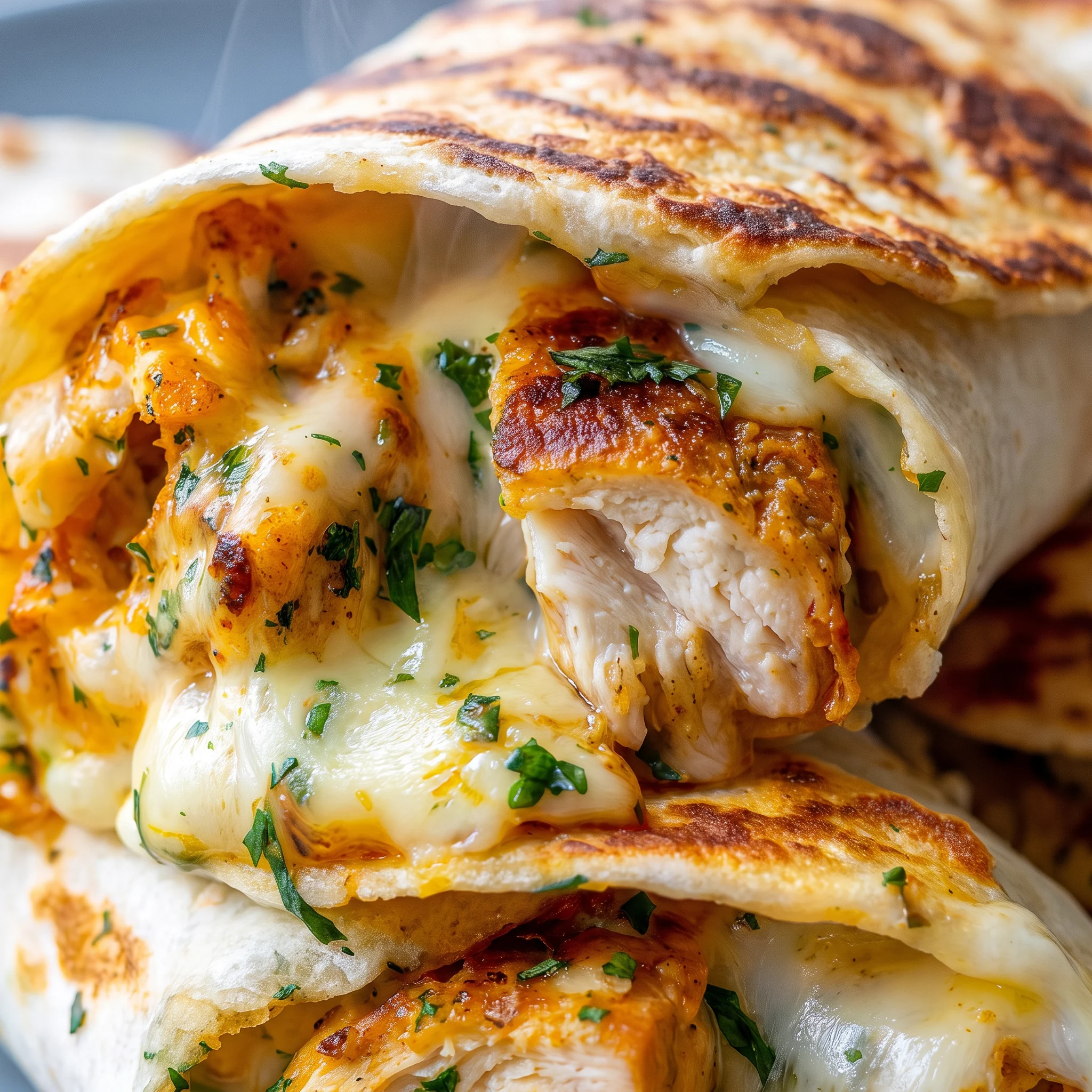
What to Buy for These Wraps
Low-carb tortillas: Pick large, pliable wraps that feel dry, not damp, since stiff ones crack when rolled around the filling.
Cooked chicken breast: Shred it yourself from a rotisserie bird or leftovers, keeping the pieces small so the cheese coats every strand.
Cream cheese: Let it sit out until fully softened, or it won’t disappear into the mix and the filling stays lumpy.
Garlic: Mince the two cloves as finely as you can; larger bits stay sharp and raw-tasting in the finished wrap.
Fresh parsley: Chop it just before mixing, since pre-cut parsley loses its bright, grassy bite after a day in the fridge.
Judging the Wrap at the Skillet and in the Bowl
The Filling Should Hold Together, Not Crumble
When you stir the chicken, cheeses, cream cheese, garlic, and parsley, the mixture should come together into a sticky, cohesive mass. If it looks dry and crumbly, the cream cheese wasn’t soft enough or there’s too much chicken.
Add a touch more softened cream cheese. If it’s wet and loose, the wraps will leak. Aim for a consistency that holds its shape when you press it.
This judgment prevents soggy tortillas and ensures even distribution.
Roll Tight Without Tearing the Tortilla
As you roll each wrap, you need to compress the filling while keeping the tortilla intact. Low-carb wraps are less elastic, so if you overfill or roll too forcefully, they crack. Stop rolling when the tortilla feels tight but not stretched.
The seam should seal with light pressure. If the wrap splits, the cheese will escape and burn in the pan. A tight roll also helps the wrap hold together when you flip it.
The Sear Should Be Golden, Not Charred
In the skillet, the wrap needs 2 to 3 minutes per side. Watch for a deep golden color and a few blistered spots. If the pan is too hot, the tortilla blackens before the cheese melts.
If too low, the wrap dries out and turns tough. The first side, seam down, should release easily when it’s ready.
If it sticks, give it another 30 seconds. A proper sear gives a crisp shell and a molten center.
The Cheese Should Melt Fully, Not Just Warm
You can tell the filling is ready when the wrap feels soft and heavy in the pan, and a gentle press yields to the melted cheese inside. If the tortilla is golden but the center still feels firm, the cheese hasn’t melted.
Lower the heat and cover the pan for a minute. Serving too early means unmelted shreds. The goal is a uniform, gooey interior that contrasts with the crisp exterior.
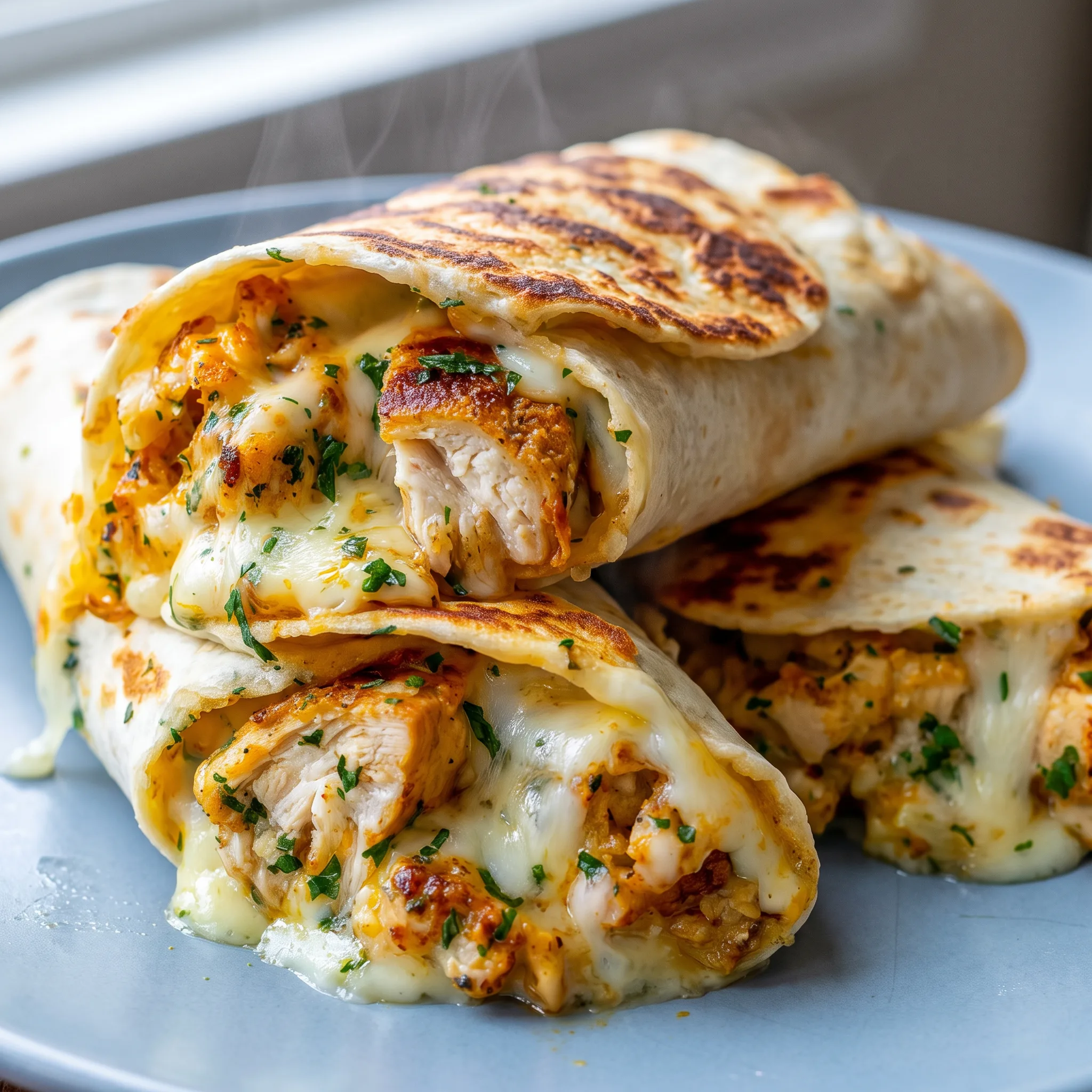
Cheesy Garlic Chicken Wraps with Mozzarella
Ingredients
Method
- Place a skillet or grill pan over medium heat and add the olive oil.
- In a bowl, combine the chicken, mozzarella, cheddar, cream cheese, garlic, parsley, and a pinch of salt and pepper. Stir until the mixture is uniform and creamy.
- Divide the filling among the tortillas into four equal portions. Roll each tightly into a compact wrap.
- Put the wraps in the heated skillet with the seam facing down. Cook for 2–3 minutes on each side, until they are golden and the cheese inside is fully melted.
- Cut each wrap in half and serve right away. If desired, sprinkle additional parsley on top for a fresh garnish.
Swap Without Losing the Wrap’s Structure
Low-carb tortillas: Another sturdy high-fiber wrap, like a whole-wheat or spinach variety. Use the same count: 4 large wraps.
You need a tortilla that can take a tight roll and a hot pan without tearing. A high-fiber wrap has the same low moisture and extra strength as the low-carb ones, so it resists soaking through.
If you go with a standard flour tortilla, expect it to turn gummy and split at the seam when it hits the skillet.
Shredded cooked chicken breast: Leftover turkey or canned tuna, both already cooked. Start with the same 2 cups the recipe uses, then adjust after you stir the filling: if it looks dry, add a spoonful more cream cheese.
Turkey tastes milder, so the garlic and parsley come through more. Tuna is stronger and will change the whole character; if you use it, drain it well or the filling turns wet and the wraps leak in the pan. Either way, shred or flake the meat small so the cheese coats every piece.
Mozzarella: Monterey Jack, shredded. Use the same 1 cup the recipe calls for. Monterey Jack melts just as smoothly but brings a tangier, slightly sharper flavor than mild mozzarella.
You lose some of the long stretch that mozzarella gives, but the filling still holds together and tastes richer. Cheddar stays in the mix for punch.
Cream cheese: Nothing. Leave it as is. This is the binder.
Without it, the shredded cheeses and chicken won’t cling together; the filling crumbles when you roll it, and the cheeses separate into greasy pools in the pan. No other ingredient in this recipe does that job. If you’re avoiding dairy, this isn’t the dish to adapt.
Storing the Filling and Wraps Separately
These wraps hit their peak within 15 minutes of the skillet. The tortilla stays crisp at the seam and the cheeses hold their stretch. Past that window, the shell softens against the filling and the texture flattens.
So eat them straight from the pan, cut in half, with the extra parsley scattered over the top right before they go to the table. That finishing touch waits until serving; parsley laid on earlier wilts and darkens against the hot tortilla.
If you’re working ahead, keep the filling and the tortillas apart. The filling goes in a sealed container in the fridge for up to 3 days, and the tortillas stay in their own packaging at room temperature. Together they turn the wrap soggy before it ever sees heat.
When you’re ready, spread the cold filling across the tortillas, roll, and pan-fry as written. Cold filling takes the same 2 to 3 minutes per side. Skip the freezer for assembled wraps; the tortillas crack and the cheese weeps on thaw.
The filling alone freezes, though it thins slightly once reheated.
Tips
- Pat the shredded chicken dry with paper towels, then squeeze the grated mozzarella and cheddar in a separate paper towel before they go in the bowl. Two cups of chicken plus 1 1/2 cups of cheese carry enough surface moisture to steam inside the rolled tortilla, and that trapped steam is what softens the shell from the inside while the outside browns. Drying both first keeps the filling dense, so the 2 to 3 minutes per side in the skillet melts the cheese and crisps the tortilla instead of poaching it.
- Grate the mozzarella and cheddar on the large holes of a box grater rather than buying pre-shredded bags, then blot the pile once. Pre-shredded cheese is dusted with potato starch or cellulose to keep it from clumping, and that coating blocks the shreds from knitting into the cream cheese and chicken. Freshly grated cheese also releases less liquid, so the filling stays thick enough to hold its shape when you press it into the tortilla. If you only have bagged cheese, the blotting step matters more, not less.
A rolled tortilla only stays closed if its seam is fused by direct contact with a hot pan. Placing the wrap seam-side down first causes the overlapping edge to toast and adhere to the layer beneath it, forming a seal. If the wrap is placed seam-side up or moved before that seal sets, the roll opens under the weight of the melted cheese and the filling escapes into the pan.
Frequently Asked Questions
Can I make these low carb cheesy garlic chicken wraps ahead of time?
Make the filling ahead, not the assembled wraps. It keeps in a sealed container in the fridge for up to 3 days, and you roll and pan-fry when you’re ready to eat.
The tortillas stay in their own packaging at room temperature until then. Assembled wraps sitting in the fridge turn soft at the seam before they ever see the skillet, so the crisp shell you’re after never happens.
Cold filling cooks in the same time as room-temperature filling, so nothing changes at the pan.
Why did my wraps fall apart when I tried to roll them?
The filling was probably too wet or piled too high, and the tortilla paid for it. When the mixture looks loose, the excess moisture softens the wrap from the inside while you’re still rolling, and the seam won’t grip.
A stiffer tortilla is the second thing to check; low-carb wraps crack instead of flexing if they’ve been in a cold fridge. Let one sit on the counter a few minutes before you fill it, and press the filling into a compact log rather than a loose mound. Stop rolling when the wrap feels snug, not stretched.
How do I keep the tortillas from getting soggy?
Keep the filling tight and dry going in, and eat the wraps while the shell is still crisp. A loose, watery mix leaks into the tortilla as it heats, and the seam goes soft first.
If the chicken was wet when it went into the bowl, blot it before mixing so the cream cheese isn’t fighting extra liquid. The other half of it is timing: these are at their best within 15 minutes of the skillet, and past that the shell gives way against the filling no matter how well you built it.
What’s the difference between these wraps and traditional chicken quesadillas?
A quesadilla is flat, cooked as one round, and cut into wedges; these get rolled into a compact cylinder before they hit the pan. That shape changes how the heat reaches the filling, since the cheese is wrapped inside the tortilla rather than sandwiched between two of them. The filling here is also bound with cream cheese, so it holds as a cohesive mass instead of relying on melted shreds to glue everything together.
You end up with a crisp shell all the way around and a gooey center, closer to a stuffed, pan-seared roll than a pressed, flat one.
Can I use leftover chicken from a rotisserie chicken?
Yes, and it’s the easiest route. Shred it small so the cheese coats every strand, and skip any skin, which stays rubbery in the filling. Rotisserie meat is already seasoned, so taste the mix before you add much salt.
If the bird was on the dry side, a spoonful more softened cream cheese brings the filling back to a cohesive, sticky mass.
