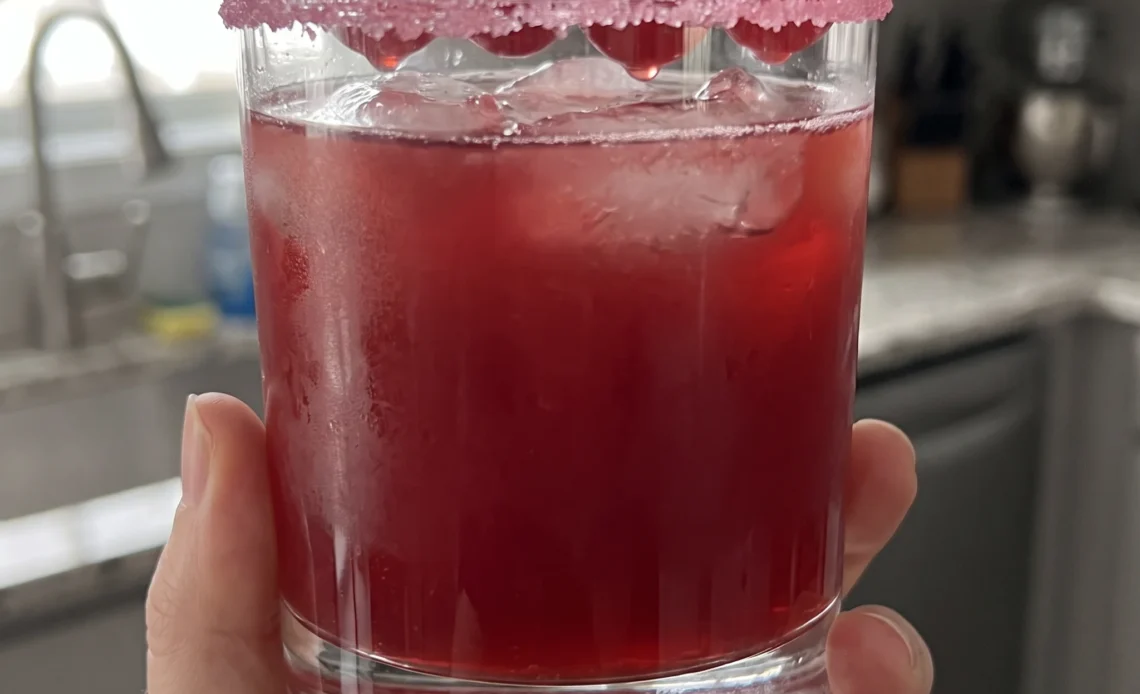
Most people build the drink first and rim the glass last, which is backwards. A cocktail this tart leans on the sugar for its first-sip balance, and a rim applied to a glass already sweating or a rim gone patchy shows up in the mouth before the gin does.
The margin for error is small: cherry juice, elderflower, lemon, and syrup in a single serving leave little room to hide a heavy hand. What makes the tart cherry gin cocktail worth five minutes is the pairing underneath, floral liqueur riding between juniper and fruit so neither shouts. Shake it too long and the ice waters the cherry; too short and the pour runs flat.
Taste the juice before you commit, because sweetened cherry juice will push the whole thing past where the lemon can pull it back.
Sugar on the Rim Does Real Work
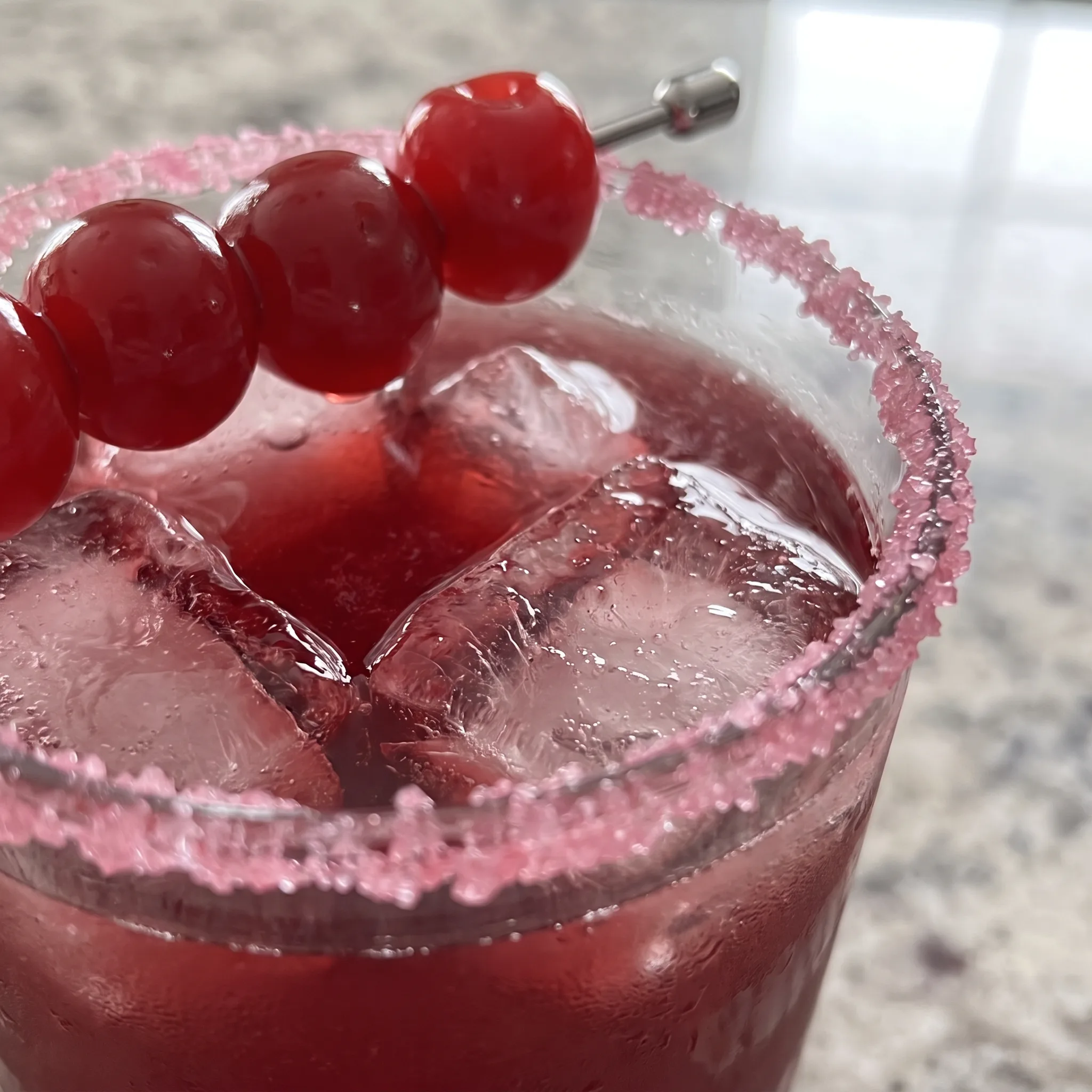
A rim of coarse sugar gives the first sip a crunch, then a hit of sweetness that lands before the cherry and lemon do. Without it, the drink leans sharp from the start.
With it, the tartness reads as bright rather than bracing. You taste the crystals, then the juice underneath, and the order matters.
Decorative sugar is coarser than the granulated in the canister. Bigger crystals cling to a moistened rim and stay there instead of dissolving into a wet smear before the glass reaches the table. Fine sugar just melts and disappears into a sticky ring that never delivers the crunch.
The lemon slice exists to give the sugar something to grab: its juice wets the glass just enough for the crystals to stick without running.
Run a fingertip around the rim after coating and you should feel a rough, even band, not a syrupy puddle. That texture is part of the drink, not trim on it, and a sip that skips the rim tastes flatter for it.
Elderflower and Cherry Built to Overlap
Elderflower liqueur carries a soft floral scent that sits between the gin and the cherry instead of competing with either. Gin brings juniper and citrus peel; elderflower rounds that edge and sweetens it slightly, so the cherry juice has a cushion to land on. Without something in that middle register the drink reads as gin plus fruit juice, two things side by side.
Maraschino cherries on top are a different cherry than the juice in the glass, and that’s why they earn the garnish spot. They’re candied, glossy, and almond-sweet, a small contrast to the tartness below. A fresh cherry would taste thin next to the drink and go soft in the liquid.
Smell the finished cocktail before you sip it. The floral note comes off the top first, then cherry, then a faint resinous gin edge underneath. That order is the balance working: nothing shouting, each part arriving in turn.
Why This Drink Gets Shaken, Not Stirred
Shaking does three jobs at once here. It chills the liquid fast against the ice, it dilutes it just enough to soften the gin’s heat, and it whips in air. A stirred version of this cocktail comes out heavy and flat, sweet syrup pooling on the tongue with no lift to carry it.
The ice matters as much as the motion. Cubes half-filling the shaker give the liquid room to move and enough surface to chill quickly without watering the drink down. Too little ice and you shake longer for less cold, and the cherry juice starts tasting thin.
Aeration is what you notice most. The shaken liquid pours cloudy and bright, and the first sip tastes lighter than the same ingredients would straight from the bottle. Small bubbles carry the floral and citrus notes up into your nose, which is where most of the flavor actually registers.
Straining matters for texture. Ice shards and pulp in a coupe feel gritty against the lip and cloud a drink meant to look clear. The strainer leaves a smooth, silky pour.
Finding the Sweet-Tart Line
Tart cherry juice already carries a sour edge, and the lemon pushes that further. Simple syrup is the counterweight, and the specified amounts put the three in a working balance: roughly two parts cherry to one and a half of syrup, cut by lemon. Taste it and the sourness should arrive first, then soften, then leave a clean finish rather than a sugary coat.
Gin’s botanicals do quiet work against that sweetness. Juniper and citrus peel cut through the syrup so the drink doesn’t finish cloying, and the higher-proof spirit keeps the whole thing from tasting like juice.
The sugar rim adds a sweet element the liquid inside doesn’t have. Sip through it and the drink tastes rounder; sip past it and the tartness sharpens. That’s why the rim is worth doing evenly.
Balance here is something you judge in the mouth, not on paper. If the finish lingers sweet, you’ll feel it coating your tongue; if it’s too sharp, the lemon catches at the back of your throat. The right pour sits between those two, brisk and clean at the end.
What to Reach For and What to Check Before You Pour
Tart cherry juice: The unsweetened kind, since the syrup and elderflower already carry the sugar, and a sweetened juice pushes the drink past the sweet-tart line.
Elderflower liqueur: Smell the open bottle: it should read floral and light, not like candy, because a heavy-handed liqueur flattens the cherry underneath.
Fresh lemon: Squeeze it just before you build the drink, since juice sitting in the fridge turns dull and loses the bright edge that cuts the syrup.
Decorative sugar: Coarse crystals the size of coarse sand, not the fine stuff in the canister, which dissolves on a wet rim before the glass reaches the table.
Maraschino cherries: The glossy candied ones with a little almond sweetness, drained well so their syrup doesn’t streak the surface of the pour.
The recipe’s balance depends on precise dilution and temperature: shaking with ice both chills the liquid and adds a controlled amount of water, while vigorous agitation aerates the mixture and softens the sharp edges of the gin and lemon. Without thorough shaking, the drink stays warm and the flavors remain harsh and disjointed, and any unstrained ice shards dilute the cocktail further as they melt, throwing off the sweet-tart ratio.
When to Stop Shaking and How to Read the Pour
Knowing when the shaker has done its job
The shaker goes cold fast, and that cold is your signal. Hold it: when the metal stings your palm and the sound thins from a slosh to a dull rattle, the liquid is chilled and diluted enough. Shake past that and the ice breaks down, watering the cherry juice and flattening the floral note.
Stop at the sting.
Reading the cloudiness of the pour
A properly shaken drink pours cloudy and bright, with tiny bubbles suspended in it. That cloud is air worked into the liquid, and it carries the elderflower and lemon up to your nose. If the stream runs clear and heavy, the shake was too short or the ice too sparse.
You can’t fix it once it’s in the glass, so judge it as it leaves the strainer.
Judging the rim before the first sip
Run a fingertip around the coated rim: it should feel rough and even, not sticky or bare in patches. A thin spot means the first sip misses the sugar and the drink reads sharp. If the sugar is sliding off in sheets, the rim was too wet.
Tip the glass and tap off the loose crystals before you pour.
Tasting for the sweet-tart line
Take a small sip before you commit the garnish. The sourness from cherry and lemon should hit first, then soften, then finish clean.
If it coats your tongue, the syrup is running ahead; if it catches at the back of your throat, the lemon is too forward. You can’t un-pour, but you can adjust the next one by a barspoon.
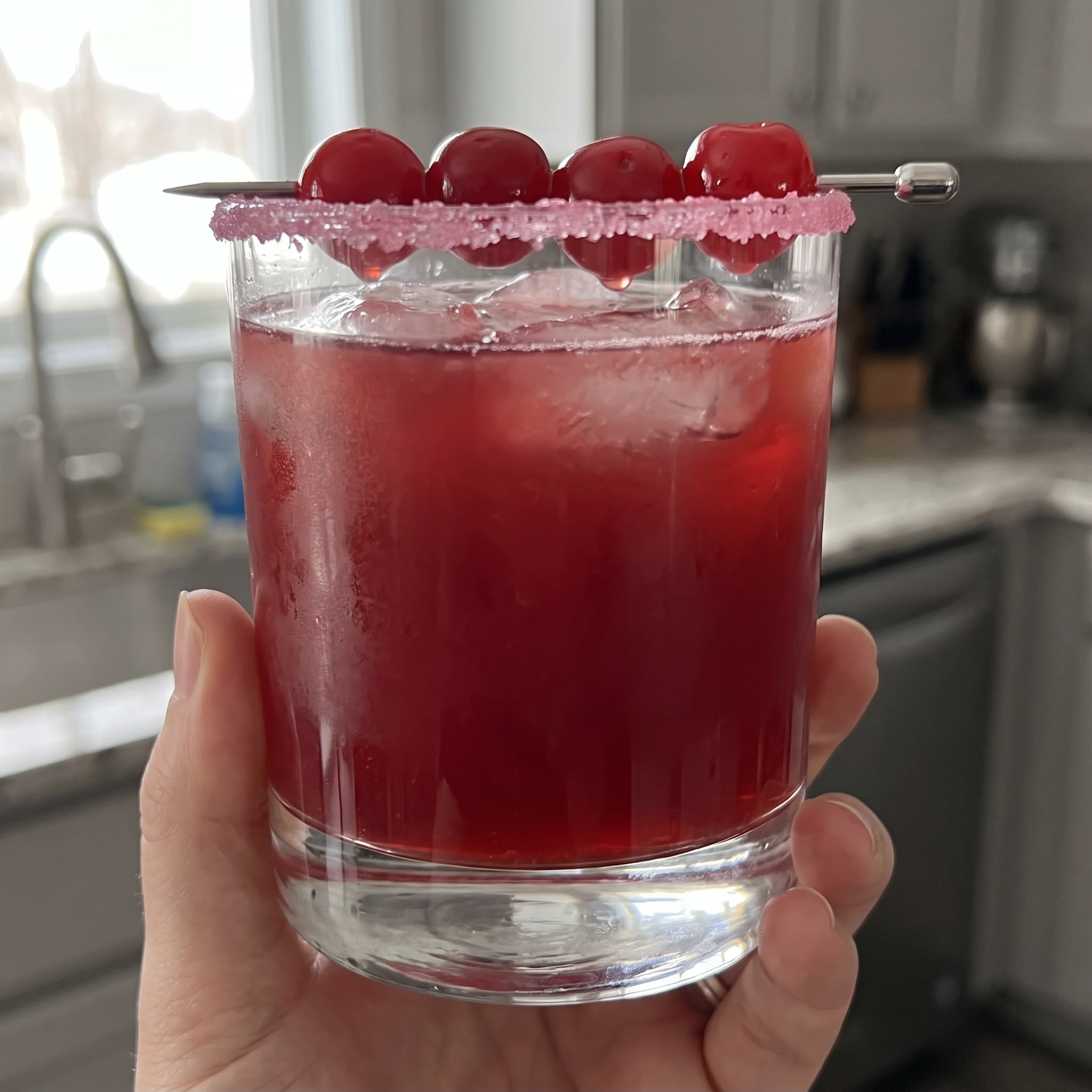
Tart Cherry Gin Cocktail with Elderflower
Ingredients
Method
- Trace a lemon slice around the serving glass’s rim.
- Coat the rim by pressing it into decorative sugar held in a shallow dish; then set the glass to one side.
- In a cocktail shaker filled halfway with ice cubes, mix the tart cherry juice, gin, simple syrup, elderflower liqueur, and fresh lemon juice.
- Shake the mixture thoroughly.
- Pour the shaken liquid through a strainer into a martini glass or a coupe glass.
- Top with maraschino cherries as a garnish.
- Serve and savor!
Drink It Now, Store Only the Mix
This cocktail has a serving window of minutes, not hours. A shaken drink is already diluted by the ice in the shaker, and the glass sits at room temperature while you sip.
Set it down for twenty minutes and the chill fades, the bubbles lift out, and the cherry and lemon turn flat and syrupy on the tongue. Shake it, strain it, garnish it, drink it. That’s the whole window.
If you want to work ahead, mix the tart cherry juice, gin, elderflower liqueur, simple syrup, and lemon juice without ice and keep it covered in the fridge. It holds for a day or two, and the flavor doesn’t shift much because there’s no ice to dilute it. Shake it with ice just before serving.
The sugar rim and the maraschino cherries go on at the moment of serving. Sugar on a glass that sits out draws moisture and turns into a sticky band, and cherries dropped in early bleed their almond sweetness into the drink. Coat the rim and garnish only when you’re ready to hand the glass over.
Don’t freeze the mixed liquid.
Tips
- Taste the tart cherry juice and the lemon juice on their own before you build the drink. Cherry juice that has sat open in the fridge picks up a dull, cooked edge, and a lemon past its prime tastes flat rather than sharp; either one drags the whole cocktail down, and no amount of syrup or elderflower brings the brightness back once it is in the shaker. A quick sip of each tells you whether you are working with what the recipe assumes.
Swap the Gin and the Drink Changes Shape, Not Just Flavor
5 fl oz measure, or white rum if you want a sweeter base. Vodka is the neutral move: it lets the cherry and elderflower run the show, but the drink loses the juniper edge that keeps the syrup from finishing cloying.
You’ll taste a rounder, softer cocktail with less grip at the back of the throat. White rum brings its own faint sweetness, so the sweet-tart line tips toward sweet; taste before you pour and add a squeeze more lemon if the finish coats your tongue.
75 fl oz, or another floral liqueur like violette or honeysuckle, measured the same way. St-Germain is the closest match and reads nearly identical, so the drink stays on course. 75 fl oz; start with a half-ounce and add a splash more to taste.
Honeysuckle runs sweeter, so expect the tartness to soften. Any heavy, candy-scented liqueur will flatten the cherry underneath, so smell before you commit.
5 fl oz. Honey brings a faint floral note that doubles up with the elderflower, and it sweetens with a heavier mouthfeel, so the drink can taste thicker.
5 fl oz may push the balance past tart into candy; pour a half-ounce less and taste. If you use a granulated sugar substitute, dissolve it in the juice first, because it won’t blend smoothly in the shaker and leaves a gritty texture against the ice.
Tart cherry juice (2 fl oz): Pomegranate juice or unsweetened cranberry juice, both at 2 fl oz. Pomegranate is tarter and more astringent, so the drink sharpens and the lemon may need pulling back a barspoon. Cranberry is leaner and more sour still, and it can make the cocktail taste thin next to the gin; add a quarter-ounce more syrup if the finish catches at the back of your throat.
Neither carries the same round cherry flavor, so the drink becomes a different cocktail, not a substitute for the same one.
Frequently Asked Questions
Can I make this tart cherry gin cocktail ahead of time?
The liquid, yes. Stir the cherry juice, gin, elderflower liqueur, syrup, and lemon together without ice, cover it, and it keeps in the fridge for a day or two, since nothing waters it down in there.
Shake it with ice when you’re ready to serve. Leave the sugar rim and the maraschino cherries for the moment you pour, because sugar on a waiting glass pulls moisture and turns into a sticky band, and cherries dropped in early bleed their almond sweetness into the drink.
Why did my cocktail turn out too sweet or too tart?
Check the rim first if it tastes too sweet, because it’s the one sweet element that isn’t in the liquid. A heavy coat of decorative sugar means every sip starts sweeter than the drink actually is, and you feel it coating your tongue at the finish.
5 fl oz of syrup pushes the balance the other way, so taste the juice from the bottle before you build. If the sourness catches at the back of your throat even with unsweetened juice, the lemon is running ahead of the syrup.
What’s the difference between this cocktail and a classic cherry gin cocktail?
75 fl oz is the real departure. A classic cherry gin drink leans on the fruit and the spirit alone, and adding a floral middle register means the cherry lands on something soft instead of hitting gin directly. The sugar rim is the other difference: classic versions often skip it, and here the coarse crystals deliver sweetness on the first sip that the liquid doesn’t carry.
Maraschino cherries on top are candied and almond-sweet, a deliberate contrast rather than the same cherry flavor twice.
How do I get the sugar rim to stick without making a mess?
Wet the rim with the lemon slice, then press the glass into sugar in a shallow dish and lift it straight out. If the sugar slides off in sheets, the rim was too wet; if it looks patchy and bare in spots, it wasn’t wet enough.
Tip the glass and tap off the loose crystals over the dish before you pour, because the ones that didn’t grab will drop into the drink otherwise. Run a fingertip around it: rough and even across the band means it’s ready.
