Moisture is what wrecks caprese skewers, and it’s the one thing guests never see coming. A tomato straight from the pint and mozzarella straight from the brine look fine on the platter and then spin loose on the bamboo the moment someone picks one up. Whole-milk balls are also softer than they look, so a hard push tears them.
The margin here is narrow but workable: caprese skewers are an assembly job, done in about the time it takes to set a table, and they hold in the fridge until the doorbell. What separates a tidy platter from a pile of tilted pieces is small, unglamorous handling, and the article walks through each check. Nothing here gets cooked, so the ingredients you bring home are the whole dish.
Dry Surface, Better Grip
A wet tomato is a slippery tomato. The same goes for mozzarella balls, which often sit in brine or water.
When you skip drying, that surface moisture acts like a lubricant between the tomato, basil, and cheese. On a smooth bamboo skewer, everything slides.
The skewer looks messy, and the components won’t stay in place. A properly dried cherry tomato has a matte finish.
No beads of water cling to its skin. Mozzarella should feel dry to the touch, not damp.
That dryness creates friction. The basil leaf, the tomato, and the mozzarella hold together as you thread them.
Without it, they twist and turn. You want each piece to stay put once positioned.
A dry surface gives you that. The difference is visible: a skewer that holds its shape versus one that droops. Drying is the single most important step for a neat, secure skewer.
It takes only a few extra minutes and saves you from a platter of sliding components.
Tomato, Basil, Mozzarella Order
Why tomato first and mozzarella last? It’s about stability. The tomato, being slightly firmer, anchors one end.
The mozzarella, softer, sits at the other. This arrangement gives the skewer a balanced base. If you reversed it, the soft cheese might compress under the tomato’s weight.
Basil in the middle acts as a friction layer. Its leaf texture grips both the tomato and the mozzarella, reducing slippage.
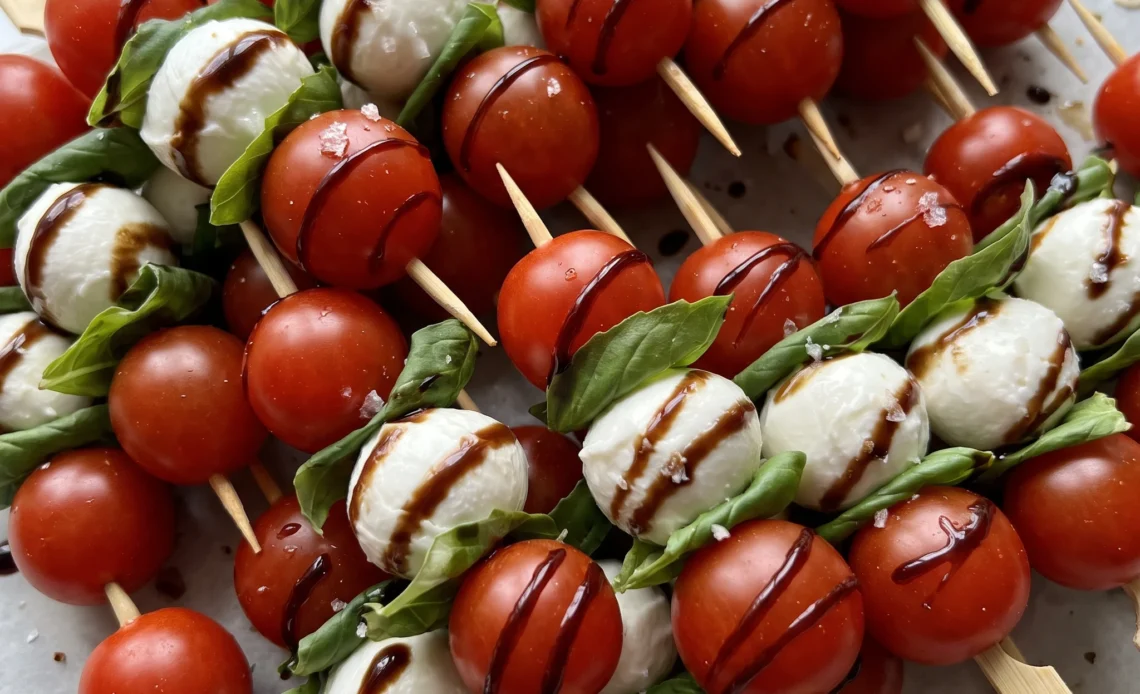
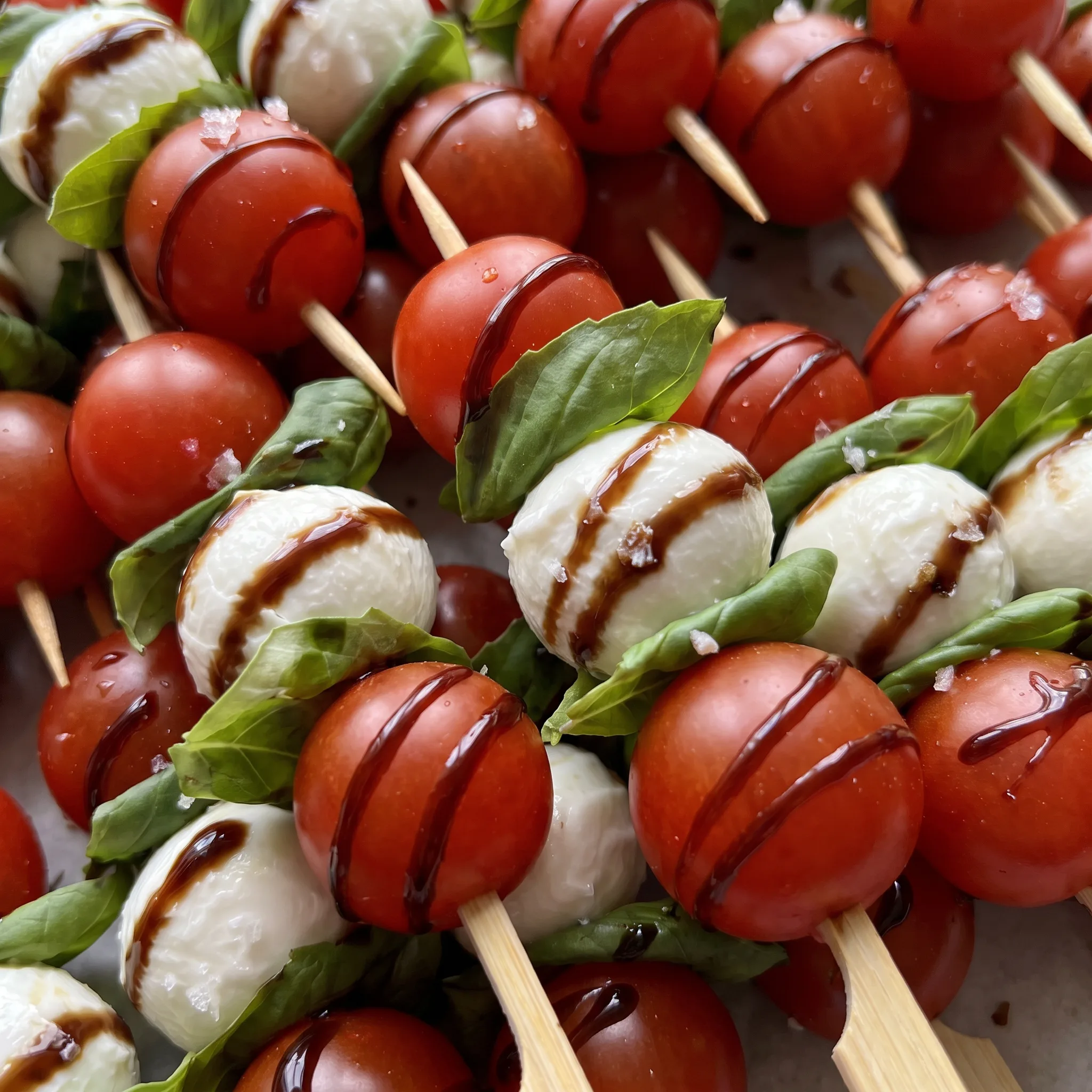
Visually, the red tomato, green basil, and white mozzarella create the classic Caprese color contrast. That order also mirrors the traditional salad, so each bite delivers the expected combination. When you look at the skewer, the tomato’s bright red at one end draws the eye, and the mozzarella’s white at the other provides a clean finish.
The basil’s green in between ties it together. This isn’t just aesthetics; it’s a practical choice that keeps the skewer intact from platter to plate.
Spoon for Controlled Glaze
Balsamic glaze is thick and sticky. A squeeze bottle can dispense too much at once, leaving blobs that overpower the delicate flavors of tomato and mozzarella. A small spoon gives you control.
You can drizzle lightly, letting the glaze fall in thin streaks rather than heavy dollops. That light drizzle preserves the visual appeal of the skewers.
The red, white, and green remain visible beneath a glossy sheen. Over-glazing makes the skewers sticky and soggy. The glaze can pool on the platter, and the skewers become messy to handle.
With a spoon, you can stop before that happens. You want just enough glaze to taste, not to dominate. Each skewer should have a hint of sweetness and acidity, not a mouthful of syrup.
A spoon also lets you avoid the basil leaves, which can wilt under too much glaze. The result is a neat, appetizing presentation.
Flaky Salt Finishing Touch
Flaky sea salt is not just for show. Its larger crystals provide a crunch that contrasts with the soft mozzarella and juicy tomato.
Fine salt dissolves too quickly, disappearing into the glaze and cheese. Flaky salt stays visible, adding a subtle sparkle.
A tiny pinch enhances the sweetness of the tomato without making the skewer salty. It also balances the balsamic glaze’s acidity.
The glaze brings tang; the salt rounds it out. Without that pinch, the skewers can taste flat.
But be careful: too much salt and you lose the delicate balance. A light sprinkle is enough. You want each bite to have a fleeting salty note, not a punch.
The salt also adds a textural surprise, a little crunch among the softness. That contrast makes the skewers more interesting to eat.
It’s a small addition that makes a noticeable difference.
What to buy and how it should feel before you thread
Fresh mozzarella balls: Buy the small balls packed in brine, then drain and pat them dry, since damp cheese slides on the skewer.
Cherry tomatoes: Choose firm, ripe tomatoes with tight skins, as soft ones collapse when you push them onto the bamboo.
Fresh basil leaves: Pick leaves that are flat and unbruised, because torn or wilted leaves darken under the glaze and bunch up.
Balsamic glaze: Use a thick, pourable glaze rather than thin vinegar, since a runny one drips off the skewers and pools on the platter.
Bamboo skewers: Check that the 6-inch skewers are straight and splinter-free, as rough ones snag the basil and tear the mozzarella.
What to look at, feel for, and taste before these go out
Whether the tomato and mozzarella are dry enough to grip
Pat both dry and then touch them. A tomato that still feels cool and damp, or mozzarella with a slick sheen, will spin on the skewer as you push the next piece on.
The test is simple: press a tomato against the bamboo and twist gently. If it holds, the surface is dry enough.
If it slides, pat again with a fresh towel. Skipping this shows up later as a platter of loose, tilted skewers.
How the basil leaf sits between the tomato and the cheese
A basil leaf that’s too large bunches up and pushes the tomato and mozzarella apart, leaving a gap. Too small and it vanishes.
You want the leaf to lie flat against the tomato, with the mozzarella pressed just enough to hold it. If the leaf buckles or tears as you slide the cheese on, the skewer will feel loose.
Adjust by folding larger leaves in half or tearing them to size before threading.
Judging the glaze drizzle by eye, not by count
A light drizzle means thin streaks that leave most of the red, white, and green visible. If the glaze pools on the platter or drips down the skewer, you’ve gone too far.
Stop when each skewer has a glossy thread, not a coat. Over-glazed skewers turn sticky and the basil darkens where the glaze sits. You can’t undo a heavy hand, so drizzle less than you think and add another pass only if the skewers look bare.
The pinch of salt that reads as a sparkle, not a crunch
Flaky salt should land as separate crystals, not a dusting. Pick up a few flakes to the touch and let them fall; if you can see individual white specks on the tomato and cheese, that’s right. A heavier pinch and the salt dominates, especially since the glaze is already tangy.
Taste one skewer before salting the rest. If the salt disappears into the glaze, you’ve used too little; if it crunches sharply, too much.
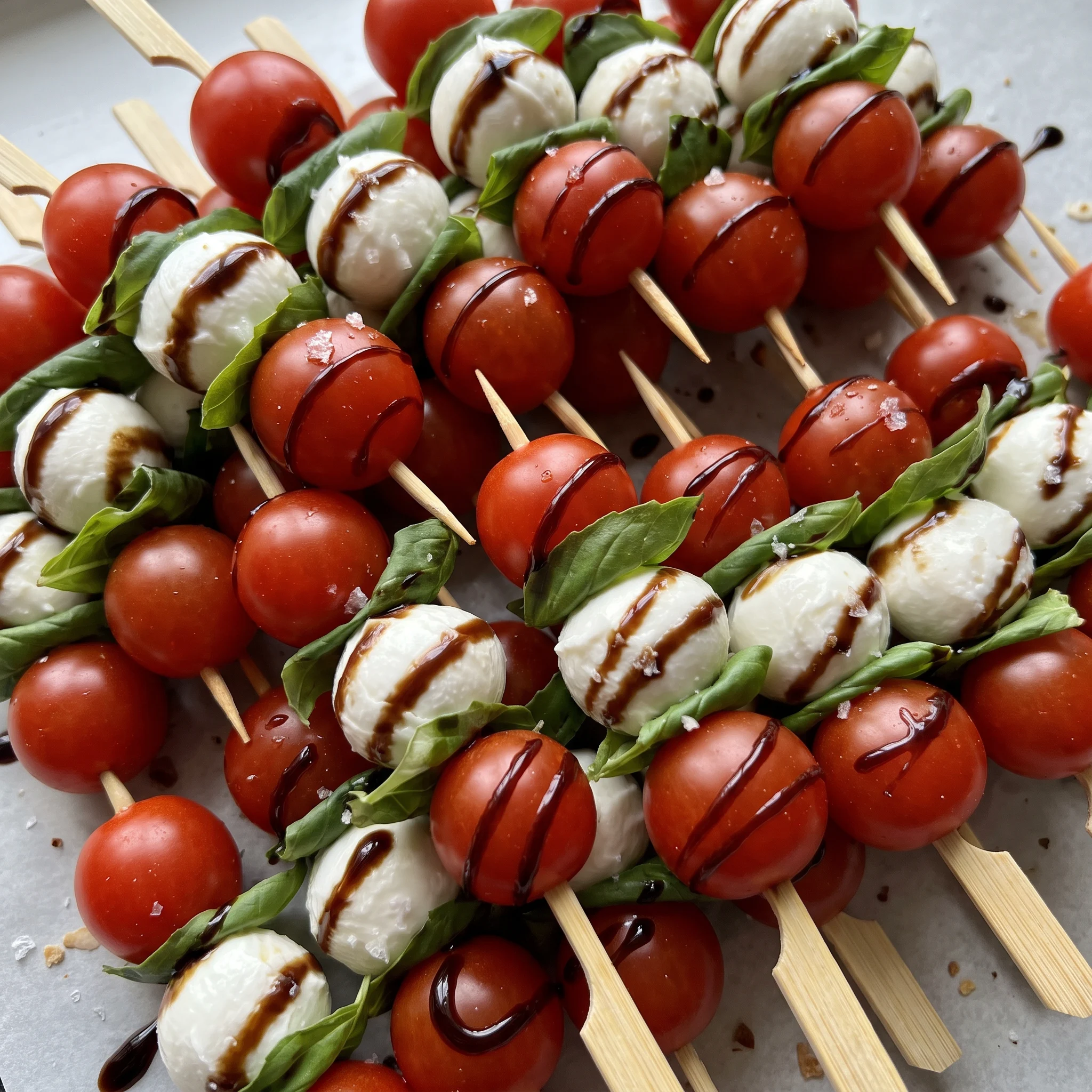
Caprese Skewers with Mozzarella, Tomatoes and Basil
Ingredients
Method
- Dry off the cherry tomatoes along with the mozzarella balls by patting them, which keeps the skewers from sliding.
- On every bamboo skewer, place a tomato, a basil leaf, and a mozzarella ball.
- For a catered appearance, lay the skewers out in orderly rows across a large serving platter.
- Using a small spoon, apply the balsamic glaze in a light drizzle.
- Top with a tiny pinch of flaky sea salt, then refrigerate until it is time to serve.
Holding Them in the Fridge and When to Eat Them
Once dressed, the skewers belong in the fridge, and the clock starts there. The balsamic glaze and the salt both pull water out of the tomato and the mozzarella, and that liquid collects on the platter and softens the basil. So the best texture is within an hour or two of assembling: the basil is still stiff, the cheese still firm against the tomato.
Assemble 2 hours ahead at most if you can, and pull the platter out just before serving. Past that, the basil darkens and slumps, and the glaze thins into a puddle.
Leftovers keep covered in the fridge overnight, but expect a limp leaf and a softer cheese by morning; drain the platter before you set them out again, and let them sit 10 minutes so the chill comes off the mozzarella. Add the flaky salt last, right before the platter goes out, so the crystals stay crisp instead of dissolving into the glaze.
Tips
- Pick cherry tomatoes by weight and skin, not color alone: a 24-tomato batch where a few are soft will collapse at the skewer hole and split before the cheese goes on. Hold each one and roll it; if the skin gives under light pressure, set it aside for salad. Firm, tight-skinned tomatoes thread cleanly and hold the basil flat against them.
- Drain the mozzarella balls in a colander for a few minutes before you pat them, and check the container’s liquid level first. Balls sold in a shallow puddle of brine are usually fresher than ones floating in cloudy water, which means the cheese has been sitting and softening. A ball that dents when you press it will tear as the bamboo pushes through, so use the firmest 24 for the platter and save the soft ones for something you’ll eat with a fork.
Where a Swap Costs You Grip, Not Just Looks
Fresh mozzarella balls (bocconcini): Ciliegine, the smaller cherry-sized balls, work if you use two per skewer. Marinated mozzarella is the other route, but drain it well and skip the salt pinch. Ciliegine slide on easier and a single one leaves a gap between tomato and basil, so pair them up.
Marinated balls carry oil and herbs that fight the glaze and make the surface slick, which is exactly what drying was meant to fix, so pat them hard and taste one before you salt the platter. Anything larger than a bocconcino won’t thread without tearing.
Balsamic glaze: Reduced balsamic you cooked down yourself works, and a few drops of good aged balsamic straight from the bottle can stand in if it’s syrupy enough to cling to a spoon. Homemade reduction is often thinner than the bottled glaze, so it runs down the skewer and puddles rather than sitting in a thread.
Reduce it further until it coats the back of a spoon and cools thick. Thin vinegar, the kind sold as balsamic for salads, drips straight off and leaves wet spots on the bamboo.
Test a drop on a cold plate before you drizzle the whole platter.
Fresh basil leaves: A chiffonade of basil scattered over the finished skewers, or a small dot of pesto pressed against the mozzarella, both deliver the same flavor when leaves are limp or out of season. Chiffonade won’t grip between tomato and cheese, so the friction layer that holds the stack together is gone and the pieces feel looser on the stick. You trade a tidier build for fresher-looking green.
Pesto brings oil and garlic that the plain leaf doesn’t, so use a small dot and expect a richer, saltier bite. Dried basil is the one to leave alone: it lands as dark flakes with a dusty, hay-like taste and no aroma.
Flaky sea salt: Coarse kosher salt is the closest stand-in. Fine table salt is not. Kosher crystals are big enough to stay visible and give that brief crunch, though they’re denser than flakes, so use a lighter pinch than the recipe’s quarter teaspoon and taste one skewer first.
Fine salt dissolves into the glaze and the tomato’s juice before anyone bites, so you lose the sparkle and the balance against the tang, and it’s easy to oversalt without noticing.
Fresh mozzarella and cherry tomatoes both carry surface water that acts as a lubricant on smooth bamboo. Without drying, the tomato, basil, and mozzarella cannot grip each other, so the skewer slides apart and the presentation collapses. Patting the ingredients dry removes that water film, restoring enough friction for the stack to hold.

Frequently Asked Questions
Can I make these Caprese skewers ahead of time?
Yes, though the window is short: assemble 2 hours ahead at most, then refrigerate the platter until serving. Within that stretch the basil stays stiff and the mozzarella still feels firm against the tomato, which is what you want people to bite into. Push it longer and the salt and glaze draw liquid out of the tomato and cheese, the basil darkens and slumps, and the platter collects a puddle.
If you’re building the skewers well before the event, hold the salt and glaze back and add both just before the platter goes out.
Why are my Caprese skewers sliding apart?
Surface moisture is almost always the culprit, so touch the tomato and mozzarella first: a slick sheen or a cool damp feel means they’ll spin as you push the next piece on. Pat both dry with a fresh towel, then press a tomato against the bamboo and twist; if it holds, you’re ready to thread.
The second check is the basil leaf. One that’s oversized bunches up and holds the tomato and mozzarella apart with a visible gap, so fold big leaves in half or tear them to fit.
Firm cherry tomatoes matter too, since a soft one collapses under the push of the skewer.
How long can Caprese skewers sit out before serving?
Keep them refrigerated until you’re ready, then let them sit 10 minutes so the chill comes off the mozzarella before the platter goes out. Past that, the clock is on the tomato and cheese, and the glaze and salt keep pulling water out of both; the platter starts to collect liquid and the basil softens. If the platter has been out a while, look for that pool and a drooping leaf, and drain it before anyone takes a skewer.
Leftovers go back in the fridge covered, though by morning you’ll have a limp leaf and softer cheese.
What’s the difference between Caprese skewers and a classic Caprese salad?
A salad gets sliced and layered on a plate, so the tomato, basil, and mozzarella sit against each other over a wide surface and the salt and glaze spread across the whole thing. Skewers thread the same three components onto a 6-inch bamboo stick in a set order, which means each bite is built the same way and the pieces have to grip the skewer instead of resting on a plate.
That’s why dryness matters more here: on a plate, a damp tomato just sits there, but on a skewer it slides. The skewers also let you lay them in orderly rows on a platter, which a salad can’t do.
Do I need to refrigerate Caprese skewers before serving?
Yes, and the recipe says so: refrigerate until it’s time to serve. The cheese and tomato are perishable, and a cool platter also keeps the basil from wilting before guests arrive.
Pull it out about 10 minutes ahead so the chill comes off the mozzarella, and add the flaky salt right before it goes out so the crystals stay crisp instead of dissolving into the glaze. If you’re assembling well ahead, remember the 2-hour ceiling before the basil darkens and the platter starts to puddle.
