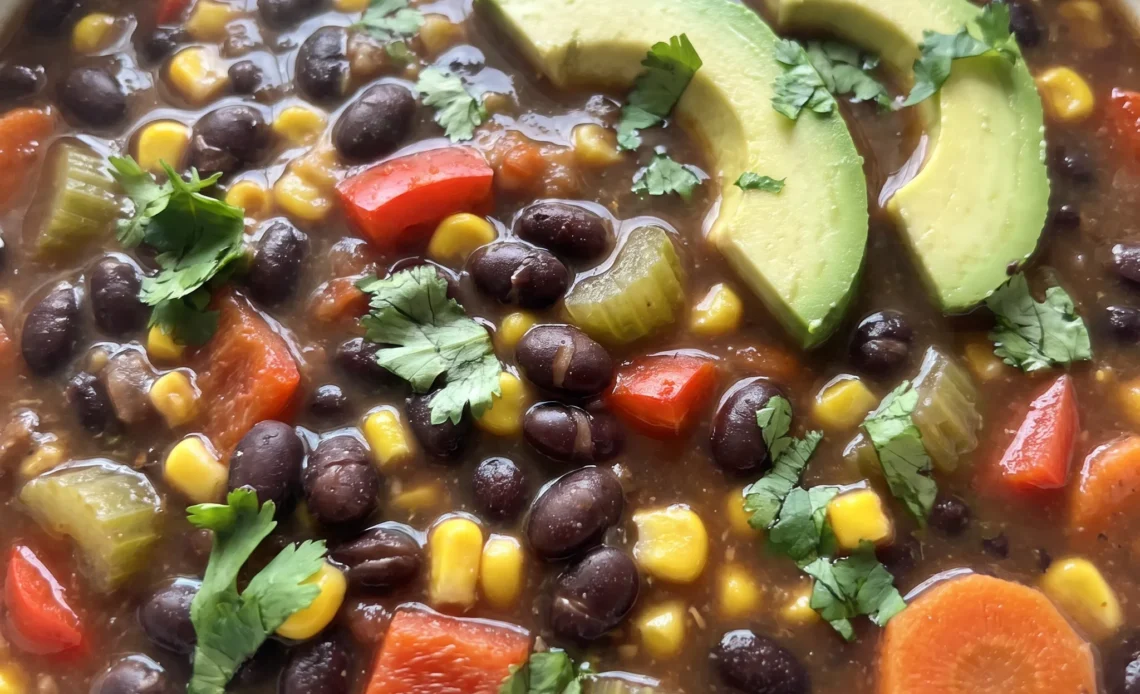
Black bean soup turns creamy for free, no cream and no long simmer, because the beans themselves do the work. That’s the quiet argument behind this daniel fast black bean soup, a vegan pot that serves six and lands in under an hour.
But the timetable isn’t the hard part. The tricky moment is the puree, and how far you take it. Blend too little and you’re eating beans in broth; blend the whole pot and you sand off every bit of texture until it feels like a smoothie.
The middle ground is narrow but forgiving, and it’s where this soup earns its keep. Add the acid at the end and you’ll see the difference instantly. Skip it and the cumin sits there, dull, no matter how much salt you throw at the pot.
That’s the whole trick, really.
Partial Puree Makes a Better Bowl
When you puree only about 4 cups of the soup, the rest stays chunky with whole beans and vegetables. That gives you body and creaminess from the blended portion while keeping texture in every spoonful.
If you blended the whole pot, you’d get a uniform smoothness that can feel like baby food. Plus, moving just a portion to the blender avoids overloading it with hot liquid, which can be dangerous.
I’ve found that this partial blend hits the sweet spot between a brothy soup and a thick puree. You get the best of both worlds: a rich, satisfying base with pieces to chew. So next time you make a bean soup, consider blending just part of it.
Your spoon will thank you.
Build Flavor Early with Aromatics
Cooking the onions, celery, and carrot first until they soften creates a sweet, savory foundation for the soup. Once they’re soft, you add the garlic, cumin, and red pepper flakes and cook briefly until aromatic. This sequence blooms the spices in the oil, intensifying their flavor before the beans and broth go in.
It also keeps the garlic and spices from burning or tasting raw. If you added everything at once, the spices might scorch or stay flat.
By layering, you build depth that carries through the whole pot. So take that extra few minutes to soften the vegetables, then let the spices sizzle for just a moment. The difference in the final soup is noticeable, with a rounder, more integrated taste.
A Splash of Acid Wakes It Up
After you puree the soup and return it to the pot, you stir in sherry vinegar or lime juice. That acidic element cuts through the richness of the beans and brightens the overall flavor.
It also helps round out the earthy cumin and mild heat from the red pepper flakes. Without it, the soup can taste flat despite proper seasoning. I always keep a bottle of sherry vinegar on hand for exactly this reason.
A little goes a long way, so add it to taste. You’ll notice the soup suddenly tastes more lively and complete.
So don’t skip this step; it’s the final touch that makes the flavors sing.
Make Ahead for Deeper Flavor
If you make this soup ahead, you’ll notice it thickens as it sits because the pureed beans continue to absorb liquid. The flavors also meld and deepen overnight, often making it taste even better the next day. When reheating, you might need to add a splash of broth or water to reach the consistency you want.
The optional garnishes like avocado and cilantro are best added fresh after reheating. I’ve found that soups like this benefit from a night in the fridge.
So consider making a double batch and enjoying the leftovers. The soup only improves with time, and you’ll have a quick meal ready when you need it.
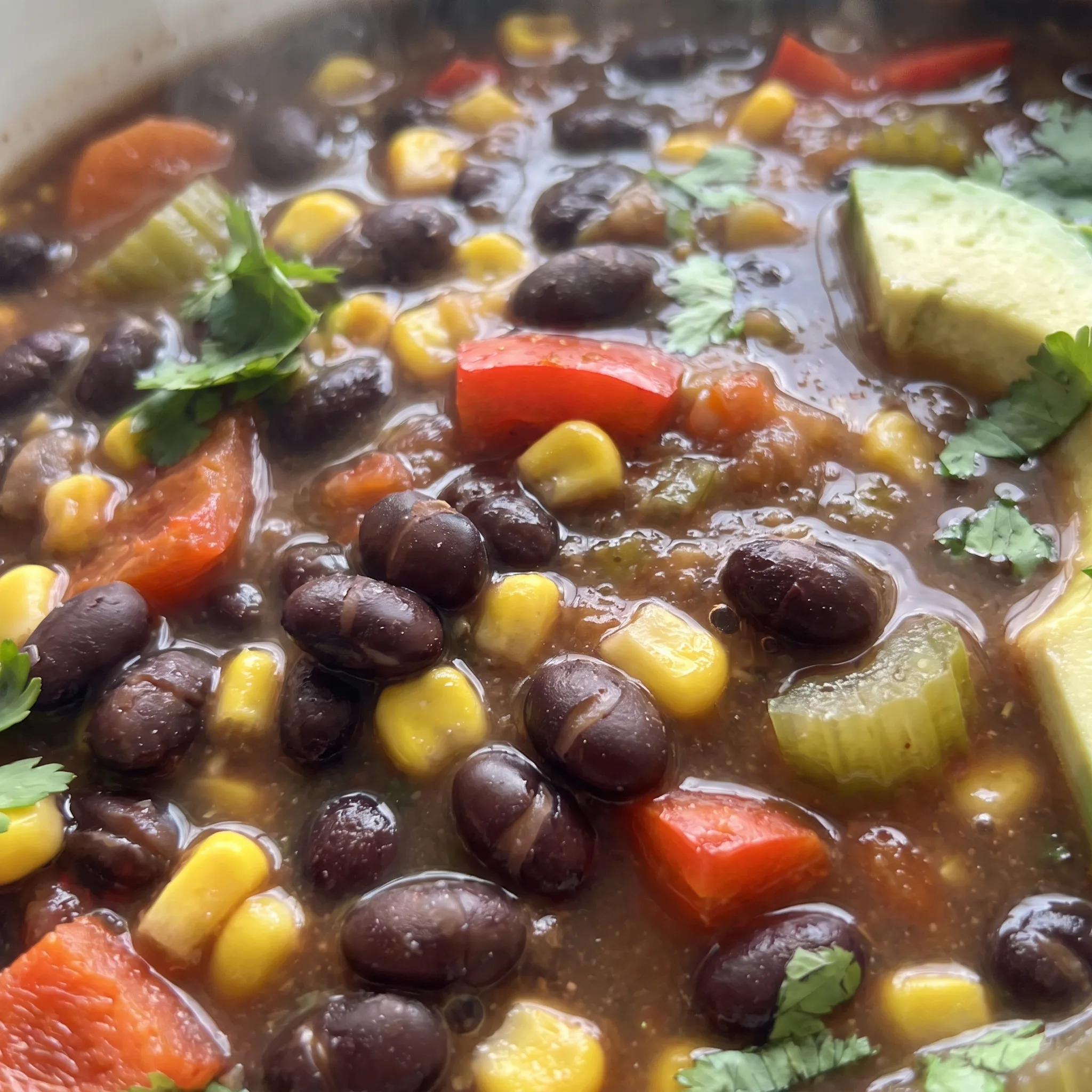
The Ingredients That Shape This Soup
Extra-virgin olive oil: Use a fresh bottle; if it smells dull or tastes flat, the aromatics won’t bloom properly.
Ground cumin: Buy whole seeds and grind them yourself, or replace if your jar is older than six months.
Red pepper flakes: Start with ¼ teaspoon if you’re unsure about heat, since the full amount can overwhelm.
Canned black beans: Rinse and drain them well; the canning liquid is salty and starchy and will cloud the broth.
Sherry vinegar: A young, bright vinegar works best; aged versions can taste too sweet and dominate the soup.
The most common mistake is pureeing the whole pot, which turns the soup into a uniform, baby-food-like puree and destroys the textural contrast that makes it satisfying. When all the beans are blended, their starches fully hydrate and the soup can become overly thick or, conversely, seem thin because there are no distinct pieces to give it substance. The recipe avoids this by blending only about 4 cups, leaving the rest chunky, so you get creaminess from the pureed portion and bite from the whole beans and vegetables.
Judging the soup as it cooks: the moments that decide texture and flavor
When the vegetables are soft enough to move on
They should give no resistance when pressed with a spoon and look glossy, not browned. If they start to color, the heat is too high and the soup will taste roasted rather than sweet. Ten to fifteen minutes is a guide; your ears and eyes matter more.
Pull them off when they slump, and lower the heat if they hiss.
The thirty-second window for the spices
Garlic and cumin go from fragrant to bitter fast. You want a smell that hits the back of your nose, not a darkening in the pan.
If the garlic starts to brown at the edges, pull the pot off the heat and add the broth immediately to stop the cooking. Thirty seconds is the upper limit; ten is often enough.
Knowing when the beans are tender enough to puree
After thirty minutes of simmering, a bean should crush easily against the side of the pot with a spoon. If it still has a chalky center, keep going.
The broth should taste like more than salted water, with the cumin and pepper rounded out. If it tastes thin, simmer uncovered for another five minutes before blending.
How much to blend for the right body
Four cups of soup out of the pot is about a third. That’s the amount that gives you creaminess without losing all the chunks. If you blend more, you’ll get a smoother, thicker soup that can taste flat; if you blend less, it stays brothy.
Judge by the ladle: you want a mix of puree and whole beans in each spoonful.
Tasting for acid and salt at the end
After the puree goes back in, the soup can taste dull even if it’s salty enough. That’s when the vinegar or lime juice comes in.
Add a teaspoon, stir, and taste. The difference is immediate: the cumin sharpens and the beans taste less heavy. If it still tastes flat, add a pinch more salt, then more acid.
Stop when it makes you want another spoonful.
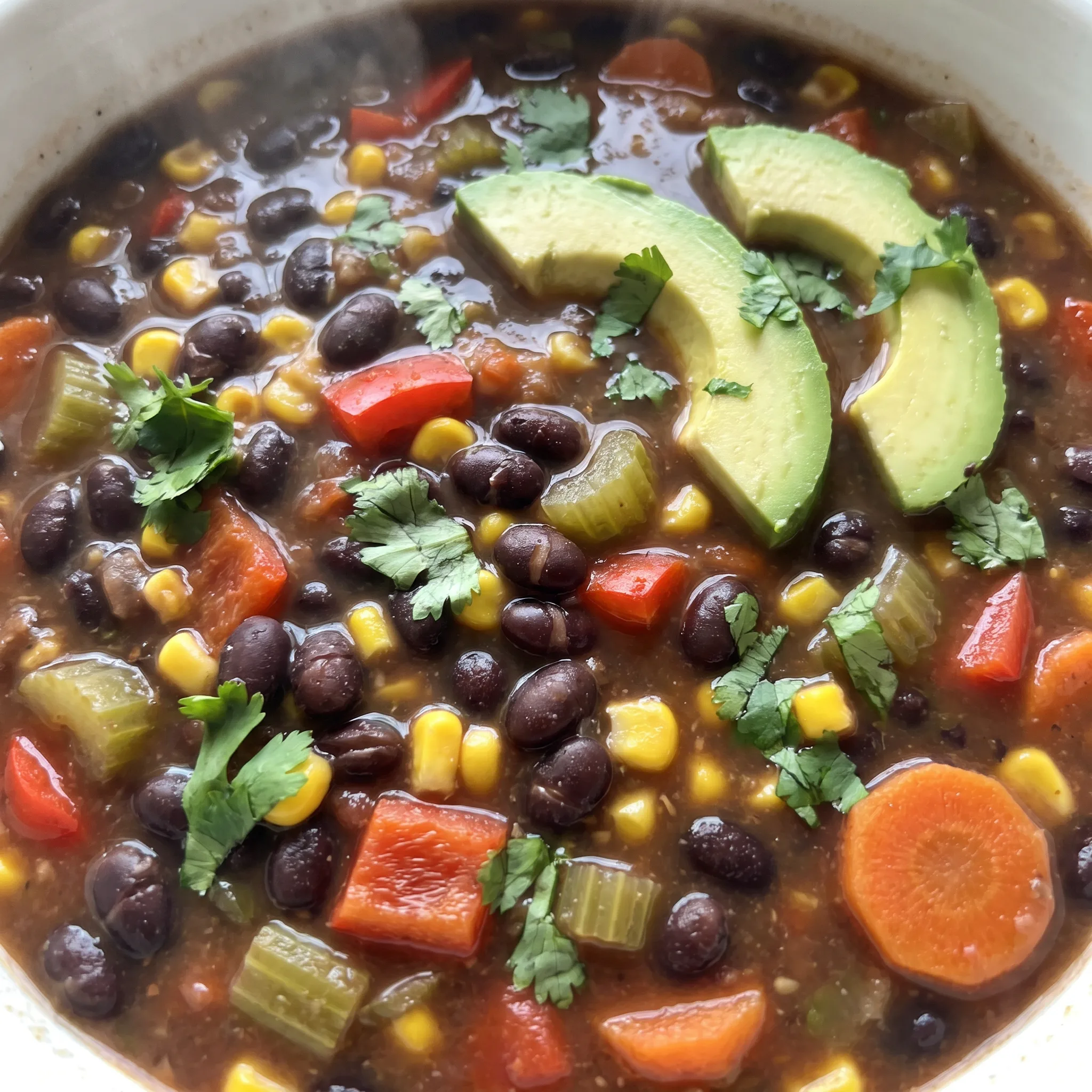
Daniel Fast Black Bean Soup with Cilantro
Ingredients
Method
- In a large Dutch oven or soup pot, warm the olive oil over medium heat until it shimmers. Add the onions, celery, and carrot along with a light sprinkle of salt. Cook, stirring from time to time, until the vegetables become soft, about 10 to 15 minutes.
- Mix in the garlic, cumin, and red pepper flakes; cook until aromatic, about 30 seconds. Add the beans and broth, then bring to a simmer over medium-high heat. Continue cooking, lowering the heat as needed to keep a gentle simmer, until the broth develops flavor and the beans are very tender, about 30 minutes.
- Move about 4 cups of the soup to a stand blender, lock the lid firmly, and blend until smooth (never exceed the maximum fill line, and be careful of the hot steam that escapes from the top). Alternatively, use an immersion blender to puree a portion of the soup.
- Pour the pureed soup back into the pot, stir in the cilantro, vinegar or lime juice, and salt and pepper to taste. Serve.
Storage, Reheating, and Serving the Soup
The partial puree means this soup sets up thick in the fridge. Store leftovers in an airtight container for up to 4 days.
As it chills, the pureed beans absorb liquid, so the texture becomes dense, almost like a bean dip. When reheating, add a splash of vegetable broth or water to loosen it back to a spoonable consistency.
Reheat gently on the stovetop or in the microwave, stirring occasionally. The soup freezes well for up to 3 months; thaw overnight in the fridge before reheating.
For the best texture, eat within 2 days, though it remains safe longer. The finishing touch, the sherry vinegar or lime juice, is already stirred in at the end of cooking. If you’re reheating a portion, taste it first; you might want another few drops of acid to brighten it.
Serve with avocado, radishes, and tortilla chips only at the table, as they lose their appeal if stored with the soup.
Tips
- Rinse the beans in a colander under cold running water for a full 30 seconds, until the water runs clear and the beans stop feeling slick. That slickness is the canning liquid’s starch, and it stays in the pot if you only give them a quick pass. Cloudy starch in the broth coats your tongue and mutes the cumin, so the soup tastes washed out even after you correct the salt.
- Drain the beans hard: shake the colander, then leave them sitting a minute so the last of the liquid drips off. A few tablespoons of canning liquid carried into the pot adds salt you did not account for, and since this recipe has you season at the end, that extra sodium makes you undersalt the cumin and pepper. Getting the beans dry means the 4 cups of broth is the only liquid you are seasoning against.
What Swaps Hold in Black Bean Soup, and Which One Sinks It
4 cans (15 oz each) black beans: Cook 4½ cups of dried black beans from scratch and use those instead. Soak overnight, simmer until a bean crushes against the pot with a spoon, then drain and measure. Home-cooked beans come out firmer and less salty than canned, so the broth tastes cleaner and the finished soup has more bite.
You may need a little extra salt at the end, and if your beans are on the firm side, give the pot another five minutes before you blend.
Low-sodium vegetable broth: Regular vegetable broth or a broth cube dissolved in water. This is the one to think twice about.
The beans and any canned goods already carry salt, and full-sodium broth pushes the whole pot past the point where the cumin and pepper can be tasted. If that’s all you have, use it but hold the salt until the very end, and taste before you add a pinch.
Sherry vinegar: Fresh lime juice, or red wine vinegar in a pinch. Lime reads brighter and more citrus-forward, which suits the cumin and the avocado garnish.
Red wine vinegar is sharper and more aggressive, so start with half of what you’d use of sherry and taste. Either way, add it after the puree goes back in, or the acid cooks off and you lose the lift.
Extra-virgin olive oil: Any neutral oil for softening the vegetables, and skip the olive oil entirely if you’re avoiding added fat. The aromatics still soften in a neutral oil, but you lose the faint peppery note that olive oil carries into the base. Cooking the vegetables in water or broth works too, though they’ll brown faster and taste flatter, so keep the heat low and stir more often.

Frequently Asked Questions
Can I make this black bean soup ahead of time?
Yes, and the pot often tastes better on day two. The pureed beans keep absorbing liquid as it sits, so the texture tightens up; loosen it with a splash of broth or water when you reheat.
Hold the avocado, radishes, and chips until serving, since they don’t survive storage. Refrigerate up to 4 days or freeze up to 3 months, and eat within 2 days if you want the best texture.
Why is my black bean soup not thick enough?
Most likely you skimped on the puree step. Four cups of soup blended smooth is what gives this pot its body, and if you pureed less than that, you’re left with mostly broth and whole beans.
Check the bean texture too: if they still have a chalky center, they haven’t broken down enough to thicken anything, so keep simmering until one crushes easily against the side of the pot. If it’s still thin after that, simmer uncovered a few minutes to drive off liquid before you blend.
And watch the broth: extra liquid beyond the 4 cups will thin it every time.
How is Daniel Fast black bean soup different from regular black bean soup?
Nothing in this pot comes from an animal, so it fits a Daniel Fast as written: olive oil, vegetables, canned beans, vegetable broth, and acid. That’s the whole difference.
Where many black bean soups lean on bacon, ham hock, or chicken stock for their backbone, this one builds its depth from cumin bloomed in oil and a partial puree instead of fat and smoke. Skip the optional garnishes only if your fast calls for it; otherwise avocado, cilantro, and radishes are all plant-based.
