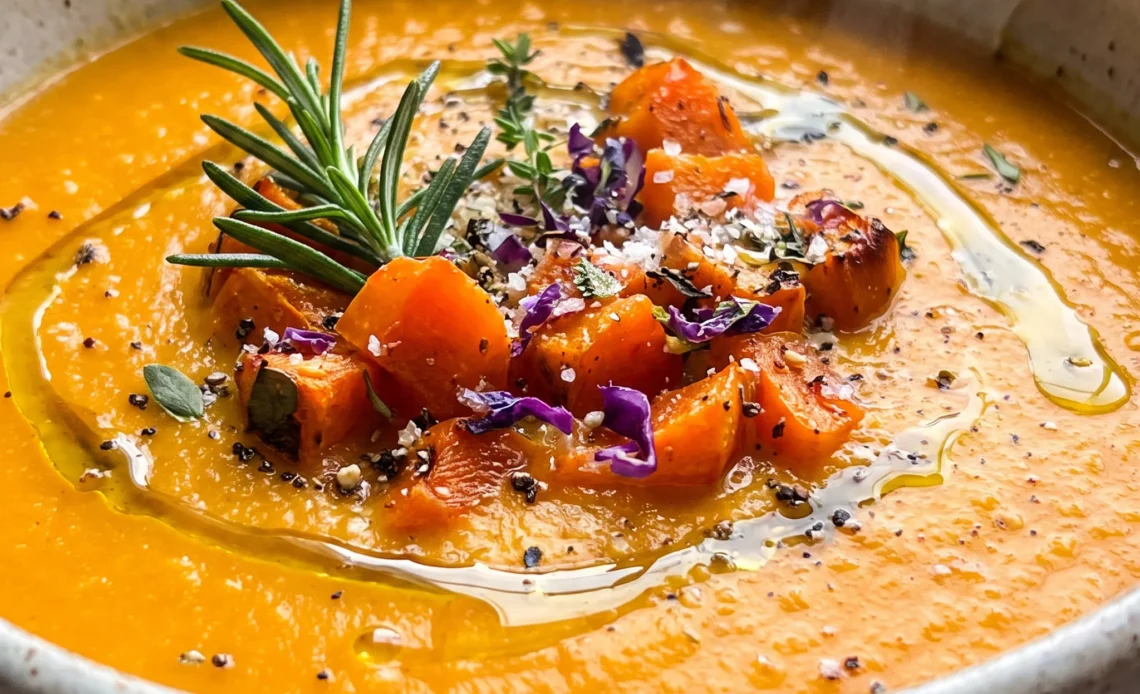
Why does a tray of roasted vegetables make a better bowl of roasted vegetable soup than a pot of boiling water ever will? Because the oven takes moisture out and leaves sweetness and browned edges behind, and a blender turns that concentrated flavor into something silky.
The trick that trips people up is knowing when the vegetables have gone far enough: pull them pale and the soup tastes thin, let them scorch and you taste nothing but bitterness. There’s a narrow band in between where onions turn sticky, peppers blister, and the whole tray smells like it’s worth eating on its own.
Unpeeled garlic goes in with everything else, and what comes out is soft and mellow rather than sharp. Get that right and the rest is mostly tasting as you go.
Roast for Flavor
Sweet potatoes, carrots, peppers, tomatoes, and onions come out of the oven with browned edges, sticky surfaces, and a smell that’s deep and sweet. Boiling those same vegetables in water gives you something flat by comparison, because water pulls flavor out instead of concentrating it. High heat drives off moisture and turns the natural sugars in the vegetables into that caramelized coating.
You can see it: the onions turn golden, the carrots shrink and darken, the peppers blister. Each one tastes more like itself, only sweeter and richer. That browning is what makes the soup taste roasted rather than simply cooked.
Skip this step and you’re left with a soup that tastes like vegetable tea, thin and pale. There’s no fixing that later in the pot. The whole character of the bowl comes from this first pass in the oven.
Unpeeled Garlic Turns Sweet
Whole garlic cloves still in their papery skins go into the oven along with everything else. The skin acts like a little jacket, keeping the outside from scorching before the inside softens. What comes out is a clove you can squeeze like soft butter, pale gold and sticky.
Raw garlic bites back and leaves a sharp burn at the back of your throat. Roasted garlic doesn’t do that. It tastes nutty, almost like a mild onion jam, with a roundness that spreads across your tongue instead of stabbing it.
When you blend it into the soup, that sweetness works underneath everything else. It doesn’t shout garlic. It just fills in the bottom notes and makes the other vegetables taste fuller.
If you’ve only ever had garlic raw or quickly sautéed, the difference in this soup is noticeable, and you’ll taste it in the finish.
Blend Smooth, Then Add Cream
Roasted vegetables go into the blender with the stock, and you run it until no flecks of skin or seed remain. Stop too soon and you get a soup with texture, which is fine if that’s what you want, but this recipe aims for silky and even. The 800ml of stock is enough to let the blades move freely while keeping the puree thick enough to coat a spoon.
More stock and you’d be drinking vegetable broth; less and it would be a puree. After blending, the cream goes in.
Heat can dull the fresh dairy taste of cream, so adding it at the end preserves that light, clean richness. Stir it through, taste, and adjust salt. The soup should pour slowly from a ladle, glossy and smooth, with a sweetness from the vegetables and a soft dairy finish that rounds off the edges.
Sweet, Earthy, and Smoky
Sweet potatoes and carrots carry the natural sugars that make this soup taste almost dessert-like in the background, though the savory elements pull it back. They also give body once blended, thickening the pot without flour or starch.
Mixed peppers and tomatoes bring acidity to cut through that sweetness, and the peppers add a faint smokiness that lingers after you swallow. Tomatoes contribute a tangy edge that keeps the bowl from feeling heavy.
Onions and garlic form the savory floor of the soup. They don’t stand out on their own but everything else rests on them.
Without that allium base, the sweetness would taste flat and one-dimensional. Together, these vegetables create a profile that’s sweet but not cloying, earthy but not muddy, with a little smoke curling around the edges.
That balance is what makes the soup taste complete.
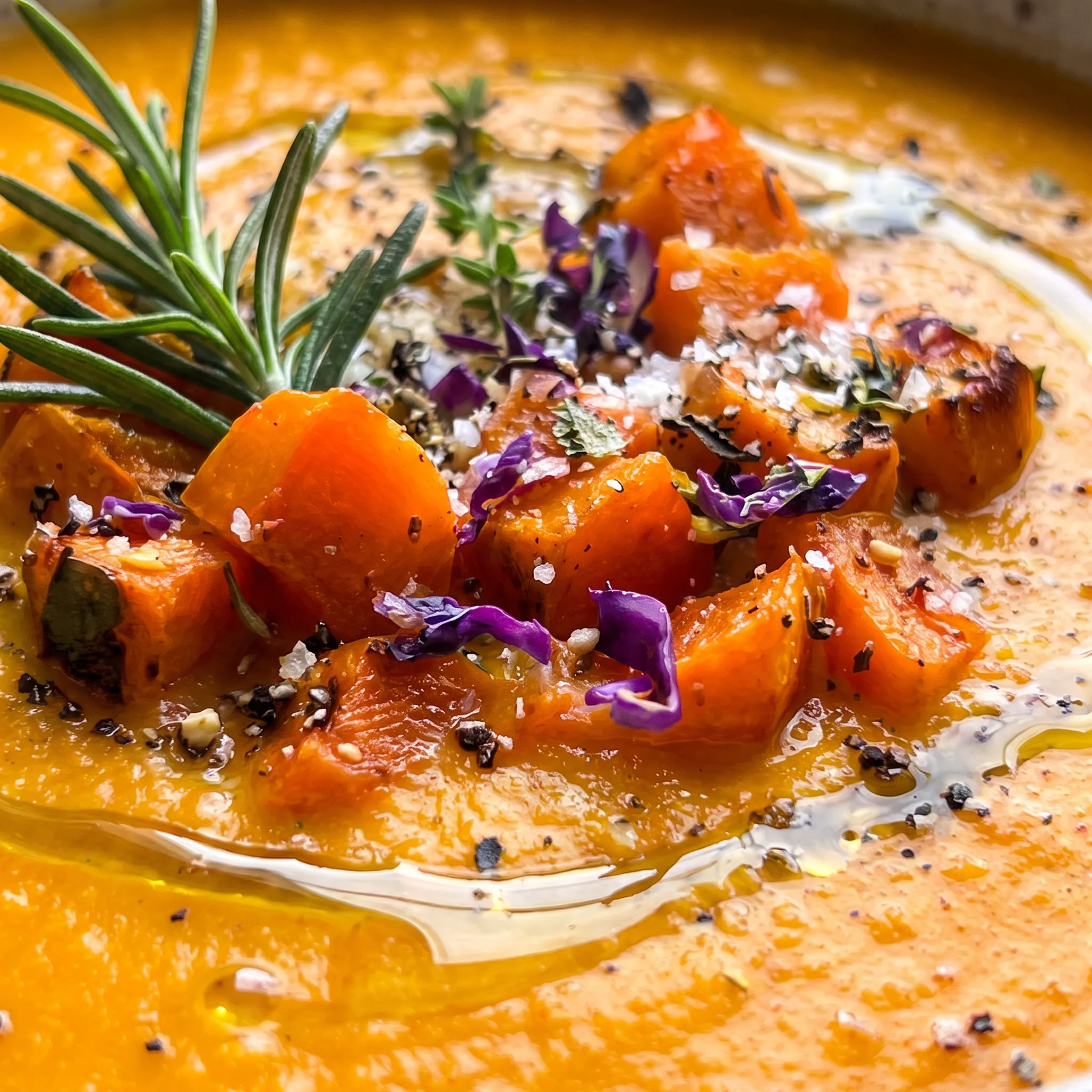
What Each Vegetable Brings to the Pot
White onions: Sliced thick, they turn jammy and sweet after 45 minutes, so don’t rush the roast.
Garlic: Leave the 5 cloves unpeeled so they steam inside their skins and squeeze out like paste.
Mixed peppers: Any color works, but red and orange ones bring more sugar and a faint smokiness.
Sweet potatoes: Cut them into chunks about the same size as the carrots so everything roasts evenly.
Salad tomatoes: These are thin-skinned and juicy, so they collapse into sauce and add tang to balance the sweet roots.
Single cream: It’s lighter than double, so it rounds the soup without turning it heavy or masking the roasted flavor.
Roasting garlic unpeeled lets the skin act as a barrier, trapping moisture so the cloves essentially steam and then caramelize rather than scorch. This changes the sharp, sulfurous bite of raw garlic into a nutty, spreadable paste, which blends seamlessly into the soup without dominating. If the garlic were peeled before roasting, its exposed surfaces would burn and turn bitter, and the soup would carry an acrid edge that no amount of cream could mask.
What to Watch for as the Vegetables Roast and Blend
Knowing when the vegetables are caramelized, not just softened
At 25 minutes the vegetables will be tender but pale. The real browning happens in the last 20 to 25 minutes, when edges darken to mahogany and onions turn sticky. If you pull them too early, the soup tastes flat and sweet without depth.
If they blacken, the soup turns bitter. Look for a mix of deep brown spots and glossy surfaces. That’s when the flavor is concentrated.
Judging how much stock to blend in for the right thickness
The recipe calls for 800ml, but the amount you actually need depends on how much water the vegetables lost in the oven. Start with 600ml and blend. If the puree is too thick to move, add more stock a splash at a time.
You want a soup that coats a spoon but still pours. Too much stock and it turns thin and watery; too little and it’s a dense puree. Adjust by feel, not by the clock.
Tasting for salt before and after the cream goes in
Salt behaves differently once dairy is added. Cream mutes saltiness, so a soup that tastes seasoned before the cream will taste flat after. Add the cream, stir, then taste again.
If it needs more salt, add it now. If you salted heavily before, you can’t take it back.
The final soup should taste savory and full, not salty. That’s your cue to stop.
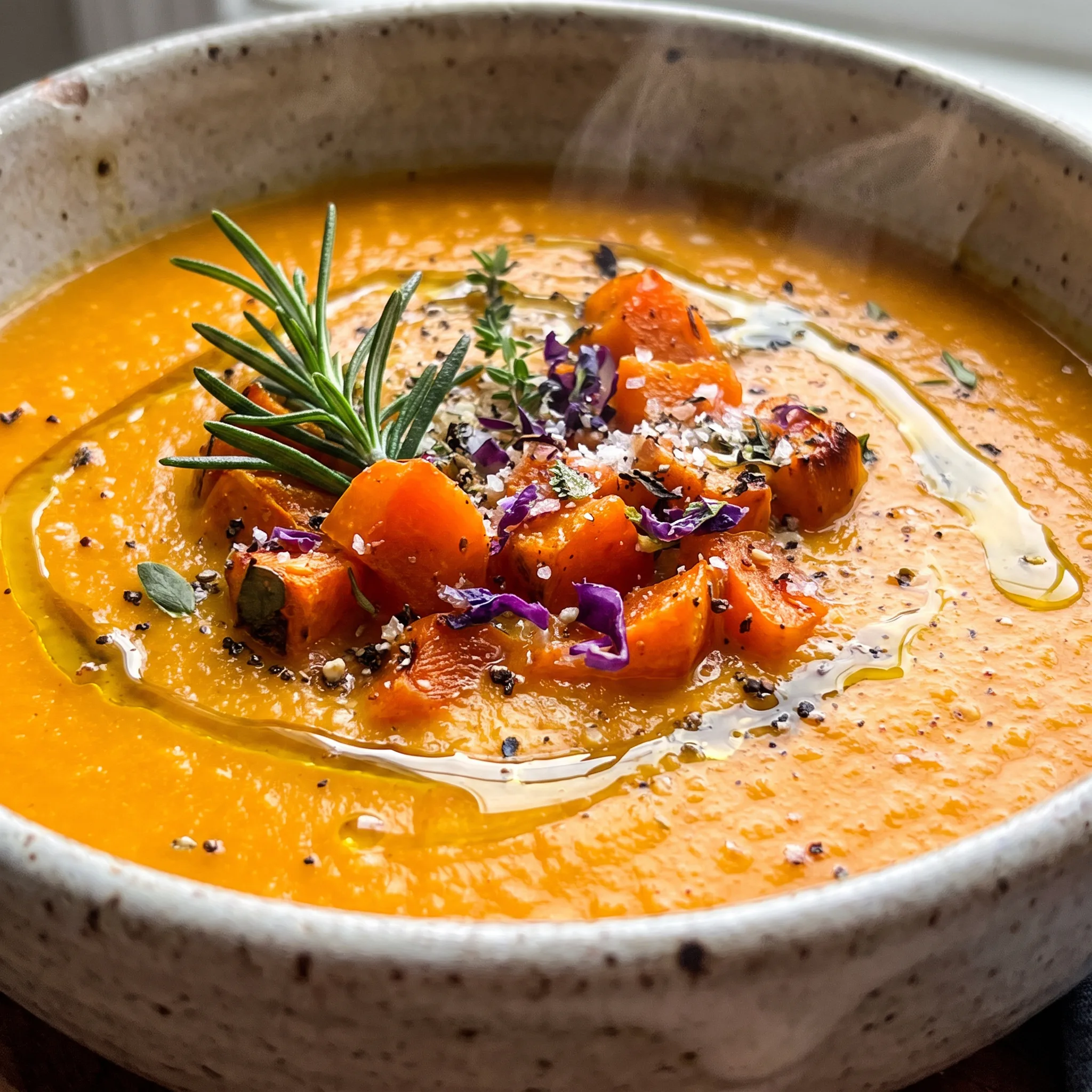
Roasted Vegetable Soup with Sweet Potatoes
Ingredients
Method
- Set oven to 350°F (175°C).
- In a large deep baking tray, mix sliced onions, garlic (unpeeled), peppers, sweet potatoes, tomatoes, and carrots with olive oil and season generously with salt and pepper.
- Roast for 25 minutes; stir and roast for an additional 20–25 minutes until caramelized.
- Discard garlic skins and rosemary sprigs; blend roasted vegetables with vegetable stock until smooth.
- Add cream, taste, and adjust seasoning as needed before serving.
When a Swap Helps, and When It Costs You the Roast
Single cream: Coconut milk or whole milk. Coconut milk brings a faint sweetness and a tropical edge that can read as coconut if you use the full 100ml. Start with 80ml and taste; add more if you want a richer body.
Whole milk is thinner and less stable when heated, so add it off the heat and stir gently. Either way, the soup will be lighter and less rounded than with dairy cream. The roasted vegetable flavor still comes through, but the finish is sharper.
White onions: Yellow onions or shallots. Yellow onions work the same way, turning jammy and sweet after the full roast. Shallots roast faster and can scorch before the carrots soften, so check them at the 25-minute mark and pull any that are blackening.
The soup will taste slightly more delicate, with less of that deep allium backbone. Use the same count: 3 onions or about 6 shallots.
Mixed peppers: Leave them out or use a single color. Peppers bring acidity and a faint smokiness that cuts the sweetness of the roots. Skip them and the soup leans sweeter and flatter, closer to a sweet potato puree.
If you use only red or orange peppers, you get more sugar and less of that smoky edge. Green peppers add a grassy note that can turn bitter after roasting.
The soup still works, but you lose the contrast that keeps it from tasting one-note.
Vegetable stock: Chicken stock or water. Chicken stock adds a savory depth that some cooks prefer, but it pushes the soup toward a different profile, less vegetable-forward.
Water leaves the soup tasting thin unless you compensate with more salt and perhaps a squeeze of tomato paste. If you use water, start with 600ml and add more only if the puree won’t move. The roasted vegetables carry most of the flavor, so the stock is supporting, not starring.
Tips
- Add the cream off the heat, then stir and taste before deciding on more salt. Cream coats your tongue and mutes saltiness, so a soup seasoned properly before the cream goes in will taste flat once the 100ml is stirred through. Salt after, not before, and you won’t overshoot.
Storage, Reheating, and the Serving Window
This soup thickens considerably as it chills, so plan to loosen each portion with a little warm stock or water when reheating. In the fridge, it holds for up to three days; beyond that, the dairy cream shortens its life and the texture turns grainy. Freeze only the base before the cream goes in, since dairy splits when thawed.
The base keeps frozen for up to two months. To serve, thaw overnight in the fridge, then warm gently on the stove, stirring in a splash of stock until it pours.
Add the cream after reheating, off the heat, so it stays smooth. For the best texture, eat within two days; after that, the vegetables lose their bright sweetness and the soup tastes flat.
The finishing touch is the cream, added just before serving, never before storing. If you’re making it ahead, blend and chill the base, then finish with cream the day you eat it. That way, the soup tastes fresh, not leftover.

Frequently Asked Questions
Can I make roasted vegetable soup ahead of time?
Make the base, chill it, and add the cream the day you eat it. The storage section says the cream goes in just before serving, and that’s because dairy dulls and separates when it sits. The base keeps in the fridge for up to three days, but you’ll get the best texture if you eat it within two.
When you reheat, loosen each portion with a splash of warm stock or water, since the soup thickens a lot once cold.
Why did my roasted vegetable soup turn out bland?
The most likely culprit is pulling the vegetables from the oven before they really caramelized. At 25 minutes they’re tender but pale; the deep flavor develops in the last 20 to 25 minutes, when edges darken to mahogany and onions turn sticky.
If they never got that far, the soup tastes sweet and flat, no matter how much salt you add later. A second check: taste after the cream goes in, because dairy mutes saltiness.
If it still tastes thin, you may have used too much stock, which waters down the roasted flavor.
How do I fix roasted vegetable soup that is too thick?
Stir in warm stock or water a splash at a time until it pours from a ladle but still coats a spoon. The recipe calls for 800ml of stock, but the vegetables lose different amounts of water in the oven, so you may need more or less. Add liquid while the soup is warm, not cold, so it blends in smoothly.
If you’ve already added the cream and it’s still thick, a little extra stock works, but taste for salt afterward since you’re diluting the seasoning.
What is the difference between roasted vegetable soup and regular vegetable soup?
Roasting concentrates the vegetables’ sugars and drives off moisture, so you get browned edges, sticky surfaces, and a sweetness that boiling can’t match. Regular vegetable soup usually starts with raw vegetables in liquid, which pulls flavor out instead of intensifying it.
Here, the oven does the heavy lifting before the blender, and the garlic goes in unpeeled so it steams and turns soft and nutty. The result is a thicker, sweeter, more savory bowl with a faint smokiness from the peppers, not a thin broth with floating pieces.
Can I freeze roasted vegetable soup?
Freeze only the base before the cream goes in; dairy splits when thawed. The base keeps frozen for up to two months. Thaw it overnight in the fridge, then warm it gently on the stove, stirring in a splash of stock until it pours.
Add the cream after reheating, off the heat, so it stays smooth. For the best texture, eat within two days of making it, since the vegetables lose their bright sweetness over time.
