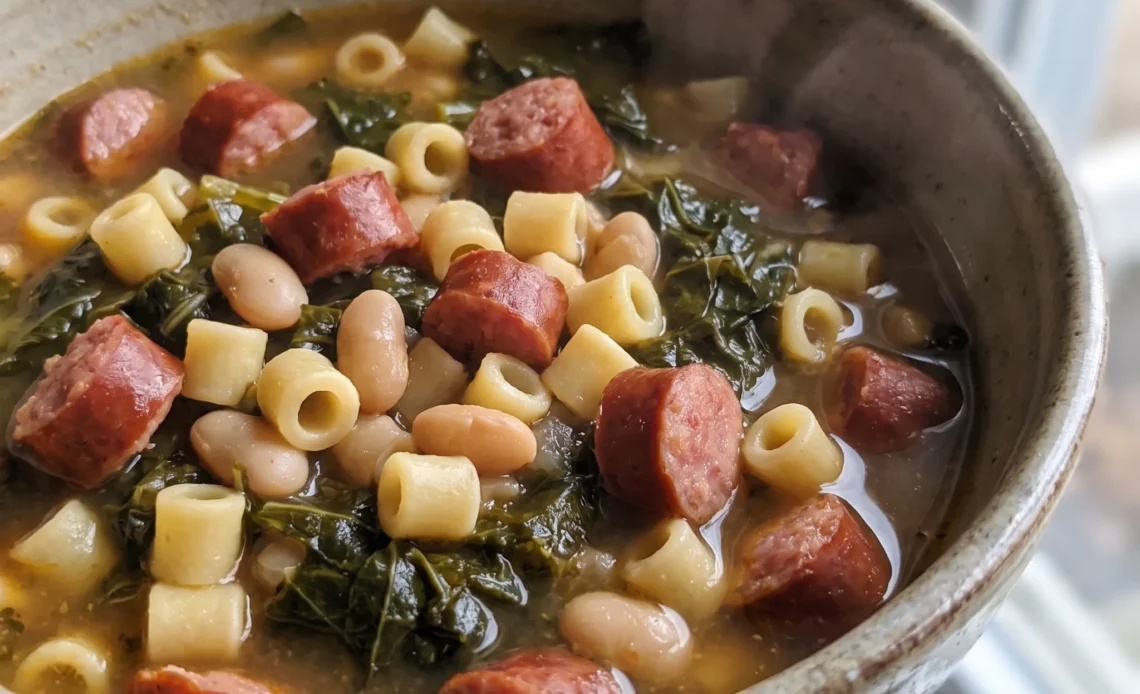
A pot of Southern greens usually eats up an afternoon. This one asks for thirty-five minutes, and the shortcut that actually matters is the liquid in the can.
Anyone who has cooked fresh turnip greens knows the pot liquor: the salty, faintly bitter broth left behind after a long simmer, the part that makes a bowl taste like greens instead of chicken soup with greens floating in it. Canned seasoned greens arrive already sitting in that liquid. Pour it off and you’ve thrown away the only thing standing in for hours of simmering, and no amount of extra sausage brings it back.
The rest of the pot is forgiving. The greens themselves are the variable, since some brands pack more pepper and salt than others, and that range is why the broth can taste finished before you’ve touched the shaker.
Get the can right and the smoked sausage turnip green soup mostly cooks itself.
Taste Before You Salt
A packet of vegetable soup mix and a can of seasoned turnip greens bring plenty of salt to the pot. Both are built to season a whole dish on their own, so by the time the soup has simmered, the broth is already well on its way.
The recipe asks you to taste first. Do that. A spoonful now tells you whether to reach for the salt shaker at all.
If it tastes flat, add a pinch and stir; if it tastes full, leave it alone. Salting early, before the greens and soup mix have given up everything they carry, is how a pot turns inedibly salty with no way back.
Better to keep hot sauce at the table for anyone who wants a sharper, saltier edge in their own bowl. That way each serving gets exactly what it needs.
Cook Pasta Separately and Add It Late
Boiling the pasta on its own and draining it before it goes anywhere near the soup gives you control over texture. If short tubes simmer in the pot for the full cook time, they keep drinking broth and softening until they collapse. The soup then thickens past the point of a spoonable broth, closer to a stew, and the pasta itself turns bloated and bland.
Adding it 10 minutes before serving means the tubes stay distinct, with a gentle chew, and the broth remains loose enough to ladle. You get a clear line between pasta and soup rather than a starchy mass.
That timing is the difference between a bowl that eats like soup and one that eats like a casserole. Keep the pasta just warm when it goes in; the hot broth brings it up to serving temperature.
Pantry Shortcuts for a Weeknight Pot
Canned seasoned turnip greens, canned beans, and a soup mix do the heavy lifting here. Traditional versions start with fresh greens and dried beans, then simmer for hours until everything goes soft and the pot liquor turns dark.
This one leans on what’s already on the shelf. Smoked sausage gives the broth its savory backbone, the soup mix adds dehydrated vegetables and seasoning, and the liquid from the greens carries a peppery edge that ties it together.
From first chop to ladle, you’re looking at 35 minutes total, with 10 of those just prep. That’s a far cry from an afternoon of tending a simmer.
The pot yields 10 servings, enough for a crowd or for leftovers that hold up well. On a Tuesday night, this gets a Southern green soup on the table without the wait.
Keep That Turnip Green Liquid
When you open the 29-ounce can of seasoned turnip greens, don’t pour the liquid down the drain. That murky, salty broth is where a lot of the flavor lives.
It carries the peppery, slightly bitter essence of the greens themselves, plus whatever seasonings the packer added. The recipe calls for retaining it and adding it to the pot along with the greens. The 8 cups of chicken broth go in separately; the green liquid is extra, not a replacement.
Discarding it would leave you with a soup that tastes thinner and less distinctly Southern. The pot liquor is what gives this soup its characteristic edge, a flavor that plain broth can’t mimic.
So tip the whole can in, liquid and all. That’s the difference between a bowl that tastes like greens and one that tastes like chicken soup with greens floating in it.
What to Grab and What to Watch
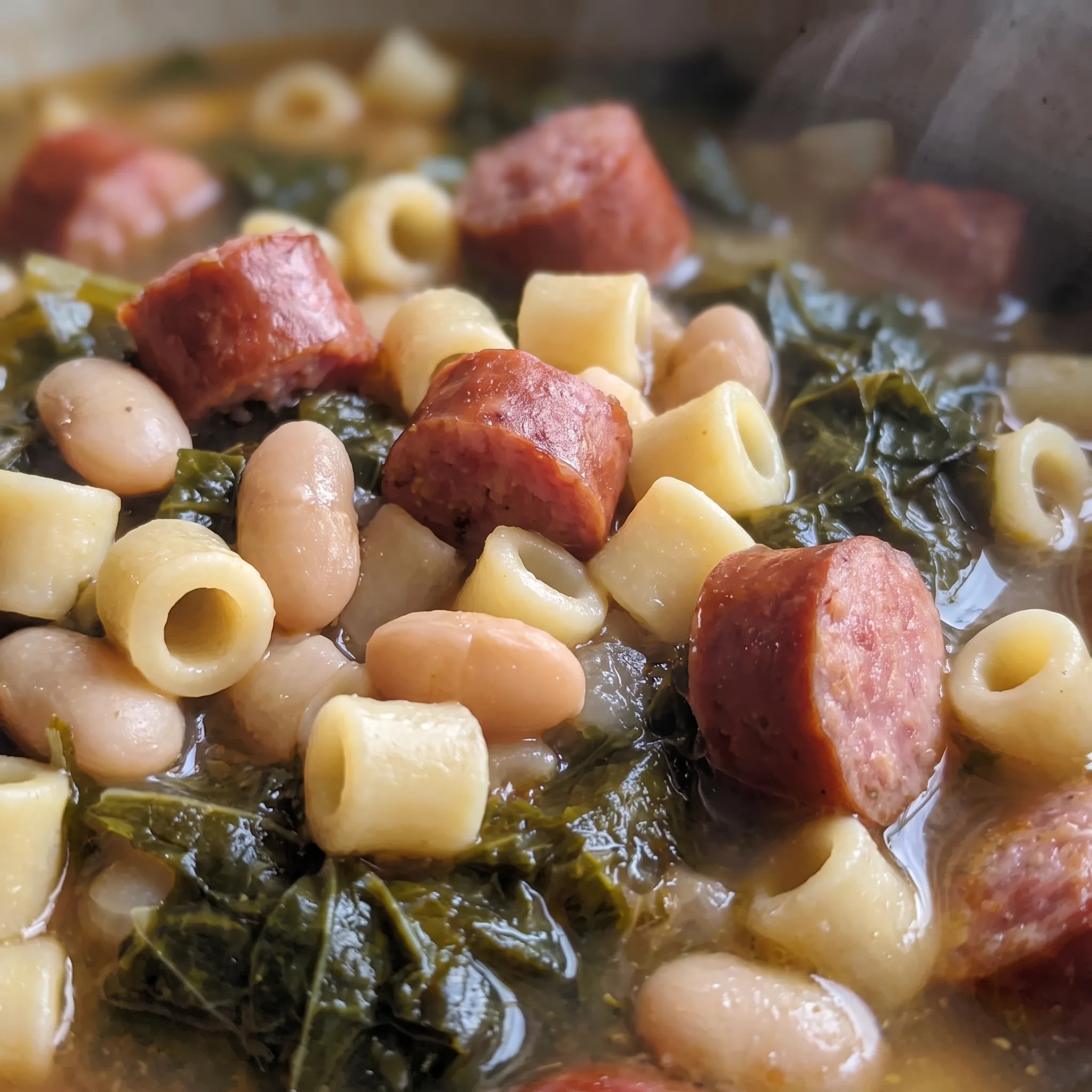
Smoked sausage: Buy the fully cooked kind, and cut it into dice or chunks so it browns instead of steaming.
Knorr Vegetable soup mix: One packet, not two, because it carries enough salt and dehydrated vegetables for the whole 8 cups of broth.
Seasoned turnip greens: The 29-ounce can is packed with its own liquid, so keep every drop and don’t drain it.
Great Northern beans: Rinse and drain the 31 ounces well, or the canning liquid will cloud the broth and thicken it.
Short pasta: Boil 2 cups to al dente and drain before it goes in, so the tubes stay firm and the broth stays loose.
Sweet onion: One cup diced small enough to soften in the same 3 to 4 minutes as the sausage.
Reading the Pot at Three Points That Decide the Bowl
When the sausage and onions have given enough
The 3 to 4 minute window is about smell and color, not the clock. You want the sausage edges to turn ruddy and the onion to go translucent at the edges. If the onion starts to brown before the sausage releases its fat, the pan is too hot; pull it off the heat for a moment.
If nothing sizzles, raise the heat slightly. This step builds the base flavor, and rushing it leaves the broth tasting flat.
Judging the simmer before the pasta goes in
The greens need to go from firm and canned-tasting to tender, and the soup mix needs to plump. That happens somewhere in the first 15 minutes of gentle bubbling.
Taste a piece of green: it should yield without resistance. If it still has a bite, keep simmering. The broth will also darken slightly and smell less raw.
Stop too early and the greens stay chewy; simmer too long and they dissolve into the liquid.
The pasta’s 10-minute soak
The pasta is already cooked, so the last 10 minutes is about warming it through and letting it take on broth without going soft. Check a tube at 8 minutes: it should still have a gentle chew. If it’s already giving way, pull the pot off the heat.
Waiting longer turns the pasta bloated and the broth thick. That’s the line between soup and something closer to a casserole.
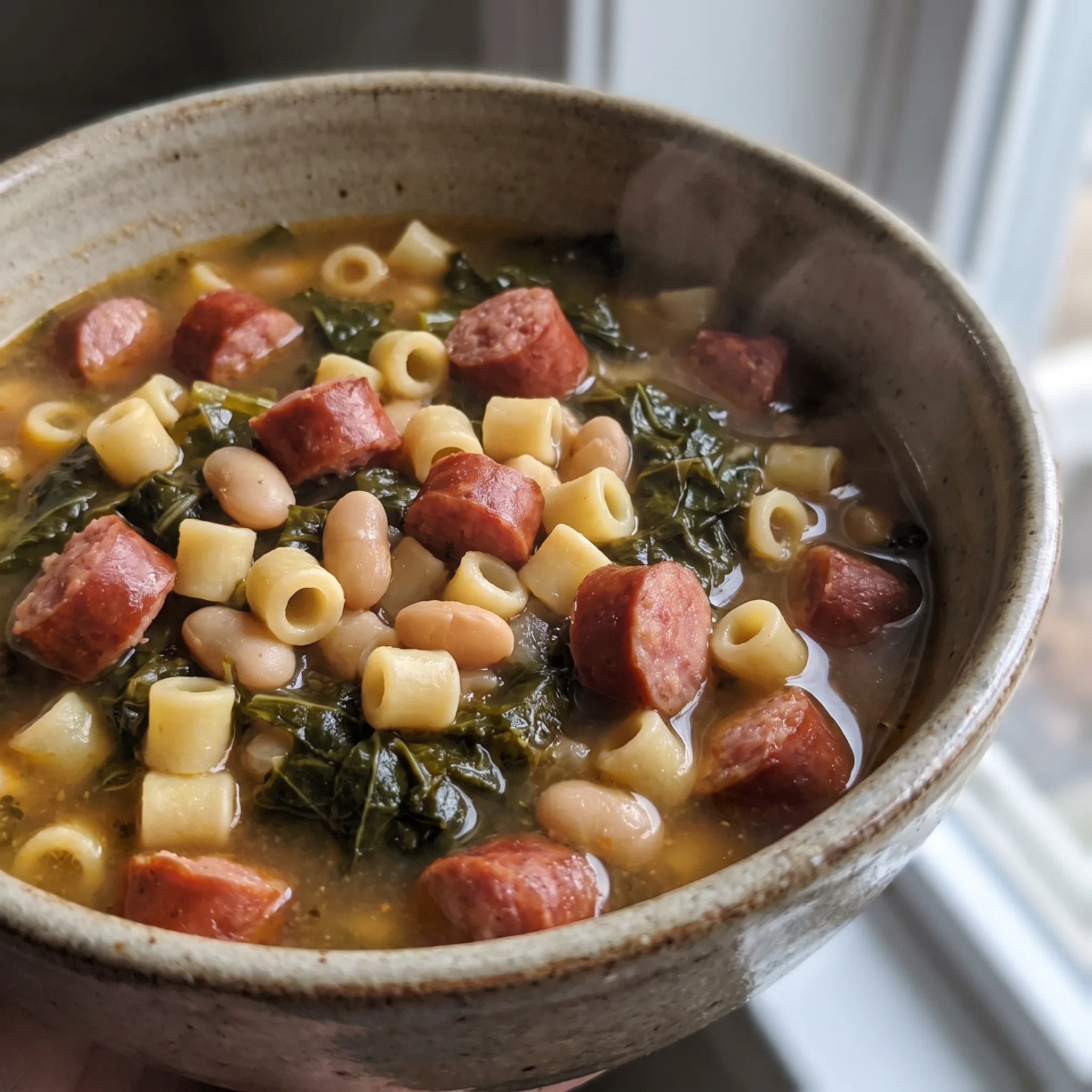
Smoked Sausage Turnip Green Soup
Ingredients
Method
- Place the chopped sausage and onion into a large soup pot set over medium heat.
- Let cook for 3-4 minutes, until the sausage starts to brown and the onions begin to soften.
- Stir in the garlic; continue cooking for 1 minute.
- Stir in the soup mix, broth, beans, and greens until well combined.
- Raise to a boil, then lower to a simmer.
- Simmer gently until the greens become tender and the soup mix is fully rehydrated.
- 10 minutes prior to serving, stir in the cooked pasta.
- Add salt and pepper to taste if needed; check seasoning first, since the greens and soup mix may already supply sufficient salt.
- Accompany with a splash of hot sauce and a piece of cornbread or hush puppies.
Swaps That Keep the Smoke and the Sip
Smoked sausage: Andouille or kielbasa, cut into the same dice or chunks. Both carry the smoky backbone this soup needs. Andouille brings a sharper pepper kick; kielbasa stays milder but still smokes up the broth.
A sweet Italian sausage or plain breakfast links will leave the pot tasting flat, like greens in chicken broth.
Short pasta (ditalini or small tubes): Any short shape you have: small shells, elbow macaroni, or orzo. The shape changes how the soup eats.
Tubes hold broth inside; shells cup it; orzo slips through the spoon and thickens the pot faster. Cook any of them to al dente and add at the same 10-minute mark. Gluten-free pasta works if you boil it separately and check it early, since it can go from firm to falling apart in a couple of minutes.
Great Northern beans: Cannellini or navy beans, rinsed and drained. Cannellini stay creamy and hold their shape; navy beans turn softer and break down a little more. Either way, the broth stays light if you rinse well.
Don’t skip the rinse, or the canning liquid clouds the pot.
Sweet onion: Yellow onion, diced the same size. Yellow brings a sharper bite that mellows with the 3 to 4 minutes in the pot. Red onion turns an odd color and stays crunchier.
If you’re out of onion, a couple of shallots will do, but they soften faster, so watch the pan.
Storing the Soup and the Pasta Apart
If you plan on leftovers, keep the cooked pasta in its own container and the soup in another. The reason is simple: those short tubes keep drinking broth in the fridge overnight. Store them together and by morning the pasta has swelled, the broth has thickened, and you’re looking at a stew instead of a soup.
Kept separate, the soup stays loose and the pasta keeps a gentle chew. Both hold in the fridge for three to four days.
Reheat the soup gently on the stove, then add the pasta for the last few minutes, just enough to warm it through. If you already stored them together, thin the pot with a splash of broth or water and expect a thicker, more stew-like bowl.
That’s not a failure, just a different dinner. The greens deepen in flavor by day two. Eat within three days for the best texture.
Skip freezing the pasta; it goes soft and grainy. The soup alone freezes well for up to three months.
A splash of hot sauce at the table, never in the pot, keeps each bowl sharp.
Tips
- Brown the sausage and onion in a dry pot, not one with oil or butter added. Smoked sausage is fatty enough to render its own, and that fat is what carries the flavor through the whole 8 cups of broth. Adding oil dilutes the rendered fat and the onion ends up steaming in it rather than picking up color. The browned bits stuck to the bottom are the only real browning this soup gets, so scrape them up when the broth goes in. Skip it and the pot tastes flat, like greens in chicken broth.
The most common mistake with this soup is treating the final seasoning step as routine and adding salt before tasting. Both the soup mix and the seasoned greens are salt-forward ingredients, and the greens’ packing liquid is stirred in as well, so the pot arrives at the end of simmering already near or past the salt level most people want. Salt added at that point cannot be removed, and because the broth is largely absorbed by beans and pasta, there is no dilution buffer to correct it.

Frequently Asked Questions
Can I make this smoked sausage turnip green soup ahead of time?
You can, and the smart play is to cook the soup base up to three days ahead, then boil the pasta fresh the day you serve. The base actually tastes deeper after a night in the fridge, because the greens and sausage keep seasoning the broth.
When you reheat, warm it gently on the stove and add the pasta for just the last few minutes so it doesn’t swell. If you’re feeding a crowd, this lets you get the pot done early and only fuss with pasta at the end.
Why did my soup turn out too salty?
The most likely culprit is adding salt before the pot had simmered, because the soup mix and the canned greens keep releasing salt as they sit. Once that happens, the only fix is to dilute: stir in more unsalted chicken broth or a splash of water, and taste again. If it’s still sharp, a spoonful of rinsed beans or a boiled potato can pull some of the salt into the starch.
Check your brands too; some seasoned greens are saltier than others. Next time, wait until the greens are tender and the soup mix has plumped, then taste and decide.
How is this different from traditional Southern turnip green soup?
The big difference is the clock. Traditional versions start with fresh greens and dried beans and simmer for hours, while this one leans on canned seasoned greens, canned beans, and a packet of vegetable soup mix to get there in 35 minutes total. That means the greens keep a little more texture and the broth stays lighter, since you’re not reducing a long-simmered pot liquor.
You also get smoked sausage browning in the pot first, which gives the broth a savory backbone without a ham hock. It’s a weeknight version, not a Sunday one, but the peppery edge from the greens still comes through.
