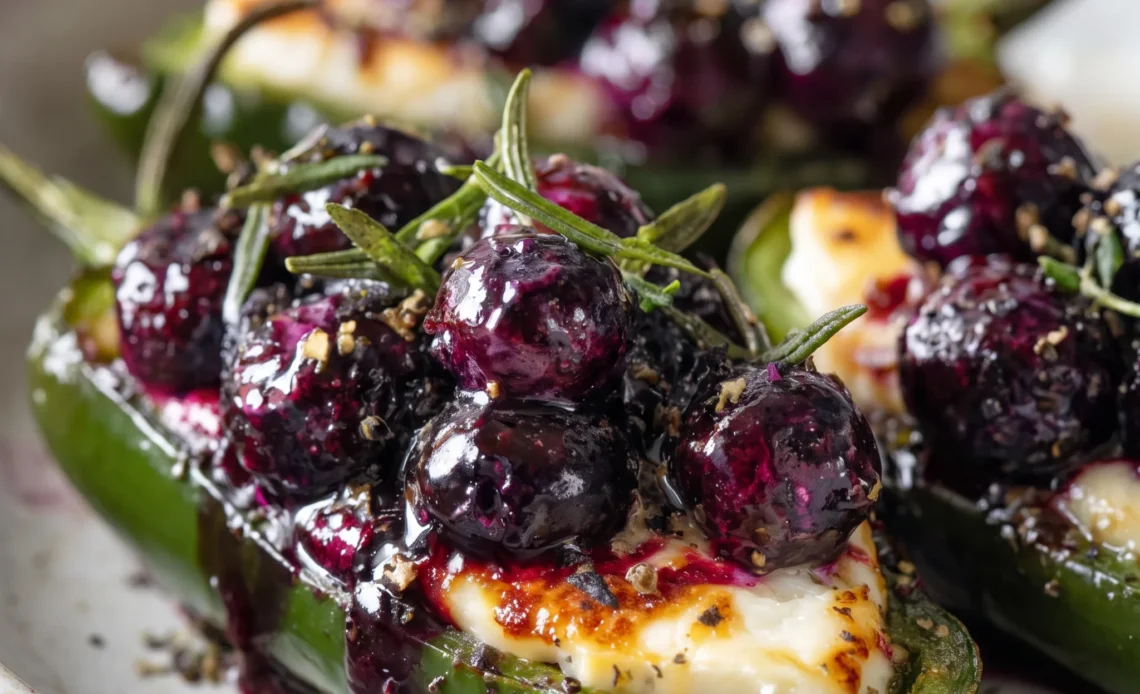
What matters most when you make blueberry brie jalapeño poppers is the order you work in, and the order is not intuitive. Sweet with heat usually means the two get layered together from the start.
Here they stay apart until the last minute, because the blueberry glaze and the brie behave nothing alike under heat. Get that backwards and you end up with purple liquid pooling on the tray instead of draped over the cheese, or berries that have collapsed into an anonymous sauce. The pairing itself reads sweeter than it sounds.
Jalapeño roasted empty loses its raw snap but keeps a slow warmth, and brie is mild enough to sit between the fruit and the pepper without either one taking over. Most people expect a bar snack and get something closer to warm cheese with jam. That surprise is what empties the tray before anyone sits down.
Roast the Pepper Halves First
A raw jalapeño half is mostly water, and water is the enemy of a clean fill. Roast the empty halves and that moisture cooks off, the walls slacken, and what’s left is a firm little cup rather than a floppy shell. Skip this and the brie has nowhere to sit; it slumps off the sides and pools on the parchment before it ever browns.
The peppers change color too, from that flat raw green to something brighter and glossier, and the flesh gives a little when you press it. That give is your cue that the raw bite has softened into a gentler warmth. The heat doesn’t vanish, it just stops fighting the cheese.
What you’re after is a pepper sturdy enough to hold melted brie to the last bite, with a flavor mild enough that the blueberry glaze reads as sweet rather than clashing. Test one with your thumb. If it bends without cracking, it’s ready for the filling.
Build the Glaze in Two Stages
Most of the blueberries go into the pan with sugar and lemon juice, where they break down into a dark, glossy syrup. That base is what clings, what drapes over the brie and stains the pepper sides purple. It should taste sweet first, then tart, with enough body that a spoon dragged through leaves a clear trail behind it.
The last handful of berries never see the burner. Fold them in once the pan is off the heat and they soften from the residual warmth alone, going jammy at the edges while holding their shape. That pop of whole fruit is the contrast: soft against creamy cheese, bright against the cooked-down depth underneath.
Let the glaze cool for a minute before spooning. Hot straight off the flame, it runs too thin and soaks the brie instead of sitting on top of it. Warm but slightly settled is where it coats without flooding.
Why This Combination Works
Bite into one and the first thing you register is temperature: the brie still steaming, the glaze cooled just enough to feel fresh against it. That contrast alone keeps a rich mouthful from turning heavy.
Then the sweetness lands, and right behind it the pepper. The glaze is sugary, deliberately so, and the jalapeño answers with a slow warmth that builds across a few poppers rather than hitting all at once.
Neither one wins. The cheese sits between them, mild and salty, keeping the sweet from cloying and the heat from sharpening into something harsh.
Texture carries the rest. Soft cheese, tender pepper, and the occasional whole berry that bursts under your teeth. A smooth topping would make every bite identical; those little pops are what keep you reaching for a second one.
Serve them warm, while the brie still pulls.
Thyme and Pepper Flakes to Finish
Both garnishes go on at the very end, after the glaze, and that timing is the whole reason they matter. Thyme’s earthy, faintly lemony edge against the blueberry reads almost like a second fruit, and it’s still fragrant because the oven never touched it. Heat it and that aroma flattens into something dusty.
The pepper flakes work differently. They sit on top of the glaze, so the first thing you taste is spice before the sweetness arrives underneath. That little delay echoes the jalapeño without doubling down on it, and it keeps the last few bites from feeling purely dessert-like.
Scatter both lightly. A pinch per popper is enough to be noticed; more and the thyme turns woody and the flakes overpower the brie. You want them to season the surface, not bury it.
Serve right away, while the herbs still smell like themselves.
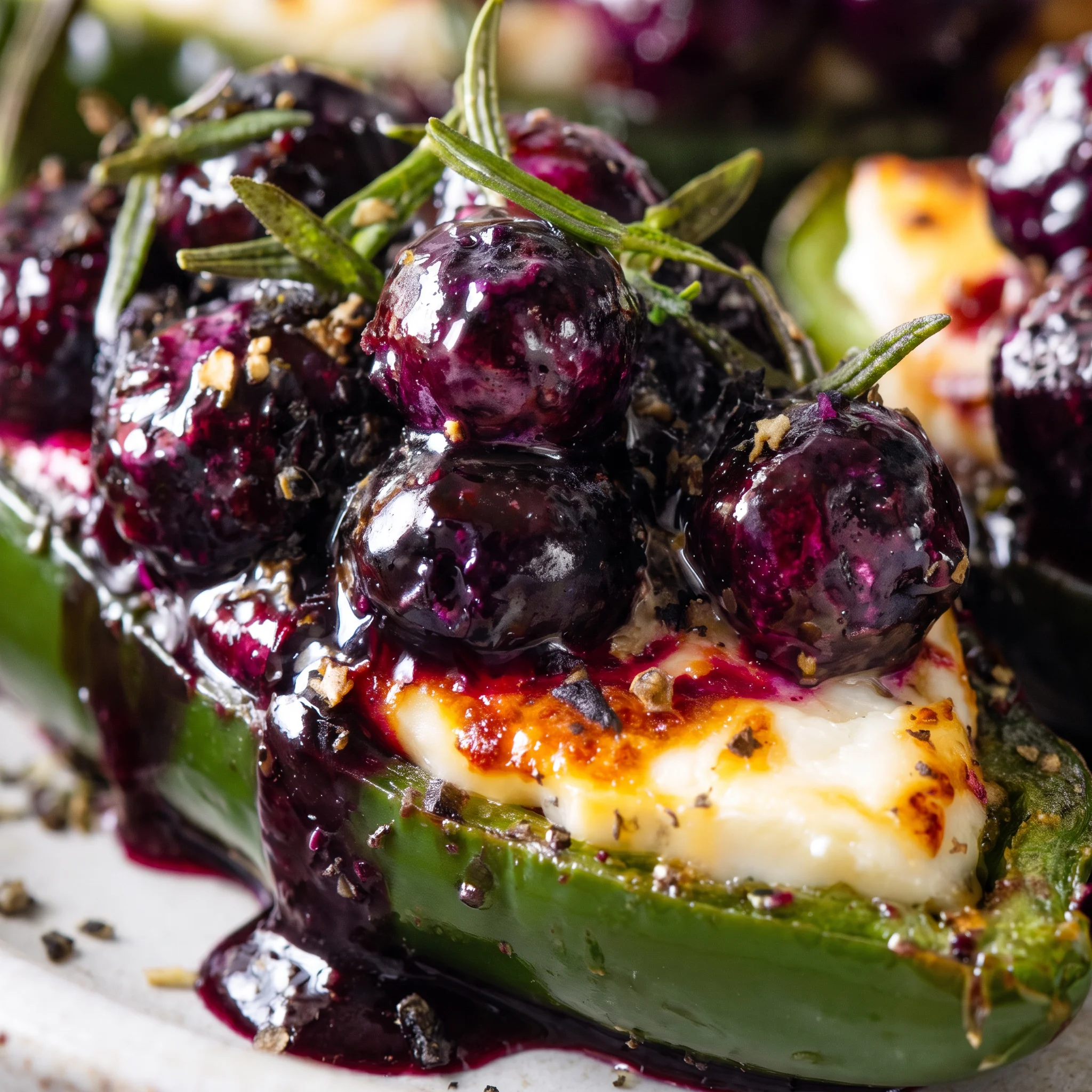
What to Buy and How to Prep It
Jalapeño peppers: Pick 12 medium ones that feel firm and heavy, since bigger peppers leave more room for the brie.
Brie cheese: A ripe 8-ounce wheel should give slightly when pressed, and the rind comes off cleanest when the cheese is cold.
Fresh blueberries: Look for 1 cup of firm, dry berries with a dusty bloom, and sort out any soft ones before you portion them.
Fresh thyme: The 1 teaspoon of leaves should come off the stems easily and smell lemony when you bruise them.
Black pepper flakes: Use flakes that are dry and crumble to the touch, since stale ones taste like dust.
Roasting the empty pepper halves first firms their cell walls and drives off surface moisture, creating a sturdy cup that contains the melted brie. Without this step, the peppers release water as they cook, which can make the cheese slide off and leave the peppers underdone. The recipe uses this pre-roast because it simultaneously sets the pepper’s structure and mellows its raw heat, balancing the rich cheese.
Reading the Poppers at Three Points Where They Turn
Judging whether the pepper walls are slack enough to fill
Poke a half with your thumb at the 8-minute mark. It should give like a ripe plum, not snap back like a raw one.
If it still feels stiff and squeaky, give it two more minutes. Past that, the walls go limp and the brie slides off the sides onto the parchment. A pepper that bends without cracking is the one that holds cheese to the last bite.
Knowing when the brie has gone from melting to running
Brie goes from solid to molten fast, and the window between bubbly and pooled is narrow. Watch the surface, not the clock. You want the cheese puffed and glossy with a few lazy bubbles breaking through, still mounded in its cavity.
If it flattens into a puddle that reaches the parchment, it has overcooked and will firm up greasy as it cools. Pull the tray the moment the surface shimmers.
Telling when the glaze has body, not just color
A dark purple color shows up before the texture does. Drag a spoon across the pan bottom: if the trail fills back in immediately, it is still watery and will soak the brie instead of draping it.
Keep it at a low simmer until the trail holds for a beat and the syrup coats the spoon. Overcooked, it stiffens into candy once it hits the cheese.
Folding the last berries without crushing them
The residual heat in the pan is enough to soften the whole berries, but only if you stop stirring. Fold once or twice with a spatula and leave them.
Stir aggressively and they collapse into the glaze, losing the pop that separates this from a plain sauce. They should look blistered and slightly translucent at the edges, still round in the middle.
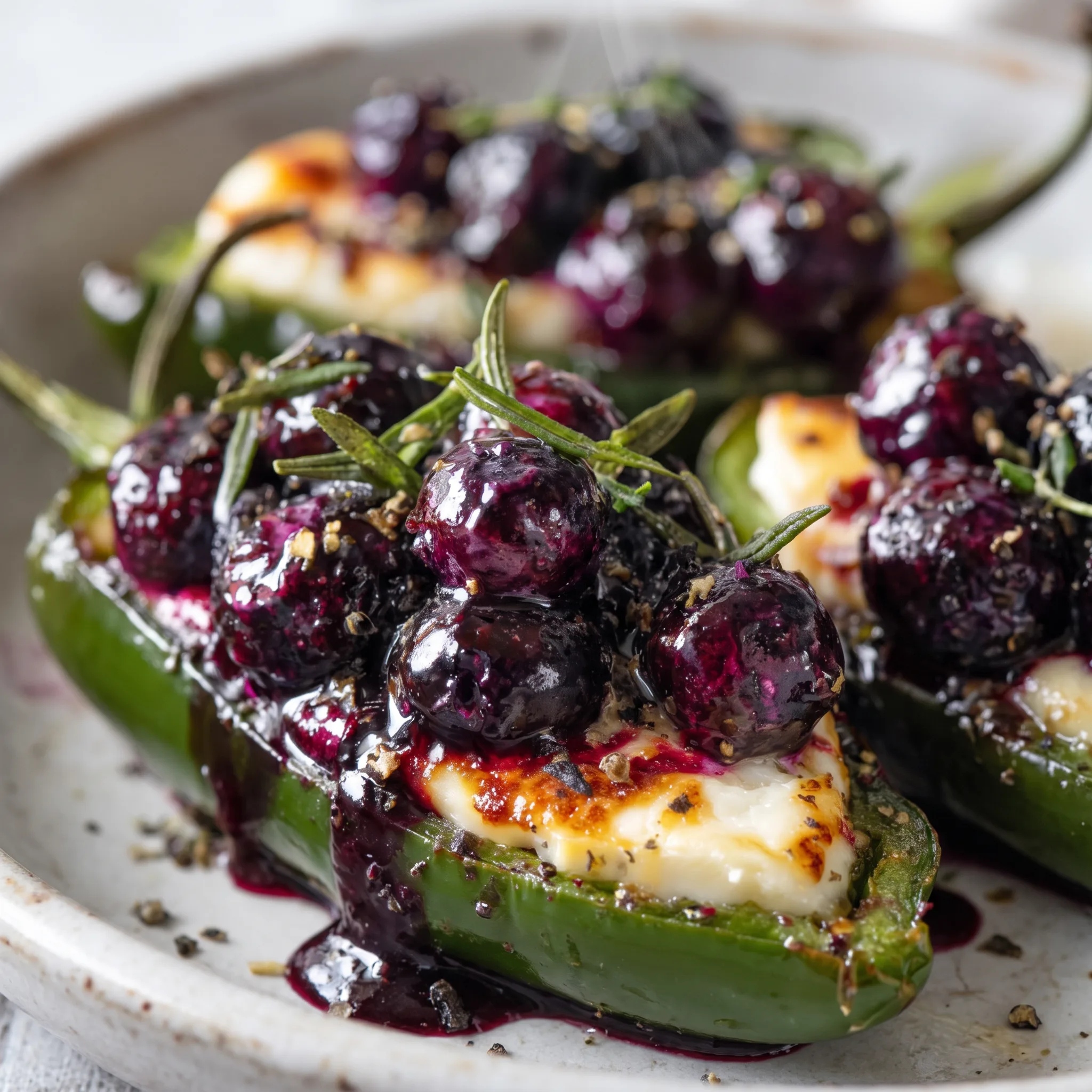
Blueberry Brie Jalapeño Poppers
Ingredients
Method
- Set oven to 400°F (205°C). Combine the seeded, halved jalapeño peppers with olive oil and kosher salt. Place them cut-side up on a baking sheet lined with parchment. Roast for 8–10 minutes, until tender and bright green.
- Take peppers out of oven and fill each cavity completely with diced brie. Put back in oven for 5–7 minutes, until cheese is bubbly, melted, and gooey white.
- In a small saucepan over medium heat, mix 3/4 cup blueberries, sugar, and lemon juice. Simmer for 8–10 minutes, mashing lightly, until a thick, dark purple sweet glaze forms.
- Take glaze off heat and fold in remaining 1/4 cup whole blueberries until they blister from residual heat. Spoon mixture over the bubbly brie, letting it drip slightly down the pepper sides. Top with fresh thyme leaves and black pepper flakes. Serve immediately.
When a Swap Helps and When It Sinks the Boat
Brie: Camembert or cream cheese. Camembert melts similarly but often has a stronger earthy rind, so if you keep the rind on, it can taste bitter against the sweet glaze. For cream cheese, use the same 8 ounces but expect a softer, tangier filling that won’t bubble and brown the same way; it stays creamy and may weep a little oil as it sits.
Still, it holds the glaze fine.
Jalapeño peppers: Serranos or mini sweet peppers. Serranos are smaller and hotter, so you’ll need more than 12 halves to use up the brie; their thinner walls also roast faster, so check them at 6 minutes.
Mini sweet peppers bring no heat at all, which shifts the whole dish toward a sweet, creamy bite. They’re larger, so you might only need 8 to 10.
Fresh blueberries: Frozen blueberries or another berry. Frozen berries work without thawing; they’ll release more liquid, so simmer the glaze a couple minutes longer to thicken. Raspberries or chopped strawberries can stand in, but their seeds and softer texture change the glaze’s body.
You’ll lose the whole-berry pop at the end unless you fold in a few fresh ones.
Lemon juice and granulated sugar: Do not substitute either. The glaze sets because sugar and lemon juice work together to thicken the berries. Swap lemon for vinegar and the flavor turns harsh; cut the sugar and the glaze stays runny and soaks the brie instead of draping it.
If you must reduce sugar for dietary reasons, accept a looser glaze and spoon it carefully.
Tips
- Sort your 12 jalapeño halves by size and pair the ones that match, then line them up cut-side down on the sheet for a second to see which rock. A half that tips when you nudge it will spill its cubed brie onto the parchment during the 5 to 7 minute second roast, and that cheese burns before the rest melts. Trim a sliver off the rounded back of a wobbly half so it sits flat, or tuck it against a neighbor.
Storing and Reheating the Poppers
Once the glaze hits the brie, the clock starts. Eat them within 30 minutes of assembly. Past that, the cheese firms at the edges, the glaze weeps purple liquid onto the tray, and the pepper walls slacken under the topping.
That is the honest serving window.
Leftovers keep in the fridge for up to 2 days in an airtight container, but know what you’re getting. The brie stiffens into a sliceable puck and the glaze thins against the cold. Reheat at 375°F for 5 to 7 minutes, just until the cheese softens.
The pepper will not return to its roasted crispness.
Do not freeze the assembled poppers. Brie that thaws weeps fat and the pepper collapses. If you want to work ahead, roast and refrigerate the empty halves up to 3 days, and make the glaze up to 3 days ahead, stored cold.
Reheat both, then fill and finish. Thyme and pepper flakes go on after the final bake, right before serving.
Frequently Asked Questions
Can I make these blueberry brie jalapeño poppers ahead of time?
Partially, and that split is what saves you. Roast the empty pepper halves and refrigerate them up to 3 days, and make the glaze up to 3 days ahead, stored cold.
Then reheat both, fill, and finish, because once the glaze hits the brie you have about 30 minutes before the cheese firms and weeps purple onto the tray. Thyme and pepper flakes go on after that final bake, right before serving. Assembling the whole thing earlier and reheating it works against you.
How do I keep the brie from leaking out of the jalapeño halves?
Underfilling is the usual culprit: pack the cavity completely and level with the rim, since a half-filled cup leaves the brie nothing to cling to as it melts. The other check is the pepper wall itself, which needs to bend without cracking so the cheese has something to grip. Cold brie cubed small fills the cavity more tightly than warm brie, which slumps before it ever sees the oven.
Watch the surface rather than the clock, and pull the tray while the cheese is still mounded and glossy in its cavity.
What’s the difference between these and traditional jalapeño poppers?
Traditional poppers lean on a cream cheese and cheddar filling, often breaded and fried, so the dominant note is salty and rich. Here the filling is brie alone, mild enough that the blueberry glaze gets to read as sweet, and the pepper is roasted empty first so the walls stay firm under a wet topping.
The finish is the other gap: thyme leaves and black pepper flakes scattered raw on top, so the first taste is spice and herb before the sugar arrives. It eats more like a warm fruit-and-cheese bite than a bar snack.
How spicy are these poppers with the blueberry glaze?
Moderate, and it builds across a few rather than hitting at once. Roasting the seeded halves softens the raw bite, and the sweet glaze lands first with the jalapeño answering a beat behind it. The brie sits in the middle, salty and mild, keeping the sugar from cloying and the heat from sharpening.
Black pepper flakes on top add a quick hit of spice before the sweetness underneath, so the last few bites never turn purely dessert-like.
