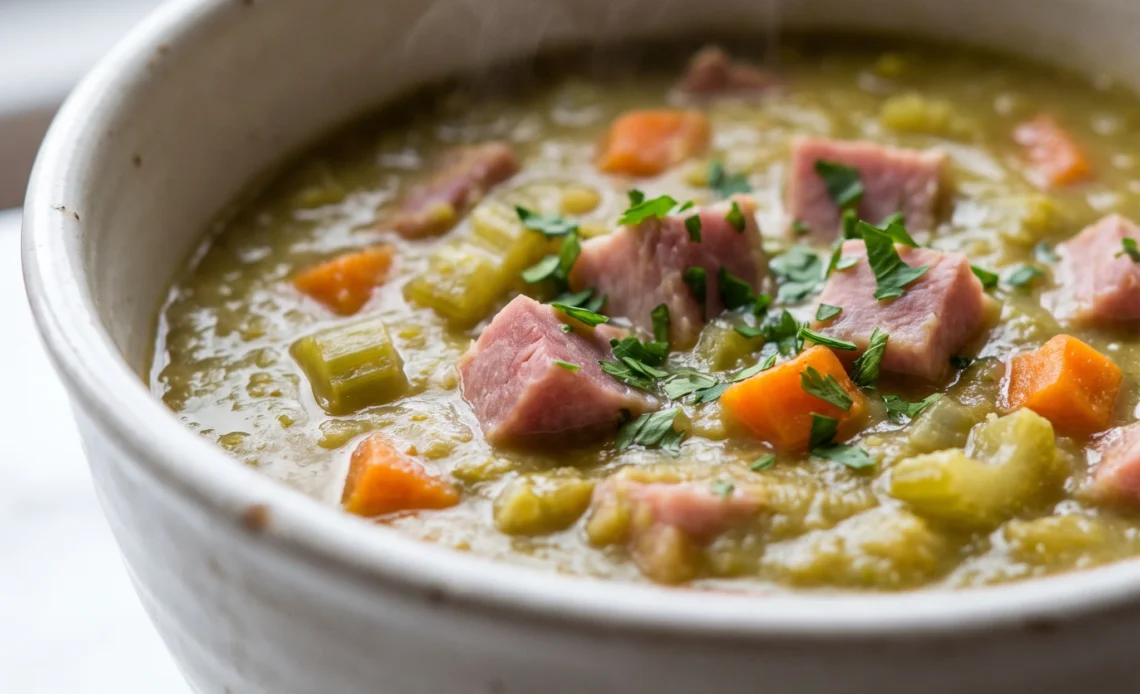
Thin, brothy split pea soup almost always comes down to peas that never broke down, and that’s the one thing you can’t fix at the table. Old dried peas stay stubborn no matter how long they sit in the heat, which is why a bag with a visible date matters more here than in most pots.
Get past that and the payoff is a slow cooker split pea soup that thickens on its own, no blender, no roux, the peas collapsing into something that coats a spoon. A ham bone left in the pot does the rest, though it can also push the salt past saving if you’re not paying attention near the end.
The margin for error is real, and it’s mostly about reading the pot rather than following a clock.
Get the liquid ratio right
Split peas drink up liquid as they cook, roughly three cups for every cup of dried peas. With twenty ounces of peas, that’s about five and a half cups absorbed, so the five cups of chicken broth plus two cups of water puts you just ahead of that. The result is a soup that thickens to a silky, spoon-coating consistency rather than a brothy one.
The size of your slow cooker matters here. A six-quart cooker gives the peas room to bubble and break down evenly; go smaller and they crowd and cook unevenly, go larger and the shallow layer can scorch at the edges before the peas soften.
After the cook, look at the pot. If the soup seems loose, the peas haven’t fully collapsed yet. If it looks like paste, too much liquid cooked off.
Either way, you’ll know whether the ratio worked for your cooker.
Why a ham bone, not just ham
A meaty ham bone does more than add pork. As it sits in the low, moist heat, it gives up smoky fat and gelatin that enrich the broth, so the finished soup tastes round and full instead of like plain cooked peas. That rendered body is what makes each spoonful feel substantial.
Leftover diced ham can stand in, but the soup will be less smoky and noticeably thinner. Without the bone’s gelatin, the broth stays watery and the flavor leans flat. I’ve made it both ways and the bone version always wins on depth.
Because the bone and broth carry plenty of salt, hold off on adding more until the end. Once the bone is out, taste and adjust. The soup should taste savory and gently smoked, not salty.
Split peas are their own beast
Dried split peas aren’t lentils or beans. They’re hulled and split, so under long, moist heat they break down completely into a coarse puree, no blending needed. That’s what gives this soup its characteristic body.
Lentils hold their shape; beans stay intact. Split peas collapse.
Green and yellow split peas cook about the same, but green keeps a slightly firmer bite and a more vegetal edge, while yellow turns sweeter and softer. Either works, but the texture of the finished pot will shift a little.
As they cook, the peas release starch that thickens the cooking liquid on its own. No roux, no cornstarch, no blender. The soup thickens from the inside out.
When you stir at the end, you’ll feel the resistance of a pot that’s come together.
Build the flavor from the start
The onion, celery, and carrot are diced small for a reason: they should melt into the soup, not float as distinct chunks. Over the long cook they soften completely and their sweetness blends into the peas.
The bay leaf and thyme go in at the beginning because they need the full cooking time to infuse. Their flavors are subtle but persistent. The parsley, on the other hand, goes in at the very end.
That keeps it bright and green, a fresh note against the deep, savory base.
Salt waits until after the ham bone comes out. The bone and broth already carry sodium, and adding more early can toughen the peas’ skins, leaving them stubborn. Once the bone is removed, taste the soup.
It should be rich and smoky, and only then should you decide if it needs more salt.
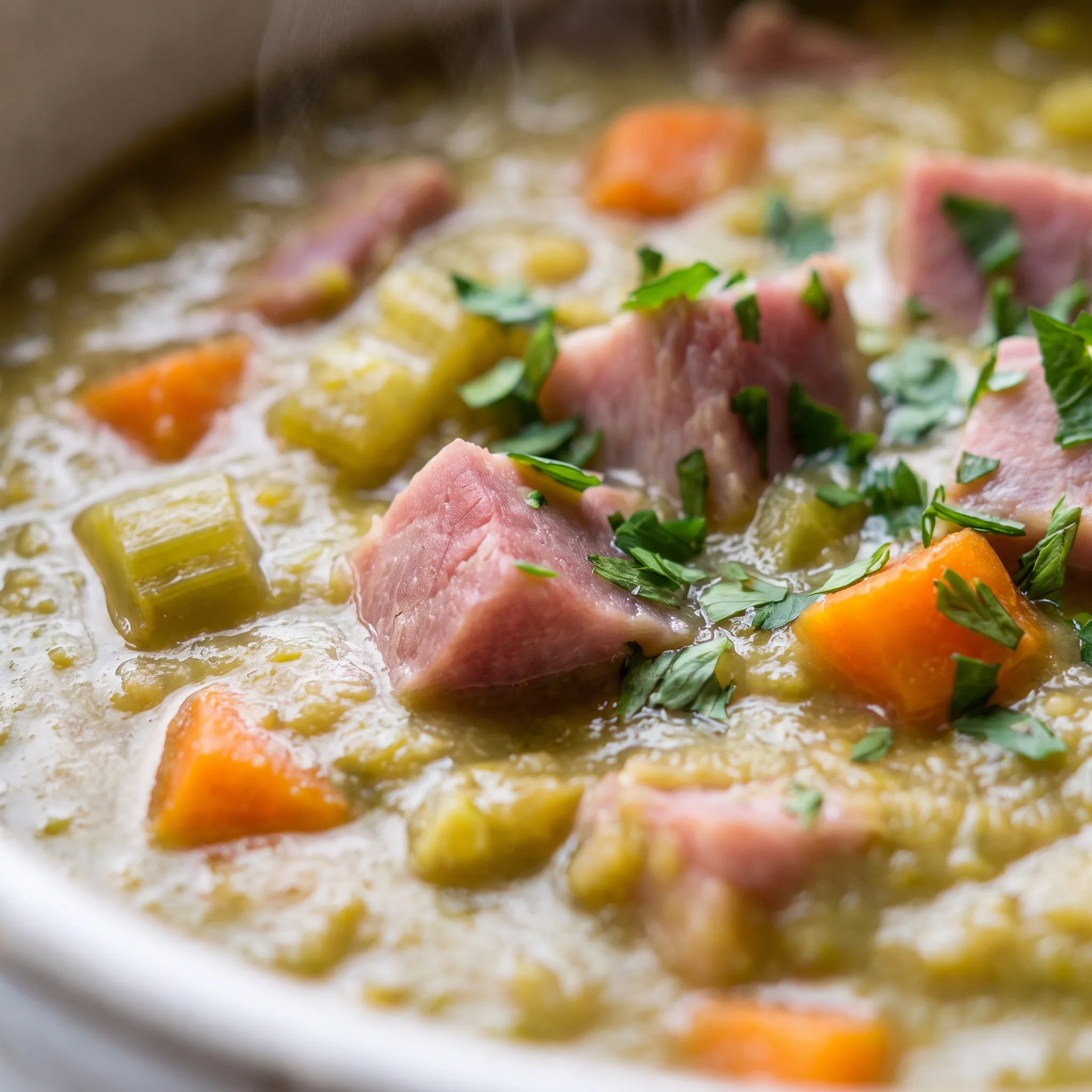
What to buy for a pot that thickens right
Dried split peas: Green or yellow, but green holds a slightly firmer bite and yellow cooks softer and sweeter, so pick by the texture you want.
Meaty ham bone: It should still have a good layer of meat clinging to it, since that meat and the bone’s gelatin are what give the pot its body.
Celery, carrots, onion: Dice all three small and even, because pieces that are too big stay distinct instead of melting into the peas.
Dried thyme leaves: Crush a pinch to the touch before it goes in; whole dried leaves stay woody and never soften through the long cook.
Fresh parsley: Flat-leaf, chopped fine, added at the end so it keeps its color and a clean green edge against the smoky base.
Split peas need to absorb roughly three cups of liquid per cup of dried peas to break down into a thick puree. If the slow cooker is too large, the shallow layer of soup may not maintain a steady simmer, so the peas remain intact and the broth stays thin. Conversely, a too-small cooker traps too much liquid, diluting the starch and preventing the soup from thickening.
How to read the pot while it cooks, because split peas give you no second chance
When the peas stop being peas
Somewhere in the last hour or two, the peas give up. Taste a spoonful: if the individual peas still pop between your tongue and the roof of your mouth, they need more time. Once they smear against the roof and the soup coats the back of the spoon in a slow sheet, they’re done.
Pull them early and you’ll never get them to break apart at the table, no matter how long it sits.
Judging the liquid before it’s too late
The card has you start with seven cups total, but slow cookers run hot and lids leak. At the four-hour mark on high, look at the surface.
If you see dry patches at the edges or the peas are piling above the liquid line, add hot water a half cup at a time. If it looks like a loose stew, leave it alone.
Over-liquid soup never thickens back once the peas have already collapsed.
The moment the ham bone has given all it has
A ham bone left in too long turns the soup aggressively salty and the meat stringy. Around the four-hour mark, pull the bone out and look at it.
If the meat falls off when you nudge it with a spoon, it’s done. If it still clings, give it another thirty minutes.
Once the bone is out, taste before you salt. The broth may already be seasoned enough.
Knowing when to stop stirring at the end
After the bone comes out and the parsley goes in, stir once or twice to combine. The soup will look thick and slightly uneven.
Stop there. Over-stirring hot split peas turns the pot gluey and tight. If it’s too thick for your liking, thin with a splash of broth or water.
If it’s too thin, leave the lid off for fifteen minutes on high, but watch the edges for scorching.
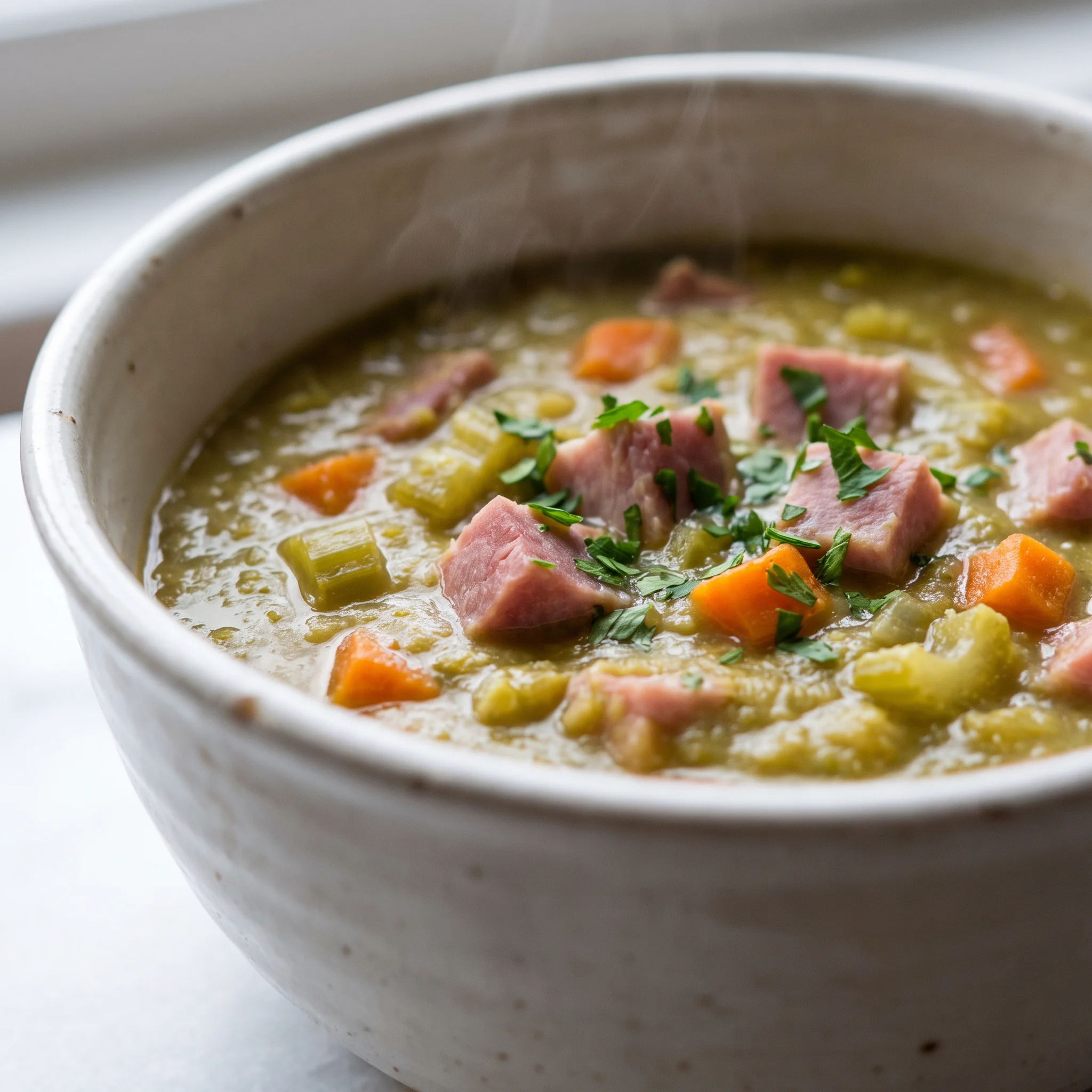
Slow Cooker Split Pea Soup with Ham
Ingredients
Method
- Rinse the split peas and drain well.
- Combine all ingredients except the parsley in a 6-quart slow cooker.
- Cover and cook on high for 4–5 hours or on low for 8 hours.
- Discard the bay leaf. Stir in the parsley and season with salt and pepper to taste.
When a swap still makes split pea soup and when it just makes peas in broth
Meaty ham bone: A smoked ham hock, or 2 cups leftover ham plus 1/2 teaspoon smoked paprika. A hock gives up the same smoky fat and body as a bone, though it carries less meat, so pick through it and shred whatever clings before you toss the hock.
Leftover ham alone leaves the pot thinner and less smoky; the paprika puts some of that back in the aroma, not the richness. Start with the same two cups the card calls for and taste after the cook before you add more.
Chicken broth: Low-sodium chicken broth, or vegetable broth if you want it meatless. The ham bone is already salty, so regular broth stacks on top of it and you end up with a pot you can’t fix. Low-sodium keeps that lever in your hands.
Vegetable broth works, but it reads sweeter and less savory against the peas, and the finished soup tastes lighter. Use the same five cups; don’t top it up with extra to compensate.
Dried thyme leaves: Fresh thyme. Fresh leaves are milder, so a straight half teaspoon disappears into the peas.
Use about a teaspoon and add it at the start with the bay leaf, since the long cook is what draws the oils out. Strip the leaves off the stems first; stems stay woody no matter how long they sit.
Tips
- Buy split peas from a bin or bag with a visible sell-by or packed-on date, and use them within a year. Split peas lose moisture as they age, and a pea that has dried past a certain point will not soften no matter how long it sits in the cooker, so you end up with a pot of broth and stubborn pebbles at hour eight.
- Weigh the 20 ounces rather than measuring by volume if you’re pouring from a bulk bin. The count of peas per cup shifts with size and how they settled, and a cup or two short means less starch released into the pot, which shows up as a thinner soup that never reaches the spoon-coating body the seven cups of liquid are built for.
Storage and Serving: How to Keep and Revive the Pot
Split pea soup is at its silkiest the day it’s made. Serve it within an hour of the parsley going in, while the puree is still loose and glossy.
As it sits, the starch keeps setting, and cold soup turns into a solid block in the fridge. That’s normal, not a flaw.
Leftovers hold five days in a sealed container. Reheat only what you’ll eat.
A splash of broth or water per cup, stirred in cold, loosens the block as it warms. Go gentle over medium-low, stirring often, because the same starch that thickens the pot will scorch on the bottom if you rush it.
Freeze portions for up to three months. Thaw overnight in the fridge, then thin the same way; the texture comes back close, though the peas read slightly grainy.
The parsley fades after a day, so add a fresh pinch to each reheated bowl.
Frequently Asked Questions
Can I make split pea soup in the slow cooker the night before and reheat it the next day?
You can cook it the night before, but the soup is at its silkiest the day it’s made, so reheating the next day means a pot that’s set into a solid block in the fridge. That’s normal for split pea soup because the starch keeps firming as it cools.
To bring it back, stir a splash of broth or water into each cup while it’s still cold, then warm it gently over medium-low, stirring often, because the same starch that thickens the pot will scorch on the bottom if you rush it. Add a fresh pinch of parsley to each bowl since the original fades after a day.
Why did my split pea soup turn out watery instead of thick?
The peas likely didn’t fully collapse, and that’s usually a sign they needed more time in the heat. Taste a spoonful: if the individual peas still pop between your tongue and the roof of your mouth, they haven’t broken down enough to release their starch and thicken the liquid.
Another possibility is that the pot ran with too much liquid from the start, either because the lid leaked or the cooker ran hot and you added water too early. If the peas are already soft but the broth is thin, leave the lid off for fifteen minutes on high, but watch the edges for scorching.
What’s the difference between this slow cooker version and traditional stovetop split pea soup?
The slow cooker gives you a longer, hands-off cook where the peas break down gradually and the ham bone has hours to give up its smoky fat and gelatin into the broth. On the stovetop, you’d simmer for a shorter time and stir more often, which can break the peas faster but also risks scorching. The trade-off is control: stovetop lets you adjust the heat and liquid on the fly, while the slow cooker asks you to trust the ratio and check the pot near the end.
Either way, the finished soup should coat the back of a spoon in a slow sheet, not run off like water.
