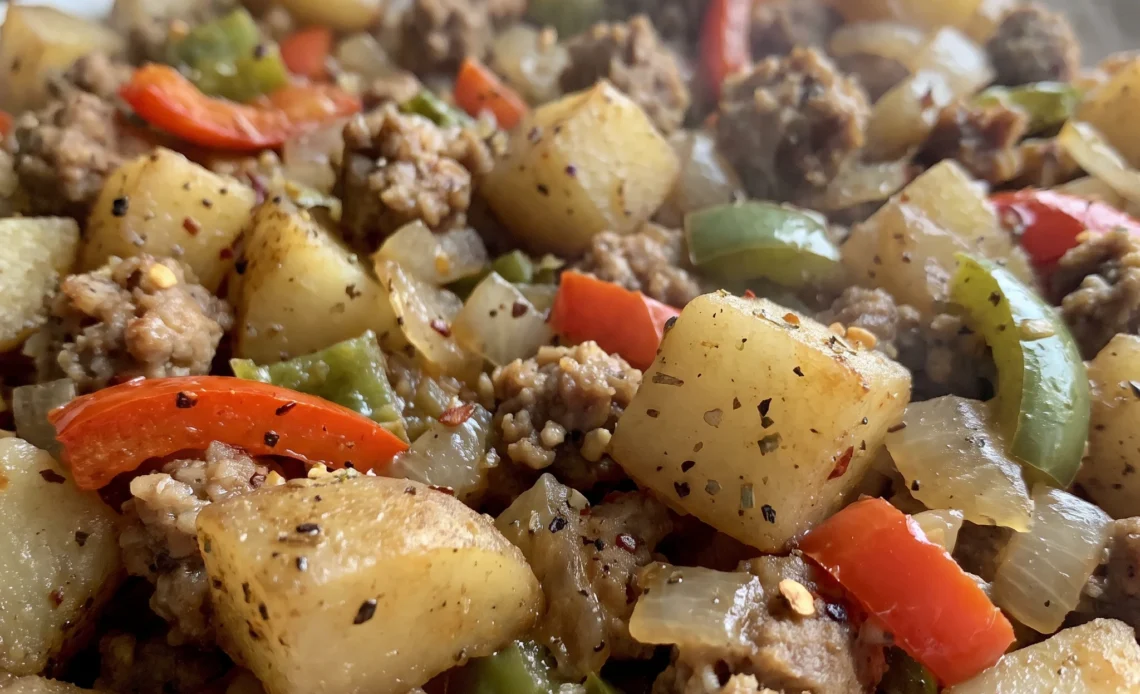
Wet potatoes are what wreck a vegan potato sausage skillet. Water clinging to the cubes after they come out of the pot hits hot oil and steams instead of frying, and you end up with pale, soft chunks and sausage that never takes on color. The fix isn’t complicated, but the margin is real: potatoes that look dry to the eye still hold enough surface moisture to slow everything down, and vegan sausage brings its own dampness to the pan.
This skillet leans on a parboil and a hot pan to get around both, and the result is worth the extra step. What separates a good version from a forgettable one isn’t the seasoning.
It’s the texture, and getting there means paying attention to a few moments where the pan tells you what’s happening.
When raw potato cubes go straight into a skillet, their surface starch gelatinizes and creates a sticky layer that holds moisture against the potato, so the cubes steam and turn gummy instead of browning. Parboiling the cubes first sets the exterior starch and firms the structure, so the potatoes hold their shape and shed excess moisture when drained. This recipe uses that parboil-then-drain approach because the final skillet sauté depends on dry, firm cubes making direct contact with hot oil to crisp.
Parboiling Potatoes Prevents Gummy Interiors
Cut potatoes straight into the skillet and they throw off starch that turns to a sticky film. The cubes steam instead of brown, and you end up scraping.
Parboiling solves that before the skillet ever gets hot. A brief boil sets the outside of each cube. The surface firms up, so when the potatoes hit the oil they hold their shape instead of collapsing into paste.
That firm shell also gives the interior time to finish cooking through without turning to glue. After draining, leave them in the colander for a few minutes.
Steam rolls off and the surfaces dry. Wet potatoes spit and stick; dry ones start to color as soon as they touch the pan.
You want cubes that are tender all the way through but still squared off, with no raw crunch at the center. That’s the texture that makes the finished skillet worth eating.
Build Aromatic Base Before Adding Vegetables
Onion goes in first for a reason. Over low heat, its sharpness fades and it sweetens, leaving a sticky brown film on the pan.
That film is where the dish gets its backbone. Peppers and jalapeño come later because they cook faster.
Add them too early and they slump into softness, losing the snap that makes each bite interesting. The same goes for the spice. Italian seasoning and red pepper flakes need a few seconds in hot oil to wake up.
Dump them in at the end and they taste flat, like dust. Let them sizzle with the onions and peppers, and their flavor spreads through every spoonful.
When the peppers are just tender but still hold their shape, and the onions are translucent, the base is ready. That’s the moment to move on. The pan should smell sweet and peppery, not raw.
Brown Sausage Before Combining For Better Texture
Vegan sausage straight from the package is damp and soft. Drop it in with the peppers and it steams, turning spongy and pale.
Crumble it into bite-sized bits first. Smaller pieces mean more surface area, so more of the sausage touches the hot pan. That’s what gives you crisp edges and a meaty chew.
Let it sit undisturbed for a minute or two. When it releases from the pan and picks up dark spots, you’ve got the contrast the dish needs. The browned bits taste deeper, almost toasted.
Add it after the peppers have softened, not before. The peppers release their own water, and if the sausage is in there while that happens, it never browns. Instead, it soaks up moisture and turns rubbery.
You want the sausage firm and slightly crisp, with no steaming. That’s the texture that holds up when the potatoes go in.
Finishing In The Skillet Makes The Dish
Everything’s cooked, but the dish isn’t done. Potatoes go back into the hot skillet with the sausage and peppers. Now they need direct contact with the pan.
Spread them out and let them sit. That’s how you get crispy edges, those browned spots that taste like roasted potatoes.
Tossing everything together does more than mix. The fat and seasoning on the sausage and peppers coat the potatoes, soaking in while they heat through. Any moisture left on the potatoes or in the pan evaporates.
If you skip this step and just stir everything in a bowl, you get a wet, lukewarm pile. The skillet drives off that water and concentrates the flavors. After a few minutes, the potatoes should look dry and slightly glossy.
Taste one. It should be crisp at the edges and fluffy inside, with the sausage and peppers clinging to it.
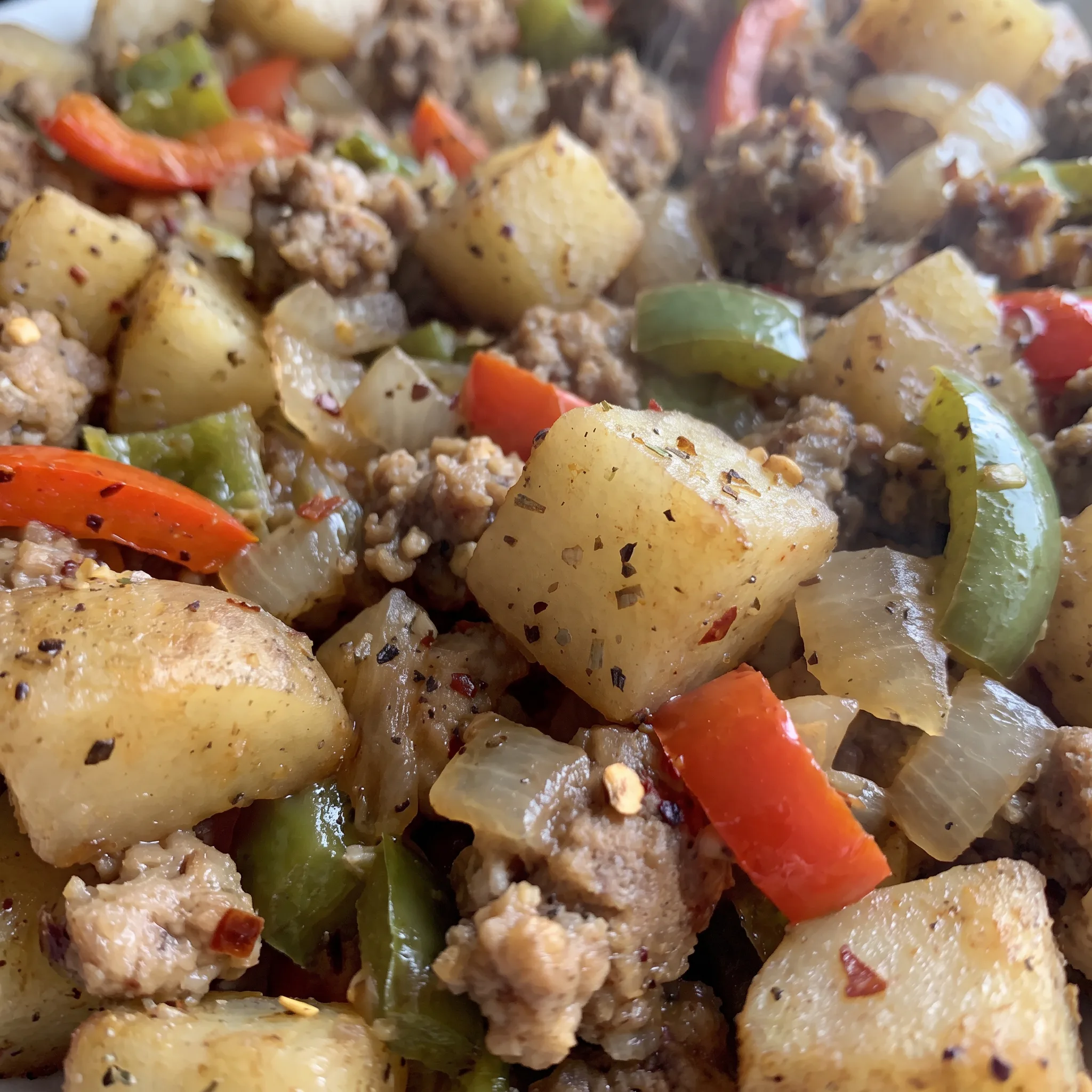
What to Look For Before This Skillet Starts
Potatoes: Waxy or all-purpose potatoes hold their cube shape through parboiling, while starchy russets break down and smear once they hit the skillet.
Vegan breakfast sausage: Buy the refrigerated crumbles or a firm patty-style link, since soft wet versions never shed enough moisture to brown properly.
Bell peppers: Pick peppers that feel heavy and firm with tight skin, because thin-walled ones collapse before they take on any color.
Jalapeño: A jalapeño with smooth unblemished skin carries steady heat, while one with faint striations across the shoulder runs noticeably hotter.
Reading the Pan at the Moments That Decide This Skillet
Judging the potatoes by feel, not the clock
A fork should slide in with almost no resistance, but the cube must stay squared off. If the tip meets a waxy center, give them another two minutes and test again. If the outside has gone ragged and the cube smears when you lift it, they have gone too far; drain immediately and handle them gently so they don’t break apart in the skillet.
Altitude and cube size both change the timing.
The moment the onions stop being sharp
They should look glassy, smell sweet, and leave a sticky film on the pan, not a puddle of water. If they’re still crunchy and raw-smelling, the heat was too high or they need more time. If they’ve turned dark brown, the pan was too hot and the base will taste bitter.
Pull the pan off the heat for a minute, then carry on with the peppers.
Knowing when the peppers are done but not slumped
They should be tender at the edges but still hold their shape when you stir. If they’ve gone limp and dull, they’ve overcooked and will disappear into the mix.
If they still squeak against the spoon, give them another minute. The pan should smell sweet and peppery, not raw or watery.
If liquid is pooling, raise the heat briefly to drive it off before the sausage goes in.
The point where the sausage browns instead of steams
Wait until the crumbles release from the pan and show dark spots on the underside. If they’re pale and clinging, the pan is too wet or not hot enough; spread them out and leave them alone for a minute.
If they’re turning dark too fast, lower the heat. Rubbery, steaming sausage means the peppers were still releasing water.
Correct by pushing the vegetables to one side and giving the sausage direct contact with the hot pan.
When the potatoes have dried out and taken on color
After the final five minutes, the cubes should look dry and glossy at the edges, with browned spots where they met the pan. If they’re still wet and pale, the pan wasn’t hot enough or they weren’t spread out; raise the heat and let them sit undisturbed. If they’re sticking and tearing, add a teaspoon more oil.
Taste one: crisp outside, fluffy inside, coated with the sausage and pepper fat. That’s the texture to stop at.
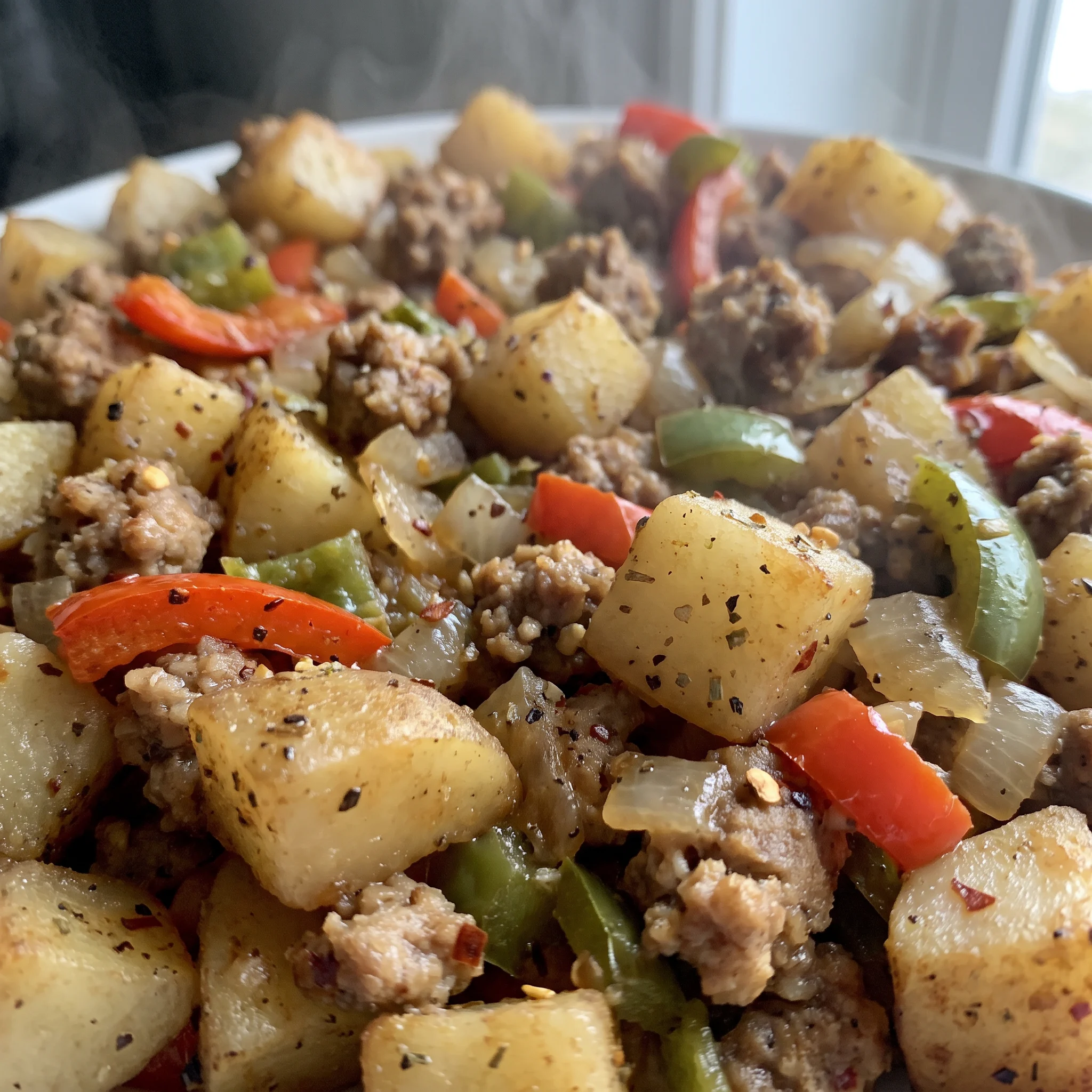
Vegan Potato Sausage Skillet with Bell Peppers
Ingredients
Method
- Heat a pot of salted water until boiling. As it warms, rinse and cube the potatoes into small pieces.
- Cook the potato cubes in boiling water for 10–15 minutes, until tender and a fork slides in easily; timing depends on cube dimensions and altitude.
- Meanwhile, peel and chop the onion, then sauté it in 3 tbsp olive oil with a pinch of salt over low heat for about 5 minutes, until it becomes translucent.
- Stir in the chopped bell peppers, jalapeño, red pepper flakes (if using), and 2 tsp Italian seasoning. Raise the heat to medium and cook for another 5 minutes. Add the vegan sausage, crumbling it into bite-sized bits, and cook until it starts to brown.
- Drain the potatoes and leave them in a colander for about 5 minutes to shed extra moisture. Transfer them into the onion, pepper, and sausage mixture.
- Mix thoroughly and continue to sauté for an additional 5 minutes. Adjust salt and black pepper to taste.
Swap the Sausage, Keep the Potatoes
Vegan breakfast sausage: Any plant-based sausage, or a crumbled veggie burger. The sausage is the most flexible part of this skillet. A different brand, a spicy variety, or even a veggie burger broken into bits will all work.
What matters is the form: crumbles or firm patties brown and give you crisp edges, while soft, wet links steam and turn spongy. If you use a veggie burger, crumble it the same way.
The seasoning and fat it brings will change the final flavor, so taste before adding extra salt. Start with the same amount the recipe uses, about one package, and adjust after you see how it browns.
Potatoes: No swap needed. Leave the potatoes alone.
They set the structure and the bulk of the dish. Waxy or all-purpose potatoes hold their shape through parboiling; starchy russets break down and smear.
Sweet potatoes or other roots would change the texture and cooking time entirely. Stick with the 4 cups of cubed potatoes the recipe calls for.
Olive oil: Any neutral high-heat oil. Olive oil carries the flavor and helps the potatoes crisp.
You can use avocado, canola, or another neutral oil if you prefer, but the taste will be slightly different. Use the same 3 tablespoons.
If you swap in a strongly flavored oil like toasted sesame, it will dominate. For a butter alternative, use a vegan butter that can take medium heat, but watch for burning.
Italian seasoning: A mix of dried oregano, basil, and thyme. Italian seasoning is a blend, so if you’re out, combine equal parts dried oregano, basil, and thyme to make 2 teaspoons.
The flavor will be close but not identical. You could also use herbes de Provence or a pinch of dried rosemary, but rosemary can overpower. Adjust after tasting.
The recipe calls for 2 teaspoons; start there and add more if the skillet tastes flat.
Tips
- Cut the potatoes into 3/4-inch cubes, or a little smaller if your knife hand is steady, and keep every cube within a quarter inch of the others. The 10 to 15 minute parboil finishes them evenly, and then the final 5 minutes in the skillet is enough to heat them through and crisp the outside. Cubes that range from pea-sized to walnut-sized will not do that: the small ones break down into the oil and the large ones stay firm in the middle, so you end up cooking past the point where the small ones hold together.
Storing and Reviving Leftovers
Eat this within 30 minutes of the final five minutes in the skillet. That’s the window where the potato edges are still crisp and the sausage crumbles hold their browned crust.
Cool leftovers within an hour, then refrigerate in a shallow container with the lid slightly ajar until the steam stops, then seal. The potatoes lose their crisp edges in the fridge, and by day two the sausage softens and the peppers go slack.
It stays safe longer, but texture drops fast. Reheat in a hot skillet with a teaspoon of oil, spread in a single layer, undisturbed for 3 to 4 minutes, then stir. The microwave steams them and leaves the potatoes slick and the sausage spongy.
Freeze only the sausage and pepper mixture if you have extra; the potatoes thaw grainy and waterlogged. Any finishing salt or squeeze of lemon goes on after reheating, never before storing.
Frequently Asked Questions
Can I make this potato sausage skillet ahead of time and reheat it?
Cook it and eat it fresh if you can: the crisp edges on the potatoes and the browned crust on the sausage are at their best within about half an hour of the final skillet step. If you’re planning ahead, the sausage and pepper mixture is the part that survives; the potatoes don’t.
Cool everything within an hour, refrigerate in a shallow container with the lid cracked until the steam stops, then seal. Reheat in a hot skillet with a teaspoon of oil, spread in a single layer and left undisturbed for a few minutes before stirring.
The microwave steams the potatoes slick and turns the sausage spongy.
Why did my potatoes turn out mushy instead of crispy?
Most likely the cubes were still wet when they hit the pan. After draining, the potatoes need those few minutes in the colander to shed surface moisture, and if you skip that, they steam and stick instead of browning.
Second check: overcrowding. Four cups of cubed potatoes need room to sit in a single layer against the hot pan; pile them up and they’ll release water and go soft.
If they were waxy or all-purpose, they should hold their shape; starchy russets break down and smear no matter what you do. And once they’re in the skillet, leave them alone for a bit so the undersides can color.
How is this vegan skillet different from a traditional meat-based potato hash?
The biggest difference is the sausage. Traditional hash often relies on pork fat rendering out to crisp the potatoes; here, the vegan sausage brings its own fat and browning, but it starts out damp, so you have to crumble it and let it sit undisturbed to get those dark spots. The seasoning leans Italian rather than the usual paprika or cayenne, with oregano, basil, and thyme doing the work.
And because there’s no meat drippings, the olive oil carries the flavor and helps the potatoes crisp. Texture-wise, you still get crisp-edged potatoes and a savory, peppery base; the sausage just tastes lighter and a bit more herbal.
