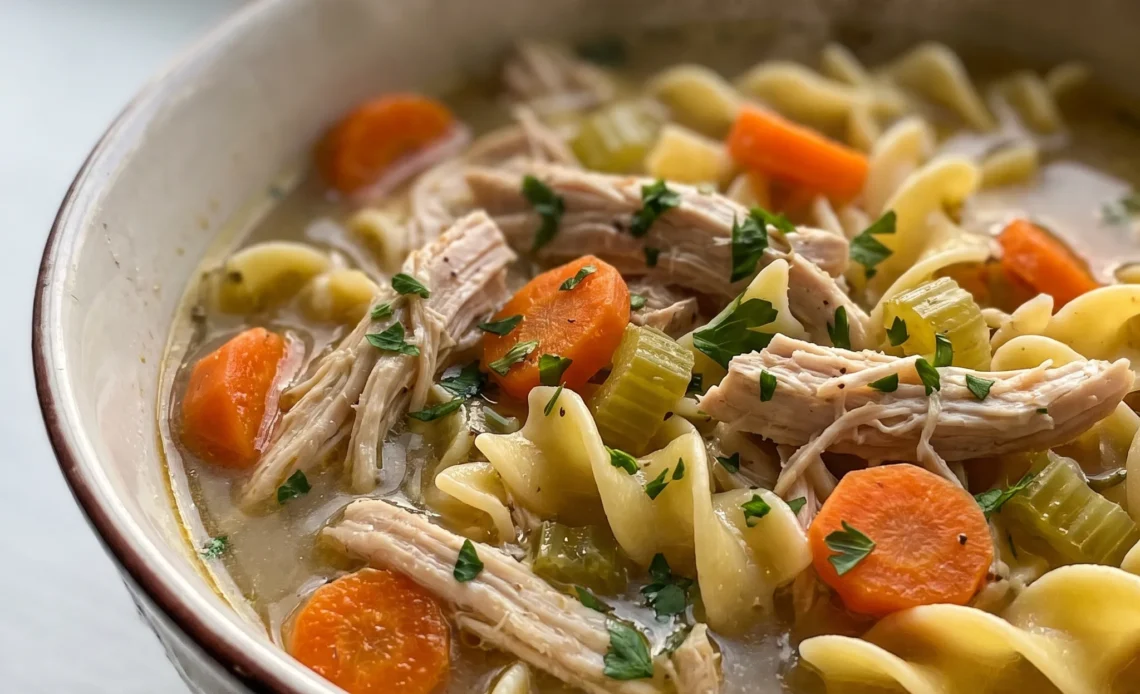
Pull a noodle out of the pot and it should still show a faint pale line at the core, because it keeps drinking broth after the heat cuts. That’s the whole gamble with crockpot chicken noodle soup: eight cups of liquid going in, less coming out, and salt that reads differently once the pasta has taken its share. Chicken breast is the other quiet risk.
It shreds cleanly at the right moment and frays into dry strings a half hour later, and you won’t know which one you’ve got until you press it. Searing first is optional and worth it, though the broth you end up with is the real tell.
What follows is the reading of the pot, not just the dump-and-go.
Egg noodles are a quick-cooking pasta that turns from tender to mushy in just a few minutes of extra exposure to hot liquid. In a slow cooker, the broth stays near a simmer for hours, so if the noodles are added at the start, they will overcook and break apart. The signal that they are ready is a firm but yielding bite with no raw flour taste; once they feel soft and start to swell or shed starch, it is too late to reverse the mushiness.
Searing Builds Flavor Before the Slow Cook
Searing the chicken first isn’t mandatory, but it’s a step worth taking when you have a few extra minutes. That quick browning in a hot skillet creates a savory depth that slow cooking alone can’t quite match. You’ll notice a richer, more rounded flavor in the finished soup, especially in the broth.
The browned bits left in the pan are pure gold; deglaze with a splash of broth and add it all to the crockpot. It’s an easy way to layer in extra taste without much effort.
Layer Ingredients for Even Cooking
When you assemble the crockpot, start with the chicken and vegetables at the bottom. This gives them direct contact with the heating element, so they cook evenly and their flavors infuse the broth as they soften. Pour the broth over everything; it distributes heat and keeps things from sticking.
Dried herbs and the bay leaf go in before cooking so they have time to rehydrate and release their essence. A gentle stir combines everything, but avoid overmixing. The result is a balanced base where each component contributes to the whole.
Noodles Go In at the End
Egg noodles are delicate and cook fast. If you add them at the start, they’ll absorb too much liquid and going soggy.
Instead, wait until the chicken and vegetables are fully cooked, then stir them in. The residual heat and simmering broth will cook them gently in just a few minutes.
You want them tender but still with a bit of bite. This way, they keep their shape and texture, and the soup stays satisfying.
It’s a small step that makes a big difference in the final bowl.
Shredding the Chicken for Better Distribution
Once the chicken is cooked, take it out and shred it with two forks. This does more than just break it apart; it creates pieces that blend seamlessly into the soup. Shredded chicken soaks up the broth and delivers tender meat in every spoonful.
Return it to the pot before adding the noodles so it stays moist and flavorful. The two-fork method is quick and gives you the right texture, neither too chunky nor too fine.
It’s a simple step that ensures each serving is hearty and comforting.
Adjusting Seasoning at the Finish
After the noodles are cooked, taste the soup and adjust the salt and pepper. The noodles absorb salt as they cook, so the broth may need a little more. Using low-sodium broth gives you control over the final salt level.
A fresh grind of black pepper adds a bright kick that complements the herbs. Don’t skip this step; a final taste ensures the soup is well-balanced.
Ladle into bowls and garnish with parsley for a fresh touch.
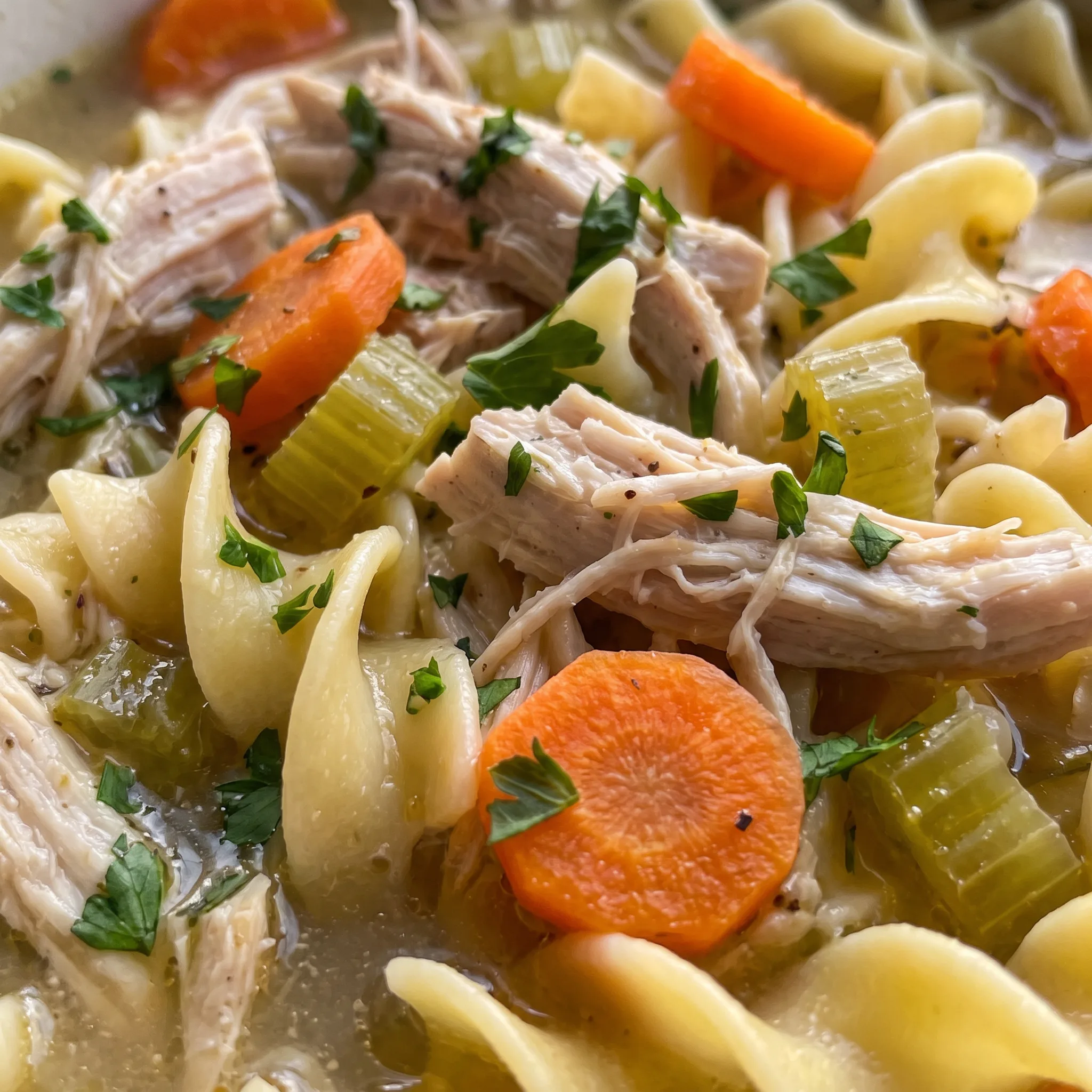
What to Grab for This Pot
Boneless, skinless chicken breasts: Trim any ragged edges and silverskin before they go in, since those bits turn tough and never soften no matter how long they cook.
Yellow onion: Dice it to a uniform quarter inch so the pieces disappear into the broth by the time the chicken is ready to shred.
Dried thyme: Rub a pinch to the touch over the pot before it goes in, which wakes up the oils and gives you more perfume than dumping it in whole.
Wide egg noodles: Buy the wide, wavy kind rather than fine or thin noodles, which collapse into paste in the time the wide ones need to turn tender.
Bay leaf: Count them as they go in, because a whole leaf left behind in the pot turns the broth bitter and there’s no fishing it out later.
Reading the Pot at Three Points Where This Soup Is Won or Lost
Knowing When the Chicken Is Done Enough to Shred
Chicken breast goes from shreddable to stringy and dry faster than you’d think. At 6 hours on low, press a breast with the back of a spoon. If it gives with almost no resistance and the fibers separate under gentle pressure, it’s ready.
If it springs back, give it another 30 minutes. Past 7 hours, the meat starts to crumble into frayed bits that cloud the broth and lose their bite.
Judging the Noodles Between Tender and Gone
Egg noodles keep cooking in the hot broth after the pot is off, so pull them while they still have a faint chalky line at the center. At 15 minutes, fish one out and bite it. If it’s soft all the way through with no resistance, they’re already past their best.
The window between al dente and blown-out is short, maybe 3 or 4 minutes. Undercook slightly rather than risk it.
Tasting for Salt After the Noodles Have Taken Their Share
Noodles pull salt from the broth as they cook, so the pot tastes flatter right after they go in than it did before. Wait until the noodles are done, then taste a spoonful with a piece of noodle in it.
If the broth tastes right but the noodle tastes bland, add salt a quarter teaspoon at a time. If you salt before the noodles finish, you’ll overshoot and the final bowl will be sharp.
Reading the Broth for Body and Grease
After 6 hours, the surface should look slightly glossy with small beads of fat from the chicken, not a heavy slick. A thin, watery broth means the vegetables haven’t broken down enough; give it another 30 minutes on low. If there’s a thick layer of fat, skim it off with a spoon before adding noodles.
Too much fat coats the tongue and mutes the herbs.
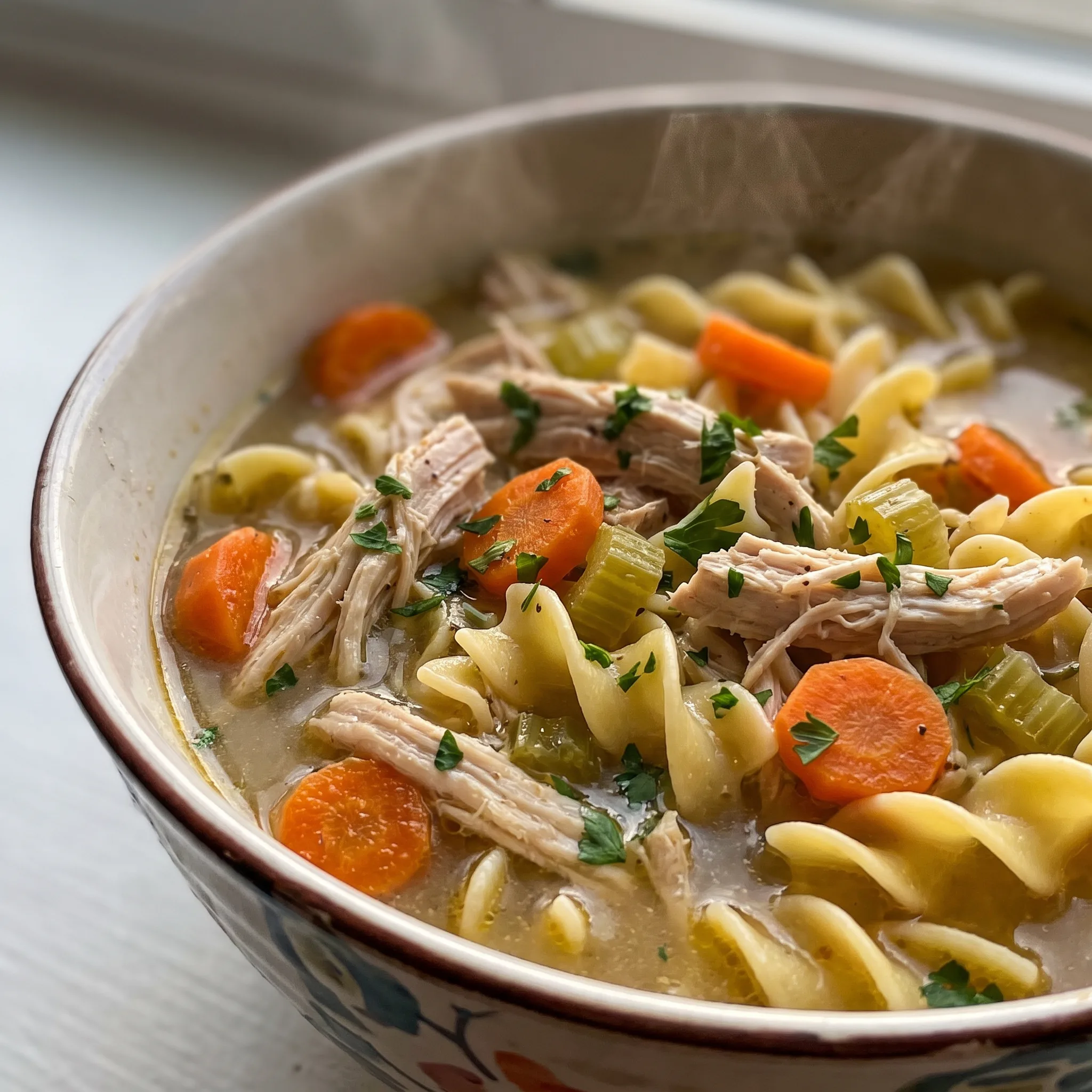
Crockpot Chicken Noodle Soup with Carrots
Ingredients
Method
- If you have a few extra minutes, heat olive oil in a skillet over medium-high heat and sear the chicken breasts for 2 minutes per side. This is optional but adds deeper flavor to the finished soup.
- Place the chicken breasts, carrots, celery, onion, and garlic into the bottom of a 6-quart or larger crockpot.
- Pour in the chicken broth, then add the thyme, parsley, bay leaf, salt, and pepper. Stir gently to combine.
- Cover and cook on low for 6 to 7 hours, or on high for 3 to 4 hours, until the chicken is fully cooked and the vegetables are tender.
- Remove the chicken breasts and shred them with two forks on a cutting board or plate.
- Return the shredded chicken to the crockpot. Discard the bay leaf.
- Stir in the egg noodles, cover, and cook on high for an additional 15 to 20 minutes, until the noodles are tender but not mushy.
- Taste and adjust the seasoning with more salt and pepper as needed.
- Ladle into bowls, garnish with a sprinkle of fresh parsley, and serve warm.
Swaps That Hold Up in a Slow-Cooked Broth, and the Ones That Don’t
Wide egg noodles: Gluten-free wide noodles or a firm gluten-free fusilli work, but keep the same 2 cups the recipe calls for and add them the same way, in the last 15 to 20 minutes on high. Rice noodles are a different story: they drink broth and go slack fast, so if you use them, add them in the last 5 to 8 minutes and expect a softer bowl. For low-carb, skip the pasta entirely and stir in spiralized zucchini or shredded cabbage in the last 10 minutes, which keeps some bite without the starch.
Gluten-free pasta often runs a touch firmer, so taste at 15 minutes rather than trusting the clock. Zucchini and cabbage won’t thicken the broth the way noodles do, and the pot will read thinner on the spoon.
Boneless, skinless chicken breasts: Bone-in, skin-on chicken thighs can go in instead, but they need longer in the pot, closer to 7 to 8 hours on low, and you’ll pull them out to strip the meat from the bones and skin before returning it. Boneless thighs land in between and finish in about the same 6 to 7 hours as the breasts. Thighs give up more fat into the broth, so skim the surface before the noodles go in or the herbs get buried under a slick.
The meat comes out silkier and less prone to drying than breast, which is the trade for the longer wait.
Chicken broth: Vegetable broth or a mushroom broth works if you want the pot meatless, and the amount stays the same at 8 cups. Water with a couple of bouillon cubes is a fallback, though you’ll want to taste before adding the teaspoon of salt since cubes vary wildly in how salty they land. Vegetable broth reads sweeter and lighter, so the thyme and bay leaf carry more of the load.
The finished soup tastes less like chicken, which is obvious but worth saying before you commit eight cups to it.
Dried thyme and dried parsley: Fresh thyme can replace the dried, but you need roughly three times as much since fresh leaves hold more water and less punch. For 1 teaspoon dried, go with about a tablespoon of fresh leaves, added in the last 30 minutes so they don’t cook into nothing. Fresh parsley belongs at the bowl, not in the pot.
Fresh herbs in early taste green and then fade to almost nothing after hours of heat. Dried holds up better here, which is why the recipe leans on it.
Yellow onion: A leek, white and light green parts only, sliced thin, or a couple of shallots, will stand in for the onion. Use about the same volume and don’t bother changing the timing. Leeks bring a gentler, sweeter allium note and break down softer, so the broth tastes rounder rather than sharper.
Shallots lean more delicate and disappear faster, which suits a pot you’ll eat over a couple of days.
Tips
- The teaspoon of salt in the recipe assumes a full 8 cups of broth that stays put. Because the noodles soak up liquid and the pot reduces over 6 to 7 hours, the finished soup can taste saltier than the broth did at the start. Hold the salt back, cook the noodles, then taste a spoonful with a noodle in it and salt from there. You may only need half the teaspoon, or none if your broth runs salty.
- Low-sodium broth is the right call here because you can always add salt but never take it out. If you only have regular broth, dilute it with 2 cups of water to bring the sodium down, then taste after the noodles cook and add salt as needed. The finished pot will still read seasoned because the chicken, vegetables, and herbs contribute their own savoriness.
Storing Chicken Noodle Soup So the Noodles Don’t Drink the Pot
The bowl is at its best within about 30 minutes of the noodles finishing. Past an hour on the warm setting, they keep swelling and the broth thickens around them.
For leftovers, fish the noodles out with a slotted spoon if you can, store them in their own container, and refrigerate both parts for up to 3 days. Together in one container, the noodles pull broth overnight and you’ll ladle out something closer to a stew by morning.
Reheat gently on the stove, adding a splash of broth or water to loosen it, and return the noodles for the last minute or two. The chicken and vegetables hold fine; it’s the noodles that dictate the clock. Freeze the soup base without noodles for up to 3 months, since egg noodles go slack and grainy in the freezer.
Add the parsley garnish after reheating, never before storing, or it darkens and tastes like wet hay.
Frequently Asked Questions
Can I put frozen chicken breasts in the crockpot for this soup?
You can, but the pot behaves differently and you’ll want to tack on time. A solid frozen block drops the broth temperature for the first hour or so, so the vegetables sit in cool liquid longer and the chicken finishes later than usual.
Thaw them if you have the hours, because frozen breasts also release more water as they come up to temperature, and that dilutes a broth you’ve already salted. If you do go frozen, pull a breast at the usual point and press it; if the fibers don’t give, it needs more time.
How do I keep the noodles from getting mushy in the crockpot?
Pull them while a faint chalky line still shows at the center of the bite. Egg noodles keep softening in the hot broth after the pot goes off, so the few minutes of carryover do the last of the work for you. The other lever is the pot itself: 2 cups of wide noodles in 8 cups of broth is a lot of liquid for the pasta to sit in, so if the soup will wait before serving, fish the noodles out and hold them separately.
Undercooking slightly beats the alternative every time.
Can I make this chicken noodle soup ahead of time and reheat it?
Yes, and the broth side of it actually improves after a night in the fridge. The catch is the noodles, which keep drinking broth as they sit. Cook the base through the shredded chicken stage, cool it, and refrigerate that for up to 3 days; boil the noodles separately the day you eat, or hold leftover noodles in their own container.
Reheat the base gently on the stove with a splash of broth or water to loosen it, then return the noodles for the last minute or two. Keep the parsley for the bowl, since it darkens and tastes like wet hay once stored.
What’s the difference between this crockpot version and classic stovetop chicken noodle soup?
Time and the texture of the chicken, mostly. On the stove you’d simmer the whole thing in under an hour and the breast stays in neat slices or chunks; here the meat sits in liquid for 6 to 7 hours on low, so it comes out shreddable and gives the broth a fuller, softer body from the vegetables breaking down.
The stovetop pot also lets you cook the noodles right in the broth without worrying about them sitting, which is why that version holds up better if you plan to eat it over a couple of days. What you trade for the long cook is depth from the vegetables and a pot you can walk away from.
