
Whipped feta dip isn’t a cream-cheese spread with feta stirred in. It’s tangier, lighter, and built on yogurt, with a whole head of roasted garlic worked in until the mixture turns silky. The hard part is texture.
Too much yogurt and it slides off a chip; too little and it clogs the blender. Feta brings its own salt, so seasoning early is a trap.
If you get it right, the whip tastes far richer than it has any right to, and the garlic reads sweet rather than sharp. That’s the version worth making.
When you blend cold feta with cold yogurt, the fat globules stay solid and the mixture remains curdy, no matter how long you process. The dip will look like cottage cheese rather than a silky puree, and you cannot fix it by adding more liquid. The critical moment is after 30 seconds of blending, if you still see distinct white flecks of feta and the mixture feels gritty to the touch, it is already too late to achieve a smooth texture.
Roasted Garlic’s Mellow Sweetness
Raw garlic in a dip like this hits you with a sharp, burning heat that drowns out the feta and yogurt. Roasting the whole head in its skin changes that completely.
The foil packet traps steam, so the cloves cook gently and their natural sugars concentrate into something sweet and jammy. You’ll smell it before you even open the foil, a deep, nutty aroma that’s nothing like the raw stuff. Keeping the individual cloves unpeeled is key: the skins protect the garlic from burning or drying out as it roasts.
When you squeeze a clove, it should slip out easily, soft and caramel-colored. That paste blends seamlessly into the dip, giving it a mellow backbone instead of a harsh bite. If you’ve ever bitten into raw garlic and felt that burn, you know why this step matters.
The result is a garlic flavor that’s rich and rounded, not aggressive.
Yogurt and Feta: The Ratio That Defines the Dip
Greek yogurt is the dial that controls whether this dip is a thick spread or a loose, dippable whip. Use ¾ cup and you’ll get a dense, scoopable mixture that holds its shape on a cracker.
Go up to 1 cup and it loosens into something more like a dip for chips, still creamy but with a softer set. The fat content matters too: 2% yogurt gives a lighter body, while whole milk brings more richness and stability, so the dip won’t weep as quickly. Feta is naturally salty, so taste before you add any extra salt.
Often, just a few grinds of pepper are all that’s needed. The feta’s salt seasons the entire batch, so a heavy hand with the salt shaker can ruin it. Aim for a balance where the tang of yogurt and the brine of feta meet in the middle.
You want each bite to feel lively, not weighed down.
Lemon and Olive Oil: The Smooth Operators
Lemon juice and olive oil do more than add flavor. The acidity from lemon cuts through the richness of the feta and yogurt, keeping the dip from tasting flat or cloying. Without it, the dairy can feel heavy on the palate.
Olive oil, on the other hand, helps everything blend into a silky texture. Skip it and you might end up with a grainy, crumbly paste instead of a smooth whip. The tang from lemon and yogurt also balances the sweetness of the roasted garlic.
You want a subtle interplay: the garlic’s mellow sugar, the yogurt’s tartness, the lemon’s bright edge. When you taste it, the dip should feel lively, not heavy.
A good whip coats a spoon but still drips slowly. That’s the texture to aim for. If it’s too thick, a little more lemon juice or olive oil can loosen it, but add gradually so you don’t overshoot.
The Garnish: More Than a Pretty Face
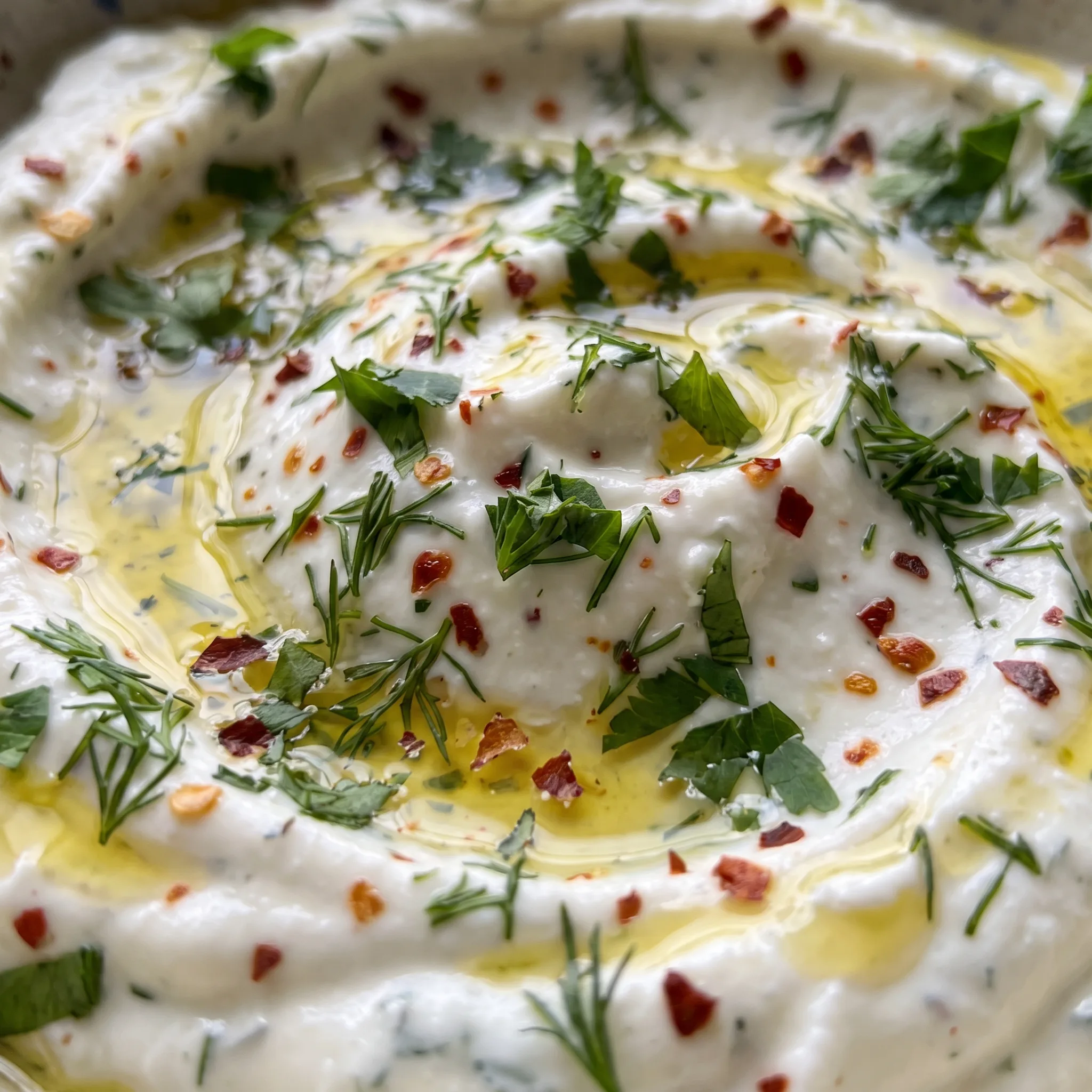
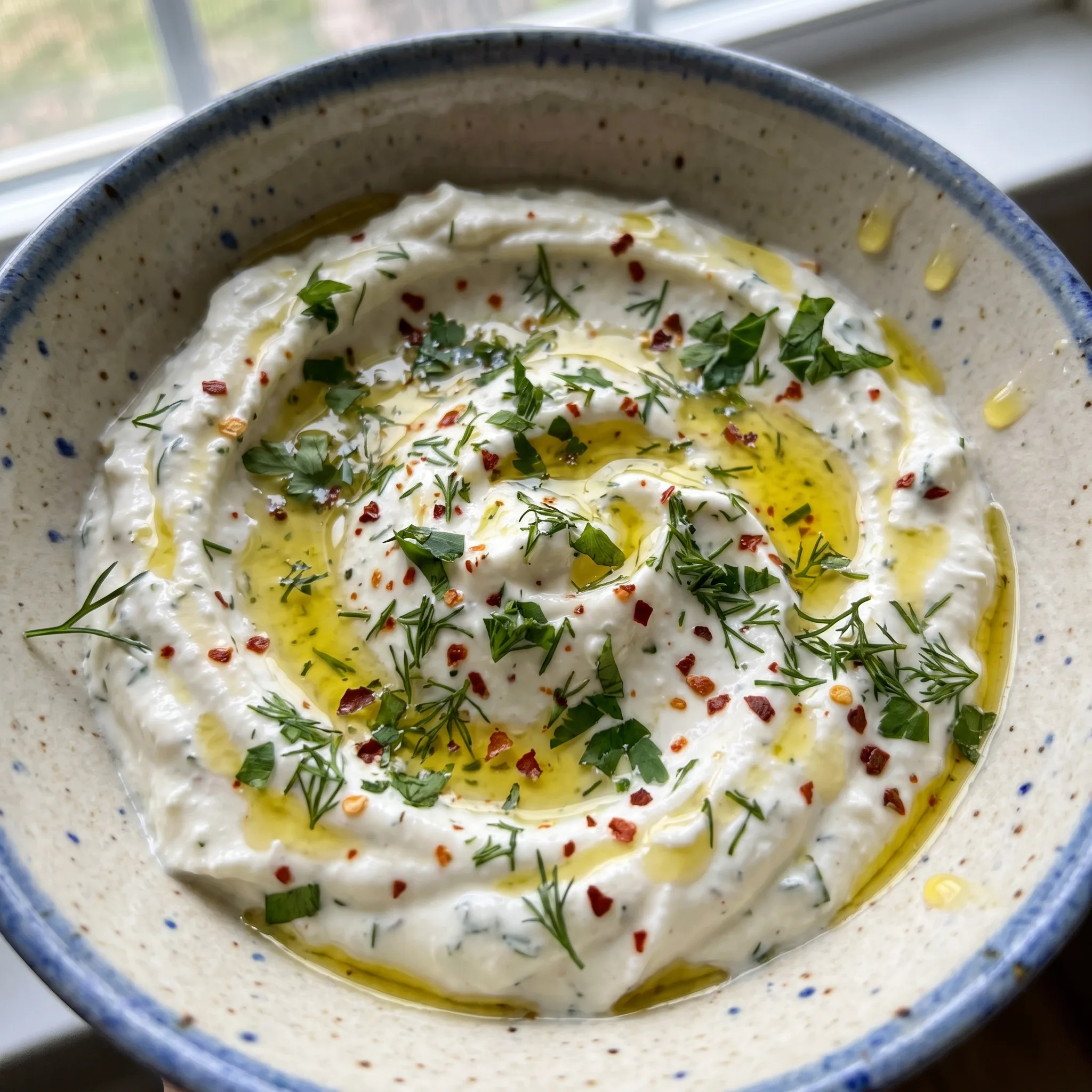
Fresh herbs like parsley, chives, or dill add a bright, grassy note that lifts the heavy dairy base. They’re not just for looks; their freshness cuts through the richness, making each bite feel lighter. A drizzle of olive oil gives the surface a glossy sheen, inviting a swipe of bread or a vegetable stick.
Red pepper flakes, if you use them, bring a hint of heat that lingers pleasantly. Serving the dip in a shallow bowl isn’t arbitrary: it maximizes the surface area for garnishes, so every scoop gets some. Plus, it makes dipping easier, whether you’re using chips, crostini, or raw veggies.
The garnishes also signal how to eat it: as a shared appetizer, a spread for sandwiches, or a sauce for roasted chicken or vegetables. When you set it out, the colors should pop against the white dip. That’s the cue that it’s ready to serve.
What to Reach For and What to Watch
Garlic: One whole head, and keep the individual cloves in their skins so they steam soft instead of scorching.
Greek yogurt: The 2% or whole milk kind, since fat content decides whether the dip holds its shape or weeps.
Feta: Buy it in brine and crumble it yourself, because pre-crumbled feta is drier and saltier by brand.
Lemon juice: Squeeze it fresh, since the bottled stuff tastes flat and won’t cut the dairy the same way.
Fresh herbs: Parsley, chives, or dill, chopped fine so they cling to the oil drizzle instead of sinking.
Reading the Dip at Three Points Where It Can Go Wrong
Judging when the garlic is roasted through
The 40 minutes at 400°F is a target, not a rule. Open the foil and press a clove through the skin. It should give with no resistance, like a soft paste.
If it still feels firm, close the foil and give it another 5 minutes. Underroasted garlic won’t mash into the dip and leaves hard bits.
Overroasted turns bitter and dark. You want deep caramel color, not black.
Knowing if the dip needs more liquid or more body
After blending, stop and look. The texture should coat a spoon but still drip slowly. If it’s stiff and pasty, add lemon juice or olive oil a teaspoon at a time.
If it’s loose and runny, you’ve likely used too much yogurt or lemon. A tablespoon more feta can tighten it.
Adjust before you chill; cold firms it slightly, so aim for a touch looser than you want.
Tasting for salt before the feta takes over
Feta brings its own salt, and it varies by brand. Blend the base without any added salt first.
Taste. If it’s already savory enough, stop. If it tastes flat, add a small pinch.
Once salt is in, you can’t take it out. Over-salted dip kills the lemon and garlic.
You want the tang of yogurt and the brine of feta to meet, not one to dominate.
Roasted Garlic Whipped Feta Dip
Ingredients
Method
- Set oven temperature to 400°F (205°C) to preheat.
- Remove and throw away the outer papery layers from the whole garlic head, but keep the skins on the individual cloves. Slice ¼ inch from the top of the cloves so the garlic is exposed. Put the head on a medium piece of foil, pour olive oil over the top, loosely wrap with the foil, and place on a small sheet pan. Roast for 40 minutes until highly aromatic. Allow to cool 5 minutes before unwrapping the foil.
- When the garlic is cool enough to handle, press the roasted cloves out of their skins straight into a high-powered blender or food processor. Incorporate the yogurt, feta, olive oil, and lemon juice. Blend until smooth and thoroughly mixed, scraping down the sides as necessary. Add salt and pepper to taste and blend again.
- Move to a shallow bowl appropriate for dipping and drizzle with a little olive oil. Top with fresh chopped leafy herbs and optional red pepper flakes. Offer as a dip with chips, crostini, or vegetables; as a spread on sandwiches; alongside roasted chicken; or over roasted vegetables.
Storage and Serving: What Happens After the Whip Sets
Eat this within a day or two for the best texture. On day one it’s a soft, glossy whip that drapes over a spoon. In the fridge, the feta firms and the yogurt stiffens, so by day two it’s dense and scoopable rather than dollopy.
That’s normal, not a flaw. Store it in an airtight container with plastic pressed to the surface, which keeps the top from drying and forming a skin. Before serving a chilled portion, stir it well, then loosen with a splash of yogurt or olive oil until it flows again.
Add the olive oil, herbs, and red pepper flakes right before it goes out, never in advance; they sit on top, and stirring them in early dulls the herbs and muddies the surface. Leftovers hold three to four days in the fridge.
Don’t freeze the assembled dip: the dairy separates and weeps on thawing, and no amount of stirring brings the whip back.
What Swaps Hold This Dip Together and What Breaks It
Feta: Full-fat block feta in brine gives the creamiest whip. Pre-crumbled feta stays grainy and can taste saltier.
If you only have pre-crumbled, use it, but expect a less smooth texture and adjust salt after blending. Block feta breaks down into a silky base; pre-crumbled leaves tiny granules that never fully disappear.
The dip will still taste good, but the texture won’t be as rich.
Greek yogurt: Sour cream or labneh can replace the Greek yogurt. Keep the same ¾, 1 cup volume. Sour cream brings more fat and a milder tang; labneh is thicker and saltier, so you might not need added salt.
Sour cream makes the dip richer and slightly less tart. Labneh tightens the texture and adds salt, so taste before seasoning. Either way, the dip will hold its shape similarly.
Lemon juice: Fresh lime juice or a mild vinegar like white wine vinegar can step in. Start with half the amount, taste, and add more if needed. Bottled lemon juice is flat and won’t cut the dairy as well.
Lime brings a different citrus note that still brightens the dip. Vinegar is sharper, so use less. The goal is to keep the dip lively, not sour.
Fresh herbs: Dried herbs work in a pinch. Use about one-third the amount of fresh, and let the dip sit for a few minutes so they soften.
Hearty herbs like rosemary or thyme should be minced fine. Dried herbs won’t give the same fresh pop, but they’ll add an earthy note. The garnish won’t look as bright, but the flavor will still come through.
Tips
- Squeeze the roasted cloves into the blender while they are still warm, right after the 5 minute rest. Cooled garlic turns sticky and clings to the skins, so you end up scraping with a knife and still leaving papery bits behind. Those bits do not break down in the blender and show up as tan flecks in the white dip.

Frequently Asked Questions
Can I roast the garlic ahead of time and store it?
Yes, and it’s the smart move if you’re pulling this together for company. Squeeze the cooled cloves out of their skins and mash them into a paste, then pack it in a small airtight container with a film of olive oil over the surface so it doesn’t dry out.
It keeps in the fridge for several days, and the flavor actually deepens a bit overnight. Bring it to room temperature before blending, since cold roasted garlic paste won’t incorporate as evenly into the yogurt.
Why is my whipped feta dip grainy?
The feta is almost always the culprit. Pre-crumbled feta is drier and saltier than block feta packed in brine, and those dry granules don’t break down no matter how long you run the machine. Buy a block, crumble it yourself, and you’ll get a silky whip instead of a sandy one.
If you’re already using block feta, check that the roasted garlic went in as a smooth paste; firm chunks of underdone clove will read as grit too. A food processor or high-powered blender running long enough to scrape down the sides twice usually gets there.
How long does this dip last in the fridge?
Leftovers hold three to four days in an airtight container, though the texture shifts. Day one it drapes off a spoon; by day two the feta firms and the yogurt stiffens, so it’s dense and scoopable rather than glossy. Press plastic wrap right against the surface to keep a skin from forming on top.
Stir it well before serving and loosen with a splash of yogurt or olive oil until it flows again.
What’s the difference between this and traditional feta dip?
Traditional versions lean on cream cheese or sour cream as the base, with feta crumbled in for texture and bite. Here the yogurt does the work, so the dip tastes tangier and lighter, and the feta gets blended smooth rather than left in chunks.
The roasted garlic is the other departure: instead of raw minced clove, you get a sweet, jammy paste that softens the whole thing. The result reads more like a savory whipped spread than a thick cream-cheese dip, which is why it works as well on a sandwich as it does with chips.
Can I serve this dip warm or does it have to be cold?
Cold is the way it’s meant to go out, but nothing breaks if it’s cool rather than ice-cold. Straight from the fridge it’s stiff and scoopable; let it sit out fifteen or twenty minutes and it relaxes into that soft, glossy whip that drapes over a spoon. Don’t warm it, though.
Heat makes the yogurt slacken and the whole thing turns loose and weepy. Add the olive oil, herbs, and red pepper flakes right before serving, never in advance, so the herbs stay bright and the surface stays glossy.
