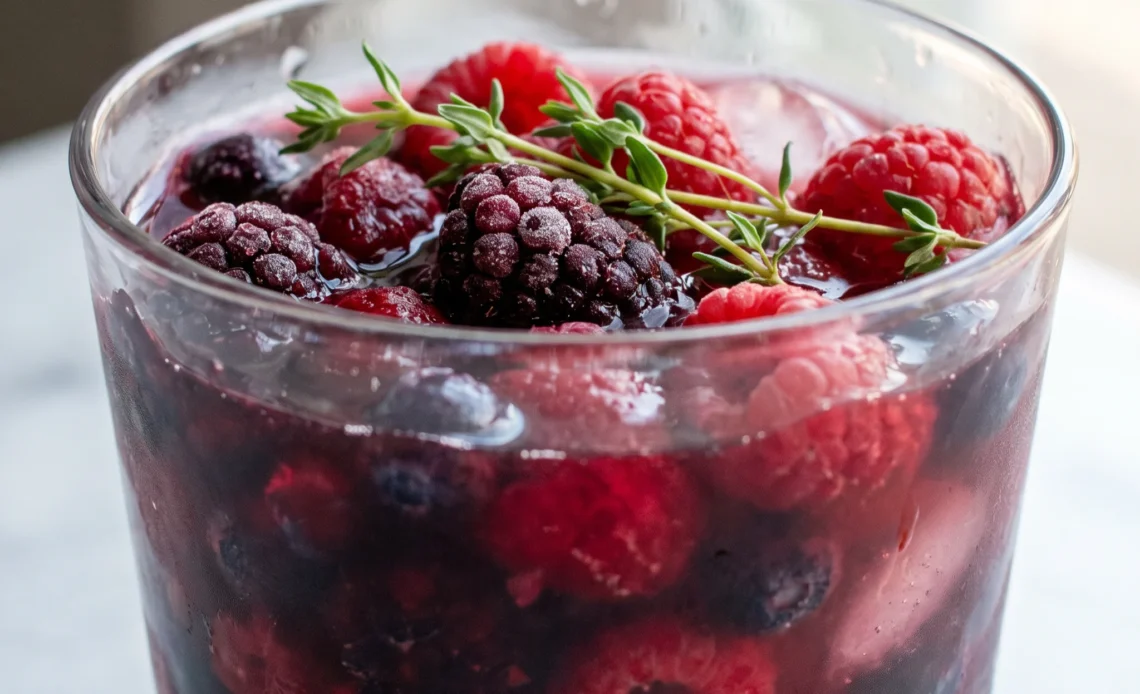
A drink that looks like it came from a bar with a real cocktail program, built at home in a pitcher with a spoon and a bag of frozen berries. That gap between how it presents and how little it asks is the whole appeal, and it’s also where people get into trouble: rum bottles vary enough in boldness that a light one vanishes behind all that pomegranate juice, and the mix will taste like fruit soda before you notice. Taste a spoonful before the pitcher leaves the counter.
Frozen berries do the chilling, so the drink stays full-strength instead of thinning out, and fresh raspberries and thyme go on at the very end or they collapse and cloud the pour. This pomegranate rum berry cocktail is one of those where the small checks matter more than the assembly.
Why stir this cocktail instead of shaking it?
Rum, pomegranate juice, Cointreau, and ginger beer go into a pitcher, and a spoon does the work. Shaking would whip air into the mix, leaving a frothy head and a hazy drink.
The goal here is a clear, deep red pour that catches the light, and stirring leaves it that way. Ginger beer carries the sparkle in this cocktail. All that fizz survives a gentle stir, but a hard shake knocks the carbonation out, and the drink tastes flat before it hits the glass.
Cointreau and rum blend with the juice in a few turns of the spoon. Nothing needs to be chilled in the pitcher because the glasses get their own cold element.
A clear, jewel-toned cocktail looks intentional; a cloudy one looks like a mistake. That clarity is worth protecting. Give the pitcher a final slow turn and pour.
What do frozen berries do besides look pretty?
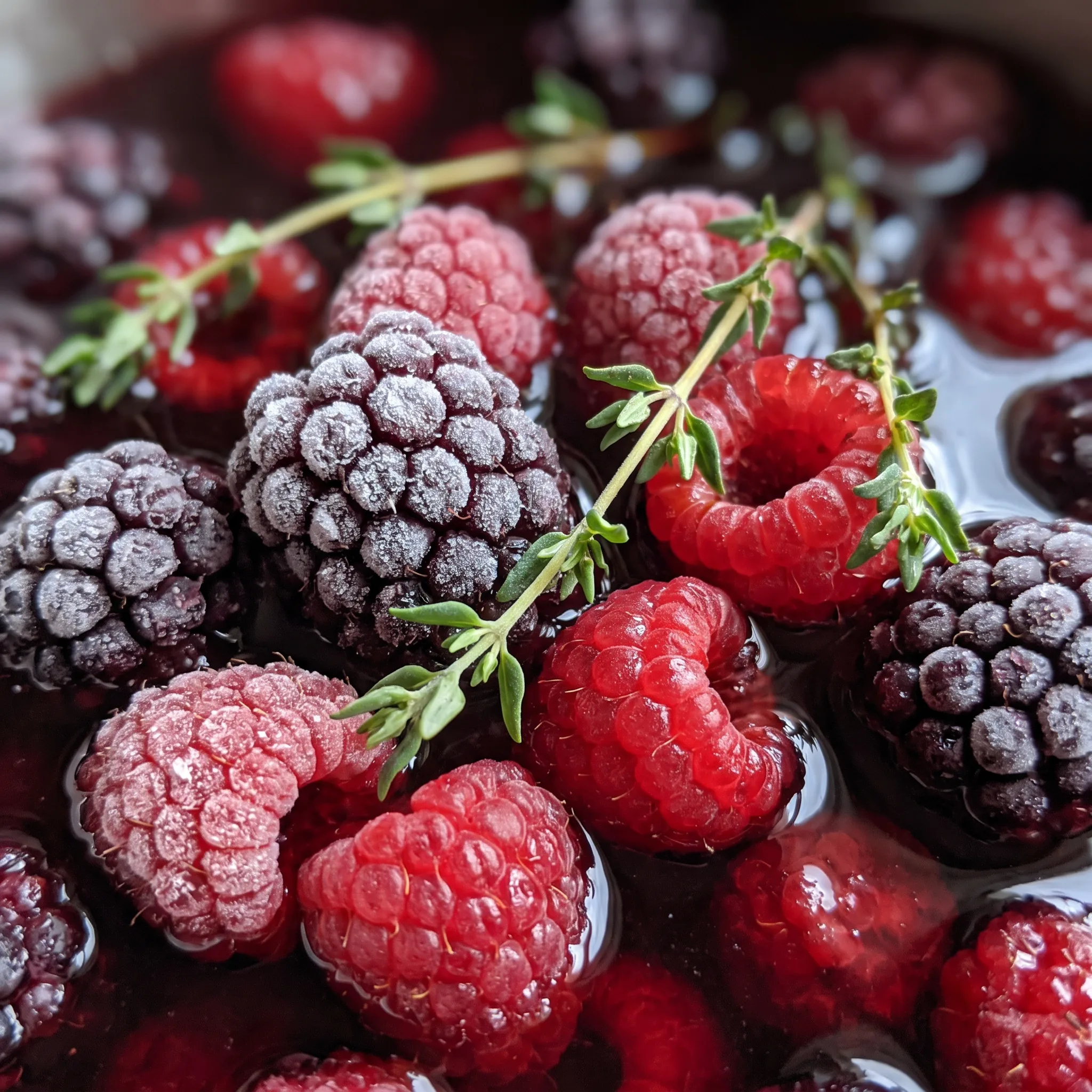
Those frozen mixed berries are the cooling system. They fill each glass about halfway and chill the cocktail from the inside without turning it watery the way ice cubes do. Ice melts fast and dilutes; frozen berries hold their shape and keep the drink cold for longer.
As they thaw, they let go of a little juice that softens the edges of the pomegranate and rum. The effect is subtle, not a fruit punch takeover. A handful of ice is optional because the berries already handle the job.
If your freezer runs warm and the berries feel soft, use them anyway; they’ll just chill a bit less. For the coldest pour, keep the berries frozen until the moment they go in the glass.
The drink stays brisk and full-strength down to the last sip, and the berries at the bottom are a nice bonus once the liquid is gone.
How do pomegranate, rum, and ginger beer balance?
Pomegranate juice brings the tartness and a deep red color that sets the tone for the whole drink. Spiced rum adds warmth and a bit of backbone, enough to remind you there’s alcohol here without burying the fruit.
Ginger beer sharpens everything with its spicy bite and bubbles, lifting the sweetness so the cocktail doesn’t sit heavy. Cointreau slips in a quiet orange note that ties the fruit and the spirits together, a bridge rather than a star.
Each ingredient has a job, and none of them shout over the others. The result is a drink that tastes bright first, then spicy, then warm on the finish.
If you sip it and only taste juice, the rum is too light; if the ginger burns, you’ve lost the fruit. A good pour keeps all three in view. This is a cocktail that rewards a quick taste before you commit to the full pitcher.
The reason garnishes go in at the end
Fresh raspberries and thyme sprigs are the last things to touch the glass for a reason. Raspberries are fragile; stir them into the pitcher and they collapse, turning the clear red liquid cloudy and seedy.
Thyme holds its aroma in the leaves, and those oils come out best when the sprig is left whole and laid on top, not crushed or steeped. Topping each glass just before serving keeps both garnishes looking and smelling their best.
The contrast matters too: frozen berries sit at the bottom, cold and firm, while the fresh raspberry and thyme sit at the surface, soft and fragrant. That difference gives the drink a little life beyond the liquid. If you garnish early, the thyme wilts and the raspberries bleed.
A few seconds of work at the end is all it takes. Set the sprigs so they stand up a bit, and the glass looks as good as it tastes.
What to check before these four ingredients hit the pitcher
Spiced rum: Bottles vary a lot in boldness, and a light one vanishes behind 510 ml of pomegranate juice, so pick something with real spice.
Pomegranate juice: Label should read 100% juice; anything labeled cocktail or blend is watered and sweetened, and the drink goes flat and sugary.
Spiced ginger beer: Ginger beer, not ginger ale, since ale is soft and sweet and won’t give the spicy bite this pour needs.
Frozen mixed berries: Keep them rock hard until they go in the glass; soft, half-thawed berries chill weakly and slump into the drink.
Fresh raspberries: Look for dry, firm berries with no dark wet spots, since a soft one collapses the moment it touches the liquid.
Fresh thyme: Leaves should be green and pliable with no dry brown patches, and the sprigs need to be sturdy enough to stand up in the glass.
Ginger beer holds carbon dioxide in solution under pressure; any agitation gives the gas nucleation sites to form bubbles that rise out of the liquid, so the drink loses its lift and turns flat. At the same time, shaking whips air into the pomegranate juice, and those suspended microbubbles make the liquid appear cloudy rather than clear. Stirring gently combines the ingredients without creating either effect, preserving both the sparkle and the jewel-toned clarity.
Reading the pitcher, the glass, and the pour before anyone takes a sip
Judging whether the mix is actually uniform
Pomegranate juice is dense and the rum and Cointreau are lighter, so they sit on top of each other until the spoon pulls them together. Watch the surface: streaks of darker red or a swirl that keeps its shape mean keep stirring. A uniform, even color with no ribbons is your signal.
Pour too early and the first glass tastes of straight spirit while the last tastes like juice.
The fill line on the frozen berries
Halfway up each glass is the target, and it’s worth eyeballing rather than guessing by handfuls. Too few berries and the drink warms fast, turns watery, and loses its chill before the bottom of the glass.
Too many and there’s barely room for the cocktail, so you’re drinking a shot of liquid over a pile of fruit. Aim for berries that sit loose, not packed, with clear space above them for the pour.
Tasting the balance before the whole pitcher goes out
Spiced rum varies wildly, and Kraken is bold while lighter bottles disappear behind 510 ml of pomegranate. Swirl a spoonful and taste.
If it’s all fruit and no warmth, the rum is being buried; if the ginger beer bites hard and the pomegranate vanishes, the pour is too heavy on the fizz. Cointreau should read as a faint orange thread, not a separate note.
How the pour sits over the berries
Pour slowly down the side of the glass. Fast pouring over frozen berries knocks the fizz out and muddles the layers, and you’ll see the drink go from clear red to cloudy in seconds. You want the liquid to settle gently around the fruit, leaving the berries intact at the bottom.
If it foams at the surface, you’ve lost carbonation and the glass will taste flat within minutes.
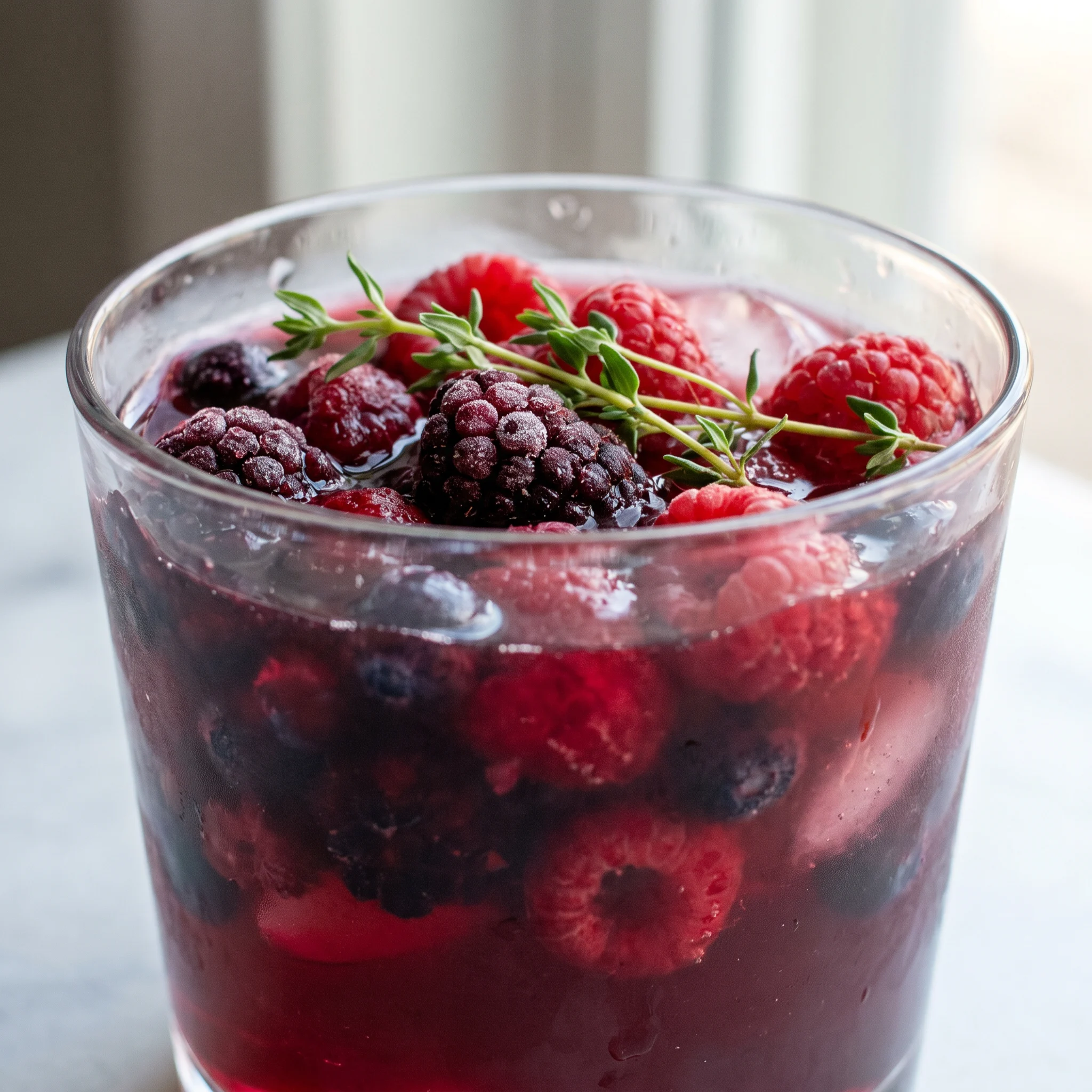
Pomegranate Rum Berry Cocktail with Thyme
Ingredients
Method
- Combine the spiced rum, pomegranate juice, Cointreau, and spiced ginger beer in a large pitcher by stirring until fully mixed.
- Place the frozen mixed berries into 4 to 6 glasses, filling them halfway; add a little ice if desired.
- Distribute the cocktail among the glasses, then top each with a few fresh raspberries and a sprig of fresh thyme just before serving.
Storing the Base, Holding the Garnishes Back
Mix the rum, pomegranate juice, Cointreau, and ginger beer ahead and keep the pitcher covered in the fridge. The base holds there for up to two days, and it stays clearer than you’d expect because there’s no fruit sitting in it. The carbonation fades after a day, so for the best fizz, stir the base again and top it with fresh ginger beer right before you pour.
Frozen berries and the raspberry-thyme garnish wait until serving. Berries stay frozen in the freezer; raspberries and thyme stay fresh and dry in the fridge. Add them to the glasses only when you’re about to drink.
A glass built with frozen berries and topped with fresh raspberries and thyme is at its best within about ten minutes, before the berries thaw enough to water down the cocktail and the thyme starts to wilt. Leftover poured cocktails don’t keep; the ice and berries dilute them fast. If you have extra base, store it separately and build fresh glasses.
Where a swap works and where it quietly wrecks the pour
Spiced rum: Use a dark or aged rum you already have, or a white rum if that’s what’s on the shelf. The pomegranate and ginger beer stay in charge either way.
A light white rum all but disappears behind 510 ml of juice, so the drink reads as fruit soda with a kick you can’t name. A dark or aged bottle brings its own vanilla and oak, which can nudge the drink sweeter and rounder. If your rum is light, start with the same 3 fl oz the recipe uses and taste a spoonful; add another half ounce only if the pour tastes like straight juice.
Pomegranate juice: No 100% pomegranate juice on hand? Use 100% tart cherry or unsweetened cranberry juice. Both bring the same kind of tart backbone and a deep red color, though cherry reads rounder and cranberry sharper.
What you can’t do is reach for a pomegranate cocktail or a juice blend. Those are watered and sweetened, and the drink goes flat and sugary, with the rum and ginger beer left fighting a syrupy base. Check the label for 100% juice before you pour.
Cointreau: Triple sec, Grand Marnier, or another orange liqueur works here. The orange note is a bridge, not a star, so the exact bottle matters less than you’d think.
Grand Marnier is sweeter and heavier, which pushes the drink toward a dessert feel; a basic triple sec is thinner and stays out of the way. Start with 2 tbsp, the same the recipe calls for, and taste. If the orange jumps forward and the pomegranate recedes, pull back to 1 tbsp next time.
Spiced ginger beer: Regular ginger beer is fine; diet or ginger ale is not. Ginger ale is soft and sweet, and it won’t give the spicy bite that lifts the pomegranate and rum. Diet ginger beer brings an aftertaste that hangs over the whole glass, and the bubbles fade faster too.
If you only have plain ginger beer, use it and expect a milder drink, not a bad one. The spiced version is what keeps the finish warm and sharp.
Frozen mixed berries: Any frozen berry mix you like, as long as it’s unsweetened. These berries are the cooling system, not a flavoring, so the blend matters less than the temperature.
A sweetened mix will slowly sweeten the drink as it thaws, which can tip a balanced pour toward candy. Keep them rock hard until they go in the glass. If your freezer runs warm and they feel soft, they’ll chill less and slump faster, but the drink still works.
Fresh raspberries: No fresh raspberries? Skip them rather than using frozen.
A frozen raspberry dropped in the glass bleeds and clouds the clear red liquid, and it won’t hold its shape on the surface the way a fresh one does. The garnish is there for looks and a soft perfume, not for flavor.
Leaving it out costs you nothing but a little color at the rim. If you have fresh blackberries or a thin slice of orange, either sits on top without muddying the drink.
Tips
- Taste the pomegranate juice before it goes in the pitcher. Bottles labeled 100% juice still swing from sweet to sharply tart depending on the brand and the year’s crop, and 510 ml is most of the drink. If a spoonful makes you wince, add 1 tsp sugar or 1 tsp Cointreau and stir before the rum and ginger beer go in; if it tastes flat and sweet, squeeze in a little lemon so the drink doesn’t land syrupy once the ginger beer is added.
- Chill the pitcher itself, not just the ingredients, if you’re mixing more than a few minutes ahead. A room-temperature pitcher pulls the cold out of the liquid on contact, and 510 ml of juice at fridge temperature warms fast in a warm vessel. Rinse the pitcher with cold water and leave it in the fridge while you gather everything, or fill it with ice water for two minutes and dump it. The pour then stays brisk longer, so the frozen berries have less work to do and thaw more slowly.
Frequently Asked Questions
Can I make this pomegranate rum berry cocktail ahead of time?
Mix the base and refrigerate it, but leave out the berries and garnishes until serving. The base keeps for up to two days, though the ginger beer loses its fizz after a day, so stir in fresh ginger beer right before you pour. Frozen berries go into the glasses straight from the freezer, and the raspberries and thyme go on top at the last second.
Build the glasses when you’re ready to drink; a poured cocktail with berries and ice sits too long and dilutes.
How do I keep the cocktail from getting watered down?
Lean on the frozen berries instead of ice; they chill the drink without melting into it. Fill each glass about halfway with berries and skip the ice, or use just a little.
Pour slowly down the side of the glass so you don’t knock the fizz out or stir up the layers. Once poured, drink it within about ten minutes, before the berries thaw enough to thin the cocktail.
What’s the difference between this and a classic rum punch?
A classic rum punch usually leans on citrus and a sweetener like simple syrup or grenadine, and it’s often shaken. Here, pomegranate juice does the tart work, ginger beer brings the sparkle, and Cointreau adds a quiet orange note instead of a loud citrus hit. The frozen berries chill the drink from the inside and slowly lend a little juice, which a traditional punch doesn’t do.
Stirring rather than shaking keeps it clear and carbonated, so it drinks brighter and less syrupy.
Can I use fresh berries instead of frozen?
You can, but you’ll lose the chilling effect that frozen berries provide. Fresh berries won’t hold the cold the same way and will soften faster in the liquid, so the drink warms sooner.
If you go fresh, chill the base well and add a little ice, and plan to drink right away. The texture will be softer and the drink less brisk, but the flavor still works.
How long can the garnishes sit out before they wilt?
The raspberries and thyme are best within about ten minutes of hitting the glass. After that, the thyme starts to wilt and the raspberries begin to bleed into the drink, clouding the clear red liquid. If you’re serving a crowd, garnish each glass just before it goes out, or set the raspberries and thyme sprigs on a small plate and let people top their own.
The frozen berries at the bottom can sit longer, but they’ll eventually thaw and dilute the cocktail.
