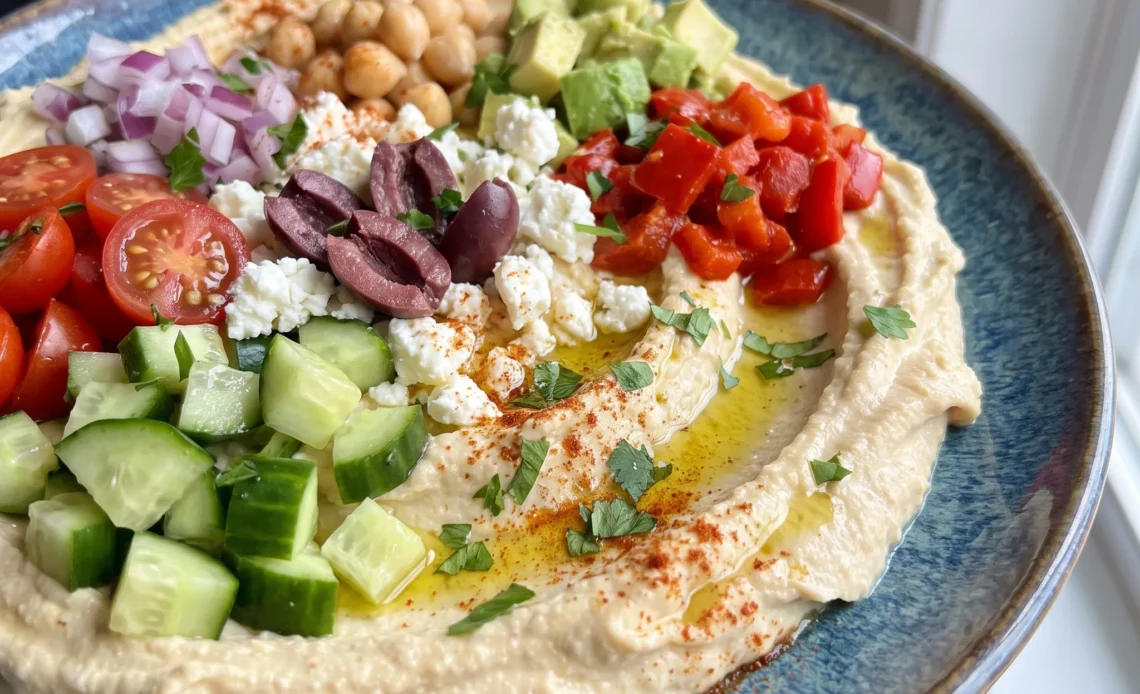
Twenty minutes, and the whole thing hinges on what happens in the first two: the wet toppings go down before the heavy ones, not after, or the hummus underneath starts pulling water and the platter you set out is soup by the time anyone gets to it. That order is the dish. A loaded hummus dip looks like a pile of vegetables on a spread, but the pile has a logic to it, and getting the sequence right is most of the work.
What the article won’t let you do is build it early and walk away, and the section on storage explains why the window is narrower than you’d want. If you’ve ever watched a platter go slack on the table, you already know which detail matters most.
The moment tomatoes and cucumbers are diced and salted, their cell walls begin releasing water, and because they sit directly on the hummus, that liquid has nowhere to go but into the dip. Within minutes the hummus surface turns glossy and loose, and the heavier olives and feta start to sink instead of perching on top. Once the hummus has absorbed that liquid, no amount of draining will restore its original creamy thickness.
Building the layers without turning hummus into soup
Start with a generous swoosh of hummus on a platter, then reach for the juiciest items first. Diced cucumber and tomato go on immediately after the hummus, not on top. They release water as they sit, and if they’re buried under heavier toppings, that water has nowhere to go but into the hummus, turning it soupy.
Olives and feta come next, their dense texture and salty brine push down on the vegetables, encouraging just enough liquid to escape without flooding. Finish with chopped parsley. Its delicate leaves wilt and darken under weight or heat, so they stay bright and fragrant only when scattered last.
A final drizzle of olive oil and a squeeze of lemon bring everything together without drowning the layers. The result stays distinct: each scoop shows a bit of creamy base, crisp vegetables, briny olives, and fresh herbs.
Why thick hummus matters
The hummus itself is the foundation. A thick, creamy texture holds the weight of the toppings without letting them sink.
Spread it with a slight well in the center or a few decorative swirls; those grooves catch olive oil and vegetable juices, creating little pools of flavor instead of letting everything slide off. Thin or watery hummus, whether from excess liquid or a low-quality brand, turns into a slippery surface. Toppings drift, the presentation looks messy, and the dip feels heavy rather than rich.
You want each bite to have a sturdy base that supports the crunchy, salty, and acidic elements on top. When you drag a pita chip through, the hummus should cling, not run. A proper spread means the difference between a composed platter and a soupy bowl.
Balancing salt, cream, crunch, and acid
Every topping on this platter serves a purpose. Feta and olives deliver salty, briny punches that cut through the rich, creamy hummus.
Without them, the dip can taste flat. Fresh lemon juice and a dusting of sumac add bright acidity, lifting the heaviness of the olive oil and tahini.
Cucumber, red onion, and whole chickpeas bring crunch and freshness, contrasting the soft textures of the base and cheese. Each element plays off the others: the salt makes you reach for the cream, the acid keeps you coming back, the crunch gives your mouth something to work with. When all four are present, the dip feels complete.
If one dominates, the balance tips. Taste as you go, adding a squeeze of lemon or a pinch of salt until it snaps into focus.
That’s when it becomes addictive.
A Mediterranean template that welcomes variations
Hummus, cucumber, tomato, olives, and feta form a classic Mediterranean base. That combination works because the flavors already know each other: briny, fresh, creamy, and tangy. From there, you can add seasonal vegetables or pantry staples without losing the thread.
Avocado lends a buttery creaminess; roasted red pepper brings a sweet, smoky note; lemon supreme adds bursts of tart juice. Each extra enhances the whole without shouting over the rest. Sticking to the region’s palate, olive oil, lemon, herbs, sumac, keeps everything cohesive.
A handful of fresh basil or mint, a sprinkle of cumin or paprika, a pinch of cayenne, all fit the same story. The platter stays flexible enough for whatever’s in your fridge, yet intentional enough to taste like it was planned.
That’s the kind of cooking that feels good.
The toppings that make or break this platter
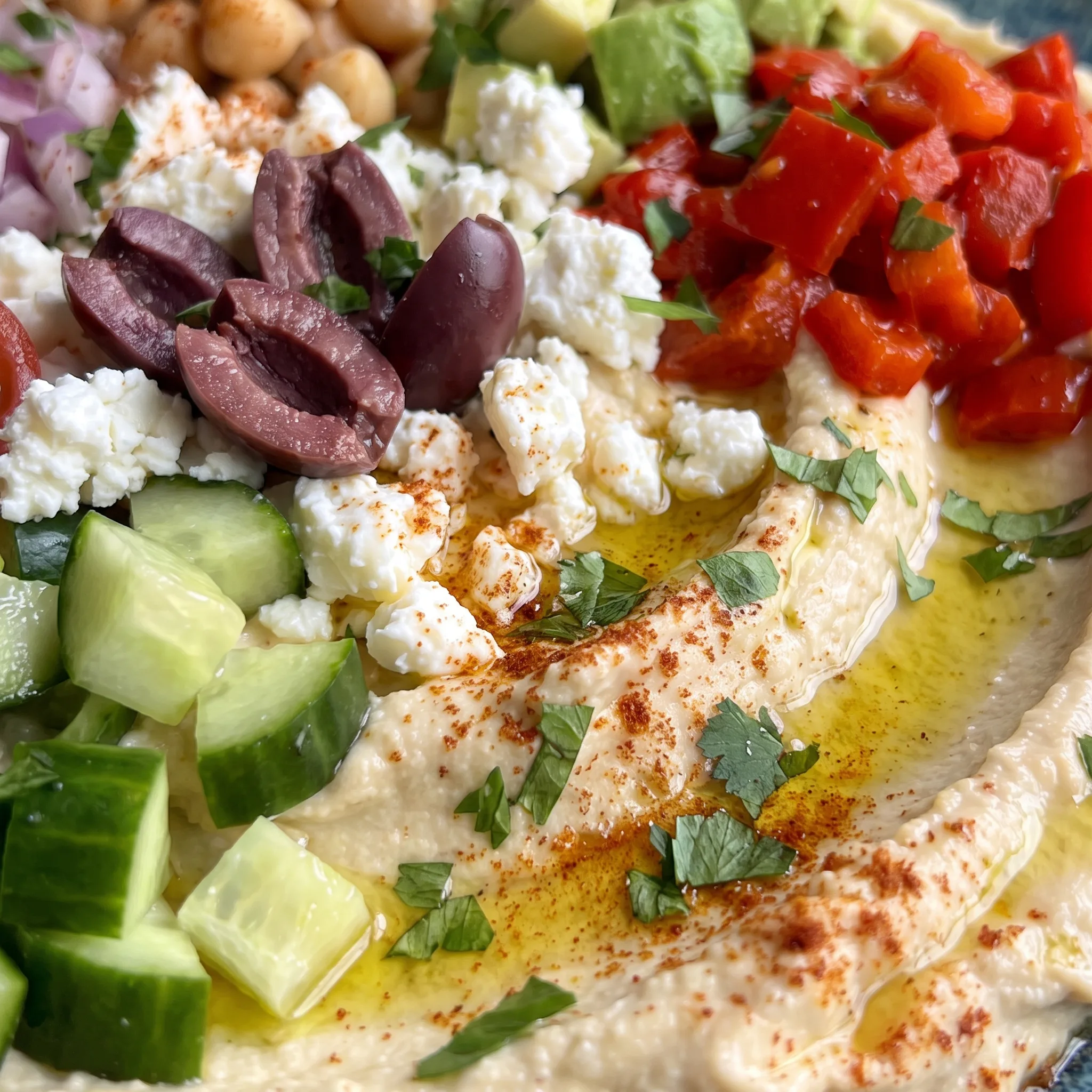
Hummus: Buy the thickest, creamiest brand you can find, since watery hummus lets the vegetables’ juices pool and the whole platter turns soupy.
Persian cucumbers: Persian cucumbers have thin skins and fewer seeds, so they stay crisp and release less water than standard cucumbers.
Feta cheese: Buy feta packed in brine, not pre-crumbled, because the brine keeps it moist and tangy instead of dry and chalky.
Avocado: Use a ripe but firm avocado so the diced pieces hold their shape and don’t smush into the hummus when you scoop.
Reading the dip as you build it, so the plate stays crisp and balanced
Spotting the point where the hummus can’t take another drop
After you spread the hummus and add the cucumbers and tomatoes, watch for a sheen of liquid forming around the edges of the vegetables. That’s the first sign the base is starting to flood. If you see it, tilt the plate and spoon off any pooled juice before adding the olives and feta.
A thick hummus will hold its shape; a watery one will start to slide. If the hummus itself looks thin before you start, it’s already at risk, and piling on wet toppings will only make it worse.
Judging when the salt and acid have landed
Taste a scoop with a bit of everything: hummus, cucumber, olive, feta, and a leaf of parsley. The first bite should make you want a second, not because it’s rich but because the salt and lemon are doing their job.
If the hummus tastes flat, add a pinch of salt. If it feels heavy, squeeze more lemon. The goal is a bite that snaps into focus.
Stop when the flavors feel bright and balanced, not when you’ve used a specific amount.
Keeping the avocado and herbs from disappearing into the mix
If you’re using avocado, add it after the olives and feta, and don’t toss it in. It should sit on top, where it stays green and creamy.
Same with the parsley and any basil or mint: scatter them last. If you fold them in, they’ll coat with oil and lose their fresh look.
The plate should show distinct patches of color and texture, not a uniform mash. That’s how you know the layers are still intact.
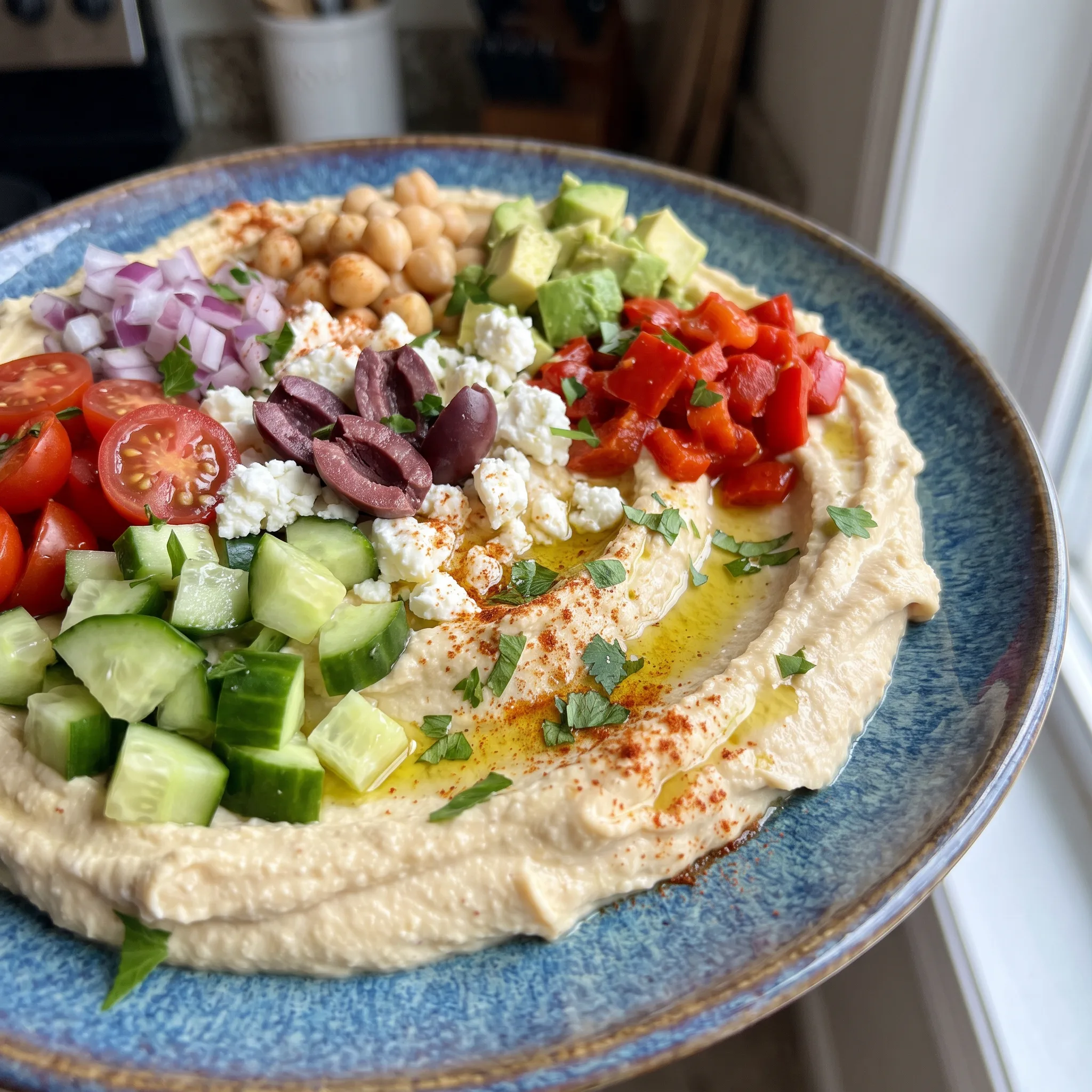
Loaded Hummus Dip with Feta and Fresh Vegetables
Ingredients
Method
- Evenly distribute the hummus across a large plate or bowl.
- Layer on cucumbers, tomatoes, red onion, olives, and feta cheese. Drizzle with oil and finish with chopped parsley. Squeeze in lemon juice and season with salt to taste. Accompany with pita bread or pita chips.
Storage and the serving window
Assembled, this platter is at its best within 30 minutes. Past that, cucumber and tomato water pools in the hummus, avocado browns at the edges, and the surface of the hummus skins over. If you need it to sit longer, hold the components separately: hummus in one container, cut vegetables and olives in another, feta and herbs dry.
Assemble just before serving.
Leftovers keep two days in the fridge, covered. The hummus and olives hold fine; the cucumbers and tomatoes go limp and watery, and the avocado won’t survive past a few hours. Scrape off the avocado and herbs before storing.
To serve a cold portion, let it sit 15 minutes, then stir the hummus to loosen it and add a fresh squeeze of lemon, a pinch of salt, and new parsley. Don’t freeze the assembled platter. The hummus alone freezes up to three months; thaw overnight in the fridge and stir well, since it separates and needs a good whip to come back together.
When a swap still respects the platter and when it wrecks it
Hummus: For a dairy-free platter, use a thick, creamy hummus that’s certified dairy-free. If you’re making it from scratch, blend chickpeas, tahini, lemon juice, garlic, and olive oil until smooth, adding a little ice water if needed to get a sturdy spread. A runny hummus, whether store-bought or homemade, lets the cucumber and tomato juices pool and the whole platter turns soupy.
You want the hummus to cling to a pita chip, not slide off. Thick hummus holds the toppings without letting them sink.
Feta cheese: For a dairy-free version, omit the feta or use a dairy-free feta alternative. If you eat dairy but want a creamier texture, swap in soft goat cheese.
Feta brings a salty, tangy punch that cuts through the rich hummus. Without it, the dip can taste flat, so you’ll want to compensate with extra olives or a finishing salt. Goat cheese adds creaminess but less brine, so the overall flavor shifts milder.
Kalamata olives: Use Castelvetrano green olives instead. They’re milder and meatier, with less brine intensity. Kalamatas deliver a sharp, salty bite that stands up to the hummus and feta.
Castelvetranos are buttery and subtle, so the dip loses some of its punch. You might need a squeeze more lemon or a pinch of salt to bring the balance back.
Pita bread or pita chips: For gluten-free, serve with gluten-free pita or sturdy gluten-free crackers. If you want a lower-carb option, use cucumber rounds or bell pepper strips. Pita chips are sturdy and scoop well, while fresh pita is soft and tears easily.
Gluten-free pita can be crumbly, so it might break in the dip. Cucumber rounds add crunch but release water, so they can make the hummus wetter as you eat.
Tips
- Salt the diced tomato and cucumber in a colander for 10 minutes, then pat dry before they go on the hummus. One medium tomato and 2 to 3 Persian cucumbers hold close to a quarter cup of free water, and that salt pulls it out before it reaches the plate instead of after.
- Dice the tomato and cucumber into pieces no larger than a chickpea, about 1/4 inch. Larger chunks sit higher and release their water in slow drips over the next half hour, while small dice spread the same volume across more surface area and let any juice drain off the back of a pita chip rather than pooling in the hummus.
Frequently Asked Questions
Can I make loaded hummus dip ahead of time?
Not assembled, no. Prep 20 minutes is all this takes, and the platter hits its peak within 30 minutes of building, so any lead time you want comes from holding the parts apart.
Keep the hummus in one container, the diced cucumber and tomato in another, and the olives, feta, and herbs dry, then layer everything just before guests arrive. That gets you from fridge to platter in a few minutes without the cucumber and tomato bleeding into the base. Leftovers of the assembled version keep two days covered in the fridge.
How do I keep the toppings from making the hummus watery?
Salt the diced cucumber and tomato in a colander for a few minutes and let the water drain off before they go anywhere near the platter. That’s the biggest lever, since they’re the two wettest things on the list and they keep weeping the whole time they sit.
The other check is the hummus itself: a thick spread holds its shape and traps less juice at the surface, while a thin one starts flooding the moment the vegetables land. If you spot a sheen pooling around the cucumbers after assembly, tilt the plate and spoon it off before you add the olives and feta.
What’s the difference between loaded hummus and regular hummus?
Regular hummus is the base alone, smooth and spreadable, nothing on top. Loaded hummus keeps that same 2 cups as the foundation and builds a full platter over it: diced cucumber, tomato, red onion, olives, crumbled feta, a drizzle of olive oil, parsley, and lemon.
The toppings change how you eat it, not just how it looks. Each scoop is supposed to carry a bit of creamy base plus something salty, something crunchy, and something acidic, so no single bite tastes flat. It’s the same dip, turned into a composed plate you serve with pita.
How long can loaded hummus sit out at a party?
Plan on 30 minutes on the table, which is when it’s at its best. After that the cucumber and tomato water pools into the hummus, the avocado edges brown, and the surface of the base skins over.
If your party runs longer, set out a smaller portion and keep the rest of the components back, then rebuild a fresh platter when the first one empties. That way the second round looks and tastes like the first instead of sitting through the whole night.
