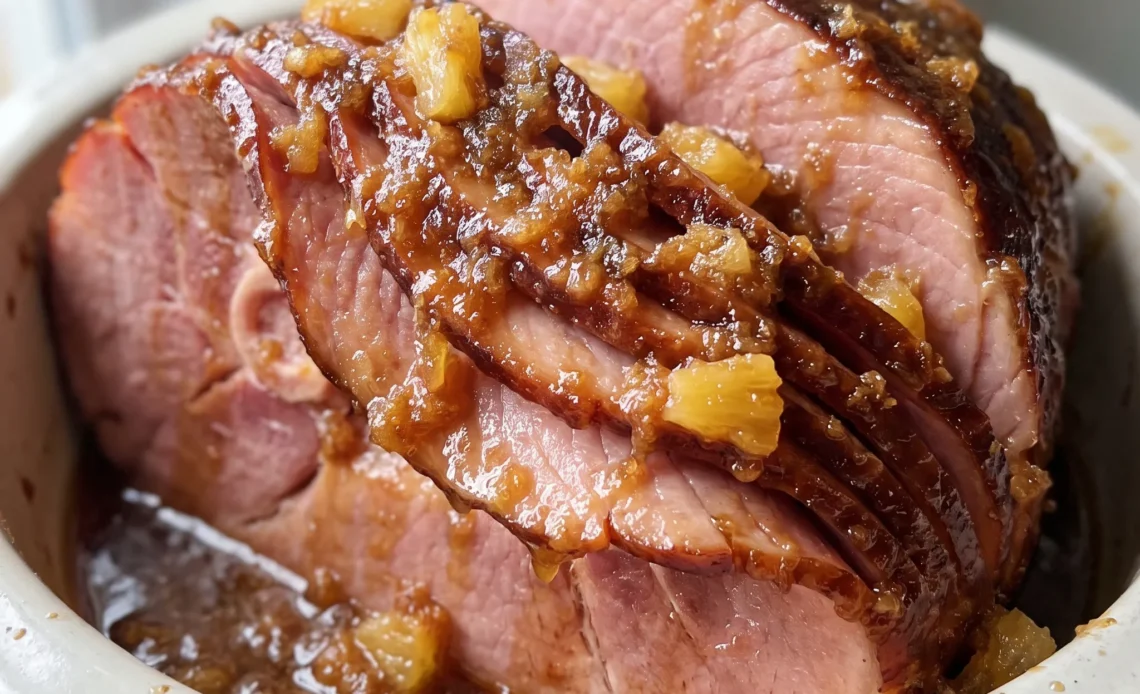
Most people glaze a spiral-cut ham on the outside and call it done, then wonder why every slice past the crust tastes like plain pork. The fix isn’t more glaze on top; it’s working the brown sugar pineapple ham mixture down into the gaps between slices before the pot ever goes on. Do that part half-heartedly and the sweet stays where it lands.
Get it right and the same base layer of brown sugar, pineapple, and cinnamon doubles as the sauce you reduce later, on the stove or in the machine, until it clings. The real difficulty is leaving it alone long enough for the ham to come up to temperature without tightening.
Why the Base Layer Matters
The first thing into the pot isn’t the ham. It’s a bed of brown sugar, crushed pineapple, and cinnamon, spread across the bottom before anything else goes in.
That layer does two jobs at once. It keeps the ham from sticking to the metal and scorching, which matters more than you’d think over a long cook, and it catches the drippings as they run down, turning them into a sweet, tangy pool that will become the sauce you reduce later.
Leave the base out and the ham sits directly on the pot, the sugars have nothing to mingle with, and you’re left with a dry pan and a ham that tastes mostly of itself. Cinnamon in the base works from below, its warmth rising with the steam and soaking into the meat’s underside. You won’t see it happen, but you’ll smell it about an hour in, a soft spice note under the pineapple.
Why Spiral-Cut Ham Takes Glaze Best
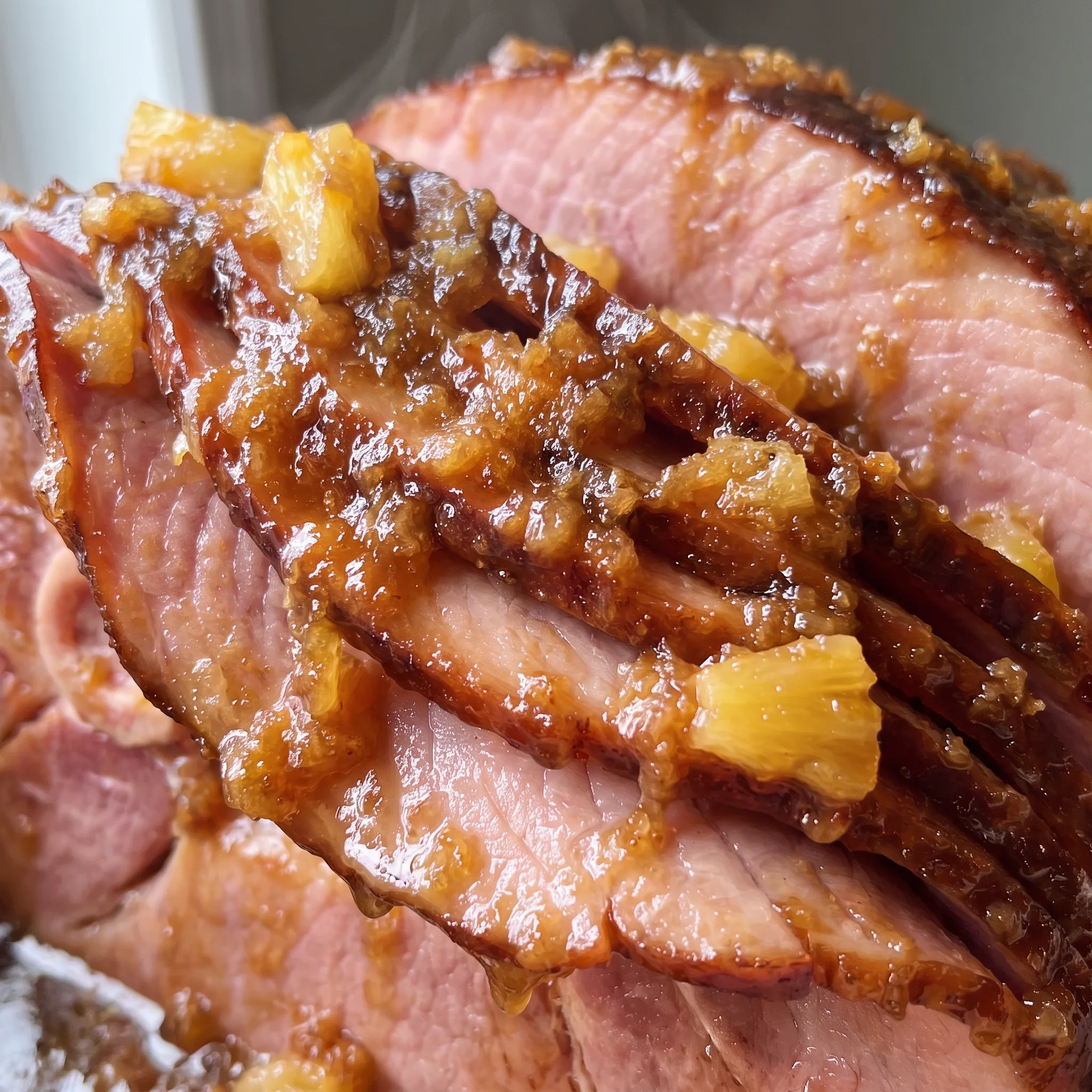
A spiral-cut ham comes to you already sliced, the blade having run a neat spiral around the bone and left half-inch gaps between the slices. Those gaps are the whole advantage. They’re crevices for glaze to run into, and once it sets, every slice carries its own coating instead of just the outside.
But you have to open the ham up. The slices arrive pressed together, and if you don’t gently separate them, the pineapple and brown sugar just sit on top like a hat.
Work the mixture down between the layers with your fingers or a spoon, nudging each slice apart. Pack more on top, and as the ham heats, the sugar melts, the pineapple releases juice, and the whole thing seeps downward, filling every gap.
What you end up with is a ham that tastes seasoned through, not just glazed at the surface.
A Spoonful of Mustard Balances the Sweet
Brown sugar and crushed pineapple are a lot of sweet. Without something to push back, the glaze can turn cloying, the kind of sweet that coats your tongue and makes you reach for water. Dijon mustard is that push.
You rub it over the ham before the sweet stuff goes on, so it hits the meat first, and its tang works its way into the slices alongside the sugar. The mustard doesn’t shout. It’s not a mustard ham.
What it does is sharpen the edges of the glaze, so the pineapple tastes brighter and the brown sugar tastes deeper, not just sweeter. Skip it and you’ll notice the ham tastes flat, like something’s missing, though you might not place what. A thin coat is enough.
The heat of the oven or the slow steam of the pot mellows the mustard’s bite, leaving only the savory backbone behind.
Reducing the Pan Juices into Glaze
After the ham comes out, the pot holds a thin, brownish liquid, the spent pineapple juice, melted sugar, and ham drippings all mixed together. It tastes good but looks watery, and it won’t cling to the meat.
Simmering it down is what turns it into glaze. As the water cooks off, the sugars concentrate, the color deepens to a dark amber, and the texture thickens until it coats the back of a spoon.
You’re looking for glossy and slightly darker, with a syrup consistency that pours slowly. Stir often, because the sugars are prone to catching and burning once they get thick.
That reduced sauce is what you pour over the ham before serving, and it’s the difference between a ham with a little flavor on top and one that’s lacquered all over, each slice shining and tasting of pineapple, caramel, and spice.
What to Look For Before This Ham Goes In the Pot
Bone-in spiral-cut cooked ham: Buy one between 6 and 10 pounds, bone in and already spiral cut, since the slices and the bone are what make the glaze work.
Brown sugar: Pack it firmly into the cup, because a loose scoop leaves you short and the base layer comes out thin.
Crushed pineapple: The 20 ounce can is the target, and two 15 ounce cans work just as well when that’s what’s on the shelf.
Dijon mustard: Plain smooth Dijon, not the grainy kind, so it spreads into a thin even coat instead of sitting in pockets.
Cinnamon: Ground cinnamon only, since sticks won’t distribute through the brown sugar base or the top layer.
Reading the Ham at Three Points Where It Can Go Wrong
Judging Doneness by Temperature, Not Time
The ham is already cooked, so you’re reheating it, not cooking it through. The target is 110°F at the center, and that’s a ceiling as much as a goal.
Push past it and the meat tightens, giving up moisture it won’t get back. Check with an instant-read thermometer in the thickest part away from the bone.
If it’s not there yet, give it more time in small increments, but stop the moment it hits 110°F.
Separating the Slices Without Tearing Them
Spiral-cut slices arrive pressed together, and the glaze only reaches the meat if you open the gaps. Work your fingers or a spoon between the layers, nudging each slice apart just enough.
Too rough and you’ll tear the ham into shreds; too timid and the pineapple and sugar sit on top like a cap. Aim for half-inch gaps, enough for the mixture to slide down but not so wide the slices fall apart.
Reducing the Sauce to the Right Consistency
The pan liquid starts thin and watery. Simmer it until it turns glossy, slightly darker, and coats the back of a spoon. That’s your signal, not a clock.
Stir often, because once the sugars thicken, they catch and burn in seconds. If you smell scorching, pull the pot off the heat immediately and whisk in a splash of water to loosen the bottom. Too thin and it won’t cling; too thick and it turns sticky and dull.
Knowing When the Pot Is Full Enough
A 10-pound ham won’t fit under the lid of a standard crockpot or Dutch oven. If the lid won’t close, foil over the top works, but you lose some heat and the cook runs slower.
Check the ham earlier than you think, especially if it’s near the top of the pot. The parts sticking out above the liquid won’t glaze the same way, so rotate if you can, or accept that those slices will be less coated.
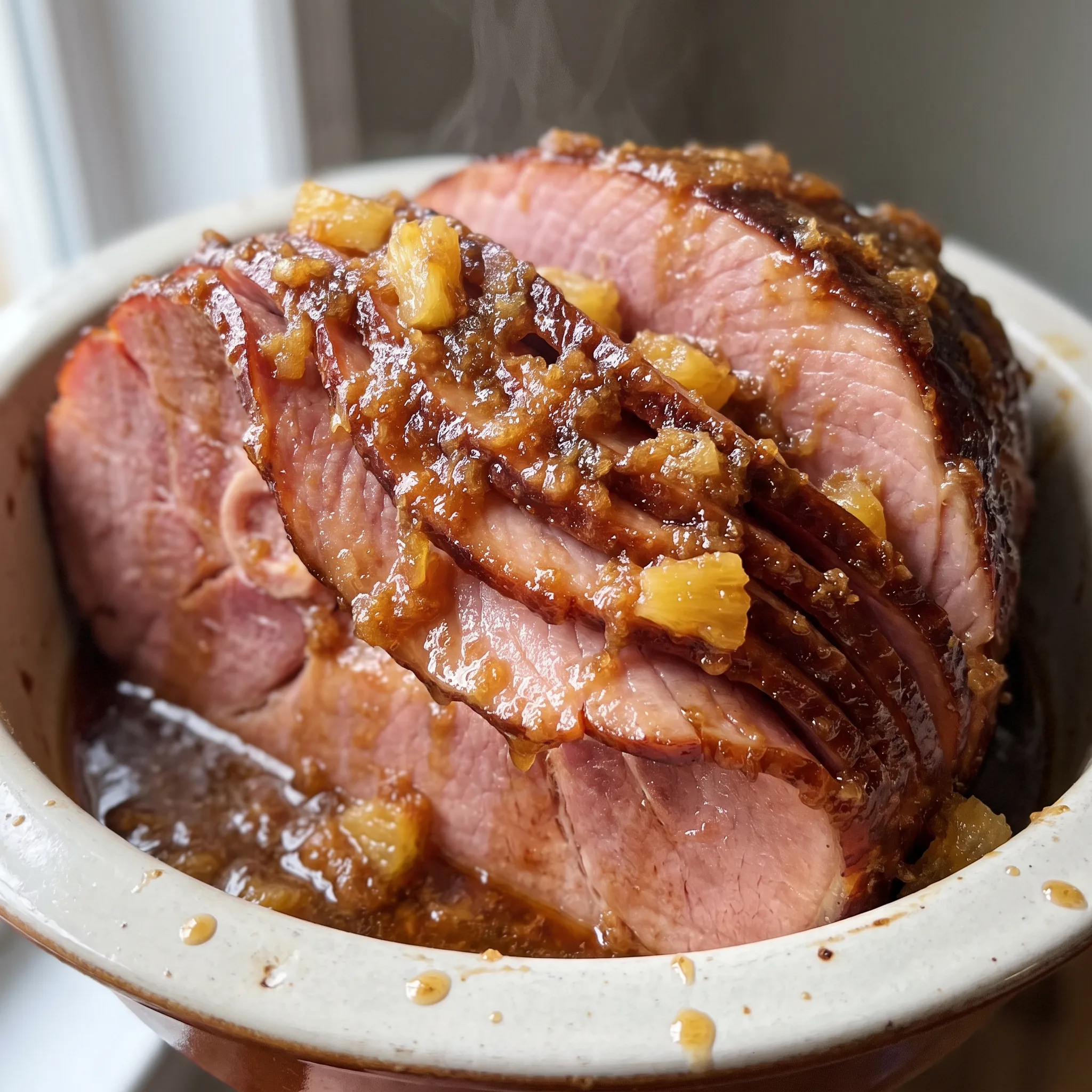
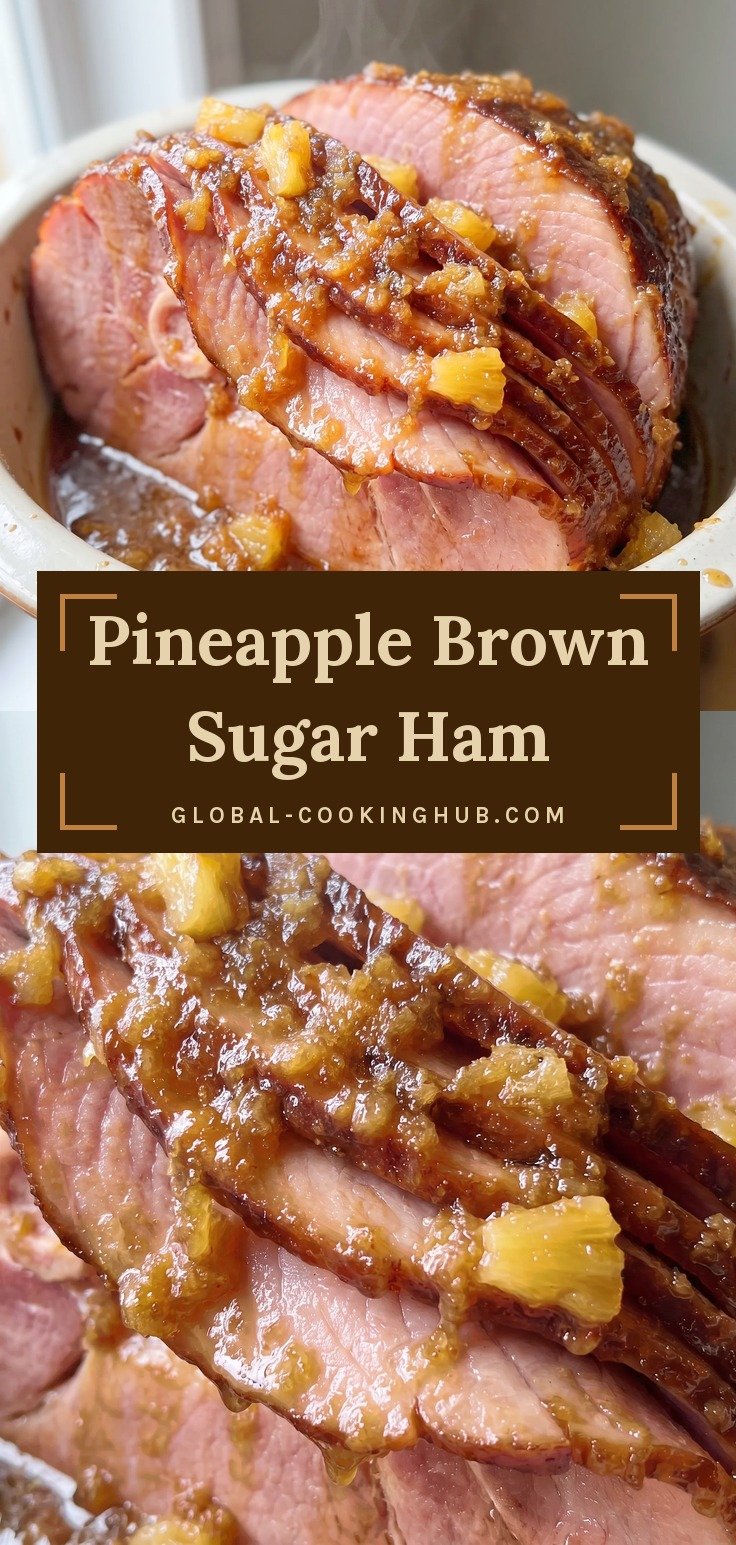
Brown Sugar Pineapple Ham
Ingredients
Method
- In the bottom of a Dutch oven, crockpot, or Instant Pot, spread half of the brown sugar, half of the crushed pineapple, and half of the cinnamon.
- Set the ham on top and gently separate the layers. Rub the mustard over the ham. Spoon the crushed pineapple over the top and work it into the slices. Add the brown sugar and sprinkle with the remaining cinnamon, then pack it on.
- For the Dutch oven: preheat the oven to 300°F (150°C). Prepare the ham as directed inside the Dutch oven; if the lid does not fit, cover with foil. Bake about 2 hours, until the center of the ham reaches 110°F (45°C). Transfer the ham to a serving platter to rest. Meanwhile, set the Dutch oven with the leftover brown sugar–pineapple mixture on the stovetop over medium heat. Simmer over medium-high heat about 15 minutes, stirring often to prevent burning, until the sauce is reduced, glossy, and slightly darker. Pour over the ham before serving.
- For the crockpot: prepare the ham as directed inside the crockpot. Lock the lid and cook on high 3–4 hours (3 hours for a 6 lb ham, 4 hours for a 10 lb ham, 3.5 hours for anything in between); the center should reach at least 110°F (45°C) since the ham is precooked. If the ham is too large for the crockpot, replace the lid with a few sheets of foil. Once done, place the ham in a serving dish and pour the remaining juices into a large saucepan. Simmer over medium-high heat about 15 minutes, stirring often to prevent burning, until the sauce is reduced, glossy, and slightly darker. Pour the saucy glaze over the ham before serving.
- For the Instant Pot: prepare the ham as directed, but when locking the Instant Pot lid, leave the venting knob “ON”. Press the slow cook button on high heat and set the timer for 3 hours. Let the Instant Pot natural release, then remove the lid and place the ham on a serving dish to rest. Meanwhile, press the simmer button and simmer the pineapple–brown sugar sauce for 20 minutes, stirring often, until the glaze is thick and syrupy. Pour the sauce over the ham before serving.
Storage, Reheating, and the Serving Window
The glaze is at its best the moment you pour it on. Serve within 20 minutes of that pour, while the outside is sticky and the slices still hold their shape. A 10-serving table empties a ham faster than you’d think, so carve from one end and leave the rest intact; the uncut portion stays hotter and holds moisture better than a platter of loose slices.
Leftovers keep 4 days in the fridge, in a container deep enough to hold the ham and its glaze. Store the slices in the glaze rather than drained, but not swimming: too much liquid and the spiral gaps soak it up, and by day two the meat goes soft and loses its bite. Skim off excess sauce before it goes in.
Reheat covered at 300°F until just warm, 15 to 20 minutes, or gently in a covered skillet. Overheating tightens the meat and squeezes out moisture. The ham freezes, but the glaze separates and the texture dulls, so I’d eat this one fresh.
When the Ham Aisle Gives You a Different Cut
Spiral-cut cooked ham: A fully cooked bone-in ham that isn’t spiral-cut. The slices won’t open, so the glaze stays on the surface and never reaches the meat between slices. The ham still tastes good, but not seasoned through.
If you go this route, score the fat in a diamond pattern and push the pineapple mixture into the cuts, then plan on more glaze per slice.
Brown sugar: Dark brown sugar for up to half the amount, or honey for part of it. Dark brown sugar brings more molasses, so the glaze tastes deeper and a little less clean.
Honey makes the sauce runnier as it heats and brown faster, so watch the reduction. Keep the total sweetener the same: if you swap 1 cup brown sugar for honey, use 1 cup honey, but expect a thinner sauce that needs a few extra minutes on the stove.
The Dijon and cinnamon should stay as written; they’re doing the balancing and spicing, not the sweetening.
Dijon mustard: Yellow mustard or a smooth brown mustard. Yellow mustard is sharper and more vinegar-forward, so use the same 2 tablespoons but taste the glaze after reducing; you might want a little less. Brown mustard is closer but can be hotter.
Either way, don’t skip it. Without mustard, the sweet turns flat and one-note.
Crushed pineapple: Two 15-ounce cans if the 20-ounce can isn’t available. You get 30 ounces instead of 20, so there’s more liquid in the pot.
The ham will release more juice, and the sauce will take longer to reduce. Simmer it until it coats a spoon, which might be 5 minutes more.
The extra pineapple also means more fruit to spoon over the top, which is fine.
Cinnamon: No good substitute; leave it out if you must. Cinnamon is what makes the pineapple taste warm instead of just fruity. Skip it and the glaze tastes flatter, more like plain sugar and pineapple.
If you don’t have cinnamon, a small pinch of nutmeg or allspice can stand in, but use half as much because they’re stronger.
Tips
- Measure your vessel before you shop, not after. A 10 lb spiral-cut ham is roughly 11 to 12 inches long and 7 to 8 inches across at its widest, so lay a tape measure across the inside of your crockpot or Dutch oven. If the ham’s widest point sits above the rim, the lid will ride up on the bone and never seal, which drops the trapped steam that drives the cook. The foil workaround in the instructions handles this, but you need to know before you start layering, because once the brown sugar base and pineapple are down, lifting the ham back out to trim it means rebuilding the whole bed.
- If the ham is too long rather than too wide, cut a section off the narrow end before it goes in. A bone-in ham won’t slice cleanly through the bone with a knife, so cut down to the bone at the point you want to separate, then work the blade around the bone or use a clean hacksaw blade to get through it. Cook the trimmed piece in a small foil-covered baking dish alongside the main ham at 300°F, checking it at 45 minutes since it’s smaller and will hit 110°F sooner. You keep the full 10 servings and the main ham fits under the lid with room for the glaze to pool around it.
Reducing the leftover brown sugar, pineapple mixture into a glaze requires balancing heat and stirring: too high a heat or too little stirring causes the sugars to scorch and turn bitter, while too low a heat leaves the sauce thin and watery. The recipe uses a moderate simmer with frequent stirring, which evaporates water gradually and allows the sugars to concentrate into a glossy, syrupy glaze without burning. This trade-off between heat level and stirring frequency is what determines whether the final glaze is smooth and rich or acrid and grainy.
Frequently Asked Questions
Can I make this brown sugar pineapple ham ahead of time and reheat it?
Make it and reheat it, yes, but hold the glaze pour until you’re close to serving, since that sticky exterior is best in the first 20 minutes or so. What you can do ahead is the ham itself: cook it, let it cool, and refrigerate the slices in the glaze, which keeps 4 days.
Reheat covered at 300°F until just warm, 15 to 20 minutes, then if you want the shine back, simmer the reserved pan liquid down again and pour it over just before you carry it out. Freezing works but the glaze separates and the texture dulls, so this is one to eat fresh.
What if my ham is too big for the crockpot or Dutch oven?
Foil over the top instead of the lid, and check earlier than you’d plan, because you’re losing heat out of that gap. A 10-pound ham is the top of the range here and it’s the one most likely to ride above the rim, so look at where the meat sits relative to the liquid: anything sticking out won’t glaze the same way, and you can rotate it partway through if there’s room to. If the pot simply won’t take it, cut the ham off the bone into two pieces and stack them, or move to the largest vessel you own.
The base layer of brown sugar, pineapple, and cinnamon still goes in first either way.
How is this different from a classic baked ham with pineapple rings?
A baked ham gets decorated on the outside, rings pinned on with cloves, and the flavor stays on the surface. This one uses crushed pineapple worked down into the spiral gaps, so each slice carries its own coating instead of just the top crust.
The other difference is the sauce: the pan juices get reduced on the stovetop until glossy and slightly darker, then poured back over, which is a lacquered finish rather than a baked-on one. And the cook is slower and lower, which keeps the meat from tightening the way a hot oven will.
