
Anyone who fills mini baked potatoes the moment they come out of the oven watches the sour cream turn thin and slip off the rounded top within a minute. Letting them cool just long enough to handle fixes most of that, and so does cutting a shallow wedge from each one first.
The margin for error here is smaller than it looks: baby potatoes at room temperature take on color unevenly, and a skin that never crisped properly won’t hold a pocket at all. Get those two things right and you have a two-bite appetizer that reads like a tiny loaded baked potato, built from a single pound of potatoes and a topping that takes one stir. The rest is assembly, done close to serving.
Two approaches exist for managing this: leaving the potatoes undisturbed for the full bake, or shaking the pan halfway through. Leaving them undisturbed lets the bottom side brown deeply but risks sticking and produces uneven color.
Shaking repositions each potato so all sides contact the hot, oiled pan, promoting even browning and preventing sticking. This recipe uses the shake halfway through because it is a simple mechanical step that does not alter temperature or time.
Why use baby potatoes for this appetizer?
Baby potatoes, sometimes sold as new potatoes, are the right size for a single bite. Each one becomes its own appetizer, no cutting after baking. Their thin skin crisps in the oven and tastes good, so you skip peeling.
The flesh cooks through at the same rate because they’re all about the same size, and it stays firm enough to scoop. That firmness matters when you hollow them out. A larger potato, even a small russet, won’t work: you’d have to cut it down, and the pieces wouldn’t hold a neat pocket.
5 inches across, with no green patches or soft spots. At the store, squeeze a few; they should feel rock hard. If they’re damp, dry them before coating with oil.
This recipe uses 1 pound, which gives about 30 bite-sized pieces. That’s your yield, and it’s why this format works for a crowd.
What does sour cream and chives bring to a baked potato bite?
Sour cream and chives are a classic pairing for good reason: the dairy is cool and tangy, the chives are mild and oniony. Together they wake up the palate without burying the potato.
The sour cream’s acidity cuts through the oil and salt on the skin, so each bite feels balanced rather than heavy. Chives add a fresh, grassy note that perks up the richness.
You add the topping after baking, so it stays cold and creamy against the hot potato. That temperature contrast is part of the appeal. The topping is just two ingredients, which keeps assembly quick.
You can chop the chives while the potatoes bake. Use a sharp knife and slice them thin; dull blades bruise the chives and turn them dark. If you can’t find chives, scallion tops work, but they’re stronger, so use less.
The sour cream should be full-fat; reduced-fat tends to separate and look watery. A small spoonful per potato is plenty.
Why cut a wedge from each potato?
That little wedge you remove isn’t just for looks. It serves three purposes.
First, it exposes the fluffy interior, giving the sour cream a place to sit. Second, it creates a flat bottom so the potato won’t wobble on the platter.
Third, without that pocket, the sour cream would slide right off the rounded top. The wedge turns a plain roasted potato into a neat, filled appetizer. You want to cut only about a quarter of the way down, just enough to make a shallow well.
If you go too deep, the potato might split. Use a small paring knife and angle it slightly.
After removing the wedge, you can pinch the sides to open the pocket a bit more. The scooped-out flesh is a cook’s treat; eat it or save it for another use. This step is what makes the appetizer easy to eat with one hand, no fork needed.
The pan shake halfway through baking
Shaking the pan at the halfway mark does more than just rearrange the potatoes. As they roast, they release moisture, which can cause them to stick to the pan if left in one spot. A quick shake frees them and lets the hot pan and oil reach all sides.
That contact is what gives you an even, crisp skin. Without it, some sides would stay pale and soft while others brown. The shake also lets you check on their progress without opening the oven door too often.
You’re looking for the potatoes to start taking on color; they should look glossy from the oil and maybe a little blistered. If they’re sticking, use a spatula to loosen them gently.
This is a simple mechanical step, not a change in temperature or time. It’s the difference between potatoes that are crisp all over and ones that are only browned on the bottom.

What to Look For in the Potatoes, Sour Cream, and Chives
Baby potatoes: Pick ones about 1 to 1.5 inches across, uniform, rock hard, and free of green patches or soft spots.
Olive oil: Any everyday oil works, but it needs to coat all 1 lb of potatoes so the salt has something to cling to.
Sour cream: Buy full-fat, not reduced-fat, which tends to separate and look watery in the container before it ever hits a potato.
Fresh chives: You need 2 tbsp chopped, so buy a bunch with firm, upright green blades rather than ones already wilting or yellowed.
How to Read the Potatoes as They Bake and Fill Them Without a Mess
Judging doneness by feel, not by the clock
At 30 minutes, a baby potato should give when you squeeze it to the touch, with no hard center. If it’s still firm, the flesh won’t scoop cleanly and you’ll tear the skin trying.
Shake the pan and give them another 5 minutes, then check again. Poke one with a paring knife: it should slide in without resistance.
Overbaked potatoes collapse and the skin splits, leaving no pocket for the sour cream.
Knowing when the skin is crisp enough to hold a pocket
The skin needs to be taut and slightly blistered before you cut. If it’s still pale and soft, it will tear when you remove the wedge. After the halfway shake, look for glossy, browned spots and a few darker freckles.
If they’re not there, leave them in a few more minutes. A crisp skin gives structure; a soft one turns to a squashed mess in your hand.
Cutting the wedge without splitting the potato
Use a small paring knife and angle it slightly, cutting only about a quarter of the way down. If you go deeper, the potato cracks and the sour cream leaks out the bottom.
The wedge should come out in one piece, leaving a shallow well. If the potato splits, pinch it closed and treat it gently.
A split potato still tastes fine, but it won’t sit flat on the platter.
Sizing the sour cream spoonful so it doesn’t overflow
A little sour cream goes a long way. Fill the pocket just to the rim, not mounded.
If you overfill, the cream oozes out when someone picks it up, making a mess. The chives should be scattered on top, not mixed in, so they stay bright green. If the sour cream is loose or watery, drain off any liquid first or it will slide right off the potato.
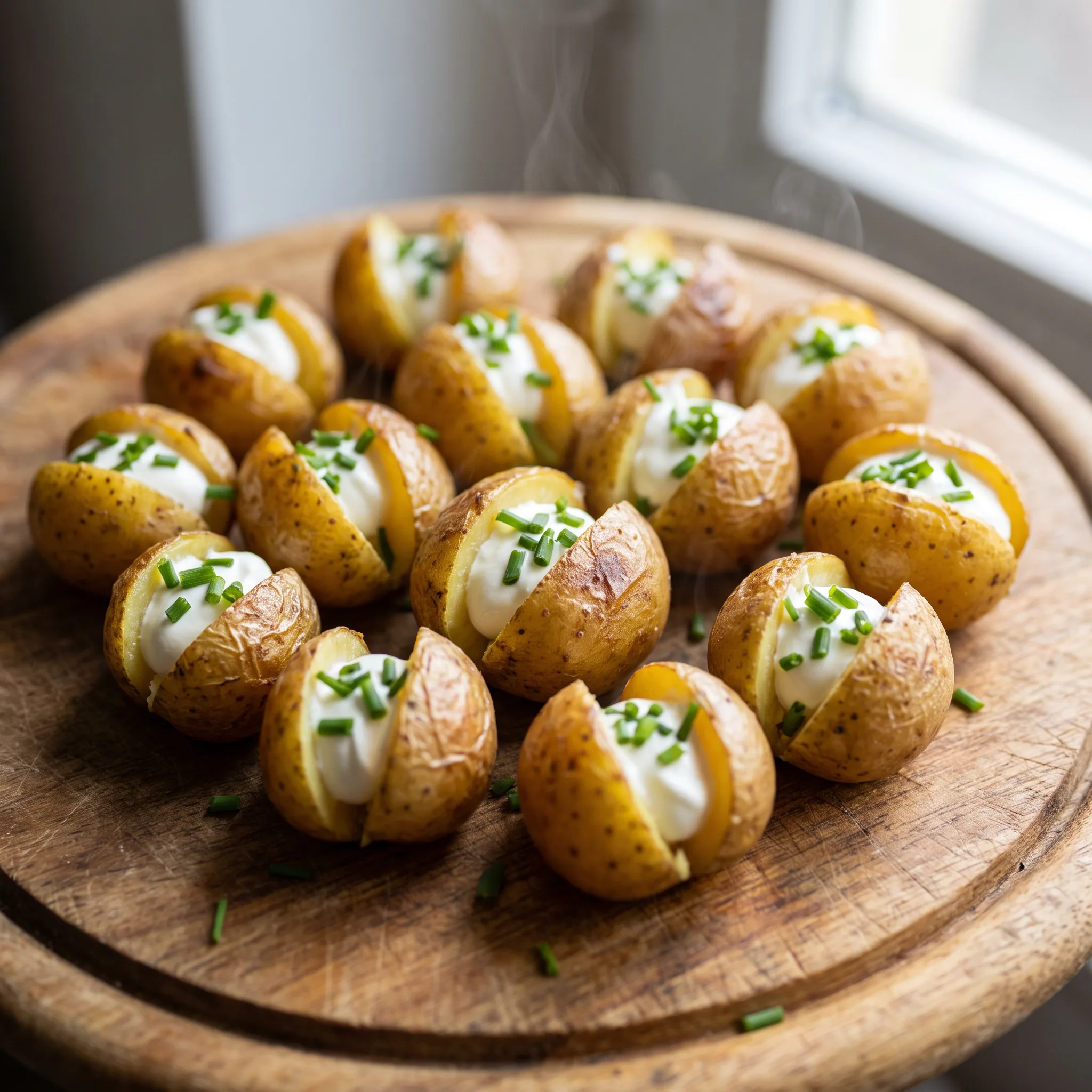
Mini Baked Potatoes with Sour Cream
Ingredients
Method
- Set the oven to 375°F (190°C) and let it heat.
- Place the potatoes in a bowl, pour the oil over them, and stir until they are evenly coated.
- Arrange the potatoes on a baking sheet and scatter the salt over them.
- Bake for 30 minutes, or until the potatoes are tender, shaking the pan halfway through to promote even browning.
- Remove a small wedge from each potato, spoon in a little sour cream, and finish with chives.
What Swaps Work for Mini Baked Potatoes and What Doesn’t
Baby potatoes: Any small, waxy potato works: fingerlings cut into 1-inch chunks, or creamers. Avoid large russets or starchy potatoes, even cut down.
Waxy potatoes hold their shape through roasting and hollowing. Starchy ones break down, turn grainy, and won’t give you a clean pocket.
Olive oil: Use the same amount of any neutral oil you have: canola, vegetable, or avocado. The oil’s job is to coat the potatoes so the salt sticks and the skins crisp. A neutral oil does that without adding flavor; olive oil brings a slight peppery note that some notice.
Sour cream: Full-fat Greek yogurt or crème fraîche, same amount. Greek yogurt is tangier and thicker, so it won’t slump on the hot potato. Crème fraîche is richer and less sour.
Both hold up; reduced-fat sour cream will weep and slide off.
Fresh chives: Thinly sliced scallion tops, starting with half the amount, or 1 tsp dried chives. Scallions are sharper and more oniony, so add a little at a time. Dried chives lose the fresh bite and can taste dusty; if you use them, rehydrate in a splash of water first.
Storing and Serving Mini Baked Potatoes
These are at their best within 30 minutes of filling. The skin stays crisp for about that long at room temperature, so leave the baked, unfilled potatoes uncovered on the sheet pan or a plate; a covered container traps steam and softens the very crust that makes the pocket work. Fill them with sour cream and scatter the chives only right before you pass the platter.
Leftover filled potatoes keep in the fridge for a day or two, but expect the skin to lose its snap and the sour cream to weep. Reheat the potatoes alone in a 375°F oven for 5 to 7 minutes; add fresh cold sour cream and chives after. The hollowed potatoes freeze well on their own for up to a month, and you can reheat them straight from frozen.
The sour cream and chives don’t freeze, so mix a fresh batch. If you’re prepping ahead, bake and hollow the potatoes, then refrigerate them; fill within 30 minutes of serving.
Tips
- When you toss 1 lb of potatoes with just 1 tbsp of oil, the oil has to cover a lot of surface. Patting them dry first means that thin film actually bonds to the skin instead of beading up on leftover water, so the salt sticks and the skin browns rather than steams. A wet potato also drops the pan temperature when it hits the sheet, which stretches out the 30-minute bake.
- After the halfway shake, slide the potatoes so they sit cut-side down only if you plan to fill them immediately. They have no cut side yet at that stage, so instead turn any potato that is pale on its bottom face up. The sheet pan’s hot spots are uneven, and flipping the pale ones gives every potato a turn against the metal. This is separate from shaking: the shake repositions, the flip reorients.

Frequently Asked Questions
Can I make these mini baked potatoes ahead of time?
Yes, but split the work. Bake and hollow the potatoes, then refrigerate them, and fill within 30 minutes of serving.
If you fill them early, the sour cream weeps and the skin loses its snap. The hollowed potatoes also freeze well on their own for up to a month, so you can reheat them straight from frozen.
Why did my sour cream get watery on the potatoes?
The most likely cause is reduced-fat sour cream, which separates and looks watery even before it hits the potato. Buy full-fat instead.
If you’re already using full-fat, the potatoes may have been too hot, causing the cream to break; let them cool a minute or two before filling. Cold sour cream straight from the fridge also holds up better against the hot potato.
How are these different from regular baked potatoes?
These are bite-sized and served as an appetizer, not a side dish. 5 inches across, so you get a single bite with skin, flesh, and topping all together. Regular baked potatoes are larger, split open, and eaten with a fork.
Here, you cut a small wedge, spoon in sour cream, and finish with chives, making them easy to eat with one hand.
