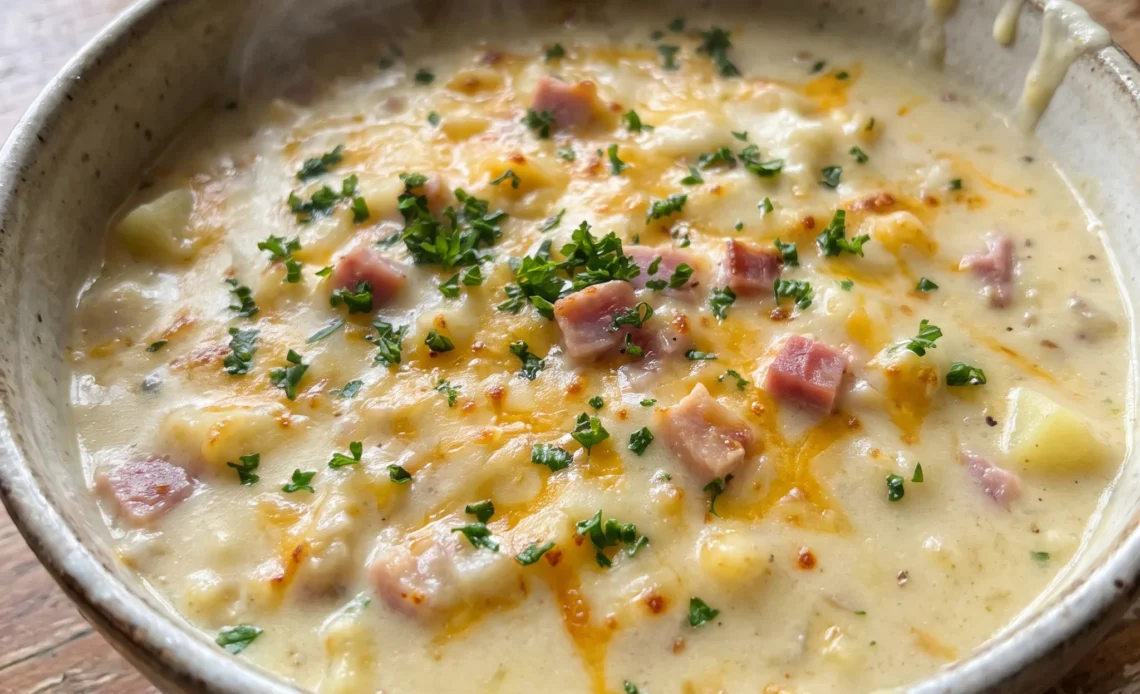
A spoon dragged through the finished pot leaves a clean trail that closes slowly behind it, and the smell is cured pork and sharp cheddar riding over sweet alliums. What sets this ham chowder apart from a plain potato version is how much the ham does before you ever reach for the salt shaker. It seasons the broth as it simmers, so the pot can turn salty before you’ve tasted it.
The real difficulty here isn’t the ingredient list. It’s timing: cheese that goes in at the wrong moment tightens into strings instead of vanishing, and potatoes pushed past tender give up their shape and turn the whole thing thick in a way you can’t undo.
Both are easy to catch if you know what you’re watching for.
Adding shredded cheese to a simmering pot keeps the liquid at a boil, so the cheese’s proteins coagulate into rubbery curds and the fat separates into oily pools. Stirring the cheese in gradually off direct heat, after the pot has been removed from the burner, lets the residual warmth melt the shreds gently enough to form a smooth emulsion. This recipe relies on that off-heat, gradual addition because its broth-based chowder lacks the flour roux or cornstarch that would otherwise protect the cheese from breaking.
Cheese that melts smooth, not stringy
Shredding your own cheese gives you control over the melt. Pre-shredded bags often come dusted with starch or cellulose to keep the shreds from clumping.
That coating can leave a slightly gritty texture in the finished chowder, especially when the cheese goes into a hot liquid. When you shred a block yourself, the pieces are clean and melt evenly.
Add the cheese gradually, a handful at a time, stirring until each addition disappears before adding more. Dumping it all in at once lowers the temperature of the pot too quickly and can cause the cheese to clump together in one mass. The result you want is a smooth, silky broth with no visible shreds.
If you’re using the optional Gruyère, fold it in alongside the cheddar. The cream or milk, if you’re using it, adds fat that helps the cheese blend into a silky consistency rather than turning stringy. A finished pot looks uniformly creamy, with no oily sheen on the surface.
Potatoes do the thickening
You won’t find flour or cornstarch in this recipe. The potatoes themselves provide all the body the chowder needs. As the diced pieces simmer, their edges soften and some of the starch releases into the broth, giving it a naturally creamy texture.
Yukon Golds break down a little more than Russets, so they create a slightly thicker base, but either works. Russets are starchier and will give you a heartier, more rustic consistency; Yukon Golds hold their shape a bit better and lend a buttery finish.
The trade-off is simple: if you want a thicker chowder, lean toward Russets, but know that the pieces may lose their distinct shape. If you prefer a broth that stays thinner with intact cubes, choose Yukon Golds. Either way, the starch that escapes during cooking is what gives the soup its spoon-coating quality.
You’ll know it’s right when the liquid looks slightly opaque and clings to the back of a spoon. That natural thickness is the goal.
Ham as the salty backbone
The ham you choose sets the salt level for the whole pot. Cooked or leftover ham is already seasoned, often quite salty, so it will release that salt into the broth as it simmers.
If you start with a salty ham and season early, you’ll end up with an overseasoned chowder. That’s why the recipe waits until the end to add salt and pepper. By then, the ham has had time to infuse the liquid, and you can taste exactly how much more you need.
The fat in the ham also adds richness. As it renders, it coats the tongue and balances the sharpness of the cheddar and the nutty Gruyère. A lean ham will give you less of that effect, so if yours is very lean, a little extra butter or olive oil at the start can help.
The finished chowder should taste savory and full, with the ham contributing depth rather than just chunks of meat. Adjust the final seasoning with that in mind.
The final simmer brings it together
Bay leaves go in with the broth because they need time to steep and release their subtle, tea-like aroma. They won’t dissolve, so you must fish them out before serving.
Leaving them in won’t ruin the pot, but biting into one is unpleasant. Once the ham and cheese are in, a short simmer lets all those flavors intermingle. The cured pork, the dairy, and the vegetables need a few minutes of gentle heat to stop tasting like separate ingredients.
You’re not just warming the chowder; you’re giving it a chance to become one thing. After that simmer, taste again.
The ham has been infusing the broth, so the salt level will have changed. Add pepper and any additional salt now, a little at a time. The chowder is ready when the broth tastes cohesive and rich, not like ham sitting in a cheesy soup.
Serve it hot, with the bay leaves removed.
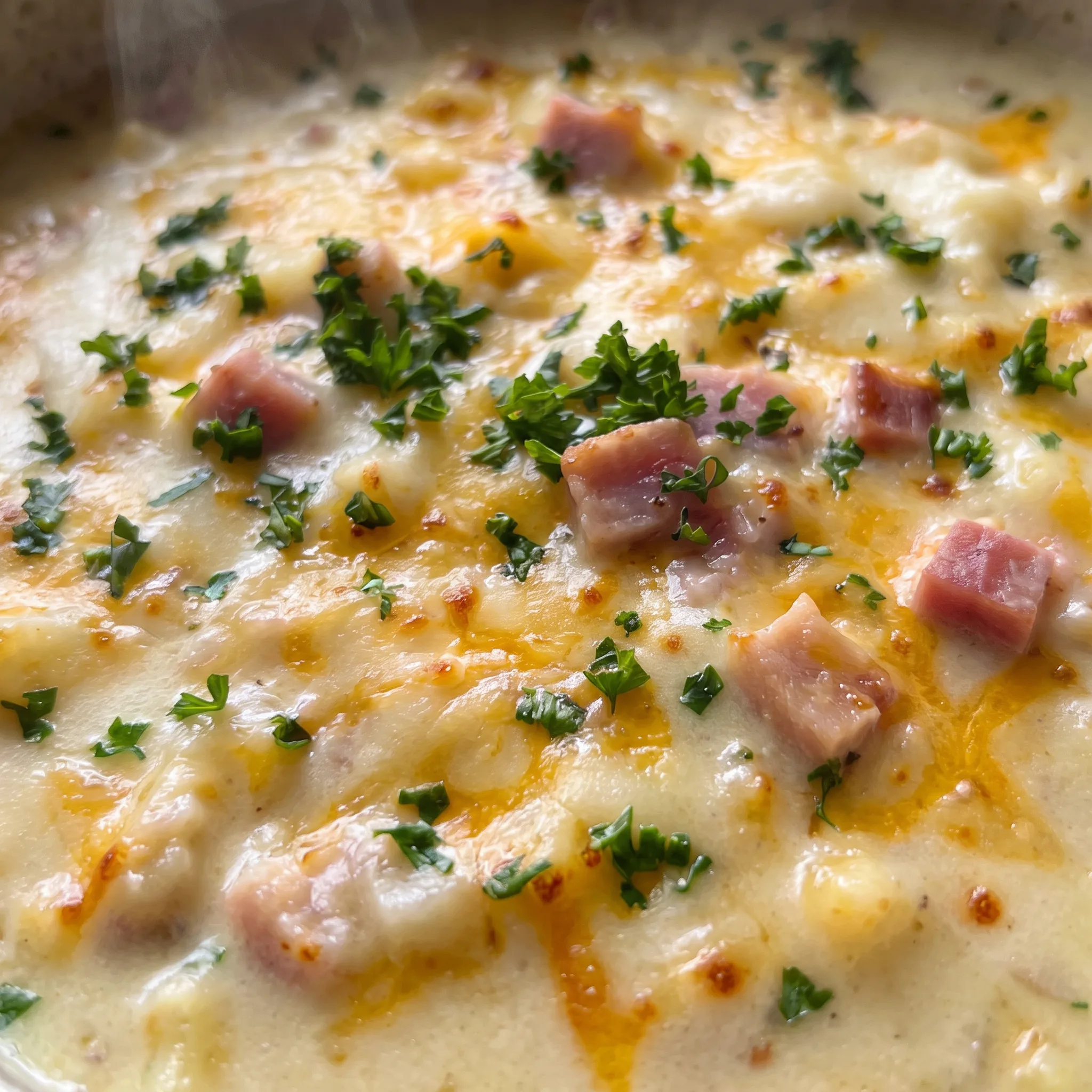
The ingredients that carry this chowder
Ham: Cooked or leftover ham is already salty and will season the broth as it simmers, so pick one you enjoy eating cold.
Cheddar: Buy a block and shred it yourself; bagged shreds are dusted with starch that can leave a gritty texture in hot liquid.
Gruyère: The optional 2 ounces add a nutty edge that plays against the cheddar, so use it if you have a piece.
Potatoes: Yukon Golds hold their shape and give a buttery finish, while Russets break down more and thicken the broth further.
Milk or cream: The full cup brings richness and helps the cheese blend smoothly, so use whole milk rather than a lower-fat option.
Bay leaves: Dried bay leaves need the full simmer to release their tea-like aroma, so use ones that still smell like something.
Judging the pot at three moments that decide the chowder
Sautéing until the vegetables are ready for liquid
The moment the onions turn translucent and the carrots and celery lose their raw snap, you’re there. That’s usually 5 to 7 minutes over medium heat, but your stove and pan size matter more than the clock. If the garlic starts to brown or smell sharp, pull the pot off the heat for a few seconds.
Scorched garlic leaves a bitter note that no amount of cheese will cover. When the vegetables look glossy and smell sweet, they’re ready for the potatoes and broth.
Reading the potatoes for doneness without turning them to paste
A paring knife should slide into a potato cube with no resistance, but the cube should still hold its shape on the knife. That’s the window between 15 and 20 minutes.
If you wait until the cubes start to crumble, they’ll thicken the broth too much and lose their texture. If they’re still firm in the center, give them a few more minutes.
Stir gently, because vigorous stirring at this stage breaks the edges and makes the chowder gluey.
Adding cheese without letting the pot cool down too far
Cheese melts into a smooth liquid when the broth is hot but not boiling. If the pot is bubbling hard, the cheese can seize into stringy clumps.
If it’s too cool, the shreds sit on the bottom and stick. Keep the heat at a low simmer and add the cheese a handful at a time, stirring until each addition vanishes before the next. The broth should look uniformly creamy, with no oily sheen or visible shreds.
If clumps form, a quick whisk over low heat can sometimes rescue it, but prevention is easier.
Tasting for salt after the ham has given up its flavor
The ham you used sets the baseline salt level, and it releases salt as it sits in the hot broth. That’s why the recipe waits until the end.
Taste a spoonful with a piece of ham and a piece of potato. If it’s already salty enough, stop. If it tastes flat, add salt a pinch at a time, stirring and tasting after each addition.
Over-salting is hard to fix; under-salting is easy. The chowder should taste savory and full, not like salty ham in milk.
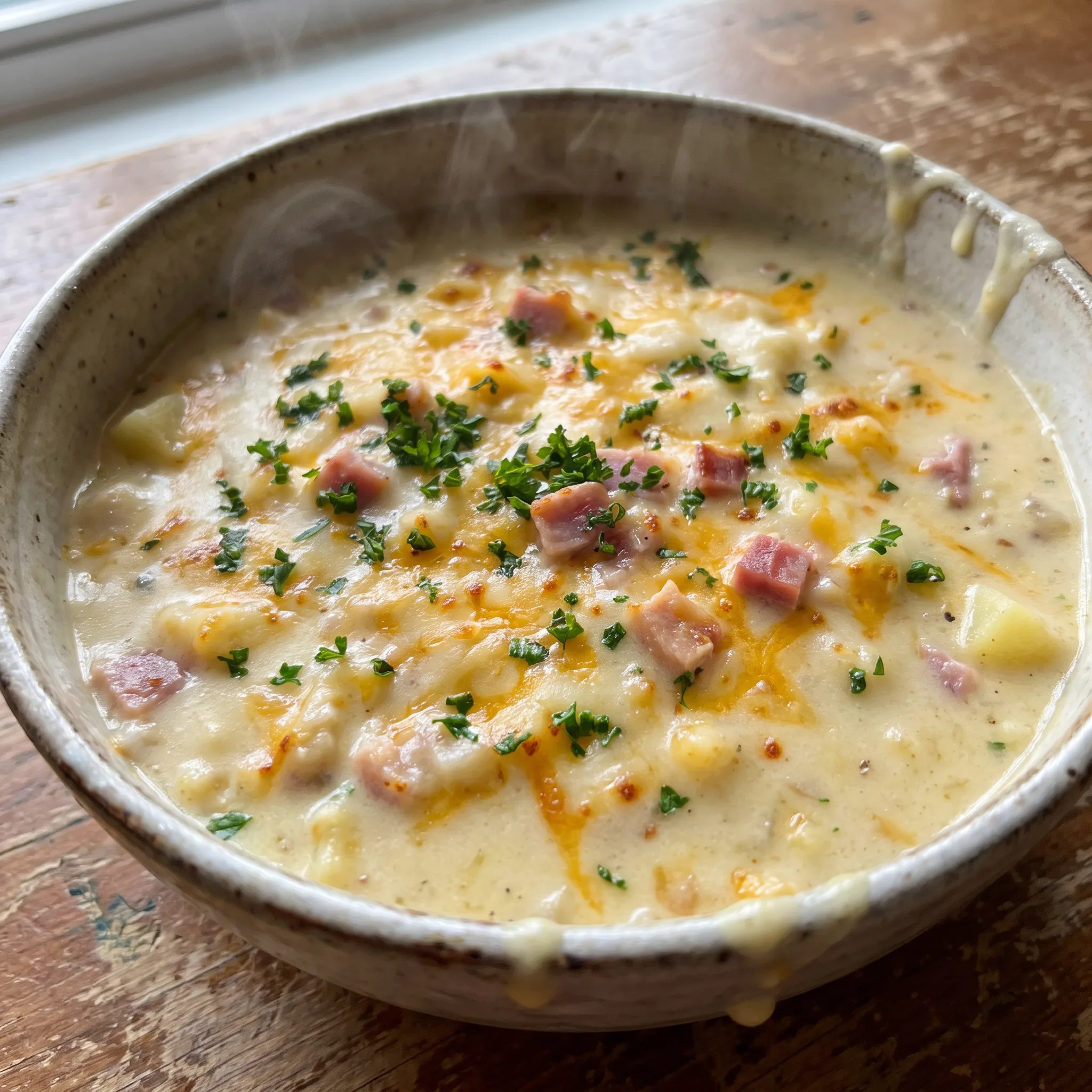
Creamy Cheesy Ham Chowder with Potatoes
Ingredients
Method
- Cut the ham into small cubes.
- Peel the potatoes and dice them into bite-sized pieces.
- Chop the carrots, celery, and onion; mince the garlic.
- Shred the cheddar cheese and Gruyère cheese, if using.
- In a large pot, warm the butter or olive oil over medium heat.
- Add the onion, carrots, celery, and garlic; sauté for 5–7 minutes, until softened and fragrant.
- Put the diced potatoes into the pot with the sautéed vegetables.
- Pour in the chicken broth and add the bay leaves. Bring to a simmer and cook for 15–20 minutes, until the potatoes are tender, stirring occasionally to prevent sticking.
- Once the potatoes are tender, add the diced ham and stir.
- Gradually add the shredded cheddar and Gruyère, stirring constantly to melt smoothly. For a creamier texture, add a bit of milk or heavy cream at this point.
- Simmer for another 5–7 minutes to let the flavors meld.
- Taste and season with salt and pepper to your liking.
- Remove the bay leaves before serving.
- Ladle into bowls and optionally garnish with freshly chopped parsley.
Storing and reheating without breaking the emulsion
Chill leftovers within two hours in a shallow container so the chowder cools fast. Overnight in the fridge, the potato starch keeps thickening and the cheese emulsion tightens, so a cold bowl looks like set custard, not soup. That’s expected.
Keep it three days at most; the dairy and the cured ham both limit how long this holds. Reheat gently on the stovetop over low heat, never a hard boil, which splits the cheese into an oily slick.
Add a splash of broth or milk at the start and stir as it loosens. A bowl from the fridge needs about a cup of liquid per quart to come back silky. Freezing doesn’t work here.
The potatoes turn grainy and the cheese breaks when thawed. Eat within the first hour of finishing for the best texture, when the broth is still glossy and the potato cubes hold their edges. Parsley goes on at the bowl, just before it hits the table, never in the pot.
Swap the dairy and the cured meat, but leave the cheddar and potatoes alone
Whole milk or heavy cream: Coconut milk (full-fat, from a can) or oat cream. The finished pot tastes lighter and carries a faint coconut or oat sweetness that sits oddly next to cheddar. If you go this route, start with the same 1 cup the recipe calls for, stir it in after the cheese has melted, and only add more if the broth still tastes thin.
A lower-fat milk, like 2% or skim, will make the chowder taste watery and can cause the cheese to tighten instead of blending in.
Gruyère cheese: Smoked gouda, fontina, or an extra 2 ounces of cheddar. Smoked gouda pushes the chowder in a campfire direction that fights the ham; fontina melts just as smoothly but adds less nutty edge. Using all cheddar keeps things simple and sharper.
Whichever you pick, shred it yourself and add it the same way: a handful at a time, off the boil, so it disappears before the next handful goes in.
Cooked ham: Smoked turkey, cooked kielbasa, or leftover roast pork. Smoked turkey gives you the salty-smoky note with less fat, so the broth tastes leaner and you may want an extra pat of butter at the start.
Kielbasa brings garlic and paprika, which changes the whole character, and it releases more fat, so skim if you like. Leftover roast pork is the mildest swap; it won’t season the broth the way ham does, so taste for salt before you decide it’s done.
Cheddar cheese and potatoes: No swap. Leave these two as written. The cheddar is the sharp backbone that cuts through the cream, and the potatoes are what thicken the broth without flour.
Swap the cheddar for mozzarella or a soft cheese and you lose the bite and get a stringy, bland pot. Swap the potatoes for cauliflower and you lose the body entirely, ending up with a thin soup that never coats a spoon.
Tips
- Grate the cheese onto a plate and let it sit at room temperature while the potatoes simmer. Cold shreds drop the temperature of the broth when they hit it, which slows the melt and gives the cheese time to clump before it blends. By the time step 10 comes around, the shreds are already soft and disappear into the pot in seconds.
- If the chowder tastes flat after the ham and cheese go in, reach for a splash of the ham’s own juices or a few drops of Worcestershire before you add more salt. The ham has already pushed the sodium up, so a little acid and umami rounds out the broth without overshooting the salt line the recipe warns about.

Frequently Asked Questions
Can I make this ham and cheese chowder ahead of time and reheat it later?
Make it a day ahead if you want, but expect the texture to shift. Chilled overnight, the potato starch keeps thickening and the cheese tightens, so the pot looks like set custard rather than soup.
Reheat over low heat with a splash of broth or milk, stirring as it loosens, and never let it come to a hard boil or the cheese splits into an oily slick. Keep it three days at most, since both the dairy and the cured ham limit how long this holds.
Why did my chowder turn out grainy when I added the cheese?
Most likely the pot was boiling when the cheese went in, or you added it all at once and dropped the temperature too fast. Both cause the shreds to seize instead of dissolving, and the result reads as grit against your tongue. Pre-shredded bags make it worse, because the starch coating on those shreds sits in the hot broth rather than melting away.
A quick whisk over low heat can sometimes pull it back together, but the better fix is a low simmer and a handful at a time, each one disappearing before the next goes in.
How is this creamy ham chowder different from a classic potato chowder?
Classic potato chowder leans on cream and potatoes alone, sometimes with bacon or clams, and stays fairly plain. Here the cheddar and optional Gruyère carry the flavor, and the ham seasons the whole pot as it sits in the broth. That means you taste the chowder before adding salt, since the cured pork sets the baseline.
The potatoes still do the thickening, but the dairy and cheese give it a sharper, richer character than a plain potato soup.
What should I serve with ham and cheese chowder to make it a full meal?
A bowl at 380 calories carries plenty on its own, so keep the sides light and let the chowder lead. Crusty bread for swiping the bowl works better than a soft roll, and a simple green salad with a sharp vinaigrette cuts the richness of the cheddar. If you want more, a plain roasted vegetable or a few pickles on the side adds acid without competing.
Skip anything heavily cheesy or creamy, since the pot already has that covered.
