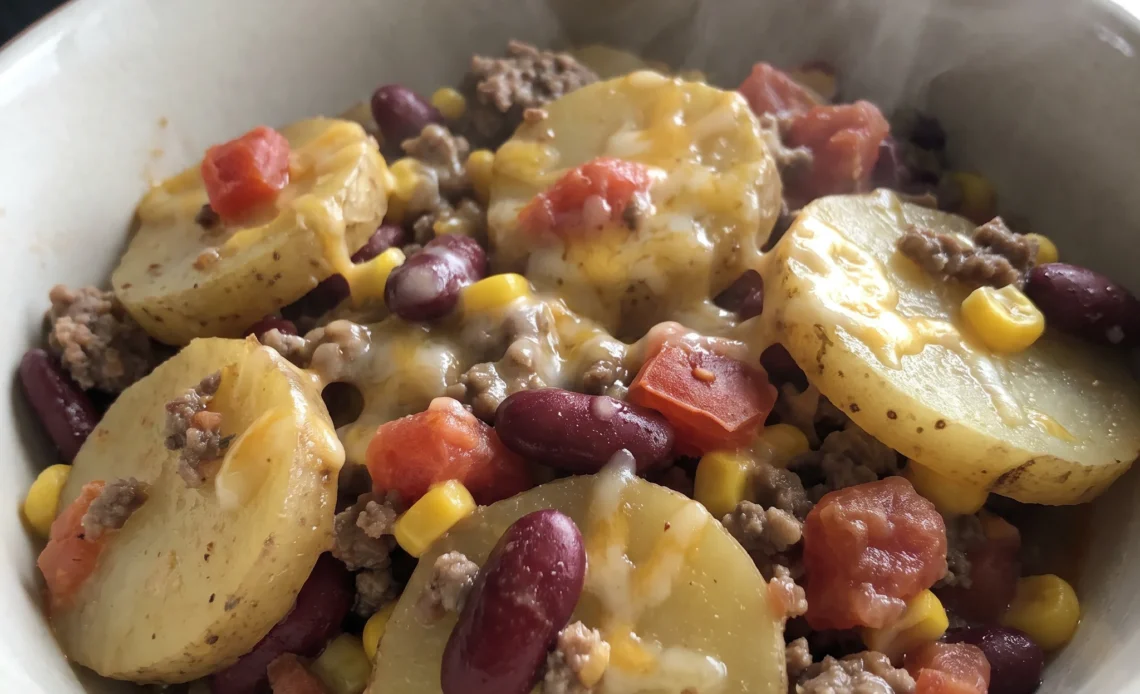
Fifteen minutes of assembly in the morning buys you a hands-off dinner that night, and the payoff hinges on one thing most people get wrong: the potatoes. Get the slices right and they drink the tomato and bean juices all afternoon, turning fork-tender under their blanket of beef and cheese. Get them wrong and you’re serving soup with rocks in it.
The margin isn’t huge, which is why the layering here matters more than it looks. This cowboy casserole rewards a little attention up front, then ignores you for the rest of the day. That’s a fair trade for anyone who wants dinner handled before the coffee’s cold.
Stack Potatoes First, Then the Reserved Meat
Potatoes go in first for a reason. They sit at the bottom of the crock, where the meat and tomatoes release their juices. Those juices pool around the slices, and the potatoes soak them up like a sponge.
If you put the meat mixture on the bottom instead, the potatoes would steam in their own moisture and turn waterlogged. That 1/8-inch thickness matters more than you’d think.
Too thick and the centers stay firm while the edges disintegrate; too thin and they collapse into a starchy paste. At an eighth of an inch, the slices hold their shape but still go tender when a fork pushes through.
The reserved meat goes on top of the potatoes, not mixed in. That way the potatoes get direct contact with the flavorful liquid below, while the meat stays put and doesn’t weigh them down.
You end up with distinct layers that eat like a proper casserole, not a stew.
Why Some Meat Stays Out of the Mix
Setting aside 1½ cups of the meat mixture before the potatoes go in gives you a built-in topping. That reserved portion sits on top of the potato slices, where it can catch a little heat from the lid and firm up slightly.
It won’t brown like a broiler would do, but it does develop a texture that’s different from the saucy mixture below. The bottom layers stay wet and spoonable; the top layer is more crumbly and holds together when you scoop it.
That contrast keeps each bite interesting. Without it, everything would have the same soft, uniform feel. The reserved meat also acts as a blanket, trapping steam and helping the potatoes cook evenly from above.
I’ve found that reserving some of the meat makes the final dish look more intentional, like you layered it on purpose rather than just dumping everything in. It’s a small step that changes how the whole thing eats.
Two Cans of Tomatoes, Two Jobs
Petite diced tomatoes bring a clean, bright tomato flavor and a fair amount of juice. They’re mild, slightly sweet, and they break down just enough to thicken the cooking liquid. The fire-roasted tomatoes with hatch chilies add a smoky note and a gentle heat that builds in the back of your throat.
Not enough to make you reach for water, but enough to notice. Both cans go in with their liquid, and that liquid is what creates the steamy environment the potatoes need. If you used only the petite diced, you’d get a one-note tomato taste.
If you used only the fire-roasted, the heat would dominate and the dish would taste sharp. Together, they balance each other: the mild tomatoes round off the chilies, and the chilies keep the mild ones from being boring. The result is a sauce that tastes like it simmered for hours, even though it came together in minutes.
Cheese Goes On at the End
Colby and Monterey Jack melt into a soft, creamy blanket without turning stringy or greasy. Colby brings a mild cheddar-like tang, while Monterey Jack is buttery and smooth. Together they complement the beef and potatoes without stealing the show.
Adding the cheese just before serving, after the casserole has cooked for hours, keeps its texture intact. If it went in at the start, it would break down and disappear into the sauce, leaving only a faint dairy taste. Instead, you get a distinct layer that coats the top and pulls into gooey strands when you lift a spoonful.
It also adds a visual finish: a golden, slightly puddled surface that signals the dish is ready. The residual heat from the crock is enough to melt it fully in a few minutes.
That final scatter of cheese is the last thing that happens, and it’s what makes the first scoop look as good as it tastes.
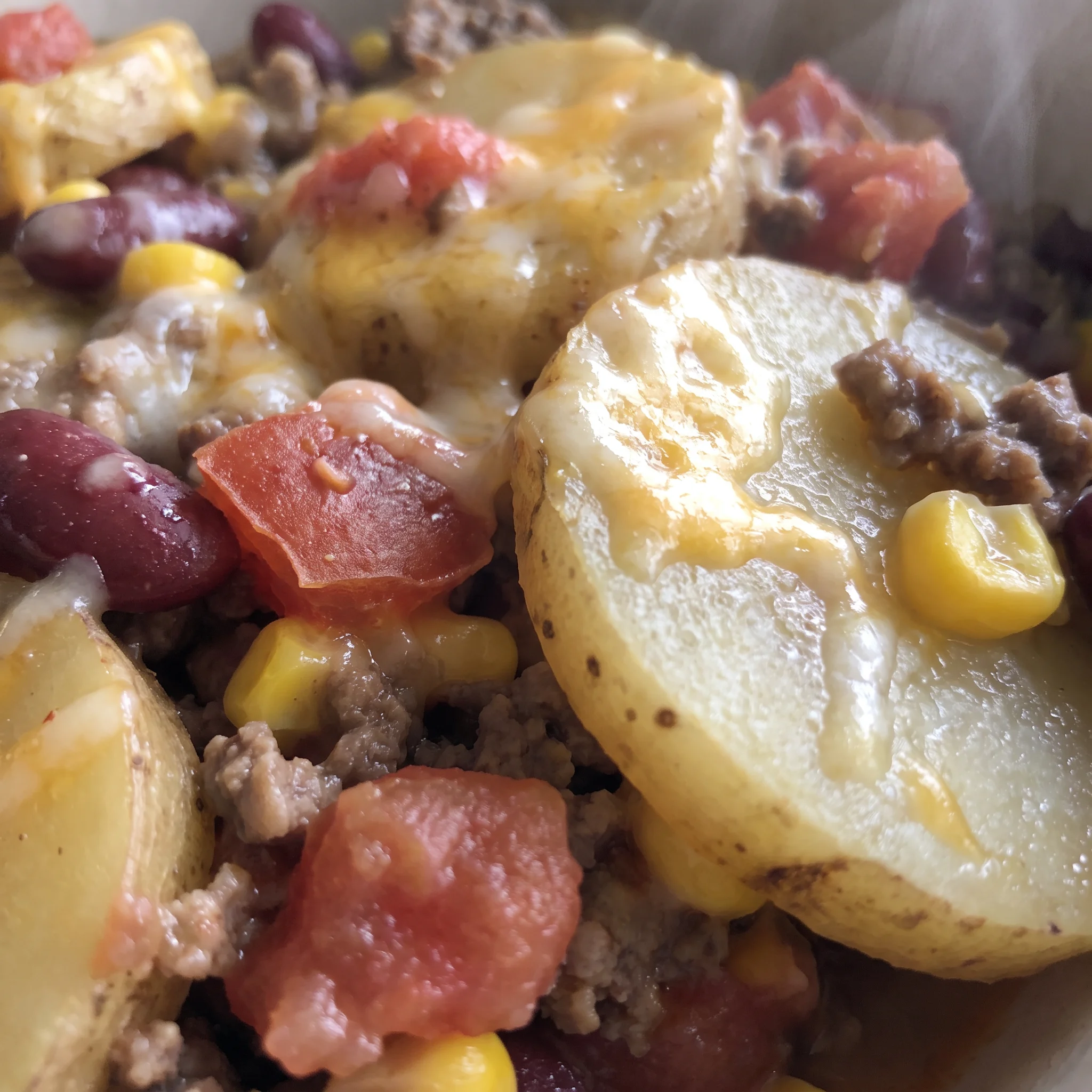
What to Buy and Prep for This Casserole
Lean ground beef: Go with 90/10 so the meat browns without dumping a pool of grease into the crock.
Yukon Gold potatoes: Stick to the 1½ pounds and slice them ⅛ inch thick so they hold shape and turn tender.
Colby and Monterey Jack cheese: Buy a block and shred it fresh for the 1¼ cups; pre-shredded bags are coated and melt poorly.
Canned diced tomatoes with fire roasted hatch chilies: The 10-ounce can with hatch chilies brings smoky heat that plain diced tomatoes can’t match.
Potatoes contain starch granules that must gelatinize in the presence of heat and moisture to become tender. In a slow cooker, the liquid from the canned tomatoes and beans creates a moist environment, but if the potatoes are not arranged correctly, they can remain above the liquid line and cook unevenly. Placing them at the bottom allows them to be in direct contact with the liquid, ensuring even heat transfer and absorption of flavors.
Judging the Cook: What to Watch, Feel, and Taste
When the beef is done browning
You’re looking for the moment the pink vanishes and the crumbles feel firm but not hard. If you stop early, the meat will release water in the crock and dilute the sauce. If you push too far, it turns pebbly and dry.
Test a piece: it should give slightly when pressed. Also, don’t let the onions go translucent; they should still have a little bite.
That texture holds up over the long cook.
Layering potatoes so they cook evenly
After you arrange the slices, run your fingers over them. They should form a mostly single layer with slight overlaps, not a tight stack.
If they’re piled too deep, the ones in the center won’t get the liquid they need and will stay crunchy. Spread them out, and if you have extra, tuck them around the edges where the heat is strongest.
The goal is even thickness, not neatness.
Reading the liquid level before the lid goes on
The liquid should just barely cover the potatoes. If it doesn’t, the top slices will dry out and toughen.
If it covers them by more than a quarter inch, the sauce will be thin and the potatoes waterlogged. You can adjust now: add a splash of water if low, or remove a few spoonfuls if high.
This is your only chance to balance the stew before the long cook.
Knowing when the potatoes are tender
At the end of cooking, pierce a center potato slice with a fork. It should slide in with slight resistance, like a baked potato at the point where it’s soft but not falling apart. If it’s still firm, give it more time; if it crumbles, you’ve overcooked.
The difference between tender and falling apart is only about twenty minutes, so check early and often near the end.
Melting the cheese without breaking it
Scatter the cheese and put the lid back on for a few minutes. You want it glossy and fully melted, but not bubbling with oil separating at the edges. If it sits too long, the cheese turns greasy and the surface pools.
Check after two minutes; if it’s not melted, give it one more. The residual heat does most of the work, so don’t rush it with a stir.
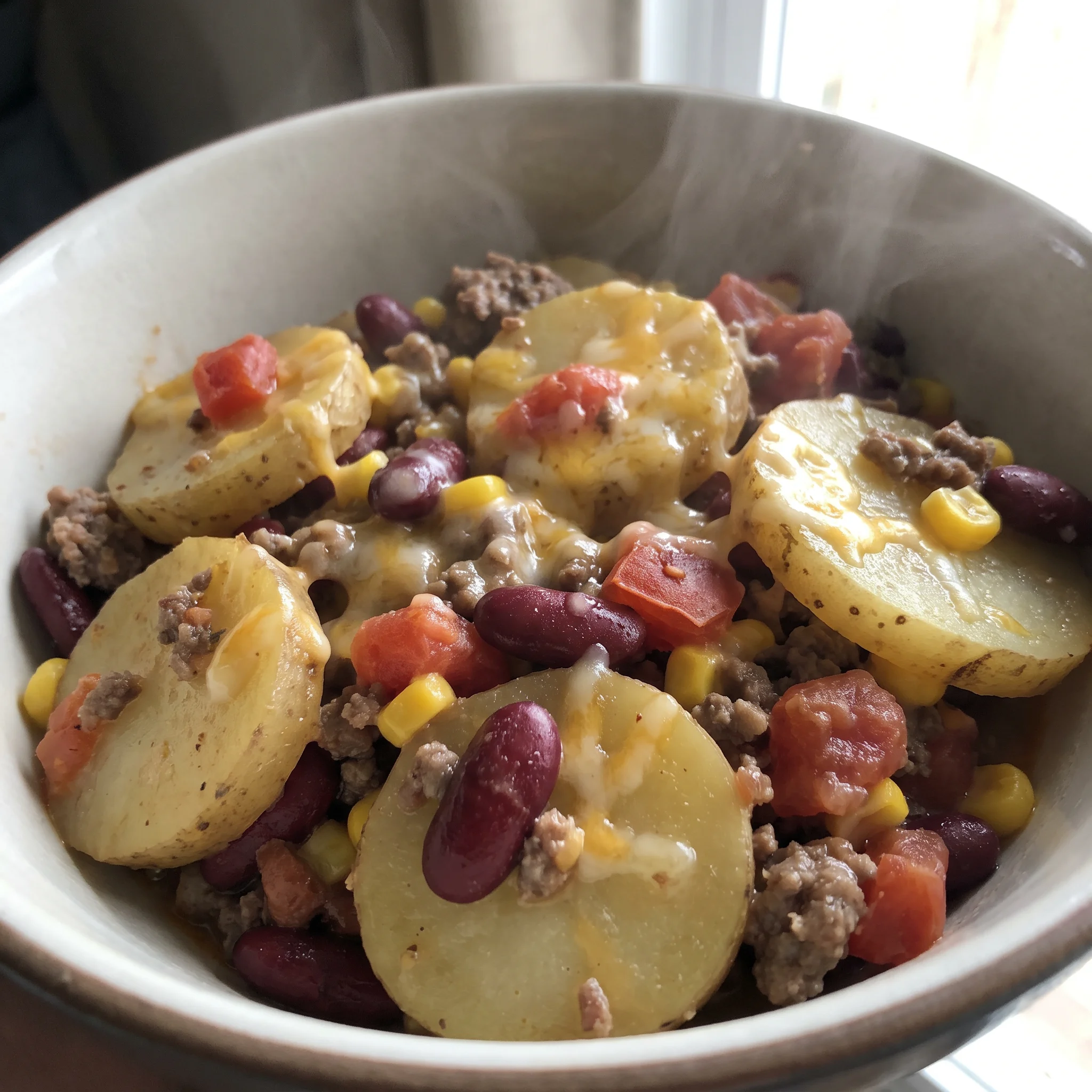
Slow Cooker Cowboy Casserole with Ground Beef
Ingredients
Method
- Mist the crockpot lightly with nonstick cooking spray.
- Place a 10-inch nonstick skillet over medium-high heat; cook the ground beef, diced onions, and minced garlic until the beef loses its pink color.
- Discard any excess grease from the skillet, then move the cooked mixture into the prepared crockpot.
- To the crockpot, add the kidney beans, petite diced tomatoes, diced tomatoes with chilies, frozen corn, kosher salt, black pepper, and chipotle powder. Stir until everything is evenly combined.
- Take out 1½ cups of the meat mixture and set it aside.
- Arrange the sliced Yukon Gold potatoes in the crockpot in layers or wedges. Distribute the reserved meat mixture evenly on top.
- Put the lid on and cook on high for 5 hours, or on low for 7 hours.
- Just before serving, scatter the shredded Colby and Monterey Jack cheese over the top. Replace the lid and allow it to melt fully. Serve hot and enjoy!
Leftovers, Reheating, and the Moment to Eat It
Eat this within an hour of that final cheese scatter. The just-melted blanket and the potatoes, still holding their edges, are the peak.
After a night in the fridge, the slices keep drinking the sauce, so day two is softer and wetter, and the cheese turns rubbery and cold. It still eats well; it just isn’t the same dish. Cool the leftovers within two hours, then move them to a shallow container so they chill fast.
They keep three to four days refrigerated. Reheat single portions covered at 50 percent power, stirring once, until the center is steaming, about two to three minutes. On the stovetop, add a splash of water and warm over medium-low, covered, five to eight minutes.
Skip the freezer for the whole casserole: the potatoes go grainy and the cheese weeps. If you must, freeze only the meat-and-bean base without potatoes or cheese, up to two months, and cook fresh slices into it later.
Swaps That Work Here, and the One That Doesn’t
Lean ground beef: Ground turkey or ground chicken, same 1 pound. The casserole will taste lighter and less beefy. Use 93/7 turkey or chicken and brown it the same way, but expect less fat to render, so the sauce might be slightly thinner.
If you want a richer flavor, add an extra pinch of salt or a splash of Worcestershire when browning.
Canned dark red kidney beans: Canned black beans or pinto beans, same 16-ounce can with liquid. Black beans bring a firmer texture and a slightly earthier taste; pintos are softer and creamier.
Both work, but the dish will look different. Keep the liquid from the can, since it helps create the steamy environment for the potatoes. If you use no-salt-added beans, taste the sauce before serving and add more salt if needed.
Frozen corn: Canned corn, drained, same 1 cup. Canned corn is softer and sweeter, and it won’t hold its shape as well after hours in the crock.
The casserole will still taste good, but you’ll lose the little pops of texture. If you only have canned, add it in the last 30 minutes of cooking to keep some bite.
Colby and Monterey Jack cheese: For dairy-free: plant-based shredded cheese, same 1¼ cups. Most plant-based shreds melt but stay a bit gluey, and they don’t brown or puddle the same way. The flavor will be milder and slightly coconutty depending on the brand.
Add it at the very end and melt with the lid on, but check after 1 minute to avoid a greasy surface. If you eat dairy but want a different cheese, mild cheddar or a Mexican blend works, but avoid aged sharp cheddar, which turns oily when melted.
Tips
- Brown the beef with the onions and garlic in a wide skillet rather than a deep saucepan, and let the meat sit undisturbed for a minute or two before breaking it up. A crowded, deep pan traps steam, so the meat stews in its own juices instead of browning, and those juices carry straight into the crock as extra liquid. Spreading it thin lets the water cook off and the crumbles firm up.
- Tilt the skillet and spoon off the fat after browning, but leave about a teaspoon behind and don’t wipe the pan. That film is what keeps the onions and garlic from scorching while they finish softening, and it carries browned flavor into the crock. Pouring off every drop leaves the mixture dry and the sauce flat, while skipping the drain entirely adds roughly a quarter cup of grease that floats on top of the tomatoes for the whole seven hours.
Frequently Asked Questions
Can I prep this casserole the night before and cook it the next day?
You can, but you’ll need to keep the potatoes from sitting in the liquid. Cook the beef mixture, cool it, and refrigerate it in a separate container. Slice the potatoes and store them submerged in cold water in the fridge.
The next day, drain the potatoes well, layer them in the crock, and proceed. If you assemble everything the night before, the potatoes will soak up the sauce and get waterlogged, and the whole thing may taste flat.
Why did my potatoes turn out hard or undercooked?
The most likely cause is that the potatoes were sliced too thick. At ⅛ inch, they cook through in the time the beef mixture needs; any thicker and the centers stay firm while the outside softens.
A second check: the liquid level. If the potatoes aren’t just barely covered by the tomato and bean juices, the top slices won’t get enough moisture and will toughen. Also, make sure you’re using Yukon Golds, not a waxy potato like red bliss, which holds its shape but resists softening.
How does this slow cooker version differ from the classic oven-baked cowboy casserole?
The oven version usually gets a crusty top and some caramelization because the dry heat of the oven browns the edges. In the slow cooker, everything stays moist and steamy, so the potatoes come out softer and the cheese melts into a gooey blanket rather than a browned crust.
The trade-off is hands-off time: you get 7 hours of unattended cooking instead of checking the oven. The flavor profile is similar, but the texture is more spoonable and less crisp.
Can I cook this on low instead of high, and how does that affect the texture?
Yes, the recipe gives you that option: low for 7 hours. On low, the potatoes cook more gently, so they tend to hold their shape a bit better and the sauce reduces less.
The meat stays tender, but the overall dish might be slightly juicier. If you prefer a thicker sauce, you can leave the lid off for the last 20 minutes on low, but that’s optional.
