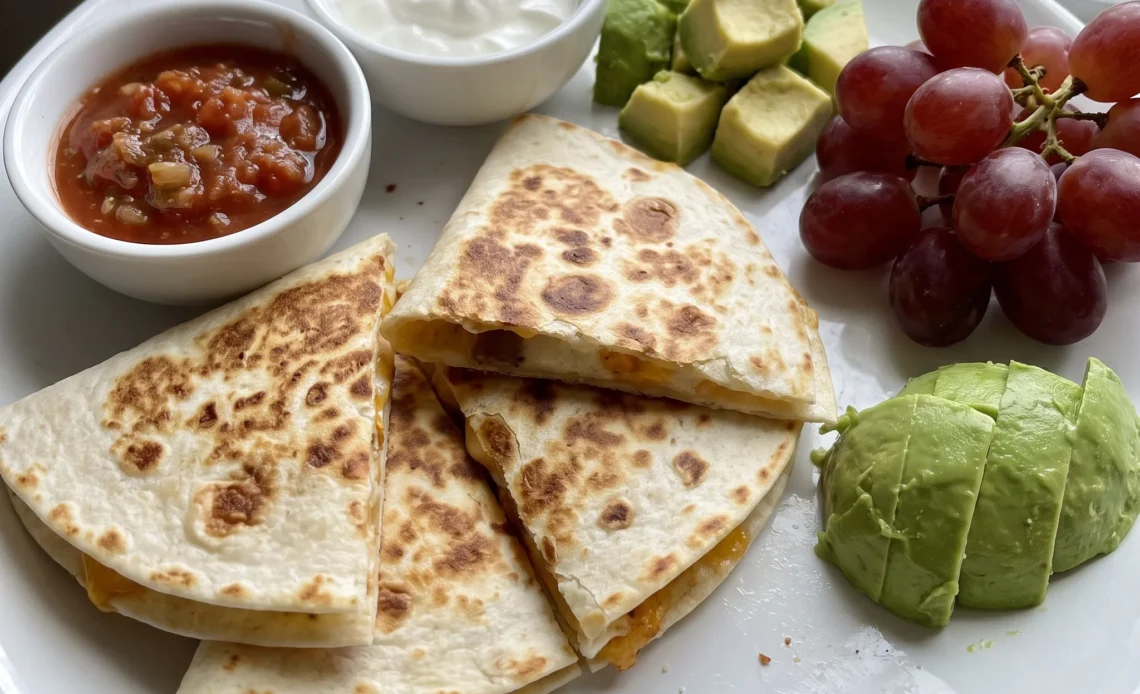
Cool wedges, dry tortilla, avocado still green. What separates a cheese quesadilla lunchbox that survives the morning from one that slumps by noon comes down to how you build it, and there’s a real difficulty most packed lunches ignore. The tortilla is the weak point.
Salsa and sour cream both want to soak in, and once they do, the shell goes limp and cold at the contact spots. Cold cheese behaves differently than hot, too, firming into something denser that needs the sides to carry their weight. Get the assembly right and four of these come together in one sitting, ready to grab on the way out.
Miss the separation and you’ll know it at the first bite. The method below is where the real work lives.
Why does packing each component separately matter?
Salsa and sour cream need their own space. Put either one against the quesadilla and by lunch the tortilla has drunk it up, going limp and cold where the two touch.
A small lidded cup or a divided well keeps them apart until someone dips. Avocado browns fast once air hits the cut faces; press plastic wrap directly onto the cubes or pack them in a snug container with as little headspace as you can manage. That slows the oxidation enough to keep them green through the morning.
Compartmentalized boxes do the same job for the quesadilla wedges, holding them clear of juicy neighbors. The cheese stays soft inside a toasted shell instead of turning clammy.
You’ll notice the difference the moment you open the lid: dry tortilla, bright avocado, salsa still loose. Everything tastes like it did when it went in.
Plain cheese beats loaded for cold eating
A quesadilla with just cheese tastes good cold. Add chicken, beans, or a pile of vegetables and the filling turns dense and mealy in the fridge, the tortilla soggy from released moisture. Plain cheese avoids that problem entirely.
Quartering the rounds makes them finger food, no fork needed, and the smaller wedges fit small hands and small lunchbox slots. The sides carry the rest of the meal: salsa brings acid, sour cream brings coolness, avocado brings fat and a soft texture, grapes bring sweetness and a burst of juice. Together they round out what would otherwise be a one-note lunch.
Each piece stays intact in the box, no filling spilling out. The whole thing reads as a complete meal, not a sad half-sandwich.
Kids eat it without negotiation, and adults don’t feel like they’re eating toddler food.
How long can you really keep this?
Plan on three or four days, not a full week. The avocado is the first to go, turning brown and soft past day two or three.
The quesadilla wedges also lose their edge, the tortilla going from tender to tough as they sit. Cover the boxes and get them into the fridge as soon as you pack them; anything left on the counter warms the cheese and speeds the decline. If you’re feeding four people for four days, that’s sixteen lunchboxes, which lines up with making a fresh batch midweek.
To avoid waste, count your days before you shop and buy only what you’ll use. The grapes hold up best, the salsa and sour cream are fine for the stretch, but don’t push past day four. After that, you’re eating something you won’t enjoy.
Pack what you’ll eat, and no more.
The creamy, tangy balance that makes it work
Salsa brings a sharp, acidic bite that cuts right through the richness of melted cheese. Without it, the quesadilla can taste heavy after a few bites.
Sour cream cools things down, its tang softening the salsa’s heat and adding a slippery texture that coats the tongue. Avocado, cubed, brings a buttery creaminess that ties the salsa and sour cream together, making each bite feel cohesive rather than scattered.
The grapes offer a juicy, sweet finish that resets your palate between wedges. That interplay of tang, cool, and cream is what keeps a simple cheese quesadilla from being boring. You taste each element distinctly, yet they work as a team.
The result is a lunch that feels balanced, not like a pile of separate snacks. It’s the kind of thing you can eat cold without wishing you’d packed something else.
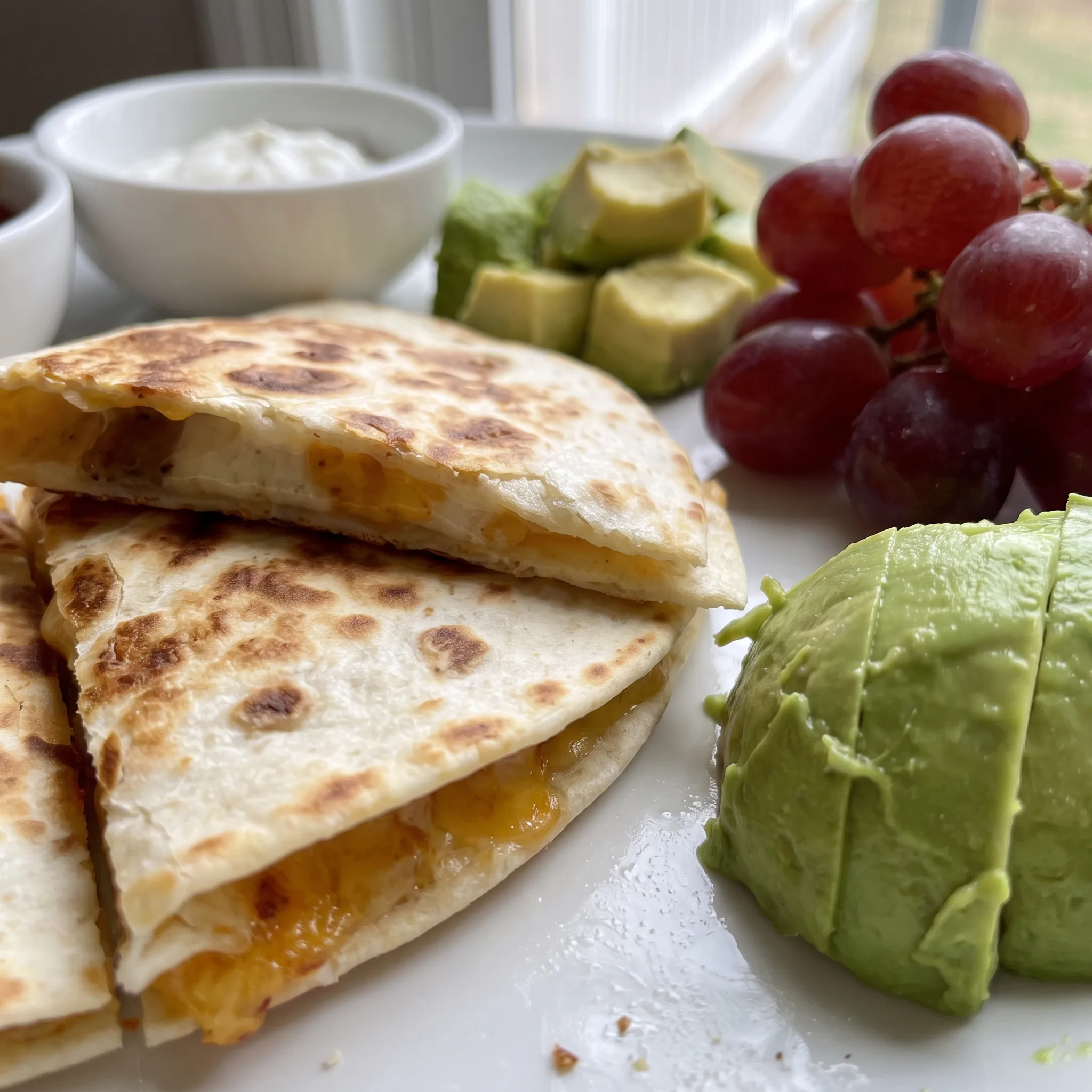
What to look for in the cheese, avocado, and grapes
Cheese: Buy a melting cheese you’d eat cold, like mild cheddar or Monterey Jack, since the wedges firm up in the fridge.
Avocado: Pick one that yields slightly when pressed near the stem, not squishy, or the cubes will smear and brown fast.
Grapes: Choose firm, unshriveled grapes with green stems; soft ones leak juice and wilt next to the quesadilla.
Once avocado is cubed, its exposed surfaces begin oxidizing immediately, turning brown within hours; the visual signal is a dull, matte sheen replacing the glossy green cut face, and by the time brown patches appear the texture has already turned mushy. Similarly, if salsa or sour cream touches the quesadilla, the tortilla absorbs moisture and loses its structural crispness, you can feel the difference as a soft, pliable wedge instead of a firm one. Both changes are irreversible once they start, so the only reliable moment to correct is before the components ever touch.
Judging the quesadilla while it’s still on the heat, and the avocado before it goes in the box
When the tortilla is done, not just warm
A cold quesadilla is only as good as the toast it got. Watch the bottom: it should go from pale to patchy gold in spots, and the top edge of the cheese should start to slump and lose its grated shape.
If you pull it while the tortilla is still soft and floppy, the wedges bend and the cheese stays stiff after chilling. Press the top with a spatula.
If it gives with a little resistance and the cheese squishes beneath, it’s ready to flip.
Keeping the cheese off the edges
Cheese that reaches the rim will run out onto the pan, burn, and leave the quesadilla with bald spots. Leave a bare half-inch border all the way around.
Once it’s folded or topped, the cheese melts inward and stays put. If you see a ribbon of cheese already escaping, scrape it back with the spatula before it sets.
That burnt lace is the difference between a clean wedge and one that looks picked at.
Cubing avocado that will hold its color
An avocado that’s just underripe resists the knife and tastes grassy; one that’s overripe smears when cubed and turns brown the fastest. Press the skin near the stem.
It should yield slightly, like the pad of your thumb, not squish. Cut it, and if the cubes look wet and ragged, they’ll break down in the box. Firm cubes with clean edges hold up better against air and the jostle of a lunchbox.
Sizing the wedge to the box
A quartered quesadilla is the right call for finger food, but a wedge that’s too wide won’t sit flat in a compartment and gets crushed against the lid. Cut each round into four even wedges, then lay one in the box before you pack the rest. If it rocks or overlaps the salsa cup, cut it narrower.
Flush wedges stay intact; crowded ones crack and leak cheese into the grapes.
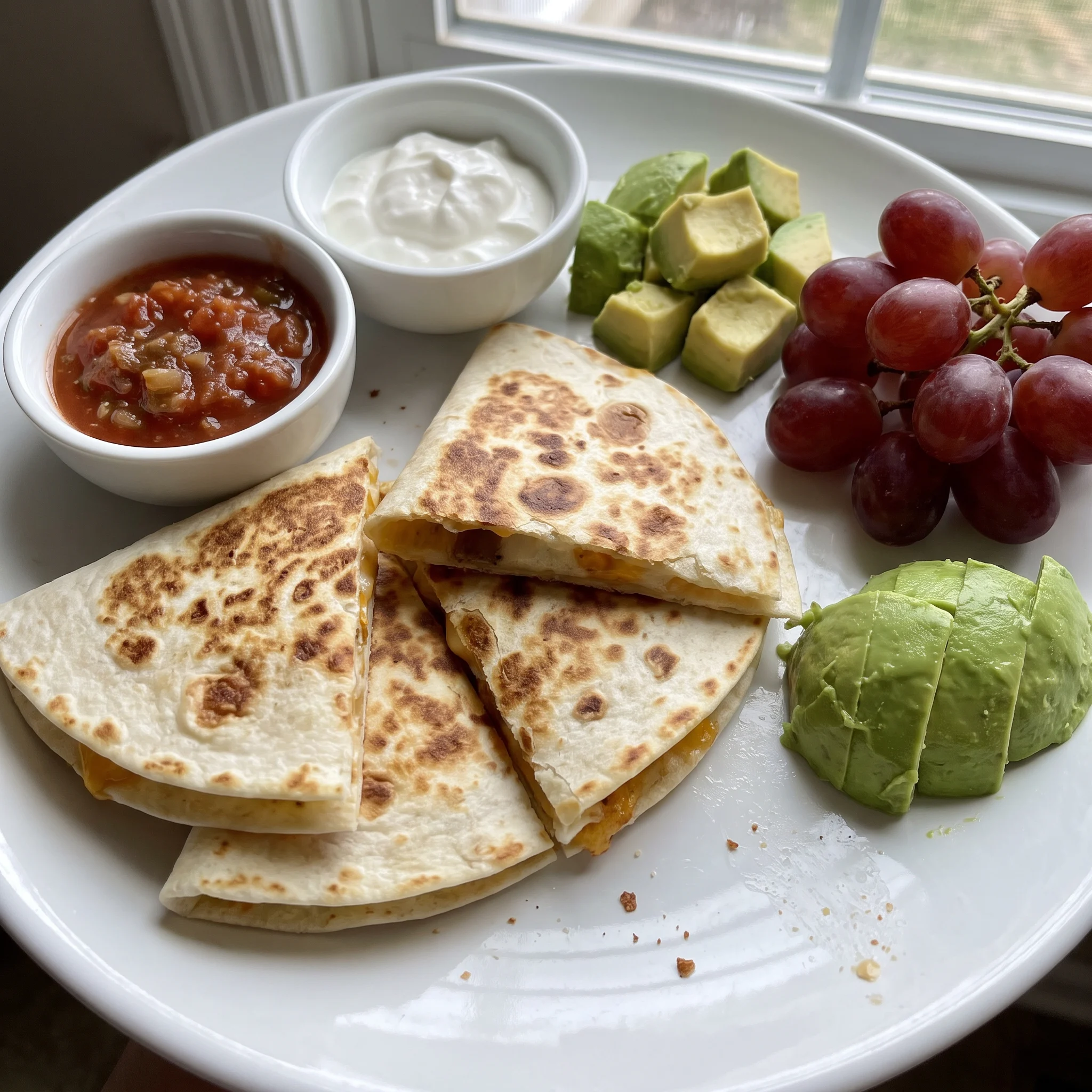
Cheese Quesadilla Lunchbox with Salsa and Grapes
Ingredients
Method
- Evenly distribute all items across 4 lunchboxes.
- Refrigerate with a cover until needed; eat within 3–4 days.
How the boxes hold up day by day
Pack the boxes, cover them, and get them in the fridge right away. Eat the first one the day you assemble it; that’s when the quesadilla wedges still have their toasted edge and the avocado cubes are firm and green.
From there the decline is steady. By day two the avocado faces dull slightly, though plastic pressed to the cut surfaces keeps most of the color.
Day three the cubes soften and the tortilla turns from tender to chewy, and that’s the point to eat the last of them. The grapes and the salsa and sour cream hold through day three fine. Don’t push to day four; the avocado goes brown and slack and the wedges taste stale.
Cubed avocado doesn’t freeze, so don’t try to stash it. Finish with the avocado going in at packing time, never earlier, and eat within three days for the best texture.
Tips
- Cut the avocado into cubes while it is still in the skin: halve it, score the flesh in a grid down to the skin with a paring knife, then scoop the cubes out with a spoon. The skin holds the fruit steady so the cubes keep clean edges instead of collapsing under the knife, and they arrive in the box as distinct pieces rather than a smear.
- Add the cubed avocado to each lunchbox last, after the quesadilla wedges, salsa, and sour cream are already seated, and drop the cubes into their own compartment rather than on top of anything. Cubes that sit under a wedge get flattened by the lid and leak oil onto the grapes, so keeping them on top and clear of the heavier items is what keeps them looking like cubes at lunch.
What you can swap and what you can’t in a cold quesadilla lunchbox
Salsa: Pico de gallo, hot sauce, or chopped tomatoes with a squeeze of lime. Pico de gallo brings crunch and fresh tomato, but it waters out faster than jarred salsa, so pack it in its own cup and expect some liquid to pool by day two. Hot sauce thins the dip and cranks the heat; start with the same 1 cup the recipe uses and adjust after tasting, since some brands are far saltier than others.
Sour cream: Plain Greek yogurt or a dairy-free sour cream. Greek yogurt is tangier and a little thicker, which reads as lighter against the cheese.
Dairy-free sour cream can taste flat and may separate into a watery ring in the cup, so give it a stir before packing. Either way, use the same 1 cup and taste before you commit the whole batch.
Avocado: Guacamole or a mashed avocado with lime. Mashing avocado with lime slows the browning and spreads more evenly, but the texture turns saucy rather than cubed, so it coats the quesadilla instead of sitting beside it.
If you go this route, keep it in a lidded cup and press plastic wrap on the surface. Cubed avocado is still the better choice for holding shape in a lunchbox.
Grapes: Any firm, seedless grape or small berries like blueberries. Grapes bring a juicy pop that resets the palate, and swapping in blueberries gives a softer, tarter burst that can bleed onto neighboring items.
Firm grapes hold up best for four days; berries start to weep by day two, so pack them in their own compartment or a paper towel-lined cup. Use the same 2 cups and adjust once you see how much liquid they release.
Frequently Asked Questions
Can I make this cheese quesadilla lunchbox the night before?
Yes, and it’s the better move. Assemble the four boxes, cover them, and refrigerate; the next morning you just grab one.
The grapes stay firm and the salsa and sour cream don’t care about the extra hours. Know that the wedges are at their crispest the day you pack them, so a night in the fridge trades a little of that toasted edge for the convenience.
How do I keep the quesadillas from getting soggy in the lunchbox?
Keep moisture away from the tortilla, and the biggest culprit is the salsa cup leaking or tipping. Seat it upright in its own well and check that the lid actually seals before the box goes in the bag. The other cause is steam: if you pack the wedges while they’re still hot, condensation forms on the lid and drips down.
Let them cool to room temperature first, then box them.
What’s the best way to pack avocado so it doesn’t turn brown?
Cut the avocado last, right before the boxes go into the fridge, and get it under cover immediately. A snug container with almost no headspace does most of the work; pressing plastic wrap flat against the cut faces handles the rest.
Cubes with clean edges brown slower than ragged ones, so use an avocado that yields slightly near the stem rather than a soft one. If the cubes look wet and smeary when you cut them, they’ll discolor fastest.
How does this lunchbox version differ from a classic cheese quesadilla?
A classic one comes off the pan and goes straight to a plate, eaten hot with the cheese still stretchy. Here the wedges chill for hours, so the cheese firms and the tortilla goes from crisp to tender. That shift is why the sides carry so much: salsa, sour cream, avocado, and grapes give you acid, coolness, fat, and sweetness to balance a wedge that’s no longer warm.
Quartering also changes how you eat it, since each piece is finger food rather than something you’d pick up whole.
Can I freeze these lunchboxes for later?
No. The avocado is the dealbreaker, going brown and slack once frozen and thawed, and the tortilla wedges turn tough and stale.
Salsa and sour cream also separate into a watery ring after a freeze. Make them fresh and eat within three to four days instead, counting your days before you shop so you don’t end up throwing boxes out.
