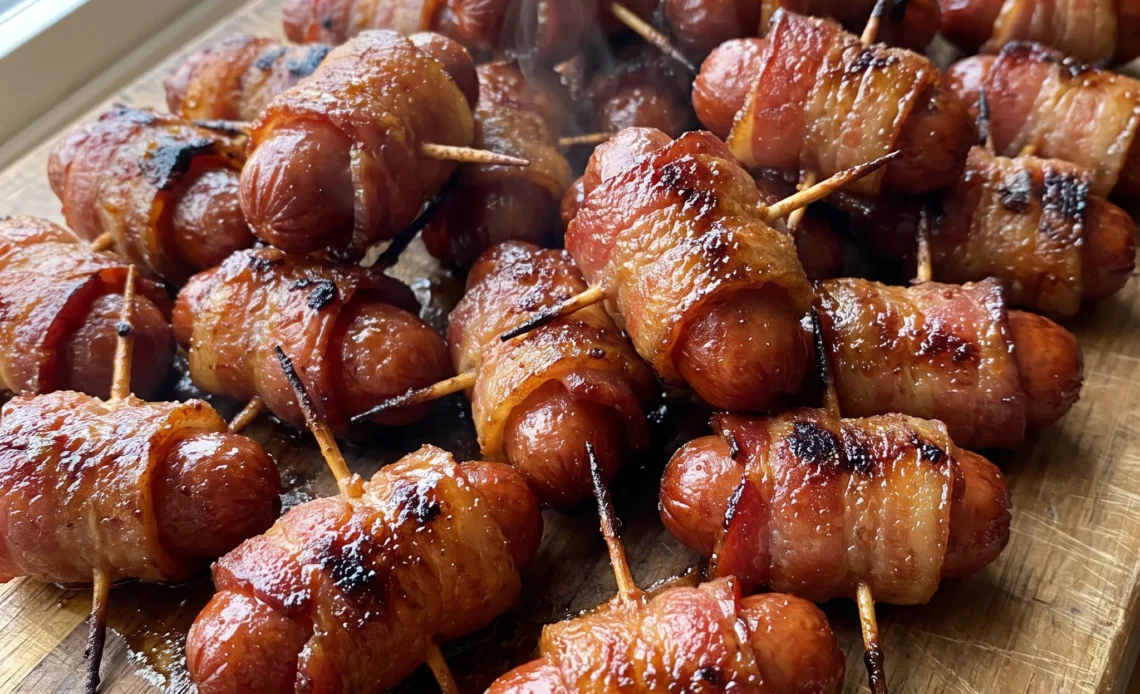
Serving a hot appetizer to a crowd usually means standing at the stove while everyone else eats. This tray doesn’t ask for that. A package of cocktail links and a pound of bacon turn into bacon wrapped smokies that go into the oven in one batch and come out crisp enough to eat by the handful.
The tricky part is the wrap. Bacon that overlaps its own layers traps steam and stays limp, and sugar that sits too long against the meat starts to weep before the tray even hits the heat. Get those two things right and the tray disappears before it cools.
When smokies are not thoroughly dried, the moisture on their surface turns to steam in the oven, which keeps the bacon from reaching the high heat needed to render its fat and crisp. The steam also prevents the brown sugar mixture from adhering properly, so instead of forming a sticky glaze, it can pool and burn. This results in a soggy, greasy texture rather than a crisp, caramelized bite.
Wrap Each Sausage with a Third of a Bacon Slice
A cocktail link is small, maybe an inch long. A whole slice of bacon would wrap it two or three times, and that extra meat never crisps.
It just steams and stays flabby. Cutting bacon into thirds gives you a piece that covers the sausage in one pass. That single layer of bacon is thin enough to render its fat and turn crisp in the time it takes the smokie to heat through.
If the bacon were thicker, it would still be raw when the sausage is done. If it were thinner, it would burn. The third-slice size is the sweet spot.
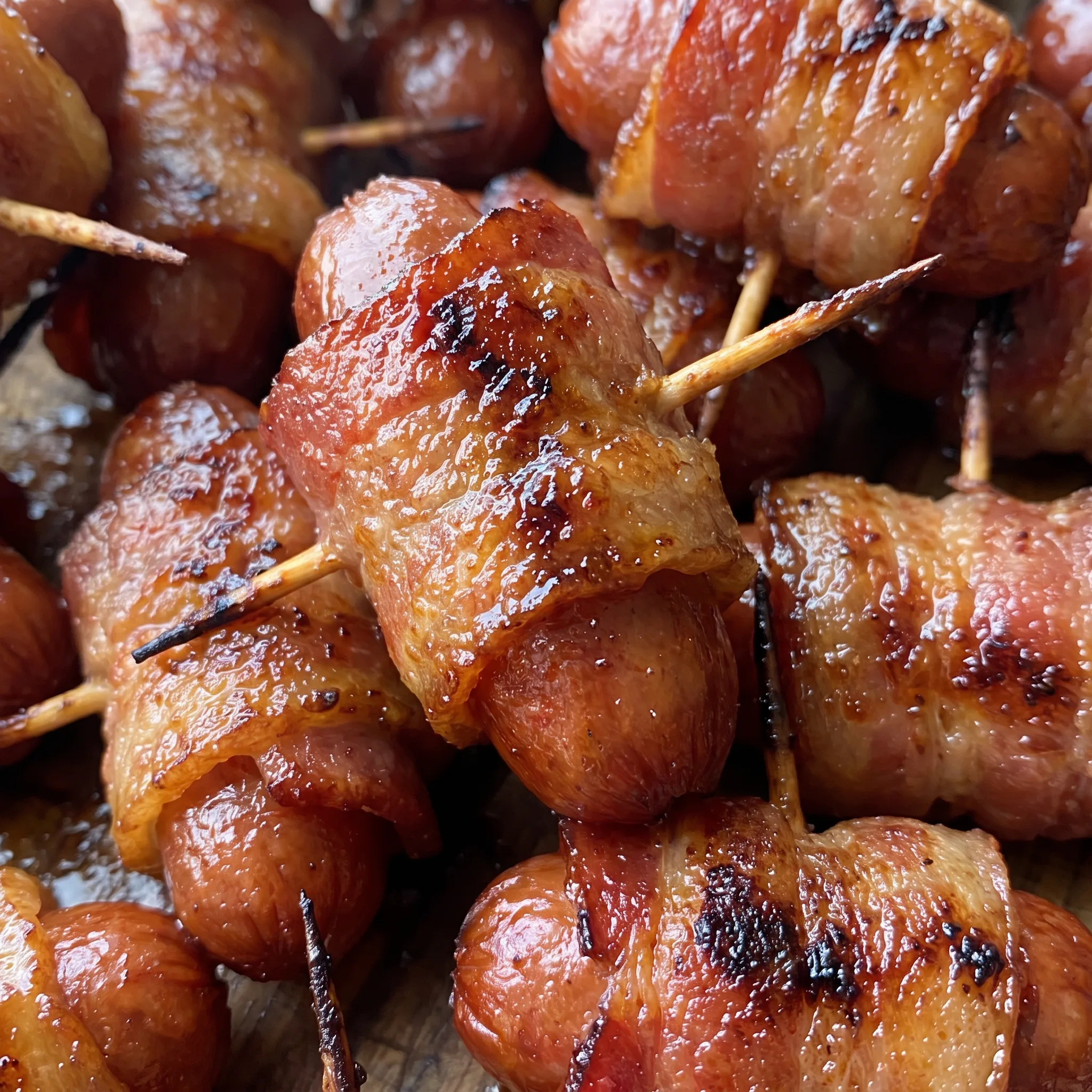
When you pull the tray from the oven, each piece should look shrunken and glossy, with the bacon clinging tight. The sausage inside stays juicy because it’s protected by that thin jacket. That’s the bite you’re after: crisp outside, tender inside, no tug-of-war between too much bacon and too little.
Brown Sugar and Chipotle Build the Glaze
Brown sugar does more than sweeten. In the oven, it melts and starts to caramelize, turning sticky and glassy.
That glaze clings to the bacon, giving each piece a shine and a chew that plain bacon lacks. Chipotle or ancho brings a mild, smoky heat that cuts through the sugar. Without it, the sweetness can feel one-note.
The heat doesn’t hit you up front; it sneaks in at the end, lingering just enough to make you reach for another. Shaking the smokies in a bag with the sugar mixture coats them evenly.
Every surface gets a dusting, so the glaze forms all over, not in patches. You’ll see the sugar start to bubble and darken as it bakes.
That’s when the kitchen smells like caramel and smoke. The result is a sticky, savory-sweet bite with a whisper of heat. If the sugar clumps, press it through a sieve first.
Dry the Smokies First
Sausages come packed in liquid, and that moisture sits on the surface. If you wrap bacon around a wet smokie, the bacon slides around and never really sticks.
Worse, that water turns to steam in the oven, and steam keeps the bacon from crisping. You end up with pale, rubbery bacon and a puddle on the baking sheet. Patting the smokies dry takes a minute, but it changes everything.
A dry surface gives the bacon something to grip, so it stays put during baking. It also lets the brown sugar mixture adhere properly. When the sugar hits a dry surface, it sticks instead of sliding off.
And without extra moisture, the bacon can render its fat and fry in it, turning crisp and browned. The smokies themselves stay juicy because they’re small and cook fast.
You’ll notice the difference in the first bite: the bacon shatters slightly, and the sausage inside is firm, not waterlogged.
Maple Bacon Is the Right Call
Maple bacon brings its own subtle sweetness, which echoes the brown sugar and makes the glaze taste deeper. It’s not about adding more sugar; it’s about building a flavor that feels complete. The maple note is mild, almost background, but it rounds out the smoky chipotle.
Regular bacon would work, but it lacks that hint of maple that ties everything together. The smokiness of the chipotle and the maple in the bacon play off each other, so each bite has a little sweet, a little smoke, and a little heat.
That balance is what keeps you coming back. When you bite into one, the bacon should be crisp and slightly candied, the sausage juicy, and the heat a gentle warmth in the back of your throat.
Maple bacon makes that happen without any extra effort.
The Four Ingredients That Make or Break This Tray
Maple flavored bacon: The maple glaze on the bacon is mild but it echoes the brown sugar and rounds out the chipotle smoke.
Light brown sugar: Light brown sugar carries molasses without turning the glaze darker or heavier than the smokies can handle.
Ground chipotle or ancho chili pepper: Chipotle is smoky and moderately hot; ancho is milder and fruitier, so pick based on how much heat you want lingering.
Cocktail links: The 14-ounce package holds the small links that fit a third of a bacon slice in one pass.
Judging Bacon-Wrapped Smokies as They Bake
Knowing when the bacon has rendered enough
The bacon should look shrunken and glossy, its fat mostly rendered. If it’s still pale and limp, the fat hasn’t cooked out.
At 30 minutes, it should be crisp. If not, give it a few more minutes, but watch closely: the sugar can go from caramelized to burnt in under a minute.
The sausage inside stays juicy, so don’t worry about overcooking it.
Judging the glaze color
The brown sugar should melt and bubble, turning a deep amber. If it stays pale, the glaze won’t have that sticky chew. If it darkens too fast, the sugar is burning.
Pull the tray if you smell acrid smoke. The chipotle adds a smoky heat, but it shouldn’t overpower.
You want a balance of sweet and smoky.
Checking for even browning
Ovens have hot spots, so some pieces will brown faster. Rotate the baking sheet halfway through if you notice uneven coloring.
If some are done before others, move them to a cooler part of the oven or remove them early. The goal is all pieces crisp and glossy, not burnt on one side.
Testing the texture of the sausage
The smokies should be firm but juicy, not dried out. If they look shriveled, they’ve overcooked. Since they’re small, they heat through quickly.
The bacon should cling tightly; if it’s loose, the wrap wasn’t tight enough or the bacon wasn’t rendered enough. A good bite has a slight resistance from the crisp bacon, then a soft, juicy interior.
Deciding when to pull them from the oven
At 30 minutes, check for crisp bacon and a bubbly, sticky glaze. If the bacon is still flabby, continue baking, but keep an eye on the sugar. Once the glaze is deep brown and the bacon is crisp, they’re done.
Overbaking dries the sausage and can burn the sugar. Undercooking leaves the bacon chewy.
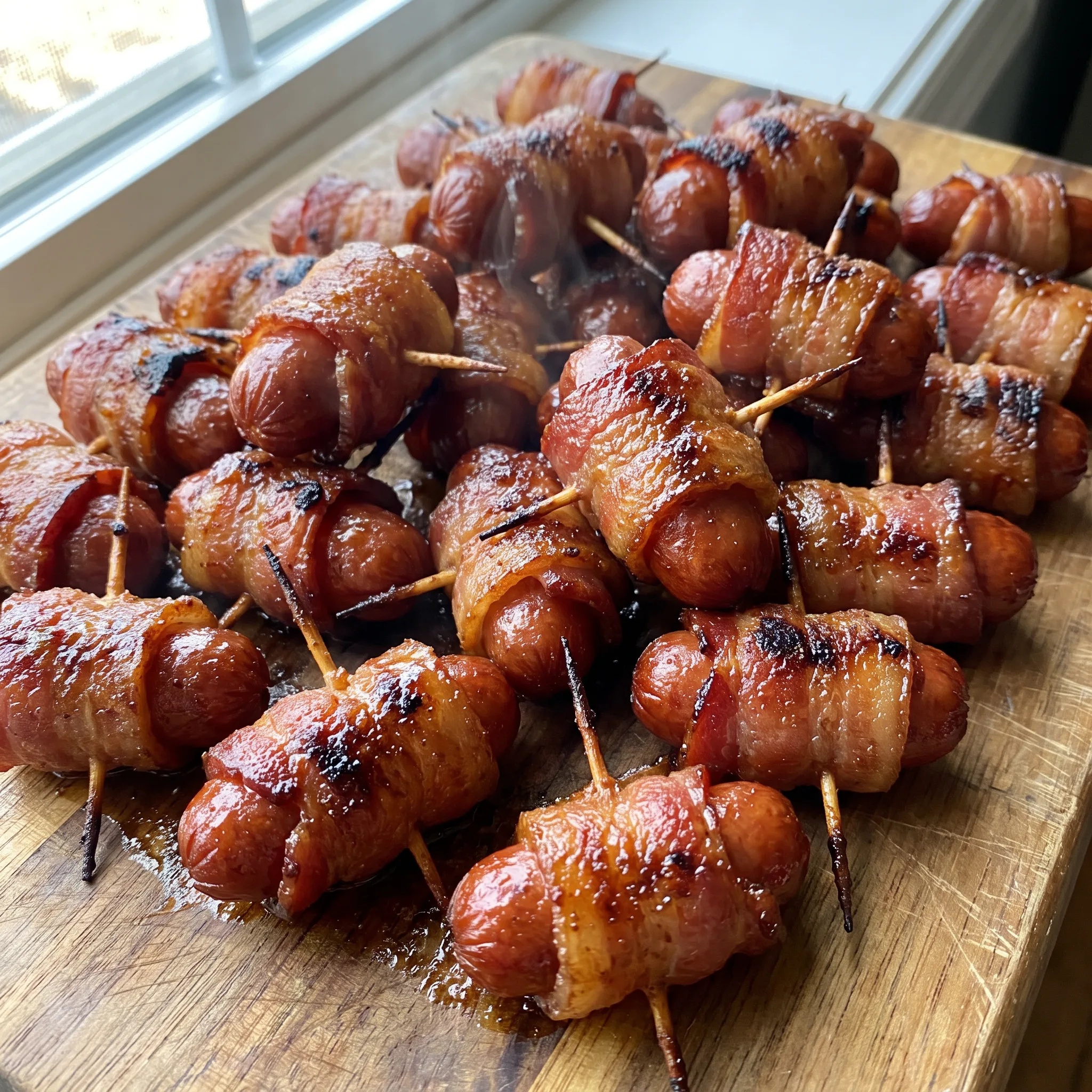
Bacon Wrapped Brown Sugar Smokies
Ingredients
Method
- Set oven to 350°F (175°C). Prepare a large rimmed baking sheet by lining with parchment or foil and coating with cooking spray. Leave aside.
- Take the little smokies out of their packaging and dry them using a paper towel.
- Encase each smokie with a single piece of bacon. Pierce a toothpick through the center to hold it.
- Combine the brown sugar and ground chipotle pepper in a gallon size bag.
- Place the bacon wrapped smokies into the bag. Close and shake gently in the brown sugar mixture until fully coated. Place on the baking sheet.
- Bake for 30 minutes or until the bacon becomes crisp.
- Serve right away with barbecue sauce or honey mustard, if you like.
Storage and Serving: Eat Them Hot, Then Revive the Leftovers
Bacon-wrapped smokies hit their peak within 20 minutes of leaving the oven. The bacon is at its crispest, the brown sugar glaze still glassy. Past that, the bacon softens against the sausage and the glaze turns tacky.
If you’re serving a crowd, bake in batches and set out only what will be eaten in that window. Leftovers keep in an airtight container in the fridge for up to 3 days.
The sausage stays juicy, but the bacon will be chewy and the sugar sticky, not crisp. Reheat on a wire rack set over a baking sheet at 350°F for 8 to 10 minutes. The rack lets fat drip away, so the bacon re-crisps instead of steaming.
A microwave leaves it rubbery. The assembled smokies don’t freeze well; the bacon releases water and turns limp on thaw.
Freeze only the plain cocktail sausages, up to 2 months, and wrap them fresh. Serve reheated with barbecue sauce on the side, not spooned over, so the coating stays dry.
Tips
- Before the tray goes in, pinch each bacon third so its two ends meet on the underside of the smokie and overlap slightly, then push the toothpick through that overlap. The ends are the thinnest part of the wrap and the first to dry out and curl away from the sausage, so a small overlap keeps them anchored and covered for the full 30 minutes.
- Count your bacon thirds against your links before you start wrapping. A 1-pound package of bacon yields roughly 45 thirds only if the slices are sliced thin and you get about 15 slices; thicker slicing or a short pack leaves you a few pieces shy of 45 smokies, and a smokie wrapped in a half slice instead of a third will overlap and steam rather than crisp.
Swapping the Sausage, Bacon, or Chili: What Changes and What Doesn’t
Cocktail links (14-oz package): Any small smoked sausage about an inch long, like a different brand of cocktail links or mini kielbasa. The size is what matters.
A sausage that’s too fat won’t wrap in one pass of a third-slice of bacon, and the bacon will overlap and steam instead of crisp. Too skinny and the bacon slides.
Stick with links in the 14-ounce range so you get 45 pieces and the timing still works. If yours are a little larger, count on fewer pieces and check at 30 minutes; the bacon may need a few extra minutes to render.
Maple flavored bacon: Regular cured bacon, or another flavored bacon like hickory-smoked or peppered. Maple bacon’s mild sweetness echoes the brown sugar and rounds out the chipotle. Regular bacon leaves the glaze tasting a little sharper, more purely sweet and smoky.
Hickory-smoked bacon pushes the smoke further; peppered bacon adds a bite that can fight the chipotle. Any of them will crisp the same way, so the texture doesn’t change, only the flavor balance.
If you use a very thick-cut bacon, cut the pieces smaller so they still wrap in one layer.
Ground chipotle or ancho chili pepper (1/2 tsp): Another mild, smoky chili powder like smoked paprika, or a hotter one like cayenne if you want more heat. Chipotle and ancho both bring smoke with mild to moderate heat. Smoked paprika keeps the smoke but loses the heat, so the glaze tastes rounder and sweeter.
Cayenne brings heat without smoke, leaving the brown sugar to carry the whole flavor. Start with the same 1/2 teaspoon the recipe calls for, taste the sugar mixture before you coat the smokies, and adjust from there. A little goes a long way; too much cayenne and the heat lingers past the sweet.
Frequently Asked Questions
Can I make these bacon wrapped smokies ahead of time?
The assembled tray can be built and refrigerated, but the bacon won’t crisp the way it does straight from the oven. A cold tray going into a 350°F oven means the bacon renders slower at first, and the sugar coating can weep as it sits, leaving wet spots on the parchment.
If you assemble ahead, keep the tray tightly covered in the fridge and bake it cold, adding a few minutes and watching the glaze for the deep amber color. The better plan for a party is to wrap and coat the smokies early, then bake in batches so what hits the table is within that 20-minute window when the bacon is still shattering crisp.
Why did my bacon wrapped smokies turn out soggy?
Wet smokies are the usual culprit. The links sit in liquid in the package, and any film of moisture left on them steams under the bacon instead of letting it fry, so the fat never renders and you get pale, flabby strips sitting in a puddle. Pat each link dry before wrapping and the bacon gets traction and browns.
If yours were dry and still came out limp, look at how the bacon was layered: any overlap traps steam between the folds, and instead of one pass around the sausage you get a spot that stays rubbery. Crowding the baking sheet does the same thing, since the pieces release moisture into each other.
How are these different from traditional bacon wrapped smokies?
Traditional versions lean on brown sugar alone, sometimes with a dusting of chili powder, and the result is sweet and one-dimensional. This recipe cuts the sugar with ground chipotle or ancho, so the heat arrives late and lingers behind the caramel, and it calls for maple bacon, which quietly reinforces the glaze instead of just adding salt and smoke. The bacon itself is cut into thirds rather than halves, which keeps the wrap to a single layer around each link, so the meat crisps through instead of steaming inside a double thickness.
Same three-bite format, but the balance tilts savory and smoky rather than candy-sweet.
