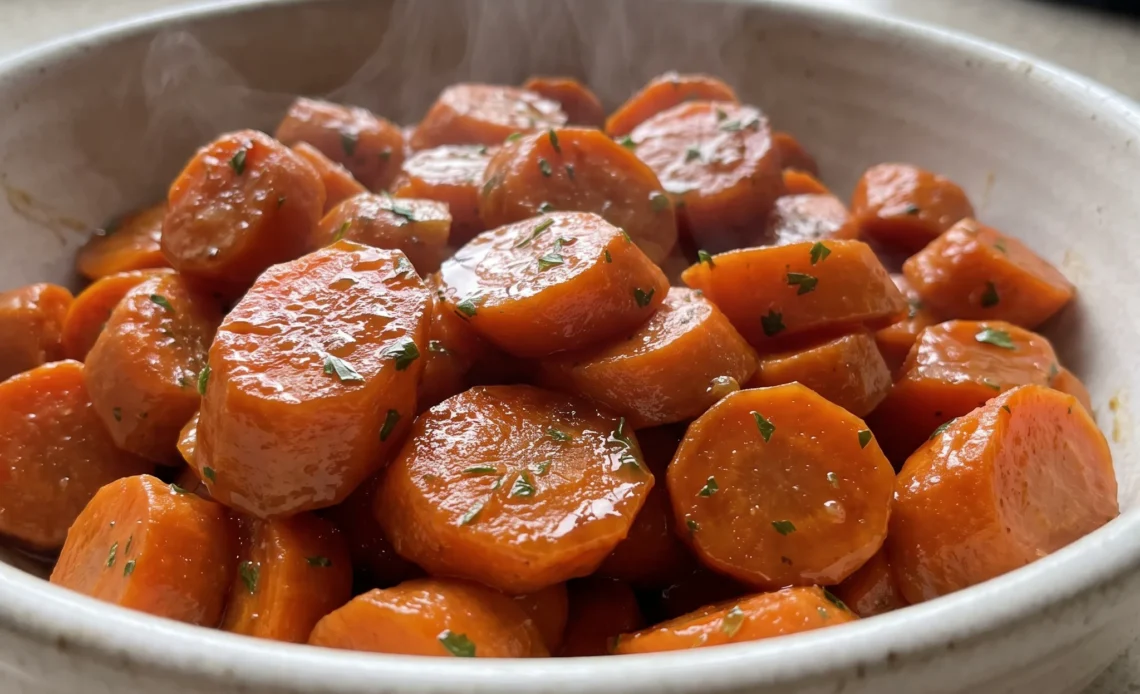
Getting slow cooker glazed carrots right comes down to one thing: the liquid that collects at the bottom of the pot. Too much of it and the carrots steam in a bath instead of taking on a glaze, no matter how long they sit. The carrots themselves matter more than most people expect.
A thick, woody carrot stays hard at the core while the outside goes soft, and old carrots have already lost much of the natural sugar that browns alongside the brown sugar in the pot. Both problems show up late, once the lid is off and the sauce is reducing.
A soft, glossy carrot with a syrup that clings is the goal, and the margin between that and a watery puddle is smaller than the ingredient list suggests.
Why does the slow cooker make carrots so tender and sweet?
Carrots in the slow cooker sit in a sealed pot, so the steam they release has nowhere to go. That trapped moisture surrounds each piece and keeps it plump from the outside in, with no hot dry air to pull water out.
You never get those leathery edges that show up in a hot oven. Over the long, gentle cooking, the carrots’ own sugars start to brown and deepen. The sweetness you taste isn’t just from the glaze; it’s the vegetable itself getting more concentrated.
Because the lid holds everything in, the butter and brown sugar mingle with the juices that collect at the bottom, turning into a syrupy liquid that clings. The result is a soft, candy-like carrot with a glossy coat, not a roasted, chewy one. If you peek through the lid, you’ll see a pool of amber liquid bubbling around the carrots.
That’s the base of the glaze, ready to thicken later. The carrots stay intact but give way easily under a fork.
What does each glaze ingredient actually do?
Brown sugar brings more than sweetness. As it heats with the moisture the carrots release, it dissolves into a syrupy liquid that coats every piece. That syrup also gives the glaze body; without it, you’d just have buttered carrots.
Butter adds richness and carries the spices. Melted butter disperses cinnamon and nutmeg evenly, so you don’t get pockets of spice in one bite and none in the next. Cinnamon and nutmeg are warm spices that play off the earthy sweetness of carrots.
They need fat to bloom, and the butter does that job, coaxing out their aroma. When you stir the glaze over the carrots, you’re not just coating them; you’re starting the sauce that will thicken as they cook. A quick taste of the raw mixture should be sweet, salty, and lightly spiced.
The salt sharpens the sugar and keeps the glaze from tasting flat. Once everything is in the pot, the carrots will release more liquid, and the sugar will dissolve completely, turning the coating into something glossy and uniform.
The last uncovered stretch, and why it matters
Taking the lid off near the end is a deliberate move. Up to that point, the slow cooker has held in steam, which kept the carrots from drying out but also left the glaze thin.
Once the lid comes off, that steam escapes and the liquid in the pot reduces. The sugars and butter concentrate, turning a runny sauce into a thick syrup that clings to the carrots instead of pooling at the bottom. You’ll see the liquid bubble more vigorously and start to look glossy.
As water evaporates, the flavors intensify, so the glaze tastes richer and more caramel-like. The carrots themselves also firm up slightly on the surface as they sit in that reducing syrup, giving them a sticky finish.
This step turns a good dish into one with a proper glaze. The difference is obvious when you spoon them out: instead of a watery puddle, each carrot wears a shiny coat.
That’s what makes them look and taste finished.
Why cut carrots into 1/2-inch pieces?
Uniform 1/2-inch pieces are the difference between a pot of evenly tender carrots and a mix of hard chunks and soft ones. The slow cooker’s moist heat penetrates smaller pieces at the same rate, so they all reach that ideal texture together.
If you leave some pieces larger, they’ll still be firm when the smaller ones have gone too soft. Peeling matters too.
The outer layer of a carrot is tougher and slightly bitter; removing it lets the glaze soak in and ensures the flesh softens uniformly. A 1/2-inch piece is small enough to cook through without turning waterlogged, but big enough to hold its shape.
You want each piece to keep its identity, not dissolve into the sauce. When you’re cutting, aim for consistent thickness rather than cubes.
A quick visual check: they should all look roughly the same size. That’s your insurance against a pot of uneven results. The glaze will coat them all the same way, and every forkful will have the same tender bite.
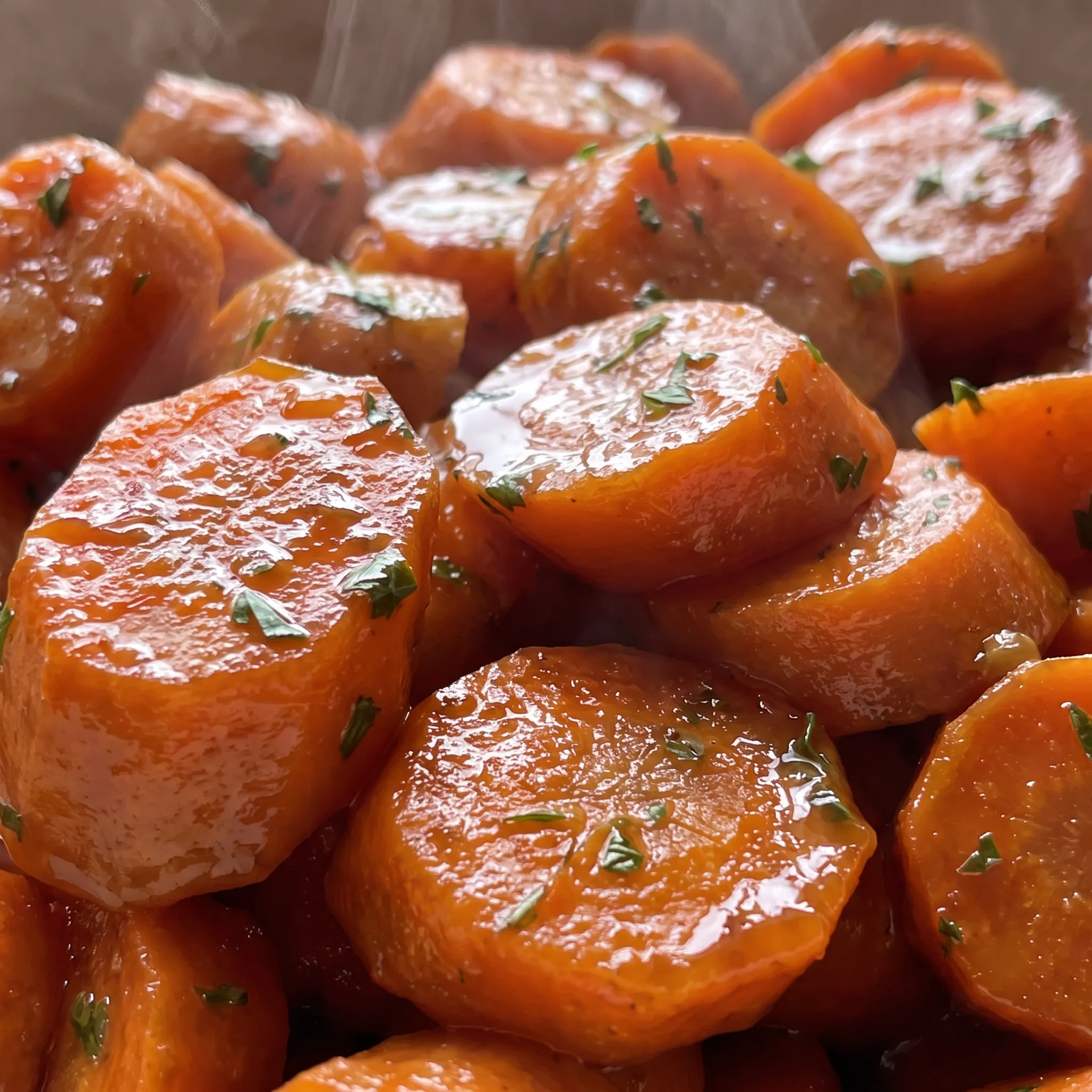
What to look for at the store and when you get home
Carrots: Look for firm carrots with no bend or rubbery give, since limp ones cook unevenly.
Brown sugar: Use fresh brown sugar that’s soft and clump-free, as hard lumps won’t dissolve.
Butter: Melt real butter, not margarine, because its fat carries the spices better.
Cinnamon: A fresh jar smells sweet and woody when you open it, not dusty or flat.
Nutmeg: Whole nutmeg grated on a microplane gives a brighter aroma than pre-ground.
Parsley: Flat-leaf parsley has more flavor than curly, and dry leaves are pointless here.
Because the lid stays on, moisture from the carrots cannot escape, and the glaze remains a pool of sugar water rather than a syrup. The sugar is fully dissolved, but without evaporation the mixture never concentrates enough to cling. The final uncovered cooking step exists specifically to drive off that excess water.
How to tell when the carrots are done, the glaze is right, and nothing has gone too far
Judging doneness by feel, not by the clock
At three hours, a carrot should give way under a fork without turning to paste. Spear one near the center of the pile, since edges cook faster. If the fork slides in with almost no resistance but the piece still holds its shape, pull the pot off heat.
If it’s still firm, give it another 15 minutes and check again. Overcooked carrots collapse and the glaze turns cloudy.
Reading the liquid level before you uncover
Lift the lid just enough to see the pool at the bottom. It should be thin and amber, barely covering the base. If the carrots are sitting in a deep bath, they’ll never glaze; leave the lid off longer, up to 15 extra minutes, and watch the level drop.
If the pool is already syrupy, skip the uncovered step entirely or the sugars will scorch.
When the glaze coats the spoon, it’s ready
During the uncovered stretch, stir once and lift a spoonful of liquid. It should fall in a slow ribbon, not a fast drip. That’s the signal to stop.
A minute or two too long and the sugar darkens and tastes bitter. If that happens, pull the insert out of the base right away and stir in a tablespoon of water to loosen the syrup.
Spotting uneven pieces before they cause trouble
About an hour in, open the lid and stir. You’ll feel which pieces are already soft and which are still hard. If a few are clearly larger, fish them out and cut them down, then return them to the pot.
Catching this early saves you from a batch where half the carrots are falling apart while the rest stay crunchy.
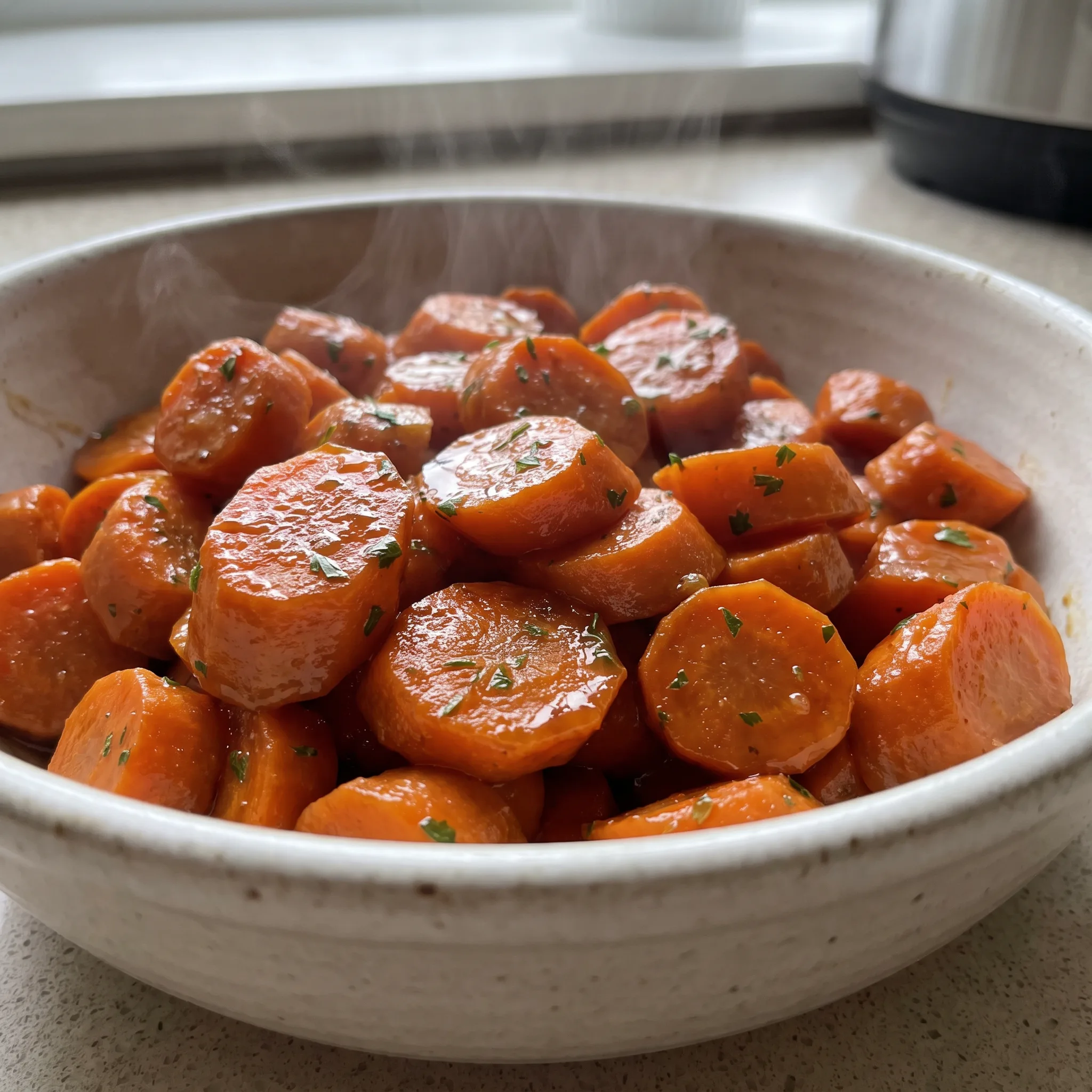
Slow Cooker Glazed Carrots with Brown Sugar
Ingredients
Method
- Put the carrots into a slow cooker. In a small bowl, combine the butter, brown sugar, salt, cinnamon, and nutmeg by whisking.
- Drizzle the brown sugar mixture over the carrots and stir to coat.
- Set to HIGH and cook for 3 hours, or until the carrots are tender. To thicken the glaze, take off the lid and continue cooking on HIGH for another 15 minutes. Scatter parsley on top and serve.
How to Store Leftover Glazed Carrots and Reheat Them Without Washing Off the Glaze
Eat these the day they’re made if you can. The glaze is at its glossiest right after the uncovered stretch, and the carrots still have a little resistance at the center.
Within a few hours in the fridge, the coating thickens as the butter firms up, and the carrots keep softening in their own liquid. That’s not a flaw.
The next day they’re sweeter and more yielding, closer to candied than crisp, and the glaze clings instead of running. Keep them in a sealed container in the fridge for up to four days.
Reheat gently, covered, in a skillet or the microwave with a splash of water, just until hot. High heat or a dry pan drives off the water in the glaze and leaves the sugar behind to scorch. Freezing doesn’t work here: the carrots weep on thaw and the sauce separates into butter and syrup.
Scatter the parsley after reheating, never before, or it wilts into the glaze.
Tips
- Thick carrots have a woody core that stays hard through the whole 3-hour cook, even when the outer flesh is tender. Slender carrots, roughly an inch across at the top, have little or no developed core, so every piece softens at the same rate and the glaze soaks in evenly.
- A carrot’s sweetness drops as it sits, since the sugars convert to starch in storage. Carrots with the greens still attached, or ones sold loose rather than bagged, tend to be younger and sweeter. That natural sugar is what browns in the pot alongside the 1/3 cup of brown sugar, so a sweeter carrot gives you a deeper glaze without any change to the recipe.
What you can swap in the glaze, and what will wreck it
Butter: For dairy-free, use a plant butter that melts and solidifies like the real thing, or coconut oil. Keep the same 1/4 cup. Skip margarine or whipped spreads; they carry too much water and the glaze stays loose.
A solid plant butter behaves closest to dairy here, so the glaze still thickens in the last uncovered stretch. Coconut oil works, but it adds a faint coconut note that fights the cinnamon and nutmeg. Olive oil is the wrong call: its flavor reads savory against the sugar and the finished carrots taste confused.
Brown sugar: Coconut sugar or dark muscovado can stand in. Start with the same 1/3 cup the recipe uses, taste the raw glaze, and adjust from there, since coconut sugar is less sweet and muscovado is more.
Coconut sugar tastes less sweet and its granules dissolve slower, so the glaze may stay thin until the uncovered step. Muscovado brings a stronger molasses edge that can bury the spices. White sugar works in a pinch but you lose the depth that makes the glaze taste caramelized rather than simply sweet.
Cinnamon: If you’re out, leave it out rather than doubling the nutmeg. A pinch of ground allspice or a light grating of fresh ginger can fill the warm-spice slot. Cinnamon is the dominant warm note, so removing it makes the glaze taste flatter and more purely sugary.
Allspice reads similar but rounder. Fresh ginger adds heat rather than warmth, which pushes the dish in a different direction.
Don’t substitute apple pie spice; the clove in it will overpower two pounds of carrots.
Nutmeg: Whole nutmeg grated fresh at the counter is the upgrade, not a swap. Pre-ground works if it still smells sharp when you open the jar. If you’d rather skip it, increase the cinnamon slightly.
Nutmeg sits in the background here, so losing it is subtle; the carrots just taste less rounded. Too much nutmeg turns soapy and bitter, so measure it, don’t grate by feel. If you’re using a jar that’s been open for years, it contributes almost nothing, and you’re better off omitting it than adding more of a dead spice.
Frequently Asked Questions
Can I make these slow cooker glazed carrots ahead of time?
Yes, but you’re trading gloss for depth. The article’s storage section says eat them the day they’re made if you can, and that’s when the glaze is at its shiniest. If you need to get ahead, cook them fully, cool, and refrigerate in a sealed container.
The next day the carrots are sweeter and softer, closer to candied than crisp, and the coating clings instead of running. Reheat gently, covered, with a splash of water, and scatter the parsley after reheating, never before, or it wilts into the glaze.
Why are my carrots still hard after 3 hours in the slow cooker?
The most likely culprit is unevenly cut pieces. If some are bigger than 1/2 inch, they’ll still be firm when the smaller ones are done. The article says to aim for consistent thickness rather than cubes.
Another check: lift the lid and look at the liquid level. If the carrots are sitting in a deep bath, they’re steaming rather than glazing, and that excess moisture can keep them from firming up.
If the pool is thin and amber, they just need more time.
How are these different from classic glazed carrots made on the stovetop?
The slow cooker traps every bit of steam the carrots release, so they plump from the outside in and never get those leathery edges. On the stovetop, the glaze reduces quickly over direct heat and you’re standing there stirring.
Here, the carrots sit in their own juices for hours, and their natural sugars concentrate. The result is a softer, more yielding carrot with a syrup that clings, not a roasted, chewy one.
The final uncovered stretch thickens the glaze without you hovering over a pan.
