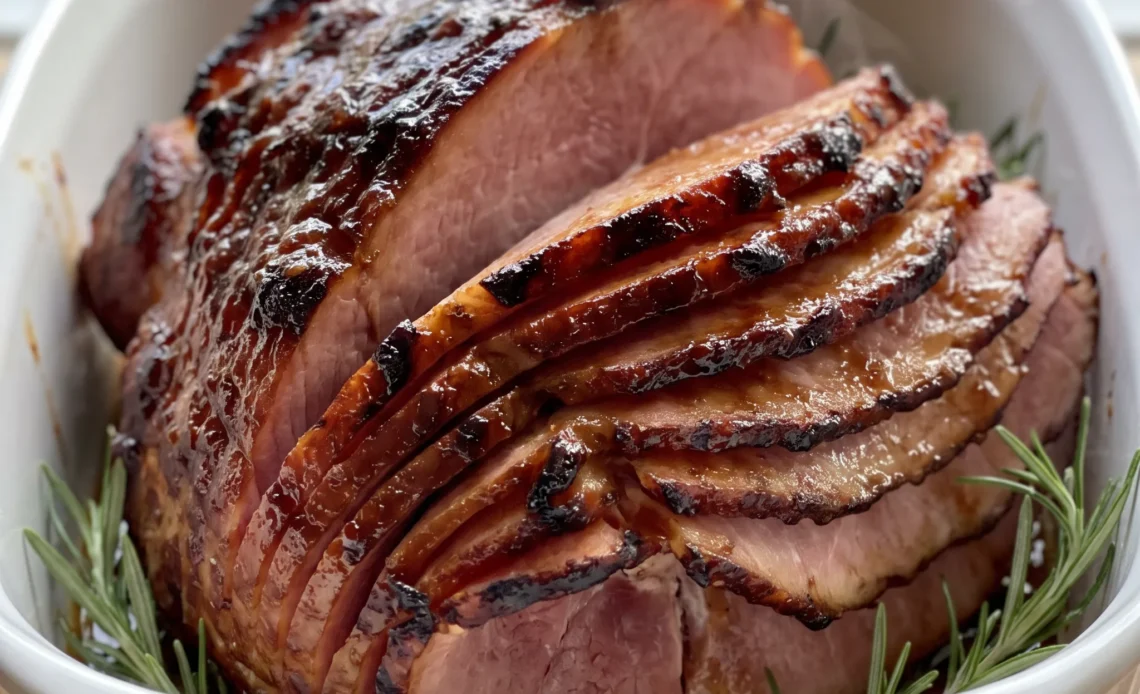
Buying the ham is the easy part. Fitting it into the slow cooker is where people get caught, and the lid tells you right away: if it rocks on the bone or the meat presses up against it, that seal is gone and you’ll pay for it over the next few hours with dry edges. A brown sugar ham for a crowd starts with a ham that clears the crock, so it’s worth setting the roast in the insert before anything else comes out of the fridge.
From there the work is mostly waiting, until that last stretch when the oven takes over and you’re standing at the door watching sugar go from bubbling to bitter. Two very different kinds of heat, and the handoff between them is what you’re actually managing.
Brush on the glaze twice for contrast
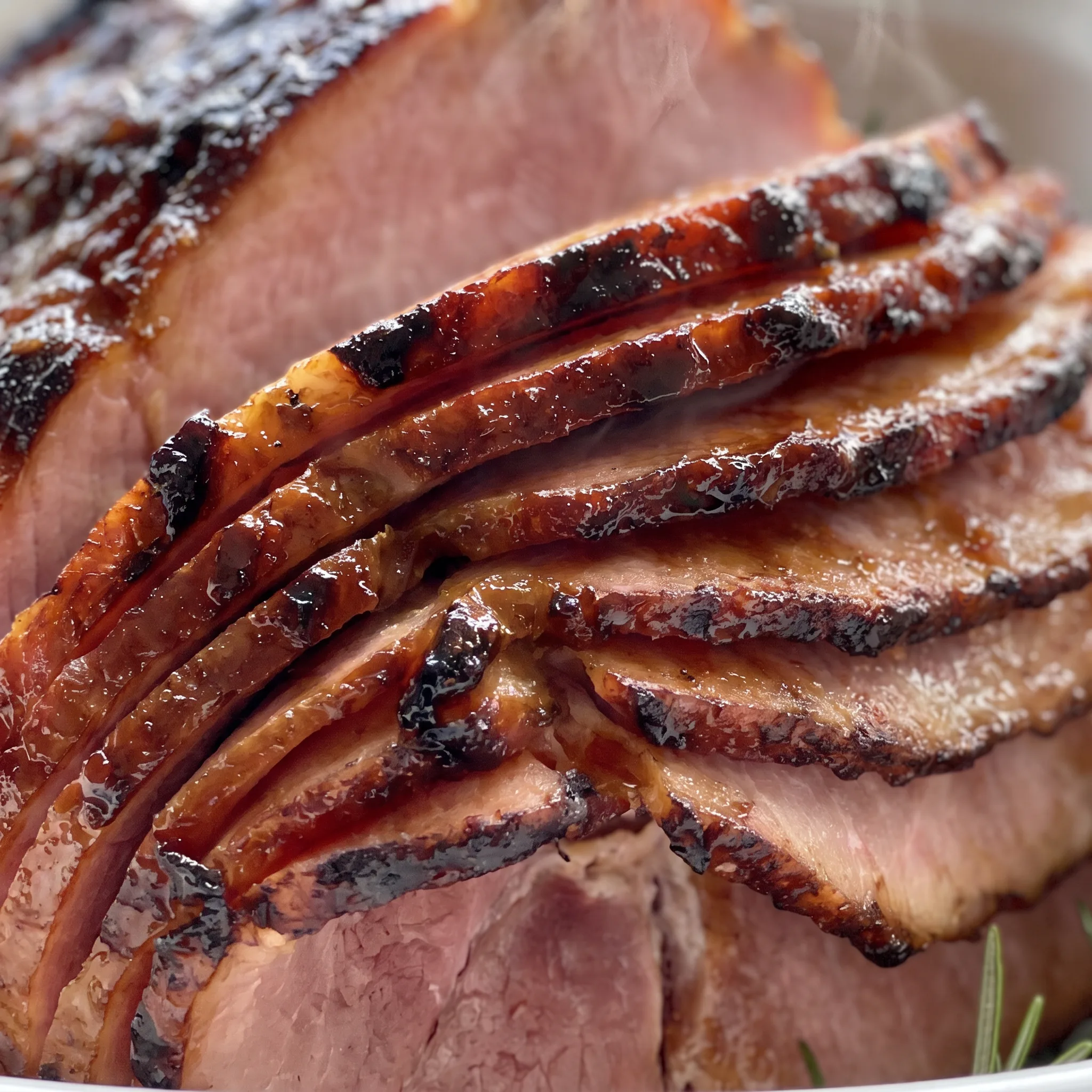
Half the glaze goes under the broiler for a minute or two. The sugar bubbles, darkens, and sets into a sticky shell that clings to the spiral cuts. That crust gives you the crackle against the soft meat underneath.
The other half stays raw, brushed on right before serving. It tastes brighter, closer to straight honey and brown sugar. If you broiled all of it, the sugars would keep cooking past the point of pleasant and turn bitter, like burnt toast.
The second coat also thins the intensity, so each slice gets a clean finish instead of a one-note char. Spoon it on warm, let it slide between the slices, and you’ll see how the two layers work together.
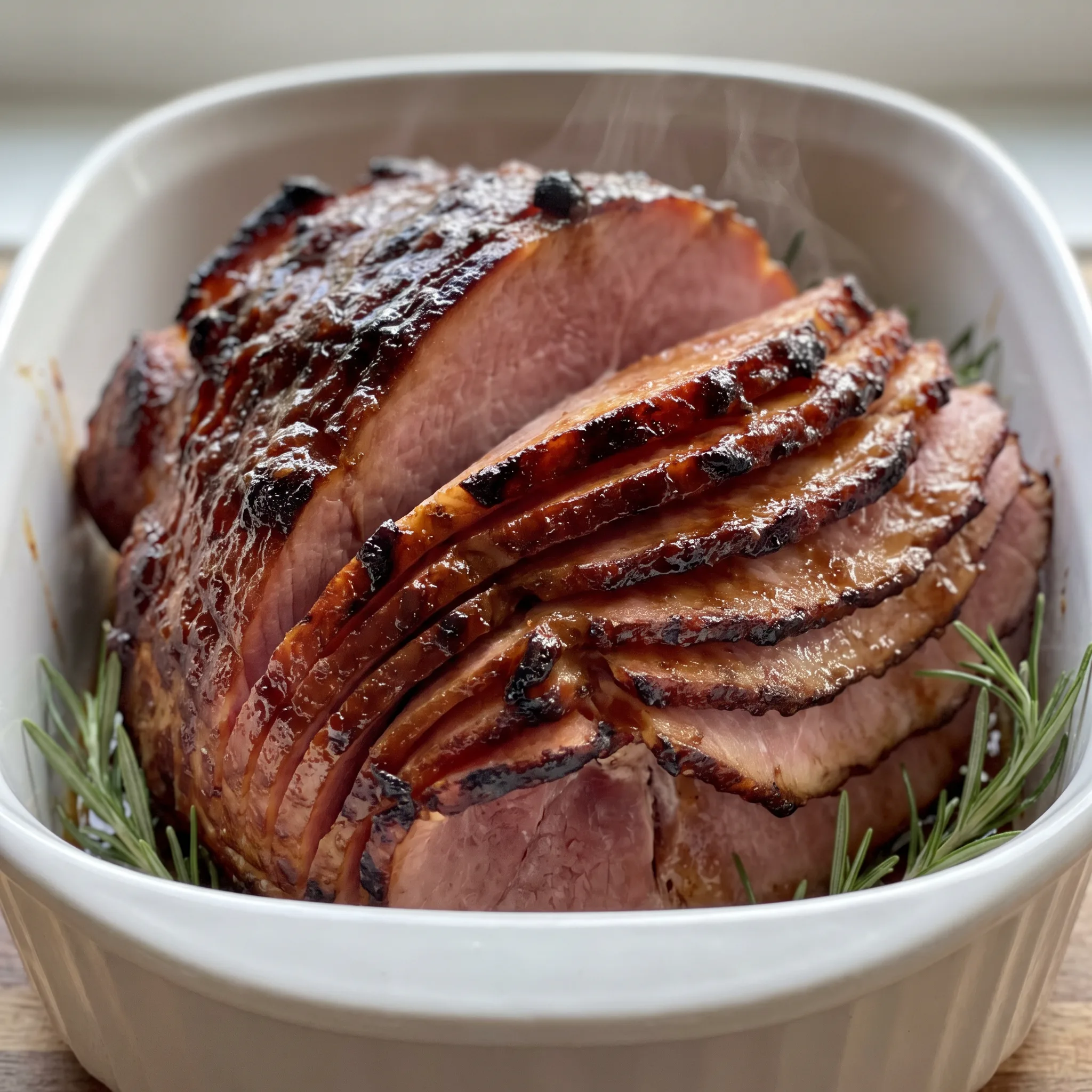
The ham ends up with a glossy top and a juicy interior, sweet but not heavy. The glaze should look wet and shiny when it hits the table, not tacky.
Warm spices and onion powder do the quiet work
Cinnamon, nutmeg, and cloves are the reason this glaze doesn’t taste like straight candy. They bring a warm, almost woodsy note that sits behind the brown sugar and honey, rounding out the edges. Onion powder sounds odd in a sweet mix, but it adds a savory hum that makes the pork taste more like pork.
Without it, the glaze would hit one flat sweet note and fatigue your palate after a few bites. The salt and black pepper sharpen everything, pulling the spices forward so you notice them without being able to name each one. A pinch of cloves goes a long way; too much and it tastes medicinal.
The goal is a glaze that tastes complex, where you get a little warmth, a little savor, and then the sweetness. When you taste it off the spoon, it should make you think of the ham, not of dessert.
Bone-in, spiral sliced, and sized to fit
A bone-in ham gives you more than a handle for carving. The bone and the marrow around it release moisture and flavor as the ham heats, basting the meat from the inside.
Spiral slicing opens the roast like a fan, so every cut gets exposure to the honey butter and the glaze. Without those cuts, the glaze would just sit on the surface. The ham also needs to fit inside the slow cooker with the lid on.
If it’s too tall, the lid won’t seal, and the steam escapes, leaving the meat dry. A 6 to 8 pound ham usually works in a 6-quart cooker. If yours is bigger, trim off the hock end or use a larger cooker.
Check the fit before you unwrap anything. The slices should be loose enough to pull apart after cooking, but still attached at the bone for serving.
Steam first, then a blast of dry heat
The slow cooker is a sealed box. The ham’s own juices plus the honey butter create a steamy environment that keeps the meat tender for hours.
That moisture is why the pork stays sliceable instead of turning dry and stringy. The honey butter mixture doesn’t just sit on top; it bastes the ham as the juices rise and fall, so the sweetness goes deep between the slices. But that wet heat leaves the outside pale and soft.
The broiler fixes that. A minute or two under high heat dries the surface and caramelizes the sugars into a crust that crackles when you cut it. You get the contrast of a sticky, slightly crisp exterior and a juicy, almost falling-apart interior.
Without that final blast, the ham would taste fine but look anemic, and the texture would be one-note soft. The broil is what makes it look and taste finished.
What to look for in the ham, honey, and spices
Bone-in spiral sliced ham: Buy one that fits your slow cooker with the lid sealed, since a bad fit means uneven cooking.
Honey: Use a pourable honey, as thick crystallized honey won’t blend smoothly with the melted butter.
Brown sugar: Choose fresh, soft brown sugar; hard clumps won’t dissolve fully in the glaze.
Ground cloves: Measure carefully, because cloves are potent and a little too much can overwhelm the whole glaze.
Onion powder: Check the expiration date, as old onion powder loses its savory punch and fades into the background.
Reading the ham at three points decides how it turns out
Judging whether the ham actually fits the cooker
Set the ham in the crock before you unwrap anything else. The lid has to sit flush and seal.
If it rocks on the bone or the meat touches the lid, steam escapes and the meat cooks unevenly. Trim the hock or move to a bigger cooker.
A 6 to 8 pound ham usually clears a 6 quart, but not always. Five minutes of checking saves four hours of dry edges.
Knowing when the meat is done without drying it out
At 3 hours, probe the thickest part away from the bone. The fork should slide in with almost no resistance and the slices should separate when you tug.
If it fights back, give it another 30 minutes and check again. Past 4 hours, the meat starts to shred and lose its sliceable structure.
The bone-in ham is already cooked, so you’re really just heating it through and letting the honey butter baste it.
Timing the glaze so it’s loose when you need it
Make the glaze during the last 30 minutes. If it sits off the heat, the brown sugar cools and firms up. It should pour off a spoon in a thin ribbon, not plop.
If it’s thick, stir in 1 to 2 tablespoons of water. When you brush it on the ham, it should spread easily and soak into the cuts.
Watching the broiler so the sugar doesn’t turn bitter
Broil for 1 to 2 minutes. Stay at the oven door.
The glaze goes from bubbling and glossy to dark and acrid in seconds. Pull it when the surface looks lacquered and you smell caramel, not toast. If a patch blackens, scrape it off before the second coat.
The second glaze is raw, so it won’t cook further; it just adds shine and a fresher sweetness.
Slow Cooker Brown Sugar Ham
Ingredients
Method
- Put the 6–8 lb bone-in spiral sliced ham into the slow cooker. In a saucepan on the stove or in the microwave, melt 1/4 cup (57 g) butter and 1/2 cup (170 g) honey, then pour the mixture over the ham.
- Cover and cook on low for 3–4 hours. During the last 15 minutes, line a baking sheet with foil.
- During the last 30 minutes, make the glaze: in a saucepan, combine 1 cup (200 g) brown sugar, 1 tsp onion powder, 1/2 tsp cinnamon, 1/2 tsp salt, 1/4 tsp ground black pepper, 1/4 tsp ground nutmeg, and 1/4 tsp ground cloves with 1/2 cup (120 ml) water. Heat for 30 seconds until the sugar dissolves.
- Preheat the oven to the broil setting. Place the ham on the prepared baking sheet and brush half of the brown sugar glaze over it. Broil for 1–2 minutes until the sugar caramelizes, then remove from the oven.
- Brush the ham with the remaining brown sugar glaze. If the glaze is too thick, stir in 1–2 Tbsp water to loosen it. Serve.
Swap the Sweetener and Spices, but Not the Ham
Honey: Maple syrup or additional brown sugar can stand in for the honey in the butter mixture. Use the same 1/2 cup (170 g) amount. Maple syrup brings a darker, almost woody sweetness that pairs well with the warm spices.
Brown sugar makes the glaze taste more like caramel and less floral. Both melt into the butter just as easily, so the basting liquid still coats the ham the same way. The only real difference is in the background flavor: honey adds a distinct floral note that maple and brown sugar won’t have.
Warm spices (cinnamon, nutmeg, cloves): Adjust amounts or leave any of them out. For a simpler glaze, use just cinnamon, or skip the cloves if you’re sensitive to their medicinal edge. Cinnamon alone gives a gentle warmth that most people expect with ham.
Nutmeg adds a subtle earthiness, and cloves bring a bold punch that can overwhelm if you’re heavy-handed. Cutting back on cloves keeps the glaze from tasting like a holiday candle. If you omit all the spices, the glaze becomes a straightforward sweet-savory mix, still good but less complex.
Start with the recipe amounts and tweak after tasting the glaze warm.
Bone-in spiral sliced ham: Do not substitute boneless or unsliced ham. The bone and the spiral cuts are what make this recipe work. A boneless ham won’t release the same moisture and flavor from the bone, so the meat can dry out in the slow cooker.
An unsliced ham blocks the honey butter and glaze from seeping between the cuts, leaving the interior bland. The spiral slicing also lets the ham fan out for even cooking and easy serving.
Stick with bone-in and spiral sliced for the texture and taste this recipe delivers.
Salted butter: For a dairy-free version, use a plant-based butter substitute that melts well, such as coconut oil or a vegan butter stick. Use the same 1/4 cup (57 g) amount. Coconut oil adds a faint coconut flavor that can clash with the warm spices, so use refined coconut oil if you want a neutral taste.
Vegan butter behaves closest to dairy butter, melting and basting the ham similarly. The ham will still be rich and glossy, but the butter’s role in carrying the honey and spices is slightly diminished. Check that your substitute is salted or add a pinch of salt to compensate.
Storing the ham in its juices, and reheating without wrecking the glaze
Eat this within 30 minutes of the second glaze going on. That raw coat is the finish, and it stays glossy and loose only while the ham is warm; once the meat cools, the brown sugar firms against the slices and the shine goes dull.
Leftovers keep 3 to 4 days in the fridge. Store the slices in the slow cooker insert or a deep container with a ladle of the cooking juices, enough to pool around them. That liquid is the whole reason the meat survives reheating.
Cold, the glaze turns tacky and opaque, and some of it settles into the juices. Reheat gently: 300°F oven, covered, with a splash of those juices, until the slices are just warm through, 15 to 20 minutes. Don’t put leftovers back under the broiler.
The sugar’s already caramelized, and it’ll go from lacquered to acrid before you can pull the pan.
The bone and any meat clinging to it freeze well, up to 2 months, wrapped tight. Slices freeze too, but the glaze weeps and the texture turns spongy. Better to eat them fresh.
Tips
- Set the ham flat on its cut side so the spiral slices open upward like a fan. In that position the honey butter poured over the top runs down into the gaps between slices instead of pooling in one spot, and the ham sits lower in the crock, which helps a 7 or 8 pound roast clear the lid.
- If the bone end rides high and keeps the lid from sealing, cut the hock off at the joint with a chef’s knife before it goes in. The hock is mostly bone and gristle, so you lose almost nothing edible, and the freed space lets the lid sit flush. Tuck the trimmed piece alongside the ham if it fits, or save it for soup.
The most common mistake is brushing the entire brown sugar glaze onto the ham before broiling, because it seems efficient and promises maximum caramelization. But under the broiler, all that sugar rapidly dehydrates and carbonizes, turning the glaze bitter and acrid. The recipe avoids this by broiling only half the glaze, then brushing on the rest after the ham comes out, so the second layer stays sweet and fresh.
Frequently Asked Questions
Can I make this slow cooker brown sugar ham ahead of time and reheat it?
You can cook the ham in the slow cooker earlier in the day and reheat it, but the finishing move has to happen right before you eat. The glaze is brushed on twice: half goes under the broiler to caramelize, half stays raw for a bright, glossy finish. That second coat is the finish, and it stays loose and shiny only while the ham is warm.
If you make the whole thing ahead, the raw glaze firms up and the shine goes dull. So cook and chill the ham in its juices, then reheat gently and do the broil and second glaze just before serving.
Why did my ham turn out dry even though I used the slow cooker?
The most likely culprit is a lid that didn’t seal. If the ham touches the lid or the bone props it up, steam escapes and the meat cooks unevenly, drying at the edges.
A 6 to 8 pound ham usually clears a 6 quart cooker, but check the fit before you unwrap anything. The other common cause is cooking past the point where the meat is heated through. At 3 hours, a fork should slide into the thickest part with almost no resistance.
If you go beyond 4 hours, the slices start to shred and lose their juice. Next time, probe early and pull it as soon as it’s tender.
How is this slow cooker version different from a classic baked ham?
A baked ham spends hours in dry oven heat, which can firm up the exterior and sometimes dry out the edges. Here, the ham sits in a sealed, steamy environment with honey butter, so the meat stays tender and sliceable all the way through. The trade-off is a pale, soft surface, which is why you finish it under the broiler for a minute or two.
That quick blast gives you the caramelized crust a baked ham would have, but the interior stays juicier because it never saw that long dry heat. The result is a ham with a sticky, glossy top and a soft, almost falling-apart center.
