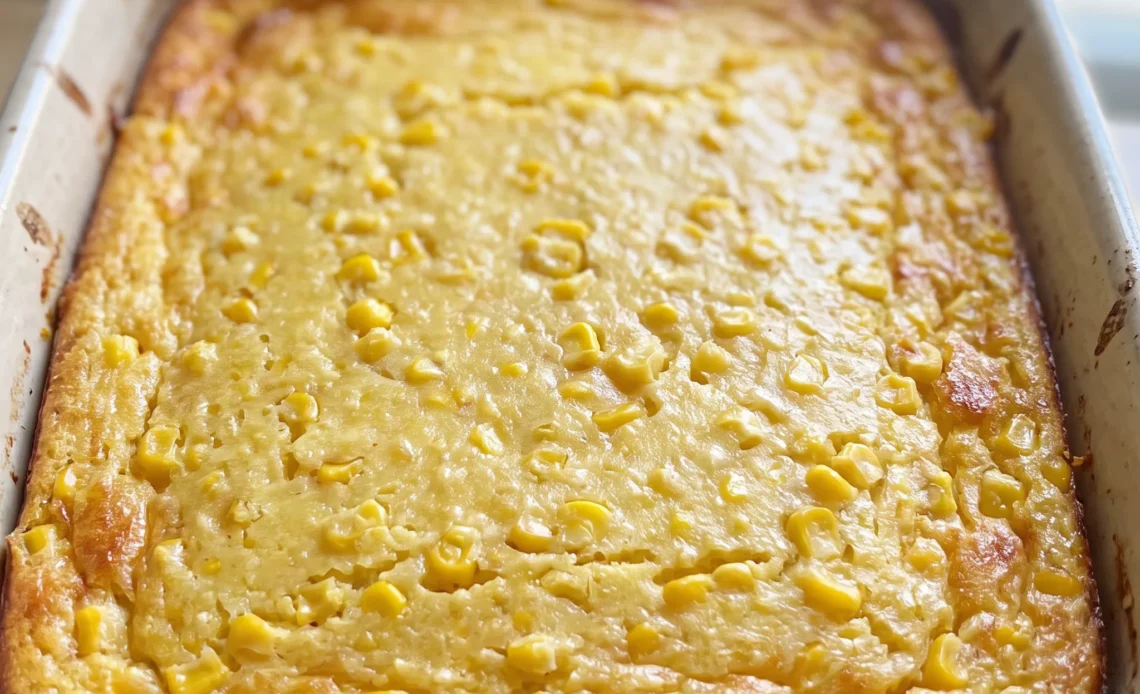
Corn casserole is a texture gamble, and the odds shift with every brand you pull off the shelf. The cans and the box look interchangeable, but a thin creamed corn or kernels that went in wet can leave the center loose while the edges brown. What separates a spoonbread-soft bake from a heavy one isn’t technique.
It’s what you put in the bowl before anything gets stirred, and how the batter feels when it hits the dish. Get that right and the reward is a side that lands on a holiday table without apology, savory enough to sit beside roasted meat, sweet enough that nobody treats it as dessert. The rest is reading the bake.
What Gives This Casserole Its Soft, Spoonable Texture
Three corn products do different jobs here. Whole kernels from the canned corn stay intact through baking, so each spoonful has small pops of texture against the softer base.
Creamed corn brings the moisture that keeps the casserole from setting up like a slab of cornbread. The corn muffin mix is the thickener and the structural backbone; it absorbs liquid and gives the bake enough body to slice and hold.
Sour cream and melted butter are the enrichments. They make the crumb tender and rich, and they temper the sweetness of the mix so the finished dish tastes savory rather than dessert-like.
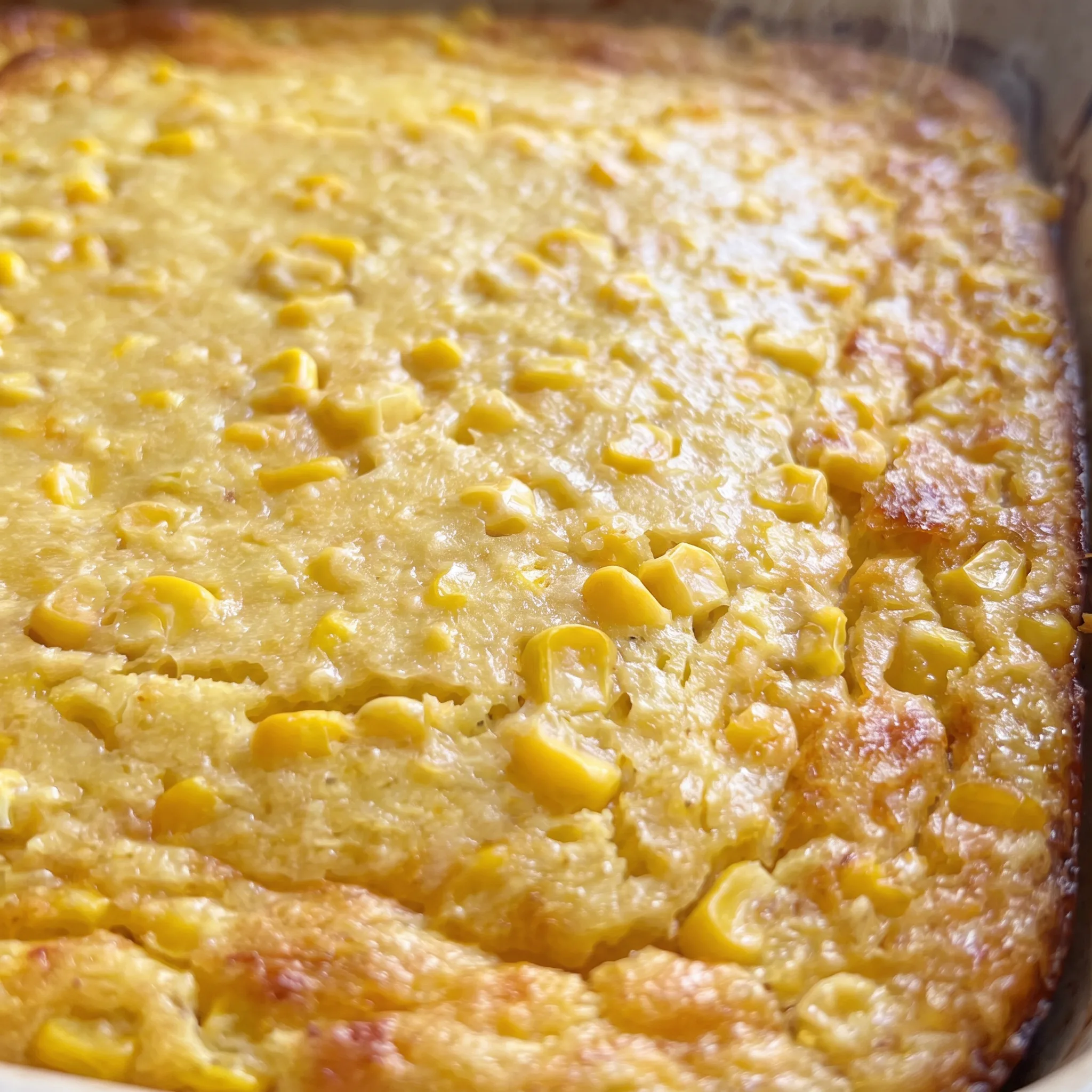
What you end up with is closer to a moist spoonbread than a typical side dish. The top browns, the interior stays soft, and a spoon cuts through without resistance. That contrast between the golden surface and the creamy center is what people reach for first.
Keep the Batter Thick Enough to Set
Liquid balance decides whether this bakes into a cohesive casserole or a wet, heavy one. 5 ounces of corn muffin mix is enough to bind the moisture coming from the creamed corn and the sour cream; short it, and the center won’t firm up no matter how long you leave it in the oven. Drain the canned corn well.
That liquid is easy to forget, but it adds up fast and thins the batter. Stir the muffin mix in a few additions rather than all at once, and stop as soon as the last dry streaks disappear.
Going past that point works the batter and can make the bake tough and rubbery instead of tender. The right consistency is thick but still spreadable, closer to a loose cornbread batter than a pourable cake one. If it ribbons off the spoon in a slow, heavy stream, it’s ready for the dish.
Choose the Right Pan for Even Baking
An 8×8-inch dish gives you a deep casserole: plenty of soft middle, with the edges setting up golden and slightly chewy. That depth is what makes the texture work. Spread the batter level so the whole surface browns at the same rate and no thin patch dries out before the center is done.
Glass and ceramic hold heat and release it gently, which suits a custardy bake like this one; the sides stay tender and the bottom doesn’t scorch. Metal pans conduct faster and can push the edges too dark before the middle catches up, so if you use one, expect to watch it more closely. Grease the dish even if it’s nonstick.
This batter has enough sugar and dairy to stick, and a casserole that tears on the way out looks worse than it tastes. You want it to release cleanly and keep its shape when you scoop.
Balancing Sweet and Savory at the Table
Corn is naturally sweet, and the muffin mix adds its own sugar on top of that. Salt is what keeps the dish from tasting one-note; without enough, the sweetness reads flat and dull.
Add it to the batter, taste, and adjust before baking, since you can’t fix it later. Black pepper gives a gentle warmth that cuts through the richness, and a generous grind works better than a pinch.
Leave the pepper out entirely if you want the sweeter version, and it still works. This side fits a wide range of meals.
It sits next to roasted chicken, pulled pork, or a holiday plate without fighting anything, because the flavor stays mild and buttery rather than sharp. Serve it warm from the dish, and let each person salt their own portion at the table if they want more.
Buy the Corn You’d Eat Plain
Canned corn: Whole-kernel canned corn holds its shape through the bake, so buy a brand whose kernels taste sweet and firm straight from the can.
Creamed corn: Creamed corn is the moisture source, and thin, watery brands leave the batter slack, so pick one with a thick, scoopable body.
Corn muffin mix: The 8.5 oz box is the binder here, so use a standard corn muffin mix rather than a cornbread mix with a different weight and sweetness.
Sour cream: Full-fat sour cream carries the richness and body this bake needs, while reduced-fat versions bring more water and less tender crumb.
The most common mistake is not draining the canned corn thoroughly and then stirring the corn muffin mix vigorously until completely smooth. The extra liquid from the corn adds water that the muffin mix cannot absorb, so the center stays wet and custardy instead of setting. Overmixing develops gluten in the flour, turning the tender, spoonbread-like crumb into a tough, gummy texture.
Reading the Bake, Not the Clock
When the edges pull but the middle still jiggles
At 45 minutes the rim will be set and lightly browned, but the center can still wobble when you nudge the dish. That wobble means the middle hasn’t firmed.
Give it 5 to 10 more minutes, checking every few minutes. If the whole surface moves as one loose wave, it needs longer. A toothpick in the center should come out mostly clean, not wet with batter.
Pull it early and the center will be wet and heavy after cooling.
Why the toothpick tells you more than the timer
Ovens run hot or cold, and this batter is dense enough that the outside can brown while the center stays raw. The toothpick test is the real measure.
Insert it in the middle. A few moist crumbs are fine; streaks of wet batter mean more time.
If the top is already dark but the center isn’t set, lay a piece of foil over the dish and keep baking. That protects the surface while the middle finishes.
The difference between set and dry
Once the center is firm and the toothpick comes out clean, the casserole is done. Every extra minute past that point drives off moisture and turns the tender, spoonable texture into something stiff and pasty. The edges will also darken further and can turn tough.
If you’re unsure, pull it when the center barely resists a light press and a toothpick shows only a crumb or two. Carryover heat will finish it as it cools.
Cooling just enough to hold together
Right out of the oven, the casserole is molten and loose. A few minutes of rest lets it settle so a spoonful holds its shape instead of running across the plate. The wait is short, only until the dish stops steaming hard and the surface looks matte rather than glossy.
Serve it too soon and the first scoop slumps; wait too long and it cools past the point where it’s best. The window is narrow but easy to spot.
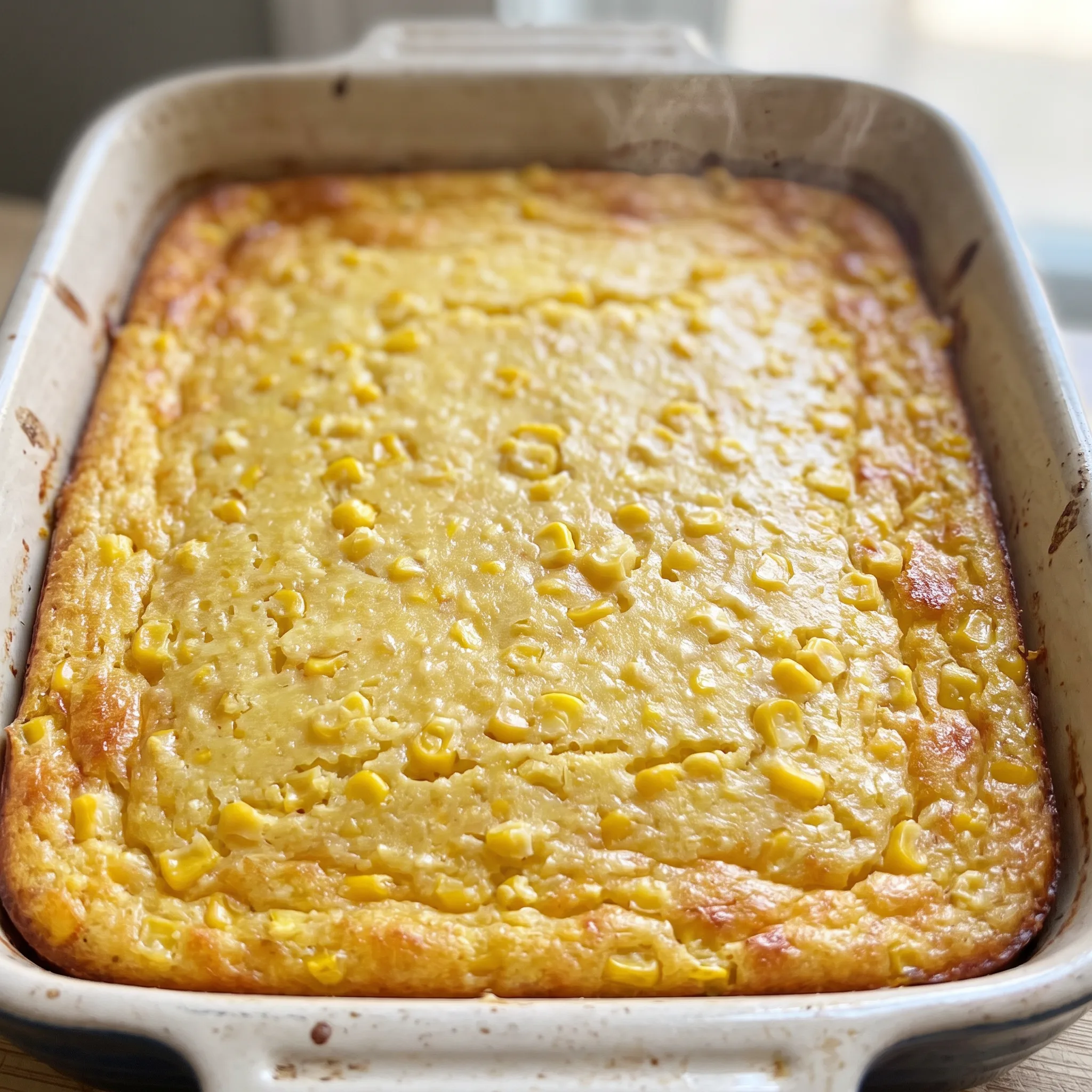
Creamy Baked Corn Casserole with Sour Cream
Ingredients
Method
- Set oven to 350°F (175°C) and melt the butter. Apply cooking spray to an 8×8-inch baking dish.
- Combine drained corn, creamed corn, sour cream, and melted butter in a large bowl. Stir until thoroughly incorporated.
- Incorporate corn muffin mix in stages, stirring continuously until the batter is lump-free and fully blended.
- Add salt and pepper to taste.
- Transfer the mixture into the prepared baking dish, distributing it evenly.
- Bake for 45 to 55 minutes, until the surface is golden brown and the middle is firm. A toothpick inserted into the center should come out mostly clean.
- Allow to cool for a few minutes before serving.
Swaps That Keep the Bake Set, and the Ones That Break It
Canned corn: Fresh or frozen corn, same drained weight. Fresh kernels need a quick blanch and full drain; frozen should be thawed and patted dry.
Both bring more water than canned, so the center can turn slack. Cut the sour cream by a tablespoon or two if the batter looks thin.
Creamed corn: Homemade puree or a different canned brand. For homemade, pulse one can of drained corn with a splash of milk until spoonable, not smooth. Use the same 15 ounces.
A thin brand leaves the batter loose and the middle won’t set; a thick one keeps the texture right.
Sour cream: Plain Greek yogurt, same 1 cup. Full-fat Greek yogurt matches the richness closely. Low-fat or nonfat versions add water and the bake turns rubbery at the edges.
Expect a slightly tangier flavor, which reads fine against the sweet corn.
5 ounces by weight. Gluten-free mixes vary in how much liquid they absorb.
Start with the same amount the recipe uses and add a splash of milk only if the batter won’t spread. The crumb will be a little more crumbly but still spoonable.
Butter: Do not substitute. Butter is the fat that carries the richness and keeps the crumb tender. Margarine or oil changes how the batter sets.
The 1/2 cup is not negotiable if you want the same texture.
Corn muffin mix ratio: Do not alter. 5 ounces is the binder. Less and the center stays wet no matter how long you bake.
More and the casserole turns dense and dry. Keep the ratio as written.
Storing and Reheating Corn Casserole
This casserole is at its best within 30 minutes of coming out of the oven, once it has cooled just enough to hold a scoop. That is your serving window. After that, the top loses its light crust and the interior firms as the starch sets.
Leftovers keep covered in the refrigerator for 3 to 4 days. Cool the dish to room temperature first, then cover it tightly or move portions to a smaller container; a loose wrap lets the surface dry and pull away from the edges.
Reheat gently, covered, at 325°F until just warm through, about 15 minutes for a full dish or 5 to 8 for a single portion. High heat dries the crumb and toughens the edges, and the dairy separates if you push it.
The microwave works for one serving on a lower power setting, though the texture comes back softer. Do not freeze this one; the sour cream and creamed corn break down and weep on thawing, leaving a watery, grainy base. Eat leftovers within those 4 days, while the flavor still reads sweet and buttery rather than flat.
Tips
- Stop stirring the instant the last dry streaks of muffin mix disappear, even if a few small lumps remain. Those lumps hydrate as the batter sits in the dish while the oven heats, and the gluten that would make the bake rubbery never gets worked. The batter should look shaggy, not smooth.

Frequently Asked Questions
Can I make corn casserole ahead of time and bake it later?
You can assemble the batter and hold it covered in the refrigerator, but the texture shifts: the corn muffin mix drinks up moisture and the batter stiffens, so the baked center comes out denser than if it went straight to the oven. If you do it, let the dish sit out while the oven heats so the chill comes off, and expect the surface to brown a little unevenly.
For serving timing, the article’s storage section has the real window: best within 30 minutes of coming out of the oven. Leftovers keep 3 to 4 days in the fridge and reheat covered at 325°F.
Why is my corn casserole mushy in the middle?
The most common cause is underbaking: the edges set and brown while the center still holds a loose wobble. The toothpick test is the check, not the timer. Push it into the middle; if it comes out with wet batter rather than a few moist crumbs, the middle needs more time, and if the top is already dark, tent foil over the dish so the surface doesn’t scorch while the center catches up.
5 ounces of muffin mix can’t absorb. If your batter looked thin going in, that’s the culprit, and next time drain the kernels well and use a thick, scoopable creamed corn.
How do I know when corn casserole is done baking?
The center should feel firm to a light press and a toothpick inserted in the middle should come out mostly clean, with only a crumb or two. The surface will be golden brown and the edges set, but the real signal is that the middle no longer moves as a loose wave when you nudge the dish.
Pull it at that point: every extra minute past set drives off moisture and turns the tender, spoonable texture stiff and pasty. Carryover heat finishes it as it cools, so err on the side of pulling it when the center barely resists.
What’s the difference between corn casserole and corn pudding?
Corn pudding is a custard: eggs and milk set the middle into a soft, quivering frame, and it’s usually baked in a water bath or at a lower temperature to keep that texture. This casserole has no eggs or added milk.
5 ounces of corn muffin mix, which absorbs the moisture from the creamed corn and sour cream and gives the bake enough body to slice and hold. The result is closer to a moist spoonbread than a custard, with whole kernels from the canned corn giving small pops of texture against the softer base.
Sour cream and melted butter keep the crumb tender and temper the sweetness of the mix, so it eats savory rather than dessert-like.
