
Served cold, a Brussels sprouts salad is a make-ahead dish: shave them, dress them, let them sit. This one runs the opposite way, and that’s what makes it worth cooking. Shredded sprouts hit a hot pan with bacon and shallots, barely enough to darken the edges and take on the fat, then get tossed while they’re still steaming with a maple and Dijon dressing that clings because it starts with a spoonful of the bacon’s own rendered fat.
The window is short. Sprouts keep softening once they’re dressed, cranberries plump and then give up, almonds lose their snap. A warm brussels sprouts salad eats like a main, though the plate stays small, and it rewards being made at the last minute rather than ahead.
Grate the Parmesan at the table and eat it right there.
A dressing built to coat warm vegetables
Warm salads have a short window. A vinaigrette made with all oil slides off the leaves and pools in the bowl; dressing that clings needs something thicker at its base.
That’s why a teaspoon of rendered bacon fat goes in first. It’s soft when warm, and it carries the maple syrup and mustard into every shred. The maple brings sweetness, but it also gives the dressing body, so a little goes a long way.
Dijon does the heavy lifting: it holds the fat and the lemon juice together so the mix stays creamy instead of separating as it sits on the sprouts. Lemon goes in before the olive oil. Its acidity sharpens the maple and cuts the richness of the bacon fat, and adding it early lets it dissolve the salt and mustard so the final drizzle of oil emulsifies smooth.
The dressing should taste bright and a little sweet, with enough backbone to season the sprouts without drowning them.
Shredded sprouts need a hot pan, not a crowd
Shredded Brussels sprouts have a lot of surface area and a lot of water. Drop them into a pan that’s too cool, or pile them so deep they can’t all touch the metal, and they steam in their own moisture.
What you get is soft, olive-drab, and limp. A hot pan and a single layer are the fix.
The shreds hit the heat, their edges catch and darken, and they stay tender-crisp instead of collapsing. That texture contrast matters: the toasted almonds bring crunch, and the sprouts need to meet them halfway, softened but still with a little bite. Adding them after the bacon and shallots are already cooked keeps the pan hot and the flavors built.
The bacon has rendered, the shallots have gone sweet, and now the sprouts go in to pick up both. They cook fast.
When they’re slightly wilted but still bright green, they’re ready.
When to add the almonds and cranberries
Toasted almonds lose their snap if they sit in a wet dressing. That’s why they go in at the very end, off the heat, tossed through just before serving. The same goes for the cranberries, though they’re more forgiving.
Warm sprouts soften them just enough that they plump and turn juicy, but they don’t break down into the dressing. Parmesan is grated over the top rather than stirred in. The shreds land in delicate curls that soften against the warm vegetables and leave little salty pockets instead of disappearing into the mix.
Each element keeps its own texture: almonds crisp, cranberries chewy, cheese melting at the edges. The salad should taste sweet, salty, and crunchy in every bite, and that only happens if you hold back the garnishes until the last minute.
Why the bacon is only half-cooked first
Bacon does two jobs here, and they need different timing. If you cook it all the way crisp at the start, the fat turns dark and bitter, and there’s nothing left to render for the dressing.
Pulling the bacon while it’s still soft and pink gives you clean fat to work with and leaves the strips to finish later. The fat is measured, about a teaspoon, because more would make the dressing greasy and heavy; the rest stays in the pan to cook the shallots and coat the sprouts.
When the bacon goes back over the heat with the shallots, it crisps gradually, and the shallots soak up the remaining fat and turn sweet. The pieces end up crunchy but not hard, seasoned by their own rendering. That’s the balance you want: bacon that crunches, fat that flavors, and a pan that’s ready for the sprouts.
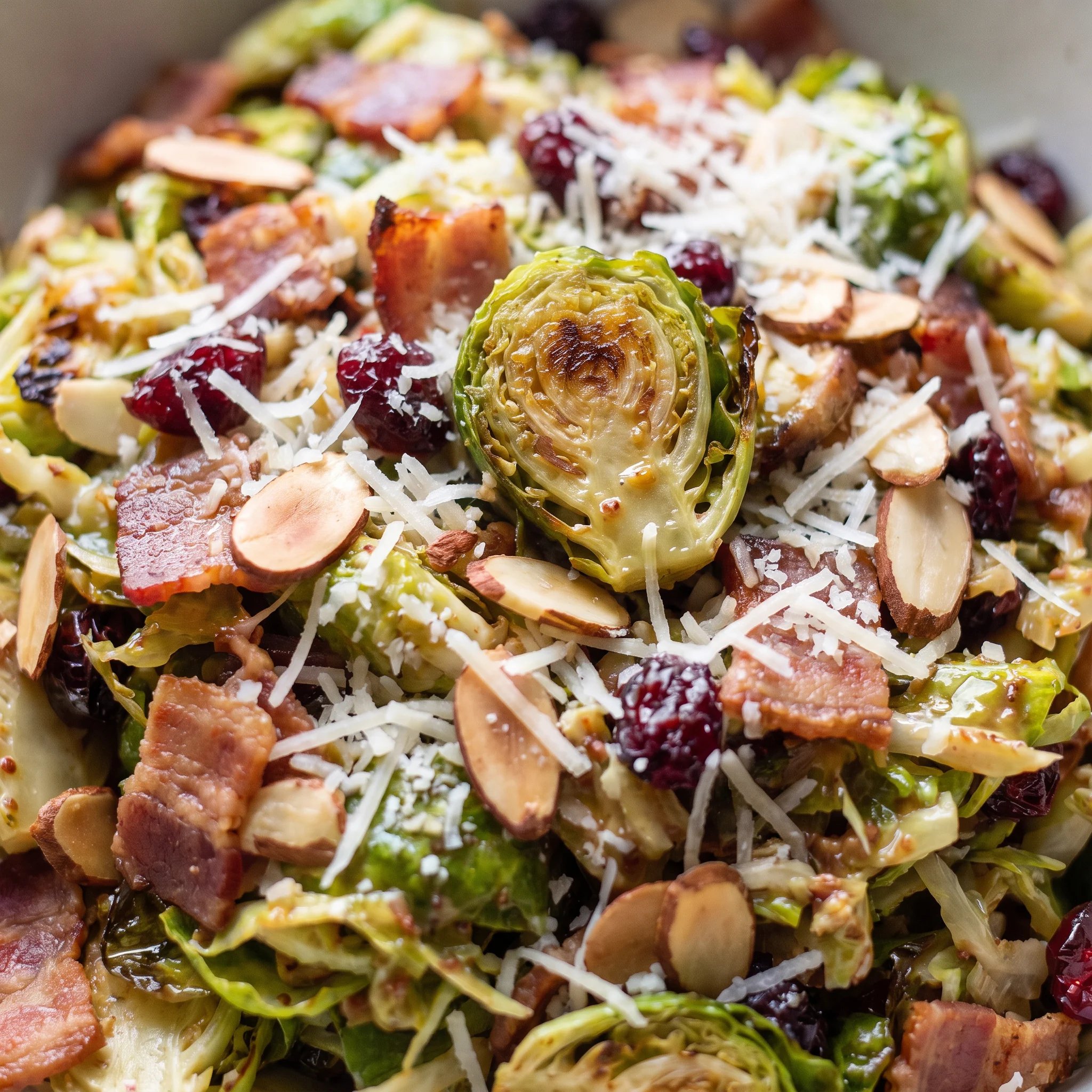
The ingredients that make or break this warm salad
thick-cut bacon: One strip is enough; its rendered fat becomes the base of the dressing and the rest cooks the shallots and sprouts.
shredded Brussels sprouts: Buy them already shredded or slice whole ones thin; either way, keep the pieces uniform so they cook at the same rate.
sliced almonds: Toasted sliced almonds bring the crunch, so use fresh ones and toast them yourself for the best texture.
dried cranberries: Look for cranberries that are still plump and soft, not hard and shriveled, so they plump up in the warm salad.
Parmesan cheese: A chunk of good Parmesan lets you grate it fresh over the top, where it melts into salty curls.
maple syrup: Real maple syrup, not pancake syrup, gives the dressing its subtle sweetness and helps it cling to the sprouts.
What to watch for while the pan is hot
Reading the bacon’s first stage
You’re pulling the bacon while it’s still soft and pink. It should look relaxed, not shrunken or curled at the edges, and most of its fat should have melted into the pan. If it’s already stiff and browned, you’ve gone too far: the fat will taste bitter and there won’t be enough clean rendered fat for the dressing.
Take the pan off the heat the moment the pieces lose their raw look but still feel pliable.
Toasting almonds by smell, not clock
Sliced almonds go from pale to burnt in under a minute. The first sign is a warm, nutty smell that hits before any visible color.
When you see the edges turn light brown, get them out of the pan. They’ll keep darkening from residual heat, so moving them to a cool bowl stops the cooking. If they smell sharp or acrid, they’re already past saving.
Judging when the shallots are done
Shallots should turn translucent and soft, with just a hint of gold at the edges, after a couple of minutes. If they’re browning deeply or crisping, the pan is too hot and the bacon will burn before it crisps.
If they’re still crunchy and opaque, the heat is too low and the bacon will render out without getting crunchy. Adjust the burner and keep them moving.
The moment the sprouts stop cooking
Shredded sprouts are done when they’ve darkened in spots and wilted but still hold their shape, about 3 to 4 minutes. Taste a strand: it should be tender with a slight crunch, not soft all the way through.
If it’s limp and olive-colored, you’ve overcooked them and they’ll going soggy in the dressing. Pull the pan off the heat immediately if they’re close.
Tasting the dressing before it hits the sprouts
Before you toss, dip a spoon into the dressing. It should taste bright from the lemon, a little sweet from the maple, and seasoned enough that you notice the salt.
If it tastes flat, add another pinch of salt. If it’s too sharp, a few more drops of olive oil will round it out. The sprouts are warm and will absorb salt, so slightly stronger than you think is right.
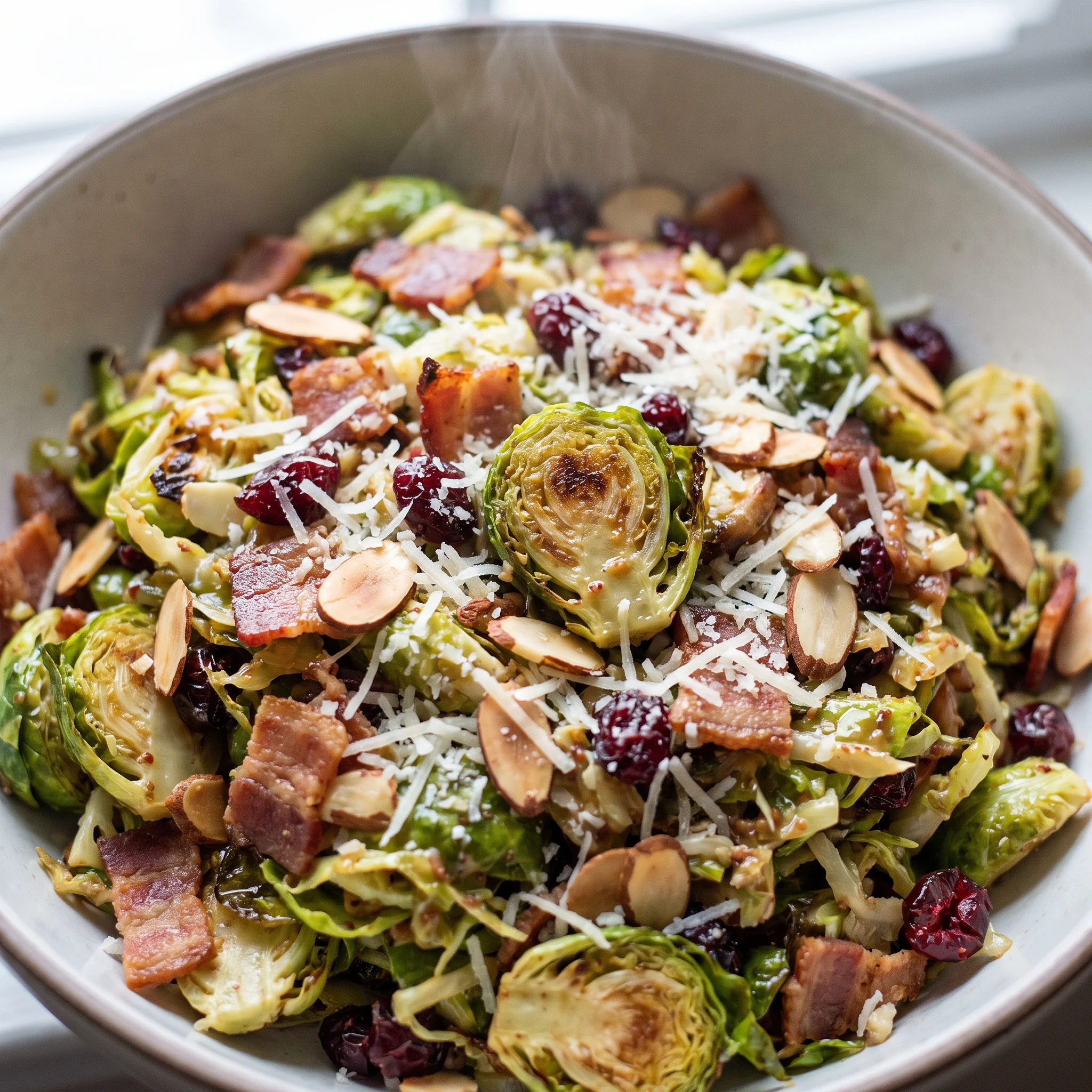
Warm Brussels Sprouts Salad with Bacon and Almonds
Ingredients
Method
- Get the Brussels sprouts, shallot, and bacon ready: When working with whole Brussels sprouts, remove and throw away the tough stem bases. Using a sharp knife or a mandoline, carefully shred or thinly slice the Brussels sprouts. Slice the shallot thinly, then chop the bacon into 1/2-inch pieces.
- Toast the almonds: Place a large non-stick pan over medium heat. After it gets hot, toast the sliced almonds for 5–6 minutes, stirring occasionally, until they are lightly browned and aromatic. Move them to a small bowl and set aside.
- Begin cooking the bacon: Put the chopped bacon into the hot pan and cook for a few minutes, stirring occasionally, until most of the fat has rendered. At this stage the bacon should not be crispy, since it will keep cooking.
- Prepare the dressing: Take the pan off the heat and carefully transfer about 1 tsp of the rendered bacon fat into a clean small bowl. Mix in the maple syrup, Dijon mustard, lemon juice, and a pinch of salt and pepper until combined. Whisk in the olive oil until creamy, then add more salt and pepper if desired.
- Cook the shallots and bacon: Put the pan of bacon back over medium heat. Once it is hot again, add the shallots along with a pinch of salt. Cook for a couple of minutes until the shallots have softened and the bacon is crispy.
- Cook the Brussels sprouts: Add the shredded Brussels sprouts to the pan with a drizzle of olive oil and a few cracks of black pepper. Stir them into the bacon and shallots until coated and beginning to darken in color. Cook for 3–4 minutes until slightly softened, then move everything to a serving bowl or plate.
- Toss with dressing and serve: Right away, combine the warm Brussels sprouts with the dressing, toasted almonds, and dried cranberries. Using a microplane, finely grate a chunk of Parmesan cheese over the top, and serve.
Two swaps that matter: sprouts and crunch
shredded Brussels sprouts: Whole Brussels sprouts, stem ends trimmed and thinly sliced. You’ll need 10 ounces whole to get the same 8 ounces shredded.
The slicing is the work: a sharp knife or a mandoline, and you want pieces about the same thickness so they cook evenly. Skip the food processor; it cuts unevenly and some shreds turn to paste.
Bagged shreds are faster and fine, but whole sprouts taste sweeter and nuttier, and they hold a bit more bite after the hot pan.
sliced almonds: Pecans or sunflower seeds. Use the same 1/4 cup.
Pecans bring a deeper, almost buttery crunch that plays well with the maple, but chop them first so they’re no bigger than a pea. Sunflower seeds are smaller and crisper; they’ll scatter through the salad instead of sitting on top.
Toast either one the same way, by smell, and add them at the end. Walnuts work too, though their bitterness can fight the lemon.
What you don’t want to skip is the toasting; raw nuts taste flat and raw seeds taste green.
bacon: Turkey bacon or a couple slices of prosciutto. Turkey bacon renders far less fat, so you’ll need an extra teaspoon of olive oil to cook the shallots and sprouts, and the dressing will lose its smoky backbone.
Prosciutto crisps quickly and gives you salty shards, but no fat for the dressing; add a teaspoon of butter to the pan instead. If you skip the pork altogether and use olive oil, the dressing turns lighter and less rich, so taste and add a pinch more salt.
Parmesan cheese: Pecorino Romano or a hard aged sheep’s cheese. Pecorino is sharper and saltier, so grate it a little more sparingly and taste before you add extra salt to the salad. It won’t melt into curls the same way; it stays in fine, salty flakes.
For a dairy-free version, leave the cheese off and finish with a pinch of flaky salt and a squeeze of lemon. The salad still works, but the salty pockets that balance the sweet cranberries and maple will be missing, so adjust the dressing with a touch more mustard.
Eat it warm, within 20 minutes, and store any leftovers cold
This salad has a short serving window. The sprouts keep softening after they leave the pan, and the dressing pulls moisture from them, so the almonds and cranberries lose their contrast the longer it sits. Toss it, grate the Parmesan over the top, and eat within about 20 minutes.
The cheese goes on last, right at the table, so the curls soften against the warm sprouts instead of melting into the dressing.
Leftovers hold in the fridge for a day, maybe two. Cold, the sprouts turn tender and the almonds go soft, and the Parmesan firms up.
That’s a different dish, not the one you made. Eat leftovers cold or let them sit out 15 minutes; reheating wilts the sprouts further and does the almonds no favors. Don’t freeze the assembled salad.
The sprouts and dressing break down, and the almonds and cranberries come back limp. If you have extra toasted almonds, freeze those separately up to a month.
Tips
- Taste the dressing before it goes on the sprouts and aim for it to be a touch saltier and more acidic than you’d want on its own. The bacon fat and the Parmesan you grate at the end both land in the bowl after this point, and once you’ve tossed everything there is no way to pull salt back out. If it tastes right now, it will taste flat once the cheese hits.
Shredded Brussels sprouts have a huge surface area relative to their volume, so they release moisture almost immediately once they hit the pan. If they are piled up or the pan is not hot enough, that moisture has nowhere to escape and the sprouts end up stewing in it, turning soft and gray instead of tender-crisp with browned edges. A hot pan and a single layer let the moisture flash off so the sprouts sear rather than steam.

Frequently Asked Questions
Can I make this warm Brussels sprouts salad ahead of time?
Not the assembled salad. The sprouts keep softening once they’re dressed, and the dressing pulls moisture from them, so the almonds and cranberries lose the contrast that makes the dish.
You can shred the sprouts and slice the shallot a day ahead and keep them covered in the fridge, and you can toast the almonds ahead and store them airtight. Do the bacon, the sprouts, and the tossing close to when you eat.
Why did my Brussels sprouts turn out soggy?
Almost always the pan was too cool or the shreds were piled too deep. Shredded sprouts carry a lot of water and a lot of surface area, so if they can’t sit in a single layer against hot metal they steam instead of sear, and you end up with soft, olive-colored strands. Cook them in batches if your pan is small, and let it come back up to heat between batches.
A secondary check: wet sprouts straight from a just-washed bag will steam no matter how hot the pan is, so dry them first.
How is this different from a classic cold Brussels sprouts salad?
A cold version shaves the sprouts raw and lets them sit in the dressing, so they soften gradually and stay crunchy all the way through. Here the shreds hit a hot pan with the bacon and shallots first, which wilts them and darkens the edges, then the dressing goes on while everything is still warm. That heat is what plumps the cranberries and softens the Parmesan curls against the sprouts.
The texture you’re after is tender with a little bite, not the snap of a raw shave.
What should I serve with warm Brussels sprouts salad?
It’s rich enough from the bacon fat, Parmesan, and maple that it wants something plain alongside. Roast chicken, a pork chop, or a piece of flaky white fish all work, and so does a bowl of farro or crusty bread to soak up what’s left in the bowl. Keep the rest of the plate lean and unsweet, since the cranberries and maple already carry that side of things.
Serves two as written, so scale the sprouts and bacon if you’re feeding more.
