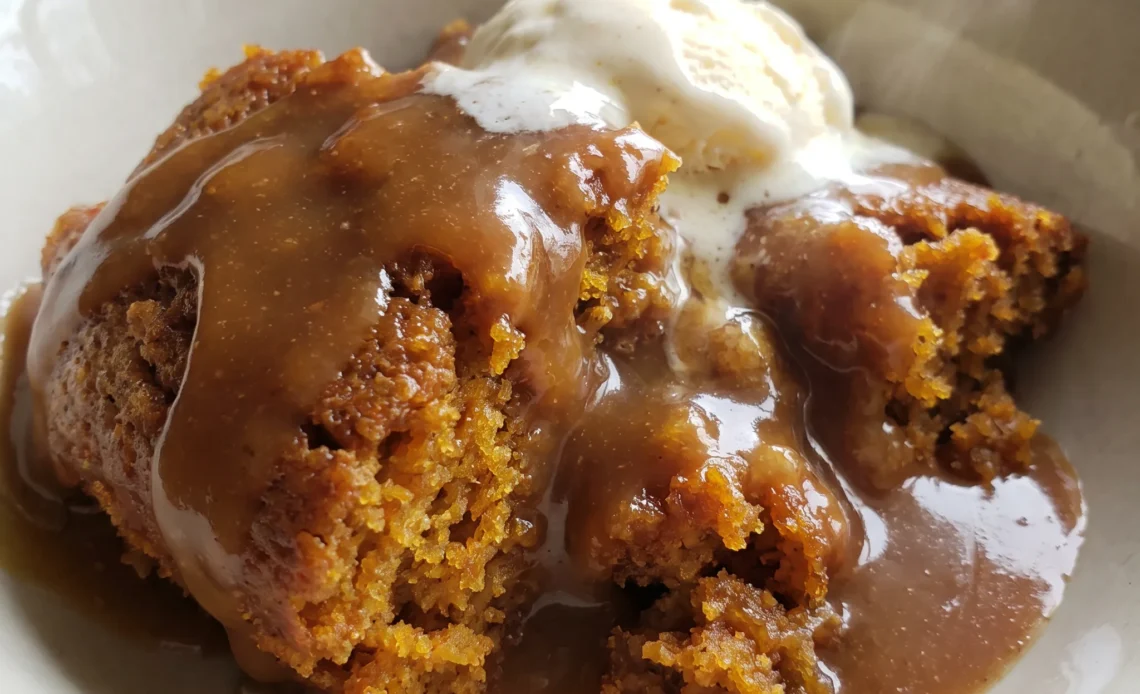
Pumpkin cobbler isn’t a pie, and it isn’t cake with sauce poured over at the end. You spread a stiff pumpkin batter in the pan, scatter brown sugar and cinnamon across it, pour hot water on top, and slide the whole thing in. What comes out has traded places: a risen cake sitting over its own caramel.
The tricky part is that nothing about the assembly looks like it should work, and a few small slips in how the layers go in can cost you the sauce entirely. The finished article walks through the pour, the bake, and what the dish should look like while it’s still in the oven.
The cobbler relies on a density inversion: the thick pumpkin batter must float above the denser brown sugar and water mixture during baking. If hot water is poured forcefully, it can channel through the batter, mixing the layers and preventing the cake from rising cleanly. This results in a uniform, soggy texture instead of a distinct cake layer over a caramel sauce.
Why the Batter Mixes Up Thick
Flour and pumpkin in a one-to-one ratio, plus oil and no added liquid, leave you with a batter that drops off a spatula in a heavy mound rather than a pour. That thickness matters more than it looks.
When the hot water goes on top, a thick batter stays put, so the two layers never blend. Spread it unevenly and you get a cake that domes in the middle with a thin edge, and the water can tunnel down through the low spots.
The flour also sets up a structure that holds the rising steam, so the cake can climb. Thin that batter with extra milk or pumpkin and it sloshes together with the water, baking into one uniform sweet mush with no sauce underneath.
You want the batter to sit exactly where you put it, so the separation holds.
How the Layers Flip During Baking
You scatter a dry mix of brown sugar and cinnamon over the batter, then pour hot water across the top. That water dissolves the sugar right away, turning the topping into a sweet liquid that weighs more than the batter below. As the oven heats, the batter sets and rises, pushing upward while the heavier sugar water sinks to the bottom of the dish.
Within twenty minutes you can see it happening through the glass: a pale cake dome breaking the surface, dark liquid pooling below. That inversion is what makes this a cobbler rather than a pumpkin cake with sauce spooned over.
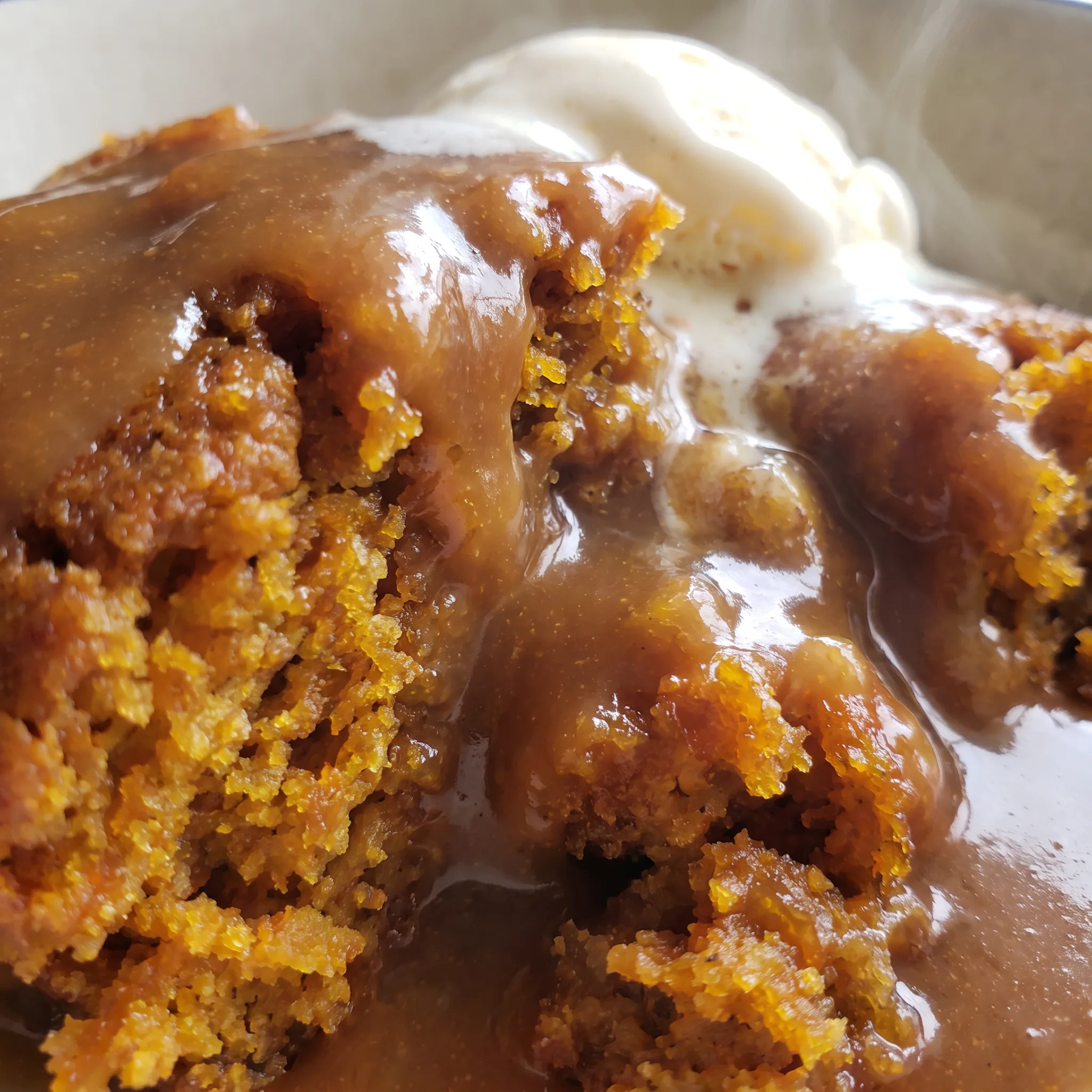
If you stirred the water into the batter, the layers couldn’t trade places. What comes out is a tender cake on top and a glossy caramel sauce underneath, ready to be spooned up with each serving.
The Spice Blend and Its Balance
Cinnamon shows up twice: a full teaspoon in the batter and half a teaspoon in the topping. That double hit keeps the warmth consistent from cake to sauce, so the caramel tastes seasoned rather than plain sweet. Nutmeg, cloves, and ginger fill in behind it, adding a slight bitterness and a faint heat that cuts through the brown sugar.
The amounts are small on purpose, a quarter teaspoon of cloves and ginger, half of nutmeg, because pumpkin itself is mild and the caramel is already rich. Push the spices higher and you taste the spice rack instead of the squash.
Using a premixed pumpkin pie spice would throw off the ratios, since most blends lead with cinnamon and short the cloves. What you want is a flavor that reads as pumpkin first, with spice as a quiet echo in the background.
Choosing the Right Pan and Pouring the Water
A 9×13-inch glass or ceramic dish gives the batter a wide, shallow bed, so the water spreads in a thin, even sheet instead of pooling in one corner. That even coverage is what lets the sauce form across the whole bottom rather than in patches. Pour the hot water slowly over the back of a spoon or in a steady stream near the edge; a hard dump in the center digs a crater through the sugar and into the batter, and the layers never fully separate.
Glass and ceramic hold heat steadily, so the inversion happens at the same rate from edge to center. A smaller pan stacks the batter too deep, and the water can’t sink evenly, leaving you with a soggy middle and dry edges. Stick with the size called for and let the dish do its job.
What to Reach For Before the Batter Starts
Canned pumpkin: Buy solid-pack pumpkin and check the label, since pumpkin pie filling already carries sugar and spice that throws off the batter.
Ground cloves: A quarter teaspoon is enough here, and older jars taste flat and dusty rather than warm, so smell yours before you measure.
Brown sugar: The topping needs fresh, soft brown sugar, and hardened lumps won’t scatter evenly or dissolve when the hot water hits.
Vegetable oil: Any neutral oil works, and olive oil’s flavor reads through the pumpkin and spices in a way you’ll notice in the cake.
Vanilla: Real extract carries the pumpkin better than imitation, which tastes thin once the cake bakes for close to an hour.
Judging the Moment the Water Goes In
When the batter is spread right
An even layer matters because if the batter is too thick in spots, the water will run off into thinner areas, and you’ll get uneven sauce pockets. After spreading, tilt the dish slightly. The batter should hold its shape, not slosh.
If it runs, you’ve overmixed or added too much liquid. You can nudge it back with a spatula, but don’t stir.
A level surface gives the water a uniform sheet to dissolve the sugar and sink through.
Pouring water without cratering
Hot water straight from the tap or just boiled? It needs to be hot enough to dissolve the brown sugar on contact, but not so hot it cooks the batter.
Pour slowly over the back of a spoon held just above the surface, moving in a spiral from the center out. A fast pour digs a hole through the sugar and into the batter, and the layers won’t separate.
You’ll see the sugar darken and melt as the water hits. If a crater forms, stop pouring and let the water settle before continuing.
The first 20 minutes in the oven
Don’t open the door. The cake needs steady heat to rise and push the sauce down. If you peek too early, you’ll see the batter still liquid and the water on top.
Around 20 minutes, through the glass, you should see the cake dome forming and the liquid below turning darker and bubbling at the edges. If the top is browning too fast but the center is still wet, the oven is too hot. Lower it by 25°F and add a few minutes.
The card says 50 to 55 minutes, but your oven might run hot or cold. Judge by the cake pulling away from the sides and the sauce thickening.
Knowing when the sauce is thick enough
The sauce is ready when it coats the back of a spoon and doesn’t run off like water. At 50 minutes, tilt the dish.
If the sauce slides around freely, it needs more time. If it clings and leaves a trail, it’s done. Underdone sauce is thin and soaks the cake; overdone sauce turns sticky and hard to spoon.
The cake should spring back when lightly pressed in the center. If the top is set but the sauce is still watery, bake another 5 minutes and check again.
Rest 5 to 10 minutes before serving; the sauce thickens as it sits.
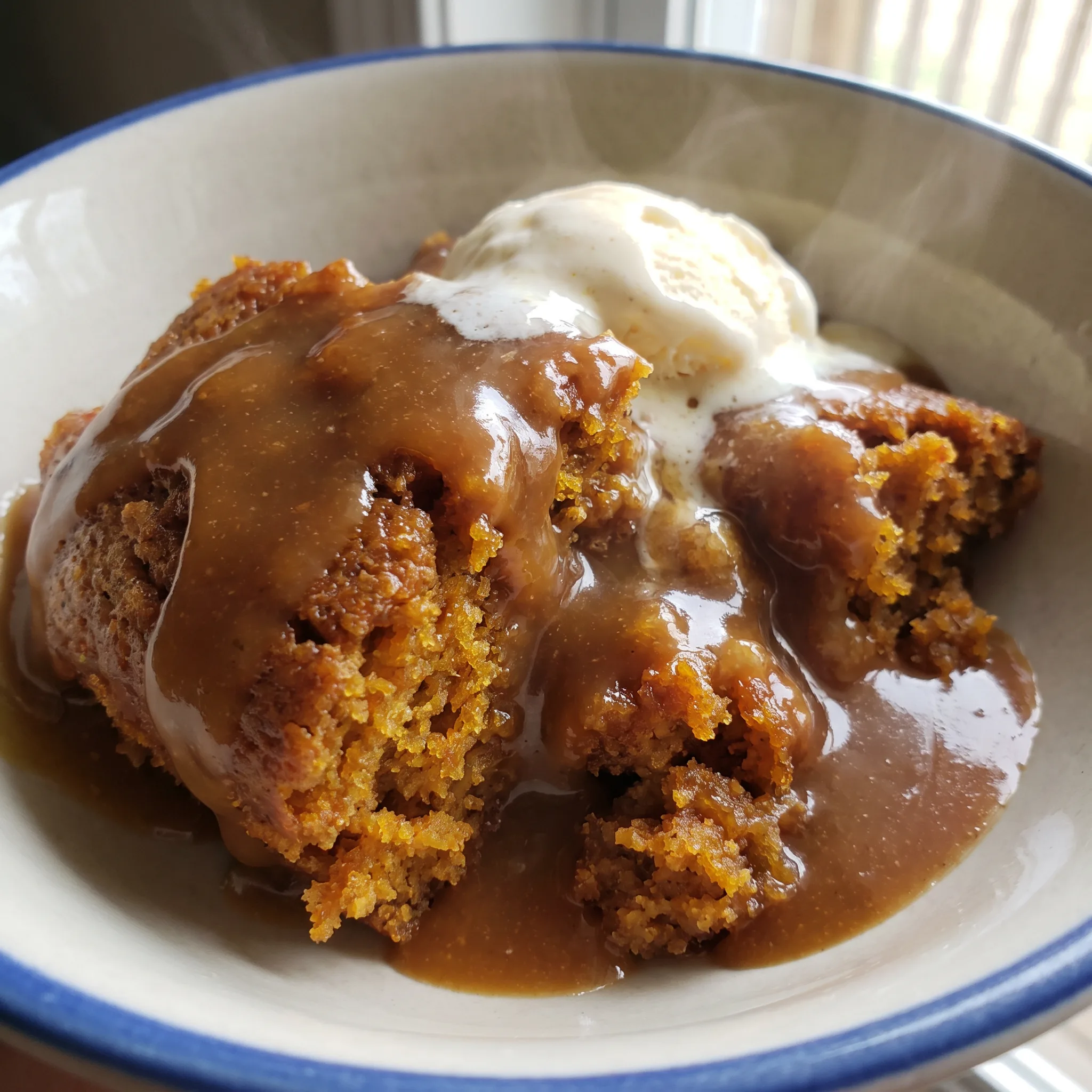
Pumpkin Cobbler with Caramel Sauce
Ingredients
Method
- Set oven to 350°F (175°C). Coat a 9×13-inch baking dish with cooking spray.
- In a large bowl, combine flour, baking powder, salt, granulated sugar, 1 teaspoon cinnamon, nutmeg, cloves, and ginger by whisking. Incorporate pumpkin, oil, and vanilla. Mix with a spatula until uniform; the batter will be thick. Evenly spread the batter into the bottom of the prepared dish.
- In a separate bowl, whisk brown sugar and 1/2 teaspoon cinnamon. Scatter this mixture evenly over the batter. Pour hot water on top.
- Bake without covering for 50 to 55 minutes. The cake will ascend to the top and the caramel sauce (topping) will settle at the bottom. Take out of the oven and allow to rest 5 to 10 minutes before serving.
- For each serving, offer a scoop of vanilla ice cream and chocolate chips, if desired. Enjoy!
Storing and Serving Pumpkin Cobbler
Eat this within an hour of the rest time. Warm is the only state where the caramel sauce stays loose enough to spoon over the cake.
Once it cools past that window, the sauce thickens and turns tacky, and cold from the fridge it sets firm and can go gummy. Leftovers keep covered in the fridge for three days. The cake itself stays tender, but the sauce never returns to its warm texture on its own.
Reheat single portions in the microwave for 30 to 45 seconds, or the whole dish covered at 300°F until the sauce loosens again, about 15 minutes. Stir the sauce up from the bottom before serving. Freezing doesn’t work here: the sauce separates and turns grainy when thawed.
Ice cream and chocolate chips go on at the moment of serving, never before, or they melt into the sauce.
What You Can Swap in Pumpkin Cobbler and What Will Ruin the Caramel
Canned pumpkin: Any plain winter squash or sweet potato puree, measured the same 1 cup. If you’re working from a whole squash, roast it, mash it, and drain it well before measuring.
The batter needs a thick, dry puree to sit on the bottom and let the water sink through. Homemade squash often carries more water than the canned solid-pack kind, so the batter turns slack and the layers can blur into one sweet mass. If your puree looks wet, spread it on paper towels for a few minutes first.
Flavor stays close, though butternut reads sweeter and acorn leans more vegetal.
Vegetable oil: Melted coconut oil or a light olive oil, same 1/4 cup. Neutral oil keeps the pumpkin and spice in front. Coconut oil adds a faint sweetness that can push the whole dish toward dessert-candle territory; refined coconut oil is quieter.
Olive oil, even a mild one, shows up in the cake after an hour in the oven. Butter sounds like an upgrade but it’s not: it brings water, and that extra liquid thins the batter enough that the hot water on top can mix in instead of sinking, and you lose the sauce layer.
Brown sugar: No real substitute for the topping. If you’re cutting sugar, reduce the brown sugar by a couple of tablespoons rather than swapping in a granulated alternative. The caramel underneath forms because brown sugar dissolves in hot water and sinks as a heavy syrup.
A sugar substitute won’t dissolve the same way and won’t thicken into a spoonable sauce, so you end up with a wet, grainy layer under the cake. Cutting back a little works because the cinnamon and pumpkin still carry flavor, but go too far and the sauce turns thin and bitter.
All-purpose flour: A 1-to-1 gluten-free blend, same 1 ¼ cups (156 g), and add 1/4 teaspoon xanthan gum if your blend doesn’t include it. The batter’s job is to set into a structure that holds rising steam and pushes the sauce down. Without gluten, that structure is weaker, so the cake can collapse before the layers finish trading places.
A blend with xanthan gum gets closer, but expect a slightly denser crumb and a softer dome. Let it rest the full 10 minutes before serving so the sauce thickens and the cake firms up.
Tips
- Scatter the brown sugar mixture with your fingers held close to the batter, not from a height. The dry topping is light enough that a high sprinkle sends cinnamon dust drifting to the edges of the dish, where it lands on bare glass and burns into dark streaks during the 50 to 55 minutes in the oven.
Frequently Asked Questions
Can I make pumpkin cobbler ahead of time and bake it later?
You can assemble the dry and wet parts separately a day ahead, but don’t pour the hot water over the sugar-topped batter and park it in the fridge. Brown sugar starts dissolving the moment the water hits it, and a cold, resting dish won’t give you the clean layer flip that a hot oven does. Keep the brown sugar and cinnamon mixed in a covered bowl, the batter covered in the dish, and the water hot at the last minute.
Then it goes straight into a 350°F oven, and the whole thing still takes 50 to 55 minutes.
Why did my pumpkin cobbler turn out soggy instead of having a sauce?
Most likely the water got stirred into the batter, or it cratered through the sugar and blended the two layers before they could trade places. You should have seen the batter stay put under a clear sheet of dark liquid for the first twenty minutes, then a pale dome push up through it.
If it came out as one wet, uniform cake with no caramel underneath, check whether the brown sugar was fresh and soft; hard lumps don’t dissolve, so they sit on top and leave the bottom thin. Oven temperature matters too, since a cold oven lets the water soak in before the cake sets.
Next time pour hot water slowly over the back of a spoon and keep the door shut.
How is pumpkin cobbler different from pumpkin pie?
Pie is a custard, eggs and evaporated milk set in a crust, and it slices into wedges that hold their shape. This is a batter cake that bakes over a caramel sauce, so you spoon it out of the dish rather than slice it, and every serving gets cake plus a glossy pool from the bottom. The texture is closer to a warm pudding cake than to a set custard, and you eat it within an hour of the rest time while the sauce is still loose.
There’s no crust at all, just the flour, pumpkin, and oil batter spread in a 9×13 pan.
What should I serve with pumpkin cobbler?
Vanilla ice cream and chocolate chips go on at the moment of serving, never before, or they melt into the sauce and disappear. The cold ice cream against the warm caramel is the contrast people are after, and the chips add a little snap. A spoonful of lightly sweetened whipped cream works if you don’t want ice cream.
Keep it simple, since the caramel is already rich, and serve within an hour of the rest time while the sauce is still spoonable.
