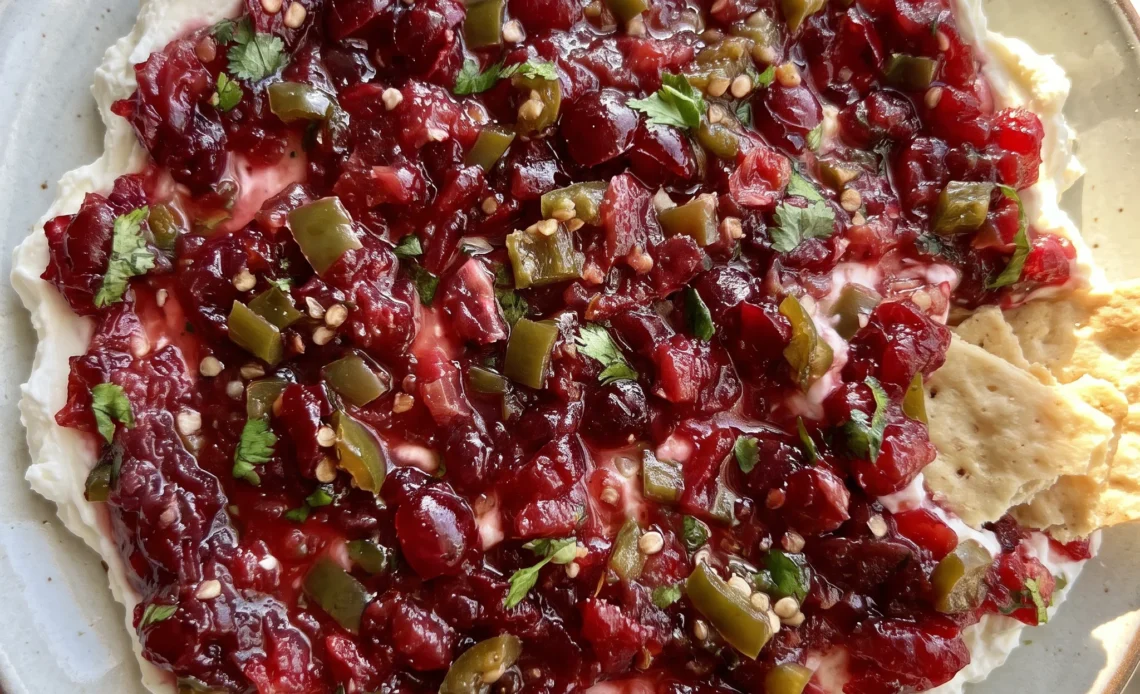
Ten minutes of hands-on work buys you a dip that looks like you fussed. The cranberry layer wants a coarse, pebbly chop, and the margin between that and a purée is a couple of pulses you can’t take back. Get it right and you end up with a cranberry jalapeno cream cheese dip that reads as two distinct things on the plate: a cool, whipped base and a bright, tart, faintly warm spoonful sitting on top.
Get it wrong and the whole thing collapses into a pink smear. The chopping is the part that trips people.
You judge it by eye, not by the clock, and by the time the sugar has done its work, you’ve lost the chance to fix it.
Balance the Sweetness with Cranberry Liquid
One cup of sugar for a small batch looks like a lot, and it is. That sugar does two jobs. It sweetens, sure, but it also pulls water out of the cranberries.
You’ll see the evidence after ten minutes in the fridge: a pool of pink syrup at the bottom of the bowl. That liquid is tart and intense, and it will bleed straight into the cream cheese if you don’t deal with it. Either drain the mixture or use a slotted spoon when you serve the cranberries.
Skip that step and you get a runny dip with a pink moat around the base. The cranberry layer needs to sit on top, not soak in. If you taste the drained liquid, it’s sharp and sweet at once.
That’s the balance you’re after, just not all over the plate.
Control the Heat by Seeding the Jalapeños
Jalapeño heat lives in the seeds and the white ribs. The recipe says to seed them, and that’s why this dip appeals to a crowd. Remove those parts and you get a mild, grassy pepper flavor with almost no burn.
Leave them in and you get unpredictable pockets of spice, because pulsing doesn’t distribute heat evenly. One bite is tame, the next makes you reach for a drink.
That randomness is worse than consistent heat. You also risk over-pulsing, which turns the mixture into a purée.
A purée spreads the capsaicin everywhere, so every bite burns, and the texture goes from chunky to baby food. Stop while you can still see distinct pieces of cranberry and pepper.
The dip should look like a rough chop, not a sauce. Spoon it over the cream cheese and you get bursts of tart and mild heat, not a wall of fire.
Whip the Cream Cheese for a Supportive Base
Cold cream cheese fights a hand mixer. It stays in lumps, and those lumps never smooth out, no matter how long you beat.
Room temperature blocks break down fast and whip into something light. That air you beat in matters. A fluffy base holds the cranberry mixture on top instead of letting it sink.
You want the cream cheese spread across a plate with some height, not a thin, dense smear. When you spoon the cranberries over it, the base stays put and the juices pool slightly at the edges.
The contrast is the whole point of the dish: cool, smooth, tangy cream cheese underneath, chunky, sweet-tart, spicy cranberries on top. If the base is heavy and cold, the topping slides and the textures blur together. Take the time to scrape down the bowl and beat until you see it lighten.
A Fresh, Savory Twist on Cranberry Sauce
This isn’t cooked cranberry sauce. No simmering, no cinnamon, no orange zest.
Instead, raw cranberries get chopped with cilantro and green onion, which brings a savory, herbal note you don’t expect from a cranberry dish. The lime juice sharpens everything.
Lemon would work, but lime has a bitter edge that cuts through the sugar better, and orange would push it back toward the classic sauce profile you’re avoiding. You taste the tartness first, then the mild heat, then the fresh herbs.
It’s a different creature entirely, and that’s why it pairs with cream cheese. The dairy softens the acidity and lets the savory notes come forward.
Serve it with plain crackers or chips. The dip should taste bright and a little wild, not like a holiday relic.
Buy and Prep Notes for the Cranberry Layer
Fresh or frozen cranberries: Frozen berries work but thaw them first; they release more water, so drain the mixture well before serving.
Jalapeños: Seed them and cut into 4, 5 pieces so the food processor chops evenly without turning them into a purée.
Cilantro (or parsley): Use 5, 6 sprigs; cilantro brings an herbal note, parsley a milder one, and both should be fresh, not dried.
Green onions (or chives): Two green onions, white and light green parts only; chives work but use a small handful for the same mild onion bite.
Lime juice: One tablespoon fresh lime juice, not bottled, because the bitter edge cuts through the sugar better than lemon or orange.
Cream cheese: Two 8-ounce blocks, full-fat, at room temperature so they beat smooth and fluffy, not cold and lumpy.
The most common mistake is treating the cranberry mixture like a thick sauce and spooning it straight from the bowl onto the cream cheese. Sugar is hygroscopic: within minutes it pulls water out of the crushed cranberries, and the salt and lime juice dissolve into that released liquid, creating a pool that will not stay on top of the base. The recipe’s 10 to 20 minute chill is not just for flavor, it gives that liquid time to separate so it can be drained or avoided with a slotted spoon.
Judging the Chop, the Wait, and the Spread
Reading the Chop Before You Add Sugar
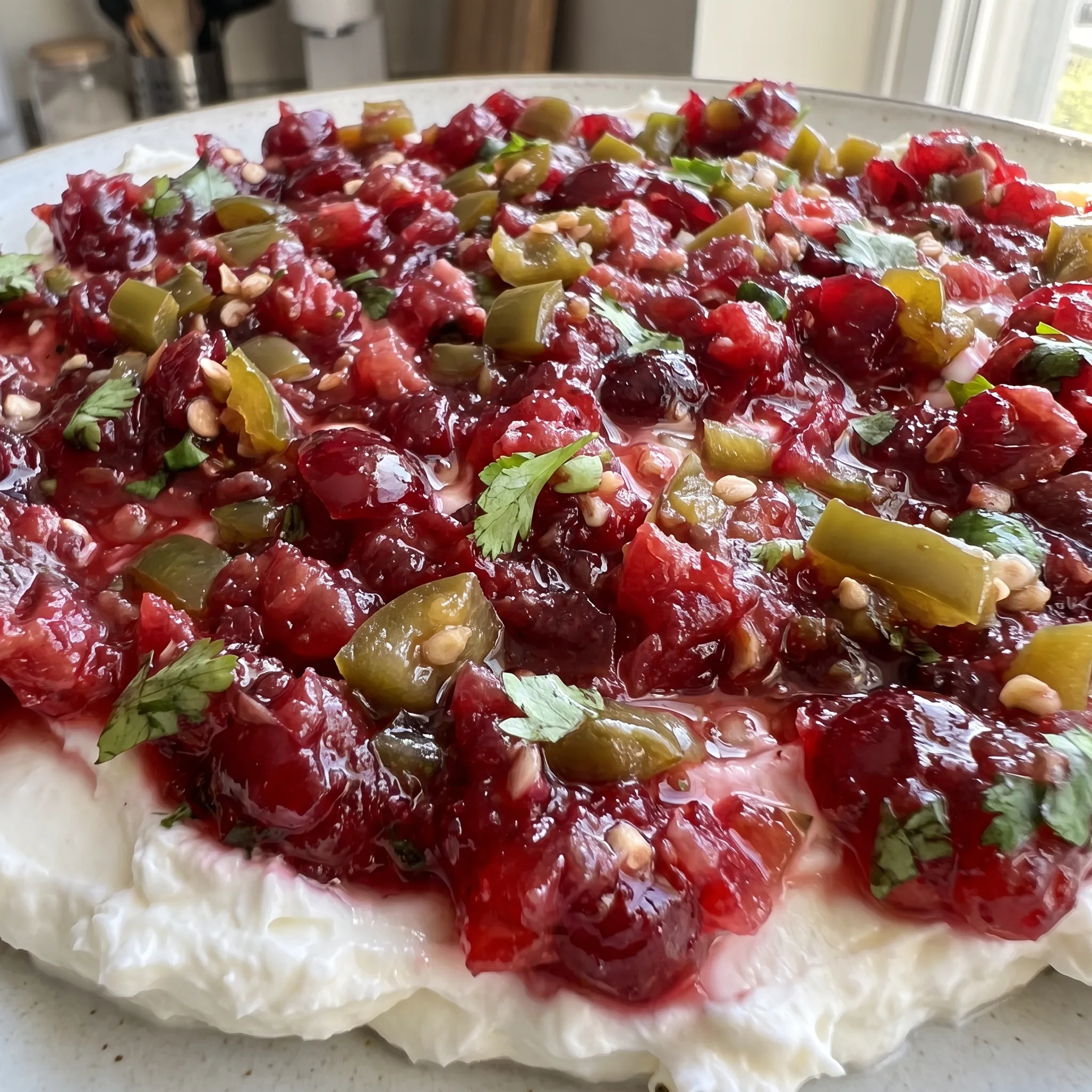
After pulsing the cranberries, jalapeño, cilantro, and green onion, stop and look. You want a coarse, pebbly texture, with visible bits of skin and pepper, not a uniform paste.
If it’s too fine, you’ve lost the bursts of tart and heat that make each bite interesting. If it’s too chunky, the dip won’t spoon evenly.
The fix is simple: pulse in short bursts and scrape the bowl often. Judge by eye, not by the clock.
Knowing How Long to Let the Sugar Pull
The sugar needs time to draw juice from the cranberries. After ten minutes in the fridge, you’ll see a pink pool at the bottom.
At twenty, there’s more liquid, and the cranberries taste less raw. But if you leave it too long, the cranberries soften and lose their pop. The sweet spot is when the liquid is plentiful but the berries still hold shape.
If you’re unsure, pull it at twenty minutes. You can always drain, but you can’t uncrush.
Tasting for Balance Before It Hits the Cream Cheese
Spoon out a little of the drained cranberry mixture and taste it. It should be tart first, then sweet, with a mild warmth from the jalapeño and a fresh hit of lime and herbs.
If it’s too sweet, add a pinch more salt or a squeeze of lime. If it’s too sharp, a little more sugar. This is your last chance to adjust before the cream cheese dilutes everything.
The cream cheese will mellow the acidity, so err on the side of a bolder, tarter mix.
When the Cream Cheese Is Truly Ready to Spread
Beat the cream cheese until it loses its cold, clumpy look and turns glossy and light. You’ll see it increase slightly in volume and feel less resistant to the mixer. If it’s still cool, it will stay lumpy and won’t hold the cranberries.
Stop when it’s smooth and fluffy, but don’t overbeat, or it can warm up and slump. If it’s too soft, chill it for a few minutes before spreading.
Judging the Drain Before It Reaches the Plate
The cranberry mixture will sit in a pool of syrup. If you spoon it wet onto the cream cheese, that liquid will run and make a pink moat. Use a slotted spoon or drain the bowl first.
The cranberries should look glistening but not dripping. If they’re too wet, let them drain a minute longer. The texture on the plate should be distinct: creamy base, chunky topping.
If it’s already mixed, you’ve lost the contrast.
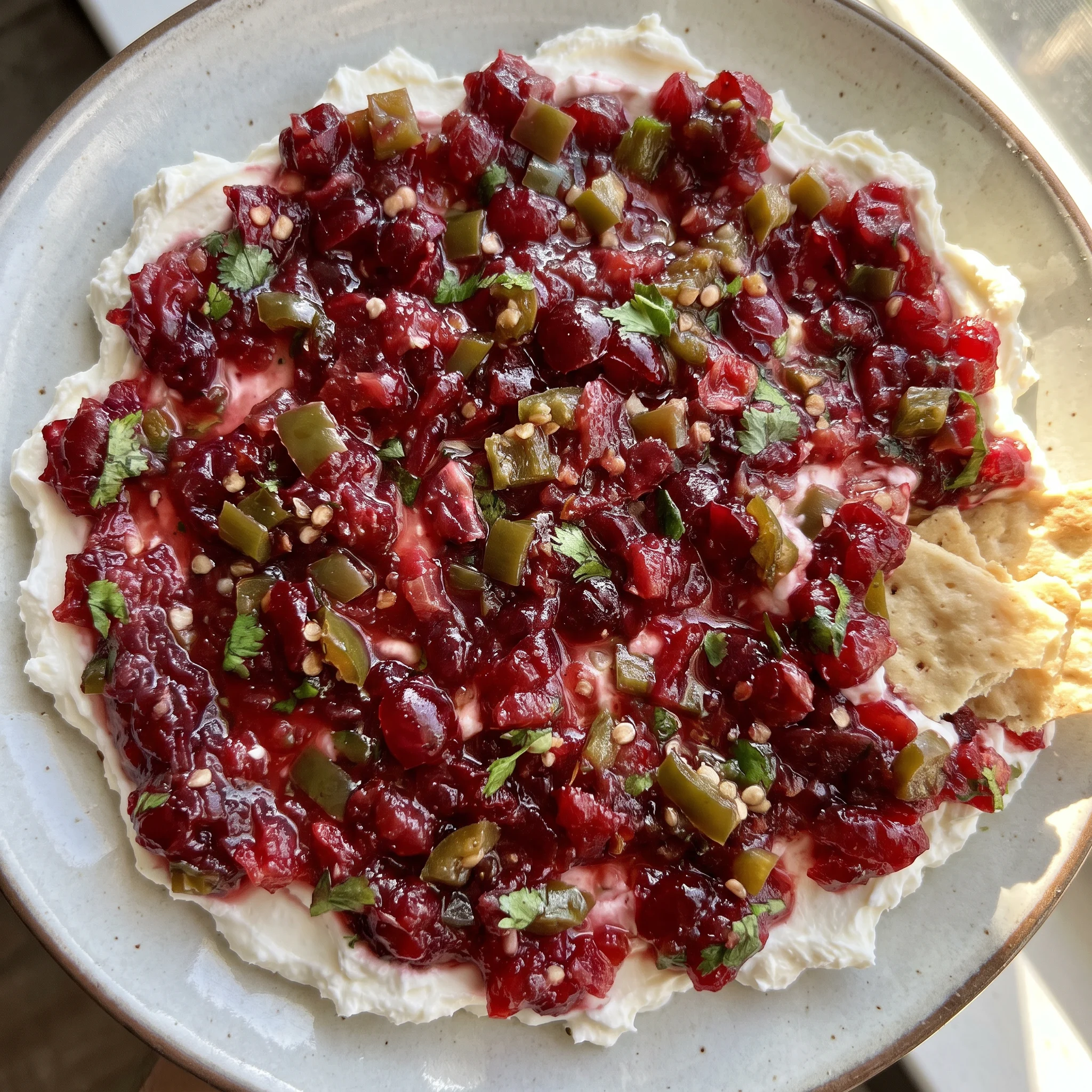
Cranberry Jalapeno Cream Cheese Dip
Ingredients
Method
- In a food processor, combine the cranberries, jalapeño pieces, cilantro, and green onion; pulse a few seconds, scrape down the sides, and pulse again.
- Add the sugar, lime juice, and salt; pulse 2–3 seconds more.
- Refrigerate 10–20 minutes. Either drain the mixture or use a slotted spoon when serving the cranberries.
- With a hand mixer, beat the cream cheese a few minutes until light and fluffy.
- Spread the cream cheese on a plate and spoon the cranberry dip over the top.
- Serve with crackers or chips.
Storage and Serving: Keep It Separated Until the Last Minute
Store the drained cranberry mixture and the whipped cream cheese in separate containers. The cranberry mix keeps in the fridge for up to 3 days. Its texture softens slightly each day, but the flavor stays bright.
The cream cheese base keeps for up to 5 days. After that, it may separate or turn grainy.
You can freeze the cranberry mixture for up to 2 months. Freeze the cream cheese base only if you’ll whip it again after thawing, as it can turn watery.
Do not freeze the assembled dip.
Assemble just before serving. The dip looks and tastes best within 30 minutes of assembly. After that, the cranberry juices bleed into the cream cheese and the base softens.
If you’re serving a stored portion, drain the cranberry mix again if it has pooled, then spoon it over freshly whipped or re-whipped cream cheese. Leftovers hold for 2 days in the fridge, but the texture won’t be as distinct.
Eat within that window for the best contrast.
Tips
- Taste the pulsed cranberry mixture before it goes in the fridge, not after. At that point the cranberries are still crunchy and the jalapeño heat has not yet spread through the sugar syrup, so a pinch more sugar or a squeeze of lime now lands evenly. Waiting until after the chill means you are adjusting a mixture that has already pooled liquid, and stirring in more sugar at that stage just makes the pool bigger.
Swap by What the Ingredient Does Here, Not by Habit
Cranberries: Frozen work if you thaw and drain them first. Fresh out-of-season berries are often hard and pale; taste one before you commit.
Thawed berries throw more liquid into the bowl, so the pink pool shows up faster and larger. Drain longer than you would for fresh, and expect the chopped texture to be softer. If the berries taste flat, add an extra squeeze of lime before you chill.
Out-of-season fresh berries can be woody and dull; better to use frozen.
Cilantro: Parsley, same 5 to 6 sprigs, flat-leaf preferred. Cilantro gives a bright, almost citrusy herbal hit that cuts the sugar.
Parsley is greener and quieter, so the dip reads more like a straight cranberry relish. Neither should be dried; dried herbs turn dusty in a raw mix. If you hate cilantro, parsley is the safe move, just know you’re trading away some of the edge.
Green onions: Chives, a small handful, snipped fine. Green onions bring a raw allium bite that wakes up the cranberries.
Chives are milder and thinner, so the onion note fades into the background. Use the white and light green parts of the green onions for the sharpest flavor; if you use chives, you may want a few more to taste.
Lime juice: Lemon juice, same 1 tablespoon fresh. Lemon is softer and more floral than lime. The dip will taste less sharp and a little sweeter, which can push it toward a classic cranberry sauce profile.
If you only have lemon, add a pinch more salt to keep the tartness in check. Bottled juice of either kind tastes flat and metallic here; squeeze fresh.
Cream cheese: For dairy-free, use a plant-based cream cheese block, same 2 (8-ounce) blocks, at room temperature. Plant-based blocks vary wildly. Some whip up fluffy and hold the cranberries; others stay dense and weep liquid.
Beat it the same way and watch for a glossy, light texture. If it stays stiff, the topping will slide.
Full-fat dairy-free versions tend to work better than low-fat. Don’t swap in whipped cream cheese from a tub; it’s too soft and won’t support the cranberry layer.
Frequently Asked Questions
Can I make this cranberry jalapeño dip ahead of time?
Yes, but keep the two parts apart until you’re ready to eat. The cranberry mixture holds in the fridge for up to 3 days, and the whipped cream cheese keeps for up to 5. Assemble just before serving so the juices don’t bleed into the base.
If you’ve stored the cranberry mix and it has pooled, drain it again before spooning it over the cream cheese.
Why is my cranberry jalapeño dip watery?
Most likely you didn’t drain the cranberry mixture after it sat with the sugar. That pink syrup at the bottom of the bowl will run straight into the cream cheese and make a moat. Use a slotted spoon or pour off the liquid before you assemble.
If you used thawed frozen cranberries, they throw off even more water, so drain longer. Also check that your cream cheese was at room temperature and whipped until fluffy; a cold, dense base lets the juices sit on top instead of holding them at the edges.
How spicy is this dip?
Mild enough for a crowd, since the jalapeños are seeded and the white ribs removed. You get a grassy pepper flavor with a gentle warmth, not a burn. The sugar and cream cheese soften what heat there is.
If you leave seeds in, you’ll hit unpredictable pockets of spice because pulsing doesn’t distribute them evenly. As written, it’s a background tingle, not a five-alarm situation.
What can I serve with cranberry jalapeño cream cheese dip?
Plain crackers or chips are the default for a reason: they stay out of the way and give you a sturdy scoop. A neutral base like a water cracker or a thick potato chip works better than anything heavily seasoned, which would fight the tart, herbal cranberry layer. You can also set out cucumber rounds or endive leaves if you want something crisp and fresh.
Just avoid anything sweet or strongly flavored; the dip already carries enough sugar and lime.
