
Baked spinach artichoke dip is not a chafing dish of orange goo that tastes the same at every potluck. It’s a hot, bubbling skillet that disappears before the chips do, and the difference between great and forgettable usually comes down to one quiet step most cooks rush: getting the greens dry enough. The cheeses here have separate jobs, so the scoop stretches, tastes nutty, and finishes sharp, all at once.
That balance is what makes it feel rich without sitting heavy. If your past attempts pooled water or turned rubbery, the fix is simpler than you think.
Three Cheeses, Three Jobs
Cream cheese gives the dip its creamy base and a clean tang that keeps each scoop from tasting flat. Mozzarella melts into elastic strands, so when you pull a chip away you get that classic cheese-pull. Gruyère brings a nutty, savory depth that balances the mild mozzarella and the tangy cream cheese.
Parmesan, used in a smaller amount, adds salty umami and a firmer bite. Each cheese is there for a reason, and none of them is interchangeable with the others. If you swapped one out, you’d lose a specific quality: the stretch, the nuttiness, the sharp finish.
The combination is what makes the dip taste rich but not heavy, and the texture varied enough to keep you coming back. When you stir the cheeses into the base, they should distribute evenly, so every bite has a bit of each.
The result is a dip that’s creamy, stringy, and savory all at once.
The Ratio That Keeps It Scoopable
Mayonnaise adds richness and helps the dip set without turning rubbery. Too much mayo can make the dip oily; too little can make it dry. The 8 ounces of cream cheese to 4 tablespoons of mayo creates a stable emulsion that bakes evenly.
This balance ensures the dip is scoopable, not runny or stiff. When you stir them together, the mixture should be smooth and thick, with no lumps of cream cheese left.
If it looks greasy or separated, the ratio is off. But with the right amounts, the dip holds its shape on a chip and doesn’t leave a pool of oil on the plate. That’s what you’re after: a dip that’s rich but not heavy, and that stays together from the first scoop to the last.
Dry Spinach, Better Dip
Excess water from spinach will make the dip soupy and prevent it from binding. Squeezing removes not just water but also some bitterness.
Drying the spinach allows the cheeses and mayo to coat the leaves evenly. If spinach is not dried, the dip may not set properly even after baking.
You want the spinach to be as dry as possible before you chop it. A good squeeze will leave you with a compact ball of leaves that feel almost dry to the touch. When you add them to the bowl, they should separate easily and not clump together.
The difference in the final dip is noticeable: a dry spinach yields a thick, cohesive dip, while a wet one gives you a watery mess. So take the time to squeeze well; it’s worth it.
Pick Your Pan for the Right Bite
A wider, shallower dish maximizes the golden cheese crust. A deeper dish yields a gooier, more dip-heavy scoop.
The 2-quart size ensures the dip is not too thin or too thick for even heating. Using an 8-inch skillet allows for stovetop-to-oven convenience and a rustic presentation. When you spread the mixture, aim for an even layer so it bakes uniformly.
The choice affects the ratio of crust to dip in every bite. If you like more crust, go wider; if you prefer a creamier scoop, go deeper. Either way, the dip should bubble around the edges and turn golden on top.
That’s your cue that it’s ready to come out.
Why No Sour Cream or Cream
Sour cream would add tang but also more water, risking a runny dip. Heavy cream would make it richer but less stable at room temperature.
Cream cheese and mayo create a firmer set that holds up on chips. This version is closer to a spread than a sauce, which is intentional for dipping. When you scoop it, the dip should cling to the chip without dripping.
That firmness comes from the cream cheese and mayo, which set up as they bake. If you used sour cream or heavy cream, you’d get a looser texture that might taste good but wouldn’t hold. So this recipe sticks with the classic combo for a reason: it gives you a dip that’s sturdy enough for dipping but still creamy and rich.
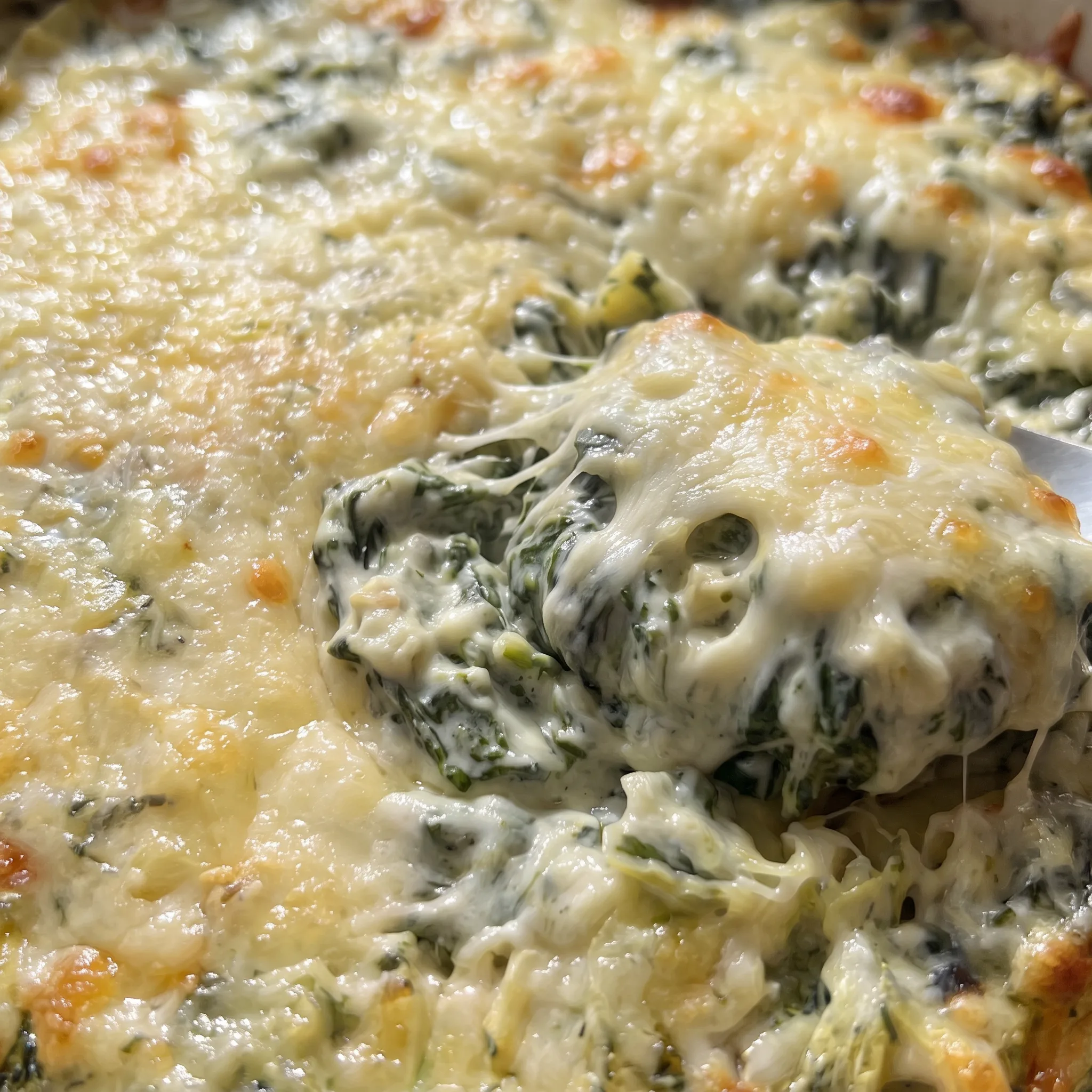
What to Buy and Prep for This Dip
Cream cheese: Buy the block, not the tub, and let it sit out until it’s truly room temperature so it stirs smooth without lumps.
Baby spinach: Wilt it first, then squeeze until no water beads out; wet leaves will steam and leave liquid pooling under the cheese.
Jarred artichoke hearts: Choose plain hearts packed in brine, not the marinated kind in oil, and drain them well before chopping so the dip doesn’t turn greasy.
Garlic: One fresh clove, minced fine; the jarred stuff tastes flat and won’t spread evenly through the dip.
Gruyère: Buy a wedge and shred it yourself; pre-shredded bags are dusted with starch that keeps it from melting into the nutty, savory layer you want.
The hard step is removing enough water from the spinach and artichokes before mixing. Two documented approaches exist: squeezing the spinach by hand or in a clean towel until no more liquid drips, versus wilting it in a hot pan and pressing it dry. Hand-squeezing removes more water because it applies direct, high pressure to the leaves, while pan-wilting can leave moisture trapped in the folds and requires an extra pressing step.
This recipe calls for spinach that is already wilted, squeezed dry, and chopped, meaning the squeezing must be thorough enough that the spinach feels almost dry to the touch, any remaining water will seep out during baking and pool at the bottom of the dish.
Reading the Dip Before It Bakes
When the spinach is dry enough to stop squeezing
A squeezed handful should feel like a damp sponge that’s been wrung out, not a wet one. If you press it and water beads on your palm, keep going. Wet spinach will steam in the oven and leave liquid pooling under the cheese, so the dip never sets.
After chopping, the pieces should separate when you toss them, not clump into a ball. If they clump, there’s still water in there.
Checking that the base is smooth before the chunky bits go in
Cream cheese at room temperature breaks up with a few stirs, leaving a smooth, thick paste. If you still see solid white chunks after a minute of mixing, the cream cheese was cold.
Those lumps won’t melt away in 15 minutes of baking; they’ll leave pockets of plain cream cheese in the finished dip. Let the bowl sit on the counter for a few more minutes, then stir again. The mayo should disappear into the cream cheese with no oily streaks.
Judging the spread: even, not packed down
Spread the mixture so it sits about an inch deep in your dish. If you press it down hard, you’re compressing the spinach and squeezing out moisture that will pool at the edges.
A light hand leaves a slightly rough surface, which gives the topping cheese something to grip. If the layer is much thinner than an inch, you’ll get a crusty, dry dip; if much thicker, the center may still be cool when the top is golden.
Stay near that depth.
The color and bubble cues that tell you it’s done
At 15 minutes, the cheese on top should be fully melted, with a few golden patches and bubbles breaking around the edges of the dish. If the center still looks matte and pale, give it two more minutes. If the top is browning too fast but the center isn’t bubbling, the oven rack is too high or the dish is too wide.
You want the dip to look liquid at the edges and set in the middle, not stiff all the way through.
Why you should let it sit for a minute before scooping
Straight from the oven, the dip is loose and separated; the cheeses haven’t finished setting. A two-minute rest lets it firm up just enough that a chip comes away with dip clinging to it instead of a runny puddle.
If you dig in immediately, the first scoops will be watery and the cheese will string but not hold. Wait until the bubbling stops, then serve.
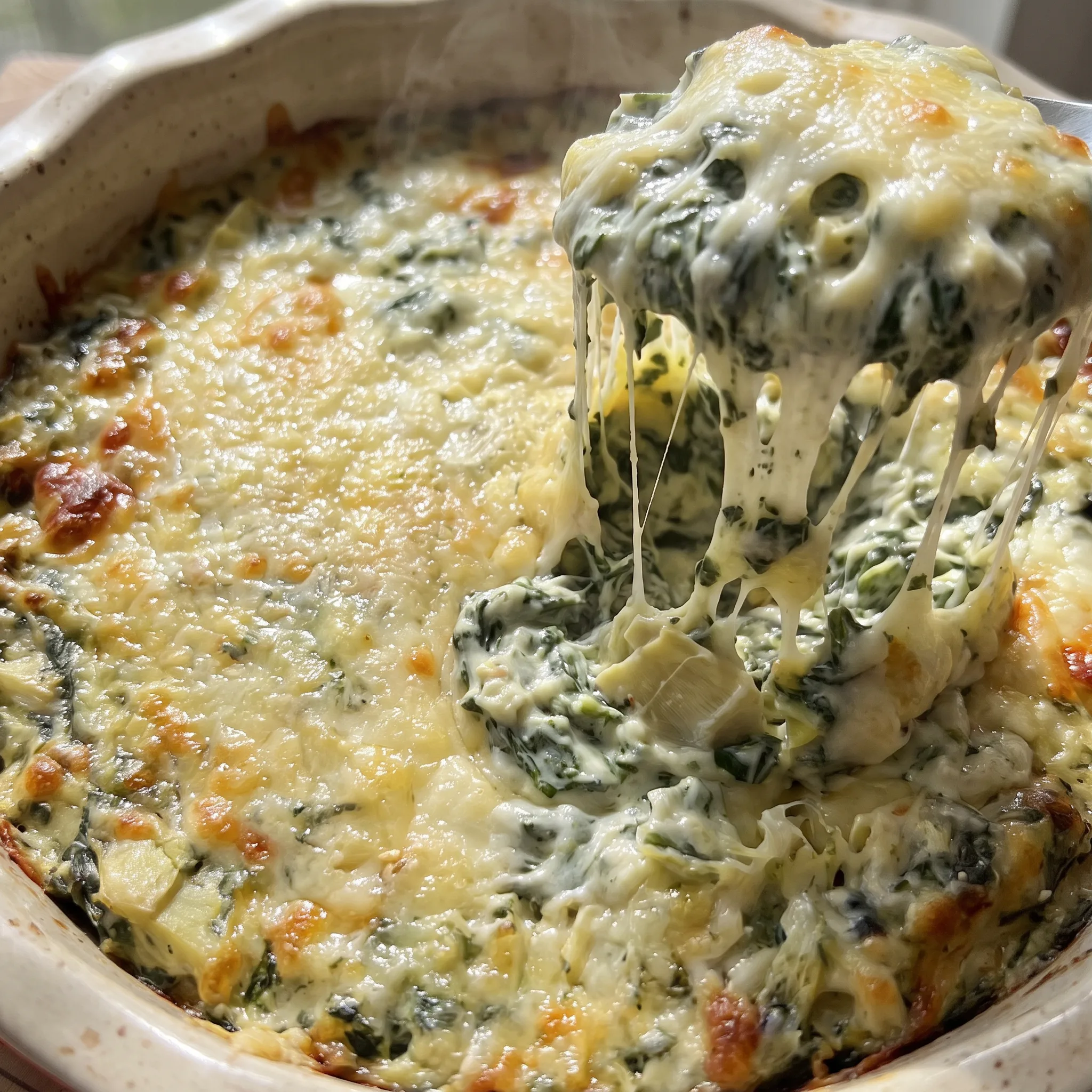
Baked Spinach Artichoke Dip with Gruyère
Ingredients
Method
- Set oven to 375°F (190°C).
- In a large mixing bowl, stir the cream cheese and mayonnaise together until the cream cheese block is broken up.
- Add the spinach, artichokes, garlic, 2 oz (57 g) mozzarella, 2 oz (57 g) Gruyère, 1 oz (28 g) Parmesan, salt, and pepper.
- Mix until completely and evenly combined.
- Transfer the mixture into a 2-quart baking dish or 8-inch skillet and spread it evenly.
- Scatter the remaining cheese on top.
- Bake for 15 minutes. Take out of the oven and serve with tortilla chips.
Storage, Reheating, and the Serving Window
Serve this within 30 minutes of pulling it from the oven. That window is when the top cheese still has its crisp edge and the interior scoops cleanly onto a chip. Past that, the crust softens and the dip stiffens as it cools.
Leftovers keep in the fridge for 3 days in an airtight container. The texture shifts: cold, the cream cheese and mayo set firm, so it won’t scoop the same way.
Reheat gently at 325°F until the center loosens, about 10 minutes, or in short bursts in the microwave. Stir once.
The crust won’t come back, so don’t chase it.
Don’t freeze the assembled dip. The mayonnaise emulsion breaks and the spinach releases water on thaw, leaving a grainy, separated texture. If you need to make it ahead, combine everything through step 4, cover, and refrigerate up to 24 hours, then bake straight from cold, adding a few minutes.
No finishing touch goes on at the end. Everything is baked in.
When You Can Swap the Greens, the Hearts, and the Cheese
Baby spinach: Frozen chopped spinach, thawed and squeezed until no water beads out. Use the same 8 ounces the recipe calls for, by weight.
The dip will taste a touch more iron-rich and less sweet than fresh wilted spinach, but it’s an easy stand-in. Squeeze it hard; frozen spinach carries more water, and if you leave it wet the dip will pool liquid under the cheese and never set.
Jarred artichoke hearts: Frozen artichoke hearts, thawed and squeezed dry, or marinated ones drained and patted dry. Start with the same 8 ounces the recipe uses. Frozen hearts give a cleaner, more vegetal flavor and a slightly softer texture.
Marinated ones bring herbs and oil; if you don’t drain and pat them well, that oil slicks the dip and makes it greasy. Either way, chop them to the same size as the recipe’s.
Gruyère: Don’t. The nutty, savory layer it adds is what keeps the mozzarella from tasting flat. If you can’t find it, use the same amount of shredded Swiss, but expect a milder, less complex dip.
Swapping Gruyère for another melter like fontina or more mozzarella loses the depth that balances the tangy cream cheese. The dip will still melt and stretch, but it’ll taste one-dimensional.
Cream cheese and mayonnaise: No direct substitute. These two set the dip’s structure. For a dairy-free version, use a plant-based cream cheese block and vegan mayonnaise in the same amounts, but test it once before serving to guests.
Plant-based cream cheese often softens more in the oven, so the dip may be looser. Vegan mayo can taste sweeter or more sour depending on the brand.
The texture won’t be identical, but it’s the only way to keep the dip scoopable without dairy.
Tips
- Let the cream cheese sit out until a finger pressed into the block leaves a dent without resistance, about an hour for an 8-ounce block. Cold cream cheese stays in lumps no matter how long you stir, and those lumps survive the 15-minute bake as pockets of plain cheese.
- If you only have a tub of spreadable cream cheese, you can still use it, but drain off any liquid that has separated at the top first and cut the mayonnaise to 3 tablespoons. Tub cream cheese is whipped with extra water and air, so the full 4 tablespoons of mayo pushes the base past the point where it sets up in the oven.

Frequently Asked Questions
Can I make this spinach artichoke dip ahead of time?
You can assemble the whole thing through step 4, cover the dish, and refrigerate it up to 24 hours before baking. The spinach and artichokes will hold fine in the cream cheese base, but don’t press the mixture into the dish; keep it loose so the topping cheese still has texture to grip. When you’re ready, bake it straight from cold and add a few minutes to the time.
Skip the freezer entirely, though. The mayo breaks and the spinach leaks water as it thaws, leaving you with a grainy, separated dip.
Why is my spinach artichoke dip watery?
The spinach is almost always the culprit. If you didn’t squeeze it until no water beads out when you press a handful, that liquid steams out in the oven and pools under the cheese. Same story with the artichokes: drain them well, and if you used the marinated kind, pat them dry so the oil doesn’t slick the dip.
A third check is your mixing bowl. If the cream cheese was still cold and left lumps, those pockets won’t melt evenly and can leave wet spots.
Get the spinach bone-dry, drain the hearts, and let the cream cheese come to room temperature before you stir.
How do I keep the cheese from burning on top?
The usual reason the top scorches is the rack is too high or the dish is too wide, so the cheese is close to the heating element and the middle hasn’t caught up. Move the rack to the center and use a 2-quart dish or an 8-inch skillet; that depth keeps the dip about an inch thick, which bakes evenly.
At 375°F for 15 minutes, you want the cheese fully melted with a few golden patches and bubbles around the edges, not a solid brown lid. If your oven runs hot, check a couple minutes early. The color you’re looking for is patchy gold, not uniform dark.
What should I serve with spinach artichoke dip besides tortilla chips?
Think about what can carry a heavy scoop without collapsing. Pita chips and bagel chips have the structural heft.
Crostini or toasted baguette slices work the same way, and the crust gives a textural contrast to the soft dip. For something cooler and crunchier, endive leaves or thick cucumber rounds hold up and add a fresh snap. Bell pepper strips and celery are fine, but they’re watery, so they’ll dilute each bite.
If you go with raw vegetables, pat them dry first.
How is this baked spinach artichoke dip different from the classic cold version?
The cold version is usually a sour-cream-and-mayo base served chilled, which gives a looser, tangier scoop. This one leans on cream cheese and mayo, bakes at 375°F, and sets into something closer to a spread, with a melted cheese lid on top. The heat changes the texture: the mozzarella and Gruyère turn stringy and the top picks up golden patches, so you get a hot, cohesive dip rather than a cool, creamy one.
It’s a different eating experience, not just a warmed-up version of the same thing.
