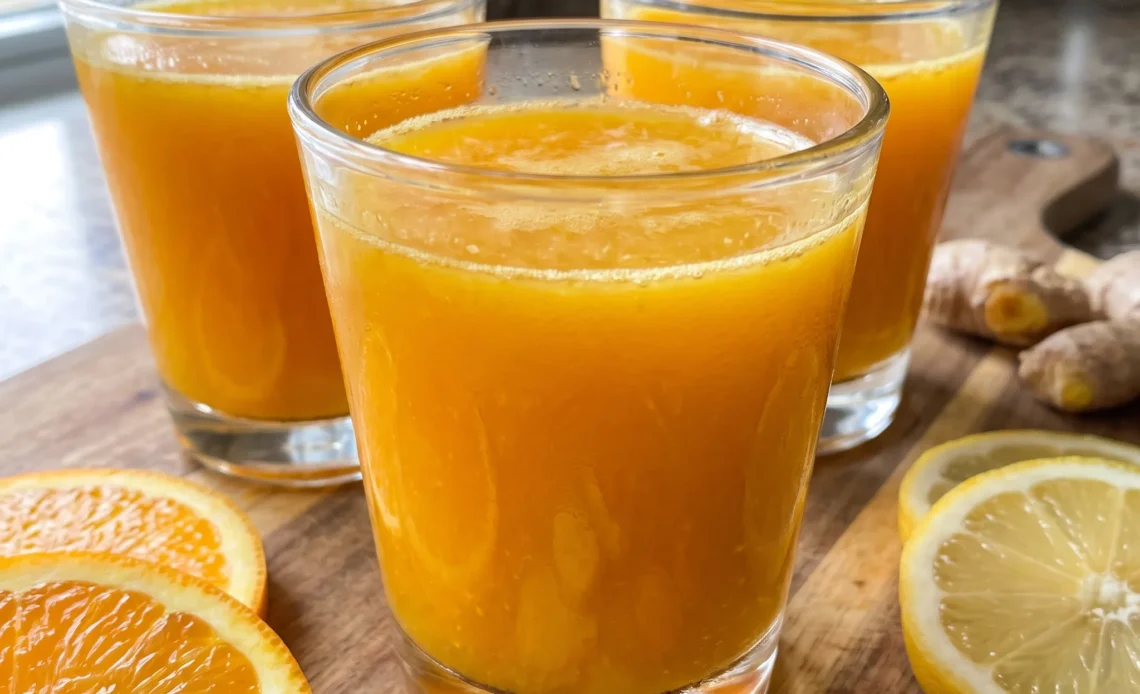
A lemon ginger turmeric shot isn’t a green juice you sip for an hour, and it’s not a cure in a glass. It’s a small, cold, golden hit that lands in three parts: citrus first, ginger rising behind it, turmeric left earthy on the finish. The trick is balance, and balance is where most batches go wrong.
Push too much root into the mix and the burn outruns the sweetness; go light and the turmeric just tastes dusty. Orange and carrot keep it drinkable. Honey, loosened in warm water so it actually dissolves, rounds the sharp edges without hiding them.
You can get there with a juicer, a blender, or nothing but a hand press, and the texture changes with the route. What you’re aiming for is a shot you can knock back without bracing.
Three Ways to Get the Juice Out
Choose your method based on the equipment you own and the texture you want. A juicer spins out clear, pulp-free juice with the highest yield and the least hands-on work.
You feed in the oranges, lemon, carrots, ginger, and turmeric, and what comes out is a bright, thin liquid that needs only a stir. A blender gives you something thicker and more fibrous, since it pulverizes everything together with water.
That means you’ll need to strain it through a nut milk bag, a thin kitchen towel, or a couple of layers of cheesecloth, squeezing hard to get all the juice out. Hand juicing takes a different path: you juice the citrus with a press or reamer, add carrot juice, and then let slices of ginger and turmeric steep in the liquid. The result is lighter and more tea-like than a true extracted juice, with a gentler heat from the spices.
Each route lands you at the same 3 servings of 1/2 cup, but the mouthfeel and intensity vary.
Coaxing Flavor from Ginger and Turmeric
Ginger and turmeric are dense, fibrous roots, and their flavor and color don’t just jump out on their own. Peeling and chopping them into small pieces or thin slices increases the surface area that meets the liquid, so more of that spicy, earthy punch ends up in your glass. In the hand juicing method, you rely on time: the slices sit in the citrus and carrot juice for a couple of hours or overnight, and the liquid gradually takes on their warmth and a golden tint.
There’s no mechanical force, so steeping is what does the work. With a juicer or blender, the machine breaks down the roots immediately, so the flavor hits right away and no waiting is needed.
You’ll notice the difference in the first sip: a sharp, clean heat from the juicer, a fuller, more rustic burn from the blender, and a mellower, slowly built warmth from the steeped version. Each has its place depending on the intensity you’re after.
Why Honey Needs a Little Warm Water
Honey straight from the jar is thick and heavy, and if you dump it into cold juice, it just sinks and clumps at the bottom. Mixing it first with a tablespoon of warm water turns it into a thin syrup that stirs in evenly, so every sip gets the same gentle sweetness. That matters because the citrus is sharp and the turmeric can be bitter; the honey rounds those edges without muting them.
The recipe calls for 1 tablespoon for all 3 servings, but you can adjust to your taste. Start with that amount, mix it in, and take a sip.
If the shot still makes you wince, add a little more. In the blender method, you add the honey after straining the juice and blend for just a few seconds to combine. That keeps the texture smooth and ensures the sweetener is fully dissolved, not just floating on top.
The goal is a balanced shot, not a sugary one.
Fresh Is Best, So Drink It Soon
This recipe makes 3 servings of 1/2 cup each, and each serving is 110 kcal. That’s a small, concentrated shot, not a full glass, so it’s easy to knock back in one go.
Chilling the juice in the fridge before you drink it makes a real difference: cold dulls the sharp edges of the citrus and ginger, and the whole thing goes down smoother. You can drink it right after making, but a stint in the fridge improves the mouthfeel.
Fresh juice doesn’t hold well. The flavors fade and the bright color dulls within a day or two, so it’s best to finish it quickly. If you make a batch, keep it sealed tight and drink within 48 hours.
After that, the taste turns flat and the turmeric can settle out. For the best experience, pour it into small cups and sip it cold, knowing you’re getting the most punch right after it’s made.
What to Look For in the Roots and Fruit
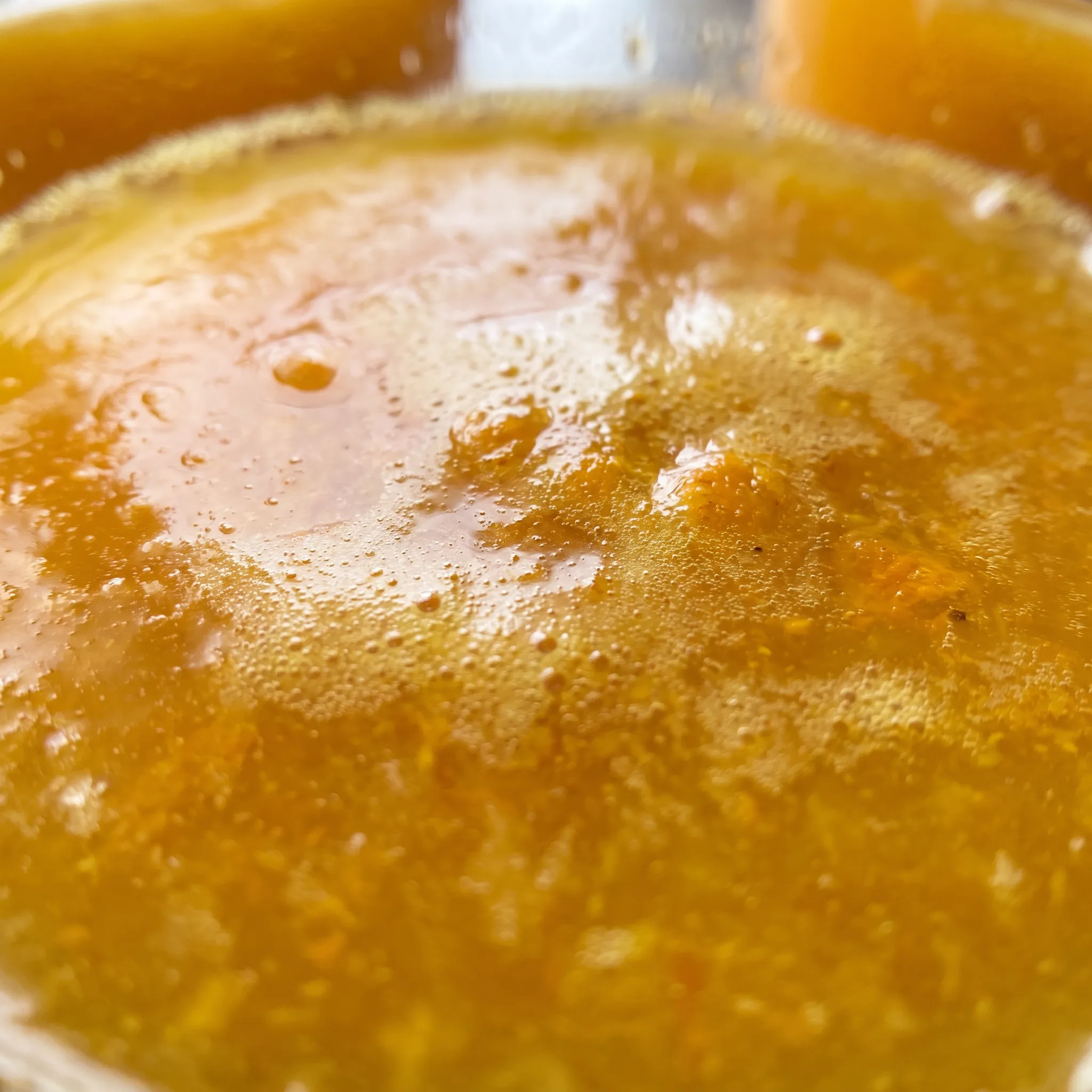
Turmeric: A 2-inch piece should stain your fingers bright yellow-orange when peeled; pale tan inside means weak flavor.
Ginger: The 3-inch piece should snap when broken, not bend; a flexible root is dried out and won’t give the heat.
Oranges and lemon: Heavy for their size means more juice; two oranges and one lemon should feel dense, not spongy or light.
Carrots: Two firm carrots with no soft spots; if they bend, they’re old and the juice will taste flat.
Honey: Manuka or local honey should be thick and opaque, not crystallized; 1 tbsp is enough for three servings.
Judging Your Shot: What to Watch For at Each Stage
Spotting when the citrus yield is worth it
Oranges and lemons give up juice in stages. A hand press gets the first easy pour, then the fruit feels spongy and light.
Keep going until the halves collapse flat and no more drips fall. Stop early and you leave a third of the liquid behind, which throws off the balance with the ginger and turmeric. If the fruit feels rock-hard, roll it on the counter first to soften the cells.
Reading the color of the ginger and turmeric
Peeled turmeric should stain your fingers a bright yellow-orange. If it’s pale tan inside, it’s old and the heat will be weak.
Fresh ginger snaps when you break it; a bendy piece is dried out. Chop both into pieces no bigger than a pea so the juicer or blender doesn’t just spit them out. When the cut surfaces look dull and dry, the flavor is already fading.
Tasting for the line between sweet and sharp
After mixing in the honey water, take a small sip. The first hit is citrus, then the ginger rises, and turmeric leaves an earthy finish.
Too sharp means the honey hasn’t dissolved evenly; stir again. Too flat means the roots were stingy. If it makes you wince, add honey a teaspoon at a time, but stop before the citrus disappears.
The goal is a shot you can drink without bracing.
Judging the squeeze on the pulp
With the blender or hand method, the pulp holds a surprising amount of juice. Squeeze the bag or cloth until it feels like damp sand, not dripping wet.
If you stop when it’s still sloshy, you lose volume and the shot tastes watery from the added water. But squeeze too hard and you push through fine fibers that make it cloudy and gritty. Stop when the pulp clumps and no more liquid runs.
Knowing when the steep has gone far enough
For the hand juicing method, the ginger and turmeric slices sit in the liquid. After a couple of hours, taste a spoonful. The heat should be present but not burning.
Overnight makes it much stronger and more medicinal. If you’ve overshot, you can dilute with a little more carrot juice.
If it’s still flat after a few hours, the slices were too thick or old. The color should be a clear golden orange.
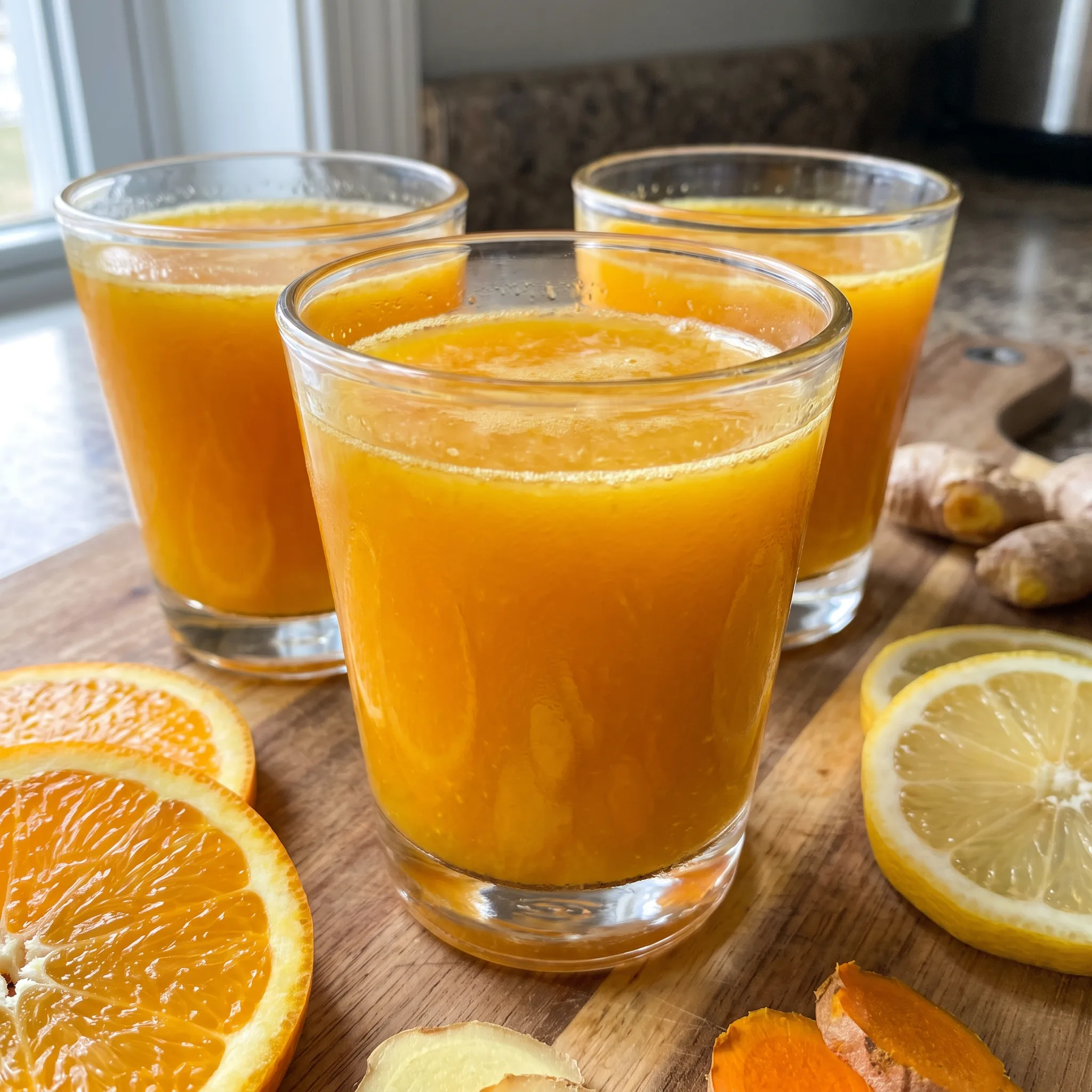
Lemon Ginger Turmeric Immunity Shot
Ingredients
Method
- If using a juicer: Carefully cut skins away from lemon and orange. Chop carrots into large chunks. Chop ginger and turmeric into small pieces.
- If using a juicer: Using a juicer add oranges, lemon, carrots, ginger and turmeric.
- If using a juicer: Mix together honey and warm water and pour into juice to sweeten, mix well. Chill juice in fridge.
- If using a juicer: When ready to drink, divide juice between small cups (1/2 cup per serving). Sip and enjoy.
- If using a blender: Peel and then slice the oranges and lemon in half crosswise and scoop out any seeds. In the high-speed blender, combine the oranges, lemon, carrots, ginger, and turmeric.
- If using a blender: Add 3/4 to 1 cup of water (or as much as needed) and blend on medium-high speed until pulverized. Use a tamper if needed if things get stuck while blending. If you do not have a tamper, occasionally stop the blender and stir with a wooden spoon to help the blending process.
- If using a blender: Place an open nut milk bag over a medium bowl. Pour the blended juice into the bag and squeeze to strain all the juice into the bowl. (Alternatively, you can use a thin kitchen towel or a couple of layers of cheesecloth to strain the juice.)
- If using a blender: Return the strained juice to the blender. Add the honey and blend for a few seconds to combine. Taste, and add more honey if you prefer it sweeter. Transfer the juice to a glass bottle or jar and place the lid on tightly.
- If juicing by hand: Juice lemon and orange with a hand juicer and pour into a medium/large jar. Add 1/4 cup (60 ml) carrot juice.
- If juicing by hand: Mix together honey and warm water, and pour into juice to sweeten. Mix well.
- If juicing by hand: Peel and chop ginger and turmeric into thin slices. Add to juice and let steep for a couple hours, or overnight depending on how strong you like the spiced flavors. Keep juice chilled in fridge, sealed tightly.
- If juicing by hand: When ready to drink, divide juice between small cups (1/2 cup per serving). Use a small strainer to catch any slices when pouring. Sip and enjoy.
Swapping the Roots, Citrus, and Sweetener: Where You Can Bend and Where You Break the Shot
Carrots (or 1/4 cup (60 ml) 100% carrot juice): Use 1/4 cup (60 ml) 100% carrot juice instead of 2 fresh carrots. In the juicer and hand juicing methods, skip the carrots and add the juice when you combine the citrus. For the blender method, the carrots are blended with everything, so if you only have juice, omit the carrots and reduce the added water by half, since the juice brings its own liquid.
Fresh carrots give a subtle sweetness and body. Bottled juice is often more concentrated and can taste cooked or flat. The shot will be slightly thinner and less fresh-tasting, but still sweet.
If you’re using the blender, cutting the water keeps the consistency from turning too watery.
Manuka honey (or local honey, or agave for vegans): Use local honey or agave nectar in the same 1 tbsp amount. For a vegan shot, agave works without any other changes. If you prefer a different liquid sweetener like maple syrup, start with 1 tbsp and adjust after tasting.
Manuka has a distinct, slightly medicinal flavor, but local honey is often milder and more floral. Agave is neutral and a touch sweeter, so you might need a little less.
The honey water step still applies: mix with 1 tbsp warm water before adding to cold juice, regardless of which sweetener you choose.
Oranges and lemon: You can swap the citrus for other juicy fruits, but keep the total volume similar. For example, use 2 grapefruits instead of the oranges and lemon, or 3 tangerines plus 1 lime. If you change the citrus, taste before adding all the honey, since sweetness varies.
Oranges and lemon give a bright, tart base that balances the ginger and turmeric. Grapefruit adds bitterness that can clash with turmeric.
Tangerines are sweeter and less acidic; lime is more sour. The color and flavor will shift, but the shot still works as long as you adjust the sweetener.
Ginger and turmeric: There’s no good substitute for fresh turmeric; dried ground turmeric won’t dissolve and will taste powdery. For ginger, you can use 1 teaspoon of ground ginger in the hand juicing method, but not in the juicer or blender, where it will just settle. If you must, add ground ginger to the steeped liquid and strain well.
Fresh roots provide the clean heat and earthy punch. Ground spices taste dusty and won’t blend smoothly, leaving a gritty texture. The shot will lack the same brightness and may be dull.
If you’re out of fresh turmeric, it’s better to make the shot without it than to use powder.
Tips
- The 1 tablespoon of honey is calibrated for the full batch of 3 servings, so if you taste the juice before chilling and the turmeric reads bitter or the ginger burns, add honey a half teaspoon at a time rather than sweetening individual cups later. Cold mutes both the sweetener and the spice, so a shot that tastes balanced at room temperature will seem flat once chilled, and one that tastes sharp now will only get sharper.
- If you used the blender method, the 3/4 to 1 cup of water dilutes the roots along with everything else, so that version usually needs the full tablespoon of honey or a touch more, while the juicer method concentrates the ginger and turmeric without added water and may need less. Taste each batch on its own rather than assuming the same amount works across all three methods.
Storing, Chilling, and When to Drink Your Shots
This juice is a fresh, unpasteurized liquid, so its keeping time is short. Pour it into a glass bottle or jar, seal it tightly, and refrigerate.
Drink it within 48 hours. The reason is simple: citrus and ginger oils are volatile, and once they’re exposed to air they fade, while the turmeric solids settle into a pale layer at the bottom.
You’ll see the color shift from bright gold to a duller amber, and the smell flattens before the taste does. Shake or stir before each pour to redistribute the settling. Cold dulls the sharpness of the citrus and the heat of the roots, so refrigerate for at least an hour before drinking, and sip it cold.
If you made the hand-steeped version, strain out the ginger and turmeric slices before storing so they don’t keep intensifying. Freezing isn’t worth it here. Ice crystals rupture the cell walls of the citrus, so a thawed shot tastes watery and loses the fresh bite.
Make it in small batches and finish it fast. Serve 1/2 cup per person, and stir the bottle right before you pour.
In the hand juicing method, the ginger and turmeric are not mechanically pulverized; they are only sliced and steeped. Slicing increases surface area but leaves the fibrous cell walls largely intact, so the spicy, earthy compounds diffuse out slowly and unevenly. The recipe’s instruction to steep for a couple hours or overnight is what allows enough time for that diffusion to reach a balanced intensity, rather than producing a weak, raw-tasting liquid.
Frequently Asked Questions
Can I make this immunity shot ahead of time and store it in the fridge?
You can, and chilling it an hour or more before drinking smooths out the sharp citrus and ginger heat. Keep it in a tightly sealed glass bottle or jar, and plan to finish the batch within 48 hours, since the bright color and aroma fade fast.
The hand-steeped version is the one to think about here: strain out the ginger and turmeric slices before you store it, or they keep steeping and the heat climbs past where you wanted it. If you’re pouring from a bottle that’s sat, stir it first so the turmeric that settled at the bottom goes back into the liquid.
How long does the juice stay fresh and potent?
Two days is the honest window; past 48 hours the taste goes flat and the gold turns a duller amber. The smell fades before the flavor does, so trust your nose as the early warning.
A batch of 3 servings at 1/2 cup each is small enough that finishing it inside that window isn’t hard if you drink one a day. If you know you won’t get through it, make a half batch instead of doubling and watching half of it die in the fridge.
Why does my juice separate or look layered after sitting?
Turmeric is the culprit: its fine solids drop out of suspension and settle as a pale band at the bottom while the clearer citrus liquid sits on top. That’s normal, not spoilage, and it happens fastest in the juicer version because the liquid is thin and nothing holds the particles up.
Give the bottle a good shake or stir before you pour and it comes back together. If you blended and strained, the layer shows up sooner because more fine pulp made it through the bag.
What does a traditional immunity shot taste like compared to this recipe?
Most traditional shots are lemon, ginger, and a pinch of cayenne, nothing else, and they hit like a slap: sour, hot, and thin. This one is rounder.
The oranges and carrots bring sweetness and body, the turmeric adds an earthy, slightly bitter finish, and the tablespoon of honey softens the edges across all 3 servings. You still get the ginger heat, but it arrives after the citrus instead of leading.
If you’re used to the old-school version, expect this one to go down easier and taste less like medicine.
