
Getting six people fed at breakfast usually means standing at the stove while the first plate goes cold. That’s the problem a breakfast burrito bar solves, and the reason it works is timing: the tortilla only meets the hot fillings when someone’s ready to eat, so it never sits there steaming itself limp. What you’ll notice first is the noise level.
Six people reaching, arguing about jalapeños, building plates that look nothing alike. Your job is mostly done by then.
The eggs are the hard part, and they’re harder than they look: they need to come off the heat while they still look underdone, or they’ll tighten up in the bowl before the first person even gets a tortilla. Everything else is bowls and warm tortillas.
The bar buys you something a plated breakfast can’t, which is a seat at your own table.
The most common mistake with a breakfast burrito bar is assembling every burrito in advance and stacking them, which seals hot fillings inside the tortilla and turns the steam into a soggy layer. The recipe’s structure avoids this by keeping the eggs, beans, and toppings in separate bowls and warming tortillas only at the moment of assembly. When each person builds their own burrito and eats it immediately, the tortilla stays dry and the fillings stay hot.
Why set up a burrito bar for breakfast?
Everyone builds their own, so the tortilla only meets the fillings when they’re ready to eat it. That’s the whole game. A burrito assembled 10 minutes early turns limp and cool; the steam from hot eggs and beans soaks straight through the flour.
At the table, each person piles on salsa, avocado, and jalapeños to their own heat level. One kid skips the hot sauce, another doubles it. No one’s negotiating.
You’ve done the cooking already: eggs off the heat, beans warm, toppings in bowls. For six people, that means no last-minute scramble at the stove while the first burrito goes cold.
The bar holds everything at eating temperature because the warm tortillas stay wrapped until the first hand reaches for one. You sit down with them. That’s the difference between a breakfast burrito and a breakfast burrito that’s been waiting.
What does cottage cheese do in scrambled eggs?
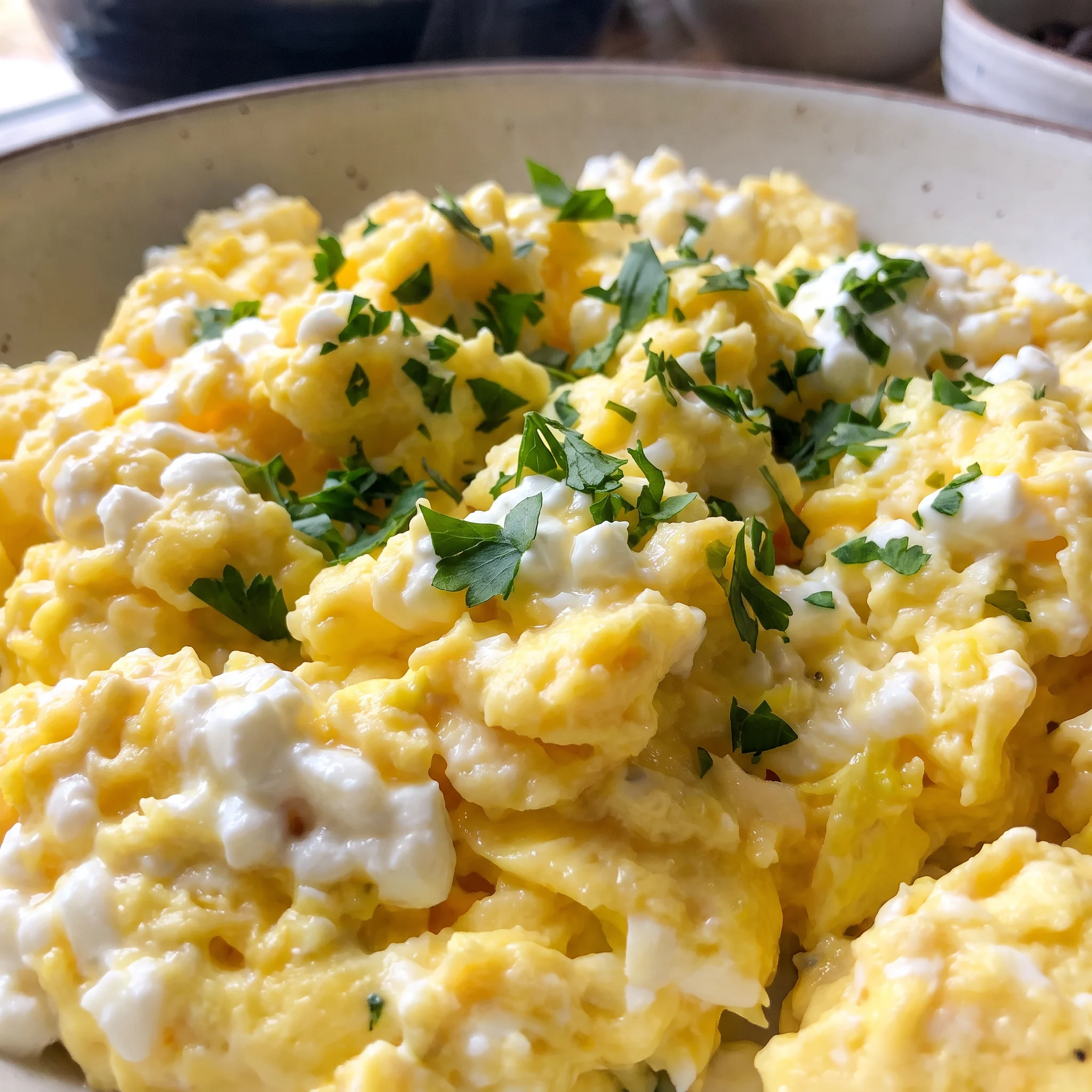
Cottage cheese is texture insurance, not a flavor trick. Whisk it into the raw eggs and the curds break apart into tiny flecks that disappear into the mix. What they leave behind is moisture that survives the pan.
Eggs cooked plain can tighten and weep if they sit for even a few minutes; the cottage cheese gives them enough body to stay soft and spoonable while the burrito bar runs its course. You won’t taste cheese, just eggs that hold together without turning rubbery.
The curds themselves vanish, so there’s no lumpy surprise in the middle of a bite. If you’re feeding a crowd and the eggs need to wait in a bowl while people build, this is the reason they still look wet and glossy instead of dry. A quarter cup for six eggs, whisked hard enough to froth, does the job.
The beans are the anchor
Canned black beans, rinsed and warmed with cumin and chili powder, turn into something that behaves like a filling instead of a side. The spices bloom against the bean’s starch, giving each spoonful a savory edge that cuts the richness of eggs and cheese.
Slightly mashed beans, or whole ones with enough body, hold the burrito together: they fill the gaps between scrambled eggs and shredded cheese so the whole thing doesn’t collapse when you pick it up. You want a texture that’s soft but not soupy, so it stays put inside the tortilla. A good sign is when the beans look glossy and smell warm and earthy, not like the can.
They also season every bite they touch, so you don’t need much else for salt. That’s why they go in before the salsa and avocado. They’re the base that everything else lands on.
How do you keep a burrito from getting soggy?
Wet toppings stay in their own bowls until the last second. Salsa and diced tomatoes release water the moment they touch a warm tortilla, and that water is what turns a burrito into a leaky wrap. So the cheese goes on first, right against the eggs, where it melts into a barrier.
Then beans, then eggs, then avocado and cilantro, and finally salsa, spooned on just before the fold. That order isn’t fussy; it’s moisture management.
The cheese gives you a layer that keeps the tortilla dry long enough to eat, and the salsa hits your tongue instead of soaking the flour. Cilantro and avocado add a cool, green contrast that cuts through the eggs and cheese, so each bite tastes fresh rather than heavy.
When you set out the bar, keep the wet stuff at the far end, and let people add it last. The tortilla stays soft and pliable to the final bite.
What to look for before the bar opens
Cottage cheese: Small-curd, not large-curd, breaks down smooth when whisked and won’t leave lumps in the eggs.
Black beans: Rinse them well; the canning liquid is salty and starchy and dulls the cumin.
Flour tortillas: The 10-inch size gives enough room to roll a full burrito without splitting.
Salsa fresca: Spoon from the top of the jar, since the watery bottom is what soaks a tortilla.
Avocado: Ripe enough to yield to a gentle press, otherwise it slices firm and tastes flat.
Judging the eggs, beans, and tortillas while the bar comes together
When the eggs are set but still wet
They should look glossy and slightly underdone when you pull the pan off the heat. The curds will be soft, not tight, and a little loose liquid is fine because they keep cooking from their own heat. If you wait until they look fully done in the pan, they’ll turn rubbery by the time they hit the tortilla.
Stir constantly over medium-low, and pull them while they still mound on the spatula instead of sliding off in a solid sheet.
Reading the beans for moisture and mash
After about 5 minutes, the beans should smell warm and earthy, not like the can. They should look glossy but not soupy.
If they’re wet, mash a few against the pan to thicken the mix; if they’re dry, add a splash of water. You want them soft enough to spread but thick enough to stay put. Taste one: it should be seasoned through, not just salty on the outside.
If the cumin and chili powder taste raw, give them another minute.
Tortillas: warm enough to fold without cracking
A cold flour tortilla cracks when you fold it, and a overheated one turns stiff and brittle. After 30 to 45 seconds in the microwave wrapped in a damp paper towel, they should be steamy, pliable, and slightly puffed.
If you’re warming in a dry skillet, 20 seconds per side leaves them soft with a few warm spots. Stack them in a clean towel so they stay that way. If one tears at the fold, it wasn’t warm enough.
Building order: keeping the tortilla dry to the last bite
Watch where the wet toppings go. Salsa and tomatoes release water on contact, so they belong on top, after the cheese and beans have made a barrier. If you see liquid pooling on the tortilla before you fold, you’ve added salsa too early or too much.
Scoop with a slotted spoon if yours is runny. The goal is a tortilla that stays soft and intact, not one that leaks through the bottom.
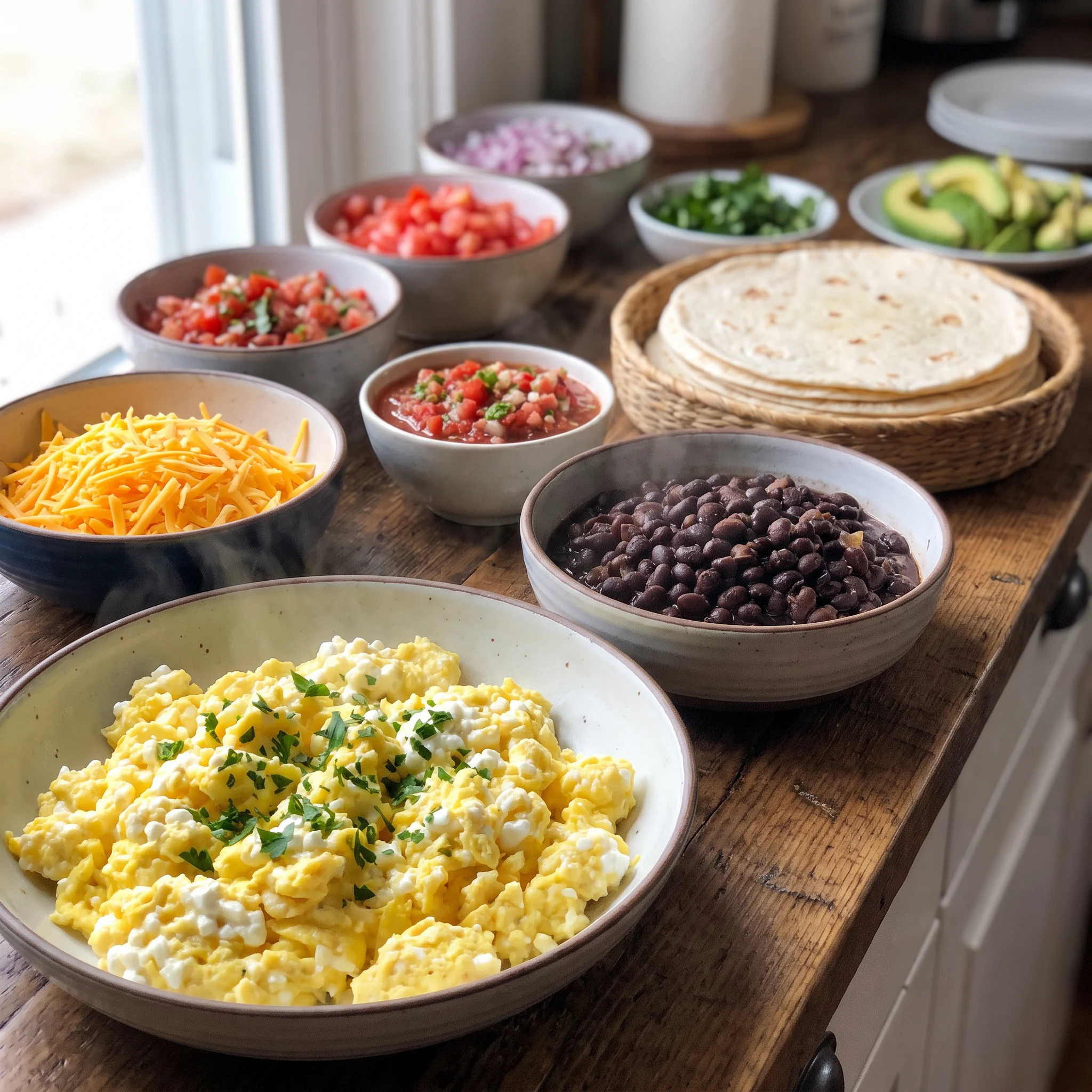
Breakfast Burrito Bar with Scrambled Eggs
Ingredients
Method
- Rinse and drain the black beans. Dice the tomatoes, chop the onions and cilantro, and slice or mash the avocado. Set all toppings out in separate bowls to create a burrito bar.
- In a small skillet over medium heat, combine the rinsed black beans with cumin, chili powder, and a pinch of salt. Stir occasionally until heated through and fragrant, about 5 minutes. Keep warm.
- Crack the eggs into a bowl. Add the cottage cheese, milk, salt, and pepper. Whisk vigorously until the mixture is smooth and slightly frothy.
- Heat the butter in a non-stick skillet over medium-low heat. Pour in the egg mixture. Stir gently and continuously with a spatula, scraping the bottom of the pan to prevent sticking. Cook until the eggs are just set but still moist. Remove from heat.
- Wrap the tortillas in a damp paper towel and microwave for 30–45 seconds, or warm individually in a dry skillet for 20 seconds per side until soft and pliable.
- Lay out the warm tortillas and bowls of eggs, beans, cheese, salsa, veggies, avocado, and any extras. Let everyone build their own burrito with their favorite combinations.
- Serve immediately with optional hot sauce or jalapeños on the side.
Swap the milk, fat, and tortilla, but leave the cumin, chili powder, and cottage cheese alone
Milk: Use the same 2 tablespoons of unsweetened dairy-free milk, such as oat, soy, or almond. Skip sweetened or vanilla versions.
The eggs will taste clean and set the same way. Sweetened milk leaves a faint sugary note that fights the salsa and cumin.
Butter: Use 1 tablespoon of neutral oil or olive oil in the skillet. Oil doesn’t brown or foam the way butter does, so you lose that nutty edge.
The eggs still cook soft, but they won’t pick up any butter flavor. Keep the heat at medium-low; oil gets hotter faster and can set the eggs too quickly.
Flour tortillas: Use 6 corn tortillas (6-inch) instead. Warm them the same way: wrapped in a damp paper towel for 30 to 45 seconds, or 20 seconds per side in a dry skillet.
Corn tortillas are smaller and tear more easily when you overfill them. You’ll need to use less filling per burrito, so plan on people making two smaller ones. The flavor turns corny and a little earthy, which pairs well with the beans but changes the whole bite.
They also cool faster, so keep them wrapped until the last second.
Cottage cheese: Leave the amount at 1/4 cup. If you skip it, add an extra tablespoon of milk or dairy-free milk. Without the cottage cheese, the eggs lose their moisture insurance and can turn rubbery if they sit.
The extra milk helps a little, but the texture won’t hold as long on the bar. If you’re avoiding dairy, use a dairy-free milk and accept that the eggs will be softer and weep a bit sooner.
What to do with leftover burrito bar fillings
Eat assembled burritos within about 20 minutes of building one. The tortilla starts losing its pliability after that, and the eggs and beans cool fastest at the surface where they meet it. Leftovers hold in separate containers, not wrapped together.
Eggs and beans go in one airtight container in the fridge for up to 3 days; cool them within an hour of cooking so they don’t sit warm. Toppings stay cold and separate: salsa, tomatoes, onion, cilantro, and avocado each in their own container.
Avocado browns within a day, so eat it first or press plastic wrap directly onto the surface. Reheat eggs and beans gently in a skillet over low heat with a splash of water, just until warm, never hard.
The microwave makes eggs rubbery. Warm a fresh tortilla to serve. Assembled burritos don’t freeze; the tortilla goes leathery and the eggs weep when thawed.
Freeze only the beans, up to 2 months, and reheat them from frozen in a covered pan.
Tips
- Taste the salsa before it goes into the bowls and adjust the eggs and beans accordingly. A salty jarred salsa means you can hold back on the salt in the eggs and beans; a mild one means you may want a pinch more cumin in the beans so the burrito doesn’t taste flat against the salsa’s heat.
- If you’re using jarred salsa, spoon off the watery liquid that collects on top and stir the solids back in before setting it out. That liquid is what pools on the tortilla first, and removing it keeps the salsa thick enough to sit on top of the cheese instead of running down the sides.
Frequently Asked Questions
Can I make the eggs and beans ahead of time for a breakfast burrito bar?
Yes, but keep them in separate containers and reheat gently. The eggs need a splash of water in a skillet over low heat, just until warm; the microwave turns them rubbery.
The beans can be made ahead and refrigerated, then warmed in a covered pan with a little water if they look dry. Don’t assemble the burritos ahead; the tortilla goes limp fast once it meets the hot fillings.
Why did my breakfast burritos get soggy?
Salsa or diced tomatoes probably went on too early, or too much liquid was left in the beans. The fix is to put cheese against the eggs first, then beans, then eggs, and save the wet toppings for the very top, spooned on just before folding.
If your salsa is watery, use a slotted spoon and take from the top of the jar. Also check the beans: they should look glossy, not soupy, so mash a few against the pan if they’re wet.
How is a breakfast burrito bar different from a regular breakfast burrito?
A regular burrito is assembled in the kitchen and handed to you; a bar lets each person build their own at the table, so the tortilla only meets the fillings when they’re ready to eat. That means the tortilla stays soft instead of steaming itself limp while it waits.
It also puts the heat level in each person’s hands: one can load up on jalapeños, another can skip them entirely. The trade-off is that you’re not rolling six burritos yourself, so everyone gets exactly what they want.
