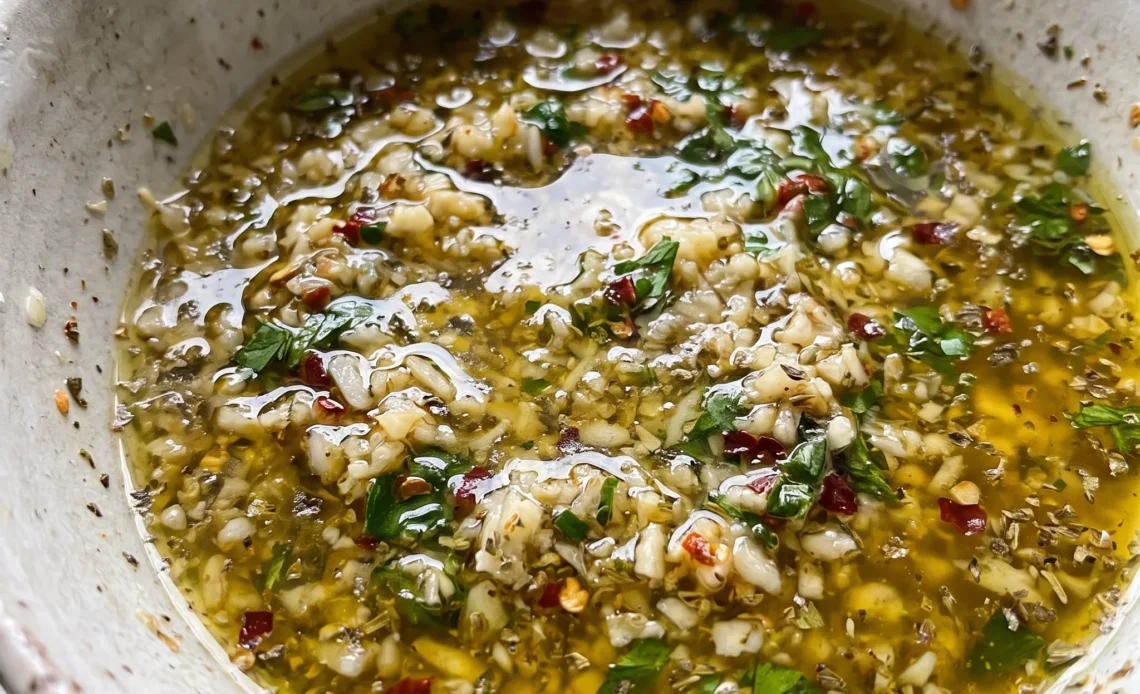
Cold oil, raw garlic, and a block of Parmesan: get the mincing wrong and one unlucky piece of bread carries a clove’s worth of heat while the rest tastes flat. The bowl looks done the second you stir it, which is the trap.
Oregano sits on the surface, the cheese hangs at the bottom, and the garlic hasn’t yet softened into the oil. Smell it again after it’s rested and the raw edge is gone. A good garlic parmesan olive oil dip lives or dies on how finely that garlic is cut and how fresh the cheese is, and both show up under a spoon.
Set it in the middle of the table with torn focaccia and watch how fast the bowl empties.
Garlic Cut Fine, Not Rough
A chunk of garlic in a cold dip never softens. You bite into it, and the heat hits like a raw clove.
When you mince garlic as finely as possible, those little bits spread through the oil instead of clustering in one spot. You get a steady garlic hum across the whole bowl, not a surprise punch.
Coarse pieces also taste sharp and bitter when they sit raw in oil. There is nowhere for that harshness to go, since nothing cooks it out. Fine mincing fixes that by making the garlic almost disappear into the mix.
You still know it is there, but it works with the cheese and spices rather than against them. The difference shows up on the first piece of bread.
If your garlic is uneven, some scoops taste flat while others bite back.
Grate Cheese Fresh, Then Pour Oil
Pre-grated Parmesan from a shaker is dry and sandy. It never softens in oil, so every bite feels like grit.
When you grate a block of Parmesan straight into the bowl, those fresh shreds are soft and moist. They melt against your tongue instead of sitting there like sand. The order matters too.
Garlic, pepper flakes, and oregano go in first. Then the cheese lands on top, and the olive oil goes last, drizzling over everything. That layering lets the oil carry the spices as you stir.
The oil is not just a liquid base. It suspends the solids so each dip of bread gets a little of everything.
Skip the fresh grating and you lose that softness. The dip turns into oily cheese dust rather than something spreadable and rich.
Five Minutes, but Flavor Needs Time
This dip comes together in five minutes because nothing hits a flame. You stir and serve. That speed is the whole point when you need something on the table fast.
But here is the trade-off. Those flavors need a little time to wake up and find each other. Right after mixing, the garlic is still sharp and the oregano sits on top.
Give it ten or fifteen minutes on the counter, and the oil pulls the garlic and herbs into itself. The cheese softens.
The pepper flakes bleed their heat through the bowl. You can serve it immediately and it will taste good. Wait a bit longer and it tastes fuller.
For a last-minute appetizer, the quick version works. If you have a few extra minutes, let it sit while you slice the bread.
Pepper Flakes, Oregano, and Black Pepper
Olive oil and Parmesan alone would be heavy and flat. The red pepper flakes cut through that richness with a slow warmth. They do not scream.
They just keep each bite from feeling like straight fat. Dried oregano brings an earthy, minty edge that fresh oregano cannot match here.
Fresh leaves would just wilt and clump in the oil, tasting like nothing. The dried version releases its flavor as it sits. Black pepper and salt come last, and they are the adjusters.
Taste the dip before you add them. The Parmesan is salty already, so you might need less salt than you think. A crack of black pepper adds a little bite that keeps the whole thing from tasting one-note.
Without these spices, you would just be dipping bread in oily cheese.
Garlic Bread in a Bowl
Think about garlic bread. You have garlic, butter or oil, Parmesan, and oregano, all soaked into bread. This dip takes those same flavors and puts them in a shared bowl.
That is why focaccia works so well here. Its dimpled top and sturdy crumb hold onto the oil without falling apart.
The salt on the crust plays against the Parmesan. A soft white bread would just soak up the oil and turn gummy. Focaccia keeps its chew.
The Italian-American appetizer tradition of dipping bread in seasoned oil is exactly what this is. You tear off a piece, drag it through the bowl, and get garlic, cheese, and herbs in every bite. It is the same pleasure as garlic bread, but you control how much you get.
Set the bowl in the middle of the table and let everyone go at it.
What Matters in This Bowl
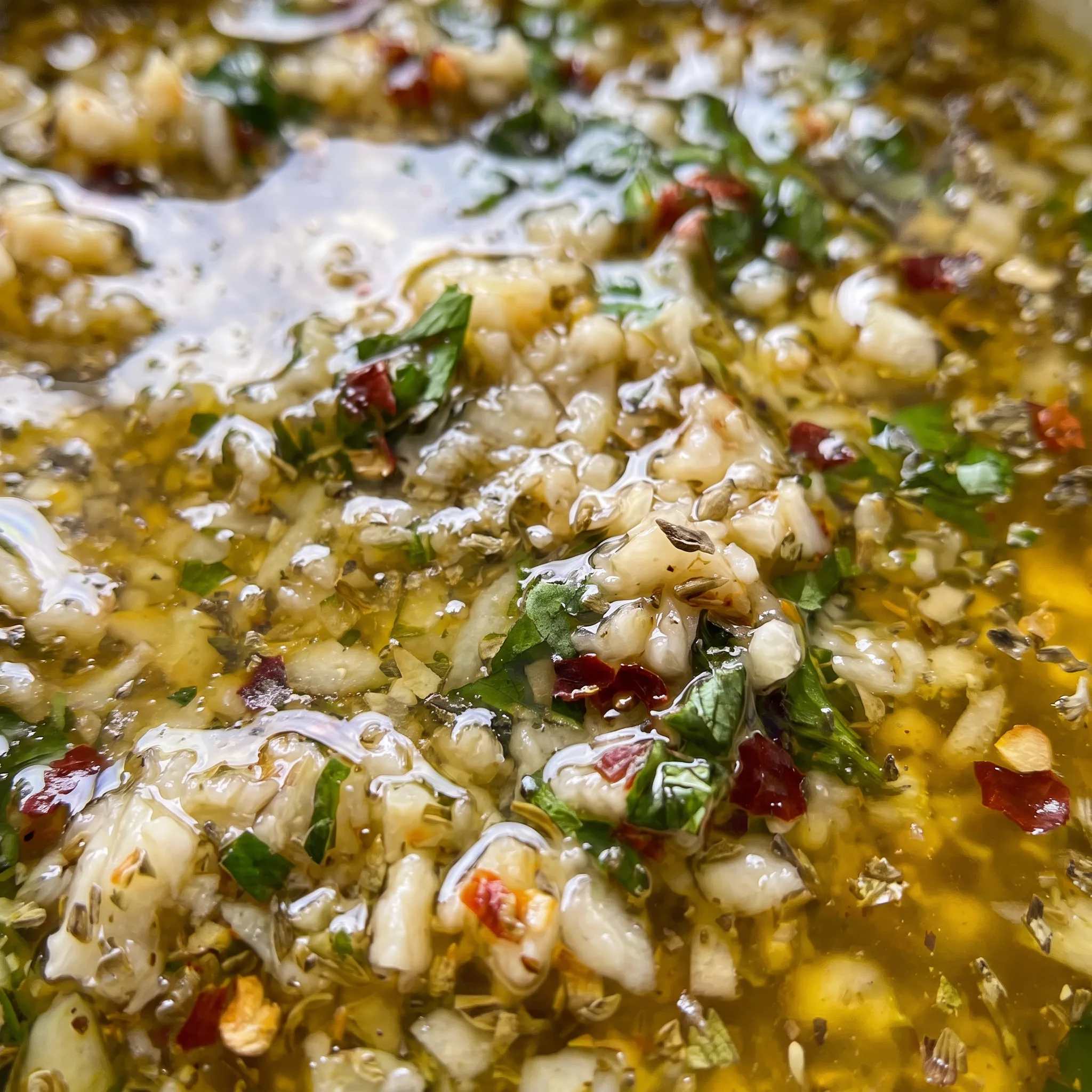
Garlic: Two cloves give a stronger bite than one, so pick your count before the oil goes in and the raw heat settles.
Parmesan cheese: A block you grate yourself at ¼ cup beats the shaker kind, which stays dry and sandy no matter how long it sits in oil.
Extra virgin olive oil: Use the good peppery bottle here, since ¼ cup of oil is the whole body of the dip and cheap oil tastes flat.
Dried oregano: The dried ½ teaspoon releases its earthy edge into the oil, while fresh leaves just clump and taste like nothing.
Red pepper flakes: A ¼ teaspoon is a slow background warmth, so taste before adding more if you want real heat.
In a no-cook mixture, garlic flavor is extracted by the oil rather than tamed by heat, so the size of the garlic particles controls how fast and how evenly that extraction happens. Two documented ways to handle this are to mince the garlic as finely as possible or to leave it in larger pieces: fine mincing creates many small particles with a huge total surface area, so the allicin disperses through the oil quickly and evenly, while larger pieces expose less surface area and stay as sharp, raw pockets. This recipe uses the fine-mince route because the dip is assembled and served within minutes, leaving no time for large pieces to mellow.
Reading the Bowl, Not the Clock
When the garlic is fine enough
Look at the pile before the oil goes in. You want grains, not slivers. Pinch a bit to the touch; if you feel distinct shards, keep chopping.
Those shards stay sharp in cold oil and land in one bite. When the garlic reads as a moist paste with no visible edges, it will spread through the bowl instead of ambushing a single piece of bread.
How the cheese sits once the oil hits
Fresh grating gives shreds that soften and almost dissolve as you stir. Watch the bowl after the drizzle. If the Parmesan stays separate and sandy at the bottom, it was pre-grated or too dry, and the dip will feel gritty on the tongue.
Fine shreds from a block disappear into the oil within a minute or two of mixing.
Tasting before you salt
Parmesan carries a lot of salt, and it varies by brand and age. Dip a piece of bread and taste before the shaker comes out.
If the first bite already tastes seasoned, stop. Oversalted dip cannot be walked back; you would have to add more oil and cheese, which throws off the garlic balance you just built. Pepper is safer to add freely.
The fifteen-minute rest, judged by smell
Straight from the bowl, the oregano sits on top and the garlic reads sharp. Let it sit on the counter and smell it again after ten or fifteen minutes. The raw edge fades and the oil smells rounder, more like the whole mix rather than its parts.
Serve it early if you must, but the bowl tells you when it has settled.
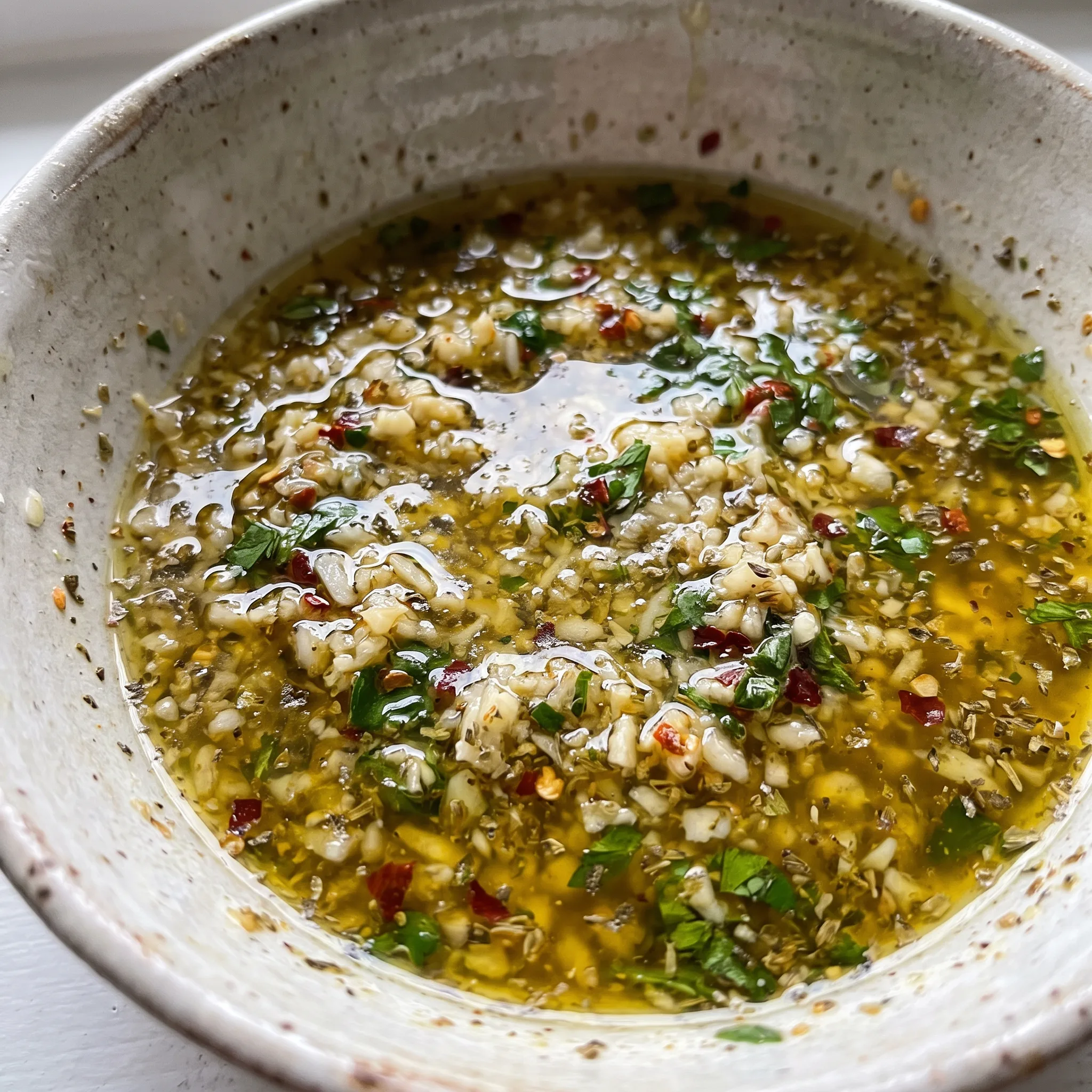
Garlic Parmesan Olive Oil Dip with Red Pepper Flakes
Ingredients
Method
- Place the minced garlic, red pepper flakes, and oregano into a medium shallow bowl or plate. Grate the Parmesan straight into the bowl, then drizzle the olive oil on top.
- Using a spoon, mix all ingredients together and season with salt and pepper as desired. If you like, scatter a little fresh chopped parsley (or basil) over the top.
- Offer with pieces of bread for dipping. Serves 4.
Storing the Dip and Timing the Last Drizzle
Eat this within the first hour for the best texture. That is when the garlic is still mellow, the Parmesan shreds are soft, and the oil sits clear.
Past an hour on the counter, the garlic sharpens and the cheese settles toward the bottom. Leftovers keep in the fridge for a day or two, no longer.
The garlic gets hotter and more raw-tasting each day, and the oil thickens and clouds once it is cold. Store it in a small jar or bowl with a lid, pressed down so the solids stay under the oil. Before serving a chilled portion, stir it well and add a fresh drizzle of olive oil, since the cold oil tightens and the mix looks dry.
Taste it, because the garlic has grown stronger and you may want less on each piece of bread. The parsley goes on right before serving, never earlier. It wilts and darkens in the fridge, and its clean bite is what cuts the rich oil.
Do not freeze this. The oil separates and the cheese turns grainy, and there is no bringing it back.
Swap the Cheese and Oil, Leave the Garlic Alone
Parmesan cheese: Pecorino Romano, grated fresh. Pecorino is saltier and sharper, so the dip snaps to attention. Use the same ¼ cup, but hold back on added salt until you taste it.
The cheese also grates into finer, drier shreds that don’t soften as much in the oil, leaving a slight chew.
Parmesan cheese: A block of Parmesan you grate yourself versus the pre-grated shaker kind. Pre-grated cheese stays sandy and never melts into the oil, so every bite feels like grit. Fresh shreds from a block go soft and almost disappear.
If you only have the shaker, the dip will still taste cheesy, but the texture turns dry and dusty.
Extra virgin olive oil: A mild or light olive oil. Mild oil flattens the dip.
The pepperiness of a good extra virgin is what cuts through the Parmesan and makes each bite wake up. If you swap in a neutral oil, you’ll need to add more red pepper flakes or a squeeze of lemon to bring back the edge. Start with the same ¼ cup and adjust after tasting.
Dried oregano: Dried marjoram. Marjoram is softer and sweeter, so the dip tastes rounder, less earthy. Use the same ½ teaspoon.
If you rub either between your palms before adding, the dried leaves release more aroma into the oil. Fresh oregano would just clump and taste like nothing here.
Tips
- Taste the finished dip on a piece of the bread you will actually serve, because focaccia’s salted crust and open crumb pull in more oil than a plain baguette, and a dip that tastes right on a neutral slice can read flat once the bread’s own salt and oil hit the bowl.
Frequently Asked Questions
Can I make this garlic Parmesan olive oil dip ahead of time?
You can mix it early, but the garlic grows sharper the longer it sits. Build it and hold it in the fridge for a day or two at most, pressed down so the solids stay under the oil. Let a chilled portion come up, stir it well, and add a fresh drizzle of olive oil since cold oil tightens and the mix looks dry.
Taste before you serve it, because the garlic has gotten stronger and you may want less on each piece of bread. Add the parsley right before serving, never earlier.
Why does my garlic taste bitter in this dip?
The usual cause is pieces cut too coarse. Drop a pinch of your mince on a plate and look at it: you want grains, not slivers, and any bit you can still feel as a distinct shard will sit raw in the oil and read sharp and bitter. Keep chopping until it reads as a moist paste with no visible edges.
A second check is the clove itself: an old clove with a green sprout at the center carries a harsher bite no matter how fine you cut it, so cut that sprout out or pick a firmer clove.
How long can I leave this dip out at room temperature?
Eat it within the first hour for the best texture, when the garlic is still mellow, the Parmesan shreds are soft, and the oil sits clear. Past an hour on the counter, the garlic sharpens and the cheese settles toward the bottom of the bowl. If you need to hold it longer than that, move it to the fridge rather than leaving it out, then stir and taste before serving.
What is the difference between this dip and traditional garlic bread?
Garlic bread carries those same flavors baked into the bread, so the garlic and cheese are already spread across every bite whether you want them or not. Here the garlic, Parmesan, oregano, and pepper flakes sit in a shared bowl of oil, and you drag each torn piece of focaccia through it, so you set the amount yourself. Focaccia’s dimpled top and sturdy crumb hold the oil without going gummy, which a soft white bread won’t do.
It’s the same pleasure, moved from the loaf into the middle of the table.
