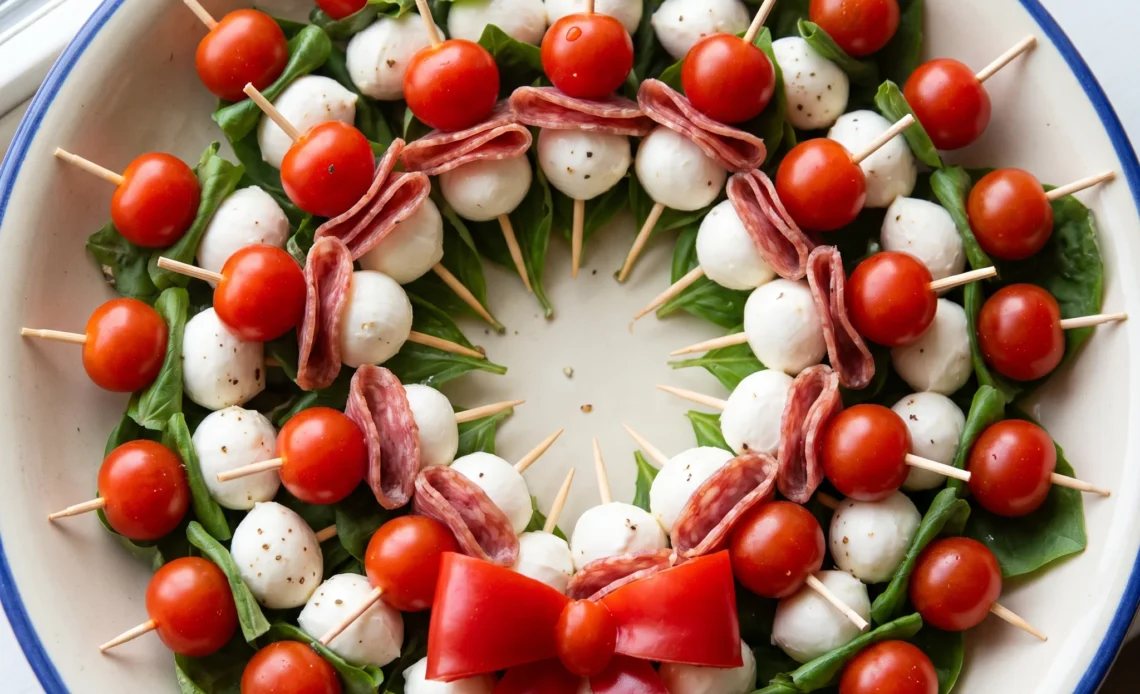
A caprese wreath appetizer earns its place on the table before anyone has taken a bite, and the trick is that the display is also the serving vessel. Guests pull a skewer straight from the ring with no fork, no plate, no detour to a side table. What surprises people who build one is how much the wreath depends on moisture control, since anything wet works against the glaze and the basil.
The margin for error is real, though not fussy. Tomato size has to match the cheese, or a single skewer loses its balance. Get the components dry and cool and the ring holds together through an evening of grazing.
The article below covers assembly, ratios, and the timing window.
A Shape That Serves
A wreath on a round platter turns a heap of skewers into something guests can approach from any side. Pull one toothpick and the rest stay put. That matters when people are circling a table with a drink in one hand and a napkin in the other.
The circle also props itself up. Toothpicks lean into their neighbors and the platter edge, so nothing tips over and rolls onto the floor.
A bowl of balsamic glaze set in the open center keeps the finishing touch inside the display instead of on a side table where it gets forgotten. You end up with a stable ring that holds together through an hour of grazing, and when the last skewer leaves a gap, the shape still reads as a wreath.
One Tomato, One Leaf, One Ball
The bite works when the three pieces are close in size. A single grape tomato brings a juicy pop, one basil leaf adds a peppery edge, and one bocconcini ball answers with a cool, creamy finish.
Use exactly one of each per toothpick and every skewer tastes the same as the first. Bocconcini are the right call because their volume matches the tomato.
Larger mozzarella pearls or torn pieces throw off the proportion and one flavor takes over. A skimpy leaf disappears under the cheese. You want the tomato and the mozzarella to meet the basil in equal measure, so the peppery note cuts through the milky richness instead of hiding beneath it.
A guest should get all three in a single bite, not a mouthful of cheese and a stray leaf.
The Glaze That Clings
Balsamic glaze is thick, almost syrupy, so it sits on the smooth mozzarella and the slick tomato skin without running off. A thin vinegar would bead up and slide to the platter. The glaze brings concentrated sweetness and a tart edge that wake up the milky cheese and the herbal basil.
It tastes like aged balsamic without the watery bite of plain vinegar. Set a small bowl of it in the middle of the wreath for dipping, and guests control their own amount. That keeps the skewers from turning soggy before they are picked up.
The wreath looks finished with the dark pool at its center, and the last few bites still get the same sweet-tart lift as the first.
Dry Before You Skewer
Since nothing here meets heat, the ingredients need to be dry and cool before they go on the toothpicks. Rinse the tomatoes and pat them until no water beads on the skins. Any lingering moisture thins the glaze and makes the platter slick.
Mozzarella balls straight from the brine carry a lot of liquid, so drain them well and blot each one; otherwise they leave a watery puddle that soaks the basil. Basil leaves should be dry and unbruised so they stay bright green and grip the toothpick instead of sliding off.
Cold ingredients also hold their shape better. Let the cheese sit out just long enough to lose its chill, and the texture turns creamier against the tomato. A dry, cool setup is what keeps the wreath looking fresh through the party.
What Matters on the Skewer
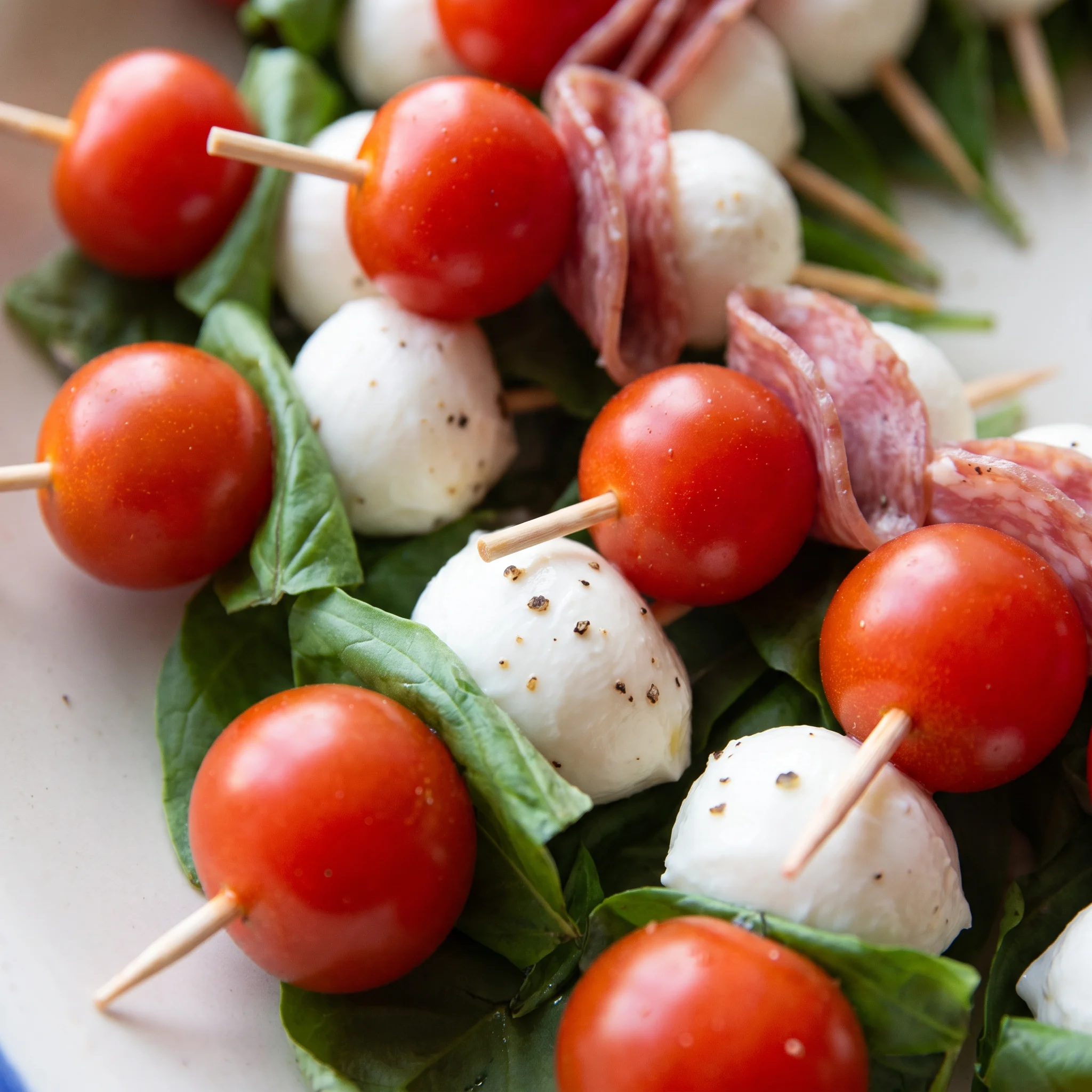
Fresh mozzarella balls: Buy bocconcini in brine, drained and blotted, since each ball’s volume needs to match a grape tomato and any larger piece throws off the bite.
Grape tomatoes: Pick firm, dry-skinned grape or cherry tomatoes around the same size as the cheese, because a soft or watery one bleeds onto the platter and thins the glaze.
Fresh basil leaves: Choose unbruised leaves about the width of a tomato, with a firm stem end, so each one holds its place on the toothpick instead of sliding off.
Balsamic glaze: Use a thick, pourable glaze rather than plain balsamic, which beads up and runs off the slick mozzarella and tomato skins.
Judging the Wreath While You Build It
When a Tomato Is Too Wet to Skewer
After rinsing, pat the tomatoes until the skin feels tacky, not slick. A drop of water left in the stem scar will run down the toothpick and pool on the platter, thinning the glaze later.
If you feel any slip as you push the toothpick through, stop and dry that tomato again. The fix is a quick re-blot, but a wet one already on the wreath means the basil next to it will darken within minutes.
The Resistance That Tells You the Mozzarella Is Ready
A cold bocconcini fights the toothpick and slides around. Let the balls sit out just until they give slightly under a gentle press, like a ripe cherry. That’s when they skewer cleanly without cracking.
If the cheese is still fridge-cold, the toothpick will tear the surface and leave a ragged edge that catches the glaze. You can’t uncrack one, but you can set the rest aside for a few more minutes before continuing.
Picking a Basil Leaf That Will Stay Put
Choose leaves about the width of the tomato. A leaf that’s too small will vanish under the mozzarella, and one that’s too large will flop over the side and bruise. Look for a firm stem end that snaps when you pinch it; a limp leaf will slide off the toothpick as soon as someone lifts the skewer.
If the leaf is torn, the exposed edge turns black against the cheese. Set torn leaves aside for another use.
When the Ring Is Tight Enough to Hold
As you lay skewers around the platter, each one should touch its neighbors and lean slightly inward. If there’s a gap wider than a toothpick, the ring will sag when a guest pulls one out. You’ll feel the difference: a tight wreath stays put when you nudge it, a loose one shifts.
Fill gaps by nudging existing skewers outward before you add more, rather than cramming a new one into a space that’s already too small.
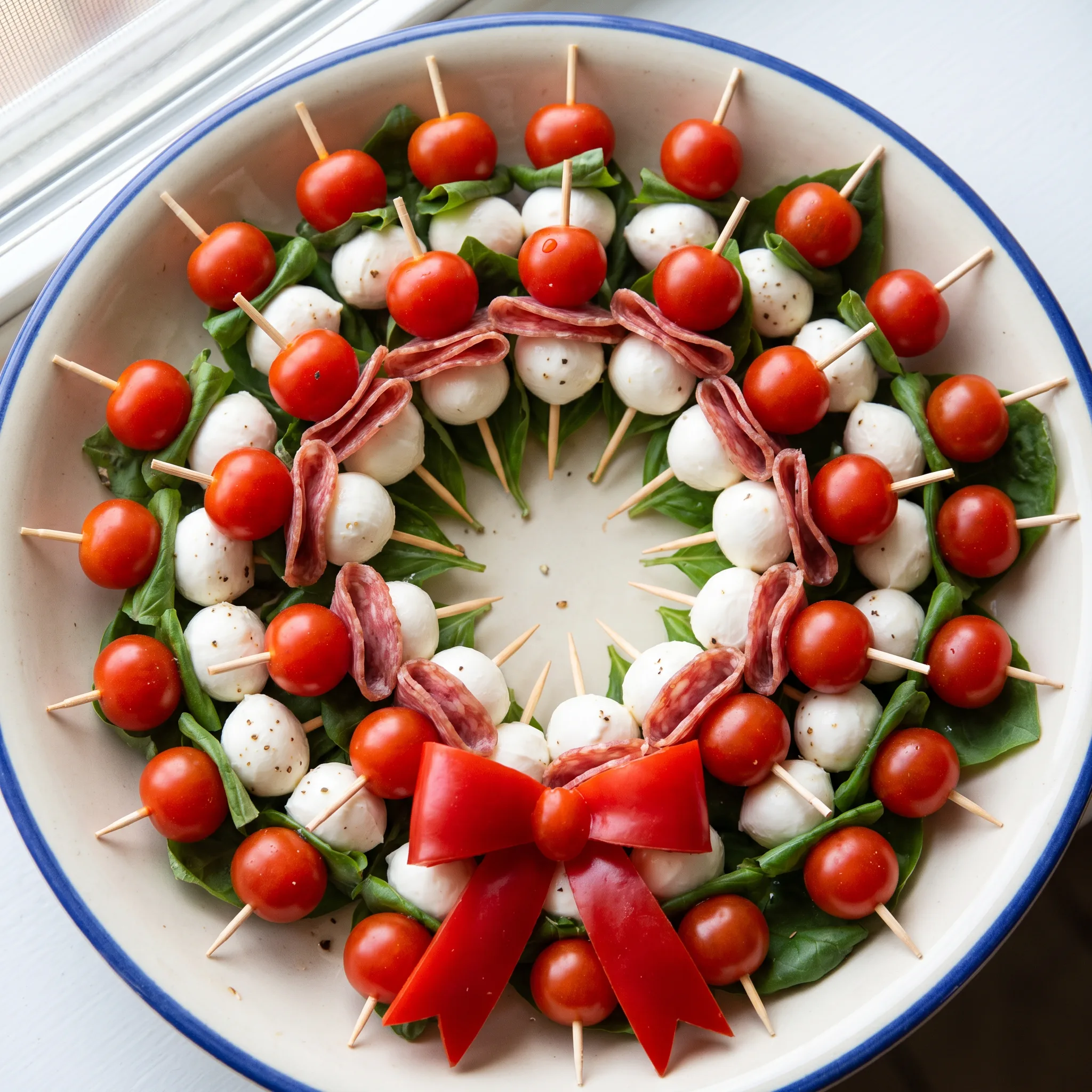
Caprese Wreath Appetizer with Mozzarella and Tomatoes
Ingredients
Method
- Rinse and dry the tomatoes.
- Set up an assembly line with the wooden toothpicks, grape tomatoes, basil leaves, and mozzarella balls.
- Skewer the tomato first, basil leaf second, and finally the mozzarella ball. Repeat this step until you have filled your round platter creating a full caprese wreath.
- Finish with a drizzle of the balsamic glaze right before serving OR add a small bowl of the balsamic glaze into the center of the wreath for dipping.
Swaps That Hold the Bite Together
Fresh mozzarella balls (bocconcini): Ciliegine, the smaller cherry-sized mozzarella, or burrata for a creamier bite. Ciliegine run about half the size of bocconcini, so a single ball gets lost against the tomato and basil. Skewer two ciliegine per toothpick to keep the mouthful balanced.
Burrata is softer and wetter; it won’t hold a round shape on the toothpick, but torn pieces deliver a looser, creamier finish. Drain and blot burrata well, and expect the skewers to look less tidy. For a dairy-free version, skip the cheese entirely rather than swapping in a firm block variety, which fights the toothpick and tastes nothing like fresh mozzarella.
Balsamic glaze: A thick aged balsamic, or a quick honey-balsamic reduction you make on the stove. Aged balsamic is syrupy enough to cling, but it’s less sweet and more acidic than the glaze, so the drizzle tastes sharper against the milky cheese.
For a honey-balsamic reduction, simmer equal parts honey and balsamic until it coats a spoon, then cool. It brings more sweetness than store-bought glaze, so start with the same amount the recipe uses and adjust after tasting. Plain balsamic vinegar is too thin: it beads up and runs off the mozzarella and tomato skins, leaving a puddle on the platter.
Grape tomatoes: Cherry tomatoes of similar size. Cherry tomatoes work the same way as long as they’re firm and about the same size as the cheese.
Larger cherry tomatoes throw off the one-bite balance; halve them and skewer one half per toothpick. The variety matters less than the texture.
A soft, watery tomato bleeds onto the platter and thins the glaze, so choose dry-skinned fruit and pat it dry after rinsing.
Fresh basil leaves: No good substitute. Dried basil won’t grip the toothpick or deliver the peppery edge that cuts the cheese.
Other fresh herbs like mint or arugula change the flavor profile entirely. Stick with basil and pick leaves about the width of a tomato, with firm stem ends, so they stay put. If basil is unavailable, it’s better to make a different appetizer than to force a swap here.
Extra long toothpicks: Standard toothpicks or small skewers. Standard toothpicks are shorter, so they hold less and may not clear the mozzarella ball. They also make the wreath look denser and harder to pick up.
If you only have standard picks, skewer the tomato and basil first, then push the mozzarella on until it’s secure. The wreath will still hold, but guests may need to pinch closer to the cheese.
Serve It Cool, Within an Hour or Two
This wreath is at its best within an hour or two of assembly. The window is short because the tomatoes and mozzarella keep releasing moisture from the moment they’re skewered, and the basil darkens as it sits against the damp cheese. Keep the platter cool but not cold.
A cold surface fogs the mozzarella and dulls the basil’s peppery edge, while a warm room accelerates the weeping. If you’re building ahead, assemble no more than an hour before guests arrive, or hold the dressed components separately and skewer at the last minute.
The balsamic glaze goes on right before serving, or it pools and the skewers go slick. Leftovers don’t keep well: the basil blackens and the cheese turns rubbery in the fridge within a day.
Pick out the basil, blot the tomatoes and mozzarella, and eat them cold as a snack. Freezing doesn’t work. Mozzarella turns grainy and the tomatoes collapse, so don’t try to save the assembled wreath.
Tips
- Buy the mozzarella balls in the smallest tub you can find and check the liquid level before you commit. Balls sitting deep in brine have been soaking up water for days, and each one will weep onto the platter once it is on a toothpick. A tub where the balls sit in just a shallow pool, or one sold in a vacuum-sealed pouch with almost no liquid, gives you a drier ball that blots in seconds. The 20 ounces this recipe calls for is roughly 40 bocconcini, so a single waterlogged tub means 40 small puddles working against the glaze.
- Pick tomatoes by weight rather than by look. Lift the 24-ounce clamshell and feel for one that is heavy for its size, since a dense grape tomato carries more pulp and less water in the cavity. Then turn the container over and check the bottom for stained or wrinkled fruit, which means the pack has already started breaking down and those tomatoes will bleed the moment the toothpick pierces the skin. Firm, heavy tomatoes also resist splitting at the stem scar, so the skewer goes in clean instead of tearing a channel that leaks onto the basil.
The recipe’s only real technique is thorough drying of the tomatoes and mozzarella before skewering. Surface water from rinsing or brine creates a barrier that stops the viscous balsamic glaze from clinging and makes the smooth mozzarella and tomato skins slide against each other and the toothpick. Without drying, the wreath becomes a wet, unstable pile instead of a clean, dippable display.
Frequently Asked Questions
Can I assemble the caprese wreath ahead of time?
Assemble it within an hour before guests arrive. Past that, the tomatoes and mozzarella keep weeping onto the platter, and the basil darkens where it presses against damp cheese. If you need to prep earlier, keep the tomatoes, basil, and mozzarella separate and skewer them at the last minute.
The balsamic glaze goes on right before serving, or it pools and the toothpicks turn slick.
What do I do if my mozzarella balls are too wet?
Drain them well and blot each ball until the surface feels dry, not tacky. Brine left on the cheese runs down the toothpick, pools on the platter, and thins the balsamic glaze.
Wet mozzarella also soaks the basil leaf pressed against it, which darkens the leaf within minutes. If the balls are still fridge-cold, let them sit out just until they give slightly under a gentle press so they skewer cleanly instead of cracking.
How is this caprese wreath different from a classic caprese salad?
The wreath is built on toothpicks, one tomato, one basil leaf, and one bocconcini per pick, so every bite carries the same three pieces. A classic salad gets tossed or layered, and a forkful often lands on just tomato or just cheese. Here the balsamic glaze goes in a small bowl at the center for dipping, which keeps the skewers from going soggy before they’re picked up.
The ring shape also lets guests pull one skewer without disturbing the rest.
