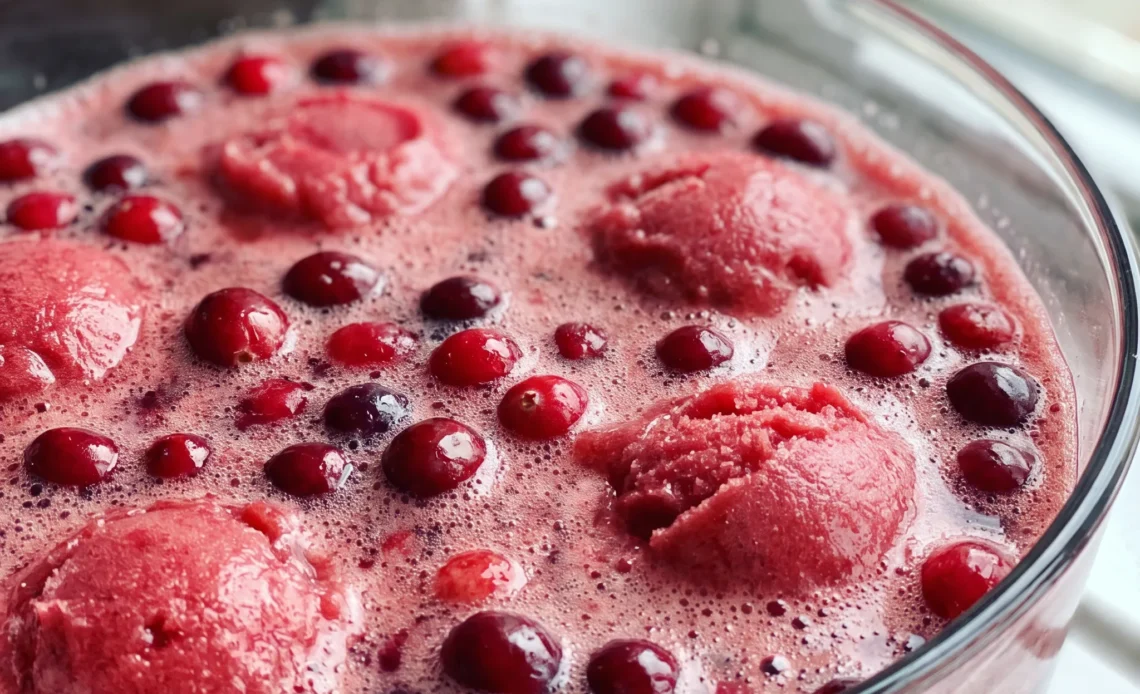
Most people build a holiday cranberry raspberry punch by pouring everything into the bowl at once, and it shows within minutes: soft sorbet dissolves into sweet pink water, and the ginger ale goes flat before the first ladle. The trick isn’t the ingredient list, which is short and forgiving, but the order and the temperature of what goes in. Real cranberry ginger ale does the heavy lifting, backing up the juice and cutting the sorbet’s sweetness so the drink tastes balanced instead of candied.
The vanilla is easy to dismiss as a mistake. It isn’t, but it vanishes if you rush it. What separates a punch that looks like a centerpiece from one that tastes like melted sherbet is timing: the sorbet and berries go in last, straight from the freezer, and the bowl gets served fast.
Get that right and the first twenty minutes are the best of it.
Pour the Cranberry Ginger Ale for a Reason
Cranberry ginger ale is doing two jobs at once, and neither is an accident. It brings a second wave of cranberry flavor that backs up the juice, so the fruit note tastes deeper and rounder instead of watery.
The ginger note, mild as it is, cuts through the sweetness of the raspberry sorbet. That little prickle keeps the punch from sliding into candy territory. Skip that and reach for regular ginger ale, and you lose the tartness that makes you want a second glass.
The drink turns flatter and sweeter, and the sorbet’s richness starts to dominate. You want the ginger ale cold, straight from the fridge, because warm soda goes flat the second it hits the bowl.
Pour it down the side of the bowl if you can, or just pour gently. The foam settles in a minute or two, and what’s left underneath is a punch that tastes balanced rather than sugary.
A Spoonful of Vanilla Rounds the Edges
One tablespoon of vanilla in a bowl this size looks like a mistake. It isn’t. What it does is soften the sharp edge of the cranberry and raspberry so they read as one drink instead of two juices arguing.
You won’t taste vanilla. You’ll taste a punch that seems smoother, a little more aromatic, and less acidic on the finish.
Leave it out and the cranberry juice’s tartness pushes forward, making the whole thing taste thin and a bit harsh. The vanilla adds a round, almost creamy note that sits behind the fruit, not on top of it.
It also helps the sorbet’s flavor blend in rather than float separately. Use real extract, not imitation, because the fake stuff has a sharp, chemical edge that shows up even in a cold drink. You don’t need to whisk it in.
A few stirs and it’s gone, invisible, working.
Sorbet Chills Without Diluting
Raspberry sorbet does more than look pretty floating in the bowl. It’s your refrigeration.
As it melts, it releases cold and raspberry flavor slowly, keeping the punch chilled without the watery wash you’d get from ice cubes. That matters because ice would melt faster and leave you with a diluted, pale drink by the second glass. Scoops of sorbet hold their shape for a while, so you get creaminess in the first pours and a softer, sweeter finish later.
The sorbet needs to be frozen solid when it goes in. If it’s soft, it’ll dissolve too fast and the punch turns into a thin smoothie. Keep it in the freezer until the last second, then add it.
You’ll see the scoops sink a little, then bob back up as they melt. That’s when you know the temperature is right.
Frozen Cranberries Stay Afloat and Add Tartness
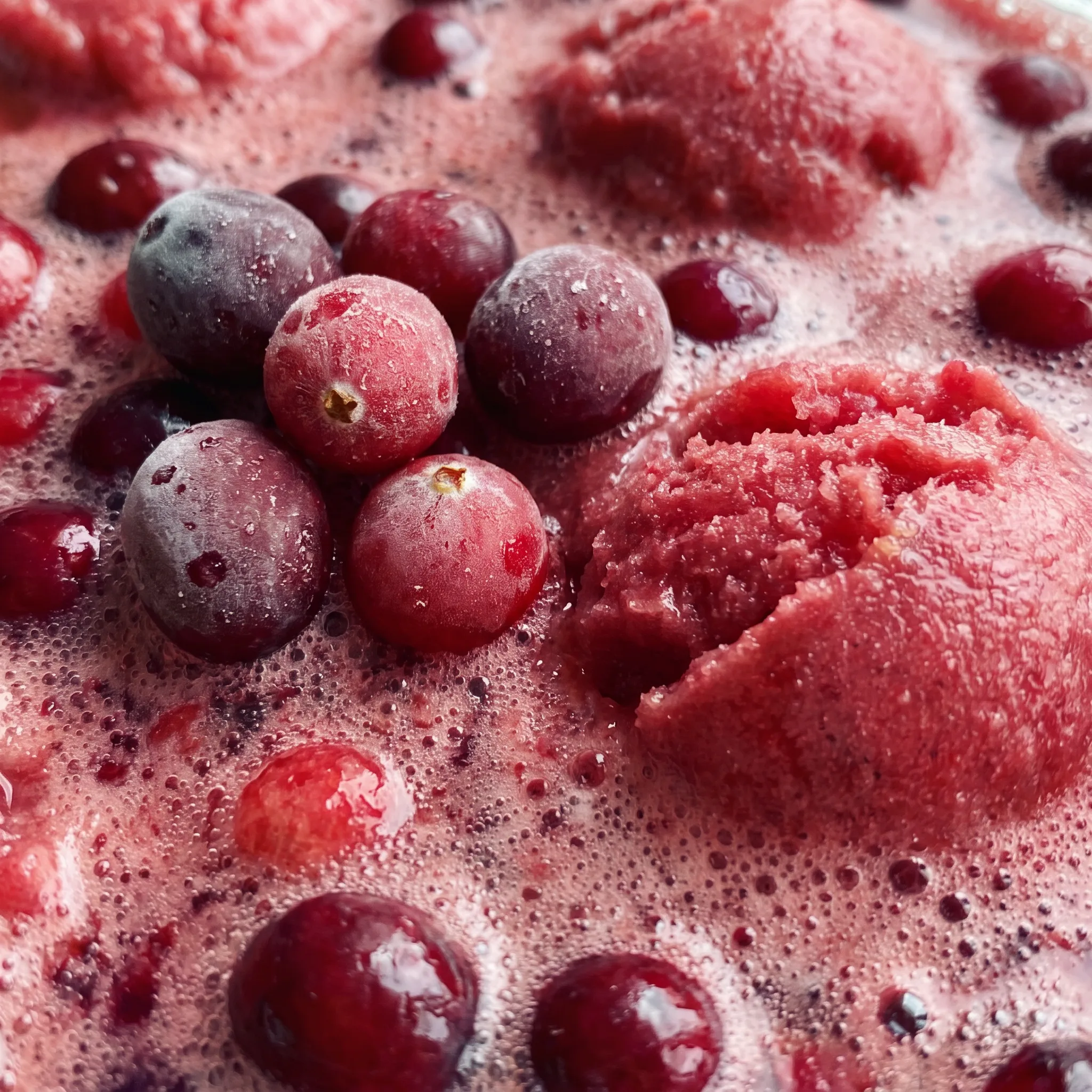
Frozen cranberries are not just for looks. They float and spread through the bowl, unlike fresh ones that often sink to the bottom. That means every ladle gets a few, and they keep the punch cold as they thaw.
Think of them as edible ice cubes that don’t water anything down. Their tartness snaps against the sweet sorbet and juice, giving your mouth a little jolt between sips.
You want them rock hard from the freezer, not partially thawed, so they hold up in the bowl. They’ll start to soften after twenty minutes or so, but by then the punch is usually gone.
If you’re making this ahead, keep the berries in the freezer until the last minute and add them right before serving. They’ll frost up slightly and look like little jewels, but the real reason they’re there is the taste and the temperature.
What to Buy and Freeze Before This Punch Hits the Bowl
Cranberry-raspberry juice: Buy 100% juice, not a cocktail blend, since sweetened drinks push the whole bowl past sweet once the sorbet melts in.
Cranberry ginger ale: Read the label for real cranberry juice in the mix, because plain ginger ale drops the tartness that keeps the sorbet in check.
Vanilla extract: Real extract, not imitation, since the fake kind carries a sharp chemical edge you can still catch in a cold drink.
Raspberry sorbet: A pint of sorbet, not sherbet or ice cream, because dairy curdles and dulls the fruit when it melts into the juice.
Frozen cranberries: Bagged frozen berries, not fresh, because fresh ones sink to the bottom while frozen ones float and chill the bowl.
Judging the Pour, the Scoop, and the Stir
When the vanilla blends in and not before
A tablespoon of vanilla in a bowl this large won’t announce itself. Look for the liquid to shift from a sharp, almost harsh cranberry-raspberry smell to something rounder and slightly sweeter on the nose.
That’s your cue that it’s mixed. If you can still catch a whiff of alcohol or see faint swirls, keep stirring. Miss this and the first glasses taste thin and acidic, with the vanilla sitting on top instead of behind the fruit.
Give it ten more seconds of stirring.
The right moment to add the sorbet
The sorbet must be rock hard when it hits the punch. If it’s soft enough to dent with a spoon, it’ll dissolve in seconds and turn the drink into a thin, sweet slurry.
You want scoops that hold their shape and sink slowly. Check by pressing a scoop with your finger: it should feel like a frozen brick. If it’s soft, put it back in the freezer for ten minutes.
The punch waits.
Knowing when the foam has settled
After you pour the ginger ale, a head of foam rises. Don’t stir it down or you’ll knock out the carbonation.
Let it sit. In a minute or two, the foam thins and breaks into a few bubbles on the surface. That’s when the punch is ready to stir gently and serve.
If you rush, you’ll deflate the drink and lose the prickle that keeps it from tasting flat.
The stir that keeps the sorbet intact
Once the sorbet and cranberries are in, stir with a ladle just two or three turns. You want to blend the flavors without breaking up the sorbet scoops or crushing the berries.
Stop when the sorbet starts to streak the liquid pink but still holds its shape. Overstir and you’ll have a uniform, cloudy drink with no contrast between sips, and the berries will lose their snap.
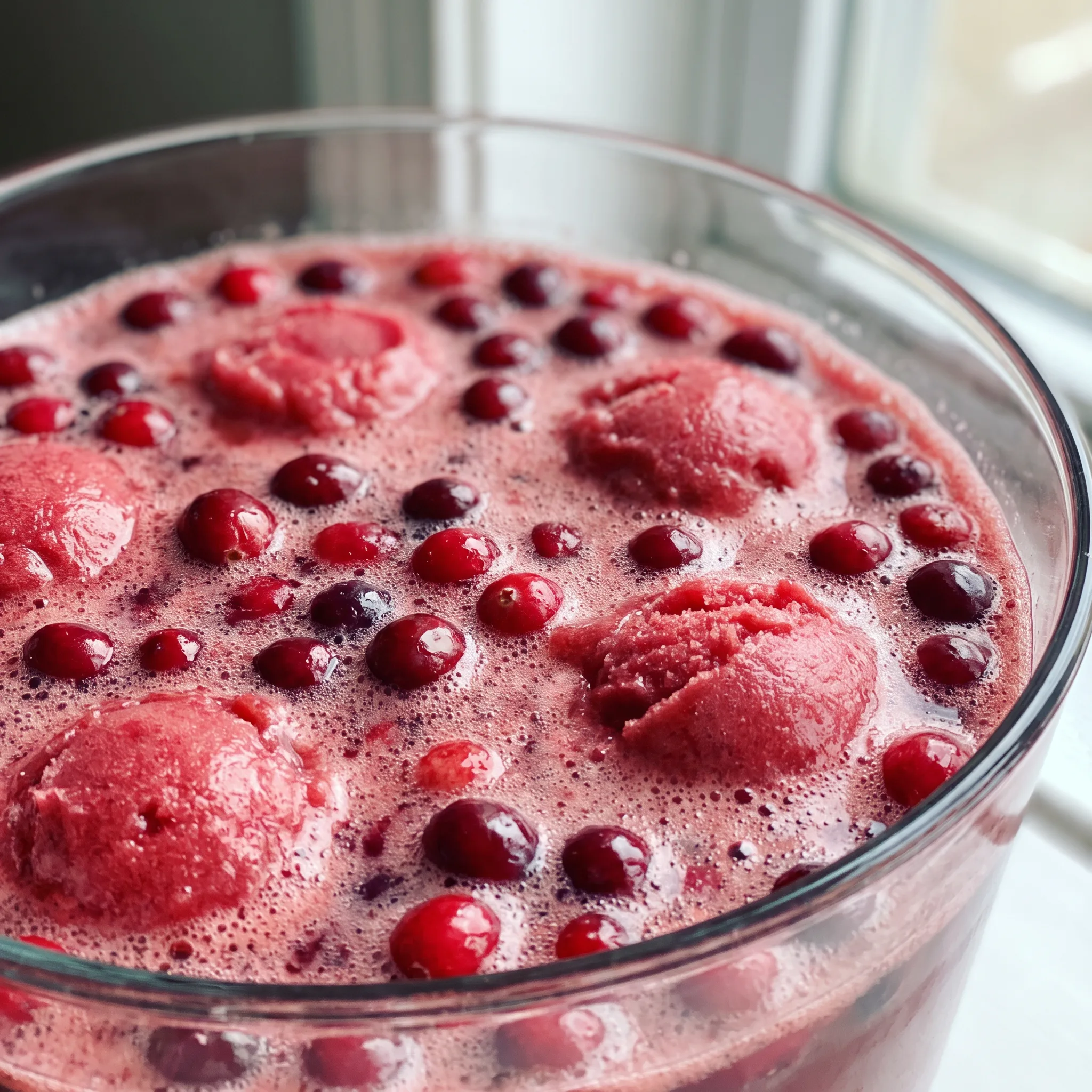
Cranberry Raspberry Punch with Ginger Ale and Sorbet
Ingredients
Method
- Into a large punch bowl, pour the cranberry-raspberry juice, cranberry ginger ale, and vanilla extract. Stir until completely blended.
- Introduce the frozen cranberries and scoops of the frozen raspberry sorbet.
- Stir gently, then serve without delay.
Drink It Within Two Hours, and Don’t Plan on Leftovers
This punch has a serving window, not a storage life. Assemble it, stir gently, and serve. The sorbet is the clock: scoops hold their shape for maybe thirty minutes in the bowl, then melt and thin the drink into sweet pink water.
By the hour mark it’s still cold and drinkable, but the contrast is gone. The carbonation fades too, and flat ginger ale makes the whole thing taste sweeter and duller. So the best texture is in the first twenty minutes, and the drink is worth pouring for the full two hours if it stays over ice in a cool room.
After that, don’t refrigerate the assembled punch hoping for tomorrow. It separates, loses its fizz, and the cranberries go soft. If you want it for a second gathering, mix the juice, ginger ale, and vanilla fresh, then add sorbet and berries at the last second.
Keep the sorbet in the freezer and the berries frozen until you’re ready. There’s no make-ahead version of the finished bowl.
Tips
- Chill the juice and ginger ale in the refrigerator overnight, not just until they feel cold. A 12-cup punch bowl holds a lot of thermal mass, and cold liquid keeps the sorbet scoops intact for their first ten minutes in the bowl instead of melting them into a pink cloud on contact.
- If you’re pouring this outside or in a warm room, set the punch bowl in a larger bowl of ice before you add the liquids. The juice and ginger ale stay cold longer, so the sorbet holds its shape and the carbonation survives past the first few glasses.
Swap the Two Cranberry Elements, Leave the Rest Alone
Cranberry-raspberry juice: Another red juice blend, like pomegranate-cherry or straight cranberry. If you use straight cranberry, the drink will be much tarter; you might want to add a spoonful of sugar or a splash more ginger ale to soften it.
Start with the same 8 cups and taste after the sorbet melts in. The punch’s fruit note shifts. Pomegranate-cherry brings a deeper, darker flavor and less tartness, so the sorbet’s sweetness feels stronger.
Straight cranberry pushes the acidity forward, making each sip sharper and more mouth-puckering. The balance you get from the original blend is why it’s called for.
Cranberry ginger ale: Regular ginger ale or lemon-lime soda. If you use regular ginger ale, the cranberry flavor will be less pronounced, and the punch will taste sweeter and flatter.
Lemon-lime soda adds a citrus note that can clash with the raspberry. Use the same 8 1/2 cups, but expect a different drink.
You lose the second layer of cranberry that backs up the juice, so the fruit tastes thinner. The ginger’s mild bite still cuts sweetness, but without the cranberry, the sorbet’s richness takes over.
The punch turns candy-sweet and less refreshing. This is the swap that changes the drink the most.
Raspberry sorbet: A different fruit sorbet, like mango, lemon, or mixed berry. Dairy-free diners should stick with sorbet, not sherbet or ice cream, because dairy curdles when it hits the acidic juice. If you swap the flavor, start with the same 1 pint and add it frozen.
The flavor profile shifts with the fruit. Mango brings a tropical sweetness that downplays the cranberry; lemon adds a sharp citrus note that can overwhelm the raspberry. Mixed berry stays closest to the original but may have seeds.
The sorbet’s job is to chill and sweeten without diluting, so any sorbet works, but the taste will be different.
Vanilla extract: Leave it as written. There’s no good substitute that does the same job. Imitation vanilla has a chemical edge that shows up even in a cold drink.
If you must skip it, the punch will taste sharper and more acidic, and the fruit flavors won’t blend as smoothly. Without vanilla, the cranberry and raspberry read as separate, and the finish feels harsh. The vanilla rounds those edges and adds a subtle aromatic note that makes the punch taste smoother.
One tablespoon is small, but its absence is noticeable.
Raspberry sorbet is a functional ingredient that chills the punch and adds body by melting slowly. If the sorbet is even slightly softened before it goes in, or if the liquid is not well chilled, it will melt all at once, turning the punch thin and watery instead of thick and frosty. The sorbet must be frozen solid when added so it melts gradually and keeps the drink cold without diluting it like ice would.

Frequently Asked Questions
Can I make this punch ahead of time for a party?
Not the finished bowl. The sorbet is the clock here, and once those scoops are in, the texture starts sliding toward sweet pink water within the half hour. Mix the juice, ginger ale, and vanilla in the punch bowl, cover it, and park it in the fridge, then scoop the sorbet and drop the frozen berries in right when guests arrive.
If you’re transporting the bowl, carry the liquid and the sorbet separately in a cooler. Cold sorbet straight from the freezer is what buys you the first twenty minutes of good texture.
How do I keep the punch from getting watered down?
There’s no ice in this recipe, and that’s deliberate: the sorbet and the frozen cranberries are your chilling, and neither leaves a watery trail behind the way cubes do. The real risk is a soft pint of sorbet. Press a scoop with your finger before you start; if it dents, it’ll dissolve fast and thin the bowl into a flat, sweet drink.
Keep the sorbet in the freezer until the last second, and if you’re setting the bowl out in a warm room, nest it in a larger bowl of ice so the ice bath does the work from outside rather than inside the punch.
What is the difference between this punch and a classic cranberry punch?
Classic cranberry punch usually leans on cranberry cocktail, pineapple or orange juice, and a lemon-lime soda, and it’s built to sit in a bowl for hours without changing much. This one skips the citrus, doubles down on cranberry with the ginger ale, and gets its body from raspberry sorbet instead of a floating ice ring.
The payoff is a creamier first pour and a tart snap from the frozen berries, but the trade-off is a shorter window. It’s a punch for drinking now, not for nursing through a long evening.
How long can the punch sit out before serving?
Serve it the moment it’s stirred, and count on roughly two hours before it stops being worth pouring. The first twenty minutes are the best of it: scoops still hold their shape, the liquid streaks pink around them, and the ginger ale still prickles. By the hour mark it’s cold and drinkable but the contrast is gone, and past two hours the fizz is flat and the cranberries have gone soft.
Don’t refrigerate what’s left hoping for tomorrow. It separates.
