
A blueberry pie goes wrong in the cooling, not the baking. Cut it while the filling is still warm and the slice slumps into a purple puddle on the plate, no matter how well you built it.
What makes a blueberry crumble pie worth the trouble is the topping: loose clumps that let steam off the fruit instead of trapping it, so the filling cooks down thick while the surface underneath fuses with the berries and the top stays crisp. The berries themselves are forgiving, and the crust barely matters.
The waiting does. That stretch between the oven and the knife is where a good pie either sets into clean slices or falls apart.
Crumble Beats a Top Crust Here
Blueberries throw off a lot of liquid, and a solid top crust traps it. Steam builds under the dough, the underside turns gummy, and the top never browns right.
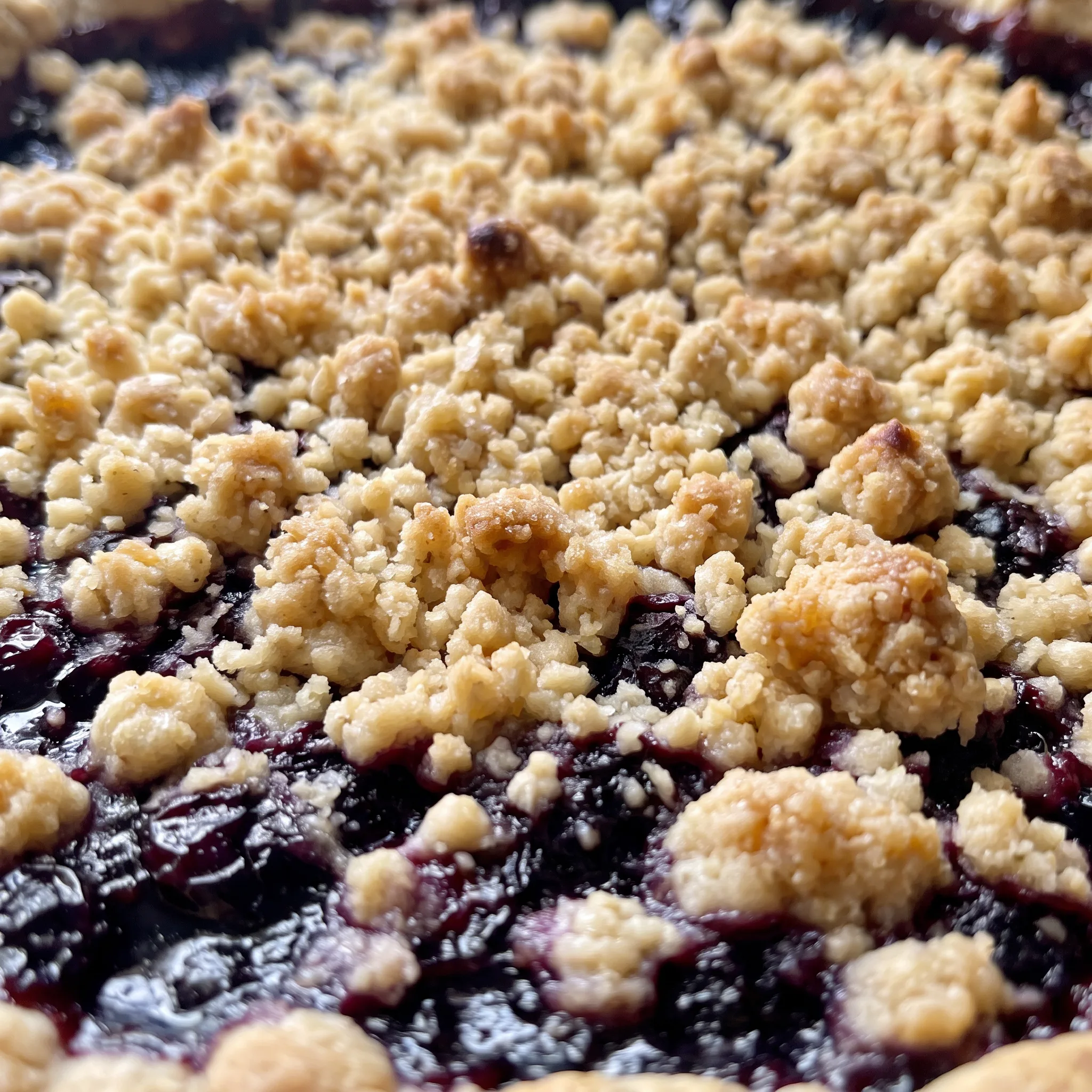
A crumble sidesteps all of that. The loose clumps leave gaps, so moisture escapes and the filling reduces to something thick and jammy. At the same time, the bottom layer of the topping drinks in some of that juice and softens just enough to fuse with the fruit, while the top stays crisp and sandy.
Cold butter is what makes those clumps survive the oven. Warm butter would melt into the flour and give you a flat, pasty sheet.
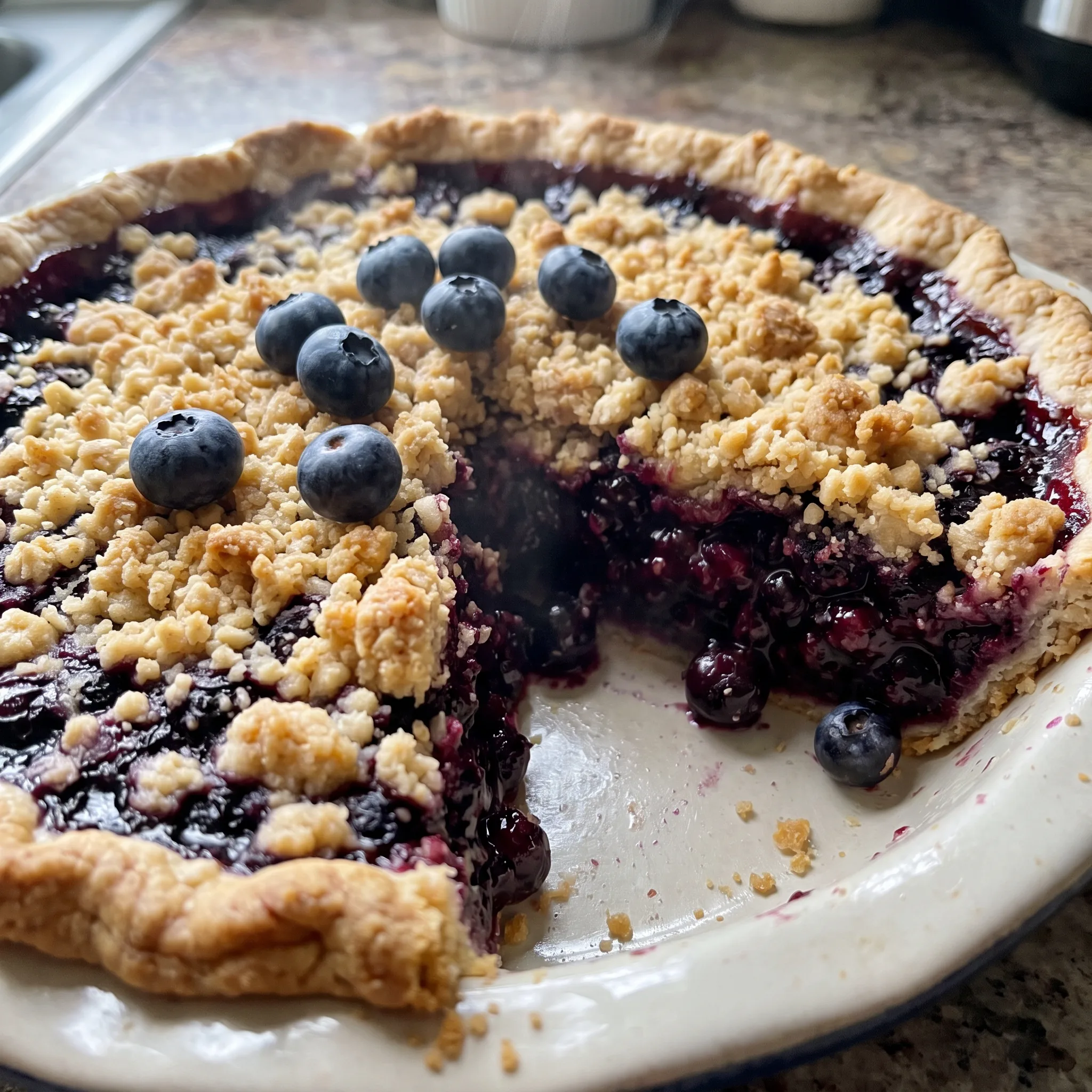
Cut it in cold and you get shaggy pieces that hold their shape. Right out of the oven, the berries are bubbling up around the golden crumbs, and that contrast of textures is the whole reason this pie works.
The Filling’s Balancing Act
Cornstarch is the right thickener for blueberries. It sets clear and glossy, so the deep purple color comes through instead of turning cloudy, and it thickens at a lower temperature than flour, which means the berries don’t have to cook into mush before the filling sets.
The two sugars do different jobs: granulated sugar adds straight sweetness and bulk, while brown sugar brings moisture and a faint caramel note that rounds out the berries’ tartness. Lemon juice and zest are not just for tang.
The acid brightens the flavor and helps the natural pectin in the berries gel, and the zest adds a floral oil that lifts the whole thing. When you stir, make sure every berry is coated and no dry cornstarch hides in the corners. Any pockets left behind will bake into chalky bits.
Once it’s mixed, the filling should look glossy and uniform, with no white streaks.
Cooling Is What Sets the Slices
A pie straight from the oven is a different creature from a pie that’s cooled. The filling looks set when it’s hot, but it’s still loose underneath. As it cools, the cornstarch gel continues to firm up and traps the liquid that would otherwise run out.
Cut it warm and you’ll see a flood of juice on the plate and a collapsed slice. Wait until the pie reaches room temperature, and the same filling holds its shape.
The baking sheet underneath matters here, too. It catches any drips and gives the bottom crust steady, even heat, so it browns fully and doesn’t turn soggy as the pie sits. The crumble topping stays crisp during this cooling time because the steam has already escaped.
Cover the pie while it’s warm, though, and that trapped moisture will soften the crumbs into paste. Let it cool uncovered on a rack, and the surface stays crunchy.
Rack Position and Foil Tent
Put the pie on the lower-middle rack. That spot is closer to the bottom heating element, so heat drives into the bottom crust and sets it before the juicy filling can soak through. Skip that and you risk a pale, doughy base.
The crumble topping insulates the berries, which means the exposed crust at the edges can brown faster than the center. If you see the edges getting too dark, tear off strips of foil and shield just the rim. A full cover would trap steam and soften the topping.
A glass or dull metal pie plate is worth using here. It heats more gently and evenly than shiny metal, and you can check the bottom crust color through the glass without cutting into the pie. When the filling bubbles up thick and slow through the crumbs, and the crust looks golden, you’re there.
What to Buy Before You Start
Fresh blueberries: Look for berries that are plump, deep blue, and dry to the touch, since wet or soft ones break down too fast and water down the filling.
Cornstarch: Check the date on your box, because cornstarch loses its thickening power after a year or so and old stuff won’t set the filling.
Old-fashioned oats: Use the flat, whole rolled oats, not quick or instant, because they hold their shape and give the crumble its chew.
Cold unsalted butter: Take it straight from the fridge and cut it into cubes, because butter that’s even a little soft smears into the flour instead of staying in pieces.
9-inch pie crust: If you’re buying one, get the refrigerated rolled kind, not frozen, since frozen crusts often crack when you try to fit them into the plate.
Judging the Pie at the Moments That Matter
Spotting the difference between glossy coated and dry pockets
After stirring, pick up a handful of berries. They should feel slick and heavy, and every one should carry a sheen from the sugar and cornstarch.
If you see white flecks or dry patches in the bowl, those are pockets of cornstarch that will bake into chalky bits. Keep folding until the mixture is uniform.
The lemon juice and vanilla will thin the coating just enough to spread, but it should still cling.
Reading the crumble texture by touch
Stop cutting in the butter when the mixture holds together in clumps but still has sandy crumbs. Squeeze a handful: it should pack into a lump that breaks apart when you poke it. If it’s powdery and won’t hold, the butter is too cold or underworked; if it’s greasy or forms a paste, you’ve gone too far.
Cold butter is what gives you shaggy pieces that stay crisp. Warm butter melts into the flour and you lose the texture.
Knowing when the filling is set enough to slice
The pie needs to cool completely, not just until it’s warm. When it’s hot, the filling looks set but is still loose. As it cools, the cornstarch firms up and traps the juice.
Cut too soon and you’ll see a flood of purple liquid and a collapsed slice. Wait until the pie reaches room temperature, and the same filling holds its shape.
That’s the difference between a runny pie and clean slices.
Timing the foil tent before the edges burn
The crumble topping shields the center, so the exposed crust at the rim browns first. Check the pie at 40 minutes.
If the edges are already dark, tear off strips of foil and cover just the rim. A full cover traps steam and softens the topping.
You want the crust golden, not charred. The filling should bubble thick and slow through the crumbs, and the topping should be deep golden brown. That’s your cue to pull it.
Blueberry Crumble Pie with Oat Topping
Ingredients
Method
- Set oven to 375°F (190°C). Place rack in lower-middle position to ensure bottom crust bakes through.
- Fit pie crust into a 9-inch pie plate. Press gently into corners and set aside.
- In a large bowl, combine blueberries, granulated sugar, brown sugar, cornstarch, lemon juice, lemon zest, vanilla, and cinnamon. Stir until berries are evenly coated and cornstarch is distributed.
- Pour filling into prepared crust. Spread into an even layer for consistent baking.
- In another bowl, mix flour, brown sugar, oats, and cinnamon. Stir until dry ingredients are uniform.
- Cut in cold butter until crumbly. Stop when mixture forms clumps and sandy crumbs with no large butter chunks.
- Sprinkle crumble topping evenly over blueberries. Ensure surface is fully covered to prevent berries from drying out.
- Place pie on a baking sheet to catch drips and promote even crust cooking.
- Bake for 50–60 minutes until golden and bubbly. Cover edges with foil if browning too quickly.
- Cool completely before slicing so filling sets and holds its shape instead of running.
- Serve as slices. Pair with whipped cream or vanilla ice cream for contrast to the warm, jammy berries.
Swaps That Work and the One Ratio to Leave Alone
Store-bought pie crust: Use a homemade single crust for a 9-inch plate if you have a recipe you like. If you’re buying, get the refrigerated rolled kind, not frozen; frozen crusts often crack when you fit them to the plate. A homemade crust tastes fresher and browns more evenly because you control the fat and thickness.
Refrigerated dough is consistent and convenient, but tends to be a little softer and may slump in the oven. Either way, the filling and crumble carry the pie, so don’t sweat the crust too much.
Fresh blueberries: Frozen blueberries work, but do not thaw them first. Use the same 6 cups and add an extra 1 tablespoon of cornstarch to the filling.
Frozen berries release more water as they bake, so without the extra cornstarch the filling turns soupy. The berries themselves soften more and lose some of their pop, but the flavor is still bright. Toss the frozen berries with the dry ingredients while they’re still icy so the cornstarch coats them evenly.
Old-fashioned oats: If you only have quick oats, you can use them, but measure the same 1/2 cup. For a gluten-free crumble, use gluten-free old-fashioned oats and swap the all-purpose flour for an equal amount of a gluten-free flour blend. Quick oats are cut finer, so the crumble comes out less chewy and more uniform, almost like a streusel.
It still tastes good and crisps up, but the texture changes. Gluten-free flour blends absorb liquid differently; the crumble may need a few extra minutes in the oven to brown and firm up. Check it at 50 minutes and look for deep golden color and a dry, set surface.
Cold unsalted butter: For a dairy-free version, use a plant-based butter stick that’s designed for baking, kept cold and cubed. Start with the same 1/2 cup. Plant-based butters vary in water and fat content.
Some melt faster and make the crumble greasy; others stay firm and give a slightly drier texture. The crumble will still crisp, but watch it closely in the last 10 minutes.
If it’s browning too fast, tent the whole pie loosely with foil. The flavor is a little less rich, but the berries and cinnamon carry it.
Cornstarch, sugar, and lemon juice: No swap. Keep the amounts as written: 1/4 cup cornstarch, 3/4 cup granulated sugar, 1/4 cup brown sugar, 1 tablespoon lemon juice, and 1 teaspoon zest. This ratio is what sets the filling.
Cutting the cornstarch gives you a runny pie; adding more makes it gluey. Less sugar and the berries turn sharply tart; more and the filling won’t gel properly.
The lemon juice is not just for flavor, it helps the natural pectin in the berries firm up. Change one and you change the whole set. If you’re watching sugar, serve smaller slices rather than tinkering with the filling.
Storing the Pie and Bringing Back the Crunch
Eat this pie the day it’s baked. That’s when the topping is at its crispest and the filling still holds a clean slice.
After that, the crumble is the first thing to go. In the fridge, the crumbs pull moisture from the filling and the air, and by the next day they’ve gone soft and cakey. That’s unavoidable once cold.
Store leftovers covered in the fridge, where they keep about three days. Cold slices still taste good, but the texture is a soft, spoonable pie rather than a crisp one.
To bring a slice back partway, warm it in a 350°F oven for 8 to 10 minutes, or until the topping feels dry again on top. A microwave makes the crumbs rubbery, so skip it.
If you want crunch back, scatter a spoonful of fresh crumble over the warm slice. Serve with whipped cream or vanilla ice cream, which contrasts the warm, jammy berries.
Freeze only the baked, cooled pie, well wrapped, up to two months; thaw overnight in the fridge, then reheat to serve.
Tips
- Taste a few berries before you mix. If they’re underripe and sharply tart, add 1 extra tablespoon of sugar to the filling; if they’re candy-sweet, cut the granulated sugar to 2/3 cup. The 3/4 cup in the recipe assumes ripe berries with some acidity, and the cornstarch set doesn’t change either way, so you’re only adjusting for flavor.
- If you’re using frozen berries, toss them with the cornstarch and sugars while they’re still frozen, then let the bowl sit for 10 minutes before pouring into the crust. The coating will cling to the icy berries and start to thaw slightly, so the cornstarch distributes evenly instead of clumping in the corners of the bowl.
Cornstarch thickens only after its granules absorb liquid, swell, and rupture under heat, and the resulting gel continues to firm as it cools. Cutting the pie warm interrupts that gel before it has set, so the filling flows instead of holding the slice. The recipe uses the lower-middle rack and a full cooling period rather than a higher rack or a shorter rest, because the lower position drives heat into the bottom crust and the cool-down is what lets the starch network finish setting.
Frequently Asked Questions
Can I make blueberry crumble pie ahead of time?
The crust and crumble can be made in advance, but assembling and baking ahead means the topping softens before you serve it. Bake it the day you plan to eat it, or the same morning, and leave it uncovered on the counter to cool. If you must work ahead, prep the crumble and refrigerate it in a bag, then scatter it over the filling just before baking.
Leftovers go covered in the fridge and keep about three days, but the crumbs lose their crunch.
Why is my blueberry pie filling runny?
Most often the pie was cut before it cooled. The filling looks set when hot, but the cornstarch is still firming, and slicing warm releases the juice that should have stayed gelled. Wait until it reaches room temperature.
The second check is the cornstarch itself: old boxes lose their thickening power after a year or so, so if the pie is baked and cooled and still runs, look at the date on your box. Berries that were wet or soft when they went in also add water the filling can’t hold.
How is blueberry crumble pie different from a regular blueberry pie?
A regular blueberry pie has a top crust, which traps steam underneath and turns the underside gummy while the top stays pale. The crumble leaves gaps for moisture to escape, so the filling cooks down to something thick and jammy. The clumps also drink in some of the juice where they meet the fruit, fusing just enough, while the top stays crisp and sandy.
What you lose is the neat double-crust look; what you gain is texture and a filling that sets cleanly.
