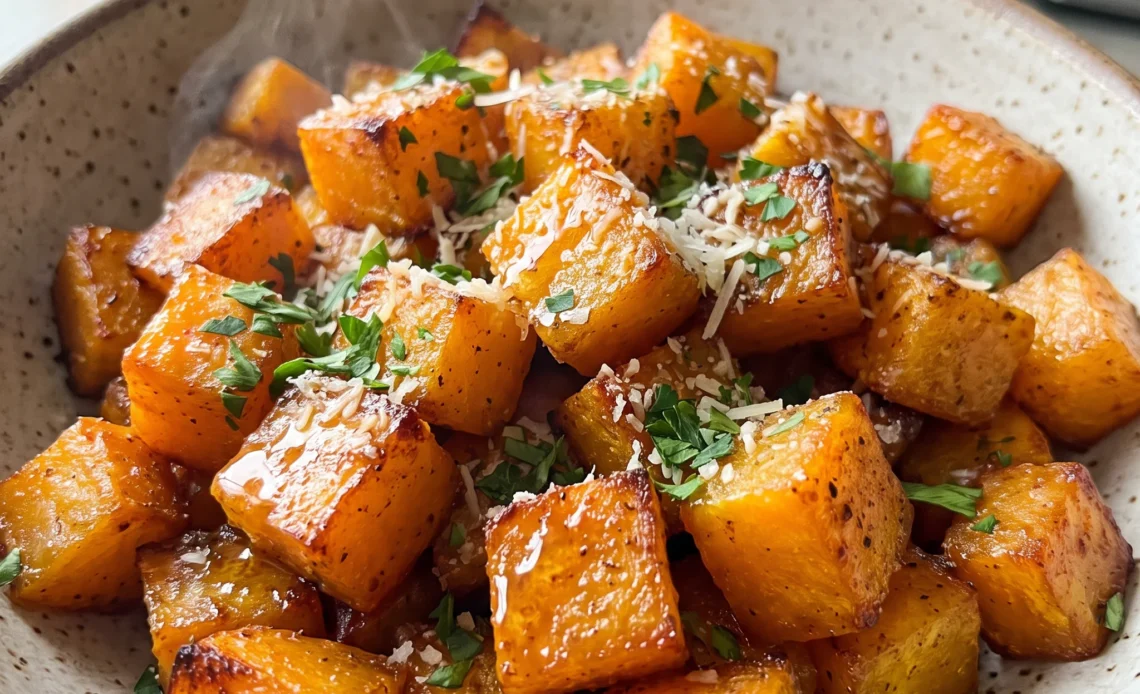
Oven roasted butternut squash is a forgiving dish right up until it isn’t. The cubes go from tender to collapsed in a window you can miss while setting the table, and the edges that looked golden through the oven door can taste scorched by the time the tray hits the counter.
What separates a good tray from a great one comes down to two things you control before the squash ever sees heat: how evenly you cube it, and how much space you give each piece. Get those right and the squash does the rest, turning creamy inside with lacquered, faintly smoky edges. Get them wrong and you’re serving pale, steaming cubes that never browned.
The finishing drizzle and the dry spices matter, but they can’t rescue a crowded tray.
Even Cubes Are Everything
Cutting the squash into even pieces is the single most important step for even roasting. If pieces vary in size, the smaller ones will burn before the larger ones cook through. You want every cube to caramelize on the outside and turn creamy inside at the same time.
That only happens when they’re all about the same size. The recipe specifies ‘even pieces’ to promote uniform cooking.
So take a few extra minutes to trim and cube carefully. You’ll be rewarded with squash that’s consistently tender and sweet, with no raw centers or burnt edges. It’s the difference between a tray of roasted squash and a disappointing mix.
Keep Them Apart
Arrange the seasoned squash in a single layer on the baking tray, and don’t overcrowd. If pieces are piled or too close, they trap steam, which prevents browning and makes the squash soggy.
A single layer lets heat circulate and moisture escape, so the edges can caramelize and crisp. You’ll see the difference: pieces with space turn golden and slightly crisp, while crowded ones steam and stay pale.
So give each cube room. Use two trays if needed. The result is roasted squash with a caramelized exterior and a creamy interior, exactly what you want.
Finishing Touches
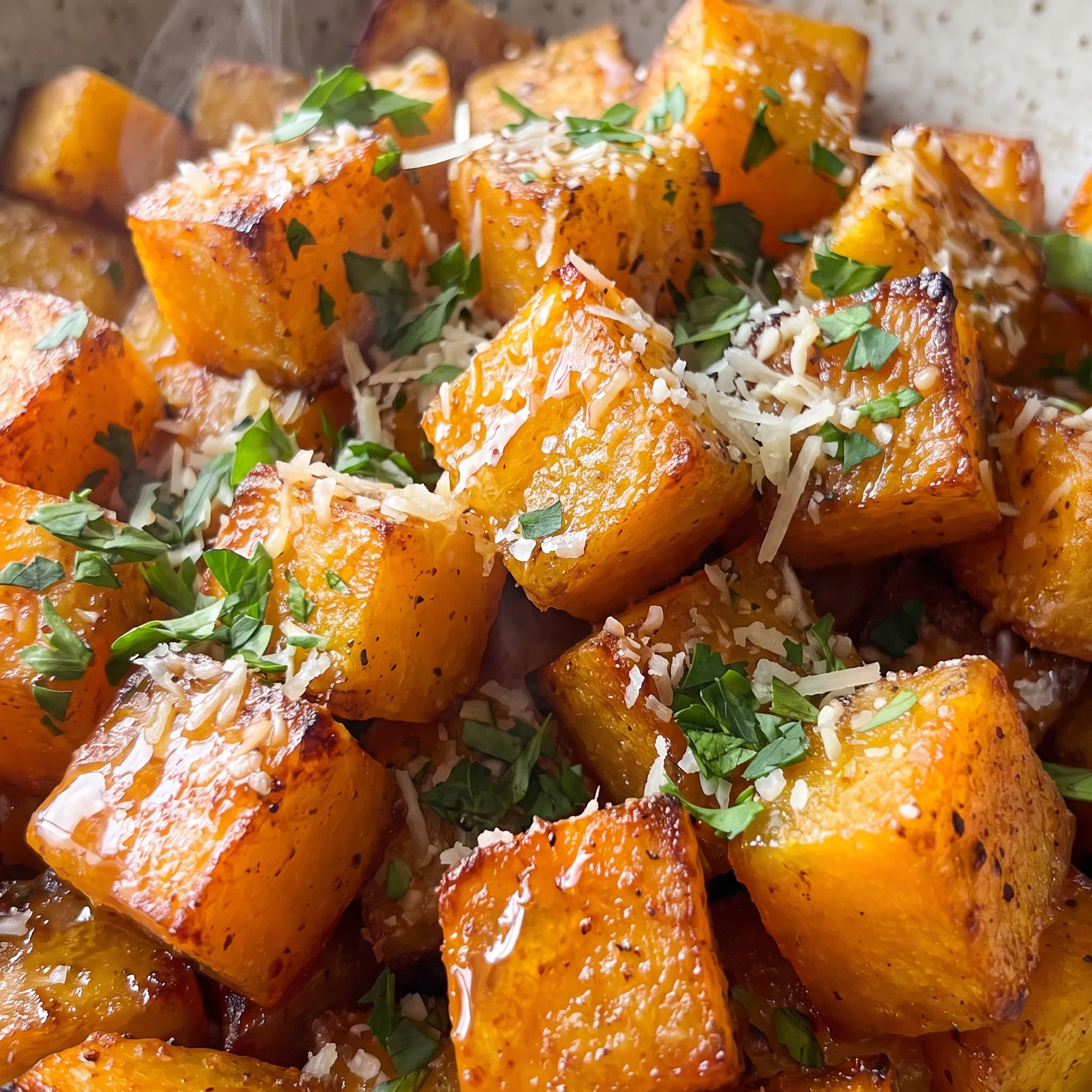
Parsley, Parmesan, and honey aren’t just garnishes; they create a Mediterranean flavor balance. Parmesan adds salty umami that contrasts with the sweet squash.
Honey drizzle enhances natural sweetness and aids caramelization. Fresh parsley provides bright, herbal freshness to cut richness.
Together, they round out the dish. So scatter parsley, grate Parmesan, and drizzle honey.
Each bite should have a little of everything: sweet, salty, fresh. It’s a simple way to make the squash feel complete.
Why Dry Spices Work Here
Smoked paprika and garlic powder are used instead of fresh garlic or other spices for good reasons. Smoked paprika adds a smoky depth that complements the sweet squash.
Garlic powder distributes evenly and doesn’t burn like fresh garlic, which can turn bitter in the oven. These dry spices adhere well to the oil-coated cubes, so every piece gets consistent flavor.
Fresh garlic would clump and burn, leaving bitter spots. So stick with the powders. The result is a well-seasoned squash with a subtle smokiness and garlic note that enhances without overpowering.
What Matters in the Tray
Butternut squash: Buy a squash that feels heavy for its size with a matte, unblemished rind, since a light one is dried out and roasts up stringy.
Smoked paprika: Use sweet or hot smoked paprika, not plain paprika, because the smoked kind is what gives the cubes their campfire depth.
Parmesan cheese: Grate it fresh off a wedge rather than reaching for the shaker can, which dusts the squash with cellulose instead of melting into salty flecks.
Honey: A thin runny honey drizzles and clings to the hot cubes, while a set or crystallized jar just blobs up in the serving dish.
When squash cubes are piled or placed too close together, the moisture they release during roasting cannot escape as vapor. That trapped steam keeps the surface temperature near 212°F, so Maillard browning and caramelization never get a chance to start. The result is pale, soft cubes with no crisp edges, even after the full roasting time.
Reading the Squash as It Roasts
When the cubes are browning too fast on the bottom
At 400°F, the bottoms can darken before the centers soften, especially on a dark tray or with thin pieces. Pull the tray at 15 minutes and lift one cube. If the underside is deeply browned and the top is pale, your pieces are too thin or the oven runs hot.
Flip the cubes and drop the heat to 375°F for the remaining time. That saves the batch from turning bitter.
Judging doneness by feel, not just the clock
A fork should slide in with almost no resistance, like into a baked potato. If it meets a firm center, the squash needs more time even if the edges look done. The window between tender and collapsing is narrow, usually 3 to 5 minutes.
Check at 25 minutes, then every 2 minutes. Overcooked cubes slump and lose their shape; undercooked ones stay chalky.
The moment the edges turn golden but the centers are still firm
Caramelization happens on the surface while the inside steams. If the edges are dark gold but the fork still hits resistance, the outside will burn before the middle cooks.
Cover the tray loosely with foil and roast 5 more minutes. The trapped steam finishes the centers without scorching the edges.
Uncover for the last 2 minutes to re-crisp.
Knowing when the oil and spices have coated evenly
After tossing, every cube should look glossy and speckled, with no dry patches or pools of oil in the bowl. Dry spots mean the seasoning won’t stick; excess oil means the squash will steam instead of roast. Add oil a teaspoon at a time if needed, or blot with a paper towel if greasy.
This takes 30 seconds and sets up the whole tray.
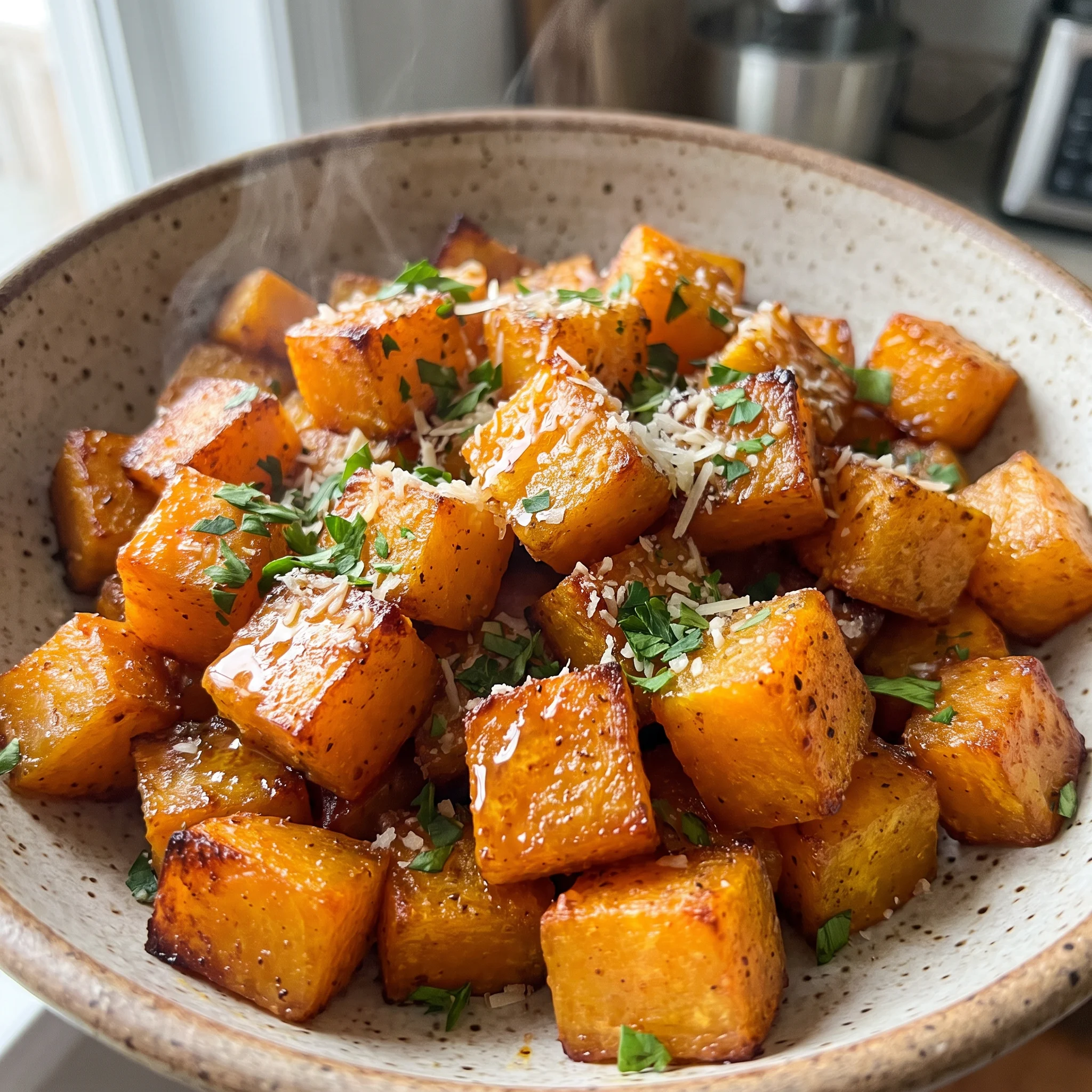
Oven Roasted Butternut Squash with Smoked Paprika
Ingredients
Method
- Set oven temperature to 400°F (205°C) and prepare a large baking tray by lining it with parchment paper for a non-stick surface.
- Cube the butternut squash into even pieces to promote uniform cooking and consistent texture while roasting.
- In a large bowl, toss the squash cubes with olive oil, garlic powder, smoked paprika, salt, and pepper until every piece is evenly coated with the seasoning mixture.
- Arrange the seasoned squash in a single layer on the lined baking tray, ensuring not to overcrowd so that optimal caramelization and crisp edges develop.
- Roast in the preheated oven for 25–30 minutes, turning the tray halfway through to ensure even browning and tenderness.
- Test for doneness by inserting a fork into the squash; the cubes should be golden-brown and easily pierced.
- Take the tray out of the oven and move the roasted squash to a serving dish. If you like, top with fresh parsley, grated Parmesan cheese, or a drizzle of honey.
- Serve right away while hot to keep the caramelized outside and creamy inside.
Storage and Serving: Eat It Hot, Store It Right
Roasted butternut squash has a short window at its best. Serve it straight from the tray, within 15 to 20 minutes of coming out of the oven. That’s when the caramelized edges are still crisp and the centers are creamy.
Wait longer and the exterior softens as steam escapes from the cubes. The finishing touches go on at the moment of serving, not before. Parsley, Parmesan, and honey go on after the squash hits the plate, so the herbs stay bright, the cheese melts slightly against the hot surface, and the honey doesn’t thin and run.
Leftovers keep in the fridge for 3 to 4 days in an airtight container. Expect the crisp edges to disappear by day two.
Reheat on a sheet pan at 375°F for 8 to 10 minutes, or in a skillet over medium heat, to bring back some edge. Avoid the microwave if texture matters. Freezing works, but only the plain roasted cubes.
Thaw overnight and reheat hot. Add the parsley, Parmesan, and honey fresh after reheating.
Tips
- At the 25-minute mark, slide a fork into the thickest cube on the tray, then lift it slightly and let it drop back down. A cube that is done holds its shape on the tines but gives a little when you press the side; one that needs more time stays rigid, and one that is past done slumps and sheds its corners. The reason to test the thickest piece first is that the smaller cubes near the tray edges finish earlier, so a tender center cube is a reliable signal that the whole tray is close.
- Once the squash comes out, leave the cubes on the parchment for 2 minutes before moving them to the serving dish. The tray is still hot and the undersides keep browning during that rest, which sets the caramelized bottom so it does not peel off and stick to the paper. Move them with a thin spatula, and scrape up any browned bits on the parchment along with the cubes, since those carry the smoked paprika and garlic powder that toasted onto the tray.
Swaps That Keep the Caramelization, Swaps That Kill It
Olive oil: A neutral oil like avocado or grapeseed works if you object to the olive flavor. Melted butter or coconut oil also coat the cubes, but start with the same 2 tbsp the recipe calls for and add a teaspoon more only if the squash still looks dry after tossing. Butter browns faster than oil at 400°F, so watch the undersides at the 15-minute mark.
Coconut oil brings a faint sweetness that reads almost like the squash itself, which can flatten the smoked paprika. Olive oil carries the paprika and garlic powder across every face of the cube and holds up to 400°F without scorching.
Swap to butter and you gain richness but lose some of the high-heat margin; swap to coconut oil and the seasoning tastes muddier. Any oil you use should leave the cubes glossy and speckled, not pooled in the bowl.
Parmesan cheese: For a dairy-free tray, leave the Parmesan off entirely or finish with nutritional yeast. If you want the salty hit without dairy, a tablespoon or two of finely chopped castelvetrano olives or capers scattered over the hot squash gets you close.
Start with the same amount you’d grate of Parmesan, taste, then adjust. Plant-based Parmesan substitutes vary wildly in how they melt, and most stay gritty rather than going soft against the hot cubes. Parmesan melts into salty flecks that cut the squash’s sweetness.
Nutritional yeast gives a savory note but no melt, so the texture stays powdery on the tongue. Olives or capers bring brine instead of umami, which pushes the dish more toward a Mediterranean profile than a straight roasted-squash one.
Honey: Maple syrup is the closest match, same runny consistency and it clings to hot cubes the same way. Use the same drizzle the recipe calls for, taste, and add more only if the squash needs it.
Agave works too but tastes flatter. Skip honey altogether if you want the squash’s own sweetness to lead, which is a legitimate choice, not a compromise. Don’t reach for a thick set honey or a crystallized jar, because it lands in blobs rather than coating.
Honey drizzled over hot squash thins out, soaks into the crevices, and pushes the surface toward a deeper gloss. Maple does the same with a slightly woodsier edge that plays well with smoked paprika.
Leave the sweetener off and the dish reads more savory, which some people prefer with the Parmesan.
Smoked paprika: Sweet paprika plus a quarter teaspoon of chipotle powder gets you smoke and heat, but start with less chipotle than you think you need because it builds. Ancho chili powder alone gives fruitiness without the campfire note.
Plain paprika is the trap here: it looks the same in the jar and does almost nothing for this dish. If you’re out of smoked paprika and only have the plain stuff, use it and accept that the squash will taste seasoned but not smoky. Smoked paprika is what makes this dish taste roasted over a fire rather than simply baked.
Swap in plain paprika and the cubes still brown, still taste of garlic and salt and sweet squash, but the thing people notice first about the dish is gone. Chipotle brings heat that competes with the honey if you’re using it, so taste before drizzling.
Frequently Asked Questions
Can I roast butternut squash ahead of time and reheat it?
You can roast the plain cubes ahead and reheat them, but the caramelized edges won’t survive the fridge. Reheat on a sheet pan at 375°F for 8 to 10 minutes or in a skillet over medium heat; skip the microwave if you care about texture. Hold the parsley, Parmesan, and honey until after reheating so they stay bright and don’t turn wet.
If you’re making this for a holiday, roast earlier in the day, leave the squash plain, and reheat just before serving. Freezing works for the plain cubes too, though thaw overnight and reheat hot.
Why did my roasted butternut squash turn out mushy?
Crowding is the usual culprit. If the cubes are piled or touching, they trap steam and roast pale and soft instead of browning. Spread them in a single layer with space between each piece, and use two trays if the squash doesn’t fit comfortably on one.
A second cause is uneven cubing: thin pieces cook through and collapse while thicker ones stay firm, so trim each cube to roughly the same size. Check the squash before roasting, too: a light, hollow-feeling one has dried out and will roast stringy rather than creamy.
How is this Mediterranean version different from classic roasted butternut squash?
The finishing trio of parsley, Parmesan, and honey is what shifts it. Classic roasted squash is often just oil, salt, and maybe a spice, served as a side. Here the Parmesan brings salty umami against the sweet squash, the honey drizzles over hot cubes and pushes the surface toward a deeper gloss, and the parsley cuts the richness.
Smoked paprika and garlic powder are the other move: they season every cube evenly without the bitter burnt spots fresh garlic leaves. The result reads more like a composed dish than a plain tray of squash.
