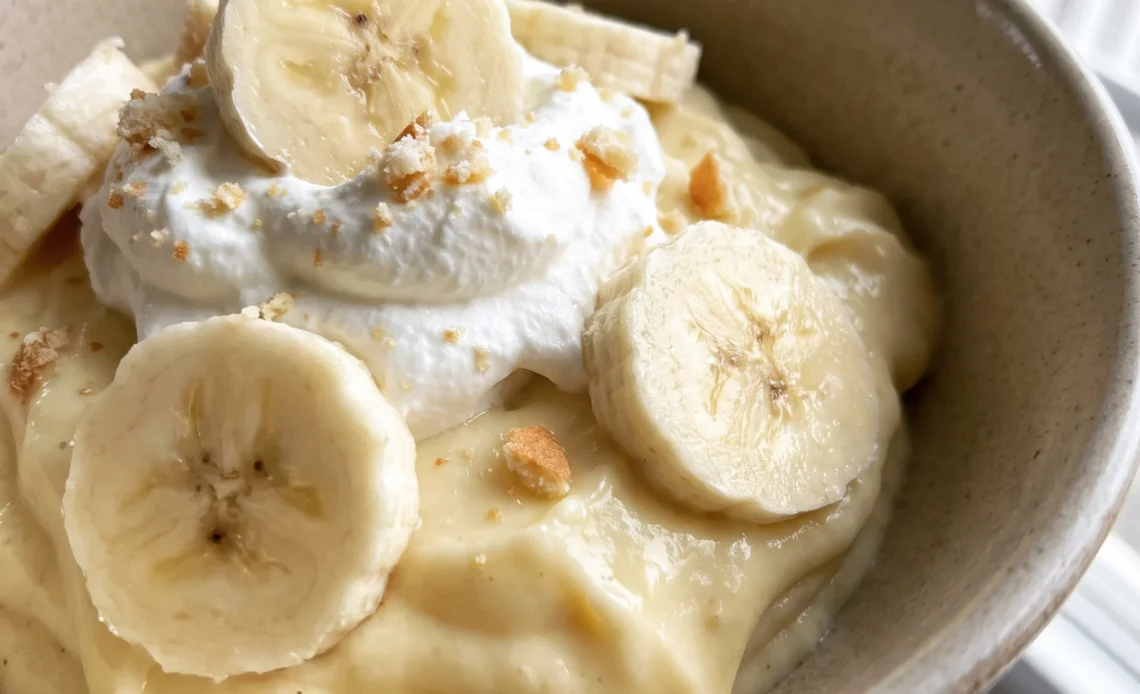
Yes, you can make homemade banana pudding without the box and without the oven, and the whole thing hinges on a starch that behaves differently than most people expect. Cornstarch sets this custard, not the yolks, which means the pot goes straight on the burner and there’s no water bath to babysit. The tricky part is the finish line: pull it while it still looks like thick milk and you’ll end up with a loose bowl no amount of chilling will rescue.
Getting it to bubble fully is where the texture is won. Bananas and cream go on at the last second, and that timing matters more than anything else you’ll do.
Keep it small, keep it cold, and you’ve got a dessert that tastes like actual dairy and vanilla instead of sweetener.
A Stovetop Custard Without the Water Bath
This pudding sets because cornstarch does the thickening. Egg yolks bring color and richness, but they aren’t what turns the liquid solid. That distinction explains why you can cook it directly in a saucepan, no water bath, no oven.
The starch granules swell as the mixture heats, and once it bubbles, the pudding is already thick enough to hold. Slide a spoon through and the trail stays open for a second before the sides slump back.
Chilled, it cuts clean and glossy, the kind of slice that keeps a sharp edge on the plate. A baked custard would need gentle, indirect heat to keep the eggs from curdling, but here there’s no such risk.
Stir over medium heat and the whole thing comes together in minutes. The texture lands somewhere between a firm pastry cream and a soft set pudding, rich but never heavy.
Bananas Go In at the Last Minute
Leave sliced bananas in the pudding for even an hour and they start to break down. Their moisture seeps out, thinning the custard, and the exposed surfaces darken.
The fix is simple: keep the base banana-free until serving. That way the pudding stays thick and pale, and the fruit keeps its shape and fresh flavor.
This also means you can make the pudding well ahead, chill it, and have dessert ready when you are. Just before you eat, peel and slice the bananas and lay them over the top.
They stay firm and clean-tasting, a bright contrast to the cold, dense pudding. The separation is what keeps the whole thing from turning into a sad, watery bowl.
You get the full banana flavor without the mushy texture that comes from sitting together.
Whipped Cream Stays on Top
Whipped cream belongs on top of this pudding, not folded through it. Stir it in and the custard loosens, losing the dense, spoonable body that makes it satisfying. Instead, each serving gets a cool, airy cap that sits against the rich pudding underneath.
You taste the difference immediately: the cream is light and barely sweet, the pudding is thick and full. That contrast is what makes the dessert feel balanced rather than heavy.
Dollop it on just before serving so it doesn’t deflate or weep into the custard. A plain, unsweetened cream works best here because the pudding already carries enough sugar.
The layers stay distinct, and every spoonful gives you both textures at once. If you want a cleaner look, spread the cream to the edges; otherwise, a generous spoonful in the center is fine.
Small Batch, Big Chill
Four servings means this fits a weeknight or a small dinner without leftovers hanging around. Prep takes 15 minutes, cooking another 8, so the active work is done in 23 minutes total. But that number doesn’t include chilling, which is important.
The pudding needs time in the fridge to firm up and get cold. Make it in the morning or early afternoon and it’s ready for dessert that night. The wait is mostly hands-off, so it’s a practical same-day project if you plan ahead.
Once chilled, the texture is set and scoopable, and the flavor is clean and milky. Portion it into individual bowls before chilling if you want to serve straight from the fridge. Just remember to slice the bananas at the last second.
For a household of four, it’s just enough for everyone to get a proper serving without temptation to overdo it.
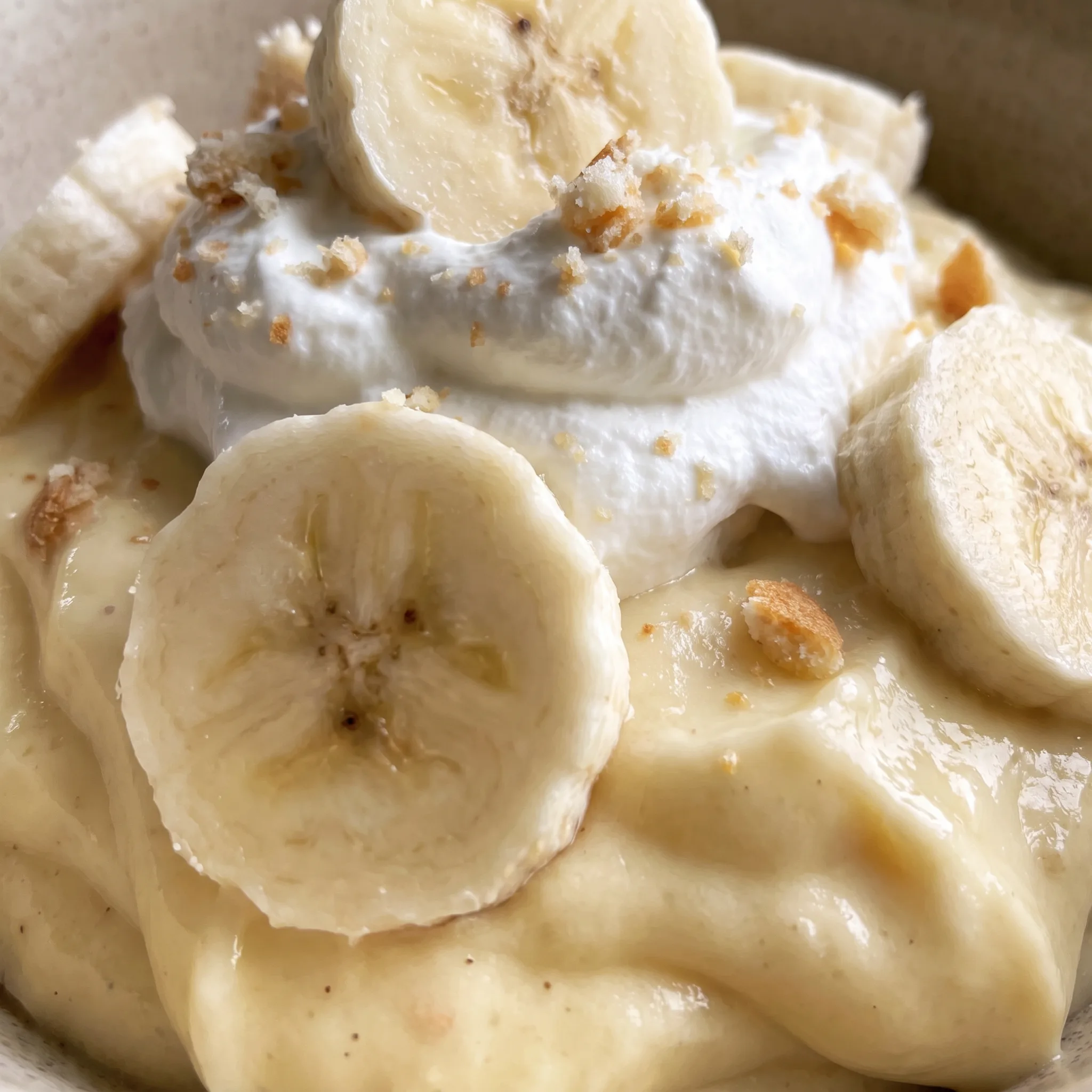
What to Buy and How to Hold It for Banana Pudding
Whole milk: Skip anything lower in fat here, since 2 cups of whole milk is what gives the chilled pudding its body and clean dairy flavor.
Cornstarch: Check the date on the box, because old cornstarch that’s been open for a year or more thickens weakly and leaves the pudding loose.
Egg yolks: Two large yolks, and save the whites for another use rather than adding them here, since extra white thins the set.
Bananas: Buy them yellow with a little green at the stem, firm enough to slice clean and hold their shape on top.
Whipped cream: Plain unsweetened cream, since the pudding already carries 1/4 cup of sugar and sweetened cream pushes it over.
The pudding thickens only when the cornstarch granules absorb liquid and gelatinize, which happens between 203, 212°F and requires constant whisking to keep the granules separate. Before that point the mixture looks like warm milk; once it thickens it will visibly bubble and coat the whisk heavily. If you stop whisking or pull it off the heat before those bubbles appear, the starch never fully sets and the pudding stays runny; if you let it sit without whisking, the granules clump into lumps that cannot be smoothed out.
Reading the Pudding as It Cooks
When the whisk starts leaving tracks
For the first few minutes, the mixture looks like milk with stuff floating in it. Then it thickens enough that the whisk leaves a faint trail that closes up right behind it.
That’s your cue to keep going, not to stop. The real signal is when the trail stays open for a second before the sides slump back. If you pull it off the heat while it’s still thin, it won’t set up firm enough.
Wait for the bubbles.
The first bubble that breaks the surface
Cornstarch needs to hit a full boil to thicken properly. A single bubble breaking the surface is the moment the pudding has crossed from liquid to set.
If you stop before that, the raw starch taste lingers and the texture stays loose. Once you see that bubble, keep whisking for another 30 seconds to make sure the whole pot has caught up.
Then pull it off the heat.
How the pudding coats the whisk
Lift the whisk and let some of the mixture drip back into the pan. If it runs off in a thin stream and disappears, it’s not done. If it coats the wires and falls in a slow, heavy plop that holds a soft shape on the surface for a beat, the starch has fully swollen.
That plop is the difference between a pudding that slices and one that pools in the bowl.
The color shift from pale to glossy
Raw custard looks flat and slightly grainy. As it cooks, the color deepens to a pale yellow and the surface turns shiny.
That shine means the starch has absorbed the liquid and the mixture is smooth. If it still looks dull or has a matte finish, give it another minute over the heat, whisking constantly.
Dullness usually means undercooked starch, and the texture will be pasty once chilled.
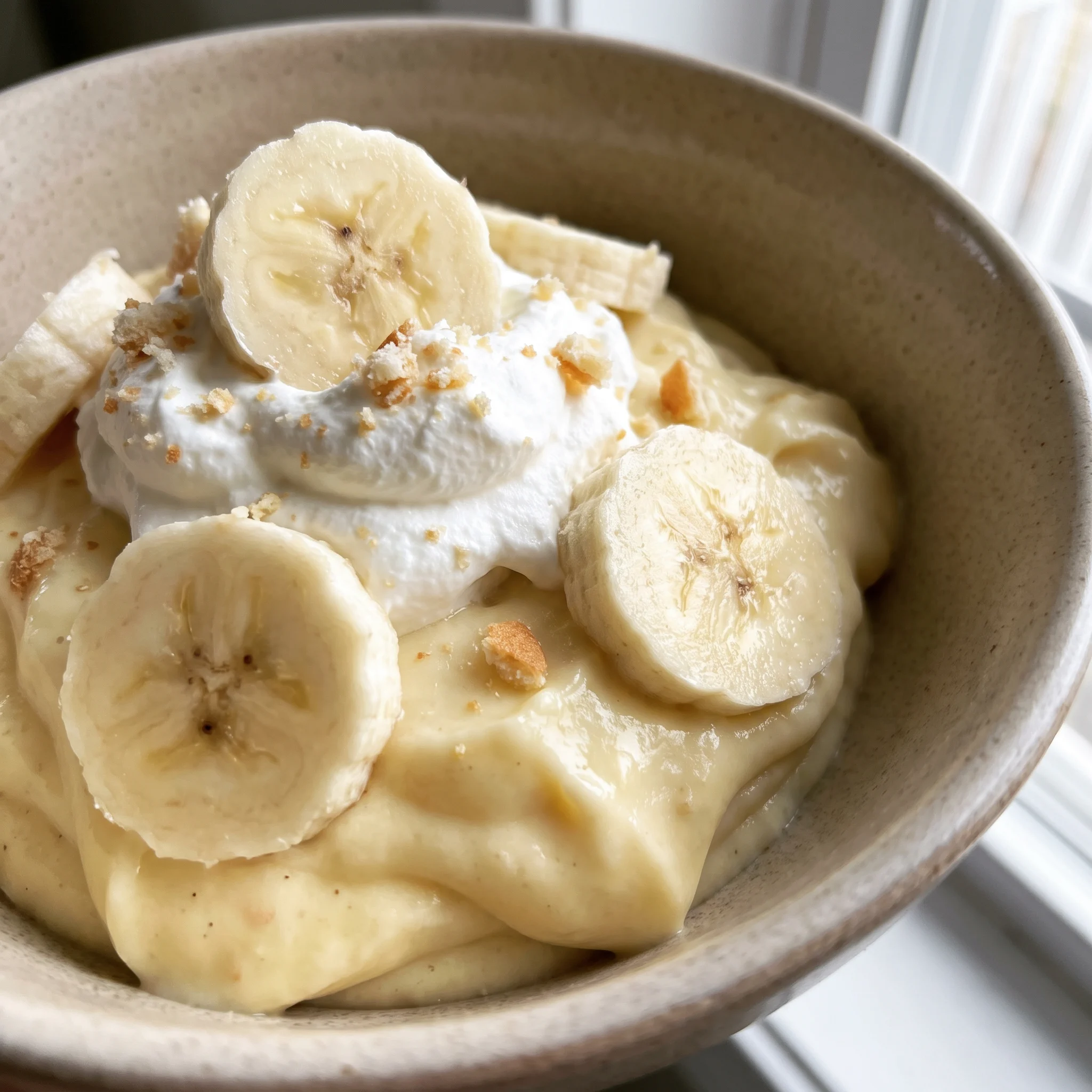
Creamy Homemade Banana Pudding with Fresh Bananas
Ingredients
Method
- Whisk together the sugar, cornstarch, and salt in a medium saucepan until fully blended.
- Add the whole milk, egg yolks, and vanilla extract, whisking until the mixture is smooth.
- Cook over medium heat, whisking constantly, until the pudding bubbles and thickens, about 6–8 minutes.
- Remove from heat and immediately transfer the thick pudding into serving bowls or a larger dish.
- Chill the pudding until it reaches your desired temperature.
- Just before serving, slice fresh bananas and arrange them on top of the pudding.
How Long the Pudding Keeps and When to Top It
The pudding base holds in the fridge, covered, for up to three days. Cornstarch-thickened custards are stable, but they do drift. By day two the surface may look slightly less glossy, and by day three the texture reads a touch firmer and drier at the edges.
That’s moisture working its way out, not spoilage. Press plastic wrap directly onto the surface before chilling to slow it. If a stored portion looks tight, whisk in a spoonful of milk over low heat until it loosens, then cool it again.
Don’t freeze the assembled pudding: dairy custards weep on thaw and the cornstarch breaks down, leaving a grainy, watery result. Eat it within a day of making for the best texture, while the body is still dense and clean. Banana slices go on only at the moment of serving, never before, and the whipped cream follows right after.
Once topped, eat within minutes. Leftover slices sitting in the bowl will darken and leak, so slice only what you’ll serve.
Tips
- Whisk the 1/4 cup sugar, 3 tablespoons cornstarch, and 1/4 teaspoon salt together in the dry saucepan before the milk, yolks, or vanilla go anywhere near it. Cornstarch clumps on contact with liquid, and once those lumps form, the only fix is straining the hot pudding through a fine-mesh sieve, which costs you time and leaves the texture less even. Whisking the three dry ingredients first coats each starch granule in sugar, so when the milk and yolks hit the pan they disperse in seconds instead of seizing into lumps you have to chase with the whisk for the next six minutes.
Swaps That Keep the Custard Thick and the Bananas Bright
Whole milk: Unsweetened oat milk or cashew milk, same 2 cups. The pudding will still set because cornstarch does the thickening, but the body gets lighter and the flavor less dairy-rich. Nut milks bring a faint sweetness of their own; oat milk tastes starchier.
Use a barista-style oat milk if you can, since it has more fat and gives a creamier result. Don’t use skim or low-fat dairy milk either, for the same reason.
The custard won’t slice as cleanly and may weep a little after a day in the fridge.
Granulated sugar: Honey or maple syrup, 3 tablespoons, added with the milk. Liquid sweeteners bring water, so the pudding takes a minute or two longer to bubble and thicken.
The color shifts toward tan and the flavor reads darker, which can fight the vanilla. Start with 3 tablespoons and taste the hot pudding before chilling; add more only if it needs it.
The set will be slightly softer than with sugar.
Cornstarch: Leave it alone. There is no clean substitute here.
Cornstarch is what turns the milk and yolks into a spoonable custard. Arrowroot thickens but breaks down under long cooking and turns slippery. Tapioca starch gives a stretchy, gluey texture.
Flour needs twice the amount and tastes raw unless you cook it longer, which risks curdling the yolks. If you must avoid corn, use 3 tablespoons of tapioca starch and accept a softer, less clean set.
Egg yolks: Leave them alone as well. They carry color and richness, and removing them changes the custard.
Skip the yolks and you lose the pale gold color and the round, full flavor. The pudding still sets on cornstarch alone, but it tastes flat and looks chalky white.
Adding extra whites to make up volume thins the set and makes the texture rubbery. Keep the two yolks.
Frequently Asked Questions
Why did my banana pudding turn out runny?
Most likely the pudding came off the heat before it hit a full boil. Cornstarch only does its job once the mixture bubbles, and if you pulled it early the starch never finished swelling, so it stays loose no matter how long you chill it.
A second check is old cornstarch, which thickens weakly even when you cook it right. And if you sliced the bananas into the pot, their moisture seeps out over time and thins what was a firm custard. Keep the fruit for the top at serving and you remove that cause entirely.
Can I make banana pudding ahead of time?
Yes, and it’s built for it. The base holds covered in the fridge for up to three days, so making it in the morning for that night is easy. Press plastic wrap right onto the surface before it goes in, which slows the moisture loss that leaves the edges looking tight by day two or three.
The bananas and the cream go on only at the moment of serving, so leave those until you’re ready to eat.
How do I keep bananas from browning in banana pudding?
Slice them right before serving, and don’t get ahead of yourself. Once cut, bananas darken and leak within the hour, and there’s no coating that stops it. Slice only what you’ll serve, lay the pieces over the chilled pudding, and add the cream right after.
Anything left sitting in the bowl will go soft and wet, so it doesn’t keep.
What’s the difference between this banana pudding and the classic boxed version?
The boxed kind sets on modified starch and often gets folded with whipped topping and layered with cookies, so it eats soft and sweet throughout. Here the body comes from cornstarch and two egg yolks cooked on the stovetop, which gives you a denser, glossier custard that cuts clean on the plate and tastes distinctly of milk and vanilla. Bananas go on as a fresh layer at serving rather than sitting in the mix, so they stay firm instead of going soft.
The cream stays a cap on top, light against the rich pudding underneath, instead of being stirred through and loosening the whole thing.
