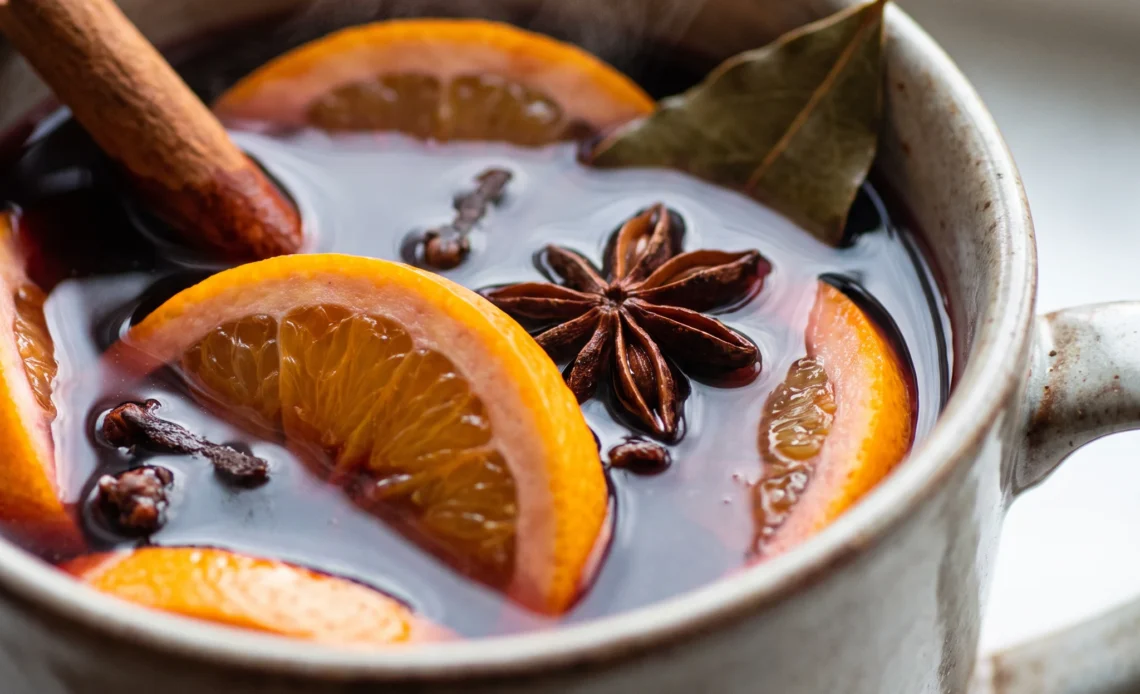
Mulled wine isn’t a sweet drink, though plenty of pots end up tasting like one. It’s wine that’s been gently warmed with citrus and spice, and the whole thing hinges on balance you set up before the heat ever touches it. A shot of amaretto and a measured half cup of brown sugar do that work, keeping the pot from landing thin or cloying.
Get that ratio right and the amaretto mulled wine stays wine first, with sweetness and spice behind it. Get it wrong and no amount of spice rescues the mug. The margin is narrower than most people expect, and it shows up fast once the wine starts to move.
Let the Amaretto Do More Than Flavor
A shot of amaretto alongside half a cup of brown sugar pushes this drink past what wine alone can carry. Both raise the alcohol and the sweetness, and that combination is what lets you warm the wine gently without it going sharp or tasting like cooked fruit. Without them, a red wine heated just to a simmer can turn thin and harsh in the time it takes to reach the pot’s edge.
The almond side of the amaretto is doing quiet work too. It links the orange peel to the cinnamon and star anise, so what you taste in the mug reads as one drink rather than sugar with spice on top. Adding it before the pot goes on the heat matters: the liqueur warms with the wine and settles into it, instead of sitting on the surface as a raw splash you’d notice at the first sip.
Six servings at 220 calories each, and none of them taste watered down.
Whole Spices, Not Ground
A cinnamon stick, three cloves, three star anise, one bay leaf. All of them go in whole, and that’s not a stylistic choice. Whole spices give up their aroma slowly as the wine warms, which is the pace this drink runs on.
Nothing turns cloudy. Nothing settles into a powdery layer at the bottom of the mug.
Ground versions behave differently. They disperse the instant they hit liquid, so a wine that’s only gently warmed ends up carrying particles it never had a chance to shed, and the spice reads sharper and dirtier than the stick and pods would. You’d feel it on your tongue.
The bay leaf is the sleeper here. It pulls against the brown sugar and amaretto with something herbal and faintly savory, and without it the finish gets flat and one-note sweet. Leave it in through the warm-up and the whole pot tastes rounder.
Thick Citrus Slices Stay Sweet
Three clementines or one orange, cut into thick rounds and dropped straight into the pot. Thick is deliberate. A thin slice gives up its pith to the wine within minutes of warming, and that pith is where the bitterness hides.
Cut thick, the peel and the white underneath hold together through the short time on the heat, so what comes through is juice and the oils in the skin, not a harsh backnote.
Those oils are the point. They lift the amaretto’s almond edge and give the cinnamon something bright to sit against. The juice adds just enough tartness to keep the sugar from running the show.
Because nothing comes to a boil, the fruit never tastes stewed. It stays fresh and faintly floral, and the wine keeps that same brightness in the mug. When you ladle it out, the citrus rounds are still intact, which tells you the pot never got away from you.
Why Eight Minutes, Then Off
Warm the wine gradually and pull it off the heat the moment it starts to move, a bare simmer and no more. Eight minutes is enough to wake the spices and citrus and pull their aromatics into the liquid. Past that, you’re cooking the drink, not infusing it.
A boil drives off the alcohol from the wine and the amaretto both, and what’s left tastes flat and cloying, sweeter than it should be because the thing balancing that sugar is gone. The volatile top notes from the star anise and orange peel leave with the steam. You can smell it happening if you let the pot go too long.
That’s the whole reason the total sits at 10 minutes. Two minutes of slicing, eight at the stove, and the goal is infusion, not reduction. The liquid should be steaming and just beginning to tremble at the edges.
Ladle it then, and the first sip still carries the wine.
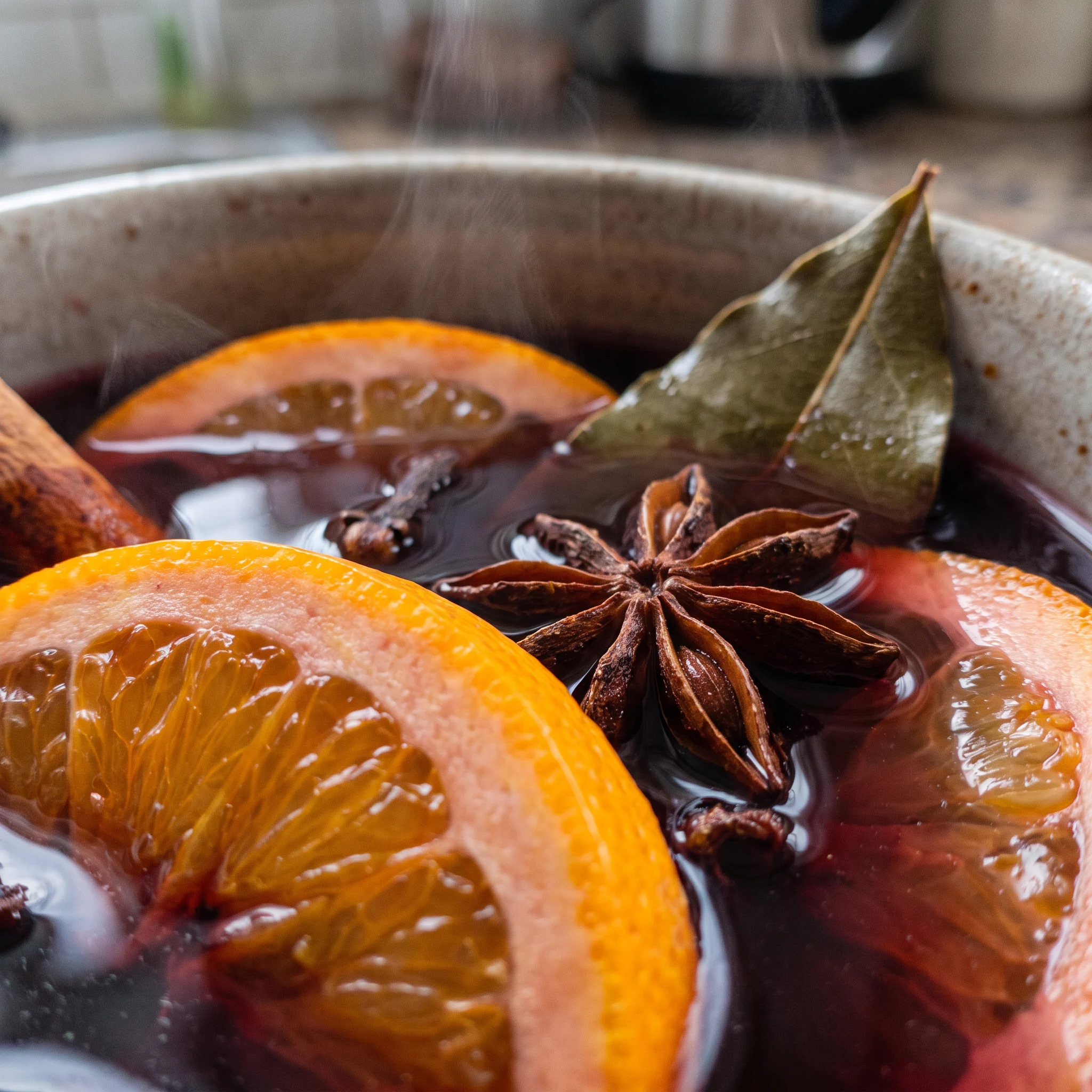
Four Things That Decide the Pot
Red wine: Any dry, fruity bottle you’d actually drink works, since a wine you find harsh cold only gets harsher warm.
Amaretto liqueur: The real almond liqueur, not an amaretto-flavored syrup, because the syrups carry extra sugar and far less of that almond edge.
Clementines or orange: Clementines run sweeter and thinner-skinned than a navel orange, so three of them bring more juice and less pith to the pot.
Star anise: Look for pods with all eight points intact and a strong licorice smell, since broken or faded ones have already lost most of their aroma.
Reading the Pot, Not the Clock
When the wine is about to move
You’re looking for the first sign of movement: a thin ring of tiny bubbles at the pot’s edge, a wisp of steam, a faint tremor on the surface. That’s your cue to cut the heat. If you wait for a full boil, you’ll lose the wine’s brightness and the amaretto’s lift, and the drink turns flat and too sweet.
Catch it early and the infusion is clean.
The smell that tells you it’s done
Lean in. When the pot smells like warm citrus and spice rather than sharp alcohol, the wine has taken on what it needs. Keep going and that perfume cooks off, leaving a dull, sugary smell.
If you’ve gone too far, pull it off immediately and add a splash of fresh wine to bring back some life.
Keeping the citrus intact
After eight minutes, the orange rounds should still look like slices, not collapsed pulp. If they’ve broken down, the wine will taste pithy and stewed. You can’t undo that, but you can avoid it by not stirring roughly and by pulling the pot off the heat the moment it simmers.
Tasting for balance before serving
A sip now should taste like wine first, with sweetness and spice behind it. If it’s cloying, the wine got too hot and lost its alcohol; a squeeze of fresh citrus or a small splash of wine can bring it back.
If it’s harsh, it needed more time off the heat to settle. Adjust before you ladle.
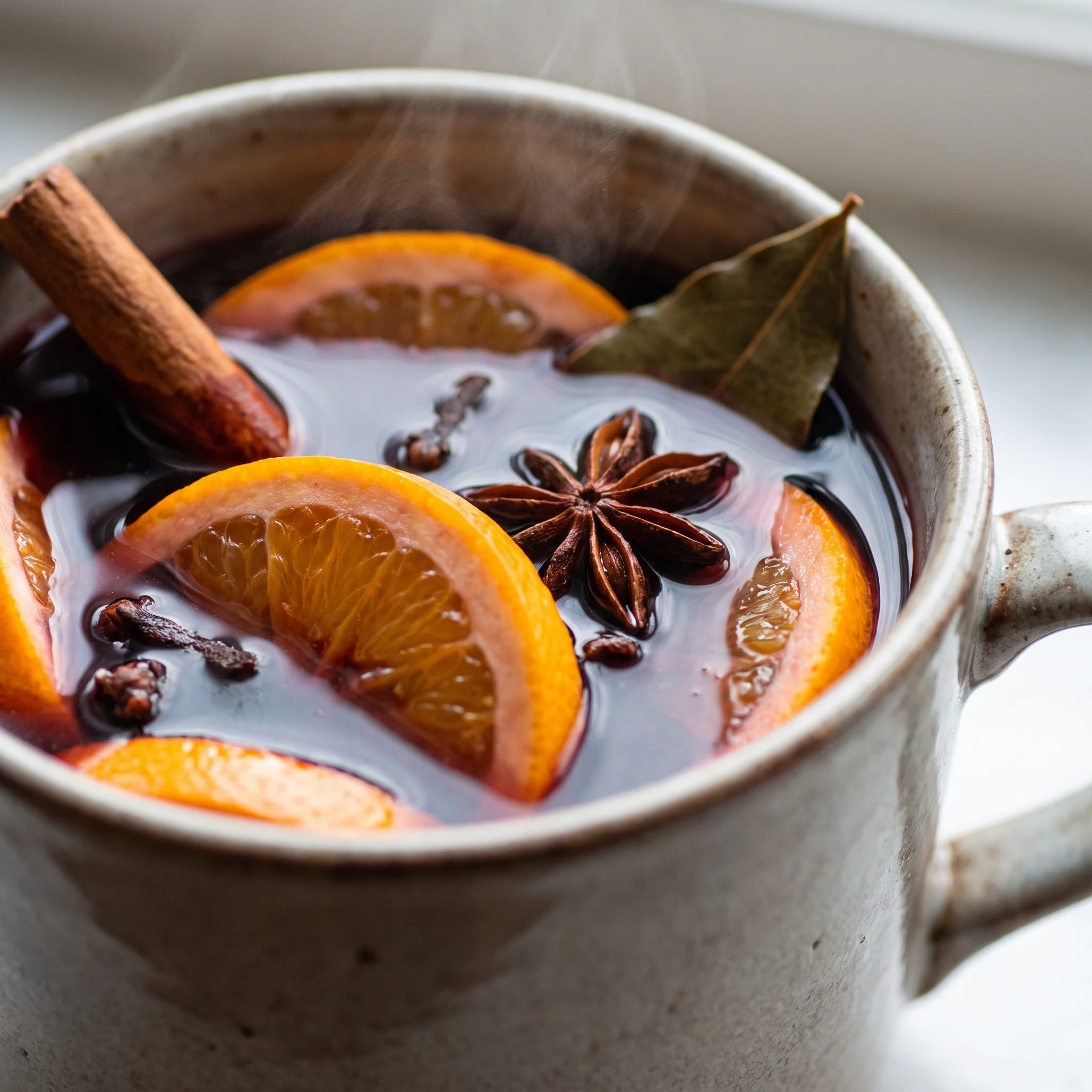
Amaretto Mulled Wine with Clementines
Ingredients
Method
- Slice the clementines or orange thickly, then place them in a medium pot. Incorporate all remaining ingredients and stir to combine.
- Warm the wine gradually until it starts to simmer, then turn off the heat right away; avoid bringing it to a boil.
- Transfer the mulled wine into heatproof mugs with a ladle and serve.
What to Trade and What to Leave Alone in the Pot
Red wine: Swap the dry red for a fruity white like Pinot Grigio or an off-dry Riesling. The drink loses some of its body and the deep red color, but the citrus and spice come forward more sharply.
The white wine also brings a lighter, brighter character that some find easier to sip. If you go this route, taste after the first few minutes of warming and add a little more brown sugar if it seems too tart.
Amaretto liqueur: Swap the amaretto for a different nut liqueur, such as Frangelico (hazelnut) or Nocello (walnut). The almond note in the original gets replaced by hazelnut or walnut, which shifts the drink’s aroma.
Hazelnut reads rounder and a bit sweeter; walnut is deeper and slightly bitter. Both still bring alcohol and sugar, so the balance stays close. Start with the same 35 ml the recipe uses, then adjust after tasting.
Brown sugar: Swap the brown sugar for honey or maple syrup. Honey adds a floral note that can clash with the star anise, while maple brings a woodsy sweetness that sits better with the cinnamon. Both are sweeter than brown sugar, so start with 1/4 cup (about 60 ml) and add more if needed after the wine warms.
The liquid sweeteners also thin the body slightly.
Clementines or orange: Swap the thick citrus slices for a few strips of orange peel and a squeeze of juice from a different citrus, like lemon or grapefruit. Using only the peel avoids the pith entirely, so there’s no risk of bitterness, but you lose the fresh juice that balances the sugar.
A squeeze of lemon adds tartness without sweetness; grapefruit brings a bitter edge that can echo the bay leaf. Add the peel at the start and the juice just before serving.
Storage and Serving: Drink It Within the Hour
This is a drink to serve as soon as it comes off the heat. Ladle it into mugs within an hour of that simmer.
The spices keep giving while it sits, so past the hour the star anise and bay push forward and the wine underneath starts to read thin. Wait much longer and the amaretto’s almond edge flattens into the sugar.
Leftovers hold in the fridge, covered, for two days. Cool the pot first, then refrigerate it with the citrus and whole spices still in. They keep infusing cold, so strain them out before you store if you want the second serving closer to the first.
Two days is the limit: the citrus peel turns the liquid bitter after that, and the wine picks up a flat, oxidized note.
Rewarm gently in a pot. Steam and a tremble at the edge, never a boil, or the amaretto and spice aromatics leave with the steam. Freezing doesn’t work here: the wine separates and the spices go harsh on thaw.
Make it fresh instead.
Tips
- Taste the wine the moment you cut the heat, not after it cools in the mug. A pot that reads balanced at a simmer can taste sweeter ten minutes later, because the amaretto and brown sugar come forward as the liquid drops in temperature and the alcohol’s bite fades. If it’s already sweet off the heat, add a squeeze of clementine juice or a splash of the bottle before you ladle, since cold mugs will only push it further that way.
- If you’re holding the pot warm for a late arrival, keep the whole spices and citrus in but leave the bay leaf out after the first eight minutes. Bay keeps extracting its herbal note the longer it sits, and in a wine this lightly sweetened it turns the finish savory and dims the star anise within another ten minutes. Fish it out with a spoon once the heat is off and the pot can wait without drifting.
The hard step is catching the wine at the first sign of a simmer and cutting the heat immediately. Watch the surface for the first lazy bubbles and listen for a low murmur rather than a rolling boil; once a full boil starts, the alcohol and delicate spice aromatics are already escaping and the flavor cannot be recovered.
Frequently Asked Questions
Can I make amaretto mulled wine ahead of time?
It’s best fresh, though you can prep the pot hours earlier: slice the citrus, add the wine, amaretto, sugar, and whole spices, then cover and leave it on the counter until you’re ready to warm it. The actual cooking takes eight minutes, so there’s no reason to simmer it in advance.
If you do warm it early, drink it within the hour; past that the star anise and bay leaf push forward and the wine underneath reads thin. Leftovers keep in the fridge for two days, strained if you want the second mug to taste like the first.
Why did my mulled wine turn out too sweet?
The wine got too hot and lost the alcohol that was balancing the sugar. Once the pot boils, the amaretto’s lift and the wine’s acidity cook off, and what’s left is cloying. A squeeze of fresh citrus or a small splash of unheated wine stirred in at the end can bring it back.
Also check your amaretto: an amaretto-flavored syrup instead of the real liqueur carries extra sugar and far less almond edge, so the drink starts sweeter than the recipe intends.
What is the difference between amaretto mulled wine and traditional mulled wine?
The amaretto is the difference, and it changes how the drink holds up to heat. Traditional mulled wine leans on sugar and spice alone, which can leave a gently warmed red tasting thin and harsh.
The shot of amaretto adds both alcohol and sweetness, and its almond note links the orange peel to the cinnamon and star anise so the mug reads as one drink. You also get a nutty aroma underneath the citrus that a standard glühwein doesn’t have.
Can I use a different red wine for this recipe?
Yes, any dry, fruity red you’d actually drink works. A wine you find harsh cold only gets harsher once it’s warm, so pour something you like from the glass. Avoid very tannic or heavily oaked bottles, since heat pushes those rough edges forward.
If you’d rather go lighter, a fruity white like Pinot Grigio or an off-dry Riesling works too, though you lose some body and the deep red color.
How do I keep mulled wine from boiling?
Watch the pot’s edge, not the clock. The moment you see a thin ring of tiny bubbles and a faint tremor on the surface, cut the heat. Steam rising and the smell of warm citrus and spice rather than sharp alcohol means the wine has taken on what it needs.
If you’ve gone too far, pull it off immediately and add a splash of fresh wine to bring back some life. A boil drives off the alcohol from both the wine and the amaretto, leaving a flat, sugary drink.
