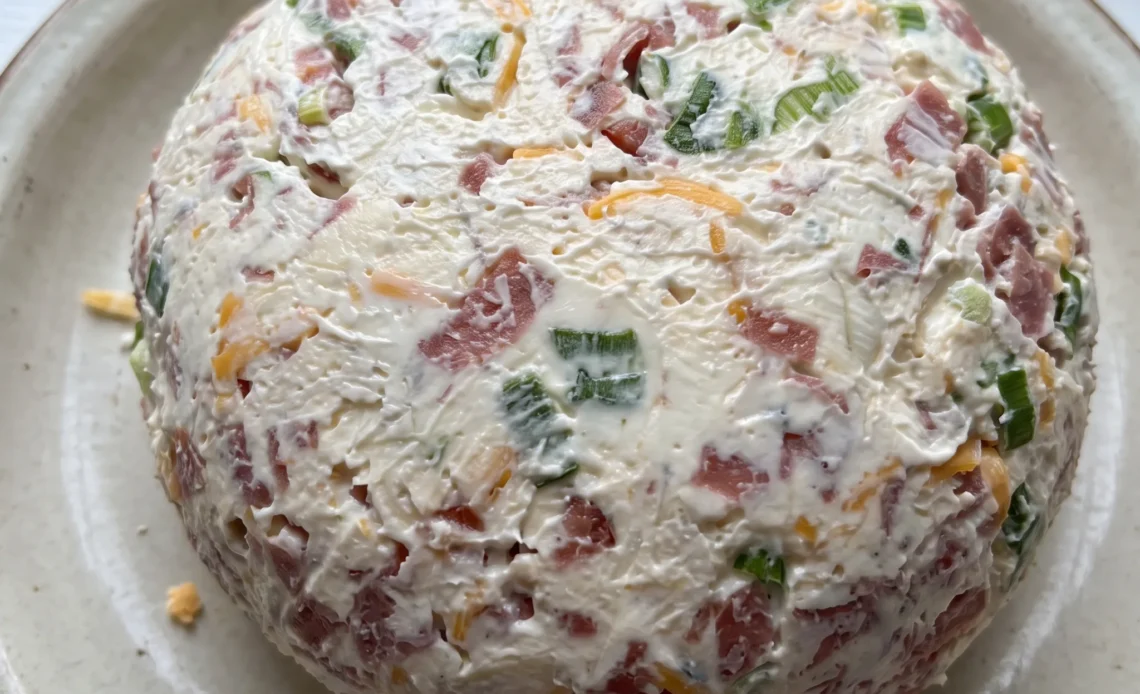
Ten minutes of prep and a chill in the fridge is all a chipped beef cheese ball asks of you, which is exactly why it’s worth getting the base right before anything else. The trickiest part isn’t the mixing; it’s knowing when the cream cheese is truly soft enough to blend, because cold cream cheese fights you and never quite smooths out. Get that right and the rest is mostly waiting.
The salty cured beef does double duty here, minced into the base for flavor and held back for a rough coating that gives each bite some texture. Cream cheese blocks, not the spreadable tub kind, make the difference between a ball that holds its shape and one that slumps.
If you’ve had a cheese ball turn greasy or the coating slide off, the fix is usually in what you bought and how dry it was, not the recipe itself.
Why does chilling make a difference?
Twenty minutes in the fridge does more than firm up the cream cheese mixture. When the ball is cold, its surface tightens, so the coating has something to grip. Chipped beef and green onions pressed onto a chilled ball stay put instead of slipping into the cheese.
If you skip the chill, the mixture stays soft and sticky. Rolling it in the coating turns into a mess, with bits smearing into the cheese and the outside looking patchy. The coating also stays distinct: you get a clear contrast between the smooth interior and the textured exterior.
A cold ball rolls cleanly, and the coating adheres evenly all over. That’s why the 20 minutes matters.
It’s not about making the cheese hard; it’s about making the surface ready to hold onto what you press onto it.
The case for keeping some beef and onions out of the mix
Setting aside 1/4 cup each of chipped beef and green onions isn’t an afterthought. The ones that go into the base get minced fine and blend into the cream cheese, adding flavor but no texture. The reserved ones stay larger and dry, so when you roll the ball, they stick out and give a crisp, savory crunch.
That contrast is what makes the cheese ball interesting to eat. If you dump everything into the base, the outside is just smooth cheese. It looks flat and tastes one-note.
The reserved coating ingredients also stay free of moisture, so they don’t clump or get greasy. You end up with a ball that has a rough, speckled exterior and a creamy interior. That’s the difference between a cheese ball that disappears and one that sits there.
Does cream cheese temperature really matter?
Yes, and it’s the difference between a smooth ball and a lumpy one. Cold cream cheese stays stiff and resists blending, no matter how long you mix. You’ll see lumps that never quite disappear, and the Worcestershire sauce and seasonings won’t distribute evenly.
Let the cream cheese sit out until it’s truly room temperature, and it whips into a silky base. The Worcestershire, garlic powder, and seasoned salt blend in without streaks.
Shredded cheddar and chipped beef fold in evenly instead of clumping. A smooth base also means the ball forms easily and chills to a uniform texture. Taste a bit before chilling; if it’s gritty or uneven, you’ll know the cream cheese was too cold.
The fix is simple: let it warm up longer next time. Room temperature isn’t a suggestion; it’s what makes the whole thing work.
Is 1/2 teaspoon of seasoned salt too much?
It can be, because both chipped beef and cheddar bring plenty of salt to the party. Chipped beef is cured and salty; cheddar, especially a sharp one, adds its own sodium.
Seasoned salt also contains herbs and more salt, so 1/2 teaspoon is easy to overdo. The smart move is to mix everything, then taste before chilling. If it’s already salty enough, don’t add more.
You can always add a pinch later, but you can’t take it out. Over-salting is the most common way this cheese ball goes wrong. The Worcestershire sauce adds its own savory depth, so you might not need the full amount.
Trust your tongue, not the recipe. A well-balanced ball tastes rich and savory, not like a salt lick. That’s the goal.
Can you make it ahead?
Absolutely. This is a cold appetizer, so it’s built for making ahead.
The base can be mixed and chilled for hours, even a day. In fact, the flavor improves as the garlic, Worcestershire, and green onion have time to spread through the cream cheese.
The coating, though, should go on close to serving. If you roll the ball in the chipped beef and green onions too early, they can absorb moisture and lose their crispness. So mix the base, chill it, and then coat just before you set it out.
That way the outside stays lively and the inside tastes fully seasoned. It’s a low-stress party food: you do the work earlier, then just unwrap and roll when guests arrive. The result is a cheese ball that tastes like you fussed, even though you didn’t.
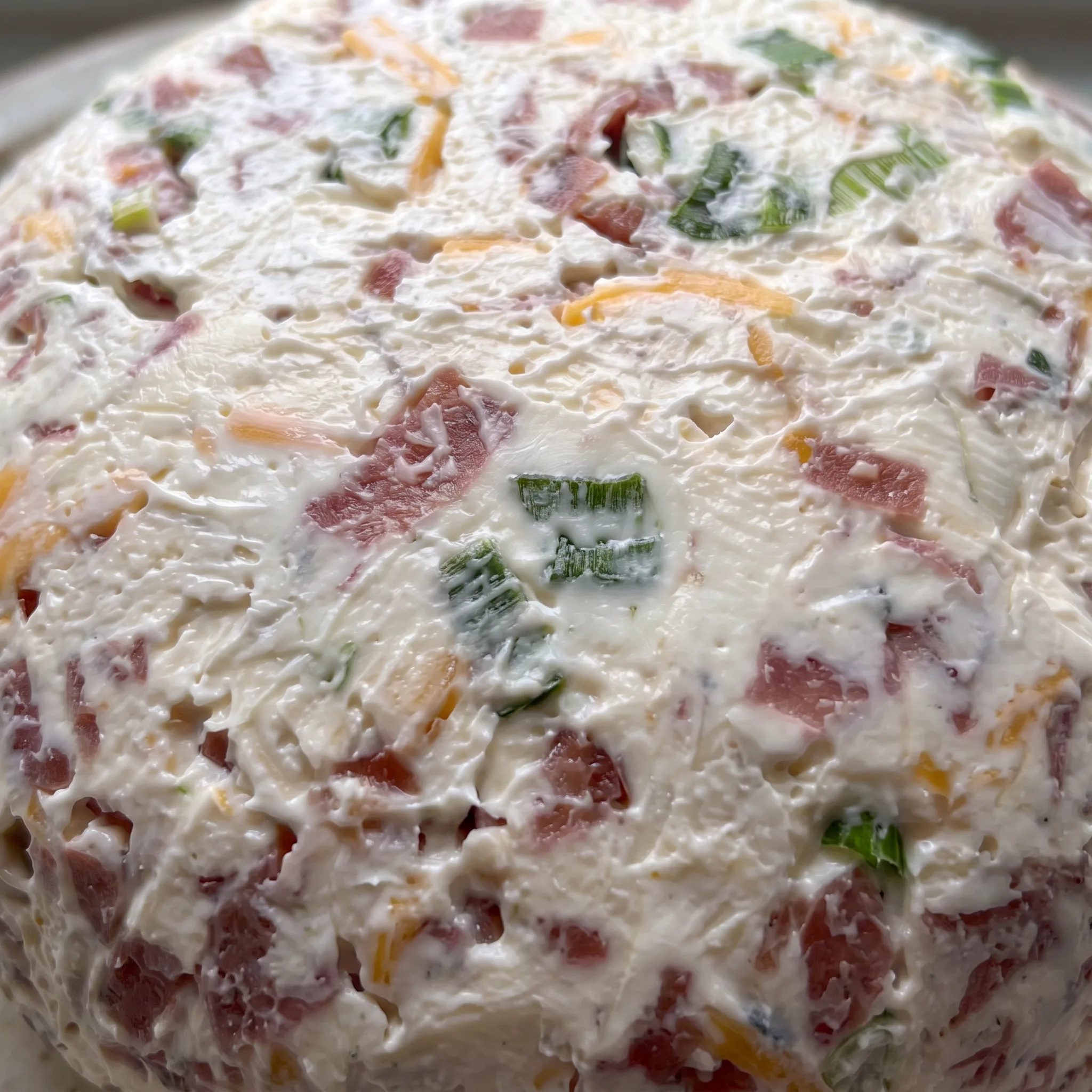
What to look for in the beef, cream cheese, and cheddar
Chipped beef: The jarred or packaged kind is cured and salty, so taste a piece before you commit the full 4 ounces to the mix.
Cream cheese: Buy the blocks, not the tub spread, because the spread is whipped with air and stays loose even after chilling.
Green onions: Use only the crisp white and light green parts, since the dark tops are limp and won’t hold up in the coating.
Cheddar cheese: Shred it yourself from a block, because the pre-shredded bagged kind is dusted with starch that keeps it from melting into the base.
Worcestershire sauce: A bottle that’s been open for years tastes flat and metallic, so check the date and use a fresh one if it’s been sitting.
At the mixing stage, taste a small pinch of the mixture before chilling: it should taste savory and rich, not sharply salty. Because chipped beef and cheddar are both cured or salted, the seasoned salt is a ceiling, not a starting point. Once the mixture is chilled and formed, saltiness cannot be reduced, so the moment to catch it is before the bowl goes into the refrigerator.
Judging the mix, the chill, and the coating
When the base is smooth enough
After whipping the cream cheese, rub a bit to the touch. Any resistance or tiny lumps mean it’s not ready.
Those lumps won’t vanish later. Keep mixing until it feels like soft butter. If you’ve already added the other ingredients, you can’t fix it by mixing more without crushing the beef and onions.
Stop when the base is silky and the add-ins are evenly scattered, not before.
Tasting for salt before you chill
Chipped beef and cheddar are both salty, so the mixture can taste right at first and too salty after it sits. Taste a small spoonful now.
It should be savory but not sharp. If it makes you reach for water, add a spoonful of cream cheese to dilute.
Waiting until after the chill gives you no room to adjust without wrecking the texture.
Reading the chill for coating
Twenty minutes in the fridge is the minimum, but the real test is touch. The ball should feel firm and cool, not soft or tacky. If your finger leaves a dent, it needs more time.
Rolling a soft ball smears the coating into the cheese and leaves bare patches. A properly chilled ball holds its shape and the beef and onions stick where they land.
Coating without clumping
The reserved chipped beef and green onions need to be dry and separate. If they’re damp, they’ll clump and slide off the ball.
Spread them on a plate and pick up the ball with your hands, pressing gently as you roll. Don’t press hard or you’ll dent the surface. You want an even, speckled layer that covers the whole ball, with no bald spots.
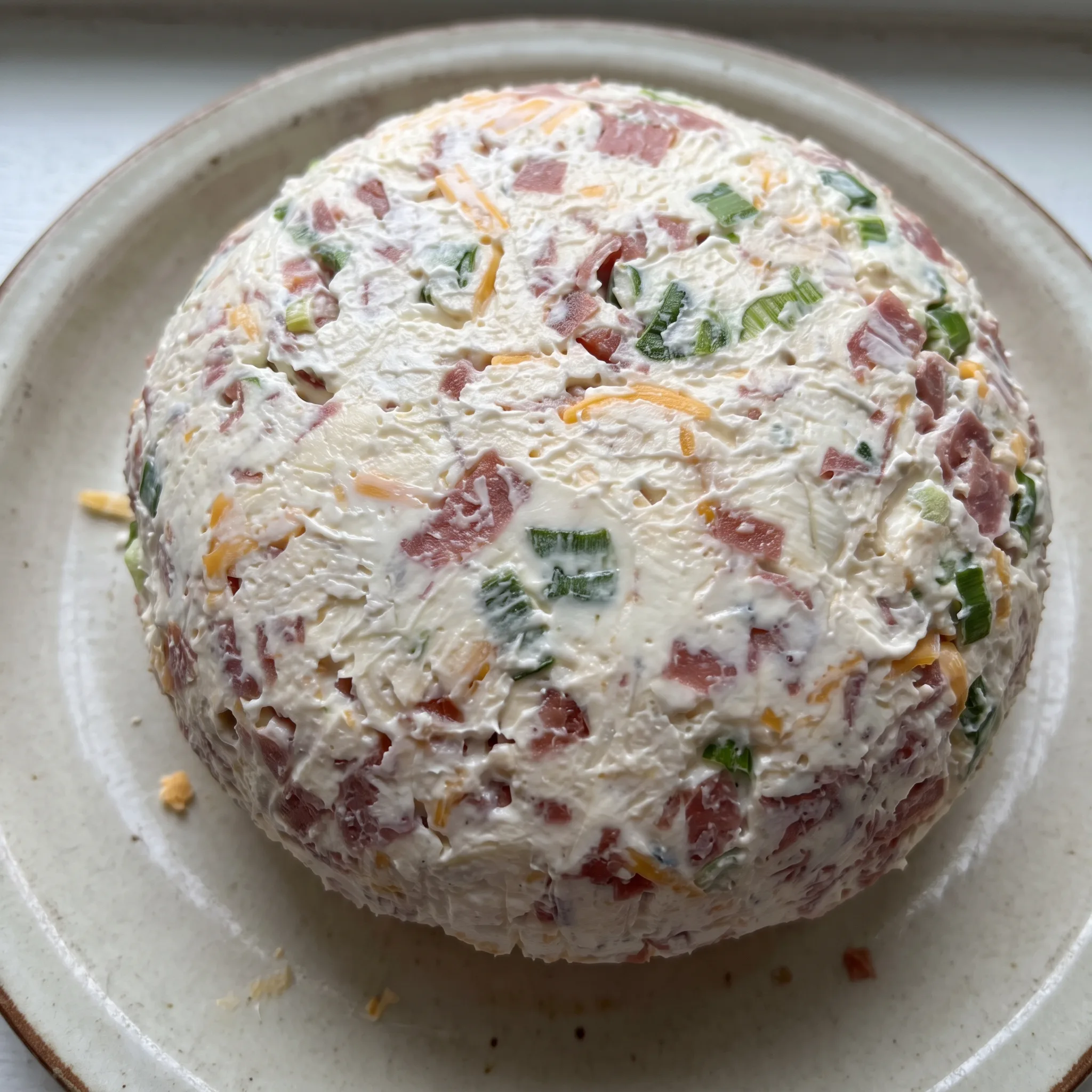
Chipped Beef Cheese Ball with Green Onions
Ingredients
Method
- Using a mixer bowl, whip the room-temperature cream cheese until smooth. Incorporate the Worcestershire sauce, garlic powder, seasoned salt, green onions, shredded cheddar cheese, and chipped beef.
- Place the mixture in the middle of a large sheet of plastic wrap. Pull the plastic wrap edges together and twist to fully cover the mixture. With your hands or by rolling on a counter, form it into a ball.
- Chill for at least 20 minutes.
- Scatter the set-aside chipped beef and green onions onto a plate or into a large bowl. Remove the plastic wrap from the cheese ball and roll it in the beef and onions until coated.
- Offer with crackers, vegetables, or sliced bread.
What You Can Change Without Ruining the Ball
Chipped beef: Dried beef or thinly sliced pastrami. Use the same 4 ounces, but keep in mind that dried beef is often saltier, so you might want to rinse it quickly and pat dry.
Pastrami brings a peppery edge and a bit more moisture, so pat it dry well before mincing; otherwise, the coating can turn damp and clump. Both alternatives give you that savory, salty punch, but pastrami will be less intense.
Cream cheese: Full-fat block cream cheese only; do not use spreadable tub cream cheese. The block style is firm and sets up when chilled, which is what gives the ball its shape. Spreadable cream cheese is whipped with air and won’t firm up enough, so the ball stays soft, the coating slides off, and you end up with a dip rather than a ball.
If you need dairy-free, a firm block-style vegan cream cheese can work, but check that it’s designed for baking and not the soft spreadable kind. Start with the same 16 ounces and adjust only if the mixture feels too wet; you might need to add a tablespoon or two of shredded cheddar to thicken it.
Worcestershire sauce: Leave it alone. It provides the savory depth that defines the flavor. Soy sauce or steak sauce would taste different and could throw off the balance.
If you must avoid anchovies, a few drops of liquid smoke mixed with a splash of tamari might come close, but it won’t be the same. Best to keep it as is.
Seasoned salt and garlic powder: Leave them alone. These two, along with the Worcestershire, build the flavor base.
Swapping them for plain salt and fresh garlic would change the texture and intensity. Fresh garlic can be harsh and watery, and plain salt lacks the herbs and other seasonings in seasoned salt. Stick with the recipe for the most reliable result.
Storage, serving, and when to add the coating
The uncoated cheese ball keeps in the fridge, wrapped tightly in plastic or sealed in a container, for up to three days. The texture softens slightly each day as the cream cheese takes on moisture from the green onions and beef, but the flavor stays balanced.
For the best eating, serve it within a day of mixing. If you’ve stored it longer, let it sit at room temperature for 15 minutes to take the chill off before rolling.
The reserved chipped beef and green onions go on right before serving. Pressed onto the cold ball, they stay crisp and distinct. If you coat it ahead, the beef and onions draw moisture from the cheese and turn soft and wet, losing the contrast that makes the exterior interesting.
So keep the coating separate until the last minute.
Leftovers: once coated, the ball is best eaten within a few hours. After that, the coating softens. You can scrape off the old coating, let the ball warm slightly, and re-coat with fresh beef and onions.
The uncoated base freezes well for up to a month; thaw overnight in the fridge, then coat and serve.
Tips
- Buy chipped beef that feels dry and leathery in the package, not slick or sitting in brine. Wet slices carry water that beads on the chilled ball, so the coating slides off in patches and clumps on the plate. Pat the slices with paper towels and let them air-dry for a few minutes before mincing; dry beef sticks where it lands and stays crisp through serving.

Frequently Asked Questions
Can I make this chipped beef cheese ball the day before?
Yes, mix and chill the base a day ahead. The garlic, Worcestershire, and green onion have time to spread through the cream cheese, so it tastes fuller after a night in the fridge. Keep the coating separate and roll it on right before serving.
That way the reserved beef and onions stay crisp instead of turning damp.
Why is my cheese ball greasy or oily?
The usual cause is cheddar that was shredded ahead and bagged; it’s dusted with starch that traps oil and sheds it into the mix. Shred your own from a block and the fat stays where it belongs.
A second check: if the cream cheese sat out too long and got warm, the emulsion can break, so keep it cool but soft. Greasiness also shows up if the coating ingredients were damp when they went on, so pat the chipped beef dry before rolling.
How do I keep the coating from falling off the cheese ball?
The coating sticks best when the beef and onions are dry and separate before they hit the ball. If they’re clumped or damp, they slide off in patches. Spread them on a plate in a single layer and pick up the ball with your hands, pressing gently as you roll.
Don’t press hard or you’ll dent the surface and leave bald spots. A light, even roll gives you a speckled layer that stays put.
What’s the difference between this and a classic cheese ball?
Chipped beef and green onions are the defining pair here, and they show up twice: minced into the base for flavor, and reserved for a rough, savory coating. A classic cheese ball often leans on a single cheese and a single coating, like nuts or parsley. This one gets its character from the salty cured beef against the cool cream cheese, with the green onion adding a sharp bite.
The result is a more textured, more savory ball than the usual.
How long can it sit out at a party?
Once coated, plan on a few hours at most. The coating softens as it draws moisture from the cheese, and the ball itself gets loose as it warms. Set it out just before guests arrive and keep an eye on it.
If it’s a long party, nest the serving plate over a bowl of ice to hold it longer.
