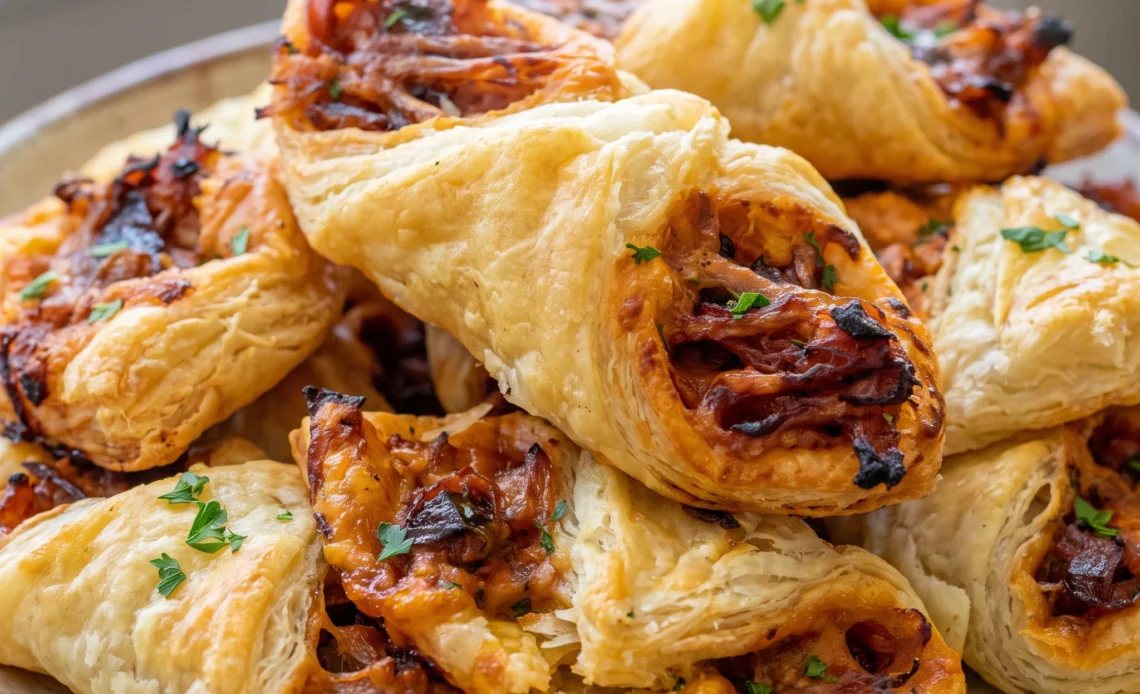
Leftover pulled pork has a short life. It dries out in the fridge, and reheating a pile of it straight in a pan just makes it drier.
Wrapped in pastry with sharp cheddar and a spoonful of sauce, that same pork turns into something people reach for twice before dinner is even on the table. A box of puff pastry gives you the wrappers, and the whole thing moves from cold fridge to hot tray fast enough to pull off on a weeknight.
The catch is the seal. Pastry that opens in the oven dumps its filling onto the parchment, and you find out too late.
These bbq pulled pork pastry puffs reward a little care at the fold and punish a heavy hand with the sauce. Everything else is timing and a hot oven.
The most common mistake is treating the pastry square as a container to fill rather than a wrapper with a narrow seam allowance. When pulled pork and cheese are piled too high or pushed toward the edges, the moisture they release during baking turns to steam, which forces the folded layers apart and leaves the bottom soggy instead of crisp. The recipe’s structure, 18 squares from two sheets, filling down the center only, is a deliberate ratio that keeps the seal dry and the pastry able to puff.
Why the Pastry-to-Filling Ratio Matters?
Eighteen squares come from cutting each of the two pastry sheets into nine. That grid sets the size of every puff, and it’s deliberate. The squares are small enough that a modest scoop of filling sits comfortably, but large enough to fold and seal without tearing.
Arrange the pulled pork and cheddar down the center of each square, leaving a clean border on all sides. That bare pastry is what you’ll press together. If you spread the filling to the edges, the seal won’t hold and the filling will leak out during baking.
The mix itself is controlled: pulled pork tossed with BBQ sauce and layered with cheddar, not a loose, saucy pile. Too much liquid and the pastry can’t contain it. Keep the filling centered and measured, and each puff bakes up neat.
You’re not just assembling; you’re building a sealed packet that stays intact.
What Tossing the Pork with BBQ Sauce Does
Pulled pork straight from the fridge can be dry and clumpy. Tossing it with BBQ sauce first changes that. The sauce coats every shred, so the meat stays moist as it heats through inside the pastry.
It also binds the pork together, making it easier to portion and less likely to spill out during folding. The cheddar goes on separately, layered with the pork rather than stirred into the sauce.
That way it melts into its own distinct layer instead of disappearing into the mix. The result is a filling that tastes balanced: tangy sauce, rich pork, sharp cheese.
Without the sauce, you’d get dry pockets and a filling that doesn’t hold together. This step is about cohesion and moisture, not just flavor.
Get the pork evenly coated and you’re set.
Egg Wash for a Glossy Finish
One beaten egg mixed with a tablespoon of water makes a simple wash. Brushing it onto the folded pastry before baking gives the surface a shine and helps it brown evenly. Without it, the crust bakes up matte and pale.
The wash goes on after folding and sealing, not before. You’re coating the top and any exposed edges.
A thin, even layer is all you need; too much and it pools, too little and you miss spots. The egg wash doesn’t add flavor, it’s purely about appearance. It’s the difference between a dull, floury-looking puff and one that looks like it came from a bakery case.
The brushed surface catches the heat and turns a deep golden brown. That visual cue tells you the pastry is done.
So take a minute to brush each one; the payoff is immediate.
A Party Appetizer That Serves a Crowd
This recipe yields 18 puffs, and that’s exactly how many servings you get. Each one is a generous bite, easy to hold and eat.
They’re designed for a buffet or passed around at a gathering, not a sit-down dinner. The beauty is that they can be served warm from the oven or left to cool to room temperature.
That flexibility means you can bake them ahead and set them out when guests arrive. The filling is already cooked pulled pork, so the only thing that needs oven time is the pastry.
That keeps the total time short: just 18 minutes in the oven. So whether you’re hosting a game day or a holiday party, these puffs fit the bill.
They’re substantial enough to satisfy but light enough to leave room for more. Make a batch and watch them disappear.
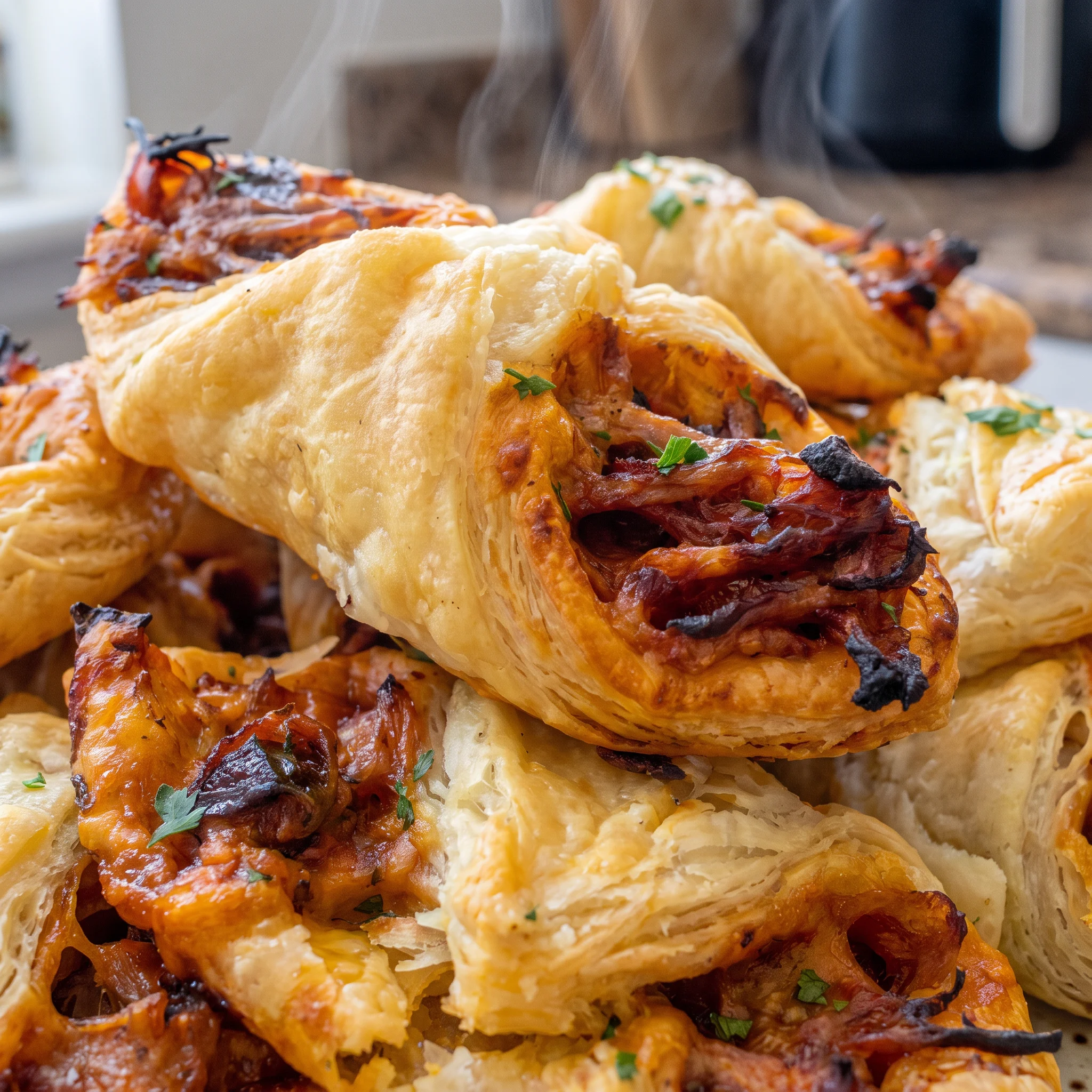
The Ingredients That Decide How These Puffs Bake
Puff pastry: Buy the all-butter kind if you can find it, since butter versions puff higher and taste cleaner than the shortening-based ones.
Pulled pork: Fridge-cold pork shreds unevenly, so let it sit out briefly and break up any clumps before it hits the sauce.
BBQ sauce: A thick, tomato-heavy sauce clings to the shreds; a thin vinegar-based one runs off and leaves the filling loose.
Shredded cheddar: Bagged pre-shredded cheese is dusted with starch that keeps it from melting into a clean layer, so grate a block yourself.
Egg: A fresh large egg beats into a smoother wash than an older one, and you want it fully blended with the water.
Judging the Puffs While They’re Still in Your Hands
When a square has too much filling to close
A clean border of bare pastry has to survive the fold. If pork and cheese touch the cut edges, the seal has nothing to grab, and the puff opens in the oven.
You’ll see it before baking: the corners won’t meet without stretching, or sauce smears the border. Scrape some filling off with a spoon.
Better a slightly underfilled puff than one that leaks.
Reading how wet the pork mix is
Pulled pork varies. Some batches arrive saucy and loose, others dry and clumped. After tossing with ¾ cup BBQ sauce, the mix should hold together when you press a spoonful, not drip.
If it’s runny, the pastry steams from inside and the bottom goes soggy before the top browns. Let it sit a minute, or add a little less sauce to the next batch.
Spotting an egg wash that’s too heavy
The wash should look like a thin sheen, not a coating. If it pools in the fold or runs down the sides, it’ll bake into dark streaks and glue the puff to the parchment. Brush it on lightly, and if you see puddles, dab them off with a paper towel before the tray goes in.
A little goes further than you think.
Knowing when the pastry is done, not just brown
Fifteen minutes gets you pale gold; eighteen gets you deep gold. The window between them is narrow.
Look at the folded edges first: when they’re dry and flaky, the inside is set. If the tops darken before the edges catch up, the filling may still be cool.
Pull them at the first sign of even color, not the darkest patch.
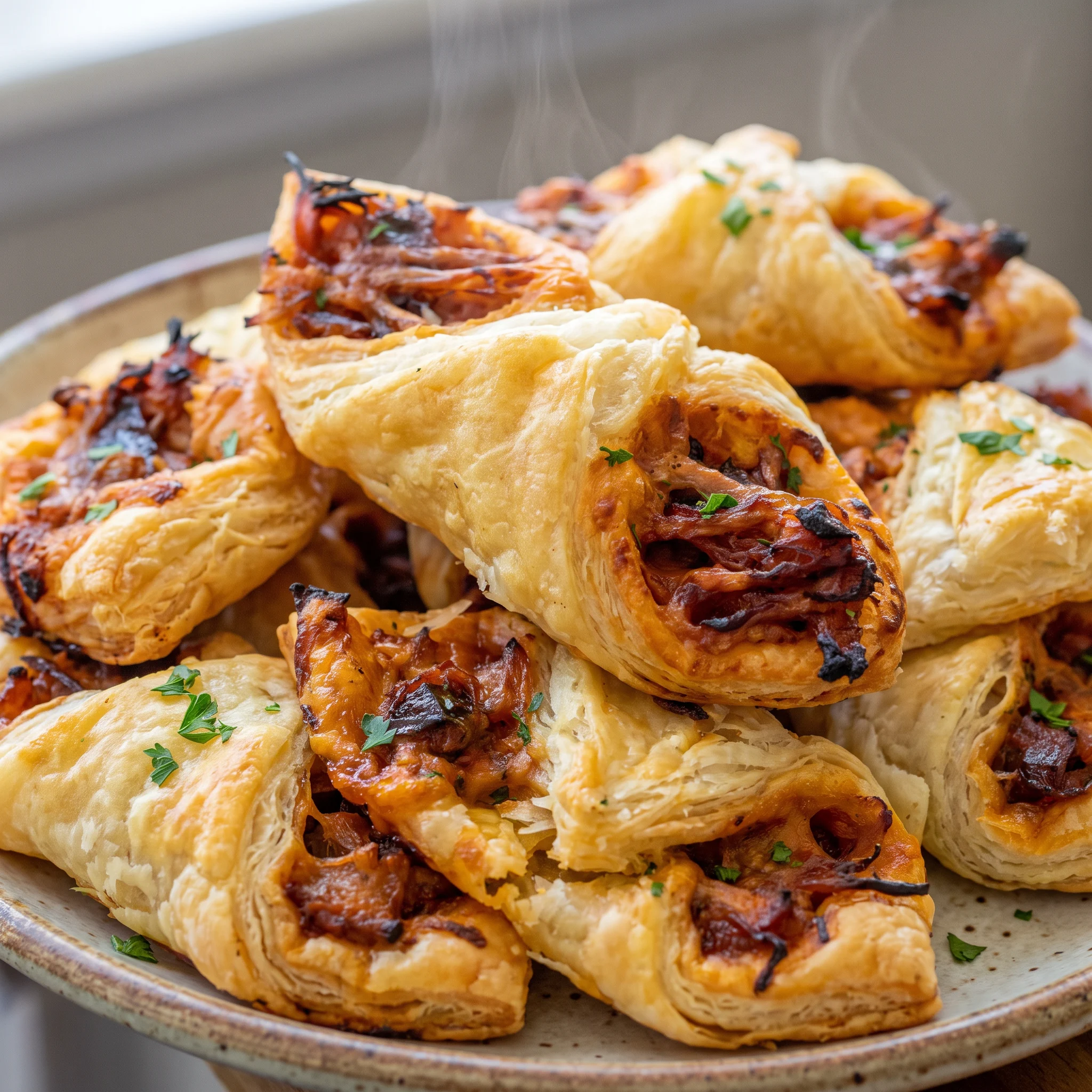
BBQ Pulled Pork Pastry Puffs
Ingredients
Method
- Preheat oven to 400ºF. Line baking sheets with parchment paper and set aside.
- Unfold pastry sheets and cut each sheet into 9 squares.
- Toss pulled pork with BBQ sauce. Arrange pulled pork and cheese down the center of the pastry squares.
- Fold two opposite corners of each square over the filling and press edges to seal. Place on prepared baking sheet.
- Combine egg and water. Brush each pastry with egg wash.
- Bake 15-18 minutes, until golden brown. Serve warm or at room temperature.
When a Swap Changes How These Puffs Bake
Puff pastry: Gluten-free puff pastry. The dough behaves differently: it’s often stiffer and less buttery, so it may not puff as high or brown as evenly.
The fold-and-seal step still works, but expect a slightly denser bite and a paler crust. If you can only find a brand that comes in a different size, cut it to the same 9 squares per sheet so the filling-to-pastry ratio stays right.
Pulled pork: Shredded chicken, beef, or a plant-based alternative. Pulled pork brings a rich, slightly sweet flavor and a shreddy texture that holds sauce well.
Shredded chicken is leaner and milder, so you might want a bolder BBQ sauce. Beef can be heavier; use a lighter hand with the sauce to avoid a soggy filling.
Plant-based crumbles or jackfruit will need a sauce that clings, as they can be wet. Start with the same ¾ pound and adjust sauce amount to get a mix that holds together without dripping.
BBQ sauce: A different style, like mustard-based, vinegar-based, or a sugar-free version. The sauce’s thickness and sugar content affect how the filling sets.
A thin vinegar sauce won’t coat the pork as well; you may need to reduce it first or use less to keep the mix from being runny. A sugar-free sauce can taste sharper and may not caramelize, so the filling won’t have that sticky sweetness. Use the same ¾ cup as a starting point, then tweak after tasting the mix.
Shredded cheddar cheese: Low-fat or tub-style cheddar, or a different melting cheese like Monterey Jack or mozzarella. Low-fat or tub-style cheddar melts greasy instead of into a clean layer, leaving an oily pool that can make the pastry soggy. If you swap in Monterey Jack or mozzarella, they melt smoothly but have a milder flavor, so the cheese won’t stand out against the BBQ.
Stick with a block of sharp cheddar you grate yourself for the best texture and taste. Use the same 1¼ cups.
Serving Window and Storing Leftovers
These puffs are at their best within 20 minutes of coming out of the oven. That’s when the pastry is crisp and shattering, and the filling is hot. After that, the crust starts pulling moisture from the pork and sauce, and the texture goes soft and chewy.
If you’re serving a crowd, bake them so they come out right as guests arrive, or bake them and hold them no more than an hour at room temperature. Beyond that, the pastry loses its snap.
Leftovers keep in the fridge for 2 to 3 days in an airtight container. The filling stays moist, but the crust will be soft. Reheat on a sheet pan at 350ºF for 5 to 7 minutes to bring back some crispness.
Don’t freeze assembled puffs; the pastry and filling separate and the texture suffers. If you must, freeze the cooked filling alone for up to 2 months.
Tips
- Work on a cold surface and set only one pastry sheet out at a time. The second sheet stays in the fridge until the first is cut, filled, and folded. Puff pastry at room temperature softens fast, and once it goes slack, the 9 squares stretch out of square and the corners won’t meet over the filling without tearing. Cold dough holds the crease you press and stays sealed through the bake.
- If the dough starts to feel tacky while you’re folding, slide the whole parchment sheet onto a baking pan and put it in the freezer for 5 minutes before you brush on the egg wash. The wash needs a firm, dry surface to sit on as a thin sheen; on warm pastry it soaks in and the tops bake up patchy instead of evenly browned.

Frequently Asked Questions
Can I make these BBQ pulled pork pastry puffs ahead of time?
Assemble them and bake them the same day. The pastry is the reason: it only stays crisp for about 20 minutes out of the oven, and after that the crust pulls moisture from the pork and sauce and goes soft and chewy. Baked puffs held at room temperature lose their snap after an hour, so if you’re hosting, work backward from when guests arrive and bake them in that window.
The one thing you can do ahead is freeze the cooked filling alone for up to 2 months, then thaw it and build the puffs fresh. Don’t freeze assembled puffs; the pastry and filling separate and the texture suffers.
Why did my pastry puffs leak or open up in the oven?
Most likely, filling reached the cut edges of the square. The seal needs a border of bare pastry to grab, and if pork or sauce smears that border, the corners won’t meet without stretching and the puff opens as it bakes. Scrape some filling off with a spoon before folding; a slightly underfilled puff beats one that leaks.
As a second check, look at how wet the mix is. After tossing, the pork should hold together when you press a spoonful, not drip. If it’s runny, the pastry steams from inside and the bottom goes soggy before the top browns.
How are these different from classic pulled pork sliders or sandwiches?
A bun soaks up sauce and stays soft; puff pastry does the opposite, going crisp and shattering around the filling. That crust is the whole point of the format, and it’s why these are at their best within 20 minutes of the oven, while a slider holds up on a platter for an hour.
The portion is different too: 18 puffs from two pastry sheets, each square cut to hold a modest scoop, so they’re built to be picked up and passed rather than eaten as a meal. The filling stays the same idea, pulled pork tossed with BBQ sauce and layered with sharp cheddar, just sealed inside pastry instead of piled on bread.
