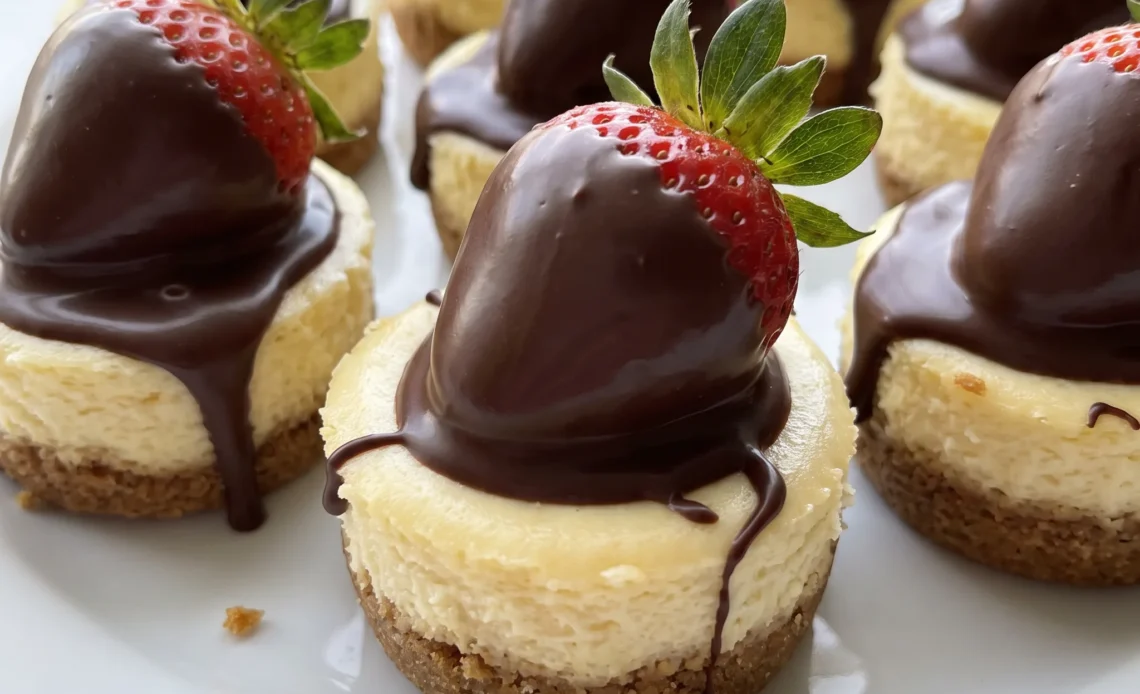
A thin chocolate shell cracks under the tooth, then gives way to cold, dense cream and a strawberry that still tastes like fruit. Shrinking a chocolate dipped strawberry cheesecake to a single bite doesn’t just divide the recipe: it forces every component to justify itself in one mouthful. Cold berries bead with moisture that makes melted chocolate seize and slide, so the drying step is where this falls apart most often.
Then there’s the window. Assemble too far ahead and the berry weeps, the shell dulls, and the crust below goes soft.
Made close to serving, the contrast is sharp: bittersweet against tang, snap against cream. The minis bake quickly and cool faster still, which is why they rarely crack the way a full-size cheesecake does.
Get the sequence right and one bite reads as the whole dessert.
Why Mini Cheesecakes Bake Faster
A mini cheesecake mold holds about two tablespoons of batter per cavity. That small volume changes everything about how the filling sets.
Heat reaches the center quickly, so the custard firms up before the eggs have a chance to overcook and turn rubbery. You want a gentle oven temperature because a hot blast would set the outside before the middle thickens, leaving a grainy texture. The extra yolk in this filling adds richness and helps the structure hold in such a small format.
And because each cheesecake is so small, it cools down fast after coming out of the oven. That quick cooldown means the surface contracts gradually, so you rarely see the deep cracks that can ruin a full-size cheesecake. Instead, the tops stay mostly smooth, maybe with a slight dip in the center.
That’s exactly what you want.
Build a Crust That Releases Cleanly
Press the graham cracker mixture firmly into each cavity with a tamper or muddler. A loose crust will crumble when you unmold the cheesecake.
The ratio of crumbs to melted butter matters too. Too much butter and the crust feels greasy and won’t hold together; too little and it stays sandy. This blend gives a compact layer that stays intact.
Each cavity takes about a tablespoon and a half of crumbs, which forms a thin, even base. That thickness is enough to support the filling without overflowing, and it keeps the overall bite balanced so you’re not chewing through a thick slab of crust.
The crust also acts as a barrier, keeping the filling from getting soggy once the strawberries and chocolate go on top. When you run a knife around the edge, the crust should release with a clean snap.
Chill Completely Before Unmolding
A warm cheesecake is fragile. If you try to release it from the mold too soon, it will crack or collapse under its own weight. Chilling sets the custard so it becomes firm enough to hold the chocolate and strawberry without sinking.
A cold surface also helps the melted chocolate set quickly, so it doesn’t slide off the sides. And during that time in the refrigerator, the texture turns dense and creamy, and the flavor of the cream cheese mellows. You can feel the difference when you press the center: it should spring back lightly, not feel soft or jiggly.
Once chilled, the cheesecake releases from the mold with a gentle push on the removable bottom. If it sticks, it needs more time.
This step isn’t optional; it’s what makes the final dessert hold together.
The Topping Is a Balance of Temperature and Texture
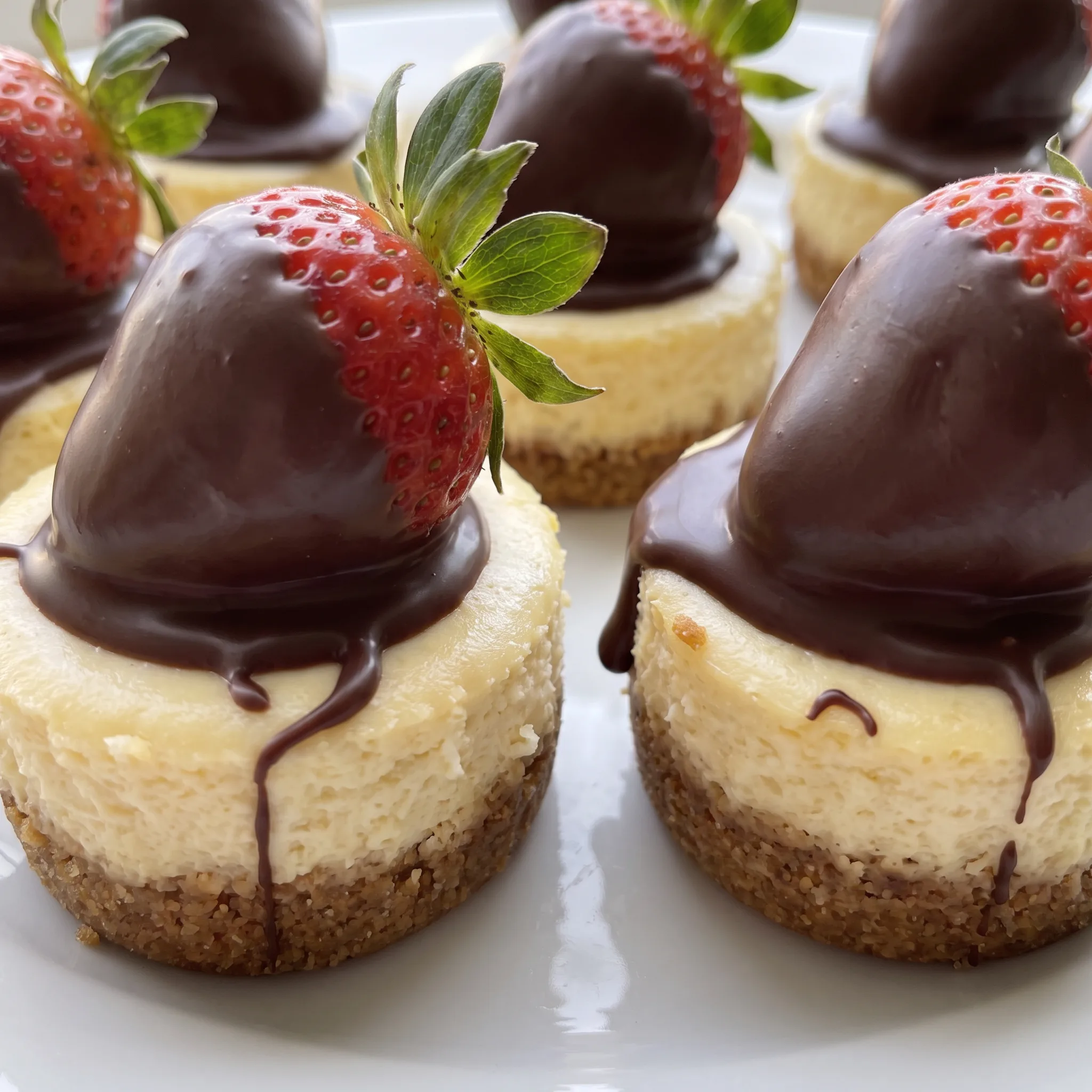
Dark chocolate, melted until fluid but not hot, drizzles over the chilled cheesecake and sets into a thin, bittersweet shell. That shell contrasts with the tangy cream cheese and the sweet strawberry. If the chocolate is too warm, it will melt the cheesecake on contact; if it’s too cool, it won’t drizzle smoothly.
Dip the strawberries in the same melted chocolate before placing them on top. This does two things: it adds another layer of chocolate flavor and helps the berry stick to the cheesecake instead of rolling off.
Assemble just before serving. The chocolate should still have a snap when you bite into it, and the strawberry should taste fresh and juicy against the dense cheesecake.
Once the chocolate dulls or the berry releases juice, the contrast is gone.
What to Buy and Prep Before You Start Mixing
**Cream cheese:** Full-fat blocks, not spreadable tub cream cheese, which carries extra water and gums that keep the filling from setting firm.
**Eggs and yolk:** Room temperature matters here, since cold eggs seize the cream cheese into lumps that never smooth out.
**Graham cracker crumbs:** Buy the crumbs or grind whole crackers fine, because coarse pieces won’t press into a crust that releases cleanly.
**56% dark chocolate:** The 56% cacao range melts fluid enough to dip berries yet sets with a snap instead of staying tacky.
**Strawberries:** Pick 18 firm, dry berries, since any water on the surface keeps the chocolate from gripping.
Reading the Cheesecakes While They Set, Cool, and Get Dressed
The jiggle that tells you to pull them
At 20 minutes, slide the mold out and nudge it. The centers should wobble like set gelatin, not slosh like liquid and not sit still. A still top at 20 minutes means the eggs have gone too far; they’ll turn rubbery once chilled.
If the centers ripple in waves, give them the remaining 5 minutes. Overbaking here is the one mistake no amount of chilling fixes.
Cooling to room temperature, not to lukewarm
The pan should feel neutral against your palm before it goes in the fridge, not warm and not cool. Moving them in warm traps steam under the crust and softens it.
Waiting until they’re fully cool risks leaving them out longer than they should be. Touch the underside of the pan. If it’s still giving off heat, wait.
If it’s room temperature, chill.
When the chocolate is ready to dip
Melted chocolate should ribbon off a spoon and hold a line for a second before disappearing back into the bowl. Too hot and it will melt the chilled cheesecake on contact, streaking the top.
Too cool and the strawberries come out lumpy instead of coated. Test on the back of a cold spoon: if it sets in a few seconds, it’s ready.
Checking the crust before you trust the release
Press up on the removable bottom slowly. If the crust resists, stop; the cheesecake isn’t cold enough and the base will tear.
A clean release feels like the whole thing lifting as one piece with a soft give. If the edges stick, run a thin knife around the rim and push again. A torn crust won’t hold the chocolate and berry.
Chocolate Dipped Strawberry Cheesecake Bites
Ingredients
Method
- Mix graham cracker crumbs with melted butter. Place approximately 1 ½ tbsp of this mixture into each cavity of a mini cheesecake mold. Use a tamper or cocktail muddler to press the crust firmly into the mold. Set aside.
- Set oven to 325°F (165°C).
- In a stand mixer bowl equipped with a paddle attachment, beat the cream cheese until it becomes smooth. While the mixer runs on low speed, slowly incorporate the sugar. Introduce the eggs and yolk one by one. Scrape down the bowl as necessary to ensure even blending. Add the vanilla and salt. Continue mixing until the batter is smooth. Distribute the cheesecake filling evenly among the molds. Level the tops.
- Bake for 20–25 minutes. The cheesecakes will rise slightly while baking but will settle as they cool. Allow the baked cheesecakes to reach room temperature in the pan. Move them to the refrigerator and chill for at least 1 hour.
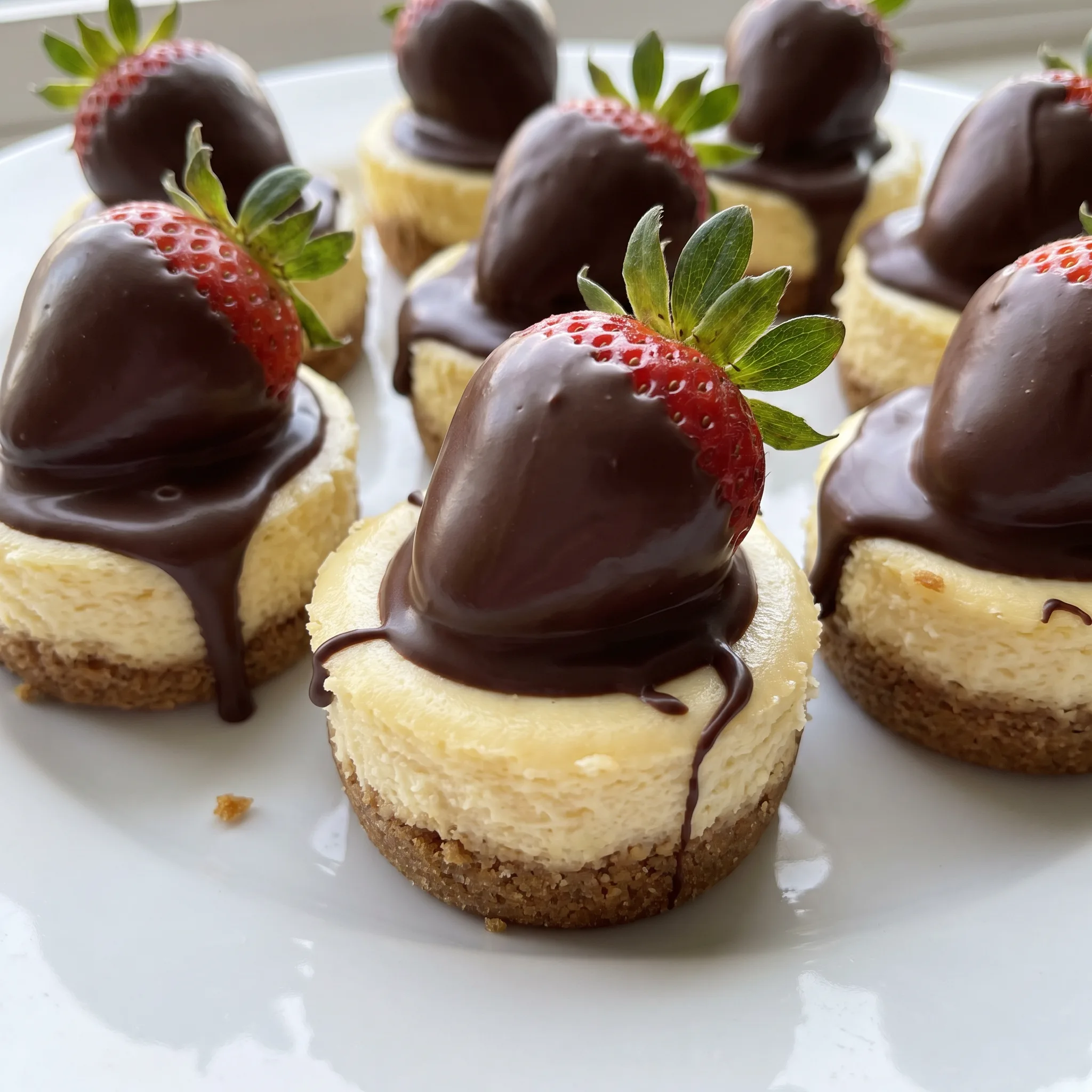
- After the cheesecakes are thoroughly chilled, release each mini cheesecake from the mold by pressing up on the removable bottom. Drizzle melted chocolate over each cheesecake. Dip strawberries into the melted chocolate and set them atop the chocolate-coated cheesecake. Serve right away.
Storage and Serving: The Window Is Short
These are at their best within two hours of assembly. That is when the chocolate shell still snaps and the strawberry tastes like a fresh berry, not a compote.
After that, the berry releases juice, the shell dulls, and the crust softens underneath. So assemble close to serving, not the night before.
If you must hold them, refrigerate in a single layer in an airtight container for up to a day. The texture shifts: the crust loses its snap and the filling stays cold and dense. You can refresh the surface by letting them sit at room temperature for fifteen minutes, but the chocolate won’t fully harden again.
Freeze only the unassembled cheesecakes. Wrap them tightly and keep for up to a month.
Thaw in the fridge overnight. Add chocolate and strawberries after thawing, right before serving. The assembled version doesn’t freeze well because the berry breaks down and the chocolate streaks.
Tips
- Pat the strawberries dry until no moisture beads on the surface, then dip them within a minute or two. Water on the berry makes the melted chocolate seize into a dull, grainy coat that slides off the fruit and off the cheesecake, and 56% dark chocolate is thin enough when fluid that a single wet spot is enough to break the shell.
- Dry the berries before you melt the chocolate, not after. Once the 8 oz of chocolate is fluid, it holds its dip consistency for only a few minutes, and stopping to blot 18 strawberries lets it cool past the point where it coats evenly, so the berries come out lumpy and the drizzle over the cheesecakes turns thick and uneven.
Swaps That Hold the Set and the Snap
Cream cheese: Use the same 2 cups (454 g) of full-fat block cream cheese. If you reach for spreadable tub cream cheese, measure the same amount by weight but expect a looser filling.
The spreadable kind carries extra water and gums, so the filling never firms up the way it should. The centers stay soft after chilling and can slump when you press the strawberry on top. Full-fat block cream cheese gives you that dense, sliceable texture.
Graham cracker crumbs: Swap in the same 1 ¾ cups (175 g) of digestive biscuit or shortbread crumbs. Pulse them fine first, then mix with the melted butter.
Digestives bring a wheaty, slightly malty flavor and a coarser grind, so press firmly or the crust crumbles on release. Shortbread tastes buttery and sweeter, which nudges the whole bite toward dessert rather than a tangy contrast. Either works, but keep the crumb fine and the press firm.
56% dark chocolate: Use the same 8 oz (227 g) of bittersweet (70% or higher) or semisweet chocolate. Stick with bar chocolate, chopped, not chips.
Bittersweet sets harder and snaps more sharply, but the higher cacao can taste astringent against the sweet strawberry. Semisweet melts into a softer shell that stays slightly tacky at room temperature, so the berries may slide.
Bar chocolate melts fluid and sets clean; chips resist melting smoothly and stay thick.
Fresh strawberries: No good swap here. Frozen berries release water as they thaw, and that water keeps the chocolate from gripping. If you must, pat frozen berries dry after thawing and use them the same day.
Frozen strawberries weep onto the chocolate and turn the snap into a wet smear. The berry also tastes limp and watery against the dense cheesecake.
Stick with 18 firm, dry fresh berries.
Two documented approaches to setting a cheesecake custard are a low oven (about 325°F) or a higher oven with a water bath. A higher oven sets the outside before the center, risking curdling and cracks; a water bath moderates heat but is impractical for individual molds. This recipe uses a 325°F oven without a water bath, relying on the small size of each cheesecake to allow even, gentle setting before the proteins overcook.
Frequently Asked Questions
Can I make these chocolate dipped strawberry cheesecakes ahead of time?
You can make the cheesecakes ahead, but leave the chocolate and strawberries off until the day you serve. The cheesecakes keep in the fridge for up to a day in a single layer, wrapped tight. The crust softens and the filling stays dense and cold.
Add the melted chocolate and berries right before serving, because once the berry releases juice and the chocolate dulls, the contrast is gone.
Why did my mini cheesecakes crack on top?
The most common cause is overbaking. At 20 minutes, the centers should wobble like set gelatin, not sit still. A still top at 20 minutes means the eggs have gone too far; they’ll turn rubbery once chilled.
Another check: if you moved them to the fridge while the pan still felt warm to the touch, that quick temperature change can also pull the tops. Let the pan feel neutral against your palm before chilling.
How do I get the cheesecakes out of the mold without breaking them?
Press up on the removable bottom slowly. If the crust resists, stop; the cheesecake isn’t cold enough and the base will tear.
A clean release feels like the whole thing lifting as one piece with a soft give. If the edges stick, run a thin knife around the rim and push again. A torn crust won’t hold the chocolate and berry.
How is this different from a regular chocolate covered strawberry cheesecake?
A regular version is one large cheesecake, sliced. Here you get 18 individual portions, each with its own crust and a whole strawberry on top.
The smaller size means the filling sets faster and the crust-to-filling ratio is fixed in every bite. The chocolate goes on as a drizzle and the berry is dipped, so each one is assembled right before serving.
