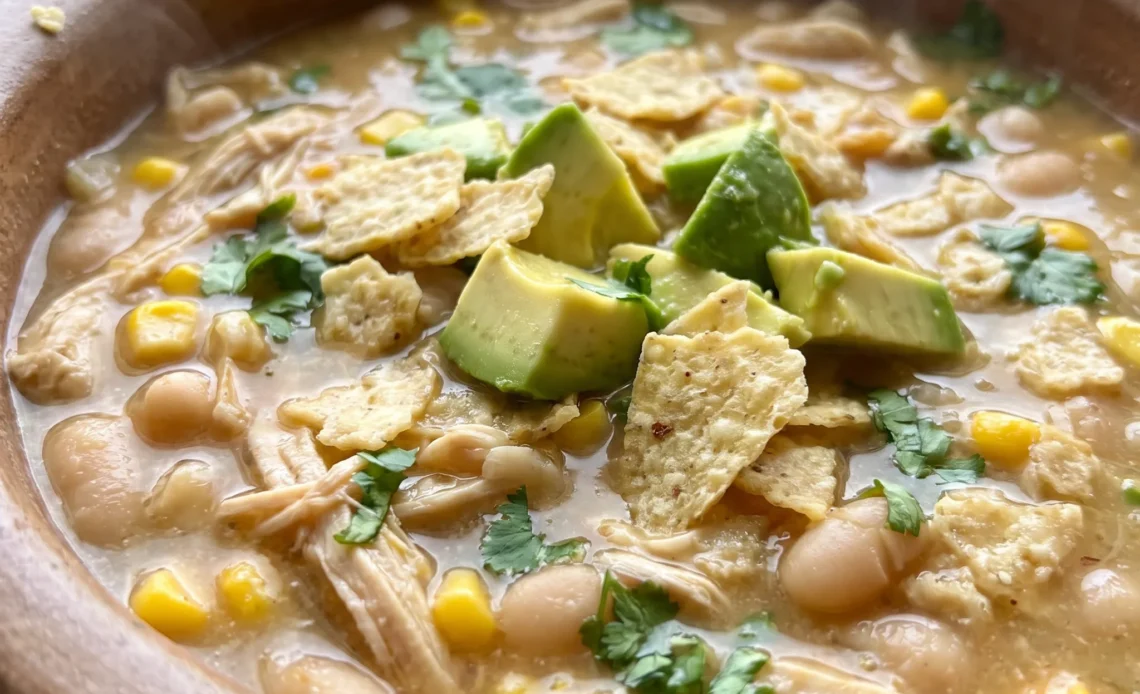
Thin, watery chili is the usual complaint, and the usual cause is skipping the step that gives this pot its body. Ladle out part of the simmered beans and corn, blend that portion rough, and stir it back. The starch you just released thickens everything it touches, so the broth coats a spoon while the beans you left whole still give you something to chew.
Push the blend too smooth and the pot turns pasty, gluey on the tongue. Stop short and you’re eating beans in broth.
Somewhere in that coarse middle is the bowl you want. No cream needed, and none missed. This white chicken chili tastes closer to a green chile stew than to the red version you braise all afternoon, which is why it fits a weeknight.
Lime and yogurt at the end keep the finish bright instead of heavy. Toppings go on cold, at the table, right before the first spoonful.
Why does blending some of the chili change the texture?
Ladle out somewhere between 1 and 1 1/2 cups of the simmered pot and blend it until the beans and corn break down into a coarse puree. That small batch carries most of the starch and body, and once you stir it back in, the whole pot reads creamier without a drop of heavy cream. What you’re after is a chili that still looks brothy at the edges but coats a spoon when you lift it.
Skip the step and the broth stays thin, with beans sitting in liquid rather than suspended in it. The trick is restraint: blend a portion, not the whole batch, so you keep distinct beans and corn to bite into. The result tastes light and fresh, closer to a green chili than a cream-based one.
If the pot tightens more than you want after the blended portion goes back, a splash of broth loosens it. The final consistency should pour from a ladle in a slow stream.
Does the order of the pot actually matter?
Onion goes in first because it needs the longest contact with hot oil to soften and turn sweet. Garlic and green chiles follow only after the onion is translucent; garlic added at the start scorches and turns bitter before the onion is anywhere near done. Those chiles bring their own moisture, so watch the pot loosen slightly when they hit.
Spices go in next, straight onto the aromatics, and get a short stir in the oil before any liquid. That brief contact is what wakes up cumin and paprika; dump them into broth and the chili tastes flat and dusty.
Once the spice base smells warm and toasty, broth and beans go in, and only then does the blended portion return. Chicken goes last because it’s already cooked.
Shredded rotisserie meat only needs to heat through and pick up flavor, and a long simmer shreds it further into strings. Taste after the chicken goes in: the broth should taste seasoned, not just spicy.
Cumin, oregano, paprika: how much is right?
Cumin carries this chili. At 1 1/2 teaspoons it’s the warm, earthy note you notice first, and it’s the spice that agrees most with roasted green chiles. Push it further and the pot starts tasting like taco seasoning rather than chili.
Pull it back and the chiles dominate, sharp and a little grassy.
Oregano at 3/4 teaspoon sits underneath, drying and slightly bitter in the way that reads as savory rather than herbal. Paprika’s 1/2 teaspoon is subtle; smoked paprika would shout, sweet paprika just rounds the edges and adds a faint reddish tint to the broth.
Salt at 1 teaspoon plus the pepper is calibrated for low-sodium broth and rotisserie chicken, both of which already carry salt. If your broth is full-sodium, hold back and taste before adding more.
Together the three spices should taste like a single warm backdrop, not three separate flavors. You want to taste the chicken and beans through them.
Do the toppings really change the bowl?
Cilantro is the freshest thing in the bowl. A handful torn over the top cuts through the richness of the yogurt and the starch of the beans, and it’s the reason a second bowl doesn’t feel heavy. Avocado adds cool creaminess that softens the cumin’s edge; a few slices mashed against the roof of your mouth mellow the spice between spoonfuls.
Tortilla chips do the textural work nothing else in the pot can. The chili is soft throughout, and chips give you salt and crunch that make each bite feel finished rather than monotonous. Crush a few over the top and use the rest to scoop; the ones that sit in the broth for a minute soften at the edges and thicken it slightly.
Build each bowl at the table instead of stirring garnishes into the pot. Leftover avocado turns brown and cilantro wilts, and the crunch disappears entirely. Serve the chili hot with the toppings cold, and the contrast is what you notice first.
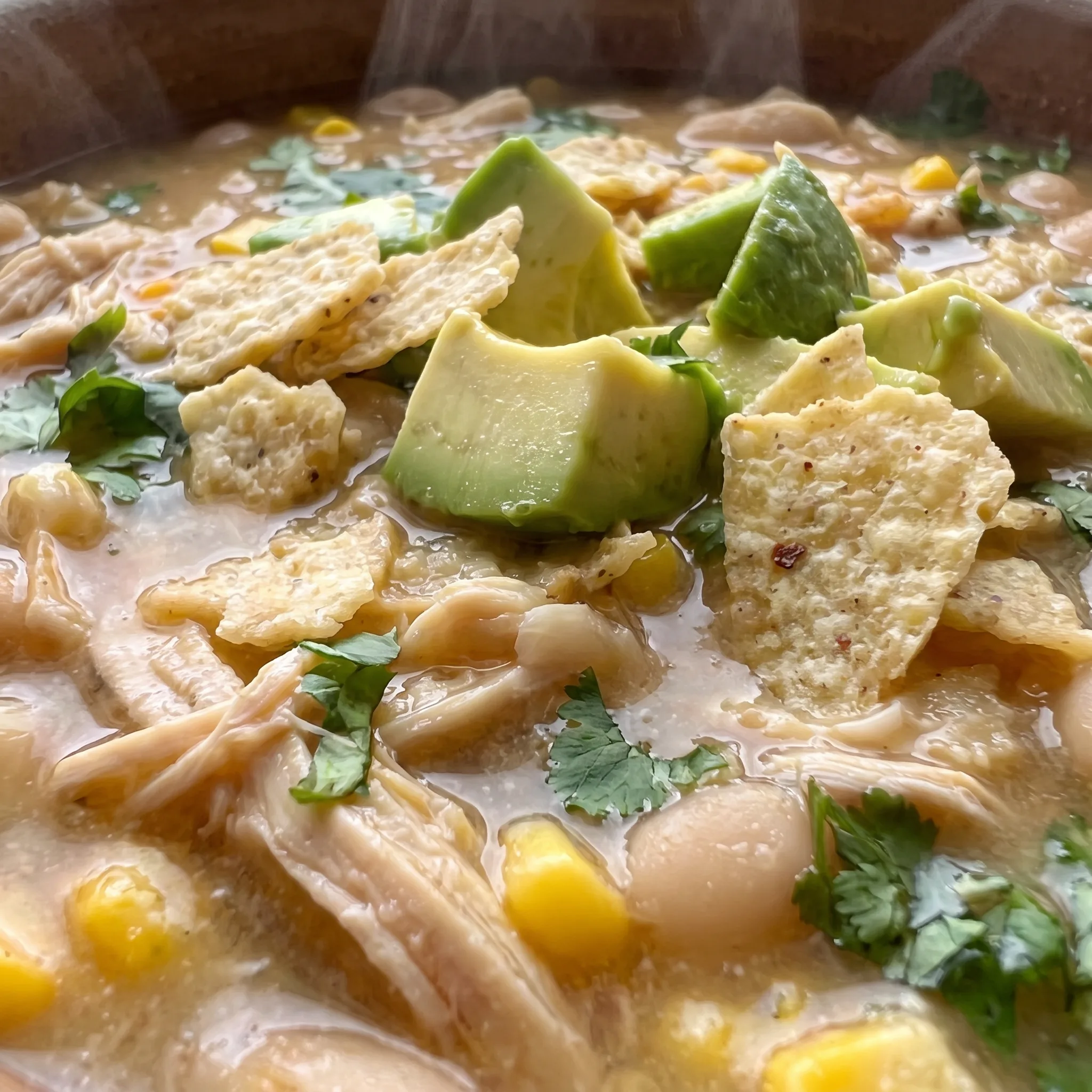
The ingredients that decide how this pot tastes
Canned diced green chiles: Buy the plain diced chiles, not the hot diced chiles with tomatoes mixed in, since those bring liquid and a different flavor to the pot.
Ground cumin: Check the jar’s date before you measure, because old cumin smells like sawdust and gives the chili a flat, dusty backbone.
Great northern beans: Rinse and drain them well so the canning liquid’s starch and salt don’t cloud the broth or push the seasoning past where the card has it.
Rotisserie chicken: Pull the meat and discard the skin and bones, since the skin turns slippery in the broth and the bones aren’t welcome in a bowl.
Plain Greek yogurt: Use plain, not vanilla, and full-fat or low-fat both work, though fat-free can break and look grainy once it hits the hot broth.
Judging the pot by look, smell, and spoon
Onion is ready when it looks glossy and smells sweet
At 7 or 8 minutes the diced onion should turn translucent and lose its raw bite. You’ll see it glisten and shrink slightly, and the smell in the pot shifts from sharp to sweet.
If it’s browning at the edges, the heat is too high. Pull the pot off the burner for a moment, lower the flame, and stir.
Browned onion brings a toasted note that fights the green chiles.
The spice base is ready when it smells warm, not dusty
Once the cumin, oregano, paprika, salt, and pepper hit the oil, give them 30 seconds to a minute. Lean in: the smell should be toasty and round, not raw and powdery. If it smells flat, the oil wasn’t hot enough.
If it smells acrid, the spices are scorching. Add the broth immediately to stop the cooking.
This quick contact is what keeps the chili from tasting like dust.
Blend a portion until it coats a spoon, not until it’s a puree
Ladle out 1 to 1 1/2 cups and blend until the beans and corn break down but you can still see flecks of skin and kernel. The texture should be coarse, like a loose hummus. If you blend it completely smooth, the chili turns pasty and gluey.
Stir it back in and watch the pot thicken. If it gets too tight, a splash of broth loosens it.
The simmer is done when the chicken is heated through and the broth tastes seasoned
After the chicken goes in, 10 to 15 minutes over low heat is enough to warm it and let it absorb flavor. The broth should taste seasoned, not just spicy. If it tastes thin or flat, salt is probably low.
Add a pinch, stir, and taste again. The chicken should be tender but not falling apart into threads.
If it starts to shred too much, take the pot off the heat.
Lime juice goes in at the end, and you’ll taste the difference immediately
Stir in the lime juice just before serving. The chili should taste bright and lively, not sour.
If you add it too early, the edge softens and you lose that lift. Start with the full tablespoon, taste, and add more only if the pot still tastes heavy.
The yogurt or sour cream already brings tang, so the lime should be a background note, not the main event.
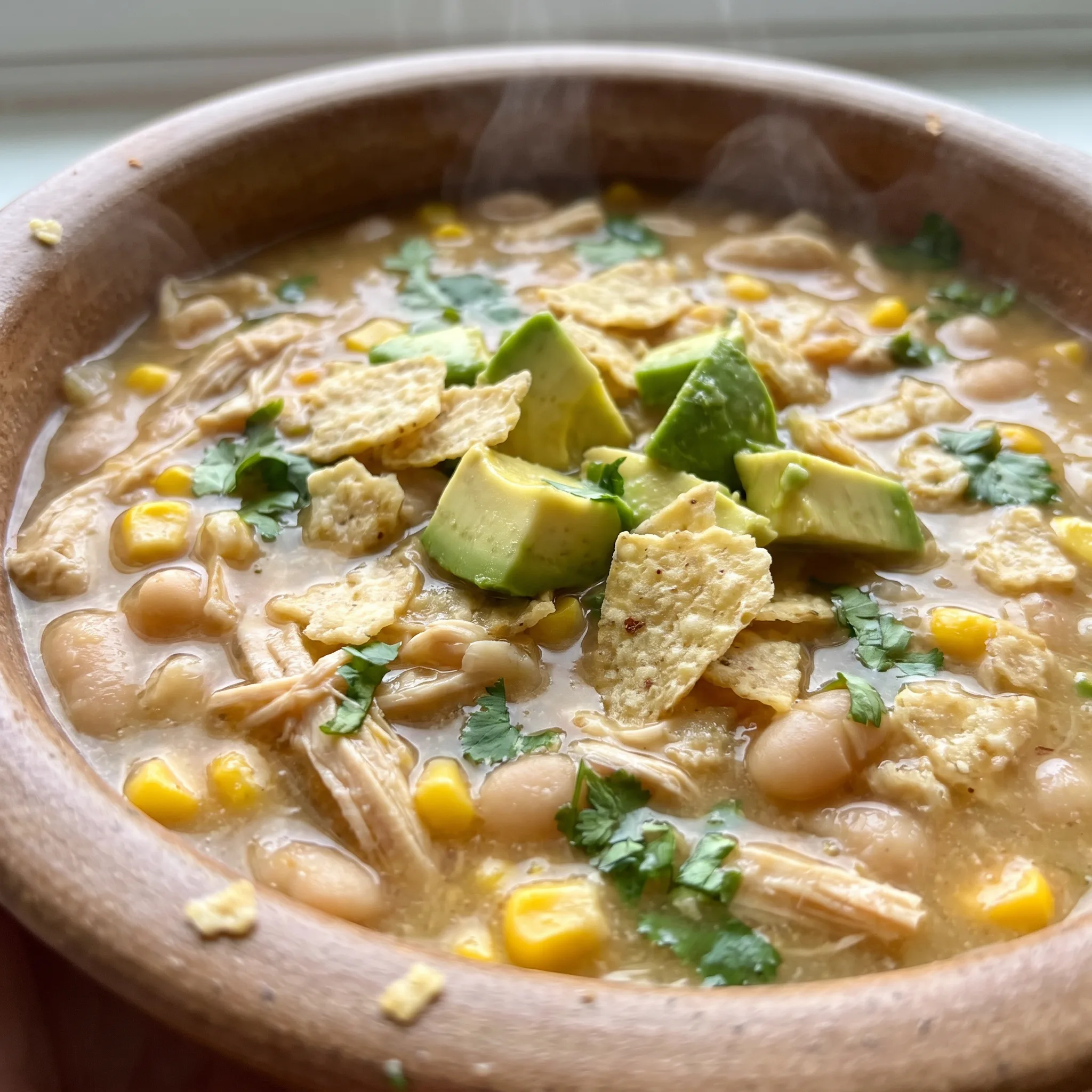
White Chicken Chili with Beans and Corn
Ingredients
Method
- Warm the olive oil in a large pot or Dutch oven set over medium heat.
- Stir in the diced onion and cook for about 7–8 minutes, stirring from time to time.
- Add the garlic and green chiles, then cook for 2–3 more minutes.
- Stir in the cumin, oregano, paprika, salt, and pepper.
- Add every remaining ingredient except the chicken. Begin with 2 cups of broth and add more if you want a thinner consistency.
- Simmer for a few minutes so the flavors can meld, then remove 1 to 1 1/2 cups and blend until smooth.
- Return the blended portion to the pot and stir in the chicken.
- Simmer over low heat for 10–15 minutes. For a thinner consistency, stir in an additional 1/2 cup of broth.
- Stir in the lime juice. Serve topped with fresh cilantro and tortilla chips, and enjoy!
How to Store and Reheat White Chicken Chili
Eat this chili within a few hours of the simmer for the best texture. The blended beans are still loose and the chicken hasn’t had time to drink up broth.
As it sits, the starch keeps absorbing liquid, so a day later the pot looks thicker and eventually pasty. Leftovers hold in the fridge for 3 to 4 days. Cool them uncovered for 30 minutes, then seal in a container.
Reheat gently on the stovetop with a splash of broth, stirring until it pours from a ladle again. The yogurt is already in the pot, so freezing the finished chili isn’t worth it; the dairy separates and the texture turns grainy.
If you want to freeze a portion, do it before you stir in the yogurt. Add lime juice and garnishes only to the bowls you’re serving.
Cilantro and avocado don’t survive storage, and chips go soft fast.
Tips
- Rinse the beans in a colander under cold water for a full 30 seconds, moving them with your hand, not a quick pass. The canning liquid is thick and salty, and it clings in the seams of each bean; a short rinse leaves enough of it behind to cloud the broth and push the salt past the 1 teaspoon the card calls for. Drain until the water runs clear and shake the colander a few times so you aren’t adding extra liquid that thins the pot.
- Add the lime juice after you take the pot off the heat, not while it’s still simmering. The 10 to 15 minute simmer is the last cooking the chili gets, and lime added before it cooks off its sharp top note, leaving only a dull sourness. Stir in the full tablespoon once the burner is off, taste, and serve within the hour; reheated leftovers will need a fresh squeeze because the brightness fades in the fridge.
Swaps That Keep the Broth and the Heat Where You Want Them
Plain Greek yogurt or sour cream: Leave it out entirely, or use 1/4 cup of creme fraiche or full-fat sour cream in its place. Skip the fat-free versions of either.
That quarter cup isn’t there to make the pot creamy, since the blended beans already do that. It’s a tangy counterweight to the cumin. Drop it and the chili still works, but the finish reads flatter and the lime has to carry all the brightness.
Fat-free yogurt or sour cream curdles into visible white specks against the hot broth, and you’ll see them before you taste anything wrong. If you use it, stir it in off the heat or after the pot comes down to low, and taste before you add the lime.
Canned diced green chiles: Use the same 8 ounces of fresh roasted Hatch or poblano chiles, peeled and diced. For more heat, keep the plain diced chiles and add a minced jalapeno alongside the garlic. Fresh roasted chiles taste greener and more vegetal than the canned ones, and they bring extra water, so start with 2 cups of broth and add the rest only if the pot tightens too far.
Don’t reach for the cans labeled hot with tomatoes mixed in. Those dump in liquid and tomato sweetness, and the chili turns pink and loses the clean green flavor the chiles are here for. A jalapeno gives you heat without changing the body at all.
Rotisserie chicken: Cook 1 pound of boneless chicken thighs or breasts and shred them, or use about 2 1/2 cups of leftover roasted chicken. Raw chicken has to cook before it goes in, so poach or roast it first.
Dropped in raw, it releases cloudy proteins into the broth and turns the pot gray. Thighs hold up better to the 10 to 15 minute simmer and stay juicy. Breast meat shredded fine can dry out and fray into strings if you leave it on the heat too long, so taste early and pull the pot off when it’s just heated through.
Leftover roast chicken works with no adjustment beyond watching the salt, since home-roasted meat usually carries less than the store-bought kind.
Low-sodium chicken broth: Use vegetable broth for a pot with no chicken in the liquid, or regular full-sodium chicken broth if that’s what’s in the pantry. The card’s 2 to 2 1/2 cups is a range on purpose.
Start at 2 cups, and the blended portion plus the bean starch thickens it from there. Vegetable broth tastes sweeter and less meaty, so the cumin reads stronger against it.
Full-sodium broth pushes the whole pot salty, and the rotisserie chicken has its own salt, so cut the added salt to 1/2 teaspoon and taste after the chicken goes in before you add more. If the pot tightens past a slow pour from the ladle, the extra 1/2 cup of broth loosens it.
The chili’s body depends on starch released from the beans and on a portion of the solids being broken down into a smooth purée. If the full 2 to 2 1/2 cups of broth go in and no portion is blended, the liquid stays thin because the beans remain whole and the starch stays locked inside them. Blending 1 to 1 1/2 cups of the simmered chili ruptures the beans and releases their starch, which thickens the liquid and gives the chili a creamy consistency without added flour or cream.

Frequently Asked Questions
Can I make white chicken chili ahead of time?
Make the pot up to a few hours before you plan to eat it and reheat it gently, but expect a tighter bowl than the day you cooked it. The blended beans keep drinking broth as it sits, so stir in a splash to loosen it back to a slow pour from the ladle. Lime juice and garnishes go in only when you’re serving, since cilantro and avocado don’t hold and chips go soft fast.
For anything longer than a few hours, the storage notes on the card cover the details.
Why did my white chicken chili turn out too thin?
Most likely the blended portion didn’t go back in, or it went back in too smooth and small to do its job. Ladling out 1 to 1 1/2 cups and blending until the beans and corn break down but you still see flecks gives the pot its body.
Second check: you may have started at the top of the broth range, 2 1/2 cups, before the starch had a chance to thicken anything. A few more minutes of low simmer with the lid off tightens it, and if you overshoot, the extra half cup of broth brings it back.
How is white chicken chili different from regular chili?
No tomatoes, no red chile powder, no long braise. The broth here stays pale and brothy, colored faintly by paprika, and the heat comes from canned green chiles rather than dried chile pods. Great northern beans and corn give it a lighter, sweeter base than kidney or pinto beans, and the yogurt plus lime at the end push the finish tangy and bright instead of deep and smoky.
Shredded rotisserie chicken goes in near the end, so the meat tastes fresh rather than stewed.
Can I use rotisserie chicken and when should I add it?
Yes, 2 1/2 cups shredded is what the card calls for. Add it after the blended portion goes back in and the pot has come together, then let it simmer over low heat just long enough to heat through and pick up the broth, 10 to 15 minutes.
The meat is already cooked, so it only needs warming; leave it longer and it frays into strings. Pull the skin and bones first, since skin turns slippery in the broth.
