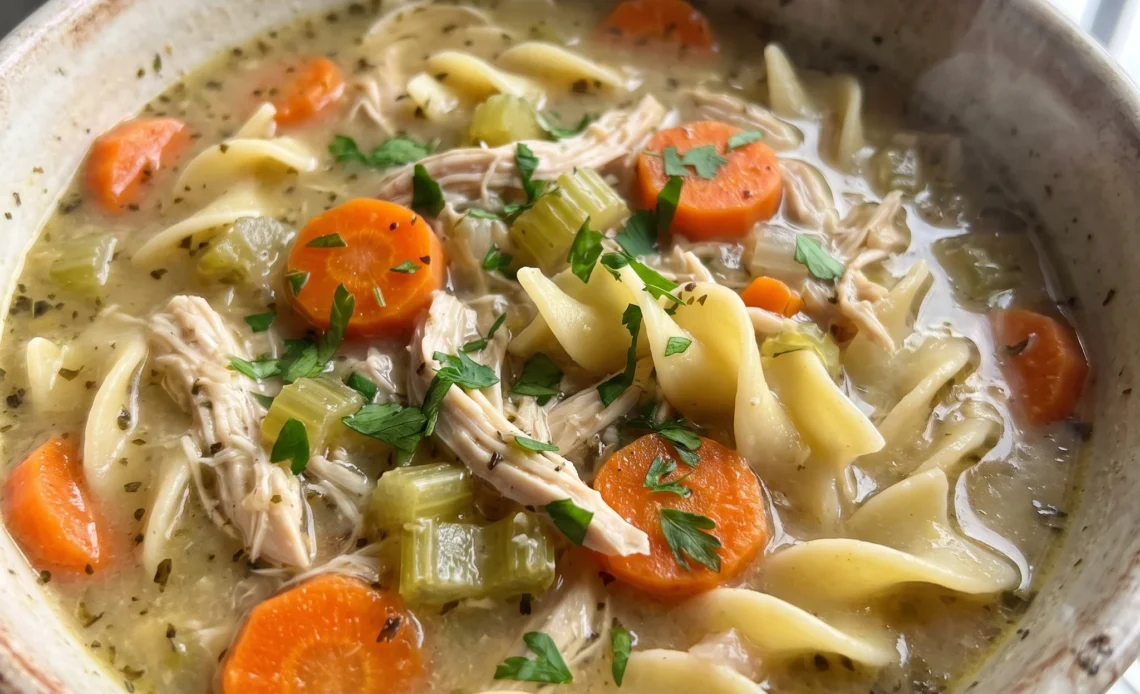
A spoon pulled from the finished pot comes up slicked, the broth beaded and hanging on instead of draining off in a stream. That weight in the liquid is what separates a rotisserie chicken noodle soup worth the bird from a thin bowl that tastes fine and feels like nothing. The hard part isn’t the cooking.
It’s the noodles, which keep drinking after they leave the heat and will quietly soak a pot past the point you wanted. Build it on the stove when the afternoon’s yours, or let the slow cooker carry it on a day that isn’t. Either road gets you there, and the thickening at the end is where you find out whether the bowl holds together.
Does the Carcass Really Do Anything in Chicken Noodle Soup?
A picked-over rotisserie chicken looks like trash once the meat comes off. Strip the meat, and the frame underneath still has plenty to give. Toss that carcass into the pot with the broth and vegetables, and the soup gains something you can taste: a rounder, meatier depth than boxed broth alone delivers.
You’ll notice the difference on the tongue first, then in the way the liquid coats a spoon.
All of that happens during the boil, while the vegetables soften and the broth works at the bones. Gelatin and fat come out of the frame, and the savory notes deepen.
A pot made with just shredded meat and broth tastes thin by comparison. One made with the carcass in the liquid tastes like it simmered all afternoon.
Small bones are the nuisance. Cheesecloth holds them while larger bones can stay loose in the pot, and either way the broth does its work. Skim a little fat if you want a cleaner broth; leave it for a richer one.
Why Thicken Soup That’s Already Rich?
Broth, vegetables, chicken, noodles: that’s a complete soup. The cornstarch is about texture.
A thin broth slides past the pasta and runs off the spoon, and the bowl feels watery even when it tastes fine. A small amount of starch cooked into the pot gives the liquid a little weight, so it clings to the noodles and settles around the vegetables instead of pooling underneath.
The slurry matters as much as the starch. Cornstarch dropped straight into hot soup seizes into lumps you can’t stir out, and cold liquid mixed in first still shocks the starch when it hits the heat.
Ladling out some of the hot broth and whisking the cornstarch into that keeps everything smooth, because the starch starts thickening at the temperature it’s already in. Pour it back, stir, and the change shows up within a minute or two.
Go easy. Enough to thicken, not enough to turn chicken noodle soup into gravy.
The bowl should still taste brothy, with body behind it. If it looks like stew, you’ve gone past the mark.
Stove Top or Slow Cooker, Which Fits Your Day?
Both builds land in the same place, a pot of soup with tender vegetables, shredded chicken, and noodles. How they get there differs. On the stove, the vegetables hit hot oil first, and that sauté step builds a sweeter, more rounded onion and carrot flavor before any liquid goes in.
The pot then simmers gently, with the carcass giving up its richness along the way. A cook who tastes both side by side gets more aroma from the stovetop batch.
The slow cooker trades that sauté for time. Everything goes in cold and sits for hours, so the broth pulls flavor out of the bones and vegetables on a long, slow schedule. You walk away and come back to a finished base.
The catch is the pasta: noodles left in a slow cooker keep softening, and the window between al dente and blown-out is short. Add them late and watch them.
Pick stovetop when you want the deeper flavor and have an afternoon at home. Pick the slow cooker when the day is full. Either way, thicken at the end.
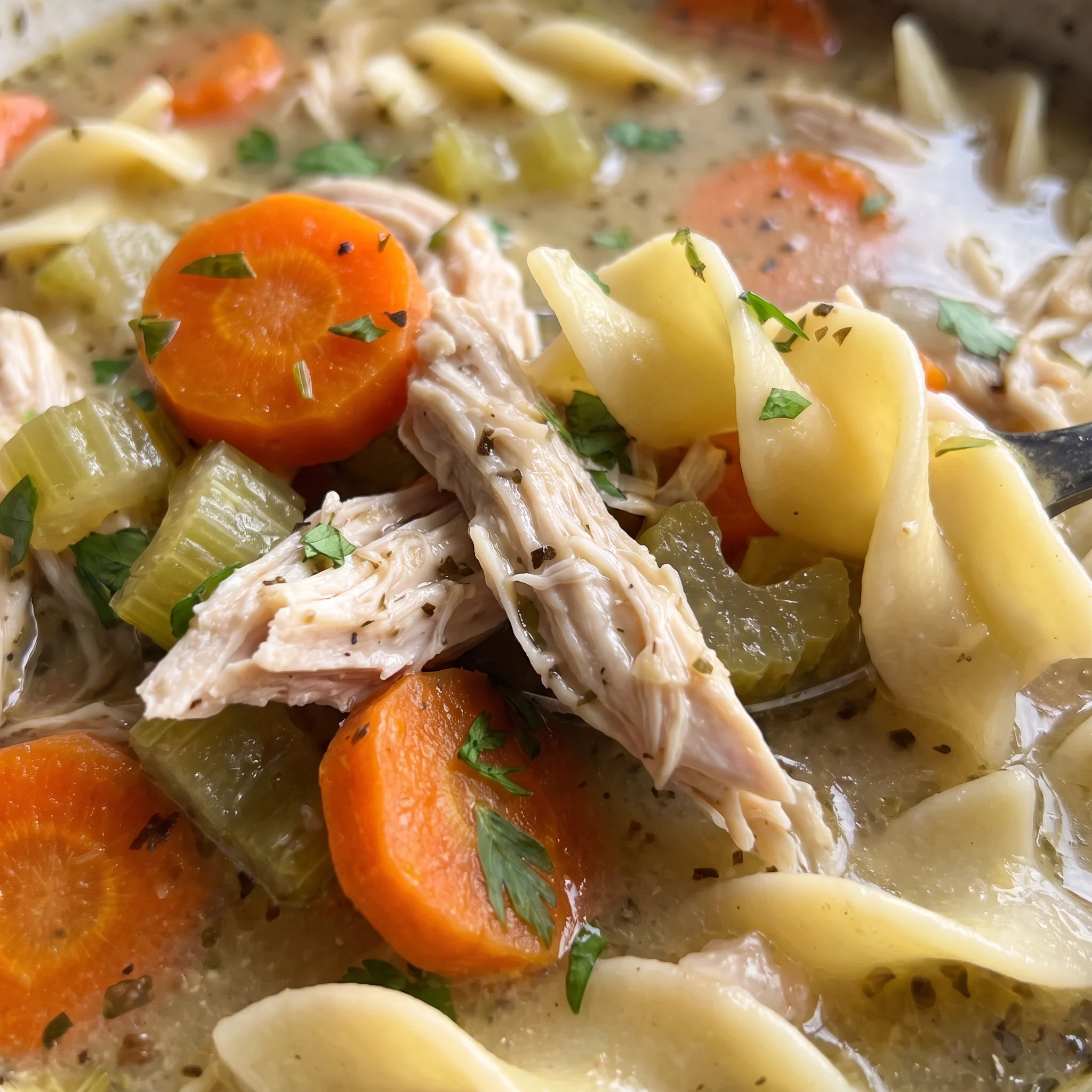
Four Ingredients That Decide How This Bowl Tastes
Rotisserie chicken: Buy one labeled fully cooked and grab it the day you plan to strip it, since the carcass is what gives the broth its depth.
Chicken broth: Use 12 cups of broth you’d drink on its own, because the boxed stuff that tastes flat goes flat in the pot too.
Carrots: Slice them into coins of even thickness so the thick pieces and thin pieces finish at the same time against the boil.
Dry pasta: Choose a short shape that holds its bite through the boil, since long strands go limp and clump in the 2 cups.
Reading the Pot at Three Points Where This Soup Goes Right or Wrong
Judging the sauté before the broth goes in
Onions turn translucent in a few minutes over medium-high heat, but translucent and sweet aren’t the same thing. Wait for the edges to pick up a little color and the carrots to lose their raw snap against the spoon.
Pour broth in too early and the vegetables taste flat and boiled. If the pan starts to brown hard underneath, drop the heat.
Knowing when the carrots are actually done
The card’s 30 minutes is a rough mark, not a guarantee. Test a thick carrot slice with a knife: it should slide through with no resistance at all. Slightly firm now means slightly firm after the pasta cooks, since the boil keeps working on them.
If the carrots still fight the knife at 30 minutes, give them more time before the noodles go in.
Fishing out bones without losing the small ones
Lift the big bones with tongs and feel along the pot’s bottom with a spoon for stray pieces. A small bone left behind ends up on someone’s spoon. Cheesecloth solves it before the boil starts, but once the carcass is loose, a slow pass with a slotted spoon is the check.
Count what comes out against what went in.
The noodle window, and what thickener does to it
Pasta keeps drinking broth after it hits al dente, and the cornstarch slurry thickens what’s left, so noodles that look right when the slurry goes in will read softer ten minutes later. Pull them while the center still has a touch of bite. In the slow cooker the margin is thinner, since the pot holds heat and keeps cooking the pasta after you stop it.
How much the slurry should change the bowl
Whisk the cornstarch into hot broth from the pot, pour it back, and stir. Within a minute or two the liquid should coat a spoon lightly and sit around the noodles instead of running off them. If it still looks watery after a few minutes of gentle heat, the slurry was thin.
Stop short of gravy; the broth should still pour.
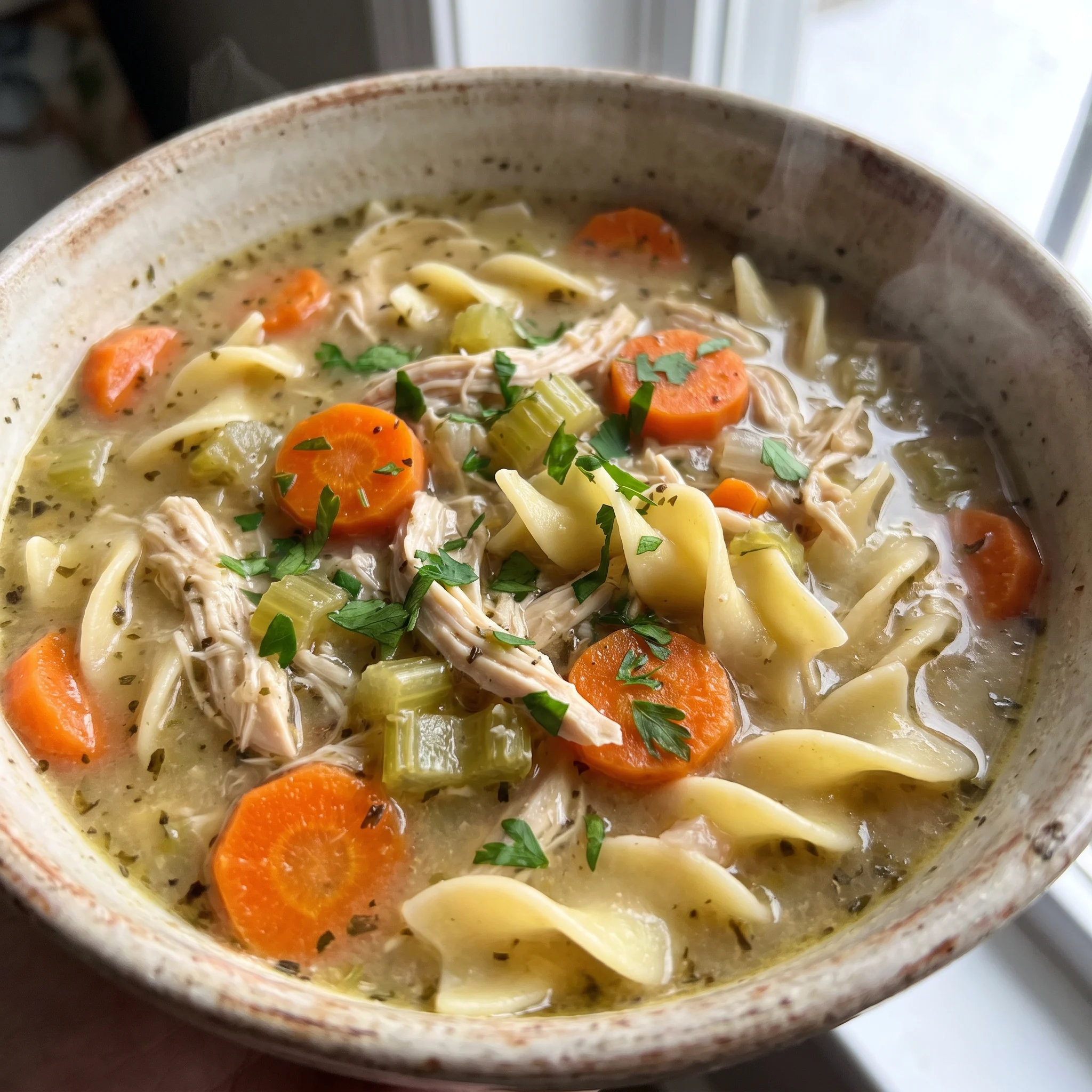
Rotisserie Chicken Noodle Soup
Ingredients
Method
- Prepare the vegetables by chopping them. If desired, remove the chicken breast meat from the bird and shred it. In a large pot, warm the olive oil over medium-high heat, then add the celery, carrots, and onion, and sauté until the onions become translucent. Mix in the broth, salt, pepper, garlic powder, bay leaf, thyme, oregano, parsley, and the chicken, along with the whole carcass. You can choose to keep a few larger bones in the soup and discard the smaller ones, or place the bones inside a cheesecloth bag to prevent small bones from escaping.
- Lower the heat to medium and let the soup come to a gentle boil for about 30 minutes, until the carrots are completely tender. Then take out the chicken bones by lifting them with tongs.
- After removing the bones, stir in the dry pasta and cook for about 10 to 15 minutes, until al dente. Transfer about 1 1/2 to 2 cups of the soup to a small bowl and whisk in the cornstarch until it dissolves. Pour this mixture back into the soup and stir thoroughly to incorporate.
- Serve, and keep leftovers in an airtight container in the refrigerator.
- Place all ingredients into the slow cooker, except for the pasta and the cornstarch.
- Cook on low for 6 to 8 hours or on high for 4 to 6 hours. Before adding the pasta, remove the bones. Add the dry pasta and cook until al dente, about 15 to 20 minutes; this timing varies depending on the slow cooker and pasta type, so monitor it closely.
- Transfer about 1 1/2 to 2 cups of the soup to a small bowl and whisk in the cornstarch until it dissolves. Pour this mixture back into the soup and stir thoroughly to incorporate.
- Serve, and keep leftovers in an airtight container in the refrigerator.
Notes
Swap the Noodles and the Thickener, Leave the Bird Alone
Rotisserie chicken and its carcass: Nothing. If you’re tempted to buy skinless breasts and a carton of broth instead, understand what you’d be giving up: the picked frame is the reason this pot tastes like it simmered all afternoon. Shredded breast meat alone in boxed broth reads thin and one-note, and no amount of dried herbs covers for it.
Buy the bird cooked, strip it the day you plan to cook, and let the frame ride in the pot as the card directs.
Dry pasta: Any short shape that keeps a bite through the boil: penne, rotini, small shells, ditalini, or egg noodles if that’s what’s in the pantry. For gluten-free, pick a corn-and-rice blend rather than a single-flour pasta, and expect it to soften faster. Long strands go limp and clump in the 2 cups, so stay short.
Gluten-free shapes soak up more broth and can turn chalky if they sit, so pull them a minute before you think they’re done and taste one. The slurry will tighten the liquid around them either way.
Cornstarch: Arrowroot powder, measure for measure at the 1/4 cup the card calls for, whisked into hot broth the same way. Arrowroot thickens at a lower heat and thins out if the pot keeps boiling hard, so pull the heat back once it goes in.
The body it gives is slightly silkier and a touch less glossy than cornstarch. Either one, go by feel: coat a spoon lightly, don’t turn the bowl into gravy.
Dried parsley, oregano, thyme, and bay leaf: A dried poultry blend or herbes de Provence at the same total spoonfuls, or fresh herbs stirred in at the end. Dried herbs need the simmer to open up, so add them with the broth as written. Fresh parsley or thyme added in the last few minutes keeps a greener, brighter taste, but it won’t replace the depth the dried blend builds over the long cook.
Skip the bay leaf and the broth loses a quiet backbone you’d notice by its absence.
Tips
- Pull the bones while the pot is still at a gentle boil, not after you kill the heat. The liquid is moving, so loose fragments drift toward the surface and the spoon instead of settling into the vegetables at the bottom, and tongs get a clean grip on the slick carcass frame.
- Count the bones you pull against what went in. A rotisserie bird gives up two thigh bones, two drumstick bones, two wing tips, and the rib cage, and knowing that tally tells you whether a stray piece is still down there. Run a slotted spoon along the bottom and listen for a clink against the pot before the pasta goes in.
Storing the Soup So the Noodles Don’t Drink It All
Eat this soup the day you make it, within an hour or so of the pasta coming off the heat. That’s the window where the noodles still have bite and the broth runs off the spoon at the right thickness. Every hour after that, the pasta keeps pulling broth into itself, the liquid gets heavier, and the noodles soften past al dente.
The fridge makes that worse overnight. A pot stored whole thickens into something closer to a stew, and rewarming won’t give the broth back. If you know leftovers are coming, pull the noodles out before you store the soup and keep them in their own container.
The broth and chicken hold several days in the fridge, and the flavor only deepens. Cook a fresh handful of pasta when you reheat, or add the stored noodles in the last minute just to warm them.
Freeze the broth and chicken without the pasta; noodles go slack and crumble on thawing. Reheat gently, taste for salt, and eat.
The hard step is judging when the pasta is done: the noodles should still have a firm, slightly resistant center when bitten, and the broth should look fluid rather than cloudy with released starch. If the pasta feels uniformly soft or the broth thickens noticeably around the noodles, it is already past al dente and will continue to soften as it sits in the hot liquid. At that point, the texture cannot be reversed, so the only fix is to stop the cooking before that stage.
Frequently Asked Questions
Can I make this soup ahead of time and add the noodles later?
Yes, and the noodles should stay out until you’re ready to eat. The broth and chicken hold several days in the fridge, and the flavor only deepens.
Cook a fresh handful of pasta when you reheat, or add the stored noodles in the last minute just to warm them. That keeps the broth at the right thickness instead of letting the pasta drink it all.
Why did my noodles turn mushy in the leftovers?
The pasta kept pulling broth into itself after it came off the heat, so it softened past al dente and the liquid got heavier. Storing the soup whole overnight makes it worse: the noodles keep drinking, and rewarming won’t give the broth back. Next time, pull the noodles out before you store the soup and keep them in their own container.
That way the broth and chicken stay separate, and you can add the noodles back just to warm them.
How is this different from classic chicken noodle soup?
The carcass goes into the pot with the broth and vegetables, which gives the soup a rounder, meatier depth than using shredded meat alone. The cornstarch slurry at the end thickens the liquid just enough to cling to the noodles and settle around the vegetables, so the bowl tastes brothy but with body. And you can choose between a stovetop sauté or a slow cooker build, both landing in the same place.
