
Lean turkey in chili goes dry and squeaky long before it looks done, so the window between raw and ruined is narrow. What keeps this bowl from tasting thin is the spice trio hitting hot liquid together, and the pot staying looser than the finished bowl looks.
The moment the garlic starts to color, the whole thing turns harsh; that’s the first place this turkey chili can go wrong, and it’s over in seconds. Canned tomatoes and sauce carry most of the depth, which is why it doesn’t need a long cook.
Seasoning is the other trap: salt that tastes right in the broth goes flat once cheddar and sour cream land on top. Taste with a bean and a piece of meat on the spoon, not liquid alone.
Why 14 Minutes Is Plenty for This Chili
Canned tomatoes and tomato sauce already carry the deep, cooked flavor that a long simmer coaxes from fresh tomatoes. In this pot, they just need to heat through and marry with the spices. The chili powder, smoked paprika, and cumin bloom quickly in the hot liquid, releasing their aroma within minutes.
Ground turkey, lean and tender, cooks fast and stays juicy if not overcooked. Kidney beans, already cooked, hold their shape and texture through a short simmer. A brief 14-minute cook keeps everything fresh-tasting.
The chili thickens slightly, the flavors come together, and the turkey remains moist. You’ll see the liquid bubble gently, smell the warm spices, and taste a chili that feels complete. This isn’t a stew that needs hours; it’s a quick, bright bowl ready in under half an hour.
That’s why 14 minutes does the job: the ingredients are already cooked or quick-cooking, so time is spent on integration, not transformation. The result is a chili that tastes built, not rushed, with each component distinct yet balanced.
When to Add Corn and Beans for the Right Texture
Frozen corn and canned beans go in after the initial simmer for a reason. They’re already cooked, so they only need to heat through and absorb the chili’s flavors.
Adding them at the start would let them break down, turning the chili grainy and dull. The final brief boil, just a few minutes, integrates them without sacrificing their texture.
The corn stays sweet and crisp, the beans remain whole and creamy. That contrast keeps the chili from feeling one-note.
You’ll notice the corn’s bright yellow pops against the deep red base, and the beans hold their shape when you stir. The chili thickens slightly as the starch from the beans lightly releases, but not enough to muddy the broth.
This late addition preserves the integrity of each ingredient, so every spoonful offers a mix of textures. The chili stays lively, not heavy.
That’s the payoff for waiting: a bowl where the corn and beans taste like themselves, not like the simmer they sat through.
Building Flavor with Lean Turkey and Warm Spices
Ground turkey is lean and mild, so the chili leans on spices and aromatics to build character. Chili powder brings a rounded, earthy heat; smoked paprika adds a campfire depth; cumin contributes a warm, slightly nutty note. Together they create a smoky, warm foundation that doesn’t need extra fat.
Fresh garlic and onion are cooked just until aromatic, not browned, to avoid any bitterness. That gentle cook releases their sweetness and bite without harsh edges. Salt and pepper go in at two stages: a pinch or two on the turkey as it cooks seasons the meat and encourages browning, while a final taste adjusts the whole pot.
The spices have time to bloom in the hot liquid, their flavors opening up and distributing evenly. You’ll smell the warm spices as they hit the pot, see the turkey turn from pink to opaque, and taste a chili that’s bold despite the lean meat. This blend gives the chili a depth that feels slow-cooked, even though it’s not.
The Strategic Role of Garnishes
The garnishes are optional, but they’re chosen to add contrast and richness that the lean chili lacks on its own. Shredded cheddar brings salty creaminess and a cooling effect, softening the spice’s edge.
Sour cream contributes tang and body, making each spoonful feel fuller. Fresh jalapeño adds a bright, raw crunch and a sharp heat that cuts through the chili’s warmth.
Together, they create a balance of textures and temperatures: cool against hot, creamy against chunky, fresh against simmered. Without them, the chili is still satisfying, but the garnishes turn it into a more complete experience. You’ll see the cheese melt into little pockets, the sour cream swirl in white ribbons, and the jalapeño add a pop of green.
Each bite becomes a mix of sensations, keeping the bowl interesting to the last spoon. That’s why they’re worth considering: not to fix a flaw, but to add a layer of contrast that makes the chili feel finished.
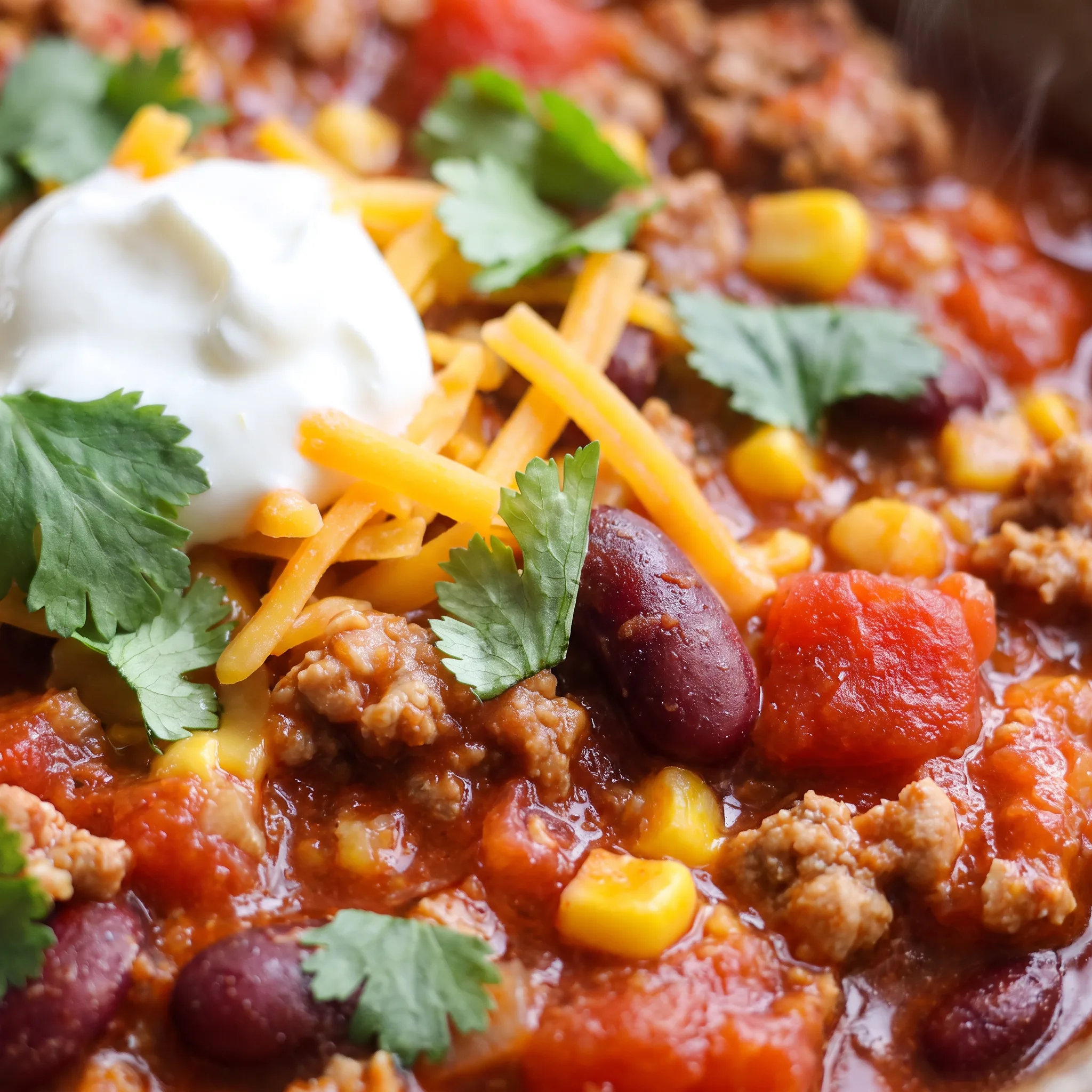
The Ingredients That Decide How This Chili Tastes
Ground turkey: Lean turkey dries out fast, so pick a package that looks moist and fresh, not gray or weepy through the plastic.
Chili powder: Chili powder blends vary wildly in heat and salt, so taste a pinch first and know what you’re adding to the pot.
Smoked paprika: Smoked paprika fades to dusty red after a few months open, so smell the jar: it should hit you as smoky, not flat.
Canned kidney beans: Drain and rinse the beans well, because the canning liquid is salty and starchy and will dull the chili’s clean tomato flavor.
Frozen corn: Frozen corn keeps its snap better than canned here, so use it straight from the freezer rather than thawing it first.
What to Watch in the Pot So the Chili Reads Right Before You Taste It
Judging the aromatics before they color
Garlic and onion go translucent and glossy, not gold. That window is 1 to 2 minutes over medium heat, and it closes fast once the pan is hot. Watch the garlic edges: the moment they darken, the bite turns harsh and no amount of simmering walks it back.
If it’s starting to color, pull the pot off the burner, not just down to low.
When the turkey is done enough to stop stirring
Look for opaque meat with no pink at the center of the crumbles, and moisture pooling in the pan rather than steaming off dry. Break clumps as you go; a lump the size of a walnut stays raw in the middle while the outside looks finished.
If the pan is wet and gray, keep going a minute or two. Dry and squeaky means it’s gone too far.
Reading the simmer after the spices go in
A boil that then settles to medium-low should show lazy bubbles at the surface, not a rolling churn. Ten minutes at a hard boil drives the sauce down and concentrates the spice until it tastes sharp.
If it’s spitting and reducing fast, drop the heat. If nothing moves at all, nudge it up.
The pot should look looser than the finished bowl.
The final seasoning call before the garnish
Taste with a bean and a piece of turkey on the spoon, not broth alone. Salt that reads right in liquid turns flat once cheese and sour cream go on top.
The spices should sit behind the tomato, present but not dusty. If the chili powder dominates, a pinch more salt rounds it.
If it tastes thin, give it another minute at medium-high before adjusting anything.
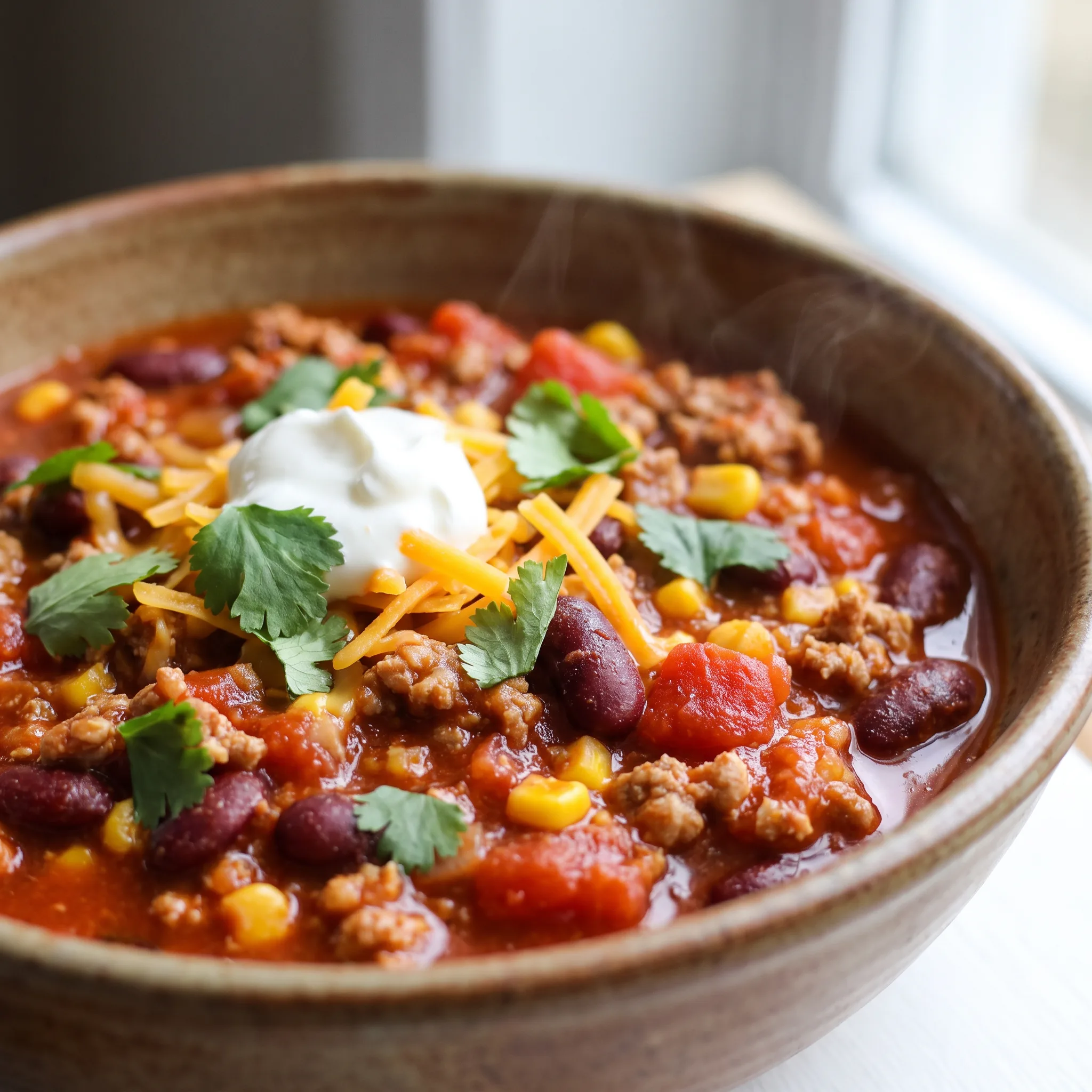
Hearty Turkey Chili with Kidney Beans and Corn
Ingredients
Method
- Chop the onion into dice and mince the garlic finely.
- Combine the olive oil, diced onion, and minced garlic in a large pot. Over medium heat, cook for 1-2 minutes until aromatic; avoid browning or burning.
- Introduce the ground turkey into the pot, crumbling any clumps. Add one or two pinches of salt and pepper. Cook until the turkey is nearly finished and shows no red or pink.
- Stir in the diced tomatoes, tomato sauce, chicken broth, chili powder, smoked paprika, and cumin. Bring to a boil, then lower to medium-low heat and cook for another 10 minutes.
- Stir in the frozen corn and drained kidney beans. Increase heat to medium-high and cook for another few minutes until the liquid boils again. Adjust salt and pepper to taste.
- Optional: Top with all or some of the garnish ingredients.
- Serve and enjoy.
Storing and Reheating Turkey Chili
Eat this chili within the first hour or two of cooking for the best texture. The corn stays crisp, the beans hold their shape, and the turkey is at its juiciest. Cool leftovers uncovered until they stop steaming, then refrigerate in a sealed container.
After a night in the fridge, the chili thickens as the beans and tomatoes absorb liquid, and the spices settle into a deeper, rounder flavor. It keeps three to four days.
Reheat gently on the stovetop over medium-low, stirring often. Add a splash of chicken broth to loosen it back to a spoonable consistency, since the chilled starch tightens the base. Let it come to a bare simmer, not a boil, so the turkey doesn’t dry out.
This chili freezes well for up to three months; thaw overnight in the fridge before reheating. Hold the garnishes until serving. Cheese and sour cream go on at the table, once the chili is hot, so they stay distinct instead of dissolving into the leftovers.
What Swaps Work Without Unraveling the Chili
Ground turkey: Ground chicken (same 1 lb) or leaner turkey (93/7 instead of 85/15). Ground chicken cooks up softer and a little wetter, so expect a looser pot and slightly less meaty chew. Leaner turkey dries out faster, so pull it off the heat the moment the pink disappears; overcook it and the crumbles turn squeaky and grainy.
Canned kidney beans: Any other canned bean (pinto, black, cannellini), 16 oz drained. Pintos go creamy and collapse a bit at the edges; black beans hold their shape and stay firm; cannellini turn silky and thicken the broth.
All three work, but black beans bring a denser bite that makes the chili feel heartier. Drain and rinse whichever you pick.
Chicken broth: Water plus bouillon (start with the same 1/2 cup, dissolve per the jar’s ratio, then taste before adding salt). Bouillon can be salty, so hold off on the final salt until you’ve tasted the simmered chili. The broth’s job here is to loosen the tomatoes and carry the spices, not to add its own flavor, so a light hand keeps the chili from tasting like a salt lick.
Chili powder, smoked paprika, cumin: None. Leave the trio alone. Those three spices are the backbone of the chili’s smoky, earthy depth.
Swapping chili powder for straight cayenne or paprika for another smoked spice throws off the balance, and the lean turkey has nothing else to lean on. If you’re out of one, better to make the dish another day than to fake it.
Tips
- Taste the canned tomatoes and sauce straight from the can before they go in. Petite diced tomatoes vary a lot in sweetness and acidity between brands, and if the sauce tastes sharp or metallic, a pinch of salt and a few extra minutes of simmering will round it out. If the tomatoes taste flat and sweet, cut back on the salt you add to the turkey and lean on the smoked paprika and cumin for backbone. The base flavor of the pot is set here, before the spices go in.
- If the tomatoes and sauce taste noticeably acidic, stir in a pinch of salt with the tomatoes and sauce at step 4, not at the end. Salt suppresses the sour edge of canned tomatoes without adding sugar, and doing it early gives the spices a cleaner base to sit on. Adding salt only at the final taste means the acidity has already been cooked into the spices, and the pot reads sharp no matter how much you adjust later.
There are two ways to handle the aromatics here: brown them for deeper roasted flavor, or sweat them briefly just until they smell sweet and raw edges soften. Browning drives the garlic’s sulfur compounds and onion sugars past the point where they read as sweet, into acrid and bitter notes that then permeate the whole pot, and because the garlic is minced fine it has far more surface area than the onion and will scorch first. This recipe takes the sweat route, keeping the aromatics pale and aromatic so the chili powder, smoked paprika, and cumin stay the dominant flavor layer rather than fighting a burnt allium backdrop.

Frequently Asked Questions
Can I make this turkey chili ahead of time and reheat it?
Yes. Cook it, cool it uncovered until it stops steaming, then refrigerate in a sealed container.
It keeps three to four days, and the flavor deepens overnight as the beans and tomatoes soak up the liquid. Reheat gently on the stovetop over medium-low, stirring often and adding a splash of chicken broth to loosen it back to a spoonable consistency.
Hold the garnishes until serving so the cheese and sour cream stay distinct.
Why did my turkey chili turn out watery?
The usual culprit is under-draining the kidney beans. The canning liquid is salty and starchy, and a wet glug or two thins the chili and dulls the tomato flavor. Rinse them well in a colander and give them a shake before they go in.
A second check: if you used a leaner turkey, it releases more moisture as it cooks, so let the pot bubble a little longer at the end until the liquid coats a spoon instead of pooling.
How is this healthy turkey chili different from classic beef chili?
The big difference is the meat: ground turkey is lean and mild, so it doesn’t bring the beefy fat that classic chili leans on. That’s why the spice trio of chili powder, smoked paprika, and cumin does the heavy lifting, and why the onion and garlic are cooked just until aromatic rather than browned. The result is a chili that tastes warm and smoky but lighter, and it’s ready in 24 minutes because nothing needs a long simmer to tenderize.
Garnishes like cheddar and sour cream add back some richness if you want it.
What should I serve with turkey chili to make it a full meal?
A skillet of cornbread or a stack of warm tortillas rounds it out, and either one soaks up the broth left in the bowl. For something green, a simple cabbage slaw with lime cuts through the smoke and heat.
If you want to keep it light, a side of rice stretches the four servings without changing the chili itself. The garnishes on top already add creaminess, so keep the sides plain and let the bowl carry the flavor.
