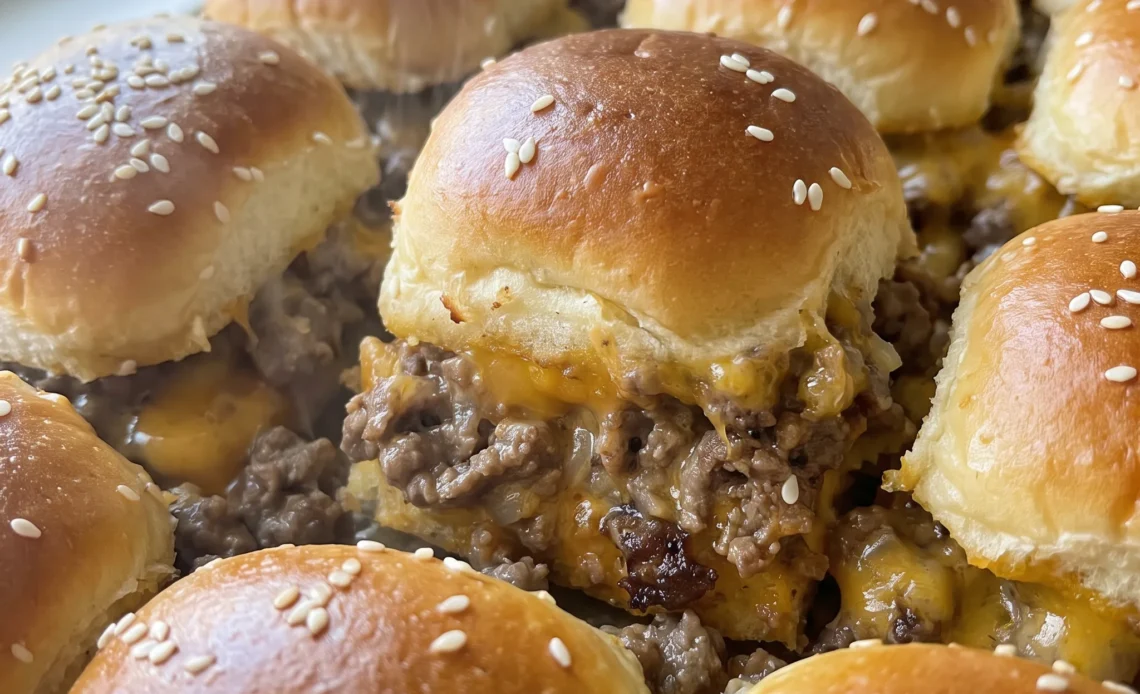
Lift one off the pan and the top crust gives a little before it tears, glossy from butter, seeds stuck fast. What’s underneath is the part people don’t expect: no puck of seared meat, just a flat, even slab of beef that was chopped fine in a skillet and finished in the oven, so every bite carries the same ratio of bread to filling. Cheeseburger sliders built this way feed a room from one tray, but the margin is real.
Lean beef can dry out in that second pass of heat, and the layer under the meat is doing quiet work to keep the bottoms from going soft. Get the beef level and watch the roll on top, and twenty-four come out together. The sections below take each of those pressure points in turn.
What the Mayonnaise Is Doing in the Beef
Mayo in a burger mix sounds wrong until you taste the beef after it comes out of the oven. Lean ground beef at 90/10 or 93/7 has little fat to spare, and the fat that is there gets poured off with the pan drippings. What’s left can eat dry and crumbly, especially after a second pass of heat.
The mayonnaise puts back some richness that draining took away, and it coats the meat so the crumbles cling to each other instead of scattering when you bite. That cohesion matters more than the flavor, which mostly disappears into the beef and onion.
You’ll see it as a slightly tacky, spreadable mix rather than loose gravel. A solid beef layer slices cleanly into portions and stays put under the top bun. Skip it and the filling will still taste fine, but it’ll shed crumbles onto the tray and the sliders will feel spare.
The beef should look moist and hold a pressed shape without springing back.
Two Cheeses, Two Jobs
Sliced cheddar goes down first, directly on the bread, and that order earns its place. Those slices lie flat and form a barrier between the roll and the wet beef above, so the bottom bun stays bread instead of turning into a sponge.
Shredded cheese goes on top of the meat, where it melts down into the crumbles and pulls everything into a gooey layer. One cheese melts slow and even; the other melts into gaps. Together they cover both the moisture problem below and the texture problem above.
What you’re watching for is the difference between a bun that’s toasted from the oven’s heat and one that’s gone soggy from beef juice. The barrier is why the bottom stays firm enough to pick up.
Cheddar is sharp enough to read through the beef and butter, so the cheese actually tastes like something. When it comes out, the top cheese should be fully slack and the bottom slices just softened at the edges.
One Slab, Evenly Baked
Twenty-four rolls on a sheet pan make one big sandwich, not twenty-four small ones, and that changes what even baking requires. Heat moves through a flat, uniform slab at the same rate everywhere. A mound in the middle and thin patches at the corners bake lopsided: the thin spots dry out while the center still looks wet.
Pressing the beef square and level with the back of a spatula fixes that before the pan ever sees the oven. Square edges mean the corner sliders get the same beef-to-bun ratio as the middle ones, and nobody ends up with a roll of plain bread. You’re looking for a slab with a level top and straight sides, edge to edge on the rolls.
Get it flat and the whole tray comes out consistent. Leave it domed and the outer sliders will taste overbaked and lean while the center ones stay soft.
Judge it by how the surface sits: flat and even reads as right.
Butter, Seeds, and a Soft Crust
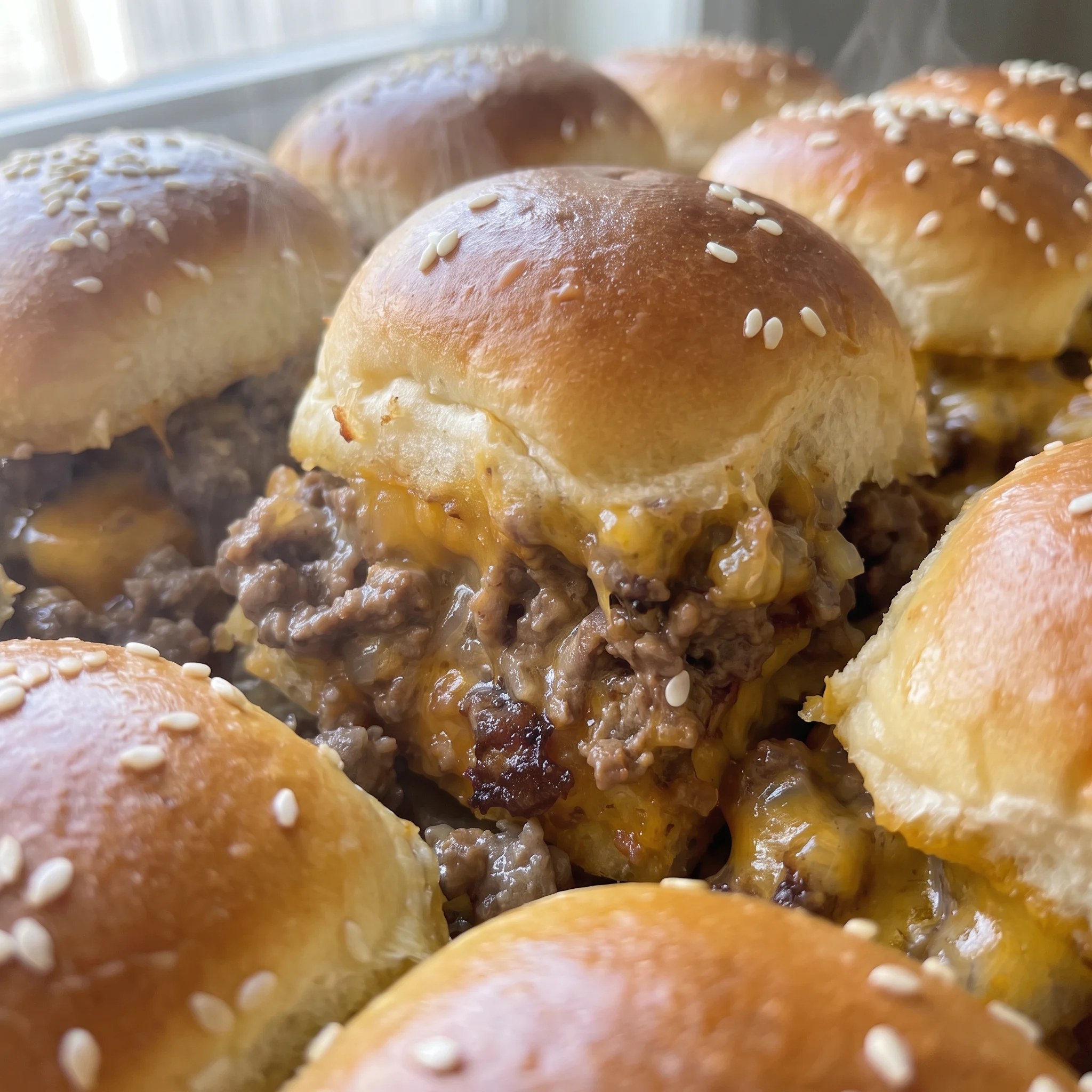
Brushing the tops with melted butter does three things at once. It gives the sesame seeds something to stick to, it browns the roll crust to a deep gold in the oven, and it keeps that crust soft rather than crisp.
A dinner roll left bare dries into a brittle shell at 350°F. The butter layer holds moisture at the surface so the bread stays tender enough to bite through without the top shattering. Sesame brings a toasted, nutty note that reads as cheeseburger bun, that specific seed-on-bread flavor you expect from a burger.
Scatter them while the butter is still wet and they’ll set as it cools. The fat is doing quiet work here, not just flavor.
What you want coming out is a glossy, golden top with seeds that stay put when you lift a slider. If the crust looks pale and dry, the butter was too thin or went on cold. A soft, giving crust under the seeds is the target.
What to Buy and How to Prep It Before the Tray Fills
Lean ground beef: 90/10 or 93/7 is the lean end, and anything fattier pools grease under the bottom cheese barrier.
Yellow onion: Dice it fine enough that no chunk pokes through the pressed beef slab and throws off the level surface.
Dinner rolls: Choose soft, squishy rolls rather than crusty ones, which fight the bite and dry out at 350°F.
Cheddar: Medium cheddar, sliced for the bottom and shredded for the top, is sharp enough to read through the beef and butter.
Judgments That Decide Whether the Tray Comes Out Right
When the beef is done before it looks done
Pull the skillet off the heat while the meat still shows a few faint pink spots and looks wetter than cooked ground beef should. Carryover heat finishes those spots while you spoon off fat and stir in mayo.
Wait for fully gray and crumbly in the pan and the second pass in the oven dries it out. Press a piece to the touch: it should give, not resist.
Reading how much fat to leave behind
Lean beef throws less liquid than you might expect. Tip the pan and look: if the spooned-off fat is a thin film, that’s all there is and taking more costs moisture. If it pools a quarter inch deep, pour it off.
The beef should glisten, not swim. Leaving too much fat makes the bottom cheese barrier fail and the rolls go greasy.
The crust you’re aiming for on top
Twelve to fifteen minutes is a range, and the top roll is the clock. Golden brown across the dome, glossy from butter, and seeds set is ready. Pale and still soft means the cheese underneath may not have slackened.
Deep bronze or dark at the edges means the bottoms are already overdone. Check at twelve, then watch. Ovens run hot or cold, and the roll tells you which.
Whether the slab will cut clean
Before the pan goes in, press the beef flat and square and look along the surface at eye level. A dome or dip means uneven portions: the middle sliders will be wet while corners dry. Straight sides and a level top mean every piece gets the same beef-to-bun ratio.
Fix it now with the spatula; once baked, there’s no leveling.
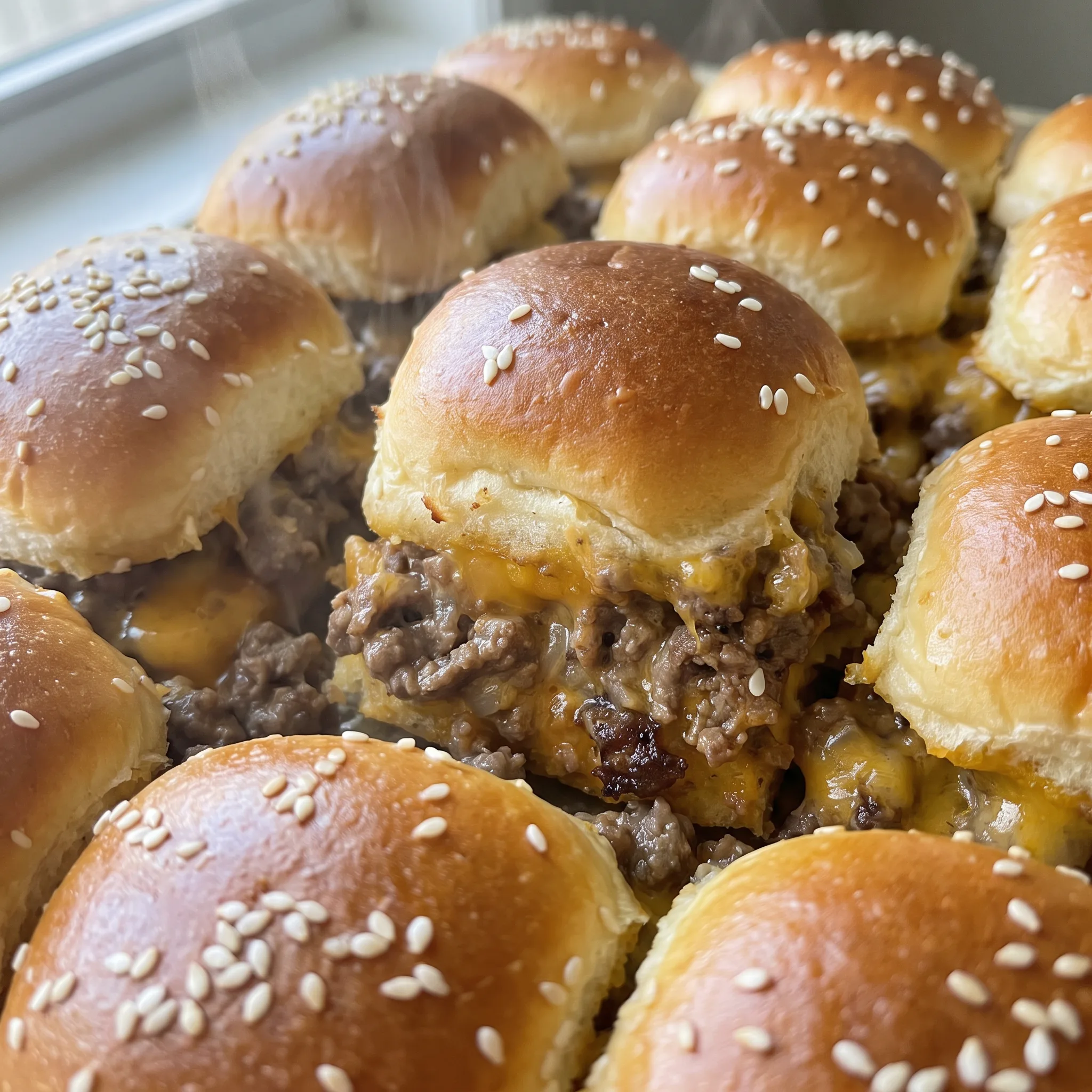
Baked Cheeseburger Sliders with Sesame Tops
Ingredients
Method
- Set oven to 350°F (175°C). Grease the bottom of a rimmed baking sheet with butter.
- Warm 1/2 tbsp olive oil in a large skillet over medium-high heat. Add the finely diced onion and 2 lb ground beef, chopping it apart with a spatula. Season with 1 tsp salt, 1 tsp black pepper, and 1 tsp garlic powder. Sauté over medium-high, breaking up the meat, and cook only until no longer pink, then take the skillet off the heat.
- Angle the skillet and spoon away the excess fat, discarding it. Mix 1/4 cup mayonnaise into the beef.
- Slice the buns in half. Lay the dinner roll bottoms on the buttered baking sheet and cover the bread with sliced cheese. Distribute the beef mixture evenly over the sliced cheese, pressing the edges square with the back of a spatula. Top the beef with 6 oz shredded cheddar.
- Set the top buns, cut-side down, over the burgers. Paint the tops with 2 tbsp melted butter and right away scatter on sesame seeds. Bake at 350°F (175°C) for 12–15 minutes, or until the cheese melts and the tops turn golden brown.
Notes
Storage, Reheating, and the Serving Window
These sliders peak within 20 to 30 minutes of leaving the oven. That’s when the bottom rolls still have snap from the buttered pan and the cheese is slack.
Past an hour at room temperature, the beef juices work down through the bread and the bottoms go limp. Cool any leftovers fully before they go in the fridge, uncovered for the first 20 minutes so steam escapes, then covered. Stacked warm and sealed, they sweat and the crust softens overnight.
Refrigerate covered and eat them within 3 days; the bread firms up cold, which is expected. Skip the microwave. It steam-blasts the roll and undoes the crust.
Reheat uncovered on a sheet pan at 350°F for 8 to 10 minutes, until the cheese loosens and the bottoms crisp back. The sesame butter topping is applied before baking, so there’s no finishing touch at serving. Freezing doesn’t hold here: the rolls and sliced cheese weep on thaw and the bottoms never recover.
Cut the slab into portions before chilling so you reheat only what you’ll eat.
Where a Swap Pays Off and Where It Costs You
Ground beef: Going from 90/10 to 93/7, or the reverse to 85/15. 93/7 sheds even less fat, so the beef can taste dry and crumbly after the oven pass; the mayo helps, but you may want a touch more.
85/15 pools grease that can soak the bottom cheese barrier and make the rolls greasy. Stick with 90/10 for the balance the recipe expects.
Dinner rolls: Brioche or Hawaiian rolls instead of standard dinner rolls. Both are richer and softer, so they brown faster and can go from golden to dark before the cheese fully melts.
Start checking at 10 minutes. Hawaiian rolls bring a sweet note that competes with the savory beef; brioche stays more neutral.
Standard rolls are the safe bet for even baking.
Cheddar cheese: Sharp cheddar for medium, or pre-shredded cheddar for the block. Sharp cheddar cuts through the beef and butter more aggressively; use the same amounts.
Pre-shredded cheese is coated with anti-caking starch, so it melts less smoothly and can look grainy on top. Shred your own for the top layer if you can.
Mayonnaise: Greek yogurt or sour cream for the mayo. Both are tangier and thinner, so the beef mixture may taste sharper and feel less rich. Start with the same 1/4 cup, then adjust after tasting the cooked beef; you may want a little less if the tang is strong.
Tips
- Let the beef mixture sit off the heat for about 5 minutes before spreading it over the sliced cheese, and drain the fat until the tilted skillet shows only a sheen, not a pool. Hot beef straight from the pan softens the bottom cheddar on contact, so it starts melting into the bread before the oven ever runs and the barrier turns greasy instead of staying a flat sheet under the meat.
The recipe builds one large slab from 2 lb of ground beef spread across 24 dinner rolls, so any mound or uneven edge means some sliders get a thick, underbaked core while others get a thin, dry patch. The oven heat reaches the beef through the roll tops and the baking sheet, and a flat, square layer of uniform thickness is what allows every portion to heat through at the same rate. Without pressing the mixture flat and square, the slab bakes unevenly and the outer sliders can end up with sparse filling.
Frequently Asked Questions
Can I make these cheeseburger sliders ahead of time and bake them later?
Assemble them on the sheet pan, cover, and refrigerate, but expect a different bottom. The sliced cheddar barrier slows the beef juices down, it doesn’t stop them, and a few hours in the fridge gives the bread time to drink. Bake them cold from the fridge straight into the preheated oven rather than letting the pan sit out, and cut the slack in your schedule so the tray goes in soon after it’s built.
If you want to get the work done early, cook and cool the beef and butter the pan the day before; the buns are the part that suffers.
Why did my sliders turn out soggy on the bottom?
Most likely you left too much fat in the skillet. Tip the pan and look after you spoon off the drippings: a thin film is fine, a quarter inch pool needs to go, because that liquid runs down and gets under the bottom cheese slices.
Second check is the beef itself, which should glisten rather than swim before it goes on the rolls. If the beef was right, look at how long the tray sat after baking; past the half hour mark the bottoms go limp no matter what you did.
How are these different from regular cheeseburgers besides the size?
The beef goes into the oven already cooked through and chopped fine, so you get a pressed, even layer with no patty to bite through and no pink center. There’s no sear on the meat at all, which means the crust you’d get from a hot skillet never happens; the browning comes from the buttered roll on top instead. Onion goes in the pan with the beef rather than raw on top, and the mayo is stirred into the meat instead of spread on the bread.
What you trade away in crust you get back in how fast twenty-four of them come together on one pan.
