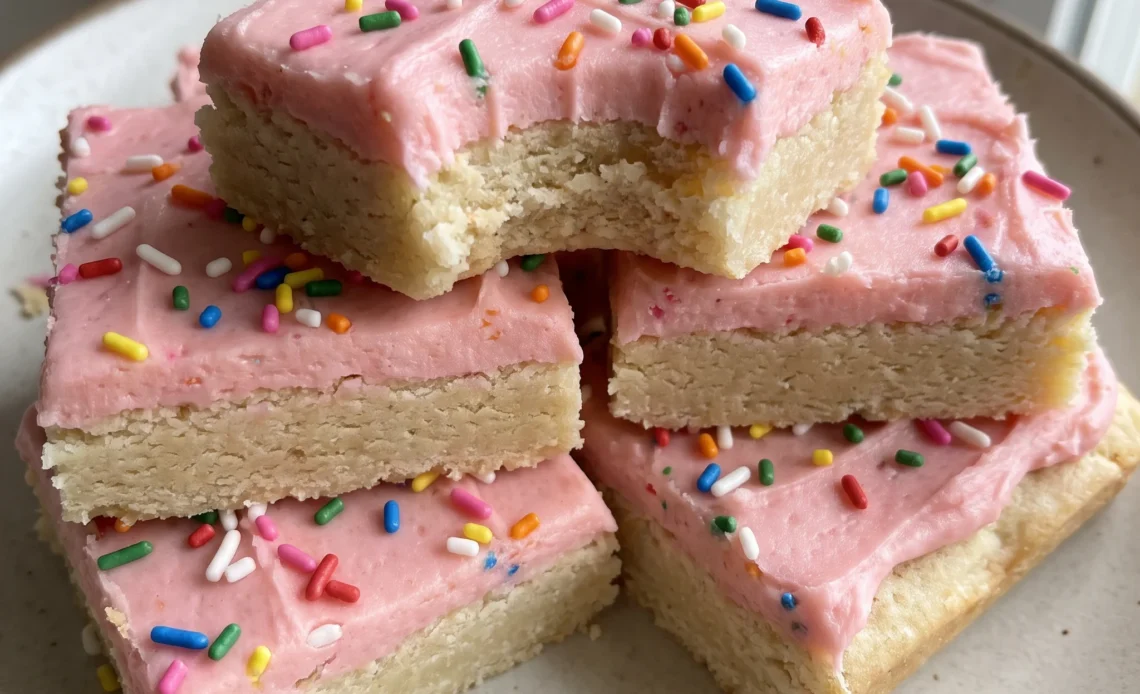
Sugar cookie bars are what you make when you want the soft, thick middle of a good sugar cookie without chilling dough, rolling it out, or cutting shapes, and the whole slab goes from mixing bowl to frosted and sliced with far less fuss than a tray of drop cookies. The catch is texture. These bars have no egg to bind them, so cornstarch and a properly creamed butter do the structural work, and the dough is stiff enough that how you press it into the pan decides whether the baked bar comes out tender or tough.
It’s a forgiving recipe right up until the moment it isn’t. Cream the butter long enough and press the layer even, and you get vegan sugar cookie bars with a soft crumb and a buttercream cap that cuts clean.
Wait for Cool, Then Frost
Frosting a warm bar is the most common way this recipe goes wrong. Buttercream is mostly butter, and butter softens on contact with heat. Spread it over a slab that’s still giving off warmth and it turns glossy, slides toward the pan walls, and pools at the edges, leaving the center bare.
The bars also aren’t finished when they come out of the oven. They firm up as they sit, and the crumb sets enough to hold together under a knife.
Cut too soon and the bars crumble at the cut line and the squares slump. Give them the full cool, until the pan feels neutral against your palm, and the surface is dry to the touch.
Then the frosting goes on in one pass, sits up where you spread it, and the cut bars come out with clean edges and an even cap. If the pan still feels warm anywhere, keep waiting.
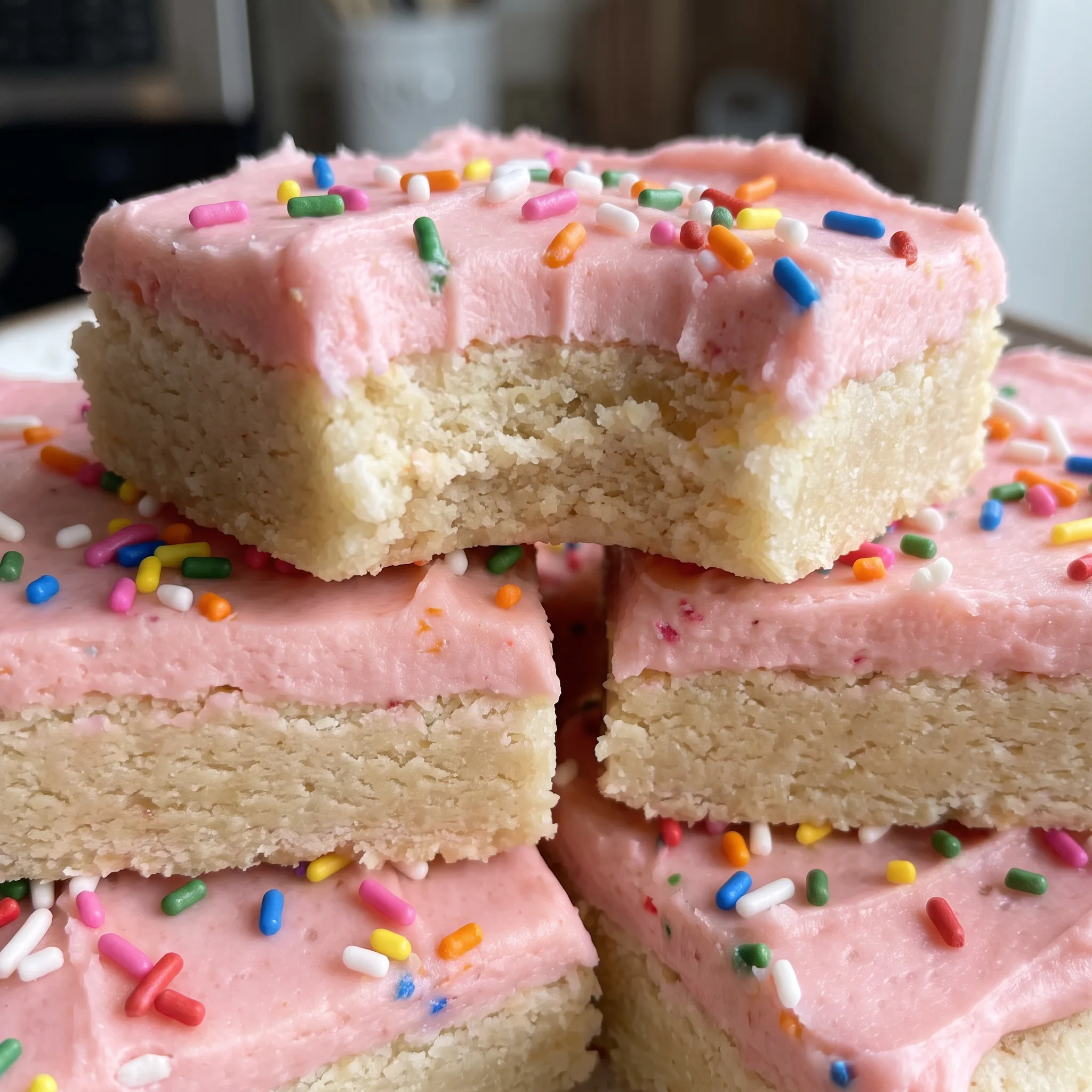
What to Grab Before You Cream the Butter
Vegan butter: Buy the block kind, not the tub spread, since tub butter carries extra water and whips up slack instead of fluffy.
Almond milk: Unsweetened plain is the safe pick here, because sweetened vanilla almond milk pushes the dough sweeter than the 3/4 cup of sugar intends.
Cornstarch: This is what keeps the bars tender without eggs, so check the box date rather than digging out a clumped old container.
All-purpose flour: Spoon it into the cup and level off, since a scooped cup packs in extra flour and the dough turns stiff and dry.
Powdered sugar: Fresh, lump-free powdered sugar beats into the frosting smooth, while older sugar leaves hard specks you can’t beat out.
Food coloring: Gel or paste coloring keeps the frosting thick, where liquid drops loosen it and force you to add more sugar.
Frosting warm bars is a race against residual heat: the butter in the buttercream melts on contact, turning a spreadable solid into a slick liquid that slides off. Waiting until the bars are completely cool lets the frosting set and adhere, while also allowing the bars to finish setting so they slice cleanly. This recipe resolves the trade-off by prioritizing full cooling over speed, because a neat, stable finish depends on it.
Judging the Dough, the Bake, and the Frosting by Feel
Reading the creamed butter and sugar
At room temperature, vegan butter should dent under a finger but still hold its shape. Whip it with the sugar for the full 3 to 4 minutes; the mixture lightens in color and turns visibly fluffy, and the grains of sugar mostly disappear.
Stop early and the baked bar stays dense and flat-tasting. If the butter was cold and never fluffed, it won’t recover. Let the bowl sit until it softens, then beat again.
When the dough is pressed thin enough
The dough is stiff and tacky, closer to a shortbread than a drop cookie. Press it across the 9×13 pan until the layer looks even and no thick ridge runs down any side. A lumpy layer bakes unevenly: the high spots stay pale and underdone while the thin spots around them brown.
Use the flat of your hand or the bottom of a measuring cup to level it. Corners need the same pressure as the center.
Telling set from underbaked at the oven
At 375°F, 12 to 15 minutes is a narrow window. The top should look dry and lightly golden, and the center should feel firm and spring back when you press it, not leave a dent.
If it still looks wet and shiny in the middle, give it another minute and check again. Pull it early and the bars stay doughy in the center once cooled; pull it late and the edges turn crisp and dry.
Getting the frosting to a spreadable consistency
After the butter, sugar, vanilla, and 1 tablespoon of milk are beaten for 2 to 3 minutes, the frosting should hold a soft peak and slide off a spatula in a thick ribbon. If it’s stiff and crumbly, add milk a teaspoon at a time; if it’s slack and runs, add powdered sugar a spoonful at a time.
Stop when it spreads without dragging the bar surface. Overbeaten frosting turns greasy and grainy.
Slicing clean bars through the frosting
The frosted slab needs a clean cut, not a saw. Chill the bars for 20 to 30 minutes if the frosting feels soft, then use a sharp knife wiped clean between cuts.
Press straight down, don’t drag. If the frosting smears and the bars tear, the frosting is too warm or the bars weren’t fully cooled. A warm blade makes the first cut messy and every cut after worse.
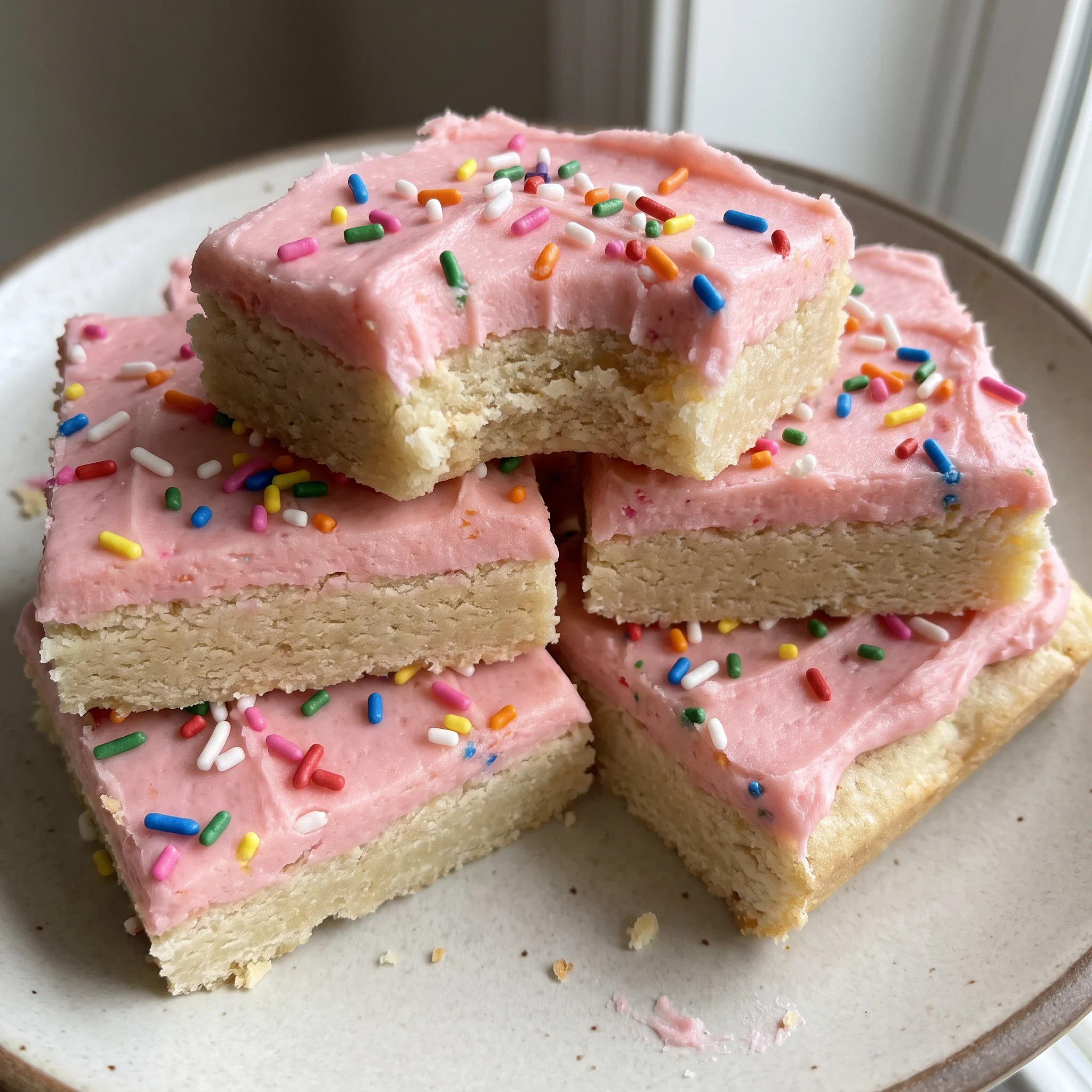
Vegan Sugar Cookie Bars with Pink Frosting
Ingredients
Method
- Set oven to 375°F (190°C) and prepare a 9×13-inch pan by greasing it or lining with parchment paper. Leave aside.
- In a large bowl, using a handheld or stand mixer with paddle attachment, whip the softened vegan butter and sugar on high speed for 3-4 minutes, until light and fluffy.
- Incorporate the almond milk, cornstarch, and vanilla. Beat on high until completely blended, about 1 minute. Scrape down the bowl as necessary.
- Add the flour, baking powder, baking soda, and salt. Mix on low speed until just combined, scraping the bottom and sides of the bowl a few times.
- Move the cookie dough into the prepared pan and press it into an even layer.
- Bake for 12-15 minutes until lightly golden and set in the center. Allow to cool fully before adding frosting.
- In a stand mixer bowl or with a handheld mixer, beat the butter until creamy. Add the powdered sugar, vanilla, and 1 tablespoon of milk.
- Beat, beginning on low speed and then increasing to high for 2-3 minutes. If the mixture is too dry or thick, add more milk. If too wet, add more powdered sugar until the frosting is spreadable.
- If desired, gradually incorporate a small amount of food coloring. I used pink.
- Spread the frosting over the completely cooled sugar cookie bars, then scatter sprinkles on top. Slice into bars and serve.
Storing and Serving Vegan Sugar Cookie Bars
Frosted bars hold their best texture for about two days at room temperature in a single layer, covered so the cut faces don’t dry out. After that, the buttercream starts to crust and the bars firm up, which is fine but less soft. Refrigerate for up to five days in an airtight container with parchment between layers; cold tightens the frosting and firms the crumb, so let a portion sit out 15 to 20 minutes before eating.
Freeze the unfrosted slab only, well wrapped, for up to two months; the frosting and sprinkles don’t survive thawing intact. Sprinkles go on right after spreading the frosting, while it’s still tacky, and they stay put once it sets. If you’re making these ahead, bake and cool the bars, wrap the slab, and frost the day you serve.
Cut into 16 squares just before setting them out, wiping the knife between cuts.
Tips
- Grease your fingertips or the flat bottom of a measuring cup before pressing the dough, and press with a light, even hand rather than leaning your weight into it. The dough is stiff and tacky, and pressing hard packs it into a tight layer that bakes up tough and short instead of tender. A thin film of oil keeps the dough from lifting with your fingers, and a measuring cup gives you flat, level corners without the extra compaction.
Swapping the Butter and Milk Is Where This Recipe Bends or Breaks
Vegan butter: Tub-style vegan spread instead of the block kind, same 3/4 cup in the bars and 6 tablespoons in the frosting. Tub spread carries more water, so when you cream it with the sugar it never gets truly light. The dough turns slack and tacky, and the baked bars come out denser and a little damp in the middle.
In the frosting, the extra water makes it looser, so you’ll likely need another spoonful or two of powdered sugar to get it back to a spreadable ribbon. It still works, but expect a softer bar and a frosting that sets less firmly.
Almond milk: Soy milk or oat milk in the same 2 tablespoons for the dough and the same 1 to 3 tablespoons for the frosting. Soy milk has a bit more protein and body, so the dough feels slightly thicker and the baked bar stays a touch more tender. Oat milk is thinner and sweeter, so the dough can be a little looser and the frosting may need less added milk to reach the right consistency.
None of them will ruin the bars, but if you use oat, start with 1 tablespoon in the frosting and add more only if it drags.
All-purpose flour: A one-to-one gluten-free flour blend in the same 2 cups (240 g). These bars lean on flour for structure, since there’s no egg to bind them.
A gluten-free blend without xanthan gum will make the dough crumbly and the baked bars fall apart at the cut. Even with a good blend, expect a softer, more fragile bar that needs the full cool before you frost. Press the dough gently and don’t overwork it, or it turns gummy.
Cornstarch, baking powder, and baking soda: Nothing. Leave them as written.
Cornstarch is doing the egg’s job here, keeping the bars tender and holding moisture so they don’t bake up dry and crumbly. Baking powder and baking soda give the only lift these dense bars get.
Swap any of them for a different leavener or skip the cornstarch and you’ll get a flat, tough slab that tastes more like a dry shortbread than a sugar cookie bar. If you’re out of one, buy it rather than substitute.
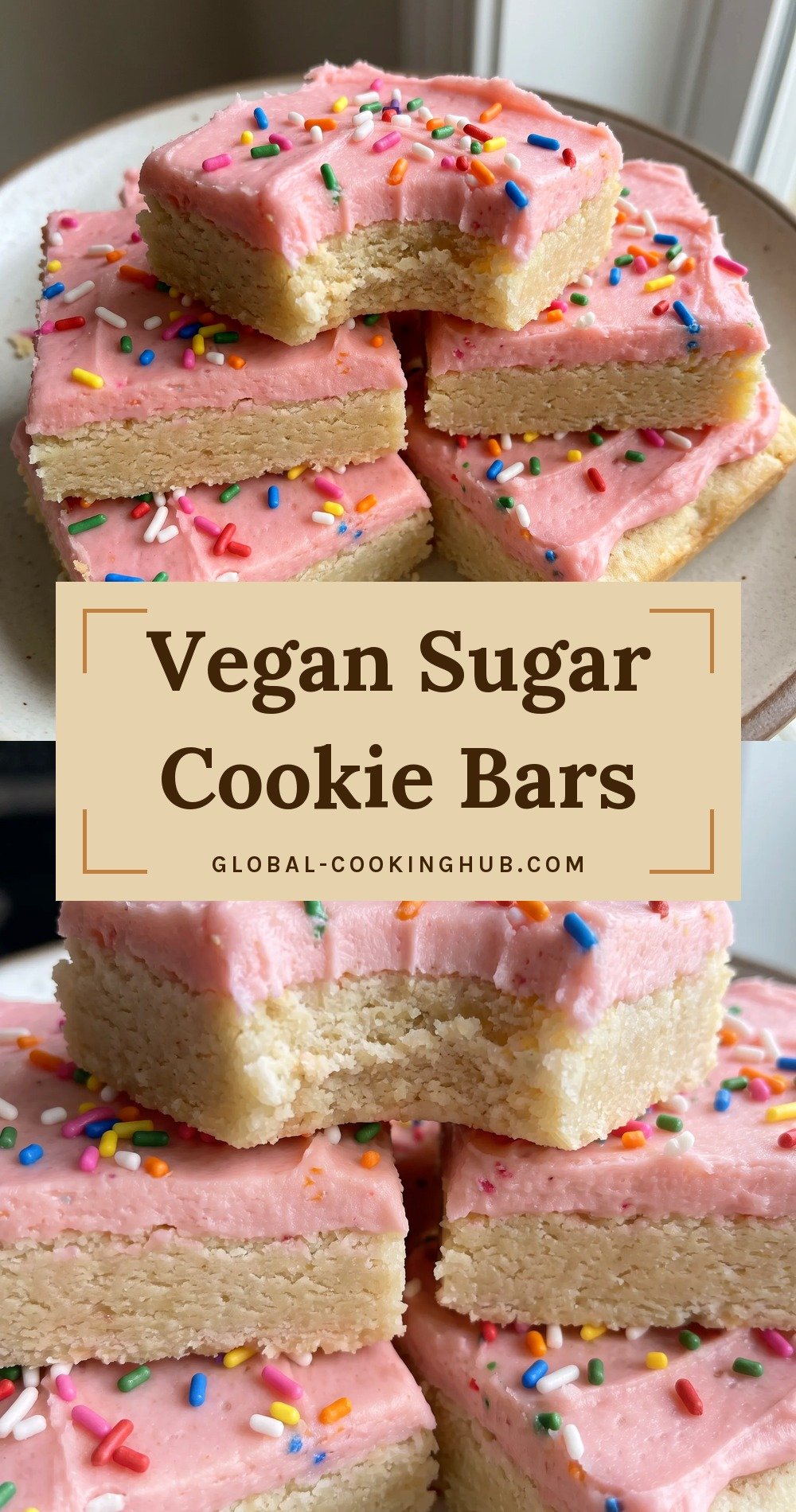
Frequently Asked Questions
Can I make these vegan sugar cookie bars ahead of time?
Yes, with a split approach. The Storage section already lays out the timeline, so just note the one move that matters: bake the slab a day ahead, wrap it once fully cool, and frost on serving day. The buttercream is mostly vegan butter, so it takes on whatever it sits against overnight; frosting early means the bars and the frosting trade texture and the cut faces dry out faster.
If you want sprinkles to stay crisp, they go on right after spreading, while the frosting is still tacky, not the day before.
Why did my frosting melt or slide off the bars?
Warm bars, almost every time. Buttercream is butter and sugar, and butter goes slack against residual heat, so the frosting creeps toward the pan walls and pools at the edges.
The bars also keep firming as they sit, so what felt set at minute ten can still be warm in the middle. Press the back of your hand to the pan; if it feels even slightly warm, wait.
If the pan was cool and the frosting still slid, the frosting itself was too loose, so it needed another spoonful of powdered sugar before it went on.
How do I know when the sugar cookie bars are done baking?
Look for a dry, lightly golden top and a center that springs back when you press it, not one that leaves a dent. At 375°F, the window is narrow because the dough is stiff and pressed thin, so the edges set before the middle does. If the center still looks wet and shiny, it isn’t there yet.
Pull it early and the middle stays doughy after cooling; leave it too long and the edges go crisp and dry. Trust the spring-back over the clock.
How are these different from classic sugar cookies?
These are one pressed slab, not scooped and rolled dough, and that changes the whole experience. Classic sugar cookies get chilled, rolled, cut, and baked in batches, so each cookie has crisp edges and a soft middle.
Here the dough goes into a 9×13 pan in one layer, bakes once, and gets frosted as a single sheet before slicing. The texture lands closer to a soft, chewy bar with a buttercream cap than a snappy cutout, and the cornstarch is what keeps it tender without eggs.
