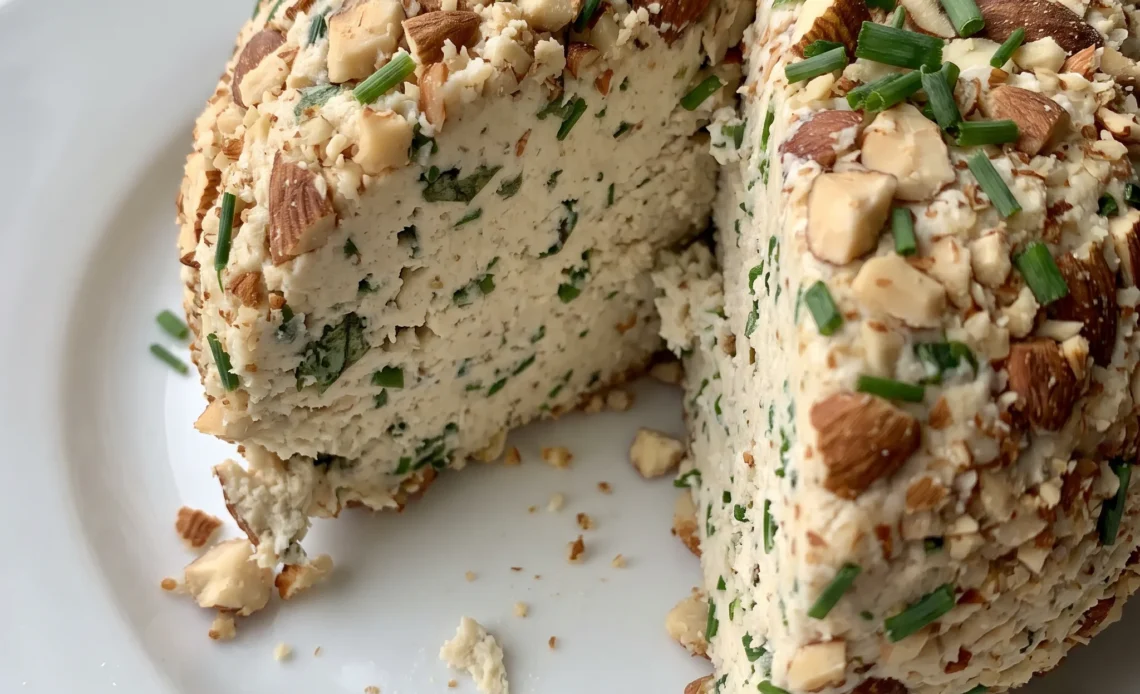
Nothing about this is cheese, and nobody at the table will care once they cut in. A vegan cashew cheese ball slices and spreads like the cream cheese version, and it sets firm enough to hold a shape on a platter without tasting like a compromise. What makes it read as cheese rather than as nuts is the savory depth underneath, which comes across as aged and rounded instead of sharp.
People who avoid dairy tend to notice that first, then go quiet and take a second cracker. The margin for error sits in the texture: a blend that’s still coarse never firms up right, and one that warms too long splits oily and won’t come back. Get the paste smooth and cool before it goes to set, and the rest is forgiving.
The coating is what goes soft first, so think about when you plan to serve it.
Soaking cashews in boiling water for an hour softens the cell walls so the blades can shear them into a smooth paste; skipping or shortening the soak leaves hard fragments that never fully break down. Blending at room temperature keeps the coconut oil liquid so it emulsifies into the cashew matrix, whereas blending cold or stopping early leaves the oil as distinct droplets that firm into greasy specks when chilled. The recipe uses the full hot soak and a long, high-speed blend to create a stable emulsion before the mixture is chilled into a firm ball.
Balance the cashews and almonds for the right bite
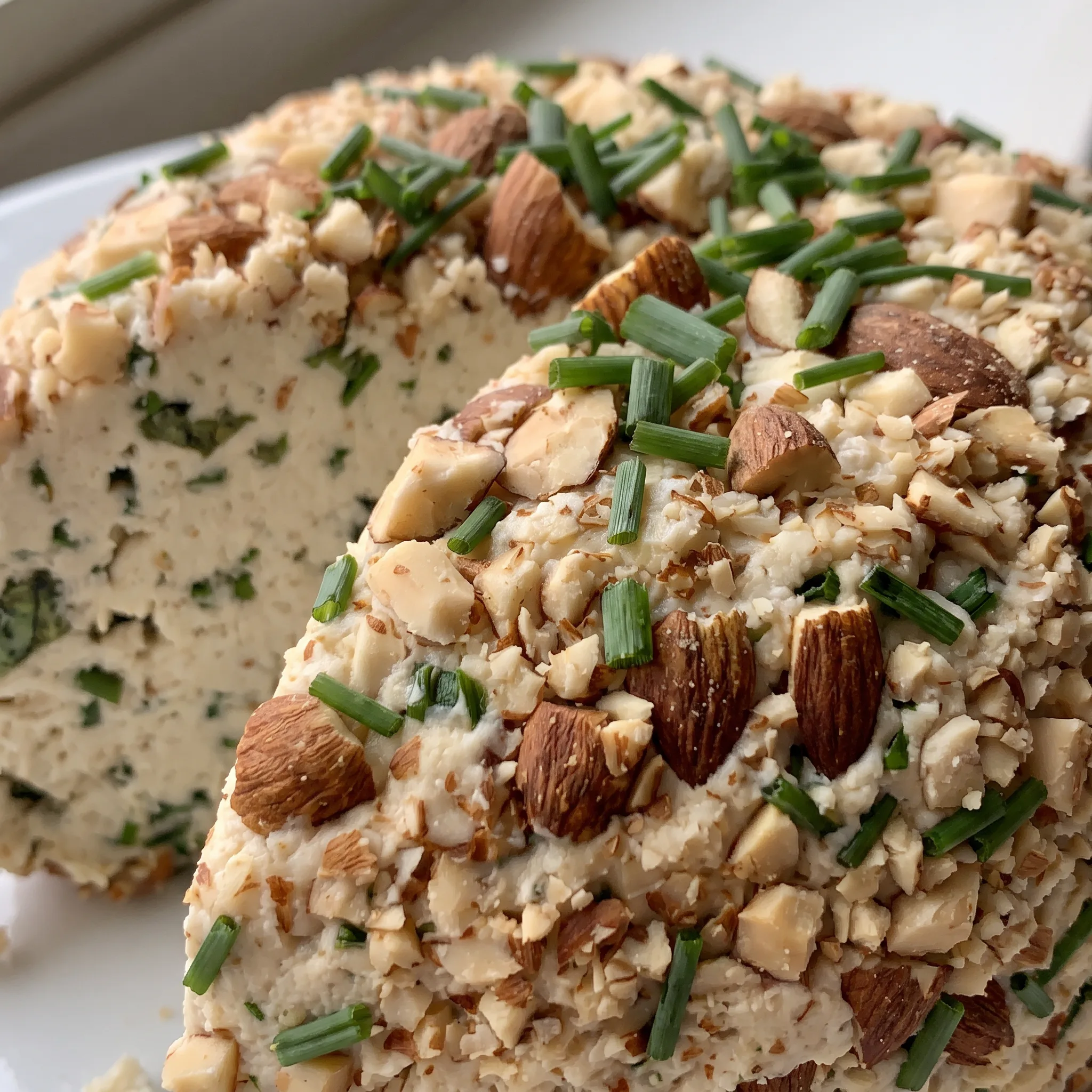
Cashews carry the whole interior because they blend to a smooth paste with enough body to hold a shape. Almonds stay out of the blend for a reason: ground into the mix, their skins and grit would roughen the texture you want in a spread. The proportion here, 1 cup cashews to 1/4 cup almonds, keeps the middle soft enough to smear on a cracker but firm enough that the ball doesn’t slump once it’s rolled.
If almonds went into the base, the cheese would turn pasty and taste heavy. Crushing them only after the cheese sets is what keeps the coating crisp; mix them in early and they’d go soft against the moisture. The result is a ball that slices cleanly and gives a little under the knife, with a crunch that stays audible from the first bite to the last.
Build savory depth from miso, nutritional yeast, and mustard
White miso paste brings more than salt. It has a fermented, rounded savoriness that makes the cashew base taste aged, almost like a soft cheese.
Nutritional yeast adds its own cheesy note, a dry, savory hum that fills in where dairy would normally sit. Dijon mustard cuts through that richness with a tang that keeps the whole thing from tasting flat.
A small amount of paprika and cayenne adds warmth, a low background heat you notice more as a finish than a burn. None of these ingredients shouts over the others; each one props up the next. The overall effect is a cheese ball that tastes complex without being busy, and the savoriness lingers after you swallow.
It’s the kind of flavor that makes people go back for a second smear without quite knowing why.
Coconut oil gives the ball its structure
Coconut oil is what turns a soft cashew puree into something you can roll and slice. At cool temperatures it firms up, so the mixture sets into a coherent ball rather than a loose pile.
It also brings a richness that stands in for the fat in dairy cheese, giving each bite a smooth, coating quality on the tongue. When it’s blended thoroughly, the oil disappears into the mixture, leaving no greasy pockets or separated spots.
You want the texture even, so the ball holds together when you cut into it. A cheese ball that’s too soft collapses under its own weight; one that’s too firm crumbles. This one hits the middle, thanks to the oil setting just enough.
You’ll know it’s right when a knife slides through with a little resistance and the cut face stays neat.
Add herbs in two stages to keep them fresh
Basil and half the chives go into the blended base by hand, not the machine. Folding them in preserves their fresh flavor and keeps them from turning into dark specks. The rest of the chives are held back for the coating, where they mix with the crushed almonds.
That way you get a bright green fleck and a mild oniony bite on the outside, plus a softer herb note running through the middle. Dividing the chives means every bite gets some herb, not just the ones near the surface. The basil, in particular, would bruise and darken if it were processed; stirred in gently, it stays green and fragrant.
The result is a cheese ball that tastes garden-fresh all the way through, with a coating that looks as lively as it tastes.
What to buy and how to prep it for this cheese ball
Raw cashews: Buy raw, unsalted ones, since roasted cashews blend up gritty and taste too toasted for a cheese base.
White miso paste: White or shiro miso is mild and sweet; darker miso runs saltier and more assertive and will push the savoriness past where the lemon can balance it.
Coconut oil: Refined coconut oil keeps the flavor neutral, while virgin coconut oil carries a coconut taste that reads through the miso and nutritional yeast.
Roasted salted almonds: Use almonds already roasted and salted, since raw ones crush into a bland, chalky coating that won’t crisp against the set cheese.
Fresh basil and chives: Both need to be dry after washing, because water clinging to the leaves turns the folded herbs dark and slimy in the mix.
How to judge the blend, the set, and the coating before you serve
Reading the cashew paste as it blends
Stop the blender when the mixture looks like thick sour cream: no visible specks of nut, but still soft enough to spread. A paste that’s too grainy means the cashews didn’t soak long enough or the blender needs more time; keep going in short pulses, scraping down the sides. If it’s warm from blending and looks oily, the coconut oil is starting to separate.
Let it cool a few minutes and pulse again to bring it back together.
Judging the set before rolling
After an hour in the freezer, press the wrapped ball with your thumb. It should feel firm but yield slightly, like cold butter, not rock-hard. Too soft and it won’t hold its shape when you unwrap it; too hard and the surface cracks as you roll it in nuts.
If it’s too soft, give it another 15 minutes; if it’s too hard, let it sit at room temperature for 5 minutes before coating.
Getting the coating to stick evenly
The ball needs a slightly tacky surface for the almonds and chives to cling. If it’s too dry, the coating slides off; if it’s too wet, the nuts clump. After unwrapping, if the surface looks dry, dampen your hands with a little water and smooth it over.
Roll gently, pressing the coating in with your palms. Any bare spots can be patched with a pinch of the nut mixture.
Tasting for balance before it sets
The mix tastes stronger cold, so sample it now. It should be savory from the miso and nutritional yeast, bright from the lemon and mustard, with a faint warmth from the cayenne. If it tastes flat, add a pinch more salt or a squeeze of lemon.
If the miso or yeast dominates, a little more lemon juice will lift it. Adjust before chilling; once set, you can’t stir it.
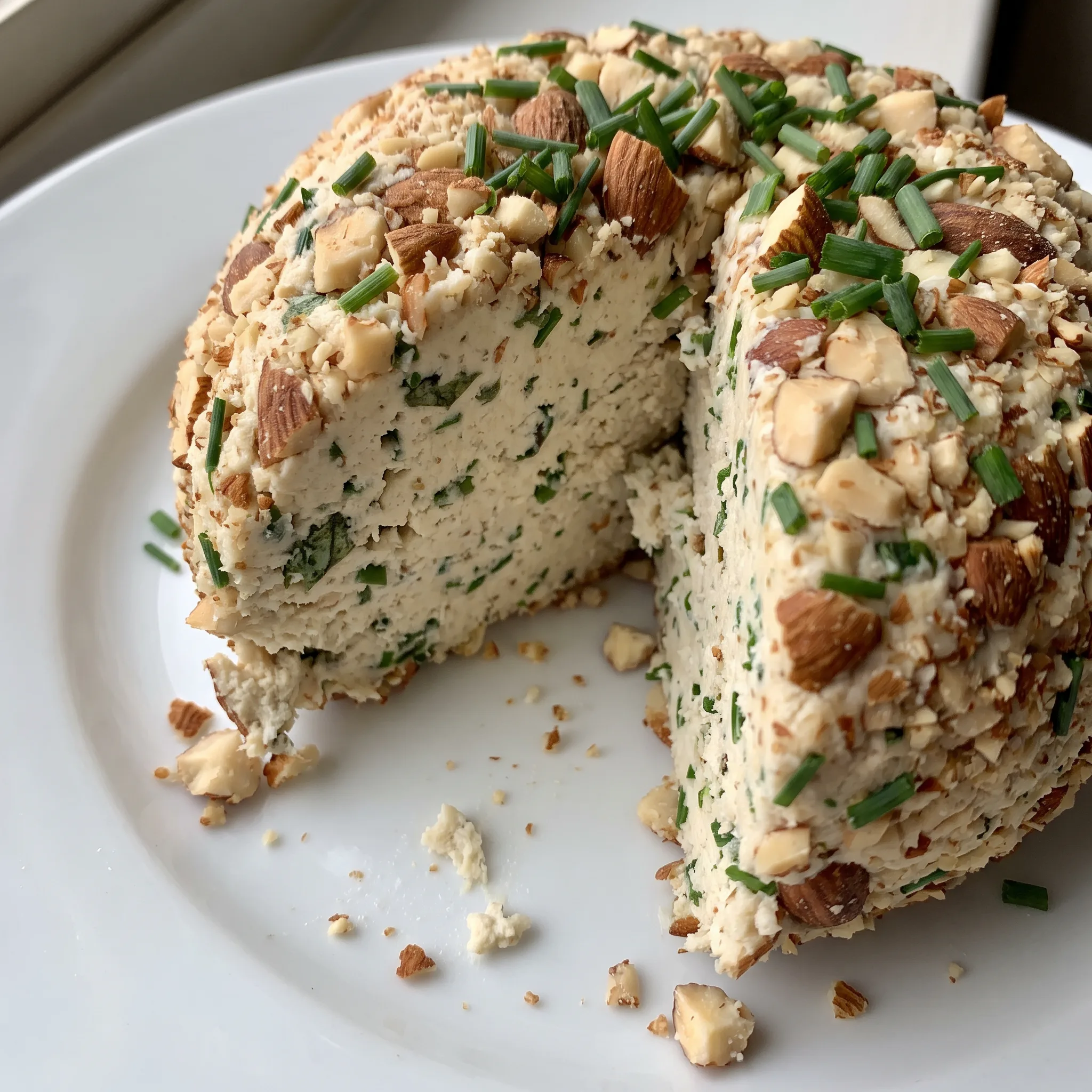
Vegan Cashew Cheese Ball with Chives
Ingredients
Method
- Put the raw cashews in a bowl and cover them with boiling hot water. Allow to soak for 1 hour.
- Drain the cashews, then transfer to a blender with the lemon juice, coconut oil, miso paste, salt, paprika, cayenne pepper, Dijon mustard, nutritional yeast, crushed garlic, and water. Process until smooth.
- Move the mixture into a mixing bowl and fold in the chopped fresh basil and 1 tbsp of the chopped chives.
- Line a small bowl with plastic wrap and spoon the mixture inside. Twist the plastic wrap closed, forming the mixture into a ball.
- Put the bowl containing the cheese ball in the freezer for 1 hour to set.
- While the cheese sets, crush the roasted salted almonds and place them in a wide bowl.
- Stir in the remaining 1 tbsp chopped chives and combine with the crushed almonds.
- After 1 hour, take the cheese ball out of the freezer and carefully remove the plastic wrap.
- Roll the cheese ball gently in the crushed almonds and chives, making sure the coating is even.
- Put the cheese ball back into the small bowl it set in and refrigerate for 30 minutes or until ready to serve.
- Serve alongside crackers, breads, veggies, or tortilla chips.
Which swaps keep the set and the cheesy note, and which wreck the ball
White miso paste: Chickpea miso, or another light fermented paste, in the same 1/2 tbsp. Soy-free cooks reach for chickpea miso first and it works here because it’s still mild and sweet rather than dark and salty. Expect a rounder, slightly sweeter savoriness and a touch less of the funky depth that white miso brings.
Taste the blend before it sets and add a squeeze of lemon if the paste reads flat. Darker miso in the same spoonful would push the salt and assertiveness past where the lemon and mustard can pull it back.
Coconut oil: Leave it out and the ball won’t firm up enough to roll. Refined coconut oil for virgin is the only change worth making, and that one’s about flavor, not structure.
Refined keeps the taste neutral so the miso and nutritional yeast stay in front. Virgin carries a coconut note that reads straight through the coating. Don’t trade the oil for olive oil or a liquid fat: those stay soft in the cold and the mixture slumps instead of setting into a ball you can slice.
Nutritional yeast: No real stand-in. Keep the 2 tbsp. That dry, savory hum is doing the work dairy would normally do, and brewer’s yeast or a pinch of extra miso won’t cover the same ground.
Cut it and the cheese tastes like lemony cashew butter with nothing aged behind it.
Roasted salted almonds: For a nut-free coating, use roasted salted pumpkin seeds crushed the same way, about the same 1/4 cup. The coating stays crisp and savory, though the pieces run a little larger and greener than almond. Toast them first if they’re raw; raw seeds crush into a flat, chalky dust that won’t crunch against the set cheese.
Tips
- Melt the coconut oil just until it’s liquid, then let it cool to room temperature before it goes in the blender. Hot oil plus a long blend warms the whole mixture, and warm cashew paste separates into an oily sheen that no amount of extra processing brings back. Room-temperature oil blends in clean and stays blended.
- Scrape the blender jar down twice during processing, once after the first 30 seconds and again before you call it done. Cashew paste climbs the walls and leaves unblended nut against the sides, and those coarse bits won’t show up until someone bites into the finished ball.
How to Store, Serve, and Refresh the Cashew Cheese Ball
Serve it within the first day. The almond and chive coating is the reason.
Crushed almonds pick up moisture from the cashew base once the ball sits wrapped in the fridge, and they lose their snap within hours. The coating still tastes fine on day two, but the crunch is what you made it for, so aim to eat it fresh.
Keep the ball covered in the fridge, in the bowl it set in or wrapped tight. It holds there for about three days. Past that, the herbs darken and the surface goes tacky.
If you’re serving a portion that’s been chilled overnight, let it sit at room temperature for 15 to 20 minutes so the middle softens enough to spread. Don’t leave it out longer than that; the coconut oil slackens and the ball slumps.
For a ball held more than a day, scrape off the old coating and press on fresh crushed almonds and chives. That one step restores the texture. Don’t freeze the assembled ball; the coating goes limp on thaw and the surface weeps.
Frequently Asked Questions
Can I make this vegan cashew cheese ball ahead of time?
Make the base a day or two ahead and coat it the day you serve. The ball keeps covered in the fridge for about three days, but crushed almonds pull moisture from the cashew base and go soft within hours of coating, so press on fresh almonds and chives at the last minute. That keeps the crunch that makes the coating worth doing.
Skip freezing the finished ball; the coating goes limp and the surface weeps on thaw.
Why is my cashew cheese ball not firm enough?
Check the blend first. If the paste still shows nut specks or looks loose rather than like thick sour cream, the cashews didn’t soften enough or the blender stopped short, and a grainy base never sets into a clean ball. Second, look at the fat: swapping the coconut oil for a liquid oil leaves the mixture soft even after chilling, since only the coconut oil firms up in the cold.
Also taste before it sets, because a flat mix often needs a pinch more salt, and you can’t stir once it’s firm.
How is this different from a classic dairy cheese ball?
Dairy versions lean on cream cheese for body, which brings a lactic tang and a dense, cold heaviness. Here coconut oil does the firming, so the ball sets lighter and softens quickly at room temperature, which is why it’s served soon after it comes out of the fridge.
The savoriness comes from white miso, nutritional yeast, and Dijon instead of aged cheese, giving a fermented, rounded depth rather than a sharp dairy bite. Expect a softer interior and a louder crunch from the almond and chive coating.
