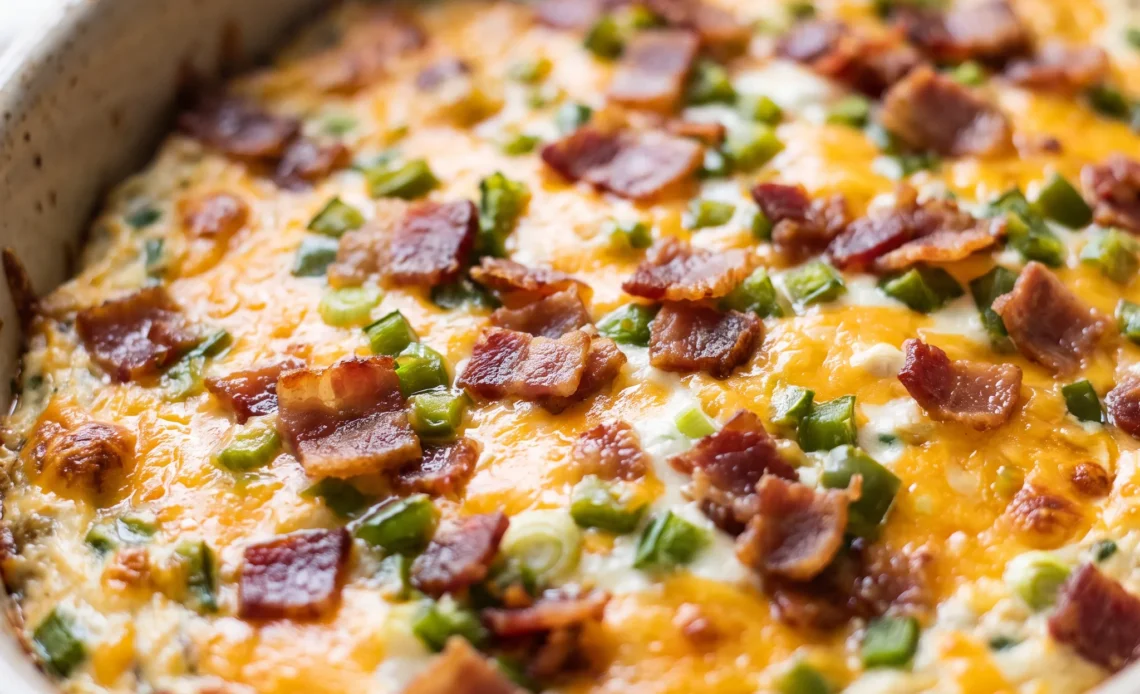
Most people make this dip with cold cream cheese, beat it until it looks smooth, and wonder why the baked result eats heavy and dense. The lumps don’t disappear in the oven; they turn into firm pockets surrounded by loose sour cream, and no amount of extra cheese on top hides that. Warm the block first and the whole thing changes.
If you’re feeding a crowd something they’ll hover over, this jalapeno popper dip gets the flavor of the fried bar snack into a baking dish you can put in the middle of a table. The margin is narrower than it looks, though. The bacon has to come out darker than you’d eat it plain, the base can turn greasy from too much beating, and the broiler gives you a short window between gold and burnt.
Get those right and it’s the dish that empties first.
Why Does Whipping the Base Matter?
Cold cream cheese straight from the fridge stays in firm lumps no matter how long you beat it, and those lumps survive baking as dense pockets surrounded by looser sour cream. Letting it sit out until it dents under a thumb gives the mixer something to work with. That’s the whole reason the recipe calls for room temperature.
Sour cream loosens the cream cheese enough that a hand mixer can pull air into the mixture. One to two minutes on medium and the bowl looks different: the base turns glossy, lightens a shade, and the beaters leave soft peaks that slump after a few seconds. That trapped air is what keeps the baked dip from eating like a brick once the bacon and peppers go in, since the mix-ins weigh the base down.
Medium speed does the job without pushing the dairy so hard it turns slack and watery. Run the mixer too fast and you’ll watch it loosen and start to separate at the edges of the bowl. Stop while the texture still looks like thick frosting.
What the Garnish Does After Baking
Anything mixed into this dip goes into a hot oven, and the jalapeños, bacon, and scallions come out softer and duller than they went in. Colors fade toward brown.
Textures go slack. Holding back a spoonful of each lets you put something on top that never saw the heat.
The reserved pieces go on after the dish comes out, never before. Scattered over the surface, they give you crisp bacon where the baked bits have gone chewy, raw jalapeño with a snap and a green that stays green, and scallion rings that still look like rings. Against the molten cheese underneath, that contrast is what the first bite registers before any of the dairy.
Visually the dish reads better too. A baked casserole of beige and brown gets a top that’s clearly bacon, clearly pepper, clearly onion. Do this right before the dish hits the table, while the surface is hot enough that the garnish smells like it belongs there.
Why Split the Cheddar in Two Stages
Fold all the cheese into the base and you end up with a uniform, creamy interior and a top that just sits there pale. Keeping a portion back to scatter over the surface changes what the oven does to the dish.
Most of the cheddar belongs inside, stirred through so every scoop carries some. The reserved handful goes on top, where the broiler hits it directly. Those shreds melt into a sheet, then the edges catch and turn gold, and the surface puffs slightly around the rim of the dish.
That browning is where the sharper, toasted cheese flavor comes from, the part you taste first.
The split also keeps the top from turning into a greasy slick. Too much cheese piled on the surface releases fat as it melts, and you get pools of orange oil instead of a crust. A modest layer browns cleanly.
Watch the broiler the whole time, since the line between gold and burnt is short.
Do Lemon and Garlic Really Change the Richness?
Sour cream, cream cheese, cheddar, and bacon all push in the same direction: heavy, fatty, rich. Without something pulling the other way, a few bites in and the dip starts to taste flat, and you can’t say why.
Lemon juice is that pull. A tablespoon won’t read as lemon, but it sharpens the dairy and keeps each bite from coating your mouth the way it would otherwise.
Garlic powder works on a different axis. It’s savory and slightly sweet, and it fills in the background under the jalapeño heat so the peppers taste like more than burn. You notice it as depth rather than as garlic.
Taste the mix before it goes in the oven. It should hit bright first, then rich, then a slow warmth from the peppers. If it tastes only heavy, the balance is off.
The baked version comes out rounder than the raw mix, so leave a little edge on it going in.
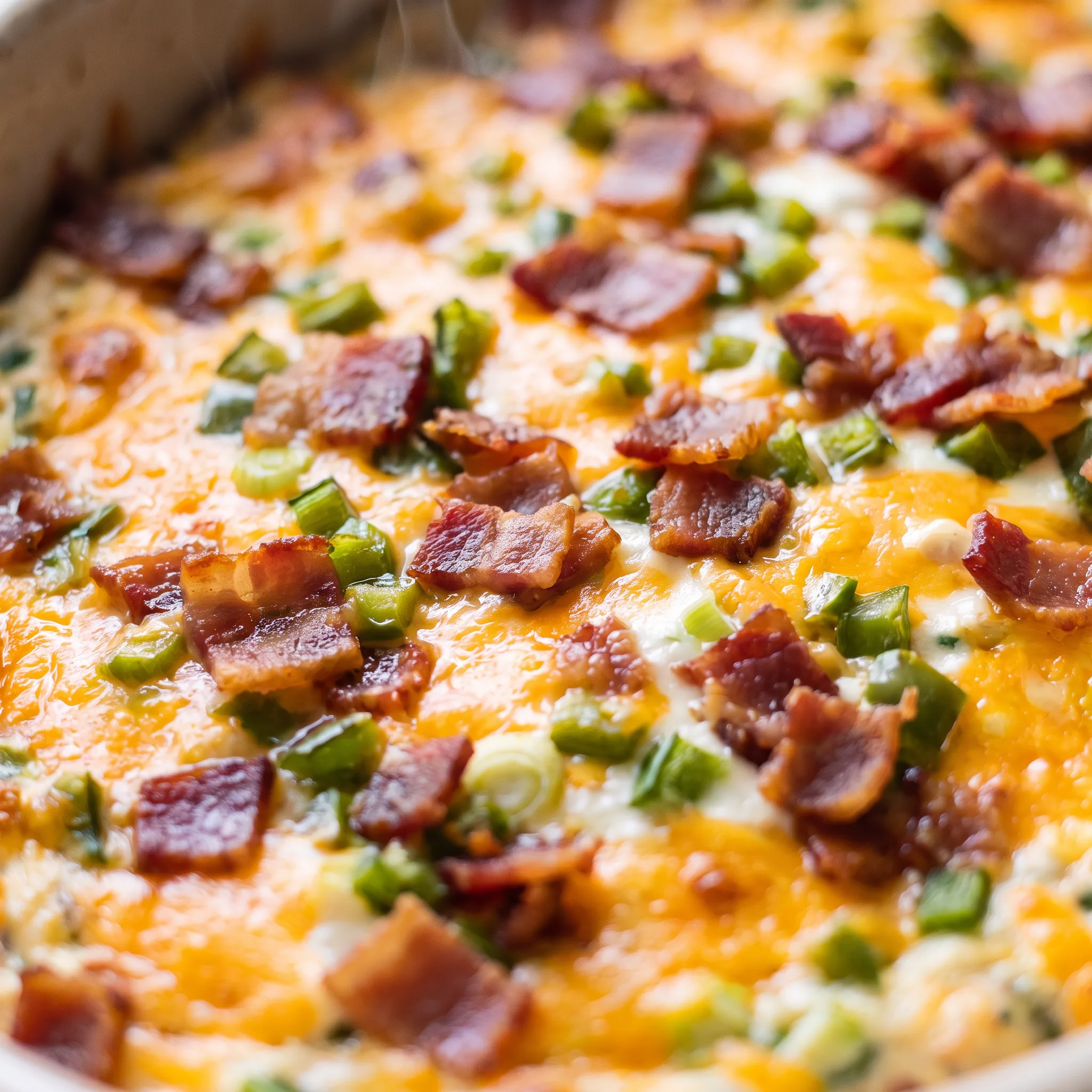
The Four Ingredients That Decide How This Dip Turns Out
Cream cheese: Buy the block, not the tub, since tub cream cheese is whipped with extra air and water and bakes up looser than the interior this recipe is after.
Jalapeños: The half cup comes from 4 to 6 peppers, and smaller ones tend to carry more heat per inch than the fat, smooth-skinned ones sitting beside them.
Bacon: Thick-cut slices give you distinct pieces that stay chewy in the bake instead of dissolving into the base, and the chopped pieces brown more evenly than thin ones.
Sharp cheddar: Buy a block and shred it yourself, because pre-shredded cheese is dusted with starch that keeps it from melting into the sheet the surface needs.
Most cooks skip the step of bringing cream cheese fully to room temperature and simply stir it with sour cream, assuming the mixture will smooth out in the oven. Cold cream cheese does not blend evenly; it stays in small, dense curds that trap air unevenly and create a heavy, lumpy base. Whipping the two dairy components with a hand mixer on medium speed forces air into the mixture and produces a light, uniform emulsion that holds up under the weight of the bacon and jalapeños.
What to watch at the skillet, the bowl, and the broiler
Reading the bacon fat, not the clock
Bacon goes from crisp to bitter fast, and the window is narrow once the fat renders. Watch the lean parts: when they darken and the edges curl, pull a piece and give it thirty seconds on the paper towel. It should snap, not bend.
Bacon fried past that point tastes acrid and drags the whole dip down. Too pale and it stays limp in the bake.
Cook it a shade darker than you want to eat it plain, since it softens in the oven.
Judging the base before the mix-ins go in
Once the bacon, peppers, and cheese are folded through, you can’t fix a slack or lumpy base. Look at the whipped cream cheese first: glossy, holds a soft peak, no visible curds of cold cheese.
If it still looks curdled at the edges, it’s overbeaten and will bake up greasy. Stop and let it sit a minute.
If it’s stiff and dull, another thirty seconds on medium helps. The texture at this point is the texture of the finished interior.
Tasting the raw mix for balance
The mix going into the dish should taste a touch sharper and saltier than you want the final dip. Baking rounds off the lemon and garlic, and the cheese concentrates as it melts. If the raw mix already tastes flat and heavy, the finished dish will too.
Too much heat from the jalapeños? That won’t fade in the oven. Too much salt now means too much salt later, so check before the second cup of cheddar goes in.
Knowing when the bake is done bubbling
Twenty minutes is a guide, not a rule. What you’re watching for is the edges: bubbles breaking through at the rim and a slight pull away from the dish. The center should look set but still jiggle when you nudge the dish.
Pull it early and the middle stays loose and soupy under the crust. Leave it too long and the dairy breaks, leaving a slick of fat pooling at the edges.
The broiler’s two-minute window
Cheese goes from gold to black in under a minute under a broiler, and the dip is already hot when it goes in. Stay at the oven door.
You want the shreds melted into a sheet with darker patches at the edges and a few blistered spots, not an even brown. The moment you see black at the corners of the dish, pull it. Burnt cheese tastes bitter and there’s no fixing it once it’s on top.
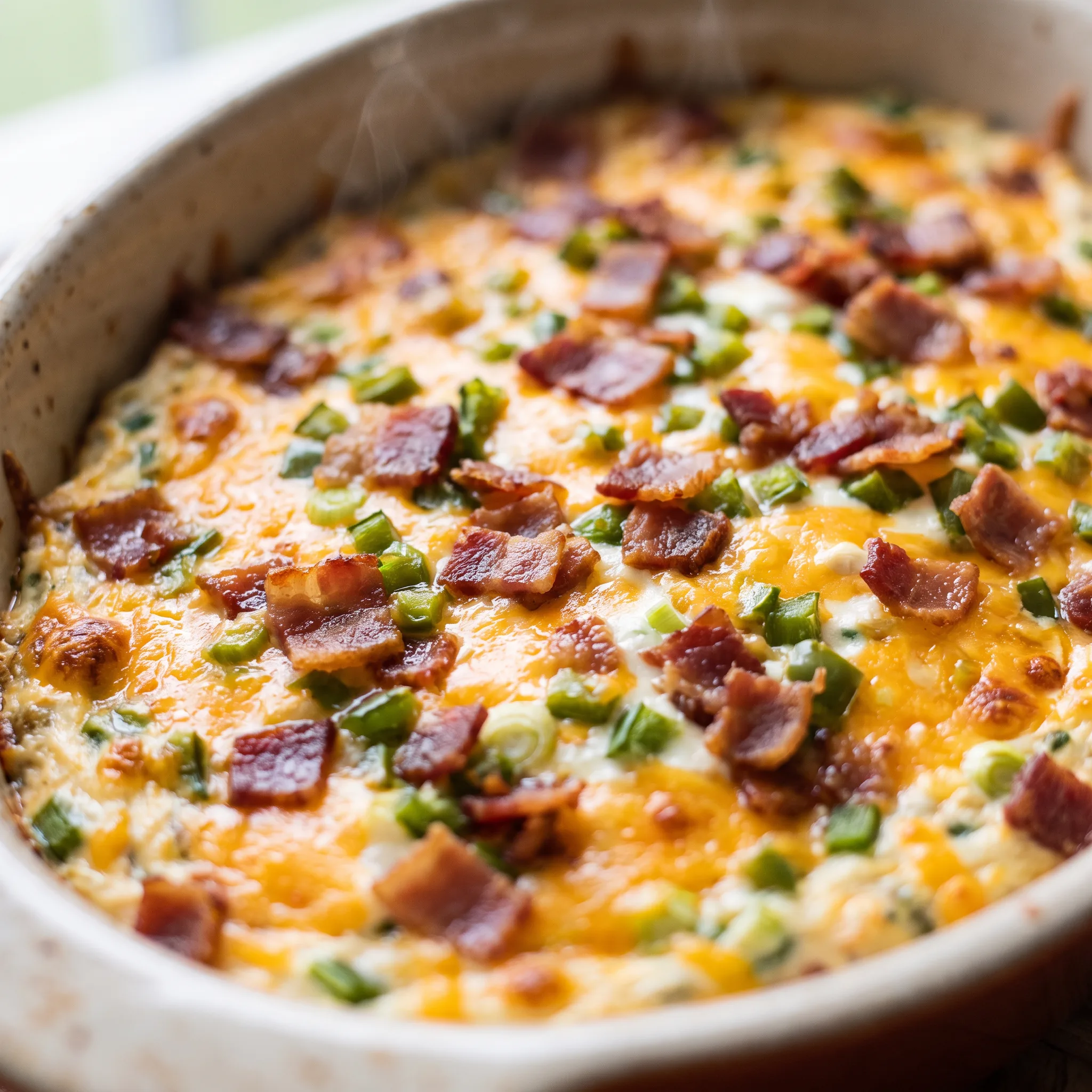
Baked Jalapeno Popper Dip with Bacon
Ingredients
Method
- Preparation: set oven to 375°F (190°C). Coat a 2-quart baking dish lightly with cooking spray. Put paper towels on a plate.
- Fry the bacon in a skillet over medium heat until the fat melts out and the bacon turns crisp. Lift it out using a slotted spoon, then move it onto the paper towel–lined plate so it can drain.
- In a large mixing bowl, stir together the sour cream and cream cheese. Using a hand mixer on medium speed, whip until smooth and airy, 1–2 minutes.
- Set aside 1 tbsp jalapeños, 1 tbsp bacon, and 1 tbsp green onions to use as garnish.
- Fold the rest of the jalapeños, bacon, and green onions into the sour cream mixture, together with the lemon juice, garlic powder, salt, pepper, and 1 cup shredded cheese. Use a rubber spatula to fold everything until evenly combined.
- Move the mixture into the prepared baking dish, then scatter the leftover cheese across the surface.
- Bake for 20 minutes, or until bubbles form around the edges. Turn the oven to broil and broil 2 minutes, or until the top turns golden. Top with the reserved jalapeños, bacon, and scallions, then serve alongside bread and sliced vegetables.
Notes
Before You Swap: What Each Ingredient Is Holding Together
Sour cream: Full-fat Greek yogurt, cup for cup (16 oz). Yogurt brings more acidity and a tighter protein structure, so the baked dip sets firmer and tastes tangier. The whip won’t hold air as well, and you may see a little whey pool in the bowl after mixing.
If you’re using yogurt, drain it for 30 minutes in a fine-mesh sieve first. The result reads more like a tangy cheese spread than a creamy dip. Don’t use fat-free yogurt; it bakes up grainy and watery.
Cream cheese: Neufchâtel, same amount (8 oz). Neufchâtel has less fat and more moisture, so the base whips up looser and the baked dip won’t hold a scoop as cleanly.
It’ll taste lighter and slightly more tart. The texture still works, but expect a softer set. Keep the block form; whipped tub-style Neufchâtel is even looser.
Fresh jalapeños: Canned diced green chiles, ½ cup drained. Canned chiles bring a softer, more vegetal heat and no fresh snap.
Since they’re already cooked, the baked dip loses the bright green flecks and the raw garnish loses its crunch. Drain them well or the extra liquid makes the base soupy. For heat, use the same ½ cup; for a milder dip, start with ¼ cup and taste before adding more.
Bacon: Thick-cut bacon or pancetta, same 8 slices. Thick-cut bacon gives you chewier pieces that stay distinct in the bake; pancetta browns faster and is saltier, so reduce the added salt to ½ teaspoon. Either way, cook it a shade darker than you want to eat it plain, because it softens in the oven.
If you skip the bacon entirely, the dip loses its smoky crunch and tastes flat; add ½ teaspoon smoked paprika to the base to compensate.
How to Store and Serve Jalapeño Popper Dip
Leftovers keep in the fridge for up to 3 days, but the texture shifts. The dairy firms and the top loses its crisp edge.
Reheat in a 350°F oven, covered, for 10 to 15 minutes, until it loosens and bubbles at the rim. Skip the microwave if you can; it heats unevenly and can make the edges watery. The garnish you added fresh will soften, so scatter a new spoonful of bacon and jalapeños after reheating.
For serving, the dip is best within 20 minutes of coming out of the oven, while the top is still golden and the reserved garnish crisp. After that, the surface dulls and the bacon softens. If you’re making it ahead, assemble the dip through step 6, cover, and refrigerate up to a day; bake straight from cold, adding 5 to 10 minutes.
Don’t freeze the assembled dip: the dairy separates and the texture turns grainy. Freeze only the cooked bacon, up to 1 month, and refresh the garnish.
Tips
- Mince the jalapeños to a consistent ⅛-inch dice rather than chopping them coarsely, and scrape out the seeds and white pith before you start if you want the heat dialed back without losing the green. Coarse pieces of a hot pepper sit in isolated pockets, so one scoop bites back and the next tastes plain, and the ½ cup measure comes out short when the pieces are chunky. A fine, even dice distributes across all 12 servings, and it also means the peppers soften into the base during the 20-minute bake instead of staying as distinct raw-tasting chunks.

Frequently Asked Questions
Can I make this jalapeno popper dip ahead of time?
Assemble it through the step where the cheese goes on top, cover the dish, and refrigerate it for up to a day. Baking it cold adds 5 to 10 minutes, which makes sense when you think about what the oven is doing: it has to push heat through a chilled, dense block of dairy before the edges can bubble, so the clock runs longer than it would from room temperature. Hold the reserved bacon, jalapeños, and scallions separately and scatter them after the dish comes out, since a night in the fridge leaves them limp and dull.
What you can’t do is freeze the assembled dip.
How do I prevent the dip from becoming greasy?
Check your bacon first. Pieces lifted out while still pale keep rendering fat into the dip as it bakes, so let them drain on the paper towels until they snap.
The other common culprit is an overbeaten base: if the whipped cream cheese looks curdled or separated at the edges of the bowl before the mix-ins go in, the dairy will break in the oven and leave a slick pooling at the rim. Watch the bake too, pulling the dish when the center still jiggles slightly rather than leaving it until the fat separates out.
Piling extra cheese on the surface makes it worse as well, since those shreds release oil as they melt.
What is the difference between this dip and classic jalapeno poppers?
Poppers are individual peppers, hollowed, stuffed, breaded, and fried, so each one gives you a crisp shell against a molten center. Here the same flavors go into a baking dish as a spread, which means no breading and no frying, and the heat level is set by how much jalapeño you mince rather than by the size of any single pepper.
The texture is soft all the way through except for the fresh garnish scattered on top after baking. You eat it with baguette slices and raw vegetables instead of picking one up by the stem.
How spicy is this dip?
Moderate heat, and it stays in the background rather than dominating. The half cup of minced jalapeños is spread across 12 servings, diluted by 16 ounces of sour cream, 8 ounces of cream cheese, and a cup of cheddar folded through, so each scoop carries a slow warmth instead of a bite.
Most of the burn sits in the seeds and white ribs, so how thoroughly you clean the peppers decides where this lands. Taste the mix before it bakes: heat doesn’t fade in the oven, so if it’s already too sharp raw, it will be too sharp finished.
Smaller peppers tend to run hotter than the fat, smooth ones, so a batch of little ones can surprise you.
Can I serve this dip cold?
It’s built to go into a 375°F oven and come out bubbling at the edges, and that’s how it eats best. Cold, the cream cheese and cheddar firm into something closer to a spread than a dip, and the surface loses the golden crust the broiler gives it. If you do want it chilled, say for a picnic, the texture will be denser and the bacon chewier, and the fresh garnish on top is doing most of the work at that point.
The dish is at its best within about 20 minutes of leaving the oven, while the top is still warm and the reserved pieces are crisp.
