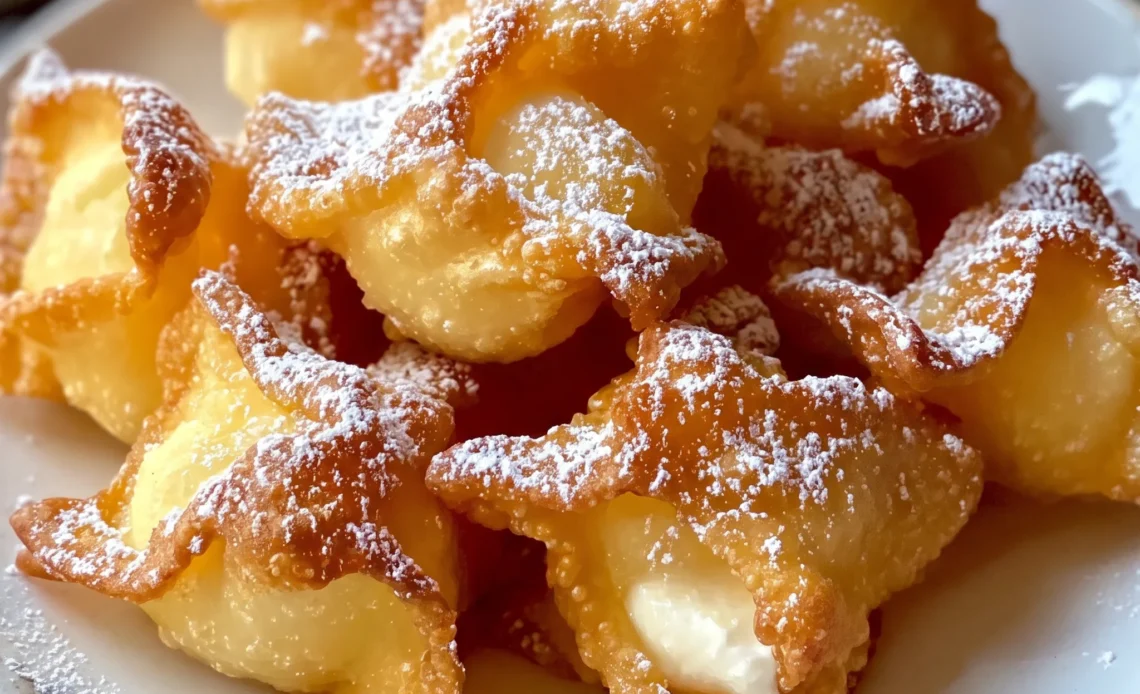
A crab rangoon is not what you’re making here. Strip the crab and the savory base, keep the fold and the fry, and you get something sweeter and, honestly, less forgiving. Cream cheese wontons live or die on two things a cook can see and feel before the oil ever gets involved: a filling soft enough to spread but stiff enough to sit still, and a seam that clings the instant you press it.
Get either wrong and you’ll watch a thin white stream of filling cloud the oil while the shell drains hollow. The reward is worth the fuss, a blistered wrapper that cracks against your teeth and gives way to something warm and soft.
Most of the work is attention, not skill. The rest of this is about knowing what to look at.
A wonton wrapper seals only where the dough surface is slightly hydrated and pressed against itself; a dry edge never forms a continuous bond. Once the sealed packet hits 350°F oil, the cream cheese filling releases steam and expands, and any weak point in the seam becomes the path of least resistance. The filling then escapes into the oil, which both leaves the wonton hollow and turns the leaked dairy into a greasy, splattering mess that coats the remaining wontons.
Why does the filling need to be smooth?
When you bite into a fried wonton, the filling should be rich and even, with no little bumps or grain. Cream cheese straight from the fridge stays cold and firm, and it won’t blend into the sugar properly, leaving tiny lumps that survive frying. Room-temperature cream cheese, on the other hand, mixes into a glossy, uniform cream.
Powdered sugar dissolves more readily than granulated, so any grittiness from undissolved crystals is less likely. That said, if you only have granulated sugar, it will still work, but the filling may feel slightly less silky. The goal is a filling that tastes as smooth as it looks, with no textural surprises.
A few extra seconds of blending can make all the difference between a filling that’s silky and one that’s uneven. Since the filling is the heart of the wonton, getting it right matters more than any other step.
What happens if the wrapper isn’t sealed well?
A wonton wrapper is thin and fragile, and once it hits hot oil, any gap in the seal becomes a leak. Cream cheese escapes into the oil, spattering and turning the oil cloudy. The wonton itself ends up greasy and deflated, with a hollow shell instead of a creamy center.
Moistening the edges with water before folding is what makes the wrapper stick to itself, creating a tight seam that holds up in the fryer. The diagonal fold not only gives the classic shape but also encloses the filling in a compact pocket, reducing the chance of blowouts.
You want each wonton to feel like a sealed little parcel, with no loose flaps or air pockets. When you press the edges together, they should cling immediately. A good seal is your insurance against a messy fry and a disappointing bite.
How hot should the oil be?
Oil temperature is the difference between a crisp, golden shell and a soggy, greasy one. At 350°F, the wrapper firms up almost on contact, forming a barrier that keeps the filling from leaking and the oil from soaking in.
The filling inside warms through gently, turning soft and creamy without overcooking. Drop the heat too low, and the wrapper acts like a sponge, drinking up oil and turning heavy.
Too high, and the outside browns before the inside is hot, leaving you with a burnt shell and a cold center. A thermometer takes the guesswork out. Without one, a cube of bread dropped in should sizzle and brown in about a minute.
The oil should shimmer, not smoke. Once the wontons are in, keep an eye on the heat and adjust as needed. That steady temperature is what gives you the contrast of crunchy outside and molten inside.
Frying or baking, which gives the better texture?
Frying gives you a shell that’s blistered and shatteringly crisp, with a filling that’s hot and molten. The oil conducts heat quickly, so the wrapper puffs and browns in under a minute, while the cream cheese inside softens but stays rich. Baking, on the other hand, produces a more uniform, drier crispness, with less added fat.
The wontons come out golden and crunchy, but the filling is less gooey, more set. A light spray of oil helps them color, but they won’t have the same blistered surface.
Which one you prefer depends on what you’re after. For a party, fried wontons are the showstopper; baked ones are easier to manage for a crowd and leave you with less oil to deal with. Both have their place, but the texture difference is noticeable.
I’ve found that baked wontons are better for dipping, while fried ones are best eaten straight away.
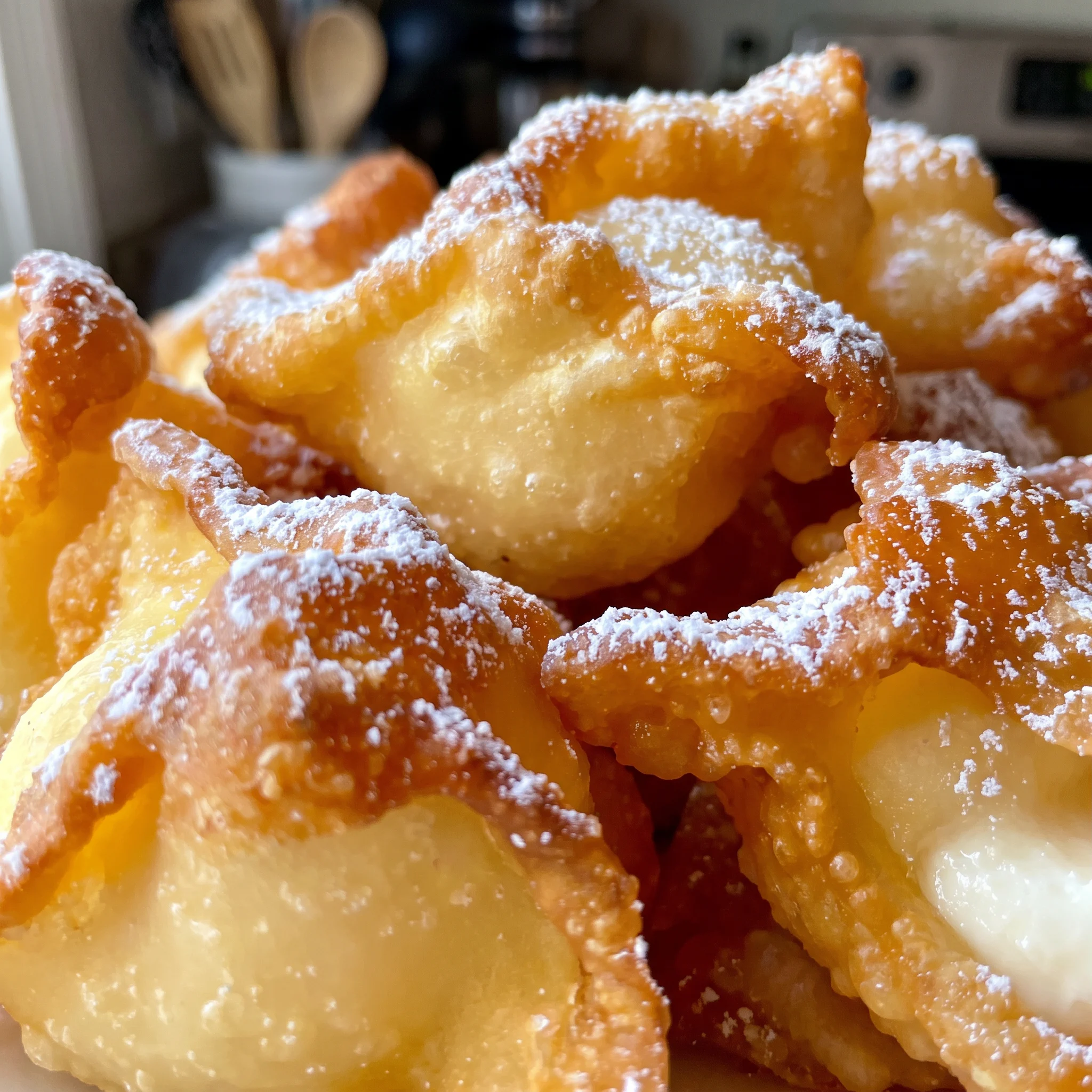
The ingredients that decide how these wontons fry up
Cream cheese: Buy the block, not the tub, and let it sit out until it dents when you press it.
Powdered sugar: Powdered dissolves into the cream cheese without the grain granulated can leave when the filling is mixed cold.
Wonton wrappers: Check the package date and keep them covered; dry edges crack at the fold and leak in the oil.
Canola oil: Use fresh oil; oil that’s already fried something darkens the wrappers before the filling warms through.
Reading the wonton at the fold, the oil, and the pull from the fryer
Judging the fill so the wrapper can close
A small scoop means a teaspoon or so, and the wrapper should still fold flat over it. Overfill and the seam won’t meet, or the filling pushes out as you press. Feel the parcel: it should lie mostly flat with a slight dome, not a tight bulge.
If the edges won’t touch, scrape some filling back out before wetting the wrapper. Too little filling gives a hollow wonton that tastes mostly of fried dough.
Reading the oil before the first wrapper goes in
350°F is the ceiling and the floor here. Watch the surface: a faint shimmer, a wisp of vapor, no smoke.
A wrapper edge dropped in should bubble steadily and brown in about a minute. If it browns in seconds, pull the pan off the heat for a moment and let it drop.
If it sits pale and greasy, wait. Frying a test wrapper tells you more than any gauge.
Knowing the moment the wrapper is done, not the filling
Forty-five seconds to a minute is short, and the color moves fast. The wrapper goes from pale to gold in the last few seconds. Lift one out and look at it: blistered, firm, evenly bronzed.
Dark brown means the oil was too hot and the shell will taste bitter. Turn them as they color so both sides meet the oil.
Spotting a leak mid-fry and what it does to the oil
A stream of bubbles from one spot, faster than the others, means filling is escaping. The cream cheese clouds the oil and the wonton drains greasy and hollow.
Fish it out, and once it’s cool enough to handle, press the seam shut or patch with a scrap of wrapper. Skim the oil before the next batch so the burnt bits don’t stick.
The bake’s own doneness, which looks different
In the oven, color comes from the outside in, so the edges brown before the center firms. Ten to twelve minutes gets them crisp; pull one at ten and press the middle. A soft give means the filling hasn’t set.
Pale, pale gold with no crispness at the edge means they need more time, not more heat. Sprayed oil helps them color, but they won’t blister like fried ones.
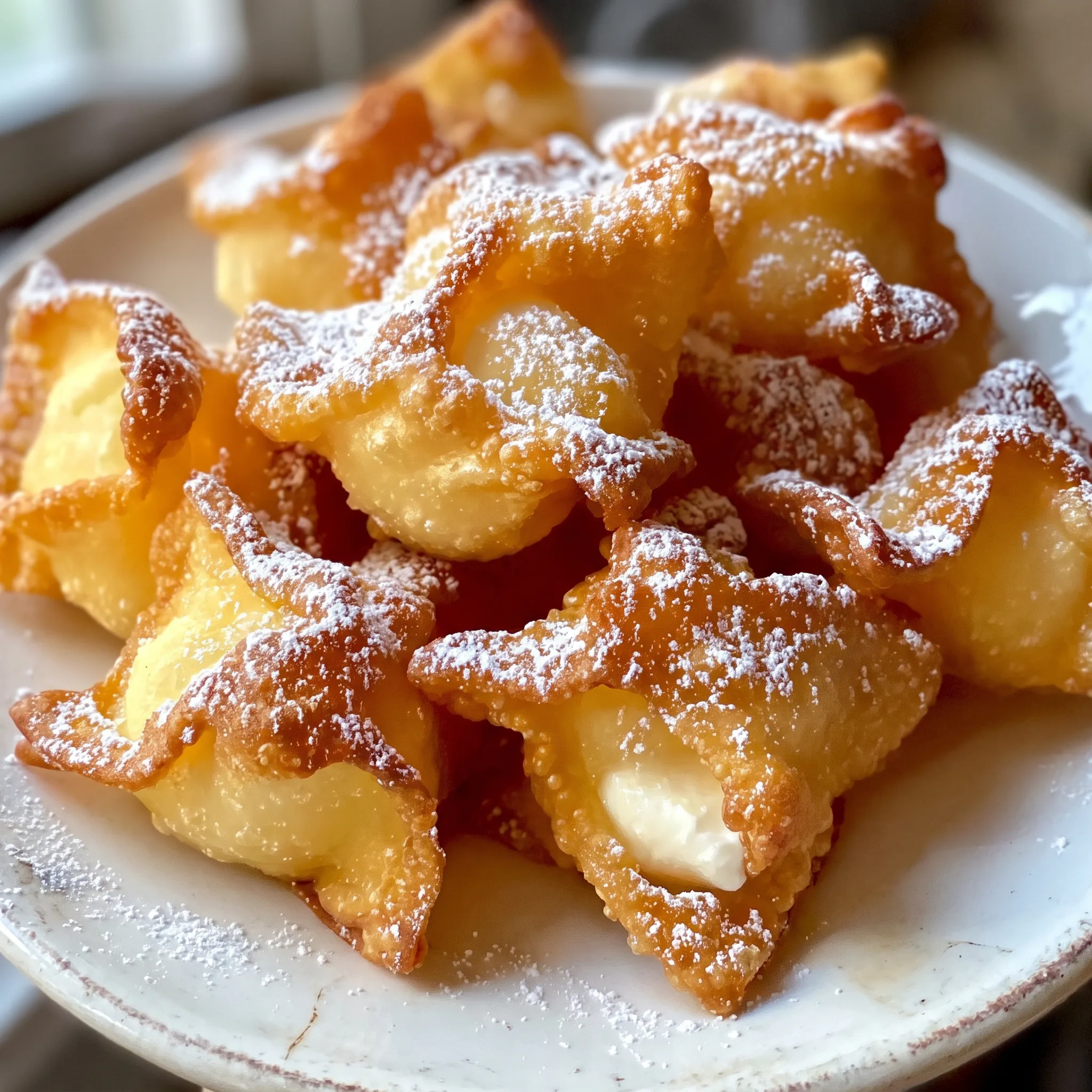
Sweet Cream Cheese Wontons
Ingredients
Method
- Combine the softened cream cheese and powdered sugar in a medium mixing bowl. Blend until creamy and smooth.
- Place one wonton wrapper, put a small scoop of the cream cheese filling in the center, wet the edges with water, and fold diagonally to seal.
- In a deep skillet over medium-high heat, heat the canola oil to 350°F (175°C).
- Carefully place the assembled wontons into the hot oil and fry for 45 seconds to 1 minute until golden brown. Drain on paper towels.
- If baking, preheat the oven to 375°F (190°C), arrange the wontons on a greased baking sheet, and bake for 10-12 minutes until crispy and golden.
- Serve warm, dusted with powdered sugar or drizzled with chocolate sauce.
What you can swap in these wontons without wrecking the fry
Powdered sugar: Granulated sugar, same 1/2 cup (60 g). Granulated works but leaves a slight grain if the cream cheese is cool. Beat it a little longer than you would powdered, until you can’t feel crystals on your tongue.
The filling will taste a touch sweeter and less silky. If you want it smoother, pulse the granulated sugar in a blender first, but then measure again because it packs down.
Wonton wrappers: Egg roll wrappers, same count, cut down to size. Egg roll wrappers are thicker and fry up chewier, more like a crisp spring roll than a delicate wonton.
They also take longer to brown, so the filling gets hotter and may ooze. Cut them into smaller squares so the wrapper-to-filling ratio stays closer to the original.
Seal the edges well; the thicker dough needs a firmer press.
Cream cheese: Neufchâtel or a whipped cream cheese. Neufchâtel is slightly tangier and lower in fat, so the filling sets a bit firmer and tastes less rich. Whipped cream cheese is airy; it’ll blend faster but may make the filling too soft to hold its shape, so use a little less.
Start with the same 8 ounces and adjust after tasting.
Canola oil: Vegetable, peanut, or another neutral oil with a high smoke point. Any neutral oil that can handle 350°F works. Peanut oil adds a faint nutty note that some people like; vegetable oil is a straight swap.
Don’t use olive oil or butter; they smoke and taste burnt before the wrapper browns.
Tips
- Count out the 20 wrappers you need before you start folding, then return the rest to their package and seal it. A wrapper left on the counter dries at the edges in minutes, and a dry edge won’t seal with water, so it opens in the oil.
- Keep the working stack under a damp, not wet, towel and take one wrapper at a time from the bottom. A soaking towel softens the wrappers until they tear at the fold, and a dry one lets the top sheet curl before you reach it.
How long do sweet cream cheese wontons keep, and how do you bring back the crunch?
Fried wontons are at their best within about 30 minutes of coming out of the oil. The shell is blistered and crisp, and the filling is still warm and soft.
After an hour, the wrapper starts pulling moisture from the cream cheese and goes leathery. Leftovers keep in the fridge for up to 3 days in an airtight container, but the texture suffers: the shell softens completely and the filling firms up.
To revive them, skip the microwave, which steams the wrapper. Instead, reheat in a 350°F oven for 5 to 7 minutes, or refry at 350°F for 30 seconds.
The oven dries the surface and re-crisps the shell without melting the filling out. Baked wontons reheat the same way but may need a minute less.
Freezing isn’t recommended for assembled fried wontons; the wrapper gets soggy and the filling weeps. If you must, freeze the filling alone for up to 1 month, then thaw and assemble fresh. Dust with powdered sugar or drizzle chocolate sauce just before serving, not in advance, or the topping dissolves and the shell softens.
Frequently Asked Questions
Can I make these cream cheese wontons ahead of time?
Make the filling a day or two ahead and keep it covered in the fridge; that’s the part that holds up. Assembled wontons are a different story, since the wrappers start soaking moisture from the cream cheese and go limp and sticky at the seams.
If you want to get the folding done early, lay them on a sheet pan and cover tightly so the wrappers don’t dry, then fry within a couple of hours. Fried wontons themselves are best eaten within about 30 minutes, so don’t count on a batch made that morning.
Why did my wontons burst open while frying?
The seam let go, and almost always because the edges were dry when you pressed them. A wrapper needs a wet finger run along the border so the two halves cling on contact; without that, the fold looks closed but springs apart the moment the oil hits it.
The second thing to check is overfilling. If the parcel bulges into a tight dome instead of lying mostly flat, the filling pushes against the seam from inside.
You can also spot it mid-fry: a fast, steady stream of bubbles from one spot means cream cheese is escaping, so fish that one out and patch the seam with a scrap of wrapper before it clouds the oil.
How do I keep the wonton wrappers from drying out while assembling?
Keep the stack under a barely damp towel or inside the open package with the flap folded over, and pull out only the wrapper you’re about to fill. These things dry fast, and a dry edge turns stiff and slightly curled, which then cracks at the fold and leaks in the oil. If a wrapper feels leathery rather than pliable, it’s already lost too much moisture.
Work in a rhythm: fill one, seal it, cover the rest, and set the finished wontons under a towel too.
What’s the difference between these and crab rangoon?
Crab rangoon has flaked crab in the filling, and usually a savory base of cream cheese with garlic, soy, or Worcestershire instead of sugar and vanilla. These are sweet through and through, closer to a dessert wonton, and they get dusted with powdered sugar or drizzled with chocolate at serving. The shape and the fry are the same idea, so if you’ve folded rangoon before, the technique carries over.
Just don’t expect a sweet filling to stand up to the same dipping sauces.
Can I use granulated sugar instead of powdered sugar in the filling?
Yes, same amount, and the recipe card allows for it. Expect a slightly coarser filling with a touch of grain, especially if the cream cheese is cool, so beat it longer than you would with powdered sugar, until you can’t feel crystals on your tongue.
The taste runs a bit sweeter and less silky. Powdered is the smoother choice, but granulated won’t wreck the batch.
