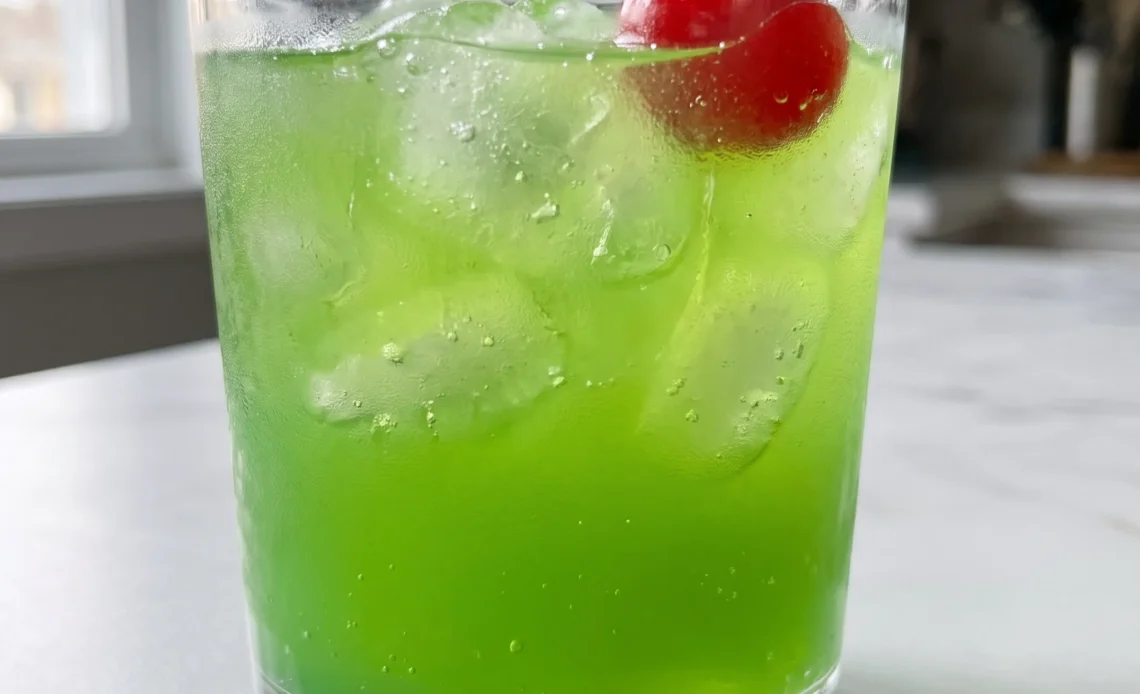
Not a cocktail, and it doesn’t pretend to be one. A green pineapple cooler mocktail is a glass of juice that behaves like a drink with a secret, and the secret is the color. Nothing green goes in.
The surprise fades on the second pour, but the first one is worth watching, and the margin for error sits in the syrup, not the juice. Measure that part by eye and you end up with something the shade of a swimming pool.
Go light and the yellow wins. Somewhere between the two is the grass-green you’re after, and it takes a stir to see where you’ve landed.
Chill the glass and the juice first; warm juice against ice waters down the base before the soda shows up. Read the section on the cherry if you’re debating whether it matters. It does, just not to the taste.
Why Does the Drink Turn Green?
Nothing green goes into the glass. Blue curaçao syrup is blue, pineapple juice is yellow, and once they meet, the color reads green.
Watch the streaks where the two liquids touch and you’ll see it happen before the stir. That’s the whole trick, and it’s why this cooler looks more complicated than it is.
The ratio does the rest of the work. A quarter ounce of syrup against four ounces of juice lands the shade you want: bright, grassy, unmistakable.
Too much syrup and the blue wins out, dragging the drink toward a teal that looks synthetic. Too little and the yellow swallows it, leaving a weak olive tint that reads as watered-down rather than bright. Four to one is the balance point.
Gentle stirring is what turns a glass of two separate liquids into one even color. Move the spoon slowly and the blue folds through the juice until no dark ribbons remain. Stir hard and you’ll knock the syrup into the ice, where it sits in pockets and colors unevenly from top to bottom.
The pour order matters less than the patience.
The Soda Goes On Last, and Stays There
Carbonation is fragile. Lemon-lime soda holds its fizz only until something disturbs it, which is why it belongs at the end of the build, poured over the finished base and left alone. Stir it in and you’re watching bubbles climb the sides and vanish.
The drink stays flat and sweet, closer to juice than to a cooler.
That’s also why the pineapple and syrup are measured heavier than a finished drink needs. They go in concentrated, because the soda will loosen them. A full pour of soda softens both the sweetness and the tart edge of the juice, so the base has to carry enough intensity to survive the dilution.
Taste the base before topping and it should read slightly too strong. After the soda, it lands right.
How much soda you add is your call. Enough to fill the glass and no more. There’s no number to hit because it’s a finish rather than a component, and a splash versus a long pour changes the drink’s weight, not its character.
Fill it, leave it, drink it while the bubbles are still loud.
What the Cherry Is Actually Doing
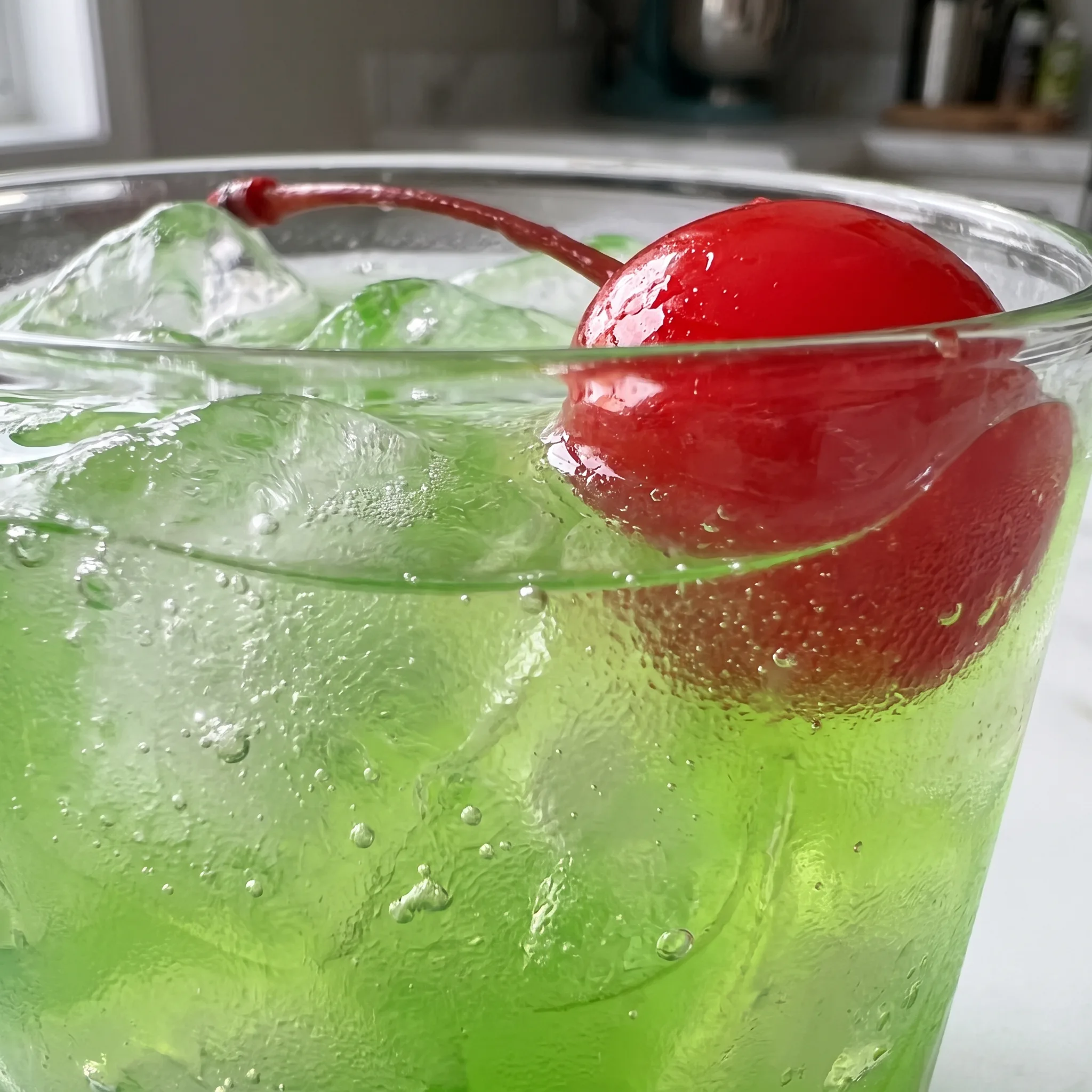
A single maraschino cherry rests on the rim or floats at the surface, and that’s as far as its influence goes. It doesn’t tint the liquid.
It doesn’t sweeten what’s in the glass unless you eat it, and the brine clinging to it stays on the outside of the drink. So the green stays green whether the cherry is there or not.
What it does is contrast. Red against that vivid green is a deliberate visual jolt, the kind you see on tiki menus and party trays, and it tells anyone holding the glass that this is a fun drink rather than a health tonic.
Presentation carries real weight in a mocktail, where there’s no alcohol to signal occasion. A bare green glass looks like a juice cleanse. The cherry fixes that in one gesture.
Strictly speaking, the drink works without it. Nobody sips a cooler and thinks about the garnish. But for this style of drink, the cherry is expected, and leaving it off makes the glass look unfinished.
A jar keeps for months, so there’s little reason to skip it.
What to Buy for a Green Pineapple Cooler
Pineapple juice: Canned or bottled works, but pick one that’s juice not nectar, since nectar drinks sweeter and heavier and the soda already softens things.
Non-alcoholic blue curaçao syrup: It’s a syrup, not a liqueur, so look on the drink-mixer shelf and check the label says non-alcoholic before you buy.
Lemon-lime soda: A fresh bottle or can matters more than the brand, because soda that’s been open in the fridge goes flat and pours dead.
Maraschino cherry: The bright red jarred kind, not cocktail cherries in syrup, since the deep red is what pops against the green.
The green color is a physical blend of blue pigment from the curaçao syrup and yellow pigment from the pineapple juice, so the two liquids must be in intimate contact for the color to read as uniform green. Because the syrup is denser and sinks while the juice is lighter, pouring them together over ice without agitation leaves pockets of blue or teal where the syrup pools. Gentle stirring after both are added distributes the syrup through the juice so the pigments mix evenly, but stirring too vigorously or before the syrup is added can splash or fail to incorporate the dense syrup.
Judging the Build: Color, Dilution, and Fizz
When the green reads right
The color should be bright and grassy, not teal or olive. After stirring, look for any dark blue ribbons left in the glass; if you see them, keep folding gently until they disappear. Too much syrup pushes it toward a synthetic teal, too little leaves a weak olive tint.
If it’s off, add more juice or syrup in small splashes and stir again, but don’t overcorrect.
Tasting the base before the soda goes in
Before you top with soda, taste the mix. It should be a touch too strong and sweet, because the soda will dilute it.
If it already tastes balanced, the finished drink will be weak. Adjust by adding a little more juice or syrup, but remember the 4:1 ratio as your guide.
This is your only chance to fix the base.
Pouring the soda without killing the fizz
Pour the soda gently down the side of the glass or over the back of a spoon. You want to keep as many bubbles as possible. Stirring after adding soda will flatten it fast.
Fill the glass and leave it alone. The drink should look lively, with bubbles clinging to the ice and climbing the sides.
Judging the cherry’s place
The cherry is for looks, not flavor. Drop it in or rest it on the rim, but don’t stir it in. It won’t tint the drink or sweeten it unless you eat it.
If the glass looks bare without it, add it; if you’re out, the drink still works. Just know that the cherry is what makes it look finished.
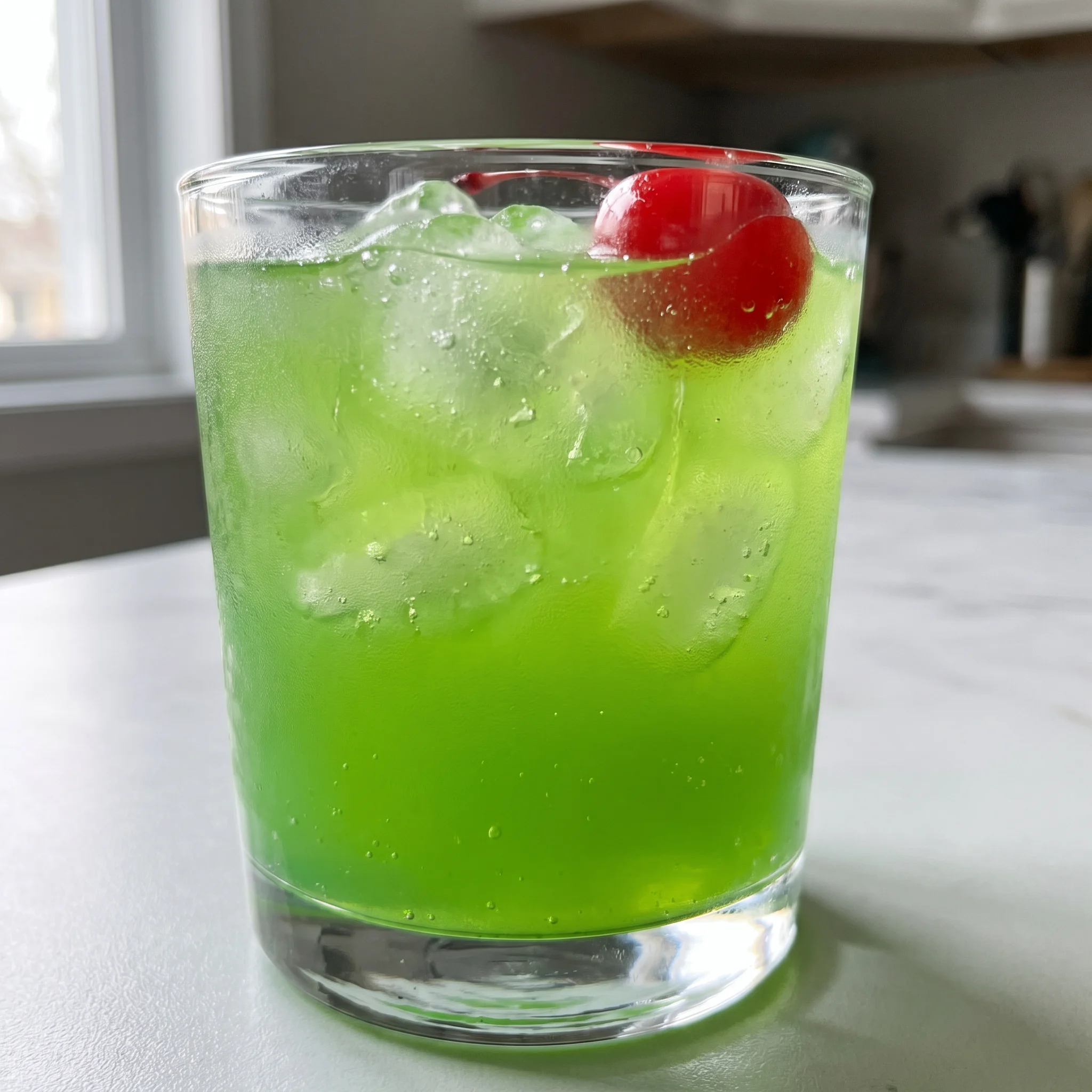
Green Pineapple Cooler Mocktail with Blue Curaçao
Ingredients
Method
- Load a highball or rocks glass with ice.
- Over the ice, pour the pineapple juice and blue curaçao syrup. Stir gently until a vibrant green color forms.
- For a fizzy, refreshing finish, top off the glass with lemon-lime soda.
- Add a maraschino cherry on top for a playful, festive appearance.
Storing and Serving the Green Pineapple Cooler
This is a build-and-serve drink, so the only thing worth storing ahead is the green base. Stir the pineapple juice and blue curaçao together in a jar, cap it, and refrigerate.
It keeps about three days, and the color holds steady because there’s nothing in it to oxidize the way cut fruit would. Mix it the morning of, or the night before, and it’s ready when you are.
Give it a quick stir before you pour, since the syrup settles.
Keep the soda and the cherry out of the jar. Soda goes flat the moment it’s mixed in, and a cherry left sitting in liquid overnight goes soft and bleeds its red into the green. Add both at serving, the soda to fill the glass and the cherry last.
Serve within a few minutes of topping with soda, while the bubbles are still climbing the ice. A glass that sits loses its fizz first and its chill second. Drink it cold, one serving at a time.
Swaps That Keep the Green, and the One That Turns It Blue
Pineapple juice: Fresh-pressed juice works in the same 4 fl oz measure, and it tastes brighter and more acidic than bottled. If bottled is what you have, use it straight. Don’t reach for juice packed in its own syrup; that’s sweetened further, and the soda already dilutes and softens the base, so the drink lands cloying rather than tart.
Fresh juice gives a sharper edge that the lemon-lime soda rounds off nicely. Syrup-packed juice dulls the green toward a murkier shade and makes the finished drink taste like candy.
Non-alcoholic blue curaçao syrup: Any non-alcoholic blue curaçao syrup on the mixer shelf works. 25 fl oz of simple syrup.
25 fl oz the recipe calls for and adjust after tasting, since coloring strength varies by brand. Do not substitute real curaçao liqueur, which is alcoholic and defeats the whole point of the drink.
A syrup-based stand-in keeps the sweetness and the 4:1 color balance intact. Food coloring alone in plain syrup can read more blue than green, so stir and check the shade before you top with soda.
Lemon-lime soda: Diet lemon-lime soda works, as does any clear citrus soda like a grapefruit or lemon soda. Skip cola and anything amber or dark, which will drag the green toward brown. Diet soda fizzes the same but leaves a thinner, less sweet finish, so taste the base and add a touch more pineapple juice if it reads flat.
A citrus soda swaps the lemon-lime tang for something sharper, and the color stays green either way.
Tips
- Chill the glass and the pineapple juice in the freezer for about 10 minutes before you build. Four ounces of room-temperature juice against a handful of ice gives the ice enough heat to start melting on contact, and that meltwater dilutes the base before the soda ever hits it, so the green goes pale and the drink tastes thin. A cold glass and cold juice keep the ice intact long enough for the 4:1 color to stay vivid and the base to stay as strong as it should be under the soda.
Frequently Asked Questions
Why did my green pineapple cooler turn out blue or teal instead of green?
Start with the syrup measure. A quarter ounce against four ounces of pineapple juice is the balance point, and a heavy hand on the pour tips the blue past the yellow so it reads teal. The other check is your juice: if it’s pale or diluted, there’s too little yellow in the glass to pull the blue toward green, and the drink looks synthetic.
Both are fixable. Splash in more juice, stir, and look for the shade to warm up before you top with soda.
Can I make this green pineapple cooler ahead of time for a party?
Mix the green base in a jar, cap it, and refrigerate up to about three days, then build each glass to order over ice. What you can’t do is assemble the whole cooler early.
Soda goes flat once it’s mixed in, and a cherry left sitting in the liquid overnight softens and bleeds red into the green. Set out the jar, a fresh bottle of soda, ice, and the cherries, and pour as guests arrive.
How is this green pineapple cooler different from a classic pineapple mocktail?
Most pineapple mocktails lean on juice and soda alone, so you get a pale gold drink with a tart edge. The quarter ounce of blue curaçao syrup here does two jobs: it shifts the color to a vivid green and adds a rounded sweetness the juice doesn’t have. The soda still goes on last to keep the fizz, same as any mocktail, and the cherry on top signals occasion rather than a plain glass of juice.
