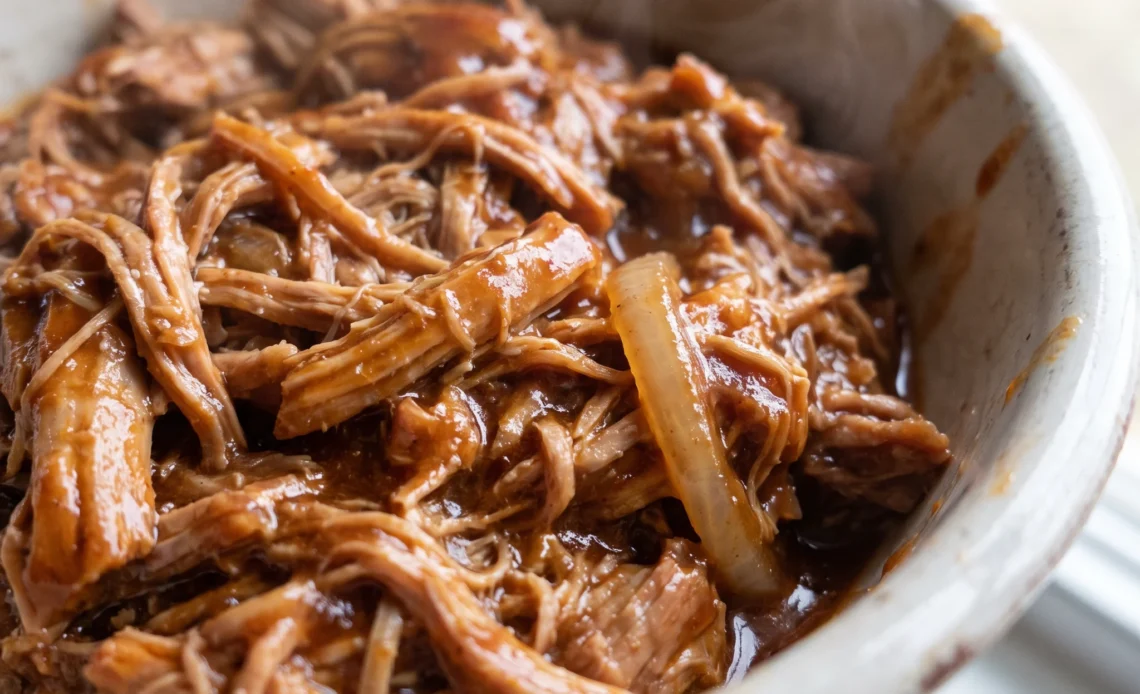
Eight hours of doing nothing is the honest pitch for this bbq pulled pork, but the doing-nothing part is where cooks get nervous. A four-pound shoulder goes in rubbed and comes out shreddable, and the pot sits there unattended the whole stretch.
That’s the appeal and the trap in one: nobody’s tasting along the way, so the decisions made before the lid goes on carry everything. The rub isa small enough quantity that a heavy hand with salt, or a sweet sauce meeting sweet sugar, shows up in the finished pot with no chance to correct it.
Broth poured over the pork instead of down the side washes the seasoning into the bottom of the insert. None of it is hard. It’s just front-loaded.
Get the setup right and the long cook rewards you with meat that pulls into fine strips without a fight.
What does each spice in the rub actually do?
Brown sugar pulls double duty here. It cuts the sweetness of the sauce that goes in later and gives the surface something to darken against as the pork cooks, so the outside tastes deeper than the sauce alone would make it.
Paprika is the variable. Smoked paprika pushes a campfire note that regular paprika doesn’t, and on a sweet sauce it reads as barbecue rather than plain red dust. Cumin is the quiet one.
A half teaspoon disappears into the blend but takes away a flatness you’d notice if it were missing, and it doesn’t shout over the pork. Salt is the piece worth thinking about. Bottled BBQ sauce runs from mild to aggressively salty, and the cup you stir in at the end lands on the same meat, so taste the sauce first and lean light on the salt if it’s a salty one.
You can’t take it back out after eight hours. The blend should look uniform in the bowl before it goes anywhere near the pork.
Why does the onion go underneath instead of on top?
Slices on the bottom of the insert do two jobs. First, they hold the pork off the hot surface, so the meat doesn’t grab and tear when you lift it out later.
Second, they give up their water as they heat, and that moisture rises into the pork instead of pooling. Put them on top and they’d just sit there, and the pork’s underside would press straight against the ceramic.
Yellow onion keeps things mild and savory, which is what most people want under a sweet sauce. Red brings a sharper sweetness that survives the long cook and shows up in the finished meat, so pick it if you want that edge. Either way they end up soft and translucent, nearly dissolved, and they get stirred through the shreds with everything else.
Nothing is wasted at the bottom of that pot.
Is a cup of broth really enough liquid?
It’s less than you’d expect for four pounds of meat, and that’s deliberate. The pork releases its own juices over eight hours, so the cup is there to create a humid environment, not to cover anything.
You want the liquid sitting low around the base, leaving the top of the roast exposed so the rub stays put. Pour it down the side of the insert for that reason.
Chicken broth brings a savory backbone that plain water doesn’t, though water does the job if that’s what’s in the cupboard. What you don’t want is a pot full of liquid, because the meat ends up sitting in a weak, greasy pool and the sauce you add later slides off instead of clinging. After the cook, you’re looking at a shallow amount of dark liquid and a lot of rendered fat, most of which you leave behind.
Shredding and saucing while the pork is hot
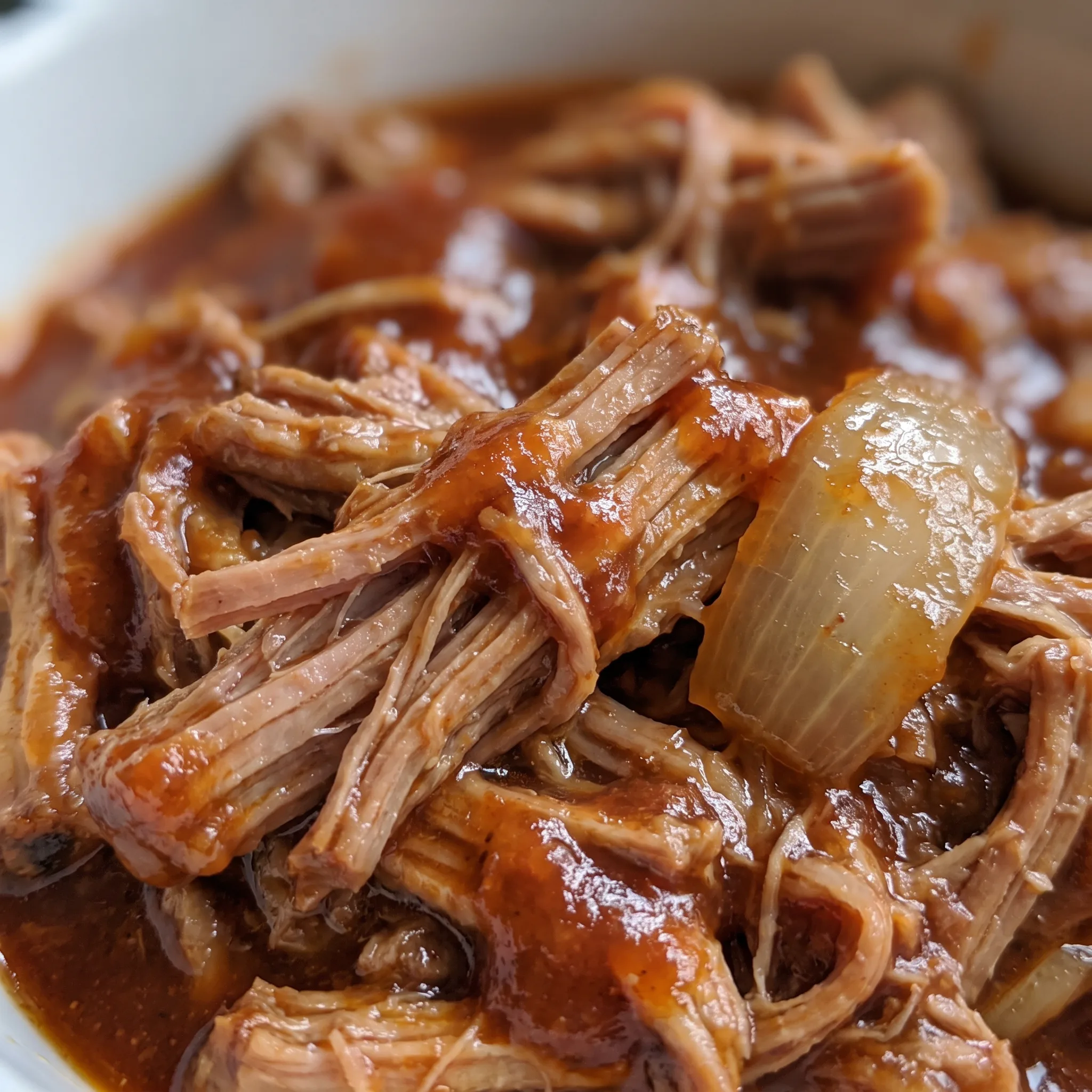
Heat is your ally here for a practical reason. Warm pork separates into strands with almost no resistance, and those open strands take sauce into them rather than wearing it on the surface.
Let the meat cool and it firms up, shreds coarser, and the sauce sits on top in patches. Warm the BBQ sauce in a skillet first if it’s thick from the jar.
Loosened, it coats evenly with a few folds instead of demanding a long stir that breaks the strands down further. Some large pieces of fat will be obvious as you pull the meat apart, pale and soft, and they’re worth setting aside since they turn the whole batch greasy. What you’re after is every strand carrying color, with no dry patches of plain pork left.
Get it mixed while it’s still steaming and the texture holds.
What to look for in the pork, sauce, and spices before they go in the pot
Boneless pork shoulder: Look for one with a good cap of fat and some marbling, because a lean cut will shred dry after eight hours.
BBQ sauce: Taste it first: a sweet and smoky sauce needs less brown sugar, while a spicy one can handle the full two tablespoons.
Paprika: Smoked paprika gives a campfire depth that regular paprika lacks, so use it if you want the rub to taste like barbecue.
Onion: Yellow onion keeps things mild and savory, while red brings a sharper sweetness that survives the long cook.
Chicken broth: Use broth rather than water for a savory backbone, but pour it down the side so the rub stays on the pork.
At the 8-hour mark, the pork should feel completely slack when pressed with a fork and the muscle should separate into strands with almost no resistance; if the meat still feels firm or springs back, the collagen has not fully broken down and the pork will shred into dry, tight fibers rather than soft, sauce-absorbent strands. The liquid level in the Crock Pot is the leading indicator: if the broth has cooked away to a thin film or the onions are scorching at the edges, moisture has dropped too low and the meat is already on the path to dryness. Once the pork has cooled even slightly in the pot, the window to pull it while hot and absorb sauce evenly has passed, and the meat will coat unevenly and taste drier.
Three places where pulled pork is won or lost
Reading the liquid at the bottom of the insert
After eight hours on low, the insert should hold a shallow pool of dark, savory liquid with a visible layer of clear fat on top. If the liquid looks thin and watery, the pork has given up more moisture than it should, and the meat may be dry. If it’s thick and syrupy, the sauce is already concentrated and you should taste before adding more.
Skim some fat if there’s a lot; too much will make the final mix greasy.
Feeling for the give in the meat
At the eight-hour mark, a fork should slide into the thickest part of the pork with almost no resistance, and the meat should twist apart easily. If there’s any tug, the pork needs more time, so check every 30 minutes. The goal is tender enough to shred with two forks, not falling apart into a paste.
Pull it too early and the shreds will be coarse and chewy; leave it too long and the meat turns dry and stringy.
Deciding how much fat to pull out
As you shred, you’ll find pale, soft fat pockets. Some of it dissolves into the meat and keeps it moist, but large chunks will make the final sandwich greasy. Set aside the big pieces and leave the smaller flecks.
If you’re unsure, taste a shred with and without fat; the difference is obvious. The goal is richness without grease, and that balance is easier to hit while the pork is still warm.
Judging the sauce coating
When you fold in the BBQ sauce, the pork should look glossy and evenly colored, with no dry patches of plain meat. If the sauce is thick and cold, it will sit on top, so warm it first. Add it in stages and stop when the meat is coated but not swimming; extra sauce can be served on the side.
Too much sauce and the pork becomes soupy, which ruins the texture on a bun.
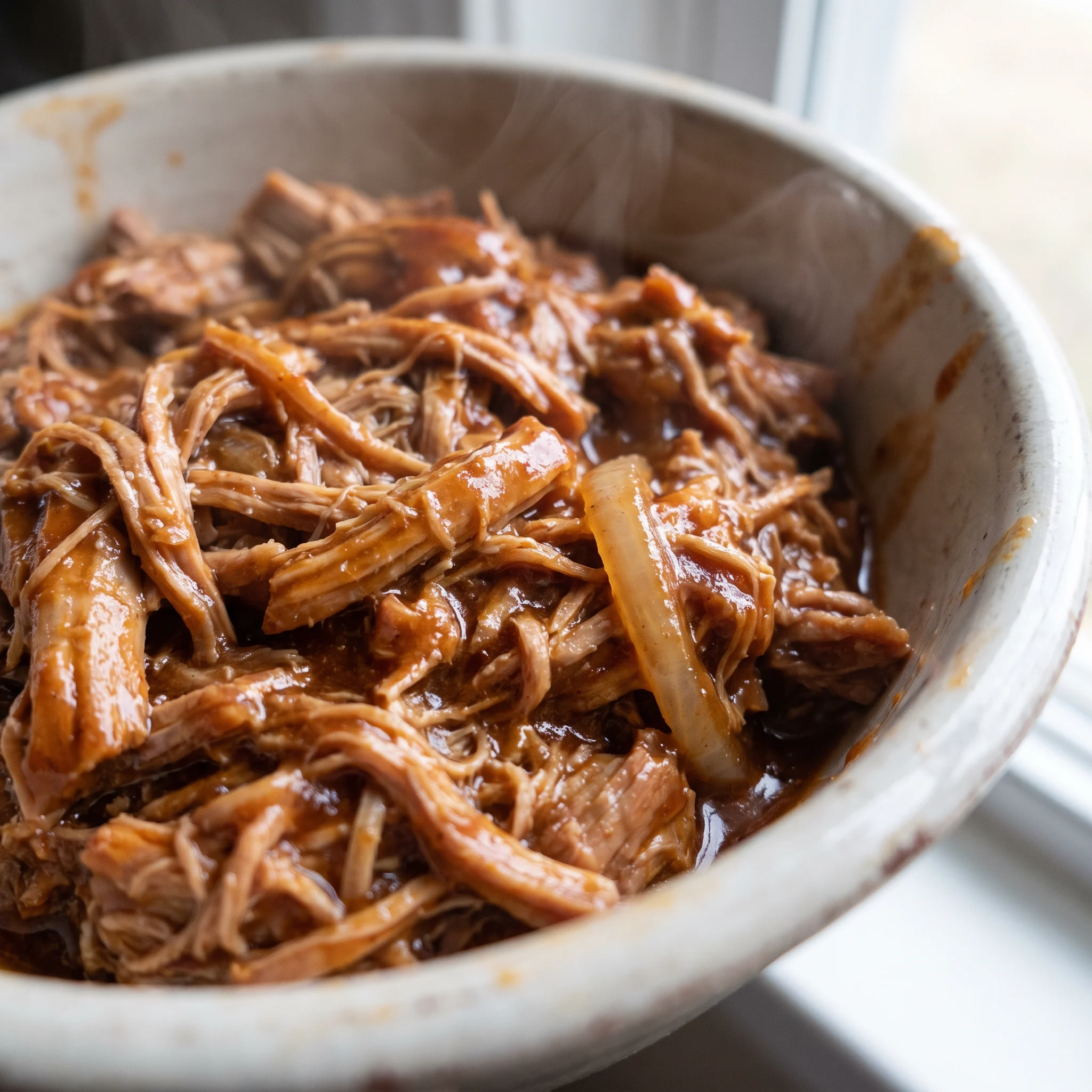
Crock Pot BBQ Pulled Pork with Sweet Onion
Ingredients
Method
- Use paper towels to blot the pork dry, which helps the spices cling and limits surplus moisture.
- Whisk brown sugar, paprika, garlic powder, onion powder, salt, pepper, and cumin together in a small bowl until the blend is even and consistent in color.
- Work the spice blend over every surface of the pork; press gently with your hands so the flavors cling and soak in throughout slow cooking.
- Layer the sliced onion across the Crock Pot bottom, forming a savory base that also guards against sticking.
- Slowly add chicken broth (or water) around the pork without rinsing off the seasoning; this liquid keeps the meat moist through low and slow cooking.
- Set the lid on and cook on LOW for 8 hours, leaving the lid in place; this breaks down collagen for a tender, melt-in-your-mouth texture.
- Transfer the pork carefully to a large tray; pull it apart with two forks into fine strips (it will fall apart easily); discard any large fat pieces if needed.
- Stir BBQ sauce into the shredded pork until every strand is coated; for a thicker sauce, warm it in a skillet before mixing.
- Serve hot right away; enjoy on soft brioche buns, in corn tortillas for tacos, or with sides like coleslaw, potatoes, or freshly baked bread.
How to store and reheat leftover pulled pork
Eat it the day you make it if you can. The sauce is loosest and glossiest then, and the strands are still tender from the pot.
Cover and refrigerate leftovers within two hours. Keep the pork in a sealed container with a splash of its own juices or a spoonful of extra sauce. The coated surface firms up cold, and without that liquid the leaner shreds dry out as they sit.
It keeps three to four days in the fridge. Reheat gently in a covered skillet over low heat with a tablespoon or two of broth or water, stirring until the strands loosen, or microwave covered in short bursts. High heat tightens the meat and drives off moisture.
Freeze portions in their liquid for up to two months, thaw overnight in the fridge, and reheat the same way. Serve on warm buns with slaw or pickles so the crunch offsets the soft meat.
Sauce on the side goes on just before eating, not into storage.
The Sauce and the Liquid Are Your Real Levers, the Rub’s Sugar and Salt Aren’t
BBQ sauce (1 cup): Any bottled sauce works, sweet and smoky or spicy, or make your own. If you go homemade, taste it for sweetness and salt before it goes anywhere near the pork. For a spicy bottled sauce, the full 2 tbsp of brown sugar in the rub balances the heat; a sweet sauce means pulling the sugar back a little, since the rub and the sauce land on the same meat.
The sauce goes in last, so it sets the final flavor more than anything else in the pot. Sweet sauces caramelize against the pork’s surface as it cooks and read rounder; spicy ones keep their edge through eight hours and give the shreds some bite. Homemade sauce is often looser and less salty, so you may want a touch more salt in the rub.
Taste a spoonful of whatever you’re using before you commit the cup.
Chicken broth or water (1 cup): The card already allows water instead of broth. Either is fine, but they don’t taste the same in the finished pot. Vegetable broth or a splash of apple juice cut with water also works.
Start with the same 1 cup the recipe calls for and pour it down the side of the insert, not over the rubbed pork. Broth adds a savory base that the pork’s own juices build on.
Water leaves the pot cleaner tasting, and with a smoky sauce you may not notice the difference. Vegetable broth can turn the liquid a little sweet, which shows up in the pulled meat. Whatever you use, keep it to that cup.
More liquid and the pork sits in a thin, greasy pool instead of steaming above it.
Boneless pork shoulder (4 lb): Pork butt is the same cut as shoulder and the better pick if your store labels them separately. A picnic roast is the other half of the shoulder and works too, but it’s leaner, so watch the eight-hour mark and check it at seven and a half.
Bone-in is fine; add about a pound to the weight and expect a slightly longer cook. Keep the boneless weight near 4 lb so the timing holds.
Butt carries more fat and marbling, which is what keeps four pounds of meat from shredding dry after a long, low cook. Picnic gives you good bark but leaner strands, and it can turn stringy if you push past tender. Bone-in roasts cook a little unevenly around the bone, so feel for the give with a fork rather than trusting the clock alone.
Brown sugar (2 tbsp) and salt (1 tsp): Leave these where they are unless you’ve tasted the sauce. If your BBQ sauce is very sweet, drop the brown sugar to 1 tbsp; if it’s aggressively salty, cut the salt to 1/2 tsp. Don’t swap the brown sugar for honey or maple syrup, since both burn faster against the hot insert and can scorch before the pork is done.
The sugar darkens the surface and balances the sauce, and the salt is the one thing you can’t fix later. Cut too much salt and the finished pork tastes flat no matter how much sauce you fold in.
Taste the sauce first, then decide. The rub is small enough that a half teaspoon either way changes the final pot.
Tips
- Pat the shoulder dry and rub it down, then let it sit uncovered in the fridge for 30 minutes before it goes in the insert. The cold air pulls surface moisture away and the rub sets into a tacky paste that stays put, so the seasoning doesn’t wash into the broth when you pour it down the side.
Frequently Asked Questions
Can I cook this on high instead of low, and how does that change the texture?
You can, and the pork will still shred, but the strands come out coarser and the meat tastes less seasoned through. High heat drives the pot to a harder simmer, so the outside of the roast firms up faster than the inside gives way, and you end up pulling apart chunks that fight the fork instead of separating into fine strips.
The rub also sits on a hotter surface and sets before it has time to work its way in. Stay near the insert at the end either way; what you’re listening for is a lazy blip rather than a rolling boil, and a boil is what tells you the heat is too high for this cut.
Why did my pulled pork turn out dry even though I followed the recipe?
Most likely the roast was too lean. A shoulder with a thin fat cap and little marbling has nothing to give back over eight hours, and no amount of sauce folded in at the end puts moisture back inside the strands. Second check: look at what was left in the insert.
A shallow dark pool with a clear fat layer on top means the meat gave up its juices properly; a bone-dry bottom with browned stuck bits means the cup of broth cooked off early, and the roast steamed in a dry pot for hours. Also feel the meat before you pull it.
If a fork meets any resistance at the thickest part, it needed more time, and shredding underdone pork gives you chewy, dry-tasting strips even though the meat is technically wet.
Can I make this ahead of time and reheat it without drying it out?
Yes, and the sauce is what protects it. Keep the shredded pork in a sealed container with a splash of its own juices or a spoonful of extra sauce, since the coated surface firms up cold and the leaner shreds dry out as they sit without that liquid. Reheat gently in a covered skillet over low heat with a tablespoon or two of broth, stirring until the strands loosen, or microwave it covered in short bursts.
High heat is what tightens the meat and drives off moisture, so keep it low and stop as soon as it’s hot through. Sauce meant for serving goes on just before eating, not into storage.
How is this slow cooker version different from smoked pulled pork?
Smoke does work the Crock Pot can’t: it dries the surface into bark and lays a bitter, woody edge over the meat that no rub replicates. What you get here is softer all over, no crust to speak of, and the flavor comes from the rub and the sauce rather than fire. The trade is tenderness you can count on.
Eight hours in a humid pot breaks the shoulder down so it pulls into fine strips with almost no effort, where smoked pork needs probing and wrapping to get there. If you want a hint of that smoke, smoked paprika in the rub is the lever, though it reads as depth rather than actual smoke.
Do I need to trim the pork shoulder before cooking, or does the fat render out?
Leave it alone going in. A fat cap and the marbling inside are what keep four pounds of meat from shredding dry after a long cook, and trimming them off before the pot removes your insurance. Some of that fat renders into the liquid, but not all of it, and the pale soft pockets you find while pulling are the part that didn’t.
Set the large chunks aside as you shred since they turn the batch greasy, and leave the smaller flecks worked through the meat. That’s the balance to aim for: richness without grease, easiest to judge while the pork is still warm.
