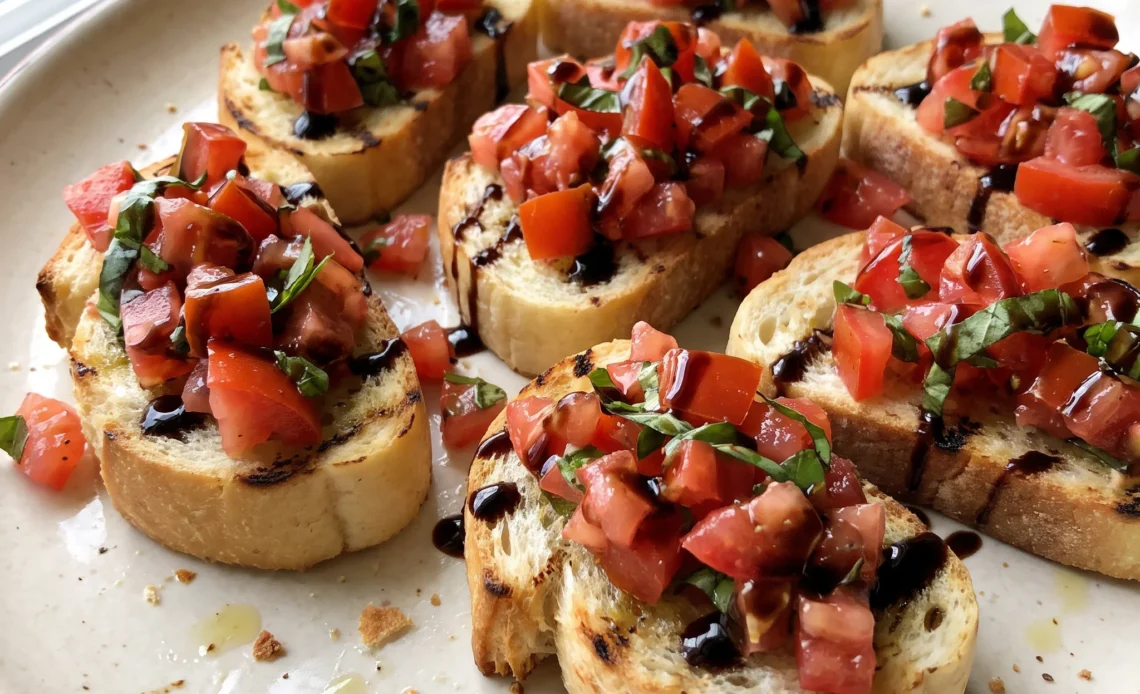
A properly built bruschetta gives you a shard of crisp crust that cracks against your teeth before the tomato gives way, and the difference between that and a limp slice is decided in the few seconds before anything gets spooned on. The bread has to be grilled until the surface feels dry and rigid, not springy, because a soft crumb under wet topping has no second chance. There’s a small margin for error here: dressed tomatoes start shedding liquid almost immediately, and a bowl that looked tight when you mixed it can turn soupy by the time guests arrive.
That’s why the topping and the slices stay apart until the last moment. It’s party food that rewards attention over effort, and it works because the components are treated like they matter individually.
One baguette, a couple of Romas, a handful of basil, and a glaze that clings instead of soaking.
Choose tomatoes with less water
Roma tomatoes earn their place here because they carry less water than the big slicing tomatoes piled nearby. Cut into one and the seed pockets are small, the walls thick.
That matters once the topping hits grilled bread: a wetter tomato bleeds into the crust within minutes and leaves a soft patch under each spoonful. Smaller dice keeps the weight even across the slice, so every piece carries tomato without a heap sliding off the front.
Olive oil goes in sparingly for the same reason. Enough to coat the chunks and carry the basil, not so much that a pool forms in the bowl before you’ve spooned anything.
Taste a piece of dressed tomato on its own and it should be bright and a little savory, not slick. The bread underneath tells you whether you got the balance right; it should stay crisp at the edges and give slightly where the topping sits.
Grill the bread for a base that holds
Slices laid directly on a hot griddle or barbecue pick up faint brown marks and a crisp shell, and that crust is what keeps the bread from collapsing under the topping. Brush both sides with olive oil first. The oil helps the heat move into the surface evenly and stops the bread from grabbing the grates.
Watch the slices rather than a clock: the moment the marks darken and the surface feels dry and firm to a spatula, they’re ready to turn. A little char along an edge brings a smoky note that plays against the sweet-tart glaze later, so don’t shy from it.
Set the grilled slices on a rack or a board in one layer while you finish the bowl. Stack them and the steam trapped between them softens the crust you just built. Feeling the underside with a fingertip tells you plenty; it should be rigid, not springy.
Basil prep that keeps its aroma even
Basil bruises fast. Press a knife through a pile of leaves and the cut edges darken and turn limp before the tomatoes are even dressed.
Rolling the leaves tightly into a cigar and snipping across with kitchen scissors gives you uniform thin ribbons with far less crushing, and those ribbons fold through the diced tomato instead of clumping in one spot. Even distribution is what you’re after: a fleck of basil in most bites, never a mouthful of it.
Too much in one place reads bitter and medicinal against the sweet tomato. One whiff from the bowl after tossing tells you whether the balance is right, green and peppery but not sharp. Scatter the ribbons over the tomatoes and fold gently with a spoon.
The bowl should smell fresh and faintly sweet, and the leaves should still look bright green when they reach the bread.
Finish with a glaze, not a soak
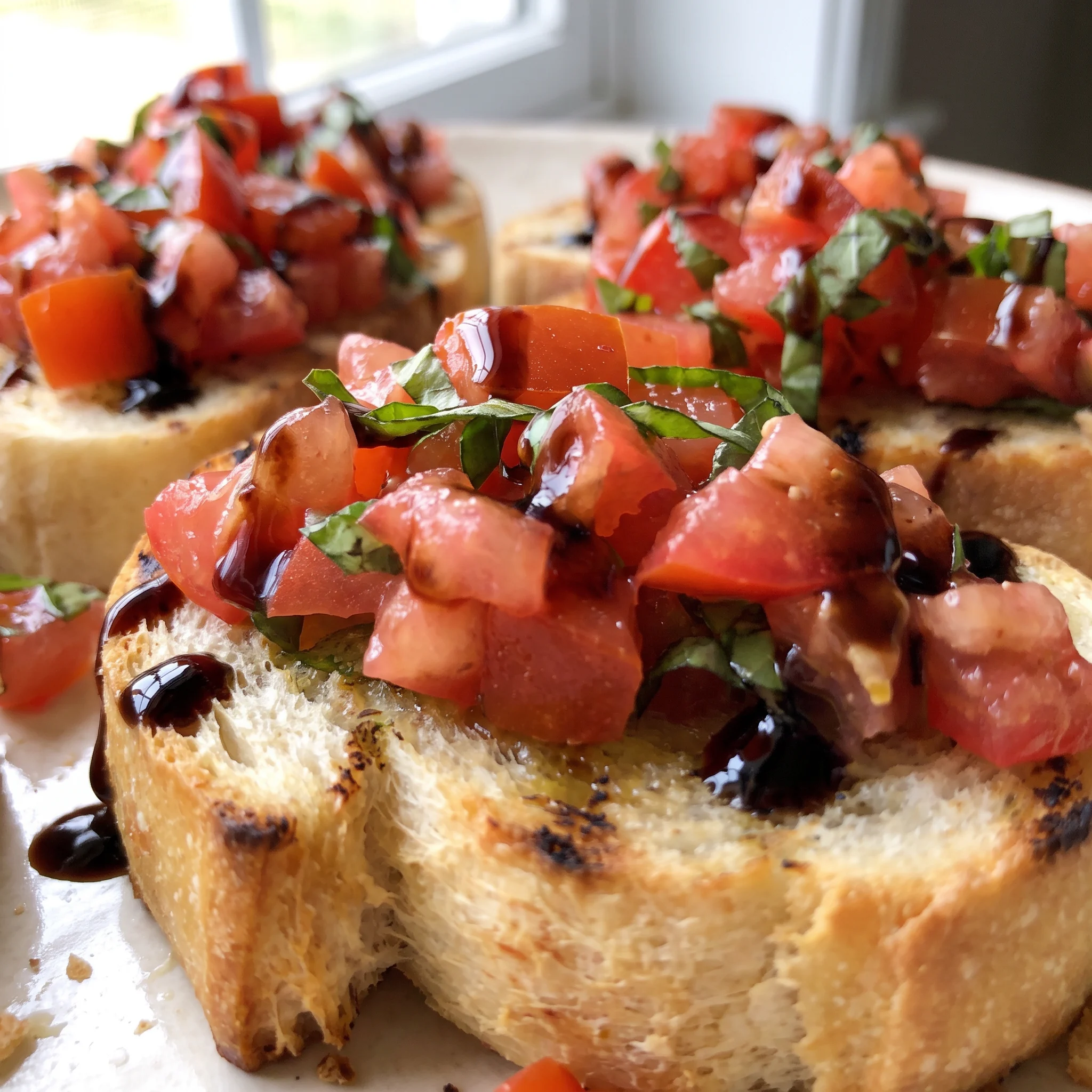
Balsamic glaze is thick enough to sit on top of the tomato-basil mixture rather than sink through it, which is the whole reason it goes on last. A thin vinegar would run straight into the bread and leave a damp patch; the glaze clings where it lands and beads on the tomato. That concentrated sweetness and acidity cuts against the savory olive oil and the green edge of the basil, and it does it in a stripe rather than throughout.
Drizzle it right before serving so the surface stays glossy and dark, and so the flavor stays bright instead of dulling as it sits. Judge by eye: a thin ribbon across each slice, some bites with more than others.
Pick one up and the topping should hold, the glaze catching the light. That’s the last thing you see before you eat it, and it should look as sharp as it tastes.
Pick ingredients that keep their edge
Roma tomatoes: Choose Romas that feel heavy and have tight, unbruised skin, since soft spots mean extra water that’ll soak the bread.
Fresh basil leaves: Leaves should look bright green and stand up straight, with no dark patches or limp stems.
Baguette: A baguette with a thin, crisp crust and a firm crumb gives you slices that stay rigid under the topping.
Olive oil: Use an oil you’d happily eat straight from a spoon, because its flavor comes through on the grilled bread.
Balsamic glaze: The glaze should pour thick and slow, coating the back of a spoon, not runny like vinegar.
The most common mistake is treating the tomato mixture like a juicy salsa and piling it on early. Diced tomatoes release water through their cut surfaces, and that liquid migrates into the porous, toasted bread, collapsing the crisp crust that makes bruschetta work. The excess moisture also dilutes the balsamic glaze and makes the basil wilt.
Reading the bread and the bowl as you go
Telling when the bread has had enough heat
Grill marks that darken to near-black mean bitter carbon, not smoky flavor, and no amount of tomato covers it. Pull a slice the moment the marks are faint brown and the surface feels dry and firm under the spatula. Springy means underdone, so turn it back.
If a slice does catch and blacken, scrape the worst with a knife and use it at the bottom of the pile.
Judging the moisture in the bowl before it hits the bread
Diced tomatoes sitting in the bowl start shedding water within minutes. Tip the bowl and look: a thin pool gathering means the topping will soak the grilled crust and soften it.
Spoon the chunks with a slotted spoon and leave the liquid behind. Taste a chunk first. If it’s watery and flat, the olive oil is too thin a coat or the dice is too coarse; cut smaller and toss again.
Sensing when the basil has gone too far
Ribbons crushed or cut too far ahead darken at the edges and taste dull, even bitter. Sniff the bowl right after folding: fresh and green means the basil survived.
A sharp, almost hay-like smell means it’s been sitting or overhandled. Correct by cutting a fresh leaf or two and folding those in just before the topping goes on the bread, not by adding more of the tired stuff.
Keeping the glaze a stripe, not a soak
Balsamic glaze beads and clings where it lands, and a heavy hand turns that stripe into a puddle that runs into the bread and overwhelms the tomato. Draw a thin ribbon across each slice, then look at the surface: glossy beads, some bites darker than others. If the glaze spreads and sinks, the drizzle was too heavy or the topping is sitting wet.
Add no more.
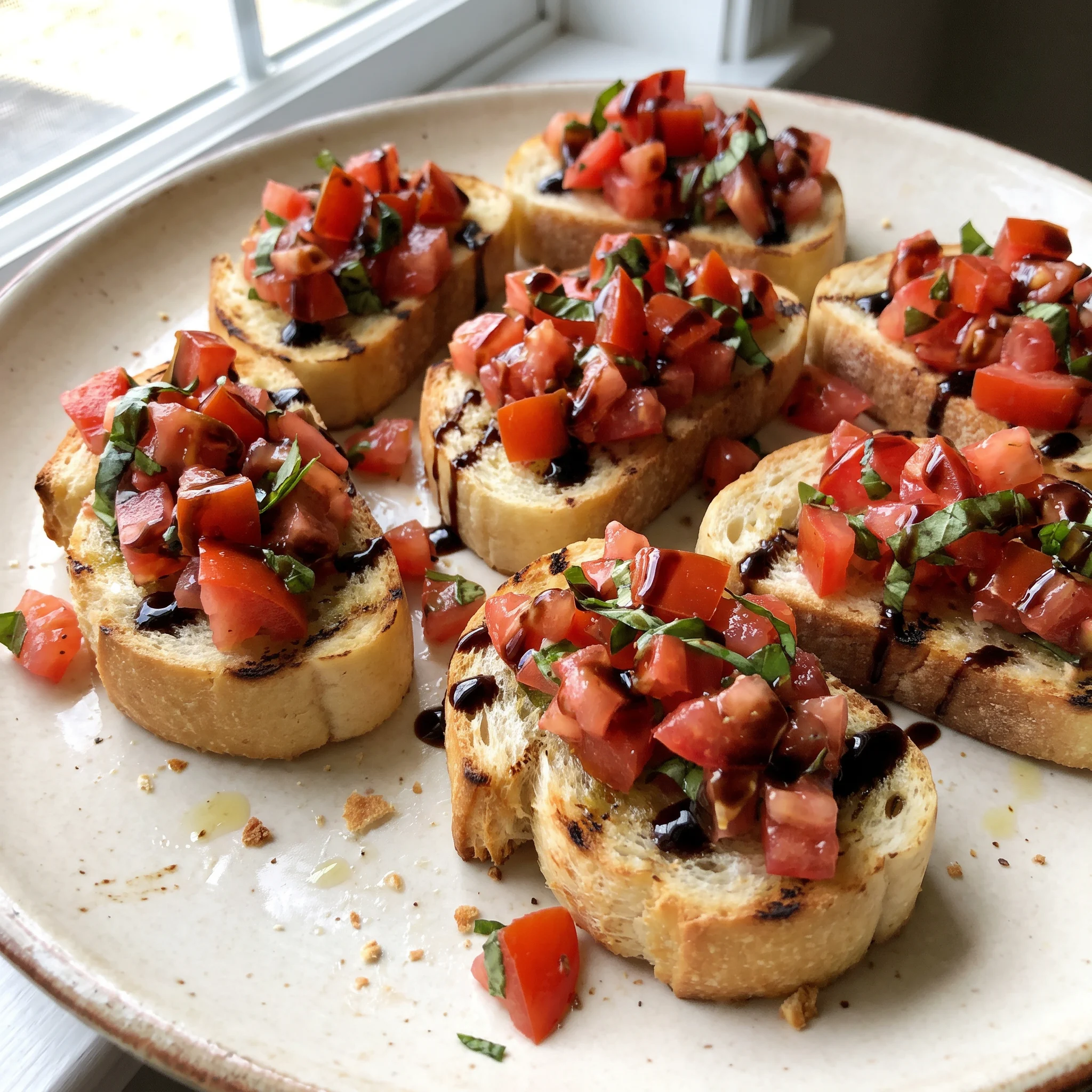
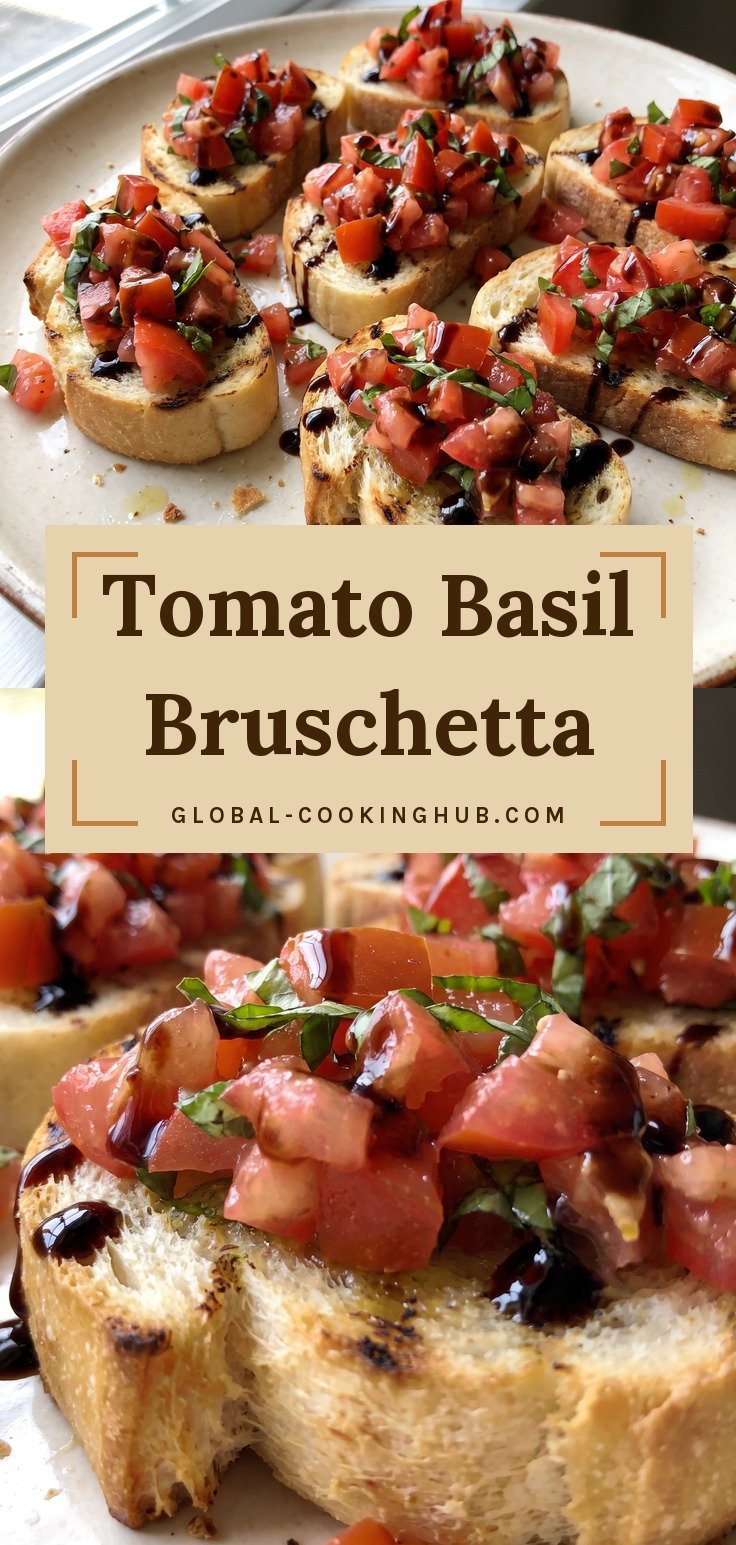
Grilled Bruschetta with Roma Tomatoes and Basil
Ingredients
Method
- Slice the basil into ribbons; a practical method is to roll it tightly and snip with kitchen scissors.
- Dice the Roma tomatoes into small chunks.
- Cut the baguette into 1/2-inch slices and brush with olive oil.
- Lay the baguette slices on a hot griddle or barbecue and cook for a couple of minutes per side until faint brown grill marks form on the bread.
- In a bowl, mix the basil and tomatoes and toss with a small amount of olive oil.
- Spoon the tomato-basil mixture over the baguette slices.
- Finish by drizzling with balsamic glaze.
Swaps that keep the bread crisp and the topping bright
Baguette: A sturdy country loaf, cut into 1/2-inch slices, or a gluten-free baguette if you need one. Country bread gives you a denser crumb that holds up under the tomatoes without going soft. Gluten-free baguettes vary a lot: some turn crumbly and drink up oil, so brush lightly and grill a touch longer to dry the surface before you spoon anything on.
Either way, slice thick enough to stay rigid when you pick it up.
Balsamic glaze: A thick aged balsamic, or a honey-balsamic blend if you want it sweeter. Aged balsamic pours slower and tastes rounder, less sharp, so you can use a slightly heavier ribbon without it overwhelming the tomato.
Honey-balsamic runs thinner and sweeter; drizzle less and check that it beads on the tomato rather than sinking in. If all you have is ordinary balsamic vinegar, don’t use it straight. It’ll soak the bread and leave a damp, sour patch.
Olive oil: A fruity extra-virgin for finishing, and a plainer oil for brushing the bread before grilling. The finishing oil is the one you taste raw against the tomato and basil, so pick one with a green, peppery edge you like off a spoon.
For brushing the slices, a basic olive oil works fine; the heat mutes the nuance anyway. Keep the amount the same as the recipe calls for, then adjust after tasting the dressed tomatoes.
Roma tomatoes: Other plum tomatoes, or cherry tomatoes halved and quartered if Romas look tired. Plum types keep the water low.
Cherry tomatoes are sweeter and pop more, but they release juice fast once cut, so dice them small and drain the bowl before spooning. Avoid big slicing tomatoes and skip dried basil entirely; it tastes dusty and won’t give you the fresh green edge the ribbons do.
Tips
- Taste the balsamic glaze on its own before you drizzle. Glazes vary widely in sweetness and acidity, and one that’s overly sweet will read as candy against the savory tomato and oil. If it tastes flat or harsh, a small squeeze of lemon or a pinch of salt stirred into the bowl of tomatoes can offset it.
- Press a tomato gently at the stem end and smell it there. A ripe Roma gives off a faint sweet, green scent and feels heavy for its size, which signals dense flesh and less water. Aroma-free tomatoes that feel light will taste thin and watery no matter how well you drain them.
Store the topping and the grilled bread apart
The tomato-basil mixture and the grilled slices have to stay in separate containers until you serve them. Spoon the topping into a small container with a tight lid and leave the liquid behind; the tomatoes keep shedding water, and a drained bowl is a bowl that won’t soak the bread. Refrigerate both, the topping in its container and the slices in a single layer or loosely covered.
The bread holds its crispness for a day at most, so plan to eat within that window. The topping keeps a short stretch longer, two to three days, though the basil darkens at the cut edges and the tomato softens. Taste it cold before you serve; if it’s flat, a fresh drizzle of olive oil and a snip of new basil brings it back.
Reheat the slices on a dry griddle for a minute per side to firm the crust. Spoon the topping on at the last moment.
For the best texture, eat assembled bruschetta within about fifteen minutes, and put the balsamic glaze on last, right before serving, so it stays a stripe rather than a soak.
Frequently Asked Questions
Can I make the tomato-basil mixture ahead of time?
Yes, but keep it in its own container and drain off any liquid before you spoon it onto the bread. The tomatoes keep shedding water, so a drained bowl is a bowl that won’t soak the grilled slices.
Refrigerate the topping, then taste it cold before serving; if it’s flat, a fresh drizzle of olive oil and a snip of new basil brings it back. Assemble at the last moment so the bread stays crisp.
Why did my bruschetta get soggy?
The likely culprit is watery tomatoes: if you diced them and let them sit, they shed liquid that soaks into the bread. Use a slotted spoon to leave that liquid behind, and dice smaller so the pieces release less juice. A secondary check is the bread: if it wasn’t grilled until the surface felt dry and firm, it won’t have the crisp shell that resists moisture.
Also, don’t stack the grilled slices while they cool; steam trapped between them softens the crust.
How do I keep the basil from turning black?
Handle it gently: roll the leaves tightly and snip with scissors instead of chopping, which bruises the edges and turns them dark. Add the ribbons just before serving and fold them in gently; the cut edges darken faster if they sit in the acidic tomato juice. If you’re making the topping ahead, keep the basil separate and fold it in at the last minute.
A sniff of the bowl tells you: fresh and green means it survived, sharp and hay-like means it’s too far gone.
What’s the difference between this bruschetta and classic bruschetta?
Classic bruschetta often rubs the grilled bread with garlic and tops with diced tomato, basil, and olive oil; this version skips the garlic rub and finishes with a balsamic glaze drizzled on last. That glaze adds a concentrated sweet-tart stripe that clings to the tomato instead of soaking in.
The bread is brushed with oil and grilled for marks, and the topping is just tomato and basil tossed with a little oil. It’s a simpler build with a sharper finish.
How many slices does one baguette yield for 24 servings?
One baguette cut into 1/2-inch slices typically gives you about 24 to 30 slices, depending on its length. That’s enough for 24 servings if you count one slice per person, but if you want a few extra for the tray, slice a second baguette. The recipe calls for one baguette, so plan on roughly one slice per guest.
Any leftover slices are good eaten on their own or used for another batch.
